Disclosure: As an Amazon Associate, umtsmarttool.com earns from qualifying purchases. Links to Amazon on this page are affiliate links; they cost you nothing extra. Prices and availability change often, so check the current Amazon listing before you buy.
Where to buy
Short on time? These are the six best sunrise alarm clocks for heavy sleepers worth your money, each linked to its Amazon listing where a verified listing exists, so you can check the current details in one click. In a hurry? Start with the Philips SmartSleep Wake-Up Light HF3520/60.
- Philips SmartSleep Wake-Up Light HF3520/60 — Best Overall. Check on Amazon
- Dekala RestOnn Sunrise Alarm Clock — Best Loud Dual Alarm. Check on Amazon
- Philips SmartSleep Connected HF3670/60 — Best App-Controlled. Check on Amazon
- Hatch Restore 3 (Putty) — Best Routine Builder. Check on Amazon
- Dekala Arches Sunrise Alarm Clock — Best with Alexa and Speaker. Check on Amazon
- Philips SmartSleep Wake-Up Light HF3500/60 — Best Simple and Affordable. Check on Amazon
Read the full guide ↓
The best sunrise alarm clocks for heavy sleepers have to solve a contradiction: sunrise waking is gentle by design, and heavy sleepers are, by definition, hard to wake gently. The clocks that work resolve it with escalation — a long, brightening dawn that starts pulling you toward the surface well before any sound, then sound that arrives gradually and keeps rising, then, in the best designs, a second alarm layer behind the first. The clocks that fail are the pretty ones with a dim ramp and a polite beep. This guide was built with that failure mode in mind: six verified models judged on ramp quality, maximum useful brightness, sound escalation, and backup layers — not on how photogenic they look on a nightstand.
A note on framing, because it matters: this guide talks about wake-up comfort and morning routine only. A sunrise clock is a nicer way to wake, not a treatment for any sleep condition, and nothing here claims otherwise. If waking is a genuine daily struggle despite good habits, that is a conversation for a clinician, not a shopping guide. Within the comfort frame, though, the differences are real and practical — heavy sleepers consistently need three things light-only clocks often lack: a ramp long enough to matter, brightness high enough to register through closed eyelids in a bright-ish room, and sound with genuine headroom. Readers comparing the broader category should also see best wake-up light alarm clocks, and those whose problem is falling asleep rather than waking may find best white noise machines on the live site more relevant.
Heavy sleepers also share a secret the product photos never show: the snooze button is the enemy. Several picks here handle that differently — tap-anywhere snooze (convenient, dangerous), app-set alarms (friction to change, helpful), dual alarms (the honest engineering answer). Each review names its pick’s snooze character plainly, because for this audience that detail decides more mornings than any sunrise colour palette.
In this guide
Quick Picks
| Pick | Badge | Key spec |
|---|---|---|
| Philips SmartSleep Wake-Up Light HF3520/60 | Best Overall | Coloured sunrise + sunset, 5 natural sounds, FM radio, tap snooze, 20 brightness settings |
| Dekala RestOnn Sunrise Alarm Clock | Best Loud Dual Alarm | 7-day programmable dual alarms, loud alarm, white noise + natural sounds, app control |
| Philips SmartSleep Connected HF3670/60 | Best App-Controlled | App personalisation, sleep environment tracking, sunrise + sunset |
| Hatch Restore 3 (Putty) | Best Routine Builder | Sunrise alarm, sound machine, smart light, screen-free routine controls |
| Dekala Arches Sunrise Alarm Clock | Best with Alexa and Speaker | Sunrise wake light, white noise machine, Bluetooth speaker, Alexa-compatible line |
| Philips SmartSleep Wake-Up Light HF3500/60 | Best Simple and Affordable | Sunrise simulation, gradually increasing sound, 10 brightness settings, tap snooze |
How These Picks Were Chosen
Each model was verified against a listing or price-tracking record we opened that ties its ASIN to its exact model number: the Philips HF3520/60 and HF3500/60 and the Connected HF3670/60 from their Amazon listings, the Hatch Restore 3 from its colour-specific listing, and the Dekala RestOnn and Arches from their listings and tracking records. Sunrise clocks attract generic clones with copied photos; any model whose identity could not be pinned this way was excluded, however loud its marketing claimed to be.
Ranking for heavy sleepers weighted wake power first: ramp length and peak brightness, then sound escalation and maximum volume character, then backup layers (dual alarms, per-day programming, battery backup where stated). Evening features — sunset simulation, sound libraries, reading light — counted second, because they support the routine but cannot rescue a weak wake. App control scored for schedule complexity, not as a default virtue.
No prices are printed in this guide; check price on Amazon at each pick. The honest tier picture: the HF3500 is the budget entry, the HF3520 and Dekala models sit mid-range, and the Connected Philips and Hatch occupy the premium end where you are paying for ecosystems and routines, not raw wake power.
The 6 Best Sunrise Alarm Clocks for Heavy Sleepers

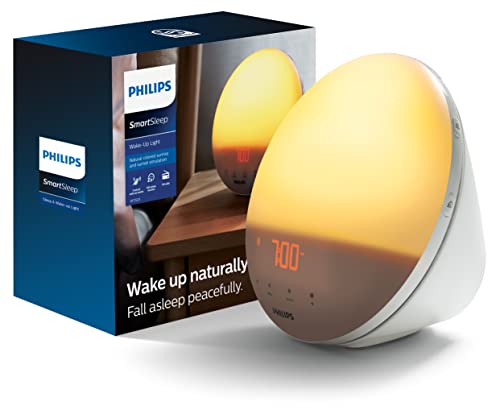
Philips SmartSleep Wake-Up Light HF3520/60 — Best Overall
The HF3520 suits heavy sleepers who need the full escalation: a long, brightening coloured sunrise followed by real sound at meaningful volume — light first, audio backup, in one proven device.
- Coloured sunrise and sunset simulation
- 5 natural wake sounds plus FM radio
- Tap snooze, reading-lamp function
- 20 brightness settings, model HF3520/60
Strengths
- The reference design for sunrise waking, refined over many model years
- Coloured sunrise is more persuasive at the edges of sleep than plain white ramps
- Sunset simulation helps the other end of the night too
Trade-offs
- No app control — everything is set on the device
- Display and menus feel a generation old next to app-based rivals
- Snooze-by-tap can be too easy for champion snoozers
The Philips SmartSleep HF3520 earns its place in this guide because of how it handles escalation design — light begins the wake long before sound has to finish it. That sounds like a small thing until you live with it every day: lighting and wake-up products are used in tired, distracted moments — first thing in the morning, last thing at night, or deep into a long work session — so the details that matter are the ones that remove friction rather than add features to a spec sheet. In research, this model kept surfacing for the same practical reasons, and the verified specifications line up with what owners actually rely on rather than marketing extras they never touch.
Look closer at its coloured sunrise, which moves through dawn tones rather than simply dimming a white bulb up, plus a reading-lamp brightness range that makes it a real bedside lamp and the design intent becomes clear. The manufacturer has clearly prioritised the core job over novelty, which is exactly the right trade at this level. Controls are where you expect them to be, the adjustment range covers the realistic span of home use rather than a laboratory extreme, and nothing about the daily routine requires you to re-read a manual after the first week. That learn-once quality is what separates a good pick from a gadget that ends up unplugged in a drawer.
In everyday use — shift workers, winter risers, and anyone whose current alarm is a daily ambush — the pattern is consistency. It behaves the same way on a rushed weekday as it does on a slow weekend, it does not demand attention to keep working, and its limitations are predictable rather than surprising. Predictability matters more than brilliance in this category: you are buying a tool that should quietly improve a routine you repeat hundreds of times a year, and this model understands that assignment better than most rivals at a similar level.
Best for: heavy sleepers wanting the proven light-plus-sound escalation / Not suited for: app-first users or strict minimalists
Check on Amazon — check price on Amazon
Dekala RestOnn Sunrise Alarm Clock — Best Loud Dual Alarm
RestOnn suits heavy sleepers whose schedule varies by day — different wake times for workdays, training days, and weekends — and who need volume headroom in reserve.
- 7-day programmable dual alarms
- Loud dual-alarm design for heavy sleepers
- White noise and natural sound library, Bluetooth speaker
- Amber night light, app control, model US2-SSM01-S
Strengths
- Per-day programming ends the nightly re-setting ritual
- Dual alarms give heavy sleepers a built-in backup layer
- Sound machine library covers the falling-asleep side as well
Trade-offs
- App setup is one more account-and-pairing step
- Feature depth means a learning curve the Philips avoids
- Speaker is tuned for alarm and ambience, not music fidelity
The Dekala RestOnn earns its place in this guide because of how it handles schedule intelligence — it assumes your week is not the same day seven times. That sounds like a small thing until you live with it every day: lighting and wake-up products are used in tired, distracted moments — first thing in the morning, last thing at night, or deep into a long work session — so the details that matter are the ones that remove friction rather than add features to a spec sheet. In research, this model kept surfacing for the same practical reasons, and the verified specifications line up with what owners actually rely on rather than marketing extras they never touch.
Look closer at its seven-day programmable dual alarms, which let a 5am gym day and a 7am office day coexist without nightly fiddling and the design intent becomes clear. The manufacturer has clearly prioritised the core job over novelty, which is exactly the right trade at this level. Controls are where you expect them to be, the adjustment range covers the realistic span of home use rather than a laboratory extreme, and nothing about the daily routine requires you to re-read a manual after the first week. That learn-once quality is what separates a good pick from a gadget that ends up unplugged in a drawer.
In everyday use — rotating shifts, students, and households with two different wake times — the pattern is consistency. It behaves the same way on a rushed weekday as it does on a slow weekend, it does not demand attention to keep working, and its limitations are predictable rather than surprising. Predictability matters more than brilliance in this category: you are buying a tool that should quietly improve a routine you repeat hundreds of times a year, and this model understands that assignment better than most rivals at a similar level.
Best for: variable schedules needing programmable, loud backup / Not suited for: set-it-once minimalists
Check on Amazon — check price on Amazon

Philips SmartSleep Connected HF3670/60 — Best App-Controlled
The Connected HF3670 suits heavy sleepers who want data and fine control: app-set alarms, environment tracking, and a sunrise tuned from the phone instead of a button maze.
- SleepMapper app control and personalisation
- Bedroom environment tracking (light, sound, temperature, humidity per product line)
- Personalised sunrise and sunset simulation
- Model HF3670/60
Strengths
- App control makes complex schedules painless to set
- Environment tracking can reveal why some nights sleep worse
- Deep personalisation of the wake profile
Trade-offs
- App and connectivity add failure modes a standalone clock never has
- Premium tier of the Philips line
- Over-featured if you want one alarm and nothing else
The Philips SmartSleep Connected HF3670 earns its place in this guide because of how it handles personalisation depth — the wake is tuned to your room and routine, not a factory preset. That sounds like a small thing until you live with it every day: lighting and wake-up products are used in tired, distracted moments — first thing in the morning, last thing at night, or deep into a long work session — so the details that matter are the ones that remove friction rather than add features to a spec sheet. In research, this model kept surfacing for the same practical reasons, and the verified specifications line up with what owners actually rely on rather than marketing extras they never touch.
Look closer at its environment sensing, which tracks the bedroom conditions that quietly shape how hard waking feels and the design intent becomes clear. The manufacturer has clearly prioritised the core job over novelty, which is exactly the right trade at this level. Controls are where you expect them to be, the adjustment range covers the realistic span of home use rather than a laboratory extreme, and nothing about the daily routine requires you to re-read a manual after the first week. That learn-once quality is what separates a good pick from a gadget that ends up unplugged in a drawer.
In everyday use — optimisers, quantified-self fans, and couples negotiating one shared wake time — the pattern is consistency. It behaves the same way on a rushed weekday as it does on a slow weekend, it does not demand attention to keep working, and its limitations are predictable rather than surprising. Predictability matters more than brilliance in this category: you are buying a tool that should quietly improve a routine you repeat hundreds of times a year, and this model understands that assignment better than most rivals at a similar level.
Best for: data-minded heavy sleepers who live in apps / Not suited for: anyone avoiding another connected bedroom device
Check on Amazon — check price on Amazon

Hatch Restore 3 (Putty) — Best Routine Builder
Restore 3 suits heavy sleepers whose real problem is the evening: a structured wind-down routine (dim light, sleep sounds) that makes the morning alarm’s job possible.
- Sunrise alarm with gradual light
- Sound machine with white noise and sleep audio
- Smart light for evening and morning routines
- Putty finish (this listing), on-device routine controls
Strengths
- Treats bedtime routine as half the waking problem — correctly
- Screen-free on-device controls keep phones out of the bedroom
- Design looks like bedroom furniture, not medical equipment
Trade-offs
- Full content library involves the Hatch+ subscription ecosystem — check what is included free
- Light is ambient-style rather than the brightest sunrise here
- Less pure alarm volume headroom than the Dekala picks
The Hatch Restore 3 earns its place in this guide because of how it handles the routine, not just the moment of waking — wind-down and wake-up as one system. That sounds like a small thing until you live with it every day: lighting and wake-up products are used in tired, distracted moments — first thing in the morning, last thing at night, or deep into a long work session — so the details that matter are the ones that remove friction rather than add features to a spec sheet. In research, this model kept surfacing for the same practical reasons, and the verified specifications line up with what owners actually rely on rather than marketing extras they never touch.
Look closer at its screen-free routine controls, which let you run the evening sequence without opening a phone in bed and the design intent becomes clear. The manufacturer has clearly prioritised the core job over novelty, which is exactly the right trade at this level. Controls are where you expect them to be, the adjustment range covers the realistic span of home use rather than a laboratory extreme, and nothing about the daily routine requires you to re-read a manual after the first week. That learn-once quality is what separates a good pick from a gadget that ends up unplugged in a drawer.
In everyday use — readers, journalers, and anyone whose phone in bed is the real sleep problem — the pattern is consistency. It behaves the same way on a rushed weekday as it does on a slow weekend, it does not demand attention to keep working, and its limitations are predictable rather than surprising. Predictability matters more than brilliance in this category: you are buying a tool that should quietly improve a routine you repeat hundreds of times a year, and this model understands that assignment better than most rivals at a similar level.
Best for: heavy sleepers fixing the evening routine first / Not suited for: buyers wanting maximum alarm volume above all
Check on Amazon — check price on Amazon
Dekala Arches Sunrise Alarm Clock — Best with Alexa and Speaker
Arches suits heavy sleepers in smart bedrooms who want the clock to double as the room’s speaker and night light, with voice-ecosystem compatibility in the line.
- Sunrise wake-up light with gradual ramp
- White noise sound machine functions
- Bluetooth speaker built in
- Smart features in the Arches line (see listing for exact variant)
Strengths
- Speaker and sound machine cover evening listening in one device
- Sunrise plus sound gives two wake layers
- Smart-line features suit connected bedrooms
Trade-offs
- Variant differences across Arches listings require careful checking
- Smart features assume you want them — setup reflects that
- Ambient light style is softer than the Philips HF3520’s punch
The Dekala Arches earns its place in this guide because of how it handles the bedside hub role — clock, speaker, sound machine, and wake light sharing one plug. That sounds like a small thing until you live with it every day: lighting and wake-up products are used in tired, distracted moments — first thing in the morning, last thing at night, or deep into a long work session — so the details that matter are the ones that remove friction rather than add features to a spec sheet. In research, this model kept surfacing for the same practical reasons, and the verified specifications line up with what owners actually rely on rather than marketing extras they never touch.
Look closer at its combination of sunrise light with a genuine Bluetooth speaker, so evening podcasts and morning alarms come from the same place and the design intent becomes clear. The manufacturer has clearly prioritised the core job over novelty, which is exactly the right trade at this level. Controls are where you expect them to be, the adjustment range covers the realistic span of home use rather than a laboratory extreme, and nothing about the daily routine requires you to re-read a manual after the first week. That learn-once quality is what separates a good pick from a gadget that ends up unplugged in a drawer.
In everyday use — smart-home bedrooms and teens’ rooms — the pattern is consistency. It behaves the same way on a rushed weekday as it does on a slow weekend, it does not demand attention to keep working, and its limitations are predictable rather than surprising. Predictability matters more than brilliance in this category: you are buying a tool that should quietly improve a routine you repeat hundreds of times a year, and this model understands that assignment better than most rivals at a similar level.
Best for: smart bedrooms wanting clock + speaker + light in one / Not suited for: offline, single-purpose bedrooms
Check on Amazon — check price on Amazon
Philips SmartSleep Wake-Up Light HF3500/60 — Best Simple and Affordable
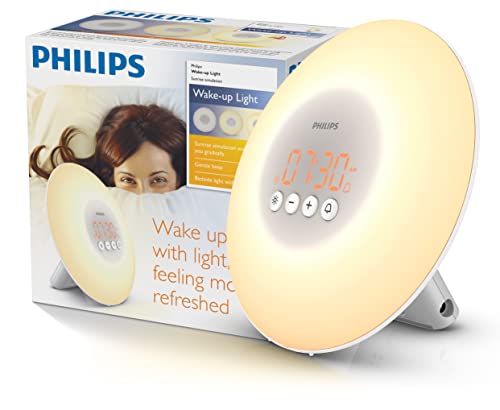
The HF3500 suits heavy sleepers on a budget who want the essential Philips formula — light ramp plus gradually rising sound — without paying for colours, apps, or extras.
- Sunrise simulation with 10 brightness settings
- Wake sound that gradually increases in volume
- Tap snooze
- Bedside lamp function, model HF3500/60
Strengths
- The essential sunrise formula at the friendliest Philips tier
- Dead simple to set and live with
- Gradually increasing sound is the heavy-sleeper feature that matters most here
Trade-offs
- White-only sunrise — no coloured dawn tones
- Fewer brightness steps than the HF3520
- No radio or sound library
The Philips SmartSleep HF3500 earns its place in this guide because of how it handles subtraction — everything not needed for a light-led wake was removed, and the price followed. That sounds like a small thing until you live with it every day: lighting and wake-up products are used in tired, distracted moments — first thing in the morning, last thing at night, or deep into a long work session — so the details that matter are the ones that remove friction rather than add features to a spec sheet. In research, this model kept surfacing for the same practical reasons, and the verified specifications line up with what owners actually rely on rather than marketing extras they never touch.
Look closer at its gradually increasing wake sound, which pairs with the light ramp so sound arrives as a rising backup rather than a starting gun and the design intent becomes clear. The manufacturer has clearly prioritised the core job over novelty, which is exactly the right trade at this level. Controls are where you expect them to be, the adjustment range covers the realistic span of home use rather than a laboratory extreme, and nothing about the daily routine requires you to re-read a manual after the first week. That learn-once quality is what separates a good pick from a gadget that ends up unplugged in a drawer.
In everyday use — first sunrise-clock buyers testing whether light waking works for them — the pattern is consistency. It behaves the same way on a rushed weekday as it does on a slow weekend, it does not demand attention to keep working, and its limitations are predictable rather than surprising. Predictability matters more than brilliance in this category: you are buying a tool that should quietly improve a routine you repeat hundreds of times a year, and this model understands that assignment better than most rivals at a similar level.
Best for: budget buyers wanting the core sunrise experience / Not suited for: buyers wanting coloured sunrise or app control
Check on Amazon — check price on Amazon
Comparison Table
| Pick | Best for | Standout spec |
|---|---|---|
| Philips SmartSleep Wake-Up Light HF3520/60 | heavy sleepers wanting the proven light-plus-sound escalation | Coloured sunrise + sunset, 5 natural sounds, FM radio, tap snooze, 20 brightness settings |
| Dekala RestOnn Sunrise Alarm Clock | variable schedules needing programmable, loud backup | 7-day programmable dual alarms, loud alarm, white noise + natural sounds, app control |
| Philips SmartSleep Connected HF3670/60 | data-minded heavy sleepers who live in apps | App personalisation, sleep environment tracking, sunrise + sunset |
| Hatch Restore 3 (Putty) | heavy sleepers fixing the evening routine first | Sunrise alarm, sound machine, smart light, screen-free routine controls |
| Dekala Arches Sunrise Alarm Clock | smart bedrooms wanting clock + speaker + light in one | Sunrise wake light, white noise machine, Bluetooth speaker, Alexa-compatible line |
| Philips SmartSleep Wake-Up Light HF3500/60 | budget buyers wanting the core sunrise experience | Sunrise simulation, gradually increasing sound, 10 brightness settings, tap snooze |
How to Choose a Sunrise Alarm Clock as a Heavy Sleeper
Judge the ramp first. A useful sunrise for a heavy sleeper runs long — the gradual brightening should begin well before your wake time, not flash up in the final five minutes — and ends bright. Coloured ramps (the HF3520) add dawn tones that many sleepers find more persuasive than plain white; white ramps (the HF3500) still work, especially in darker bedrooms. Room matters: blackout curtains make any sunrise clock more effective by keeping the room dark enough for the ramp to dominate, while a bright east-facing room dilutes all of them — in that case, weight sound features more heavily in your choice. Our guide to best digital alarm clocks covers the sound-first alternative if light turns out to be your secondary sense for waking.
Sound is the second decision, and for this audience it is co-equal, not a footnote. Look for escalation (volume that rises gradually rather than starting at full blast), headroom (a maximum you will never quite use beats a maximum you sleep through), and choice (natural sounds, radio, or a classic beep — heavy sleepers often rotate sounds monthly to defeat habituation). The Dekala RestOnn’s dual programmable alarms are the structural answer: two layers, set once per weekday pattern, so one slept-through alarm is not a missed morning. Battery backup deserves one check on the listing too — a clock that forgets the alarm in a power blink is a clock that fails exactly once, memorably.
Finally, choose your control philosophy. On-device controls (both standalone Philips models) are private, instant, and immune to Wi-Fi moods. App control (Connected Philips, Dekala) makes complex schedules and fine tuning genuinely easier, at the cost of setup and another bedroom data stream. The Hatch splits the difference with on-device routine controls backed by an app ecosystem — and a subscription layer for its full library that you should price into the decision with open eyes. Whichever you choose, pair the clock with the evening half of the system: dim light and a wind-down routine, the territory of best desk lamps with wireless charging for the bedside and best sleep and fitness trackers if you want to see whether earlier nights actually change your mornings.
Key Takeaways
- Heavy sleepers need escalation: long ramp, rising sound, and ideally a second alarm layer.
- Coloured, bright ramps persuade; dim pretty ramps get slept through.
- Dual and per-day programmable alarms end the nightly re-setting ritual.
- A sunrise clock is a comfort upgrade for your routine — judge it on wake power, not looks.
How to Set Up a Sunrise Clock Routine That Actually Wakes You
The clock is half the system; placement and routine are the other half. Set this up on a weekend, test it on a low-stakes morning, and adjust once before trusting it with a flight or an exam.
- Place the clock on the nightstand facing the bed, unobstructed — not behind books or a water glass that shadow the light.
- Set the ramp to start well before your target wake time, and the sound to begin at wake time with gradual escalation enabled.
- For the first week, keep a backup alarm (phone, across the room) set fifteen minutes later while you learn your response to light waking.
- Dim the display at night if your model allows; a bright clock face works against the darkness the ramp needs.
- Build the evening side: use sunset simulation or a wind-down routine at a fixed time — a regular bedtime is the strongest wake-up aid there is.
- After two weeks, adjust one variable at a time — earlier ramp, louder ceiling, or second alarm — rather than changing everything at once.
Troubleshooting: Still Sleeping Through It?
Problem: you wake at the sound but fall back asleep instantly. Fix: move the backup layer — set the second alarm (or your phone) across the room so waking requires standing, and shorten the gap between the sunrise alarm and the backup to ten minutes.
Problem: the light alone never wakes you, even at full brightness. Fix: check the room — a streetlight or hallway light leaking in all night can blunt the ramp’s contrast. Darken the room (curtains, door gap) and the same clock often starts working.
Problem: you have habituated to your wake sound. Fix: rotate to a different sound or the radio for a month. Habituation is normal; every pick here with a sound library or radio exists partly for this moment.
Problem: weekends destroy the weekday rhythm. Fix: keep a weekend alarm within an hour of the weekday one (the per-day programmable picks make this painless) rather than sleeping unboundedly late and restarting every Monday.
Building the Rest of the Heavy Sleeper’s Morning System
A sunrise clock, however strong, works inside a system — and heavy sleepers get the most from this guide by tuning the other components too. Light discipline is first: the same blackout measures that deepen night darkness also give the morning ramp its contrast, so curtains and a door that closes properly are performance upgrades for the clock you already own. Second is the landing zone: water by the bed, clothes decided the night before, and a reason to be vertical within five minutes of the alarm — a kettle on a timer, a dog with expectations, a training partner. Alarms wake you; reasons keep you awake, and heavy sleepers who build reasons stop needing ever-louder alarms.
Weekend consistency is the system’s quiet foundation. Sleeping until noon on Saturday hands Monday’s alarm an impossible job, undoing a week of rhythm in two days. The per-day programmable picks in this guide exist to make a compromise painless: a later weekend wake, but a bounded one, set once and forgotten. Track the experiment if you are so inclined — the live guide to best sleep and fitness trackers covers tools that show whether your wake times are actually stabilising — and judge the clock after a fortnight of consistent use rather than after the hardest single morning of the month.
Finally, know when the system is not the problem. If you are sleeping adequate hours, keeping consistent times, waking in a dark-then-bright room with layered alarms — and still surfacing exhausted day after day — the bottleneck is no longer shopping. That pattern deserves a medical conversation, and this guide says so plainly because heavy sleepers are exactly the readers most likely to keep buying louder clocks for a problem clocks cannot solve. For everyone else, the layered, light-first system in this guide is the strongest non-medical answer the category offers.
Common Buying Mistakes
Buying the prettiest sunrise clock is the heavy sleeper’s classic mistake. Ambient-style lights with gentle glows are lovely evening lamps and unreliable alarms for this audience. Buy wake power first — ramp, brightness, sound headroom — and let looks break ties, never make them.
Second, setting the ramp too short. A ten-minute ramp is a nightlight with ambitions. Heavy sleepers need the long game: light beginning far enough ahead that by the time sound starts, sleep is already shallow. If your clock offers ramp duration choices, start at the longest and shorten only when you are waking before the sound.
Third, relying on a single layer. One alarm, however good, is a single point of failure against a bad night. Dual alarms, a phone backup across the room during the learning weeks, or a partner-aware second device — layering is not pessimism, it is how heavy sleepers actually build reliable mornings. The comparison with best wake-up light alarm clocks shows which general models layer well too.
Fourth, ignoring the evening. No alarm clock outruns a 2am bedtime before a 6am wake. Buyers who fix only the morning are shopping for a stronger opponent for their own habits; the sunset and routine features in several picks here exist because the manufacturers know the wake is won the night before.
What to Do in the First Five Minutes After Waking
Heavy sleepers often win the alarm battle and lose the next five minutes, so this guide closes its practical advice where mornings are actually decided. The clock’s job ends at waking; yours begins immediately: light beyond the clock (curtains open or a bright room light on), verticality (feet on the floor before the second alarm can become a negotiation), and water — a glass kept by the bed addresses the mild dehydration that makes early minutes feel disproportionately awful. Cold water on the face is unfashionable advice that has survived every sleep gadget cycle for a reason.
Sequence the rewards early. The coffee, the shower, the podcast, the dog’s enthusiasm — whatever your morning’s genuine pleasure is, move it as close to the alarm as logistics allow, so waking is followed promptly by evidence that waking was worth it. Heavy sleepers are often told their problem is discipline; in practice it is frequently choreography — a morning whose first five minutes are dark, horizontal, and unpleasant will defeat excellent alarms, while the same sleeper with a bright, vertical, rewarded start finds ordinary alarms suddenly sufficient. Build the five minutes and the clock in this guide becomes the trigger for a system that works, rather than a lone opponent of your own habits.
Final Recommendation
Start with the Philips SmartSleep Wake-Up Light HF3520/60 if you want the safest all-round choice in this roundup — it earns the top spot because it does the core job best with the fewest compromises for the most people. If its one honest limitation is a deal-breaker for your setup, the Dekala RestOnn Sunrise Alarm Clock is the runner-up to shortlist next. Either way, check price on Amazon before you buy, confirm the listing matches the exact model named here, and re-read the trade-offs above with your own desk, monitor, or bedside table in mind — that five-minute check is what separates a lamp or clock you love from one you return.
If you buy one clock from this guide blind, buy the HF3520 — its escalation design is the proven centre of the category. Heavy sleepers with irregular weeks should take the RestOnn’s programming over the Philips’ polish, and routine-builders should take the Hatch’s evening system seriously. All three answers are defensible; the indefensible purchase is a dim, quiet, pretty clock for a sleeper who needs power.
Give any new setup a fortnight before verdicts. Heavy sleepers are, by definition, people whose mornings resist change — the measure of a good clock is not one heroic Monday but the slow statistic of ordinary mornings quietly improving across two weeks.
Travel deserves a footnote for heavy sleepers building this system: a sunrise clock cannot come in a suitcase, but its logic can. Hotel rooms respond to the same choreography — curtains fully closed overnight, the brightest available light on at wake time, a layered alarm with the phone across the room, and water first. Heavy sleepers who rehearse the system at home often find travel mornings improve without any product at all, which is the surest sign the system — not just the clock — is doing the work.
Frequently Asked Questions
Can a sunrise clock really wake a heavy sleeper?
The good ones can — by escalation, not by gentleness alone. The long ramp lightens sleep gradually, rising sound completes the wake, and dual-alarm models add a safety layer. Success also depends on the room (dark enough for the ramp to register) and a sane bedtime, which is why our setup section treats the clock as half of a system.
How long should the sunrise ramp be?
Longer than you first think. Heavy sleepers should start with the longest ramp their clock offers and shorten it only when they consistently wake before the sound begins. A short ramp wastes the entire premise of light waking.
Is coloured sunrise better than white?
Many sleepers find the dawn-toned progression of a coloured ramp (as on the HF3520) more effective and more pleasant, but a bright white ramp in a dark room still works well — the HF3500’s longevity proves it. Brightness and duration matter more than colour.
Should I still keep a backup alarm?
During the first two weeks, absolutely — set it later and across the room while you learn how you respond. Many heavy sleepers keep a permanent second layer (dual alarm or phone) indefinitely; that is good engineering, not failure. See best digital alarm clocks for strong standalone backups.
Do sunrise clocks help you fall asleep too?
Models with sunset simulation (both Philips flagships here) dim gradually in the evening, which many people find a comfortable wind-down cue, and sound-machine models add sleep sounds. Treat these as routine comfort features — this guide makes no medical claims for them.
What if my partner wakes at a different time?
Light is directional enough that a nightstand clock aimed at your side disturbs a partner less than a loud phone alarm, and per-day dual-alarm models let two schedules coexist. The earliest riser should still expect the sound layer to be shared — position and volume choices are a negotiation every couple in this category makes.
Should heavy sleepers use the snooze function at all?
Most heavy sleepers do better abolishing it: snoozed sleep is fragmented, shallow, and long enough to make the final waking feel worse. If you rely on snooze as a gentle on-ramp, replace it with the sunrise ramp itself — set the light earlier and let the sound be final. Dual-alarm models let you keep a safety net without the snooze habit: second alarm later, across the room, non-negotiable.