Disclosure: As an Amazon Associate, umtsmarttool.com earns from qualifying purchases. Links to Amazon on this page are affiliate links; they cost you nothing extra. Prices and availability change often, so check the current Amazon listing before you buy.
Where to buy
Check the latest availability and delivery on Amazon. Orders are placed on Amazon. We may earn a commission from qualifying purchases.
- Best Sand Example: Intex Krystal Clear SX2100 Sand Filter Pump (26645EG) — Check on Amazon
- Best Cartridge Example: Intex Krystal Clear C2500 Cartridge Filter Pump (28633EG) — Check on Amazon
- Best Compact Example: Intex Krystal Clear C1000 Cartridge Filter Pump (28637EG) — Check on Amazon
Read the full guide ↓
Every pool filter pros and cons conversation eventually becomes a cartridge-versus-sand conversation, because those are the two ownership philosophies on offer for above-ground pools — glass media rides along as a variant of the sand approach. This article gives each side its full, honest hearing: the strengths with real substance behind them, the trade-offs without the softening, and a clear statement of who should buy which. Product examples are drawn from the verified shortlist behind Pool Filter Review, and the sizing groundwork lives in How To Choose A Pool Filter.
Pool Filter Pros and Cons: The Strengths, in Full
Filtration keeps water usable for a whole season
The foundational strength is simple: a filtered pool stays swimmable. Suspended particles are removed continuously rather than accumulating until the water clouds, and circulation spreads sanitizer into every corner instead of leaving stagnant zones. Owners experience this as the absence of drama — no green surprises, no emergency drain before guests arrive.
Cartridges: fine filtration, tiny footprint, minutes of setup
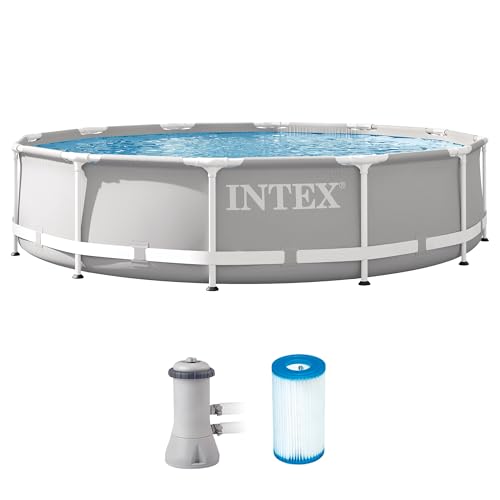
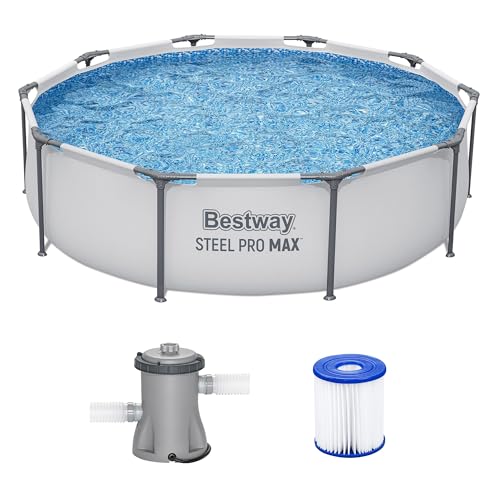
Cartridge systems such as the Intex C-series install by connecting hoses and plugging in, occupy very little pad space, and filter finely through pleated media. Maintenance is a hose-rinse and an occasional replacement. For small pools and owners who value simplicity over everything, that combination is genuinely hard to beat.
Sand: backwash cleaning and media that lasts for seasons
Sand systems trade the consumable for a valve. When the gauge climbs, a backwash restores flow in minutes, and the media itself serves for seasons. For larger pools, where a cartridge would need constant attention, sand’s rhythm is calmer and its running costs steadier. Timers on the Intex SX range automate the daily run entirely.
The category is mature and parts are everywhere
Cartridges for the major families, replacement hoses, O-rings and clamps are stocked wherever pool supplies are sold, because Intex and Bestway pools are everywhere. Ownership risk is low: you are buying into ecosystems with deep spare-parts benches.
In this guide
The Trade-Offs, in Full
Cartridges are a standing consumable
The cartridge bargain bills you forever, in small amounts. Elements wear, oils saturate them beyond what rinsing restores, and heavy-use pools move through replacements at a pace that adds up across a season. Owners who hate subscriptions in product form should look at sand.
Sand asks for space, water and a learning curve
A sand tank needs a level pad, a waste route for backwash water, and a filled weight that discourages relocation. Setup involves media loading and valve discipline — moving the handle with the pump running damages seals — and the first week has more to learn than a cartridge system’s first week.
Neither media sanitizes anything
The most consequential trade-off is a category limit: filters remove particles and nothing else. Bacteria, algae chemistry and pH live in the sanitation system. Owners who buy a bigger filter to solve a chemistry problem will own a bigger filter and the same problem.

Headline specifications flatter every model
Pump flow rates overstate delivered flow on every brand, and sizing honestly requires the system figure. This is not a reason to avoid the category; it is a reason to do one division before buying, as the sizing section below shows.
How Pool Filter Sizing Actually Works
Every sizing mistake in this category starts with the same confusion: the big number on the box is the pump flow rate, measured at the pump outlet with nothing resisting it, while the number that decides whether your pool stays clear is the system flow rate, measured with water actually moving through the filter media, the hoses and the pool fittings. Intex publishes both figures for its Krystal Clear range, and the gap is not small. A pump rated at 2,500 gallons per hour may deliver 1,900 gallons per hour as a system, and a 1,500 GPH sand unit may deliver 1,050 GPH in the pool. Size from the system figure every time, and treat the headline figure as marketing context rather than a promise.
The working target is turnover: you want the system to pass the pool’s full volume through the filter at least once a day, and twice a day is a healthier goal during heat waves, heavy swimming loads or after a storm drops debris into the water. Turnover is simple arithmetic. Divide your pool volume by the system flow rate and you get the hours for one full pass. A 6,000-gallon pool on a system flowing at 750 GPH needs eight hours for one turnover, which is a long daily run. The same pool on a 1,600 GPH system needs under four hours. Neither is wrong in absolute terms, but the running time, the electricity and the wear all follow from that one division, so do it before you buy rather than after the water turns.
Oversizing has limits too. A filter pump far larger than the pool needs wastes electricity, can stir debris faster than the skimmer action settles it, and on cartridge systems it pushes water through the media at a rate the cartridge was not shaped for. The honest band is a system that turns the pool over in roughly three to six hours of running. Inside that band, choose based on media type, maintenance style and fittings. Outside it, either the run times become unreasonable or the hardware is mismatched to the pool, and no badge on a box changes that arithmetic.
One more sizing factor hides in the fittings. Above-ground pools use two common hose sizes, 1.25-inch (32 mm) and 1.5-inch (38 mm), and the filter pump must match or adapt to them. Cartridge pumps in the Intex C-series use 1.25-inch fittings, while the SX sand range uses 1.5-inch hoses, and Bestway ships adaptors with some Flowclear models for exactly this reason. Measure your pool’s connections before ordering, because the best filter in the world is a paperweight until its hoses seal against your pool wall fittings.
Who Should Buy, and Who Should Skip
Best for: cartridge systems — small pools, renters, minimal pads, simplicity-first owners / Not suited for: very large pools with heavy swimmer loads
Best for: sand systems — mid to large frame pools, owners who dislike consumables, households wanting timer-driven routines / Not suited for: tiny pools, pads without a backwash route, owners who move equipment often
Alternatives to Consider
The Intex SX2100 represents sand at its most balanced; the Intex C2500 is the strongest cartridge case; the Intex C1000 is the simplicity benchmark. Whether the purchase itself is justified is argued in Is A Pool Filter Worth It, and band-by-band shortlists live in Best Pool Filter Under $150 and Best Pool Filter Under $300.
Common Buying Mistakes
The first mistake is sizing from the headline flow rate. Pump flow and system flow differ by hundreds of gallons per hour on the same unit, and pools sized on the bigger number end up under-filtered with run times the owner never planned. The second mistake is ignoring the fitting size: 1.25-inch and 1.5-inch hose systems do not connect without adaptors, and discovering that on setup day turns a one-hour job into a week of waiting for parts.
The third mistake is buying media-blind. Sand systems ship without sand, cartridges wear out, and glass media costs more at fill time; the purchase is the start of a small supply chain, not the end of one. The fourth mistake is expecting filtration to do sanitation’s job. A filter removes particles; it does not disinfect, and owners who skip testing and chlorine while upgrading their filter are polishing one leg of a three-legged stool.
The fifth mistake is choosing by pool diameter instead of pool volume. Two pools with the same diameter and different depths hold very different gallons, and it is gallons, matched against system flow, that decide turnover. The sixth mistake is forgetting the waste route: a sand filter needs somewhere for backwash water to go, and a cartridge filter needs a spot where rinsing a muddy cartridge will not redecorate the patio. Decide both before the box arrives.
The Bottom Line
Pool filters earn their keep. Choose cartridge for simplicity and small pools, sand for capacity and calm ownership, and either with your eyes open about what filtration cannot do. The pros outweigh the cons for every pool that stays filled — the real decision is which set of trade-offs fits your backyard.
Cartridge, Sand and Glass: What the Media Choice Really Changes
The filter media is the part that actually traps debris, and the three mainstream choices ask different things of you. A cartridge is a pleated paper element that slides into a housing. You rinse it with a garden hose on a regular rhythm, replace it when rinsing no longer restores flow, and you never backwash. Cartridges filter finely and suit owners who prefer a five-minute maintenance task with no water loss. The cost is a standing consumable: cartridges wear out, and a pool that swims daily in summer will move through them at a pace that surprises first-time owners.
Sand is the opposite bargain. A sand bed inside a tank traps debris through depth, and when the pressure gauge climbs you turn a valve to backwash, sending the dirty water out through a waste line and restoring flow in minutes. The sand itself lasts for seasons before it needs replacing, so the consumable cost nearly disappears. What sand asks instead is space, a level pad, a waste-water route for backwashing, and a little more learning at setup: filling the tank correctly, seating the laterals, and running the valve positions in the right order the first time.
Glass media sits between the two philosophies. Recycled glass granules load into the same sand tanks, usually at a lower weight than the sand they replace — Intex publishes both figures for its SX range, such as 50 lb of silica sand or 35 lb of glass for the SX2100 — and glass is often chosen for finer filtration and longer life. The practical differences an owner feels are modest: slightly less frequent backwashing for some, a higher media cost at fill time, and the same valve routine as sand. If a tank supports both, the choice is about preference and local availability more than a dramatic performance gap.
Whichever media you choose, the filter only removes suspended particles. It does not sanitize the water, kill algae spores chemically, or balance pH. Filtration, circulation and sanitation are three legs of the same stool, and owners who expect a new filter pump to fix a chemistry problem will be disappointed no matter which model they buy. Clear water comes from the filter doing its mechanical job while chlorine and testing do theirs.
Worked Examples: Three Pools, Sized Properly
Abstract sizing advice becomes useful when it survives contact with real pools, so here are three worked examples using published system flow figures. The first is a small frame pool holding about 2,000 gallons, the kind shipped with minimal filtration. A compact cartridge pump flowing at 300 GPH as a system turns it over in under seven hours — acceptable for a lightly used pool, marginal for one children use daily. Stepping to a system flowing at 750 GPH cuts that to under three hours, which is why the smallest pools often benefit most visibly from one size up.
The second example is the classic family frame pool at about 6,000 gallons. On a 750 GPH system, one turnover takes eight hours: a full working day of running, every day, with no slack for parties or storms. On a 1,050 GPH sand system it takes under six hours. On a 1,600 GPH sand system it takes under four, leaving headroom to run a second turnover on heavy days inside a normal timer window. This is the pool size where the mid-range sand systems earn their reputation — not because the smaller pump fails, but because the larger one fits filtration inside a family’s actual day.
The third example is a large frame pool at about 12,000 gallons. A 1,900 GPH cartridge system turns it over in a little over six hours, which is workable but leaves the cartridge working hard and often. A 2,150 GPH sand system does it in under six with backwash cleaning instead of element rinsing. The lesson generalizes: as volume grows, media maintenance style matters as much as flow, because the bigger the pool, the more debris the media must hold between cleanings. Size for flow first, then choose the media whose cleaning rhythm you prefer at that scale.
Notice what none of these examples used: the headline pump flow on any box. Every figure above is a system flow, the water actually delivered through media and hoses. If a brand will not publish a system figure, treat its headline number with a discount and compare cautiously against brands that publish both.
Troubleshooting in Depth: Reading What the Water Tells You
Problem: water stays cloudy despite long filter runs. Diagnosis: cloudiness that survives filtration is either particles too fine for tired media, or a chemistry problem wearing a filtration costume. Rinse or backwash first and watch the pressure behavior; if pressure behavior is normal and cloudiness persists for days, test the water — low sanitizer lets microscopic growth cloud water faster than any filter can clear it, and no pump upgrade fixes a chemistry deficit.
Problem: sand appears on the pool floor beneath the return. Diagnosis: on a sand system this points to a cracked lateral or standpipe inside the tank, or media finer than the specified grade escaping through healthy laterals. The fix is mechanical: switch off, open the tank, inspect the laterals, and confirm the media is the #20 silica grade or glass equivalent the maker specifies. It is a repair, not a mystery, and catching it early keeps the media in the tank where it belongs.
Problem: the pump loses prime overnight. Diagnosis: air is entering the suction side as the system rests — a lid O-ring that seals under pressure but weeps at rest, a hose clamp a quarter-turn loose, or a water level that drops to the skimmer’s air line. Fill the pool to its specified level, reseat and lubricate the O-ring as the manual directs, and snug the suction-side clamps before suspecting the pump itself.
Problem: flow is strong after cleaning and weak within days, repeatedly. Diagnosis: the media is loading at an abnormal rate. The usual causes are an algae bloom being filtered out — treat the water, not just the filter — or media at the end of its life: cartridges whose fibers no longer rinse clean, or sand whose grains have rounded and channelled after seasons of service. When cleaning stops restoring performance for a reasonable interval, renewal is the honest fix, and it is cheaper than the electricity spent compensating for exhausted media.
Problem: the pressure gauge reads zero or barely moves. Diagnosis: gauges fail, and a dead gauge is a blindfold. Confirm actual flow at the return fitting by hand; if flow is strong, replace the inexpensive gauge and restore your maintenance signal. If flow is genuinely weak with a low reading, suspect an obstruction before the filter — a packed pump basket or a blocked suction line — rather than the media.
Seasonal Care: Opening, Mid-Season and Closing
Spring opening sets the tone for the whole season. Before the pump runs, inspect every hose for cracks that winter storage can cause, check clamps for corrosion, and confirm the lid O-ring or valve seals are supple rather than flattened or split. Cartridge owners should start with a fresh or thoroughly cleaned element rather than the one that finished last season exhausted; sand owners should backwash and rinse before the first filtration day, and top up the media level if last season’s backwashes have lowered it. Run the system continuously through the first day while you brush and vacuum the debris winter left behind, because opening water carries the heaviest particle load the filter will see all year.
Mid-season care is rhythm maintenance. The pressure gauge or the cartridge’s flow tells the story weekly: clean on the signal, not on a guess. Heat waves and swim parties compress the schedule — a pool that hosts a birthday weekend may need its media cleaned on Monday regardless of what the calendar said. Keep a spare cartridge on the shelf if you run a cartridge system, so a saturated element never forces a choice between running dirty and not running at all. For sand, keep the water level steady, since a pump that draws air loses prime and filtration stops being filtration at all.
Closing is where next season’s problems are prevented. Clean the media one final time, drain the pump and tank completely if your climate freezes — water left inside expands and cracks housings and laterals — and store cartridges dry and indoors. Disconnect hoses, drain them, and cap the pool fittings. Note what wore out this season while you still remember: the O-ring that wept, the clamp that rusted, the cartridge that stopped rinsing clean. Buying those small parts in the off-season turns opening day into assembly instead of shopping.
Filtration and Water Chemistry: The Partnership
A filter’s best week cannot rescue neglected chemistry, and perfect chemistry cannot clarify water that never moves. The partnership works like this: circulation delivers every gallon to the sanitizer and the sanitizer to every gallon, while the media removes the particles that would otherwise consume sanitizer and cloud the result. Testing is the feedback loop — a simple, regular rhythm of checking sanitizer level and pH, adjusting in small steps, and letting the filter run long enough to distribute what you added. Owners who test on schedule find their filter suddenly seems to perform better, when in fact the partnership is finally complete.
Practical rhythms that work: test before the weekend’s swimming rather than after it, brush the walls weekly so debris becomes suspended where the filter can reach it instead of colonized where it cannot, and shock or boost sanitation after the heaviest use days or storms, then give the filter an extended run to clear what the treatment loosens. Algae prevention is the dividend — an established bloom forces the filter into days of cleanup duty and the owner into repeated media cleaning, while steady partnership keeps the water boringly clear, which is the highest compliment pool water can earn.
Running Costs, Noise and Neighbors
Filtration’s running cost is mostly arithmetic you control. Electricity follows run hours, and run hours follow the turnover division: a system that turns your pool over in four hours needs half the daily running of one that needs eight, which is the quiet economic argument for sizing up within reason. Timers convert that arithmetic into habit, running the pump in the same window daily — ideally overlapping the hours the pool is used or the sun is strongest, when debris and bather load enter the water. Owners on time-of-use electricity pricing can shift the window to cheaper hours, provided the full turnover still happens every day; the water does not care when it was filtered, only that it was.
Noise is the cost your neighbors notice. Pump noise at the pad is a mix of motor hum and vibration transmitted through the base, and the second half is the one you can engineer away: a firm, level pad, hoses that do not press the unit against a fence or wall, and placement that uses the pool itself or a hedge as a sound break. Sand systems, with their larger motors on the bigger models, deserve the most placement thought. None of the systems in this category are loud by machinery standards, but a pump droning against a bedroom wall at night will be resented out of proportion to its decibels, so place it once, thoughtfully.
Myths and Reality Checks
Myth: a bigger pump always means clearer water. Reality: beyond the flow your pool’s volume and fittings can use, extra power buys electricity bills and stirred debris. Clarity comes from matched sizing, clean media and working sanitation, in that order.
Myth: sand never needs replacing. Reality: sand lasts for seasons, not forever. Grains round, channels form, and filtration quietly declines until backwashing stops restoring it. Renewal on a multi-season horizon is normal ownership, not a defect.
Myth: cartridges can be cleaned forever. Reality: rinsing removes surface debris, but oils and fine particles saturate the fibers over time. When a rinsed cartridge no longer restores flow for a reasonable interval, replacement is the maintenance, and forcing more life from it just strains the pump.
Myth: the filter will fix green water by itself. Reality: green is a sanitation event. The filter’s role in recovery is clearing the aftermath after treatment kills the growth; running a filter against a living bloom without treating the water is asking a sieve to do a chemist’s job.
Myth: running the pump longer compensates for any undersizing. Reality: within limits, yes — and the limit is your willingness to run it. A system needing twelve hours daily will, in practice, be run for six, and the pool will be filtered for six. Honest sizing is what makes the daily routine one owners actually keep.
The Other Filter Types You Will Hear About
Shoppers researching beyond the above-ground mainstream will meet diatomaceous earth filtration, the third classic media. DE systems coat internal grids with a fine powder that filters extremely finely, and they are common on in-ground pools. For above-ground owners they bring cost, complexity and a powder-handling routine that the cartridge and sand mainstream avoids, which is why this cluster’s guides concentrate on the two dominant types. Knowing DE exists matters mainly so its finer-filtration reputation does not make a well-chosen sand or cartridge system sound inadequate; for the pools these guides serve, the mainstream types are the mainstream because they fit.
You will also meet filter balls and other synthetic media that load into sand tanks in place of sand or glass. They are light, washable in some cases, and their published equivalents vary by maker, so treat conversion claims cautiously and follow the tank manufacturer’s media guidance first. Saltwater systems, finally, are not filters at all: they are chlorine generators that pair with a filter, and Intex sells combined units. A salt system changes your sanitation, not your filtration, and it still needs the filter sizing in these guides done properly.
How to Run a Pool Filter Day to Day
Daily filtration is a rhythm, not an event. The routine below applies to cartridge and sand systems alike, with the media-specific steps called out where they differ.
- Start the season with clean media: a fresh or freshly rinsed cartridge, or a sand bed that has been backwashed and rinsed before the valve returns to filter.
- Set a daily run window long enough for at least one full turnover of your pool volume at the system’s real flow rate, and lengthen it during heat, heavy use or after storms.
- Run the pump while the pool is being used or shortly after, when debris is suspended and the skimmer action can catch surface material.
- Check the pressure gauge on sand systems weekly. A sustained rise over the clean starting pressure is the signal to backwash, then rinse, then return to filter.
- On cartridge systems, pull and hose-rinse the cartridge on a fixed rhythm rather than waiting for flow to visibly drop; waiting means the pump has been straining against a clogged element.
- Empty skimmer and pump baskets before they pack tight, because a choked basket starves the pump and cuts flow through the filter.
- Keep the water level at the height your pool maker specifies, since low water lets the pump draw air and lose prime.
- Record the clean pressure reading and the date of each cartridge change or backwash; a simple note on the equipment pad saves guesswork later.
Problem: flow drops noticeably a few days after cleaning the media. Fix: check the baskets and water level first, then confirm the media was actually restored — a cartridge that looks clean can be saturated with oils that rinsing does not remove, and a sand bed that was backwashed without a rinse cycle sends loosened debris straight back toward the pool.
Problem: air bubbles stream from the return fitting. Fix: air is entering on the suction side. Check the water level, the pump lid O-ring, and every hose connection between the pool and the pump, tightening clamps and reseating seals with the pump off.
Problem: the pump hums but does not move water. Fix: switch off at once. A humming motor that cannot turn can be a jammed impeller or a failing capacitor, and running it in that state overheats the motor. Clear debris from the impeller housing if your manual allows owner access, and treat persistent hum as a service or replacement decision.
How to Install a Pool Filter, Step by Step
Installation is the same skeleton for almost every above-ground filter pump: a level pad, the correct hose path, media loaded properly, air purged, and a leak check before you walk away. The full walk-through lives in our dedicated guide — see How To Install A Pool Filter — but the working sequence is this.
- Choose a level, stable spot close to the pool’s fittings and within reach of a GFCI-protected outlet, following the clearance distances in your manual.
- Set the unit on a firm pad so vibration does not walk it across the ground and the tank sits upright.
- For sand systems, fill the tank with water partway before adding media, cover the standpipe, add the specified weight of #20 silica sand or glass, then seat the valve head and clamp.
- For cartridge systems, seat the cartridge fully in its housing and confirm the lid O-ring is clean and seated before closing.
- Connect the suction hose from the pool outlet to the pump inlet and the return hose from the filter outlet to the pool inlet, with clamps snug on every barb.
- Open the air release, start the pump, and let trapped air escape until a steady stream of water appears, then close the release.
- On sand systems, run a first backwash and rinse before switching to filter, so manufacturing dust and fine media never reach the pool.
- Walk the whole loop once more with the system running, checking every joint for drips, and note the clean pressure gauge reading as your baseline.
Safety is standard manufacturer guidance, not fine print: connect only to a GFCI-protected circuit, never run the pump while people are in the pool if your manual forbids it, keep electrical connections dry and off the ground, and switch the pump off before moving any multiport valve handle, because shifting a pressurized valve can damage its seals.
The First Month of Ownership: What to Expect
Week one is calibration. The system settles, air works out of the lines, and you learn the sound your pump makes when it is happy — a steady hum you will later diagnose problems against without thinking. Check the joints daily for the first few days; a weep that appears under pressure announces itself early or not at all. Record the clean pressure reading or note the cartridge’s starting flow, because every later judgment compares against this week.
Week two is rhythm. The timer window proves itself or gets adjusted: water that sparkles on Saturday morning means the schedule works, while water that dulls by Friday means the window wants lengthening or the media wants its first cleaning. This is also when cartridge owners learn their true rinsing interval — not the manual’s generic guidance, but the one their swimmer load imposes — and when sand owners perform their first real backwash and discover how quick the routine actually is.
Weeks three and four are where ownership becomes boring, which is the goal. The routine compresses into habits: a glance at the gauge, a basket emptied without ceremony, a test strip dipped on the same morning each week. If the first month instead feels like a series of interventions, something upstream is off — sizing, fittings or chemistry — and the troubleshooting sections in this guide exist for exactly that diagnosis. A well-matched filter disappears into the background of a pool season, and that disappearance is the product you actually bought.
Spares and Accessories Worth Owning
A short spares shelf prevents most mid-season emergencies. For any system: a spare lid or tank O-ring, because seals fail on weekends; hose clamps in your system’s size, because the originals corrode quietly; and a tube of the O-ring lubricant your manual approves, because a dry seal is a leaking seal waiting for pressure. Cartridge owners should keep one full spare element, which converts a saturated cartridge from a crisis into a swap, and lets the dirty element be cleaned properly — rinsed, soaked if the maker allows, and dried — instead of hurriedly.
Sand owners should keep a spare pressure gauge, the cheapest diagnostic instrument in the category, and know where their media supplier is before they need media, because a tank opened for a lateral repair wants its sand replaced while it is open. A backwash hose long enough to reach your chosen waste route, bought at setup rather than improvised later, belongs on the list too. None of this is upselling; it is the difference between a twenty-minute fix and a lost swimming week in July, when every pool store queue is at its longest and every delivery estimate at its vaguest.
What does not belong on the shelf: miracle clarifier chemicals bought in bulk, oversized pumps purchased as insurance, and duplicate media bought against specifications you have not verified. The spares that matter are the ones matched to your exact model — which is why the model number, recorded at install time, is the most valuable accessory of all.
Water and Energy Stewardship
A filtered pool is already the water-wise choice: the alternative to filtration is draining and refilling, and a single refill of a family frame pool spends more water than a season of sand backwashing. Stewardship inside filtration is about not wasting the advantage. Backwash on the gauge’s signal rather than on a fixed calendar, and stop when the waste water runs clear rather than by a timer in your head; both habits cut water use without touching performance. Cartridge rinsing water, spent on a lawn rather than a drain, returns most of what it carried to the garden, within whatever local rules apply.
Energy follows the same discipline. Run the hours your turnover math requires — all of them, but not double them out of anxiety. A timer that runs the pump through the pool’s actual need, every day, beats a pump run around the clock for a week after each cloudy scare. Covers deserve mention here too: a pool cover cuts debris load, evaporation and heat loss together, which shortens the filter’s work and the heater’s, and it is the single accessory that improves every other system’s economics at once.
Finally, dispose of worn media thoughtfully. Spent cartridges go out with household waste in most areas; old filter sand is inert and often reused in gardens or paths where local rules allow. The stewardship point is modest but real: a pool maintained by rhythm rather than rescue uses less water, less energy and fewer chemicals across a season, and the filter — correctly sized, honestly maintained — is the instrument of that rhythm.
How Long a Pool Filter Lasts, and What Wears Out First
A filter pump’s life is decided less by its motor than by its seals, hoses and the owner’s cleaning discipline. Motors in this category commonly serve for many seasons; what ends systems early is usually a cascade of small neglects — a perished O-ring left weeping until the pump runs dry once too often, hoses baked brittle by sun and then flexed at install, a cartridge run saturated for a month until the motor strains against it daily. The owners who get long service share a pattern: they clean media on the signal rather than the crisis, they store the unit dry and shaded out of season, and they replace the cheap wear parts — seals, clamps, baskets — at the first sign of failure instead of the last.
Expect the wear order to run roughly like this: cartridges first, as consumables by design; then O-rings and hose clamps; then the pressure gauge on sand systems, which lives a hard life of vibration and weather; then baskets and lids that get forced by impatient hands. The tank, the valve body and the motor housing are the long-lived bones of the system. Sand itself renews on a multi-season cycle, and a tank whose laterals survive inspection can be refilled and returned to service in an afternoon. This is why the mid-priced mainstream systems are such durable value: every wear part on them is stocked, priced modestly and replaceable with household tools, so the system’s life is a series of small renewals rather than a single expiry date.
When a system does reach its end, the honest signals are a motor that hums, overheats or trips protection repeatedly, a housing cracked beyond seal repair, or a model whose spares have genuinely vanished from the market. At that point the sizing and selection guidance in this guide applies fresh — and most owners, having learned their pool’s true gallons and their own maintenance temperament, choose better the second time.
A Final Word on Matching, Not Maximizing
Every section of this guide returns to the same principle: pool filtration rewards matching, not maximizing. The right system is the one whose flow matches your gallons, whose media matches your temperament, and whose fittings match your pool — and a system matched on all three will outperform a larger, costlier system matched on none. Buy for the pool you own and the owner you are, keep the small routines faithfully, and the equipment will repay you in the only currency that matters here: clear water, ready whenever you are.
Frequently Asked Questions
Can a filter pump be too big for a pool?
Yes. A greatly oversized pump wastes electricity, can overwhelm a small cartridge housing, and stirs debris without improving clarity. The sensible target is a system that turns the pool over in about three to six hours of running. Far beyond that, extra flow buys noise and power draw rather than cleaner water.
Does a pool filter sanitize the water?
No. A filter removes suspended particles mechanically. Sanitizing — killing bacteria and algae — is the job of chlorine or another approved sanitizer, supported by testing and balanced chemistry. Filtration, circulation and sanitation work together, and no filter upgrade replaces the other two.
How many hours a day should a pool filter run?
Long enough to turn the pool’s full volume over at least once at the system’s real flow rate — divide gallons by system GPH to get the hours. Many above-ground pools land between four and eight hours daily, with longer runs during heat waves, heavy swimming or after storms, and shorter runs in cool, low-use weeks.
Is a sand filter better than a cartridge filter?
Neither is universally better. Sand cleans by backwashing and its media lasts for seasons, which suits owners who dislike buying consumables. Cartridges filter finely, install in minutes and suit small pools and owners who prefer a rinse-and-replace routine. The right answer depends on pool size, your maintenance style and whether you have a route for backwash water.
What is the difference between pump flow rate and system flow rate?
Pump flow is measured at the pump outlet with no resistance; system flow is measured with water moving through the filter media, hoses and fittings, so it is always lower. Intex publishes both figures for the Krystal Clear range, and sizing, run-time math and honest comparisons should always use the system figure.
How often should filter media be replaced?
Cartridges are rinsed regularly and replaced when rinsing no longer restores flow — Intex directs changing its Type A, B and H cartridges on roughly a two-week rhythm in season for best performance, though gentler use stretches real-world intervals. Sand typically lasts several seasons before its grains round off and filtration slips; glass media generally lasts longer still.