Disclosure: As an Amazon Associate, UMT Smart Tool earns from qualifying purchases. This guide is built from product listings and maker specifications, not from our own hands-on testing. Prices are approximate and can change, so check the current price before you buy. Last updated: November 10, 2026.
A twin window fan does a job no ordinary room fan can: it sits in the window opening and trades air with the outdoors. Run it as intake on a cool evening and it pulls fresh air in; switch it to exhaust and it pushes hot, stale air out; on the better models, each head can run in a different direction, so one side draws air in while the other sends it out. Which model suits you depends on your window width and whether you want a thermostat and remote or simple dials. This guide is organized by use case, so you can start with the feature that matters most.
In this guide
Quick Picks
The short version: six twin window fans we would look at first, one per use case.
| Pick | Type | Best for |
|---|---|---|
| Bionaire BW2300-N | Twin fan with remote and thermostat | All-round use and set-and-forget cooling |
| Lasko W09550 | Twin fan with independent motors | Exchanging air through a single window |
| Holmes 9″ Twin Digital | Digital twin fan with remote | Bedrooms and higher airflow |
| Comfort Zone CZ310R | Twin fan with remote, expandable | Wide windows up to 37 inches |
| Amazon Basics WDF9-1 | Manual twin fan | Simple, budget-friendly night cooling |
| Holmes HAWF2041-N | Compact manual twin fan | Smaller windows and basic controls |
Our Picks
1. Bionaire BW2300-N — Best Overall
The Bionaire BW2300-N is the most complete package here. Its twin 8.5-inch blades are electronically reversible and independently controlled, so you can draw fresh air in, exhaust warm air out, or run one head each way for a true air exchange. A programmable thermostat with an LED display lets the fan manage itself: set a target temperature and it cycles to hold it. Three speeds, a remote and extender panels cover windows from 24 to 36 inches, including double-hung, slider and casement types.
The trade-offs are the usual ones for a full-featured fan. It sits in the mid-range tier, and as a slim unit (about 4 inches deep, 24 inches wide) it will not match a large whole-house fan for raw air volume. Its thermostat also reads air at the window, where temperatures swing most. For most bedrooms and living rooms, though, remote plus thermostat plus reversible independent blades is the combination to beat — backed by a 3-year limited warranty.

2. Lasko W09550 — Best for Air Exchange
The Lasko W09550 is built around the trick that makes twin fans special: two independently controlled motors. Each 9-inch fan can run in either direction, so a single window can pull cool air in on one side and push warm air out on the other. It is electrically reversible, with three speeds, a thermostat and a remote. Lasko rates it at up to 560 CFM while drawing roughly 22 to 31 watts depending on speed, and it fits windows 24 to 32 inches wide.
That efficiency is the headline: useful air movement for a fraction of what a window air conditioner draws, which matters if it runs all night, every night. The compromise is availability — Lasko sells much of its range through dealers, so stock comes and goes. For genuine two-way exchange in one opening, this is the specialist pick.


3. Holmes 9″ Twin Digital — Best for Bedrooms
The current Holmes 9-inch Twin Digital is the airflow pick. The listing rates it at up to 850 CFM from its twin five-blade heads — the strongest figure in this roundup — with three speeds and a remote so you can adjust it from bed. The blades reverse for intake, exhaust and in/out exchange modes, and built-in extender panels help it seat in double-hung and slider windows. At about 60 watts and roughly 23 inches wide, it is a standard-size unit that behaves like a bigger one.
Bedroom use is where it earns its place: strong intake on a cool night drops a room’s temperature quickly, and the remote means the last adjustment of the night happens without getting up. The cautions are practical: airflow figures are maker numbers, every twin fan gets audible on high, and digital controls mean more to go wrong over the years than a simple dial. If you want maximum air movement with bedside control, this is the one.

4. Comfort Zone CZ310R — Best for Wide Windows
Window width is the first filter in this category, and the Comfort Zone CZ310R covers the widest range here: its expanders stretch from 23.5 to 37 inches, taking in broad windows that leave other twin fans rattling in the opening. It is a full-featured unit, not just a wide one — twin 9-inch blades, three speeds, three functions (intake, exhaust and circulate) and a remote that controls power, function, direction and speed. A removable fabric cover blocks drafts and dust when the fan is off.
The reverse is manual on some functions, so flipping between intake and exhaust can mean a trip to the window despite the remote. It is also a budget-to-mid-range build whose plastic panels reward careful handling. Choose it if your window is wider than the standard 24 to 32 inches.
5. Amazon Basics WDF9-1 — Best Budget
The Amazon Basics WDF9-1 strips the idea back to what matters. Twin 9-inch blades, two speeds, and one genuinely useful detail: each head is set independently, so one side can intake while the other exhausts — the exchange trick without paying for electronics. It fits windows from 25 to 32 inches, draws 68 watts, and includes feet so it can stand on its own out of the window.
What you give up is automation: no thermostat, timer or remote, and two speeds means less fine control over noise at night. The build is plain, functional plastic. But as a first window fan, a guest-room fan, or a cheap way to test whether night cooling works in your home, it covers the essentials honestly at a budget-friendly tier.
6. Holmes HAWF2041-N — Best Simple Manual Fan
The Holmes HAWF2041-N is the long-running classic of the category: twin 8-inch blades (8.5 inches in diameter, per the manual), three speeds, manual controls and a manual reverse, drawing 60 watts. There is no app, remote or thermostat to configure — you slide it into a double-hung or slider window, extend the side panels, and turn it on. For a rental, dorm, workshop or spare room, that simplicity is the feature.
Manual reverse is the honest limitation: changing direction happens at the unit, and with no thermostat the fan runs until you turn it off — not the set-and-forget overnight choice the Bionaire is. It is also an older design, so confirm the listing is the manual-control version before ordering. Pick it when you want a proven fan with dials instead of menus.
Best Picks by Category
- Overall: Bionaire BW2300-N — thermostat, remote and independently reversible blades in one slim unit.
- Air exchange: Lasko W09550 — two independent motors let one window intake and exhaust at the same time.
- Bedroom: Holmes 9″ Twin Digital — the strongest rated airflow here, with a remote for bedside control.
- Wide windows: Comfort Zone CZ310R — expanders cover openings from 23.5 to 37 inches.
- Budget: Amazon Basics WDF9-1 — independent head direction and freestanding feet at a budget-friendly tier.
- Simple manual: Holmes HAWF2041-N — three speeds and manual reverse, with nothing electronic to configure.
How to Choose
Measure your window first
Width is the hard constraint. Most twin fans fit openings of about 24 to 32 inches using extender panels; a few reach 36 or 37 inches. Measure the opening where the fan will sit, check the fan’s stated range — not just the body width — and confirm your window type: these units are made for double-hung and slider windows, and only some suit casement windows. Height matters too; most need an opening at least 12 inches tall.
Intake, exhaust and exchange modes
Intake pulls cooler outside air in — the evening cool-down mode. Exhaust pushes hot indoor air out, which works best with another window open elsewhere so replacement air can flow in. Exchange mode runs one head in and one head out, changing a room’s air through a single window; only models with independently controlled, reversible heads can do it.
Manual vs electronic reversing
Cheaper fans reverse with a manual switch at the unit, or by physically turning the fan around in the window. Electronic reversing changes direction from the panel or remote — minor-sounding, until you are changing modes twice a day, all summer. If the fan will live above a bed or behind furniture, electronic reversing and a remote stop being luxuries.
Thermostat, timer and remote
A thermostat turns a window fan into a cooling strategy: set it in the evening and the fan runs while the outside air is worth having, then cycles off when the room reaches the target. Without one, the fan runs all night whether or not it is still helping. A remote matters in proportion to how awkward the window is to reach.
Airflow (CFM) and noise
Maker CFM figures are measured under ideal conditions; use them to compare models within this list, not as a guarantee. In practice, twin fans earn their keep with sustained air exchange over hours, not a single gust. Noise follows speed: every model here is pleasant on low and audible on high, so for bedrooms the question is whether low moves enough air — where higher-rated models give you headroom.
Cooling a Whole Home With a Window Fan
A twin window fan works best as part of an airflow plan rather than a lone appliance. The idea is simple: when the air outside is cooler than the air inside, you move cooler air in at one point and push warm air out at another. On a summer evening that often means opening the windows that face the shade and running a fan in a second window to pull air through the house.
- Open a window on the opposite side of the home from the fan, so air travels through the rooms rather than circling near the fan.
- Run the fan in exhaust mode in the room with the most heat, such as a top-floor bedroom, to pull cooler air up through the stairwell.
- Close the interior doors of rooms you do not want to cool, so the airflow stays focused.
- Start in the early evening when the outdoor temperature drops, and shut windows and blinds in the morning to hold on to the cool air.
Models with independent fans, like the Lasko W09550 described above, can bring air in and push it out through the same window, which helps when you only have one opening to work with.
Window Types and Installation Variations
Most twin fans are designed for the classic double-hung window that slides up and down. Other styles need a little more thought, and some do not work at all.
- Double-hung: the standard case. Raise the lower sash, set the fan on the sill, and lower the sash on its frame.
- Sliding windows that move sideways: a fan may sit in the opening, but you need a way to fill the gap, and the frame height has to match the fan. A rigid panel or board can help.
- Casement windows that crank out: usually a poor fit, since the sash swings away from the frame.
- Very small or very high windows: check the minimum and maximum width and the height, and think about how you will reach the controls.
Whatever the style, seal the open space around the fan with the side panels or a strip of foam, so insects, rain and warm air do not leak in. A fan that rattles in its seat will also be noisy.
Safety, Security and Weather
An open window is an open door, and a fan can hold it in an unlocked position. Take a few precautions so cooling does not become a risk.
- Use a window lock or a wooden dowel in the track so that the window cannot be opened wider from outside.
- Keep the fan on the ground floor only if you are comfortable with it, and weigh the security trade-off for street-level windows.
- Remove or unplug the fan when storms are expected. Rain on electrical parts is a hazard.
- Keep fingers, pets and children away from the blades, and choose a unit with a grille that keeps small hands out.
- Use the power cord as supplied, without a thin extension, and avoid running it across a walkway.
Fan blades also draw in dust, pollen and smoke. If the air outside is smoky or the pollen count is high, a closed window and a filter may be a better answer.
Noise and Sleep
A fan that moves air steadily can be soothing, but a rattle or a high whine will keep you awake. Placement makes a difference. A fan pointed directly at the bed can dry out your throat and eyes, while one across the room draws a gentle flow.
Use lower speeds for sleeping and rely on a timer if the model has one. If the sound is rough, check that the unit is level, the side panels are seated, and nothing is touching the grille. Foam strips between the fan and the sash often reduce vibration noticeably. If outside noise is the bigger issue, remember that an open window lets it in, and a quieter alternative may be needed.
Energy Use and Running Cost
One reason people choose a window fan over an air conditioner is the small power draw. A twin fan uses far less electricity than a cooling unit, and so running it for a night costs little. The exact wattage differs by model, so check the label or listing, and multiply watts by hours and your local rate per kilowatt-hour for a rough figure.
- Lower speeds use less power and make less noise.
- A thermostat or timer prevents the fan from running when it is no longer helpful.
- Exhausting hot air at night, then closing up by morning, gets more value from the same power than running all day.
Keep in mind that a fan cools by moving air, and it does not lower the temperature of the air itself. On very hot, humid days, a fan may only move warm air around, and an air conditioner is a better fit.
How the Picks Compare in Everyday Use
Reading six fan reviews back to back can blur the differences, because on paper most twin window fans promise the same things: two fans in one housing, a few speeds, and some way to reverse the airflow. In a real room the differences show up in smaller, more practical ways — how fiddly the controls feel at midnight, how well the housing seals against the window frame, and how much thought you have to give the fan once it is installed. This section puts the picks side by side in the situations where you will actually notice those differences.
Set-and-forget comfort versus hands-on control
The Bionaire BW2300-N, our best overall pick, suits households that want the fan to make small decisions on its own. A thermostat-led approach means the fan responds as the room warms and cools through the evening, rather than running at one fixed speed until you get up to change it. That matters most in bedrooms, where the temperature at bedtime is rarely the temperature at three in the morning. The Holmes HAWF2041-N sits at the opposite end of the same idea: simple manual controls, nothing to program, and nothing to misconfigure. If you prefer to choose a speed, feel the air, and leave it there, the manual route is not a compromise — it is the more honest fit. Choose the Bionaire if you value automation, and choose the Holmes manual model if you value predictability and a control layout anyone in the house can understand at a glance.
Moving air through a home versus cooling one room
The Lasko W09550 earns its place for air exchange, and that is a different job from simply making one room feel breezy. Exchange means deliberately pushing stale indoor air out and drawing fresher outdoor air in, ideally with a second opening elsewhere in the home so air has a path to travel. If your goal is clearing cooking smells, easing stuffiness in a hallway apartment, or cooling the whole home on a mild evening, that exchange role is the priority and the Lasko is the pick to start with. The Holmes twin digital model, by contrast, is framed around bedroom comfort: quieter, more contained, and better judged by how it feels a few feet from the bed than by how much air it can shift through a floor plan. Neither is better in the abstract. A fan that excels at whole-home exchange can feel like more fan than a small bedroom needs, and a gentle bedroom fan will disappoint if you bought it to ventilate a kitchen after a smoky cooking session.
Wide windows, narrow windows, and the seal in between
The Comfort Zone CZ310R is the answer in this list for wider window openings, where a standard housing can leave awkward gaps at the sides. Gaps matter more than many buyers expect: they let insects in, they whistle on windy nights, and they waste the pressure difference the fan is trying to create. The Amazon Basics WDF9-1, our budget pick, takes the opposite brief — cover the common window sizes well, keep the controls simple, and keep the commitment low for a first window fan or a spare room. If your window is an unusual width, measure twice and start with the model built for that span rather than planning to stuff towels into the gaps of a fan that was never meant to fill them. A snug, well-sealed fit will do more for real-world performance than a small difference in headline airflow between two similar models.
A Room-by-Room Plan for Twin Window Fans
The bedroom
In a bedroom, judge a fan by the lowest speed, not the highest. The highest speed is for the first hour, pulling the day’s heat out before you get into bed; the lowest speed is what you will actually sleep next to for the rest of the night. Place the fan so air moves across the room rather than directly onto the bed if you wake up feeling chilled, and run it on exhaust for a while before bedtime on hot days, then switch to intake once the outdoor air has cooled. If street noise is part of your night, a fan’s steady hum can actually help by masking intermittent sounds, but only if the tone is even — a rattling housing or a loose side panel will do the opposite, so check the fit during the day rather than discovering it at midnight.
The kitchen and living areas
In living spaces the fan’s job is usually exchange: out with cooking odors and warm air, in with cooler evening air. Run the window fan on exhaust in the kitchen window and open a window or door on the opposite side of the home to give the air somewhere to come from. Without that second opening, the fan works against a sealed box and moves far less air than you expect. In a living room where people sit still for long stretches — reading, watching a film, working at a desk — a gentle intake breeze aimed indirectly, bouncing off a wall or ceiling rather than blowing straight at faces and papers, is usually the most comfortable arrangement.
The home office and the spare room
A home office adds two constraints: video calls and paperwork. A fan on a high setting can buffet a microphone and lift loose sheets, so the practical setup is exhaust mode during calls, which pulls warm air out without blowing across your desk, and intake between calls when you want the breeze. In a spare room or a rental where the fan may only run for part of the year, the budget Amazon Basics model makes sense precisely because the stakes are low: occasional guests, occasional hot nights, and easy storage when the season turns. Spending more only pays off where the fan will run nightly for months.
Getting the Installation Right the First Time
Most disappointment with window fans is really disappointment with installation. Start by cleaning the window track and sill; grit under the housing is a common source of vibration noise that owners then blame on the motor. Seat the fan so its weight rests evenly, extend any side panels until they meet the frame without forcing them, and check from outside that the housing sits square. A fan that leans will drain condensation poorly and can buzz against the frame on higher speeds.
Think about the cord before you think about the controls. The cord should reach the outlet without tension, without crossing a walkway, and without being pinched by the closing window, which can damage insulation over time. Keep the arrangement simple and general: a cord in good condition, plugged directly and fully into the outlet, kept dry and away from standing water, and never left where it can be tripped over in the dark. If the only outlet forces a bad cord route, move the fan to a different window rather than improvising around the problem.
Finally, plan for weather from day one. Know how quickly you can remove the fan or close the window when a storm arrives, and practice that motion once in daylight. Fans differ in how they tolerate a damp evening, but none of them turn an open window into a sealed one, and wind-driven rain finds gaps that a gentle shower never will. Households that remove and refit the fan a few times each season should favor the simpler, lighter housings in this list; households that install once in spring and remove in autumn can comfortably choose a larger, more featured model.
Care, Cleaning, and Getting More Seasons From a Fan
A window fan inhales the neighborhood: pollen, dust, cooking grease if it lives near a kitchen, and fine grit on dry, windy days. That load lands on the blades and grilles, and a dirty fan is a louder, weaker fan. Wipe the grilles regularly during the season and give the blades a proper clean whenever you can see buildup rather than guessing by the calendar. Always unplug the fan before cleaning, let any damp parts dry fully before it goes back into the window, and keep water away from the motor housing and controls — a damp cloth for surfaces, not a soak, is the right level of enthusiasm for an electrical appliance.
Storage decides whether next summer starts with a working fan or a shopping trip. Clean the fan before it goes away, not after it comes out; dust stored damp in a garage can leave smells that take days of running to clear. Store it upright in its box if you kept it, or covered so the grilles are not crushed by heavier items. Before the first hot night of the new season, run the fan briefly in daylight, listen for new rattles, and check the cord and plug for damage from storage. Ten unhurried minutes in spring beats a sweltering evening spent troubleshooting.
Mistakes That Make a Good Fan Feel Like a Bad One
The first mistake is buying for the hottest imaginable day instead of the typical evening. A fan chosen for a rare heatwave will spend most of its life on its lowest setting, where it may be no quieter or pleasanter than a smaller model chosen with typical nights in mind. The second mistake is sealing every other opening in the home and then judging the fan harshly for moving little air; exchange needs a path, and the fan cannot invent one. The third is ignoring the window itself — a fan that fits the width but fights the way your window opens, or that blocks a window you need for other reasons, will annoy you daily no matter how well it performs.
The last mistake is treating all six picks as rivals for one crown. They are not. The Bionaire is for automation, the Lasko for exchange, the Holmes digital for bedrooms, the Comfort Zone for wide windows, the Amazon Basics for a low-commitment start, and the Holmes manual model for people who want controls they never have to think about. Match the fan to the job and the window in front of you, and every pick on this list can be the right answer in the right room.
Seasonal Playbook: Spring Start-Up to Autumn Storage
Spring is when a window fan earns its keep most cheaply, because the temperature gap between a warm house and a cool evening is at its widest. Start the season with the exhaust habit: as soon as outdoor air drops below indoor air in the evening, run the fan outward in the warmest room and open a low window on the shady side of the home. That single routine, repeated nightly, does more than any speed setting. In high summer the strategy flips to timing — ventilate hard at night, then close windows and curtains before the morning warms, so the fan is banking cool air rather than fighting the afternoon. On the worst humid nights, accept the fan’s limit honestly: it moves air and aids evaporation from skin, and paired with light bedding it can still make sleep possible, but it is a companion to hot weather, not a cure for it.
Autumn is the season owners skip, and it shows the following year. Before storage, run the fan on a dry day to clear moisture from the housing, clean the grilles and blades as described earlier, and inspect the side panels and any seals for warping or cracks while replacements are still easy to think about. Note which window the fan lived in and how it fitted; a sentence taped to the box saves next spring’s measuring entirely. Households with two fans should also note which fan served which room, because the bedroom fan and the kitchen fan lead different lives and age at different rates.
Two Fans, One Home: Pairing the Picks
Many homes end up with two window fans, and the pairing matters more than the individual models. The classic pairing in this list is the Lasko W09550 as the exhaust engine in the warmest or smelliest room, with the Bionaire BW2300-N or the Holmes digital model as the intake partner in the bedroom. Air pulled out must come in somewhere, and choosing where it comes in — the room where you sleep, across the bed’s general direction but not blasting it — turns a house-wide draft into a deliberate cooling path. A second budget pairing suits rentals: the Amazon Basics WDF9-1 in the living room and the Holmes manual model in the bedroom, giving both main rooms relief with controls so simple that guests and housemates need no instructions. Whichever pairing you choose, run both fans in the same logical direction on a given evening; two fans fighting each other’s pressure is the one configuration guaranteed to underperform a single fan used well.
Final Checklist Before You Order a Twin Window Fan
Measure the window’s width and height and note how it opens. Decide the fan’s main job in one sentence — bedroom sleep, whole-home exchange, kitchen clearing, or wide-window coverage — and let that sentence pick the model: Bionaire for automation, Lasko for exchange, Holmes digital for bedrooms, Comfort Zone for width, Amazon Basics for a gentle start, Holmes manual for simplicity. Check the cord route to a suitable outlet. Plan the weather routine: who removes the fan, and how fast, when a storm arrives. Then order once, install carefully on a calm day, and judge the fan after three real nights rather than three minutes — by then the seal, the sound, and the airflow path will have told you the truth, and in the great majority of homes that truth is that a well-chosen, well-fitted twin fan makes summer evenings feel like a different season indoors.
A Note on Expectations
Set the fan’s job description before its first night and it will rarely disappoint you. A twin window fan is a ventilation tool that makes warm evenings livable, sleep easier, and stale rooms fresh again at very modest running cost compared with cooling the same air mechanically. It is not a silent appliance, not a sealed window, and not a refrigerator for a room. Owners who buy it on those honest terms — and choose among these six picks by job, window, and control style — tend to keep their fans for many summers, which is the surest sign the category, chosen well, simply works.
One Small Upgrade That Helps Every Pick
Whatever model you choose, the cheapest performance upgrade is the seal around it: side panels fitted snugly, gaps closed, and the window itself in good order. Air that leaks around a fan is air the fan moved for nothing, and insects that enter through a gap will be blamed on the fan all summer. Spend ten minutes on the fit and every pick in this list performs closer to the best version of itself.
Frequently Asked Questions
Can a twin window fan cool a room as well as an air conditioner?
No — a fan does not refrigerate air. It replaces warm indoor air with cooler outdoor air, which on evenings when the outside temperature drops below the indoor one can cool a room quickly and cheaply. On a humid afternoon when it is hotter outside than in, an air conditioner is the only real answer; intake mode would make things worse,.
Which direction should I run the fan at night?
Intake, once the outside air is cooler than the air in the room — the cool-down mode most people buy these fans for. Earlier in the evening, when the room is hot but the outside is hotter, run exhaust with a window open in another room, or wait. If your model supports exchange mode, it is the best single-window compromise.
Will a twin window fan fit my window?
If your double-hung or slider window opens to between about 24 and 32 inches wide, most models here will fit with their extender panels; wider openings up to 37 inches need a model with long expanders, like the Comfort Zone above. Casement (crank-out) windows are the hard case — only some fans suit them, and the Bionaire lists casement compatibility. Measure before ordering, including the opening height.
Can I leave a window fan in during rain?
Treat it as a fair-weather appliance unless the maker says otherwise. Some models have weather-resistant motors, but the unit is still an electrical appliance in an open window, and driving rain can get water inside. The safe habit is to close the window or remove the fan ahead of storms.
How do I install one?
Typically: open the window, set the fan in the opening, slide the extender panels out to the frame so there are no gaps, then lower the sash onto the unit to lock it in place. Gaps undo much of the benefit — you want air going through the fan, not around it. Most models also come with feet so the fan can stand on its own out of the window.
Twin fan or a single box fan in the window?
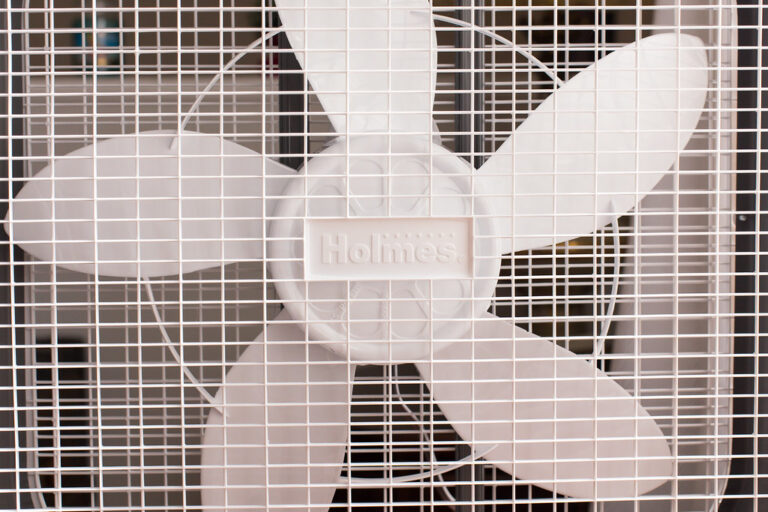
A box fan moves more air for the money but only in one direction, and changing direction means flipping the whole fan around. A twin fan adds reversing, independent heads, exchange mode, thermostats and remotes in a slimmer body made to seal a window opening. For occasional exhaust, the box fan is fine; for nightly air management, the twin is the better tool.
Can I use a window fan with sliding windows?
Sometimes. A twin fan is built for windows that open vertically, so a sideways-sliding window needs a fan sized to the opening and a way to close the gaps, such as a board or panel cut to fit. Measure carefully and check the minimum height in the listing before you order.
Do window fans help remove cooking smells?
They can. Running the fan in exhaust mode near the kitchen, with another window open elsewhere for makeup air, pulls odors and heat outside. It works best when you start while cooking and keep it on for a short while after. A range hood is more effective for grease and smoke.
Is it safe to run a window fan all night?
Generally yes, if the unit is in good condition, the cord is undamaged and the plug is not hot. Use a timer if the model offers one, keep the window secured, and unplug it if you leave home or if storms are expected. Stop using any fan that smells hot or sounds unusual.
How often should I clean a window fan?
Wipe the grille and blades a few times each season, or whenever you see dust building up, since dust slows airflow and adds noise. Unplug the fan first, and use a damp cloth or a soft brush. Do not spray liquid into the motor housing.
Bottom Line
Start with the Bionaire BW2300-N if you want the complete package — thermostat, remote and independently reversible blades. Choose the Lasko W09550 if single-window air exchange and very low running watts are the priority, the Holmes 9″ Twin Digital for the strongest rated airflow, and the Comfort Zone CZ310R if your window is wider than standard. On a tight budget, the Amazon Basics WDF9-1 keeps the essential independent-head trick; the Holmes HAWF2041-N is the pick for simple manual controls. Measure your window opening and check the current price and fit range on the listing before you order.