Disclosure: As an Amazon Associate, UMT Smart Tool earns from qualifying purchases. This guide is built from product listings and maker specifications, not from our own hands-on testing. Prices are approximate and can change, so check the current price before you buy. Last updated: November 10, 2026.
“Best bathroom storage bins” depends on where the bin has to work. Under a sink, the problem is depth and plumbing: items at the back disappear, so pull-out drawers win. In a linen closet, the problem is dust and stacking, so a latching lid matters more. On a countertop or inside a medicine cabinet, the problem is small items mixing together, so divided and drawer-style bins do the heavy lifting. This guide is organized by job, and every pick below is a hard-sided plastic bin or organizer — for woven baskets, see our separate guide to bathroom storage baskets.
In this guide
Quick Picks
The short version: six hard-sided bins we would look at first, one per storage job.
| Pick | Type | Best for |
|---|---|---|
| Vtopmart Clear Stackable Storage Bins with Lids, 8 Pack | Lidded clear bins, mixed sizes | Whole-bathroom organizing in one set |
| Delamu 2-Tier Under Sink Organizers, Clear, 2 Pack | Pull-out drawer organizer | Under-sink cabinets with plumbing |
| IRIS USA 6 Qt. Storage Bins with Lids, 3-Pack, Clear/Seafoam Blue | Latching clip box | Dust-free backstock and first aid |
| STORi Audrey Stackable Bin Drawers, 2 Piece Set | Stackable mini drawers | Medicine cabinets and small items |
| STORi Bliss Clear Organizer | Divided bin with drawer | Countertop and vanity sorting |
| Sterilite Large Clip Box, 6 Pack | Flat latching boxes | Budget multi-packs and drawer sorting |
Our Picks
1. Vtopmart Clear Stackable Storage Bins with Lids, 8 Pack — Best Overall
The Vtopmart set is the easiest starting point because it solves several spots at once: eight clear PET bins in graduated sizes, the large ones measuring about 11 x 7.5 x 6 inches, each with a lift-off lid and built-in handles. The mixed sizing is the real feature — big bins take spare toilet paper rolls and cleaning bottles, mid-size bins take skincare and hair tools, and the smallest corral cotton balls, swabs and refills. Because the walls are clear, you can see contents from the side on a closet shelf instead of opening every lid, and the lids let you stack two or three high without the tower sliding.
The trade-offs are in the lids and material. The lids lift off rather than latching, so they keep dust out but will not stay put if a bin tips over, and they are not airtight. PET is clearer than ordinary polypropylene but less forgiving of drops onto tile than the softer plastics below. Treat this as the general-purpose set for cabinets and closets, and pair it with a latching box for anything you store long-term.

2. Delamu 2-Tier Bathroom Under Sink Organizers, Clear, 2 Pack (model DLM-ClearOrganizers-2Set) — Best Under the Sink
Under-sink cabinets waste space two ways: the P-trap eats the middle, and anything behind the front row is effectively lost. The Delamu answers with two clear acrylic units per pack, each about 12.26 inches deep, 7.48 inches wide and 11.02 inches tall, that stand either side of the plumbing. Both tiers are pull-out drawers on a frame rated by the maker for up to 22 pounds, so the back of the cabinet comes to you instead of the other way round. Movable dividers let you split a drawer between tall bottles and small tubes, and the anti-slip feet keep the frame from walking when you pull.
Measure before ordering: the unit needs roughly 11 inches of clear height, and wide drain assemblies can steal the width the second unit needs, so some cabinets will only fit one. Acrylic also asks for gentle cleaning — mild soap and water, not solvent sprays — and the open drawer tops will not protect contents from a slow drip, so fix leaks first and keep anything water-sensitive in a lidded bin instead.

3. IRIS USA 6 Qt. Storage Bins with Lids, 3-Pack, Clear/Seafoam Blue (model 500459) — Best Latching Lid for Backstock
Most bathroom bins are open or loose-lidded, which is fine for daily items and wrong for backstock. The IRIS clip box closes with buckle latches at both ends, so the lid actually stays on: spare razor cartridges, first-aid supplies, cotton refills and guest toiletries stay clean instead of collecting closet dust. Each box measures 14 x 10.8 x 3.3 inches, a flat letter-size footprint that stacks neatly on linen closet shelves and slides into shallow cabinets. The polypropylene is BPA-free per the maker, the boxes nest when empty, and they are made in the USA.
The shallow 3.3-inch height is the limit: tall bottles and full-size shampoo refills will not fit, so this is a flat-goods box, not a bottle box. IRIS markets the line for craft and office supplies, but the dimensions and latching lid are exactly what bathroom backstock needs — just do not expect the crystal clarity of PET or acrylic; the walls are translucent-clear rather than glass-like.

4. STORi Audrey Stackable Bin Drawers, 2 Piece Set (model 8816) — Best for the Medicine Cabinet
Medicine cabinets and small-item drawers fail in the opposite way to closets: everything is tiny, and one open bin becomes a junk tray. The Audrey set breaks the space into proper drawers — two stackable clear drawers per set, each 7.88 inches deep, 6 inches wide and 6.75 inches tall — so medications, nail care, tweezers and thermometer batteries each get a closed compartment you can open without disturbing the rest. The plastic is BPA-free per the maker, the drawers stack securely, and the line is made in the USA by US Acrylic, so extra sets match if you expand later.
Capacity is the obvious compromise: nothing tall or bulky fits, and a 6-inch width rules out full-size bottles entirely. Drawers also cost more per litre of storage than simple bins. Buy these for the small, losable things a medicine cabinet or top drawer actually holds, and let the cheaper bins below handle bulk.

5. STORi Bliss Clear Organizer (model 5971) — Best Divided Bin for the Countertop
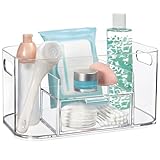
Countertop clutter is usually a sorting problem, not a space problem: brushes, tubes and bottles all in daily use, all in one heap. The Bliss organizer divides them into four compartments across a 9.63 x 5.75-inch footprint, 5 inches tall, with a removable pull-out drawer underneath for the small items — hair ties, clips, cotton pads — that otherwise vanish. The divided top suits makeup brushes and nail polish as well as toothbrushes and razors, the clear BPA-free plastic wipes clean, and pass-through handles make the whole bin easy to lift off the counter for cleaning day. It is made in the USA.
An open divided bin near a sink collects dust and splashes, so it suits a vanity counter better than the wet zone right beside the tap, and the compartments are fixed — tall aerosol cans and large pump bottles will not stand in it. Think of it as the daily-essentials station, not general storage.
6. Sterilite Large Clip Box, 6 Pack (model 19638606) — Best Budget Multi-Pack
When the job is sorting a whole closet or a deep drawer rather than showcasing anything, the Sterilite clip box is the value play: six flat latching boxes, each with outside dimensions of 14 x 11 x 3.25 inches per the maker, sized around a letter-size footprint. That flat shape suits the flat side of bathroom storage — sheet masks and sample sachets, spare toothbrushes and travel minis, first-aid restocks, feminine care refills — and six identical boxes label and stack into a system instead of a pile. The lids latch at both ends, and the clear base and lid keep contents visible.
Sterilite’s polypropylene is more flexible and less glass-clear than PET or acrylic, and the latches are simple end clips rather than seals, so these are dust covers, not waterproofing. The boxes are shallow by design — check the 3.25-inch height against anything upright. At this tier the plastic also scuffs sooner. For flat sorting in quantity, though, nothing else here stores as much per dollar.

Best Picks by Category
- Whole-bathroom set: Vtopmart Clear Stackable Storage Bins with Lids, 8 Pack — mixed sizes with lids cover cabinets and closets in one purchase.
- Under-sink organizer: Delamu 2-Tier Under Sink Organizers, Clear, 2 Pack — pull-out drawers recover the back of the cabinet around the plumbing.
- Latching backstock bin: IRIS USA 6 Qt. Storage Bins with Lids, 3-Pack — buckle latches keep dust off first aid and refills.
- Medicine cabinet drawers: STORi Audrey Stackable Bin Drawers, 2 Piece Set — small closed drawers for small, losable items.
- Divided countertop bin: STORi Bliss Clear Organizer — four compartments plus a drawer for daily essentials.
- Budget multi-pack: Sterilite Large Clip Box, 6 Pack — six flat latching boxes for drawer and closet sorting.
Notice the pattern: the winning bin is the one shaped like the problem — drawers for depth, latches for dust, dividers for small daily items, cheap flat boxes for sorting in bulk.
How to Choose
Measure the space, including the plumbing
Record width, depth and height of the exact spot, then subtract the obstacles: P-trap and supply lines under sinks, door hinges and swing in cabinets, shelf lips in closets. Bottle height is the second measurement — standard pump bottles run 8 to 10 inches, so an organizer with 11 inches of total height may still leave too little per tier. Buy to the smaller of the two numbers.
Lids: lift-off, latching, hinged or open
Lift-off lids are fastest and fine for items you grab daily. Latching lids are the ones that protect backstock from dust and stay closed when a bin is carried or tips. Hinged lids suit one-handed use in tight cabinets. Open bins are for the countertop and the front of shelves only — anything stored long-term in a humid bathroom deserves a lid.
Materials: PET, acrylic and polypropylene
PET bins are the clearest of the affordable plastics and stiff for their weight, but can crack on a hard drop. Acrylic looks like glass and suits drawer organizers, but scratches and hates solvent cleaners. Polypropylene (Sterilite, IRIS) is softer, slightly translucent and the toughest against drops and bathroom chemicals — the practical choice for under-sink and kids’ bathrooms.
Drawers versus simple bins
In a deep cabinet, a drawer beats a bin: the contents come to you, and nothing hides behind anything else. In a shallow cabinet or on open shelves, plain bins are better — cheaper per litre, easier to carry to the counter, and stackable when lidded. Most bathrooms end up with both: drawers under the sink, bins in the closet.
Dividers and compartments
Fixed compartments suit a stable set of daily items. Movable dividers suit changing stock — cleaning products this month, baby supplies next year. If a bin will hold small items (swabs, ties, cartridges), some form of division is not optional: one open volume always degrades into a junk tray within a month.
Care in a humid room
Store only dry goods in closed bins, and let anything damp — sponges, cloths, loofahs — live in open, ventilated storage instead, or the bin becomes a mildew box. Wipe bins with mild soap and water; keep bleach sprays and acetone away from acrylic and PET, which can cloud or craze. A quick dry of the cabinet floor before bins go back prevents the musty smell people blame on the bins themselves.
Zoning a Bathroom by Task
The easiest way to decide what goes into which bin is to think in zones rather than product types. Group items by where and when you use them. Daily essentials such as toothpaste, face wash and hair products belong in the most accessible spot, usually the countertop or the top drawer. Occasional items, like extra razors, first-aid supplies or spare toiletries, can go in lidded bins on a high shelf or in the back of a cabinet.
Bins work best when they hold one category. A bin for dental care, one for skin care and one for hair tools is simpler to use than a mixed container where everything gets jumbled. Think about who uses the bathroom too. In a shared space, give each person a bin of their own so no one has to dig through someone else’s things.
- Daily zone: open or easy-grab bins near the sink.
- Weekly zone: drawers or mid-level bins for less frequent items.
- Backstock zone: lidded bins for refills, towels and cleaning supplies.
Small Bathrooms and Rentals: No-Drill Strategies
When you cannot drill into walls or the bathroom has almost no cabinet space, bins still make a difference. Use vertical space by stacking bins, placing a shelf over the toilet or choosing narrow, tall organizers that fit between the toilet and a wall. Over-the-door hooks and tension rods can add more room without any tools.
Choose bins with a footprint that matches the shelf or surface depth so nothing hangs over the edge. In rentals, light, removable organizers are also easy to take with you. Be careful with damp areas: put bins that hold paper or cardboard items away from the shower, and consider rinse-friendly plastics for anything near water.
Keeping Children and Medications Safe
A bin is not a safety device. If you share a home with young children, medications, cleaning supplies, razors and anything toxic should be stored out of reach and in a place that can be locked, not just in a lidded bin. A lid that clicks closed is still easy for a determined child to open.
Use bins to separate hazardous items from everyday ones so that you can see at a glance what needs to be secured. Keep medicines in their original containers, away from heat and humidity, because bathrooms are often not the ideal place for them. A cool, dry shelf elsewhere in the home is usually better. Check expiration dates periodically and dispose of old products correctly.
Labeling and Keeping Order Over Time
Even the best bin system falls apart if no one remembers what belongs where. Labels help. Simple removable stickers or a label maker let everyone in the household know what goes in each bin, and clear bins make it easy to check contents without opening them.
Plan a quick reset once a month: pull everything out of one zone, wipe the bin, discard empties and expired items, and return the rest. It takes only a few minutes and prevents the slow build-up of clutter. If a bin is regularly overflowing, that is a sign you either need a larger container or fewer products. Resist the urge to buy more bins before reducing what you own.
Choosing the Right Size and Shape for Each Spot
Before you buy any bin, measure the space it will occupy: the width, depth and height of the shelf, drawer or cabinet. Leave a little room around the bin so you can slide it in and out without scraping your knuckles. In a bathroom, the odd shapes of plumbing and cabinet doors can eat into the usable space, so measuring twice avoids returns.
Shallow, wide bins suit drawers and shallow shelves, where they keep small items visible. Tall, narrow bins work well in tight corners or between a toilet and the wall. Deep bins are good for bulky items like extra toilet paper or hair dryers. Rectangular bins use space more efficiently than round ones, while round or oval baskets add softness and work well on open shelves where appearance matters.
- Match bin height to what is stored: tall bottles need tall bins.
- Pick stackable designs if vertical space is your main constraint.
- Avoid bins so large that they become dumping grounds.
- Consider handles for bins you pull out often.
Finally, think about weight. A bin full of lotions and bottles can get heavy, so look for sturdy handles and a firm base. Flimsy bins that bow when carried will not last, no matter how well they look in a photo.
Frequently Asked Questions
What is the difference between a storage bin and a storage basket?
A bin is hard-sided — plastic or acrylic — with straight walls, often a lid, and a shape that stacks and wipes clean. A basket is woven or fabric, better looking on open shelves but harder to clean and not dust-proof. This guide covers bins; our bathroom storage baskets guide covers the woven side.
How do I organize under the bathroom sink around the pipes?
Work around the P-trap, not against it: two narrow pull-out units, one each side of the plumbing, use the depth without fighting the pipes. Keep cleaning chemicals in the lower tier and daily items up top, and measure the clear height after accounting for the trap’s lowest point.
Can I stack lidded bins on top of each other?
Yes, if the lids are flat or recessed and made to stack — most sets here are. Keep stacks to two or three bins, heaviest at the bottom, and never stack lift-off-lid bins so high that pulling the middle one out brings the tower down. Latching lids are the safer choice for tall stacks.
What size bin fits a medicine cabinet?
Most medicine cabinets are only about 4 to 5 inches deep, so look for drawers and bins under 5 inches deep and under 6 inches wide per unit — the STORi Audrey drawers above are sized for exactly this. Measure your shelf spacing too; many cabinets have fixed shelves around 6 to 8 inches apart.
Are clear bins better than opaque bins in the bathroom?
Clear bins win on function: you find things without opening lids, and you notice restocks running low. Opaque bins win on looks in open shelving and hide visual clutter. A common compromise is clear bins inside cabinets and closets, opaque or woven containers where they stay on display.
How do I stop storage bins from smelling musty?
Start dry: only bin items that are fully dry, and leave lids cracked for a day after cleaning the cabinet. Keep damp items out of closed bins entirely. If a bin already smells, wash it with warm soapy water, dry it in moving air, and check the cabinet itself for a slow leak — the smell usually comes from the space, not the plastic.
How do I organize a bathroom without a cabinet?
Use vertical space and surfaces. A narrow shelving unit, an over-the-toilet shelf, wall-mounted racks or a small rolling cart can hold bins of toiletries. Use lidded bins for items you want to hide and open bins for everyday products. Keep the countertop mostly clear for easy cleaning.
Should I store medicine in the bathroom?
Many pharmacists advise against it, because heat and humidity can affect medication over time. A cool, dry spot such as a bedroom shelf or a kitchen cabinet away from the stove is usually better. If you do keep medicine in the bathroom, store it in its original container.
Do toiletries need bins with lids?
Not always. Lids keep dust and splashes off backstock and help hide clutter, but items you use daily are faster to grab from an open bin. A mix works well: open bins for daily items and lidded bins for refills and less-used products.
How do I keep bathroom bins from looking cluttered?
Limit each bin to one category, choose a consistent style or color and avoid overfilling. Label bins so items return to the right place. Reset them every month by removing what you no longer use. Clear or matching bins make a small space look more orderly.
Bottom Line
Start with the Vtopmart 8-pack if you are organizing a whole bathroom at once — the mixed lidded sizes cover most cabinets and closets. Add the Delamu pull-out set where under-sink depth is being wasted, keep backstock dust-free in the IRIS latching boxes, and use the STORi Audrey and Bliss for the small-item zones. On a budget, six Sterilite clip boxes will sort a linen closet for very little. Measure your cabinet and your tallest bottles first, and check the current price before you order.