Disclosure: As an Amazon Associate, UMT Smart Tool earns from qualifying purchases. This guide is built from product listings and maker specifications, not from our own hands-on testing. Prices are approximate and can change, so check the current price before you buy. Last updated: November 10, 2026.
A bedroom blanket has a different job from a couch throw. It has to cover the whole bed, layer cleanly under or over a comforter, and hold the right amount of warmth for the season you are sleeping in. The six blankets below are all proper bed sizes — twin through king, with the queen versions detailed here — and they cover the main material families: woven cotton, microfiber fleece, a cotton and bamboo-rayon waffle weave, sherpa fleece, cotton muslin and a quilted wool-blend down alternative. Start with how warm you sleep, then match the material and weight to your room.
In this guide
Quick Picks
The short version: six bed blankets we would look at first, one per material and sleep style.
| Pick | Type | Best for |
|---|---|---|
| Madison Park Freshspun Basketweave | Woven cotton bed blanket | Year-round layering on any bed |
| NANPIPER Fleece Blanket | Microfiber flannel fleece | Everyday warmth on a budget-friendly tier |
| Bedsure Cooling Cotton Waffle | Cotton and bamboo-rayon waffle weave | Hot sleepers and warm rooms |
| Elegant Comfort Reversible Sherpa | Flannel fleece with sherpa reverse | Cold nights and unheated bedrooms |
| SE SOFTEXLY Muslin Blanket | 4-layer cotton muslin | The lightest summer layer |
| Sleep Philosophy Wonder Wool | Quilted wool-blend down alternative | Down-style loft without feathers |
Our Picks
1. Madison Park Freshspun Basketweave Cotton Blanket, Full/Queen (90″ x 90″), Blue — Best Overall
The Freshspun is the classic layering blanket: 100% cotton woven in a basketweave pattern at 250 GSM, sized 90 by 90 inches in the Full/Queen (model BL51N-0852). A woven cotton blanket is the most versatile layer a bed can have. In summer it is enough on its own over a sheet; in winter it sits between the top sheet and a comforter and adds warmth without the bulk of a second quilt. Cotton breathes, does not build up static the way synthetics can, and the open basketweave texture gives it a tailored, made-bed look even when it is the top layer. It is the pick that works in the widest range of bedrooms, which is why it leads this list.
The trade-offs are the usual ones for woven cotton. It will not feel plush — there is no pile or loft, just a smooth, slightly textured weave — and on the coldest nights it is a layer, not the whole answer. Cotton also wrinkles out of the dryer and can shrink a little if washed hot, so follow the care label and wash it like the cotton bedding it is. Choose the Freshspun if you want one dependable, natural-fiber blanket that earns its place on the bed in every season.

2. NANPIPER Fleece Blanket, Queen (90″ x 90″), Pink — Best Budget
NANPIPER’s fleece is a straightforward microfiber flannel blanket in true bed sizes — Throw 50 by 60 inches, Twin 60 by 80, Queen 90 by 90 and King 90 by 108 — and the Queen in Pink is the one detailed here. Flannel fleece is brushed on both sides, so it feels soft the moment you get under it, and microfiber traps body heat efficiently for its weight. That makes it a sensible main blanket for spring and fall, an extra layer over a comforter in winter, and an easy spare for a guest bed. It sits firmly in the budget-friendly tier, which matters when you are buying for several beds at once.
What you give up versus natural fibers is breathability. Microfiber holds warmth well but lets less air through than cotton or muslin, so hot sleepers may find it clammy in summer, and synthetic fleece can pick up static in dry winter air. Like most fleece, it will look best if washed cool and dried on low heat. For a soft, warm, inexpensive bed blanket that asks very little of you, though, this is the value pick of the six.

3. Bedsure Cooling Cotton Waffle Blanket, Queen (90″ x 90″), Natural — Best for Hot Sleepers
Bedsure built this blanket for people who run warm: the fabric is 50% cotton and 50% rayon derived from bamboo, woven in a waffle pattern whose pockets let air move instead of trapping it against the skin. The maker positions the blend as moisture-wicking and breathable, and the rayon-from-bamboo half is what gives the fabric its cooler, smoother hand compared with plain cotton. The Queen measures 90 by 90 inches, and the line also comes in Throw (50 by 70), Twin (66 by 90) and King (104 by 90) sizes, so the same material can cover every bed in the house.
Be clear about what it is not: this is a warm-weather and in-between-seasons blanket, not winter insulation. In a cold room you will still want a comforter over it. Blended natural fabrics also repay gentler handling — wash cool and avoid high dryer heat to protect the rayon fibers and the waffle texture. If you currently kick off a fleece or microfiber blanket by midnight, this is the pick aimed at you.

4. Elegant Comfort Reversible Flannel Sherpa Blanket, Queen, Emerald Green — Best for Cold Nights
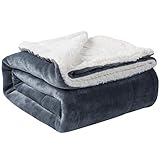
For a genuinely cold bedroom, this is the heavyweight of the list. One side is smooth flannel fleece; the other is a deep sherpa pile — the fabric type is listed as 100% micromink sherpa fleece — so you can sleep against the flatter flannel or fold the sherpa side up for maximum trapped air and warmth. The Queen size (model SB-Sherpa-Blanket-Q-Emerald) is cut for a full bed rather than a lap, and the Emerald Green detailed here gives a bed a finished look without a separate coverlet. Two different textures in one blanket also means it works as the only layer in fall and as the top layer over a lighter blanket in deep winter.
The compromises are size and heat. A queen sherpa blanket is bulky in a home washing machine and slow to dry, so check your machine’s capacity before you buy. It will also be too much blanket for warm sleepers or summer use — this is a seasonal specialist, not a year-round layer. For drafty rooms, cabins and anyone who keeps the thermostat low at night, it is the warmest pick here.

5. SE SOFTEXLY Muslin Blanket, 4-Layer, Full/Queen (80″ x 90″), Sage Green — Best Lightweight for Summer
Muslin is the lightest construction in this guide: four layers of 100% cotton gauze (model JP-QL-US-SE-1001E2) that together make a blanket with real coverage but very little insulation. Air passes through the loose gauze weave, so on a hot night it gives you the settled feeling of a layer over you without holding heat the way fleece or even a waffle weave does. The maker describes the fabric as naturally temperature-regulating, and muslin has a reputation for softening with repeated washing. The Full/Queen size detailed here measures 80 by 90 inches in Sage Green — a little narrower than the 90-inch squares above, so check the drape against your mattress.
The limits follow from the material. This is strictly a summer and warm-room blanket; it will not substitute for a mid-weight layer in spring or fall. Gauze weaves can also snag on rough jewelry or Velcro in the wash, so a gentle cycle is the safer routine. Choose it if your current problem is not staying warm but sleeping under something at all in July and August.

6. Sleep Philosophy Wonder Wool Down Alternative Blanket, Full/Queen, White — Best Down-Alternative
The Wonder Wool takes a different construction from everything above: instead of a single woven or fleece layer, it is a quilted blanket with a 300 thread count cotton sateen cover and a 150 GSM fill blended from 50% wool and 50% polyester (model BASI51-0324). It is sold as a down alternative, and the construction explains why — the quilting holds lofted fill evenly across the bed the way a light comforter does, while the wool in the blend adds the temperature regulation wool is known for without feathers, quills or a full down price tier. The Full/Queen in White is the version detailed here.
Because it has fill, it is warmer and puffier than a flat woven blanket, and it needs more storage room when it is off the bed. Wool-blend fills also deserve a look at the care label before washing — follow the maker’s instructions rather than assuming it can be treated like a plain fleece. Pick it if you like the feel of a light comforter but want something thinner, easier to layer and free of feathers.
Best Picks by Category
- Year-round layering: Madison Park Freshspun Basketweave — woven cotton that works alone in summer and under a comforter in winter.
- Budget-friendly warmth: NANPIPER Fleece Blanket — soft microfiber flannel in full bed sizes on the lowest price tier here.
- Hot sleepers: Bedsure Cooling Cotton Waffle — cotton and bamboo-rayon waffle weave built to move air and moisture.
- Cold nights: Elegant Comfort Reversible Sherpa — flannel on one side, deep sherpa pile on the other.
- Lightest summer layer: SE SOFTEXLY Muslin Blanket — four gauze layers of cotton with minimal insulation.
- Down-style loft: Sleep Philosophy Wonder Wool — quilted wool-blend fill under a cotton sateen cover, no feathers.
Notice that each role is really a material decision: weave, pile and fill are what change how a blanket sleeps, far more than color or branding.
How to Choose
Start with material
Material decides warmth, breathability and care in one step. Cotton (woven, waffle or muslin) breathes and suits most sleepers and seasons. Microfiber fleece feels plush and warms fast but breathes less. Sherpa adds a deep pile for maximum trapped air. Rayon derived from bamboo shows up in cooling blends because it feels smooth and handles moisture well. Wool and wool blends regulate temperature in both directions but ask for more careful washing. Pick the fiber for your climate first, then compare weaves and weights inside that family.
Match warmth to season, and layer
One blanket rarely covers a whole year. A practical setup is a light layer (muslin or a waffle weave) for summer, a mid-weight layer (woven cotton or fleece) for spring and fall, and either a sherpa or a quilted fill for winter — or the mid-weight layer worn over the light one. Layering two thinner blankets also traps air between them and lets you adjust night by night, which a single heavy blanket cannot do.
Get the size and drape right
Bed blankets are sold by bed size, but actual dimensions vary by brand: the queen versions above range from 80 by 90 inches to 90 by 90. Measure your mattress, decide how much overhang you want on each side, and compare the listed inches rather than trusting the size name. A blanket that only just reaches the edges will creep and pull loose; a few extra inches of drape keep it in place and let it double as the visible top layer.
Weave, GSM and construction
For woven blankets, the weave is the spec that matters: waffle and basketweave textures create air pockets that change warmth without adding weight, while a flat thermal weave is smoother and thinner. GSM (grams per square meter) is a useful rough guide to fabric weight within one material family — the cotton pick above is 250 GSM — but it does not compare cleanly across fibers. For filled blankets, look at the fill blend and weight instead, and check that quilting or stitching will keep the fill from shifting.
Fills and allergy considerations
If feathers are a problem, down-alternative fills give you loft without down; blends that include wool add temperature regulation, while all-synthetic fills are usually the easiest to wash. Whatever the fill, confirm the shell fabric and the care instructions before buying, since a filled blanket is the hardest type to launder at home. Allergy claims vary by maker, so rely on the materials list rather than marketing words when you compare.
Care, washing and storage
Most fleece and cotton bed blankets are machine washable, but the details differ: cotton can shrink in hot water, rayon blends prefer gentle cycles, sherpa needs room in the drum and a full dry to keep its pile, and wool blends may have specific instructions on the label. Wash a new blanket before first use, follow the maker’s label over general advice, and store off-season blankets clean and dry so the fibers — natural ones especially — come back in good shape.
Which bedroom blanket should you buy?
Choose the bedroom blanket by how warm you sleep: the Madison Park Freshspun for all-season layering, the Bedsure Cooling Cotton Waffle or SE SOFTEXLY muslin if you run hot, and the Elegant Comfort sherpa or Sleep Philosophy Wonder Wool if you run cold. The NANPIPER fleece covers the budget end.
- If you want one dependable blanket for every season, go for the Madison Park Freshspun Basketweave, a woven cotton layer that works alone or under a comforter.
- If you want soft warmth across several beds without spending much, choose the NANPIPER Fleece Blanket.
- If you kick blankets off by midnight, try the Bedsure Cooling Cotton Waffle, whose waffle pockets move air.
- If your bedroom is cold or drafty, the Elegant Comfort Reversible Sherpa gives the most trapped warmth in this guide.
- If you only want something light over you in July and August, pick the SE SOFTEXLY Muslin Blanket.
- If you like the loft of a light comforter without feathers, the Sleep Philosophy Wonder Wool is the quilted option.
Couples with different temperature needs can solve the problem with two blankets rather than one compromise. One person can use a light muslin or waffle layer while the other adds sherpa on their own side, with a shared sheet underneath.
If you are torn between two of the best bedroom blankets here, ask which problem is bigger: overheating or being cold. Fixing the bigger problem first usually points to the right material.
What to check before you buy a bedroom blanket, and who should skip it
Before you buy a bedroom blanket, check the exact dimensions, the fiber content and the care label, because the size name alone does not tell you how a blanket will fit or wash. Then weigh the trade-offs for your own sleep.
- Dimensions in inches: compare the listed width and length with your mattress and the overhang you want.
- Fiber content: cotton, rayon from bamboo, microfiber and wool blends all behave differently.
- Care label: confirm that it is machine washable and that your washer can hold it.
- Colour: check the colour name and photos, since screens can differ from the real fabric.
- What is included: look at whether it is sold as a single blanket or a set.
- Returns: confirm the return window and conditions on the listing.
Honest trade-offs. Woven cotton such as the Freshspun is not plush and may wrinkle. Microfiber fleece and sherpa trap heat and can build static in dry air. Muslin offers very little insulation, and a quilted wool-blend like the Wonder Wool needs more storage room and careful washing.
Who should skip each type. Hot sleepers should skip sherpa and heavy fleece. Anyone with a small washing machine should think twice about a queen sherpa. If you want a single winter cover for a cold room, a flat muslin or waffle blanket alone will not be enough.
Compare the picks above, check the current listing for size and what is included, then choose the one that fits how you will use it.
How the Six Bedroom Blankets Compare in Real Use
These six blankets are less a ranking of quality than a map of temperature. At the cool end sit the SE SOFTEXLY muslin and the Bedsure waffle blanket, both built to let air move so a layer can rest over you without holding heat. In the middle sit the Madison Park Freshspun cotton basketweave and the NANPIPER fleece, one breathable and natural, the other soft and insulating for its weight. At the warm end sit the Elegant Comfort flannel sherpa, the heavyweight for cold rooms, and the Sleep Philosophy Wonder Wool down-alternative, which aims for comforter-like warmth in blanket form. Choosing well means locating your bedroom on that map honestly. A warm sleeper who buys the sherpa because it feels luxurious in a shop will spend the winter kicking it off. A cold sleeper who buys muslin because it looks light and pretty will spend the same winter adding socks. The best overall pick, the Freshspun, leads precisely because most bedrooms sit in the middle, where a layer that works alone in summer and under a comforter in winter earns its place all year.
Material is the second comparison, and it decides care as much as comfort. Cotton, in the Freshspun and the muslin, breathes, washes straightforwardly and does not build the static that synthetic fleece can in dry air. The Bedsure blend adds rayon derived from bamboo to cotton, gaining a smoother, cooler hand while asking for gentler washing to protect the fibres and the waffle texture. Fleece, in the NANPIPER and on the flannel side of the Elegant Comfort blanket, feels soft immediately and traps warmth efficiently, but lets less air through and can feel clammy for warm sleepers. The down-alternative fill in the Sleep Philosophy blanket behaves most like a comforter, with loft that traps air in pockets, which also makes it the bulkiest to wash and store. None of these is a flaw in itself. They are simply the terms of each blanket, and the reviews above score each pick against its own terms rather than pretending one material suits every bed.
Layering the blankets you already own
A blanket rarely works alone across a whole year, so think in layers rather than in single purchases. The most flexible bed runs a sheet, a breathable mid-layer and a warmer top layer that can be added or folded down. The Freshspun is the natural mid-layer in that system, thin enough to sit under a comforter without bunching and substantial enough to be the only cover on a mild night. The muslin can take the mid-layer role in summer, or rest on top as the lightest possible cover when even cotton basketweave feels like too much. The Bedsure waffle sits comfortably in either slot during warm months, its pockets giving a little more presence than muslin without fleece warmth. Fleece changes the equation because it insulates wherever it sits; the NANPIPER works as the top layer in spring and autumn and as an added layer over a comforter when the room turns cold. The sherpa is best treated as the final, outermost layer or as the sole blanket on the coldest nights, since its pile is wasted compressed under another cover. The down-alternative blanket can replace a comforter entirely for sleepers who want loft without a duvet system. If two people share a bed and disagree about temperature, layer the warmer blanket on one half or keep a folded throw at the foot for the colder sleeper, rather than compromising on a single blanket that leaves both of you slightly wrong all night.
Who should skip each blanket
Skip the Freshspun if you want plush softness against the skin, because a woven basketweave feels smooth and tailored rather than cuddly, and skip it as your only cover if your bedroom is genuinely cold in winter. Skip the NANPIPER fleece if you run warm at night, since microfiber holds heat and breathes less than the cotton picks, or if static in dry winter air bothers you. Skip the Bedsure waffle if you need real winter insulation; it is a warm-weather and shoulder-season blanket, and no weave pattern changes that. Skip the Elegant Comfort sherpa if your washing machine is small, because a queen sherpa is bulky to wash and slow to dry, and skip it entirely for summer or for warm sleepers. Skip the SE SOFTEXLY muslin if you want any meaningful warmth in spring or autumn, or if the narrower cut detailed in its review leaves too little drape over your mattress. Skip the Sleep Philosophy down-alternative if you prefer a flat, tailored made-bed look or have limited storage, because loft takes space in a closet just as it does on the bed. Matching the skip list to your household first often narrows this guide to one or two candidates faster than comparing virtues.
Washing, Storing and Getting More Seasons From a Blanket
Blankets age in the laundry more than on the bed. Wash each pick as its own care label directs, because the constructions here differ too much for one routine. Cotton basketweave tolerates regular washing but can shrink if washed hot and can wrinkle out of the dryer, so cooler water and prompt removal keep the Freshspun looking tailored. Muslin gauze is delicate by design; a gentle cycle and care around zips and hooks in the same load protect its loose weave, and it typically softens with washing rather than wearing out. The Bedsure blend repays cool washing and low heat to protect the rayon fibres and keep the waffle pockets springy. Fleece prefers cool water and low dryer heat, which preserves the brushed surface of the NANPIPER and the flannel side of the sherpa; high heat is what makes fleece feel tired before its time. The sherpa side should be dried thoroughly, since deep pile holds moisture, and the down-alternative blanket needs enough machine capacity to move freely, plus a full dry so its fill does not clump. When in doubt, an extra rinse and a longer, cooler dry beat a fast, hot cycle for every blanket in this guide.
Storage matters in the months a blanket is not used. Store blankets clean, because body oils and spills attract pests and set stains over a season in a closet. Fold loosely or roll rather than compressing, especially the down-alternative and sherpa picks, whose loft is their warmth and recovers slowly after tight packing. A breathable cotton storage bag suits natural fibres better than a sealed plastic box in a humid home, while a dry, cool closet suits everything here. Keep a spare blanket, perhaps the budget-friendly NANPIPER, folded for guests and for the inevitable laundry day when the main blanket is in the wash. Rotate two blankets if you can; a blanket rested between uses and washed less frantically simply lasts longer. Finally, judge replacement by performance rather than age alone. A blanket that has lost its loft, pills heavily, feels clammy despite washing, or no longer keeps you comfortable at its intended season has done its service, whichever pick it is. Replacing it with the right temperature class, using the map at the top of this section, matters more than replacing it with the same material out of habit.
A Decision Checklist Before You Buy a Bedroom Blanket
Begin with your bedroom’s actual temperature across the night, not the temperature at bedtime. Rooms that cool sharply by morning reward a layer that can be pulled up at three in the morning, which is why a breathable mid-layer such as the Freshspun, possibly paired with a warmer top layer, suits more households than any single heavy blanket. Note whether you sleep with heating, air conditioning, a fan or an open window, because moving air changes how a blanket feels: fleece under a fan can feel warmer than its weight suggests in still air, while muslin in a draught can feel cooler. Next, be honest about your own warmth. If you routinely kick off covers, shop from the cool end of this guide, the muslin and the waffle, and treat anything sherpa as a sofa blanket rather than a bed blanket. If you routinely add layers, shop from the warm end and save money by not buying a summer blanket you will store unused. Couples should settle the disagreement explicitly, with layered halves or a folded extra at the foot, rather than splitting the difference on one blanket that satisfies neither sleeper.
Then check the practicalities that listings make easy to skip. Confirm the size against your mattress, including its depth, remembering that the muslin detailed here is cut a little narrower than the square queen picks, and that drape is what keeps a blanket tucked and even through the night. Check your washing machine’s realistic capacity against the bulkiest candidate, the queen sherpa, because a blanket you cannot wash at home becomes a blanket you wash rarely, and rarely washed bedding is its own problem. Consider who else uses the bed: children, pets and guests all argue for the easier-care, easier-replace end of the list, where the budget fleece earns its keep without anxiety. Consider storage for the off-season, since lofted and sherpa blankets occupy real closet space. Finally, decide the blanket’s role before choosing its material: sole summer cover, year-round mid-layer, winter top layer or comforter replacement. Role first, temperature second, material third is the order that makes the six picks above sort themselves, and it prevents the commonest error in blanket buying, which is purchasing a texture you loved in your hands rather than a layer your bed actually needed.
Blankets beyond the main bed
The same thinking, scaled down, organises every other bed and sofa in the house. A guest bed wants the most forgiving combination rather than the most specialised: a breathable cotton layer that suits most sleepers, with a warmer folded blanket at the foot for the guest who runs cold, because you cannot interview visitors about their sleep temperature. A child’s bed wants easy washing above all, in sizes that fit a domestic machine without a struggle, and a weight the child can pull up and rearrange alone. A sofa or reading chair wants a throw-sized layer rather than a full bed blanket, and here a spare fleece or a folded muslin can serve without buying anything new, provided it returns to the bed when guests arrive. Seasonal rotation ties the whole system together: when the warm blankets come out, wash and fully dry the light ones before storing them, and reverse the process in spring, so every blanket spends its off-season clean and its working season ready. Households that rotate deliberately rarely feel they own too few blankets. Households that buy reactively, one cold night at a time, usually own several blankets and still cannot find the right one. The six picks in this guide cover the full temperature map, so a deliberate household can fill its gaps once, assign each blanket a bed and a season, and then stop thinking about blankets for years.
Making the bed so the blanket can do its work
How a blanket is used matters almost as much as which blanket it is. A mid-layer such as the Freshspun works best smoothed flat between sheet and top cover, without bunches at the foot that leave one sleeper covered and the other short. A top layer should be given enough length to fold back at the chest, because that fold is both the tailored look of a made bed and a reservoir of extra warmth you can pull up without remaking anything at three in the morning. Warm sleepers using the waffle or muslin picks often sleep better with the blanket covering the torso while feet stay free, a compromise a flat woven layer allows and a tucked-in heavy layer resists, so leave the foot of a light blanket untucked in summer. In winter, tuck the warmer layers and let the sherpa or down-alternative sit as the final cover, its weight settled evenly rather than dragged to one side by the first sleeper to get in.
Partners with different habits should arrange the bed as a treaty rather than a contest. A shared breathable base layer keeps the bed unified, while individual warmth is added on top, half by half, where it can be adjusted without disturbing the other side. That arrangement also washes better, because the lighter shared layer goes through the machine often and easily, while the heavier personal layers need washing less frequently. Judge the arrangement after a week of real nights, and change one variable at a time: the order of layers, the tuck, the fold, the side the extra warmth sits on. Blankets are simple objects, and small changes in how they are laid produce surprisingly large changes in how a bed sleeps, which is why the right blanket used thoughtlessly can disappoint and a modest blanket used well can satisfy for years.
A final word on warmth you can adjust
The most comfortable beds are rarely the warmest or the coolest; they are the most adjustable. A blanket you can fold back, layer up or kick half off without a struggle gives you control across the whole night, through warm evenings, cool mornings and the odd hour when the room’s temperature surprises you. Judge every pick in this guide by that adjustability as well as by its material, and you will understand why the versatile middle of the list suits so many bedrooms, and why the specialists at each end delight the sleepers they were made for.
Frequently Asked Questions
What is the difference between a bed blanket and a throw?
Size and intent. A throw is typically around 50 by 60 inches — enough for one person on a sofa. A bed blanket is cut for a mattress: twin around 66 by 90 inches, queen around 90 by 90, king wider still. All six picks here are bed sizes meant to be slept under or layered on a made bed.
What size blanket do I need for a queen bed?
Most queen bed blankets measure about 90 by 90 inches, which gives roughly 15 inches of drape on each side of a 60-inch-wide mattress. Check the exact inches on the listing — some brands cut their Full/Queen at 80 by 90 — and size up to king if you share the bed and fight over coverage.
Which blanket material is best for hot sleepers?
Breathable, low-insulation fabrics: cotton muslin is the lightest option here, and a cotton and bamboo-rayon waffle weave adds a little more substance while still moving air. Avoid deep-pile sherpa and heavy microfiber fleece in summer; save them for the cold months.
Can a cotton blanket be warm enough for winter?
As a layer, yes; as the only cover in a cold room, usually not. A woven cotton blanket over a top sheet and under a comforter adds real warmth because the layers trap air between them. On its own, even a heavier cotton blanket will sleep cooler than sherpa fleece or a quilted filled blanket.
How often should I wash a bed blanket?
Follow the maker’s care label, but a reasonable rhythm is every few weeks for a blanket that sits on top of a top sheet, and more often if it touches skin directly or pets sleep on the bed. Washing before first use is worthwhile for any blanket, and fully drying pile fabrics like sherpa keeps them from smelling musty.
Is a wool-blend blanket better than a down comforter?
They do different jobs. A quilted wool-blend blanket like the Wonder Wool is thinner and flatter than a comforter, easier to layer and to store, and regulates temperature well for its weight. A full down or down-alternative comforter gives more loft and more insulation. Many people end up with the blanket for most of the year and the comforter for the coldest weeks.
Should a blanket go on top of or under the comforter?
Either works, depending on the look and the job. Under the comforter, a blanket adds warmth and keeps the comforter cleaner. On top, a woven cotton blanket gives a tidy made-bed look and is easy to remove when you get warm.
How many blankets do you need on a bed?
Most people do well with one or two, plus a top sheet. A light layer and a mid-weight layer let you adjust through the seasons. Add a heavier sherpa or filled blanket only for the coldest weeks.
Why does a fleece blanket give off static?
Synthetic fibers like microfiber build up charge, especially in dry winter air. A humidifier, a cooler dryer setting and skipping harsh softener residue can help. Natural fibers such as cotton tend to produce less static.
How do you keep a blanket from sliding off the bed?
Choose a blanket with a few extra inches of drape on each side and tuck the foot end under the mattress. A textured weave grips the sheet better than a slick fabric. Sharing a bed is easier with a wider blanket or one per person.
Is a muslin blanket warm enough for spring?
On its own it is usually too light for cool spring nights, but it works well as a base layer. Pair it with a mid-weight cotton or fleece blanket and you can adjust as the weather changes. It shines most in warm rooms.
Do waffle weave blankets shrink in the wash?
Cotton-rich waffle weaves can shrink a little if washed hot or dried on high heat. Follow the care label, wash cool and use low heat. Wash it before first use so you know how it behaves.
Bottom Line
For most bedrooms, start with the Madison Park Freshspun Basketweave: woven cotton layers in every season and looks tidy as a top layer. On a tighter budget, the NANPIPER fleece covers the bed-blanket basics well. Sleep hot and you want the Bedsure Cooling Cotton Waffle or, at the lightest extreme, the SE SOFTEXLY muslin; sleep cold and the Elegant Comfort sherpa or the quilted Sleep Philosophy Wonder Wool will do more than any flat blanket can. Check the exact dimensions and the current price before you order, and buy the size in inches, not just the size name.