Disclosure: As an Amazon Associate, UMT Smart Tool earns from qualifying purchases. This guide is built from product listings and maker specifications, not from our own hands-on testing. Prices are approximate and can change, so check the current price before you buy. Last updated: November 10, 2026.
A king mattress is a specific purchase, not just a bigger queen. At 76 by 80 inches it gives each sleeper 38 inches of width — the same as a twin bed each — and that extra space changes which constructions make sense: motion isolation matters more, edge support gets used more, and a firmness compromise has to work for two bodies instead of one. Every pick below is the true king variant of its model, checked against the maker’s king-size listing, because on Amazon each size of the same mattress is a separate product with its own listing. The guide is organized by sleep style and budget, so start with how you and your partner actually sleep.
In this guide
Quick Picks
The short version: six king mattresses we would look at first, one per need.
| Pick | Type | Best for |
|---|---|---|
| Tuft & Needle Original | All-foam, 10 inch | Best overall balance for couples |
| DreamCloud Classic Hybrid | Hybrid, 12 inch | Luxury hybrid feel and the longest trial |
| Purple Plus | GelFlex Grid, 11 inch | Hot sleepers who overheat on foam |
| Casper Original Hybrid | Hybrid, 11 inch | Combination sleepers who change position |
| Sweetnight 12-Inch Hybrid | Hybrid, 12 inch | Medium-firm support for back sleepers |
| ZINUS 12-Inch Green Tea | Memory foam, 12 inch | Tight budgets and guest rooms |
Our Picks

1. Tuft & Needle Original, King (MAT-TN-02-K) — Best Overall
The Original is our first king pick because its foam behaves the way most couples want foam to behave. Instead of slow-sinking memory foam, Tuft & Needle uses its own T&N Adaptive foam — a responsive, gel-infused foam in a 10-inch, two-layer build with a medium feel. It cushions hips and shoulders without the stuck feeling, so turning over on a wide king surface stays easy, and one partner’s movement is absorbed rather than broadcast across all 76 inches. The foams are CertiPUR-US certified, and the king comes with the maker’s 100-night trial and 10-year limited warranty.
The trade-offs are thickness and support style. At 10 inches this is the slimmest mattress here, and there are no coils, so edge support is modest and heavier couples may prefer a taller, spring-based build. The single medium feel also cannot be tuned per side. But as a balanced, no-drama default — cool enough, responsive, and fairly priced for the category — the Original in king is the safest starting point for most bedrooms.

2. DreamCloud Classic Hybrid, King (dchyclasdz-s:king) — Best Luxury Hybrid
DreamCloud’s Classic Hybrid is the hotel-style option: a quilted CloudQuilt cover with gel memory foam over individually wrapped coils, in a 12-inch king that weighs about 101 pounds. The coil core gives it the bounce, airflow and perimeter support that all-foam beds lack, which matters more at king width, where the edges get sat on constantly. Two terms stand out in this list: a 365-night home trial and the maker’s Forever Warranty. The build is fiberglass free and the foams are CertiPUR-US certified.
The feel is on the firmer side of medium — supportive for back and combination sleepers, but lighter side sleepers who want deep shoulder sink may find it firm. It is also the heaviest box here, so plan on two people for setup, and it sits in a premium tier next to the budget picks. Choose it if you want a king that feels like a traditional luxury hybrid and the longest possible trial to confirm the firmness works for both of you.

3. Purple Plus, King — Best for Hot Sleepers
The Purple Plus replaces foam at the surface with 2 inches of Purple’s GelFlex Grid — a flexible polymer lattice whose open columns let air move through instead of trapping heat against your body. Purple describes the feel as temperature neutral, and the grid flexes under hips and shoulders while staying supportive elsewhere, which gives pressure relief without a sinking memory-foam hug. Under the grid, the Plus adds plusher comfort foam layers over a supportive foam core, for an 11-inch profile. It is made in the USA.
Nothing else here feels like it, and that is both the appeal and the risk: the buoyant, on-top-of-the-bed sensation divides sleepers, and a partner used to memory foam may need the trial period to adjust. It is a premium-tier purchase, and very light side sleepers sometimes find the grid firmer than expected. If you sleep hot, have ruled out foam because of heat, and can use the trial honestly, the Plus is the king to try first.
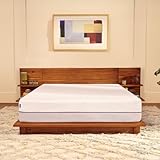

4. Casper Original Hybrid, King (950-000073-005) — Best for Combination Sleepers
Casper’s Original Hybrid builds its king around Zoned Support: the foam is softer under the shoulders and firmer under the hips and waist, aiming to keep the spine level as you rotate through back, side and stomach positions. The top foam is perforated — Casper calls it AirScape — to let heat escape, and a spring layer underneath adds response and edge support that the all-foam Original does not have. The overall feel is medium, the profile is 11 inches, and Casper backs it with a 100-night trial and CertiPUR-US certified foams.
Note that this is the hybrid version of the Original — Casper sells an all-foam mattress under a similar name, so check the listing title before ordering. The medium feel is a genuine middle: dedicated stomach sleepers and heavier back sleepers may want something firmer, and zoned foam cannot be adjusted if the zones do not match your body. For restless sleepers who change position all night across a king’s width, though, it is the most accommodating build here.


5. Sweetnight 12-Inch Hybrid, King (SN-M011-12-K) — Best Medium-Firm Hybrid
Sweetnight’s SN-M011 hybrid pairs a gel memory foam comfort layer with a pocket innerspring core in a straightforward 12-inch king, finished with a moisture-wicking adaptive cover. The feel is medium firm — the supportive end of this list — which suits back sleepers and stomach sleepers who find medium mattresses too soft at the hips. Pocket springs also help a wide king feel consistent from center to edge, and they isolate motion better than a connected coil unit.
This is a value brand, so set expectations accordingly: the finish is simpler than the premium names above, and you should read the current trial and warranty terms on the listing rather than assuming they match the big DTC brands. The firmer feel will not suit side sleepers who need deep pressure relief at the shoulder. But if you want genuine coils, a 12-inch profile and a firmer surface in king size without paying premium-tier money, this is the pick that makes sense.


6. ZINUS 12-Inch Green Tea Memory Foam, King (AZ-BTCM-12K) — Best Budget
The Zinus Green Tea is the budget benchmark for kings: a 12-inch all-foam mattress whose memory foam is infused with green tea extract and charcoal, which the maker uses to help the foam stay fresher and resist odor build-up. The feel is the classic slow, contouring memory-foam hug, with strong motion absorption — useful when one partner keeps different hours. The foams are CertiPUR-US certified, and the king size costs a fraction of the premium picks above while still giving you a full 12-inch profile.
The compromises are the usual ones at this tier. The response is slow, so combination sleepers may feel like they are climbing out of the foam when they roll; the surface sleeps warmer than the hybrids and the grid bed here; and edge support is limited, which effectively narrows a king if you sleep right at the side. Foam at this price also tends to soften sooner over the years. For a guest room, a first king, or a tight budget, those are fair trades.

Best Picks by Category
- Best overall: Tuft & Needle Original — responsive, balanced foam that suits the widest range of couples.
- Best luxury hybrid: DreamCloud Classic Hybrid — quilted gel-foam top, wrapped coils, a 365-night trial and a forever warranty.
- Best for hot sleepers: Purple Plus — the open GelFlex Grid moves air instead of trapping heat like foam.
- Best for combination sleepers: Casper Original Hybrid — zoned foam support that adapts as you change position.
- Best medium-firm hybrid: Sweetnight 12-Inch Hybrid — gel foam over pocket springs with a firmer, supportive feel.
- Best budget: ZINUS 12-Inch Green Tea — a full 12-inch king with classic memory-foam contouring at the lowest tier here.
Every pick is the king variant of its model — the same mattress line in queen is a different listing, so always confirm the size selector says King (76 x 80 inches) before you check out.
How to Choose
King vs California king
A standard king is 76 inches wide and 80 inches long. A California king trades four inches of width for four inches of length: 72 by 84 inches. For couples, the standard king is usually the better trade — width is what stops elbows from colliding — while the Cal king mainly serves sleepers well over six feet tall. The two are not interchangeable for bedding or bed frames, so decide before you shop, and note that every pick in this guide is the standard 76 x 80 king.
Room size, doors and stairs
Makers generally suggest a room of at least 12 by 12 feet for a king, leaving roughly two feet or more of walking space on three sides. Measure the route in, too: hallways, stair turns and door frames. Most kings here ship compressed in a box, which solves the doorway problem but not the weight problem — a king hybrid can top 100 pounds, so plan a two-person carry to the bedroom before you open the box.
One king or a split king
Two twin XL mattresses (38 by 80 inches each) pushed together equal a king’s footprint exactly — that is a split king. It lets each partner choose a different firmness and works with dual adjustable bases, at the cost of a center seam and split-king bedding. A one-piece king like the picks above gives a seamless surface and standard king sheets, but both sleepers share one firmness. If you and your partner disagree sharply on feel, split king is the honest fix; otherwise one piece is simpler.
Firmness when two sleepers disagree
Start from sleep position, not preference labels. Side sleepers need pressure relief at shoulder and hip; back and stomach sleepers need the hips held up. A medium or medium-firm king is the usual compromise, and designs that cheat the compromise — zoned support, or a surface that flexes locally like the GelFlex Grid — are worth a premium when one partner is a side sleeper and the other sleeps on their back. Use the home trial: a king is expensive to return, and firmness arguments are only settled by sleeping on it.
Foam, hybrid or grid construction
All-foam kings isolate motion best and cost least, but sleep warmer and have softer edges. Hybrids add pocket coils for airflow, bounce and perimeter support, at higher weight and price. Purple’s grid is its own category: very breathable and responsive, with a feel unlike either. Body weight matters at this size — heavier sleepers generally do better on the taller hybrid profiles, while lighter sleepers can find firm hybrids and the grid too unyielding.
Foundation, trial and warranty
A king frame needs center support — a rail and legs down the middle — because a 76-inch span will sag without it; check the maker’s slat-spacing rules so you do not void the warranty. Compare trials as well as prices: the picks here range from 100 nights to a full year, and the warranty terms differ in years and in the sag depth they cover. Keep the box and packaging until the trial decision is made, especially with a mattress this size.
Firmness and Sleeping Position: A Decision Guide
Firmness is personal, and a king mattress covers two people, so preferences may differ. A general guide is that side sleepers often prefer a softer surface that cushions the shoulders and hips, back sleepers often like medium firmness, and stomach sleepers often like firmer support. These are common tendencies, not rules.
| Sleeping position | Often prefers |
|---|---|
| Side | Softer to medium feel |
| Back | Medium to medium-firm |
| Stomach | Firmer feel |
| Combination | A balanced medium option |
Foam, Hybrid or Innerspring
The construction changes the feel. Foam mattresses hug and absorb motion, hybrids combine coils with foam layers, and innerspring models feel bouncy with strong edge support. Read the listing for layer descriptions and the thickness of each material.
- Foam suits people who like a cradling feel.
- Hybrids suit those who want support with some cushion.
- Innersprings suit people who prefer a springy surface.
- Check the motion isolation if you share the bed.
Size, Bed Frame and Room Planning
A king mattress is about 76 inches wide and 80 inches long, which needs a large room. Measure the bedroom, the doorways and the stairs before delivery, and make sure the bed frame supports a king. Many mattresses arrive compressed in a box, so check how long it takes to expand and the maker instructions for unboxing. Confirm that your frame has center support if the maker requires it.
Trial Periods, Warranties and Care
Read the trial period and return terms carefully, since details differ between makers and sellers. Look at the warranty length and what it covers. Use a mattress protector as the maker advises, rotate the mattress if instructions say so, and follow the cleaning guidance. Air out the mattress after unboxing as directed. If you have back pain or a medical condition, talk with a qualified professional about what support suits you.
Mistakes to Avoid When Buying a King Mattress
A mattress is a long-term purchase, and small oversights stay with you for years.
- Buying without measuring the room, the doorway and the stairs.
- Choosing firmness by a label without thinking about your own preference.
- Ignoring a partner who sleeps differently.
- Skipping the foundation or frame check.
- Not reading the return policy and the warranty terms.
A Short Glossary of Mattress Terms
- Motion isolation: how well the bed limits movement from one side to the other.
- Edge support: how firm the perimeter feels when you sit or sleep near the edge.
- Coil count: the number of springs in an innerspring or hybrid bed.
- Density: how heavy and dense a foam layer is.
- Cooling cover: a fabric or layer described as helping airflow.
Terms like these appear on every listing, so a basic understanding helps you compare. Keep in mind that descriptions are the maker claims and that comfort is subjective. Think about what matters most to you, such as quiet movement, cooler sleep or strong edges, and look for the features that address it.
Finally, remember that comfort develops over time. Give a new mattress a few weeks to settle, rotate or flip it only if the maker advises, and keep the packaging details handy in case you need to ask the seller a question about the trial terms or the delivery.
Each King in the Bedroom: Comfort, Feel and Fit
A king mattress has to work for two sleepers, across a wide surface, night after night. This section stays with comfort and practical fit — how each of the six kings feels to lie on, who each one suits, and what to weigh honestly before you order. There are no miracle promises here, because a mattress is a comfort product: the right one is the one whose feel, temperature and support style match how you and your partner actually sleep.
Tuft & Needle Original: the easygoing default
The Original suits couples who want a calm, balanced foam feel without the slow, deep sink of traditional memory foam. Its responsive surface makes turning over and changing position feel easy across the king’s width, and movement from one side is softened rather than sent across the bed, which helps two different sleep schedules coexist. It is a good first king for a couple upgrading from a queen who agree on a medium feel. Its limits are its slimmer profile and foam edges: sitting on the edge feels less firm than on a coil bed, and couples who prefer a taller, more structured mattress may want a hybrid instead. Choose it for balanced comfort and simplicity; skip it if you know you love the bounce and perimeter feel of springs.
DreamCloud Classic Hybrid: the hotel-style king
The DreamCloud suits sleepers who want a king that feels substantial and a little luxurious — a quilted top, a supportive coil core, and edges you can sit on while dressing without feeling perched on foam. The coil base gives it airflow and response, and the long trial period is genuinely useful at this size, because a king is a commitment you want time to judge. Its feel leans firmer than a soft foam bed, which back and combination sleepers often enjoy, while lighter side sleepers who want a deep, cradling sink may find it less plush than they hoped. It is also heavy to set up, so plan for two people and a clear route. Choose it for a traditional, supportive hybrid feel; skip it if you want a soft, enveloping foam hug.
Purple Plus: the cool, buoyant outlier
The Purple Plus suits hot sleepers and anyone curious about a feel that is neither foam nor springs. The open grid lets air move through the comfort layer instead of pooling around the body, and the surface feels buoyant — you rest more on the bed than in it. For couples, that on-top feel makes moving around easy, and the unusual surface is the reason to choose it over a conventional king. The same uniqueness is the risk: a partner who loves memory foam may need the trial period to decide, and very light side sleepers sometimes find the grid firmer than expected. Use the trial honestly and judge it as a pair, not on the first night. Choose it if heat on foam has been your main complaint; skip it if you already know you love a slow, sinking foam feel and do not want to experiment.
Casper Original Hybrid: the position-changer’s king
The Casper suits combination sleepers — people who start on their back, move to a side, and wake somewhere else entirely. Its zoned foam aims to feel softer at the shoulders and firmer through the middle, and the spring layer adds response so changing position does not feel like climbing out of a hollow. Across a king’s width, that easy movement is a real comfort advantage, and the perforated top foam is designed to let heat escape. Its medium feel is a true middle, which is both the appeal and the limit: committed stomach sleepers or anyone who strongly prefers a firm bed may want more, and the zones are fixed rather than adjustable. Make sure you are ordering the hybrid version, since a similar name covers an all-foam model. Choose it for restless, mixed-position sleeping; skip it if you and your partner share a strong, specific firmness preference at either extreme.
Sweetnight 12-Inch Hybrid: medium-firm and straightforward
The Sweetnight suits back sleepers and couples who agree on a medium-firm feel and want a hybrid without premium-tier positioning. Gel memory foam over pocket coils is a familiar, sensible recipe: some surface cushioning, a supportive core, and coils that move independently enough to keep one sleeper’s turning from becoming the other’s event. At king size that straightforwardness is a virtue — no unusual surface to adjust to, no exotic care story. Its limits are the limits of its tier: finishing and long-term brand track record are less proven than the big names above, and medium-firm is a specific choice that soft-bed lovers should not talk themselves into. Choose it for honest medium-firm hybrid comfort at a friendlier tier; skip it if you want a plush top or the longest trial on the list.
ZINUS Green Tea Memory Foam: the budget king that works
The ZINUS suits a tight budget, a guest room, a first apartment, or a couple who need a king now and plan to upgrade later. Twelve inches of memory foam at this tier is a lot of mattress for the money, and the classic foam feel — a slow, close contour — is exactly what some sleepers love most. Judge it by its role: foam edges are soft, the surface sleeps warmer than the hybrids and the grid for many people, and a budget foam bed is a shorter-horizon purchase than the premium picks. For a guest king that will be slept on occasionally, those limits barely matter and the value is obvious. For a primary bed for two every night, weigh the longer-term picks above. Choose it knowingly, for the job it is good at, and it will not disappoint.
Comparing the Six Kings as Couples Actually Use Them
Feel is the first comparison. The Tuft & Needle and the ZINUS are the foam pair, but they feel different: responsive and balanced versus slow and contouring. The DreamCloud, Casper and Sweetnight are the hybrid trio, sharing coil support with different tops and firmness personalities — hotel-firm, zoned-medium, and straightforward medium-firm. The Purple Plus stands alone with its grid. If you and your partner disagree, the hybrids are usually the easiest common ground, because coils give a familiar, neutral base that fewer sleepers actively dislike.
Temperature is the second. Sleepers who run hot should look first at the Purple’s open grid and then at the hybrids, whose coil cores let air move through the bed in a way solid foam stacks do not. The foam picks are not automatically hot — gel infusions and perforations exist for a reason — but if heat has ended previous mattress relationships, let construction lead the decision rather than hoping a topper will fix it later.
Movement is the third. On a king, each sleeper has generous space, but a restless partner can still send motion across a shared surface. Foam absorbs movement most; pocket-coil hybrids isolate it well because the coils move independently; a buoyant grid feels different again, easy to move on without feeling stuck. Couples with very different schedules — one early riser, one light sleeper — should weight this heavily, and should also talk honestly about whether one shared king or a split arrangement, covered earlier in this guide, better fits their nights.
Edges and height are the unglamorous fourth. Kings get sat on: to dress, to read to a child, to tie shoes. Coil-based picks hold that edge best. Height interacts with your frame and bedding: a slimmer foam king on a tall frame can sit lower than expected, while a taller hybrid on a platform can make the bed high to climb into. Measure the finished height — frame plus mattress — against your preference before ordering, and check that your existing king sheets have pockets deep enough for the profile you choose.
Setting Up and Settling In
Plan the delivery day. A king in a box is still a large, heavy object: clear the route, decide in advance which way the bed will rotate into place, and have two people for the hybrids especially. Let a boxed mattress expand as the maker directs before judging its feel, and expect any new-bed smell to fade with ventilation. Then give the trial period a fair job. Comfort judgments made on the first two nights are unreliable, because your body is comparing the new surface with the old one it was used to. Sleep on it for several weeks, both of you, through ordinary weeks rather than a holiday, before deciding. Keep your old bedding for the first nights if you can, so the mattress is the only new variable; change one thing at a time and you will know what actually helped your comfort.
Support the bed properly. A king’s width needs the foundation the maker specifies, with center support where required — a wide mattress on an undersupported frame will feel wrong and age badly, whatever its quality. Rotate the mattress on the schedule the maker suggests if the design allows it, use a protector from the first night to keep the trial and the surface in good order, and check that the bed frame’s slats or base suit a foam or hybrid build as applicable. These are boring steps, and they are the difference between a king that feels right for years and one that mysteriously disappoints by spring.
A Couples’ Decision Path
Talk about three things before you look at prices or tiers. First, feel: do you both lean soft, firm, or middle, and if you differ, who feels their preference more strongly? Second, temperature: does either of you sleep hot enough that construction should be chosen for airflow first? Third, movement: how much does a partner’s turning disturb either of you? With those answers, this list sorts itself — balanced foam, hotel hybrid, cool grid, zoned hybrid, medium-firm value hybrid, or budget foam. Choose together, use the trial together, and judge the bed on ordinary nights. A king is the most shared piece of furniture you own; bought as a shared comfort decision, it earns that place every night.
Bedding, Frames and the Finished Height of a King Bed
A king mattress is the center of a system, and the system deserves the same care as the mattress choice. Start with finished height: add the frame or foundation height to the mattress profile and picture sitting on the edge with your feet on the floor. A slim foam king on a tall platform can feel low and deep to climb out of, while a tall hybrid on a high frame can leave shorter sleepers perched. Neither is wrong, but the combination should be chosen rather than discovered. Sheets are the next detail: king bedding is widely available, yet pocket depth varies, and a taller hybrid needs deep-pocket sheets that will stay put when two sleepers move. A protector matters from the first night, both for the mattress surface and for keeping trial terms in good order, and it should be a quiet, breathable style that does not change the feel you chose the mattress for. Pillows deserve a thought at king width too: two generous pillows use the width properly, and couples with different preferences can finally choose independently without compromise, which is one of the quiet luxuries of the size.
What Changes When You Move From a Queen to a King
Couples upgrading from a queen often expect the king to feel like the same bed, only wider. In practice three things change. Space per person grows enough that each sleeper can settle into their own position without negotiation, which is the main comfort gain and the reason the size exists. Movement behaves differently: there is more surface for motion to dissipate across, especially on foam and pocket-coil builds, so a partner’s turning is usually less noticeable than on a queen of the same model. And the room itself changes: a king consumes floor on both sides, so bedside tables, lamps and walking space need re-planning, and in a smaller bedroom the honest question is whether the remaining room still works as a room. Measure before ordering, including the route in, and consider whether the bed will be assembled or placed by rotating it through the doorway — king dimensions forgive very little. Sleepers who make the move with the room planned usually wonder why they waited; the upgrade disappoints mainly when the mattress was chosen carefully and the bedroom was not.
Judging the Trial Like a Couple, Not a Customer
A trial period is only useful if you use it as a structured test. Agree in advance on what each of you is judging: ease of falling asleep, how often you wake, how you feel about the surface temperature by morning, and whether getting in and out feels easy. Give the bed several weeks, because the first nights measure the change from your old mattress more than the quality of the new one. If one partner loves the bed and the other is unsure, that is useful information rather than a failure — it may point toward a different feel within this list, toward separate bedding so each sleeper controls their own warmth, or toward the split arrangement discussed earlier in this guide. Keep notes if your impressions blur together; a few lines after the first week and the third week will show whether comfort is improving as you adjust. And protect the decision from single bad nights caused by travel, illness or a heatwave, which say more about the week than the mattress. Judged patiently and together, the trial turns a large purchase into a calm one.
Long-Term Comfort: Keeping a King Feeling Right
Comfort over years is mostly about support staying even. Use the foundation the maker specifies, with the center support a wide bed requires, and check it if the bed ever starts to feel different in the middle than at the edges. Rotate the mattress if the design allows it, on the maker’s schedule, so the two sleeping zones wear evenly — on a king, each side has its own sleeper and its own wear pattern, which makes rotation more valuable than on a single bed. Keep the protector washed and the bedding fresh, air the bed in the morning rather than making it instantly on warm days, and address a frame squeak or a sagging slat promptly instead of blaming the mattress. Expect any mattress to soften slightly as it settles in the first months; that is normal adjustment, distinct from a genuine fault. A king bought for comfort, supported properly and judged patiently, should feel familiar and right for a long time — and when it eventually stops feeling that way, you will know exactly which qualities to look for in its successor, because you will have chosen this one deliberately.
King Mattresses for Guest Rooms and Second Homes
A king in a guest room is judged differently from a king in a main bedroom, and it is worth saying so plainly because households often buy the wrong one for the room. Guests sleep a few nights, arrive with different preferences, and are politely unlikely to report honestly — so the guest king should be the most broadly agreeable bed you can justify, which in this list points toward the balanced foam of the Tuft & Needle or a medium hybrid, rather than an idiosyncratic surface that devotees love and others find strange. The ZINUS also has a genuine guest-room case: a comfortable, generous king at a budget tier, in a room used occasionally, is a sensible allocation of money that a main bedroom might spend differently. In a second home, consider how the bed will be left between visits — a protector on, bedding fresh, the room aired — and choose the construction whose care story suits long gaps between sleeps. What a guest king should not be is the household’s retired main mattress moved sideways out of guilt; guests notice a tired bed, and the room meant to welcome them ends up apologizing for itself.
Reading a King Listing Carefully Before You Order
King listings reward slow reading, because on marketplaces each size is effectively its own product. Confirm that the size selected at checkout is truly the king variant and not a queen or California king carried over from a previous click, and check the model’s name word by word — this guide already flags one case where a hybrid and an all-foam mattress share a similar name. Read the trial and warranty terms as they apply to the listing in front of you rather than assuming the headline terms from an advertisement, and note what the trial requires of you, such as keeping the protector on and retaining packaging or documentation for a period. Check the foundation requirements for the specific build, the finished profile height against your bedding’s pocket depth, and the delivery format, since a king in a box and a flat-delivered king are very different arrivals. Finally, screenshot or save the listing details on the day you order; if a question arises later, the page you bought from is the record that matters, and it may have changed by the time you need it.
One last practical note for king buyers: decide where the old mattress goes before the new one arrives. A king is the hardest size to store, move or dispose of, and a delivery day that begins with the old bed still in the room tends to go badly. Arrange removal, donation or collection in advance, clear the bedroom floor, and the upgrade becomes the calm, satisfying change it should be.
Frequently Asked Questions
What are the exact dimensions of a king mattress?
A standard (eastern) king is 76 inches wide by 80 inches long. Split in half, each side is exactly a twin XL — 38 by 80 inches — which is why a king gives each partner the width of their own twin bed.
Is a king bigger than a California king?
They cover almost the same area but in different proportions. The king is wider (76 vs 72 inches) and shorter (80 vs 84 inches). Couples usually benefit more from the king’s width; very tall sleepers benefit from the Cal king’s length.
Will a king mattress fit in a 10 x 12 foot bedroom?
It will fit, but tightly: a 76-inch bed in a 10-foot-wide room leaves under two feet on each side, which makes nightstands and walking space cramped. Makers commonly recommend at least 12 by 12 feet for a comfortable king layout. Measure with the furniture you actually own, not an empty room.
How do I get a king mattress upstairs or through a narrow door?
Choose a bed-in-a-box model like every pick in this guide: it arrives rolled and compressed, so doors and stairs are rarely a problem. The real challenge is weight — king hybrids can exceed 100 pounds boxed — so have two people carry it to the bedroom before unboxing.
Can two twin XL mattresses replace a king?
Yes — two twin XLs side by side match a king’s 76 x 80 footprint, and that split-king setup lets each side have a different firmness or an adjustable base. The trade-offs are a seam down the middle and the need for split-king sheets or a mattress bridge if you want it to feel like one bed.
How long does a king mattress in a box take to expand?
Most makers say the mattress is sleepable the first night and finishes expanding over 24 to 72 hours. A king has more foam to recover than a queen, so give it the full window before judging firmness, and keep the room ventilated while any new-foam smell airs out.
Bottom Line
For most couples, the Tuft & Needle Original in king is the balanced place to start: responsive foam, honest medium feel, no heat trap. If you want a traditional luxury hybrid and the longest trial, choose the DreamCloud Classic Hybrid; if you sleep hot, the Purple Plus is the cooling outlier worth trying. Position changers should look at the Casper Original Hybrid, back sleepers on a budget at the Sweetnight hybrid, and anyone furnishing a guest room at the ZINUS Green Tea. Whichever you pick, confirm the listing says King — 76 x 80 inches — and check the current price and trial terms before you order.