Disclosure: As an Amazon Associate, UMT Smart Tool earns from qualifying purchases. This guide is built from product listings and maker specifications, not from our own hands-on testing. Prices are approximate and can change, so check the current price before you buy. Last updated: November 10, 2026.
“Best mattress for back sleepers” almost always means the same short list of traits: a medium-firm surface that does not let the hips sink below the shoulders, real support under the lumbar curve, and enough cushioning on top that your shoulder blades are not taking your full weight on a board. Back sleeping spreads weight evenly, so the failure mode is different from side sleeping — a bed that is too soft lets the midsection bow downward, and a bed that is too hard leaves the lower back unsupported because the lumbar curve never touches the surface. This guide is organized by build and body type, so you can start with the construction that fits how you sleep, then compare the strongest option in each role. Every pick below is the Queen size.
In this guide
Quick Picks
The short version: six medium-firm mattresses we would look at first for back sleeping, one per build and budget.
| Pick | Type | Best for |
|---|---|---|
| DreamCloud Luxe Hybrid (14″, Queen) | Luxury hybrid | Best overall for back sleepers |
| Purple Restore (Firm, Queen) | GelFlex Grid hybrid | Hot sleepers who want a responsive surface |
| Emma Original (10″, Queen) | All-foam, zoned base | Back sleepers who prefer memory foam |
| Brooklyn Bedding Titan Plus Luxe with Cooling Cover (13″, Queen) | Heavy-duty hybrid | Heavier back sleepers (plus-size builds) |
| Awara Natural Hybrid (10″, Queen) | Organic latex hybrid | Natural materials and a lifted, buoyant feel |
| Siena Memory Foam (10″, Queen) | Budget all-foam | A medium-firm bed on a tight budget |
Our Picks
1. DreamCloud Luxe Hybrid Mattress, 14-Inch, Queen (dchyluxedz-s:queen) — Best Overall
The Luxe is DreamCloud’s top-tier hybrid, and it is built the way a back-sleeper bed should be: support first, softness second. The listing confirms a 14-inch, seven-layer build with 792 individually wrapped coils, a support foam layer split into three zones, a 2-inch memory foam comfort layer, and a quilted CloudQuilt+ Euro top in a cashmere blend with cooling fibers. DreamCloud rates the feel medium-firm, the zoned transition layer is firmer through the middle third where your hips and lumbar sit, and the stated weight capacity is 800 pounds. It is also fiberglass-free with CertiPUR-US certified foams, and it carries the longest policies in this guide: a 365-night trial and a Forever Warranty.
The trade-off is the Euro top itself. That quilted layer gives the Luxe a plusher first impression than the other picks here, and some independent testers rate it a touch softer than a true medium-firm — back sleepers who want a distinctly flat, firm surface may prefer the Purple Restore Firm below. At 103 pounds and 14 inches tall it is also the heaviest bed in this guide and needs deep-pocket sheets. For most back sleepers who want lumbar support, pressure relief and cooling in one premium bed, it is the safest first look.
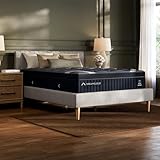
2. Purple Restore Mattress (Firm), Queen (10-21-23992) — Best for Hot Sleepers
Purple’s Restore pairs the company’s 2-inch GelFlex Grid with a pocketed coil base in an 11.5-inch profile, and this is the Firm version — the one back and stomach sleepers should be looking at. The grid is a hyper-elastic polymer lattice that stays upright under broad, even pressure (which is most of a back sleeper’s body) and buckles only under concentrated points like a shoulder blade or heel. Because the grid is mostly open air channels rather than foam, it does not hold body heat the way memory foam does, and Purple describes the feel as temperature neutral. The coil base keeps the surface responsive, so rolling over does not mean climbing out of a foam crater.
The honest caveats: the grid feel is genuinely different — springy and buoyant rather than contouring — and some sleepers never warm to it, which is why the 100-night trial matters; it is also shorter than the 365-night trials elsewhere in this guide. The warranty is 10 years, and the price sits in the premium tier. Choose the Restore Firm if you sleep hot, dislike the slow sink of memory foam, and want a firm, supportive surface that still gives at the pressure points.
3. Emma Original Mattress, 10-Inch, Queen (CAEMAOR153203USA) — Best Foam Mattress
If you want the back-sleeper formula in an all-foam bed, the Emma Original is the straightforward answer. The US listing confirms a 10-inch, four-layer foam build rated for up to 500 pounds, with CertiPUR-US certified foams. Emma’s construction stacks a breathable Airgocell comfort layer over Halo memory foam, on top of an HRX Supreme support foam that is cut into three zones — firmer through the middle, where a back sleeper’s hips and lumbar need the lift, and more forgiving at the shoulders and legs. Emma rates the overall feel medium-firm, which is exactly the zone this guide targets. The trial is a full 365 nights with a 10-year guarantee, the joint-longest trial here.
All-foam trade-offs apply. There are no coils, so edge support is weaker than on the hybrids — sitting on the side compresses the edge noticeably — and foam holds more warmth than the grid or latex picks, though the Airgocell top layer blunts that. The 10-inch profile also sits lower on the frame than the 13–14 inch hybrids. For back sleepers who like foam’s motion isolation but need a zoned, medium-firm base rather than a plush sink, this is the balanced pick.
4. Brooklyn Bedding Titan Plus Luxe Mattress, 13-Inch, with Cooling Cover, Queen (BBTILXCT1350) — Best for Heavier Back Sleepers
Standard medium-firm mattresses are usually calibrated around average-weight sleepers; heavier back sleepers compress comfort layers further and can end up effectively sleeping on a much softer bed. The Titan Plus Luxe is Brooklyn Bedding’s answer: a 13-inch hybrid designed specifically for plus-size sleepers, with a heavy-gauge TitanCore individually encased coil unit, TitanFlex comfort foam infused with TitaniumGel, and a 1-inch quilted gel foam top. This listing is the version with the GlacioTex cooling cover sewn in — check the model code BBTILXCT1350 on the listing, because the standard-cover version is a separate listing. Brooklyn Bedding rates the feel medium-firm, and the trial runs 120 nights.
The same heavy-duty build that supports a larger body can feel overly firm to a lighter back sleeper, so this is a specialist pick, not a default. It is also a premium-tier purchase and a heavy bed to rotate. But if you are over roughly 230 pounds and have watched medium-firm mattresses soften into a hammock under your hips within a couple of years, the reinforced coil unit here is the feature that matters — support that is still there after the comfort foam has done its compressing.

5. Awara Natural Hybrid Mattress, 10-Inch, Queen (awhyclascz-s:queen) — Best Natural Latex Hybrid
Awara takes the latex route: a comfort layer of certified organic natural latex over individually wrapped coils, with a cover blended from New Zealand wool and bamboo rayon, in a 10-inch profile. Latex pushes back instead of letting you sink, so your hips stay lifted and the lumbar curve keeps its natural arch, while the wool layer handles moisture and temperature without synthetic cooling gels. The listing confirms the bed is fiberglass-free, and Awara backs it with a 365-night trial and a Forever Warranty.
Latex is not for everyone. The surface feel is buoyant and noticeably firmer in character than foam at a similar rating, there can be a mild natural rubber scent in the first days, and a 10-inch profile gives you less comfort-layer depth than the DreamCloud Luxe if you are a heavier sleeper. The price also sits above basic foam for the organic materials. For back sleepers who want natural materials, a cool surface and a lifted feel rather than a hug, it is the natural-materials pick of this guide.
6. Siena Memory Foam Mattress, 10-Inch, Queen (sienamattress-s:queen) — Best Budget
Siena is the value brand from Nectar’s parent company, and its 10-inch all-foam Queen is the budget way into a genuinely medium-firm back-sleeper bed. The listing confirms the specs that matter: a medium-firm feel, CertiPUR-US certified foams, pressure-relieving memory foam layers over a supportive base, a 180-night home trial and a 10-year warranty. That trial and warranty combination is unusually strong at this tier, and the firmness rating is honest — this is a support-first foam bed, not a plush one wearing a medium-firm label.
Budget limits show up where you would expect. Ten inches of foam means a thinner comfort system, so heavier back sleepers will compress a larger share of the bed and should look at the Titan or the DreamCloud instead. Edge support is foam-only, and an all-foam bed sleeps warmer than the hybrid and latex picks above. As a first medium-firm mattress, a guest-room upgrade, or a way to test whether firmer support suits your back before spending premium money, it covers the brief at the lowest tier in this guide.

Best Picks by Category
- Best overall: DreamCloud Luxe Hybrid (14″, Queen) — zoned support foam and coils under a medium-firm Euro top, with a 365-night trial.
- Best for hot sleepers: Purple Restore (Firm, Queen) — the GelFlex Grid is mostly air, so it stays temperature neutral where foam traps heat.
- Best foam mattress: Emma Original (10″, Queen) — a three-zone HRX base keeps the midsection lifted without any coils.
- Best for heavier back sleepers: Brooklyn Bedding Titan Plus Luxe with Cooling Cover (13″, Queen) — a heavy-duty coil unit built for plus-size bodies.
- Best natural materials: Awara Natural Hybrid (10″, Queen) — organic latex and New Zealand wool for a buoyant, breathable surface.
- Best budget: Siena Memory Foam (10″, Queen) — honest medium-firm support with a 180-night trial at the lowest tier here.
Notice the pattern: not one of these picks is plush. For back sleeping, the differences that matter are how the support is delivered — zoned foam, zoned coils, a grid, latex or heavy-gauge steel — not how soft the top feels in the first five minutes.
How to Choose
Firmness: aim for medium-firm, and read it against your weight
Most back sleepers land between 6 and 7.5 on the standard 1–10 firmness scale: firm enough that the hips stay level with the shoulders, soft enough that the surface fills the lumbar curve instead of bridging over it. Treat maker ratings as relative, not absolute — the same “medium-firm” feels firmer to a 130-pound sleeper than to a 230-pound sleeper, because more weight compresses more of the comfort layers. If you are heavier, shop one step firmer or look for a bed explicitly built for larger bodies, like the Titan Plus Luxe above.
Zoned support and the lumbar region
Zoning is the single most useful design feature for this sleep position. A zoned bed is firmer through the center third — under the hips and lower back — and slightly softer at the shoulders and legs, which keeps the spine in its natural S-curve instead of letting the heaviest part of the body dictate the whole surface. Zoning can live in the coil unit or in a foam core; both approaches appear in the picks above. A flat, uniform bed can still work, but it has to split the difference with one firmness everywhere.
Hybrid, foam, latex or grid?
Hybrids (foam over pocketed coils) give back sleepers support with some bounce and airflow, and they are the easiest to move on. All-foam beds isolate motion best and contour closely, but sleep warmer and have weaker edges. Latex is the most responsive comfort material and sleeps cool, with a lifted feel some people love and others find too springy. Purple’s GelFlex Grid is its own category: very breathable and instantly responsive, with a feel unlike any foam. Pick the response and temperature profile you prefer, as long as the firmness and zoning are right.
Profile height, weight limits and your foundation
Check two numbers before ordering: the bed’s profile (10 to 14 inches across this guide) and its stated weight capacity, which ranges from about 500 pounds on the foam picks to 800 pounds on the DreamCloud Luxe listing. Taller beds need deep-pocket sheets and sit higher on the frame. Whatever you buy, the foundation matters as much as the mattress: slats should be closely spaced per the maker’s requirements, and a sagging base will undermine even the best lumbar support.
Trials, warranties and the break-in period
Foam and hybrid beds almost always feel firmer in the first weeks than they will after break-in, so use the trial properly — most makers ask for at least 30 nights before a return. The trials in this guide run from 100 nights (Purple) to 365 nights (DreamCloud, Emma, Awara), and warranties from 10 years to lifetime “Forever” coverage. Read what the warranty actually covers: it is a defect warranty measured by visible sag depth, not a comfort guarantee, and it depends on using a proper foundation.
Which mattress for back sleepers should you buy?
The best mattress for back sleepers is a medium-firm bed that matches your weight, temperature and material preference, so pick by those needs first. Here is how the six named beds line up.
- Most back sleepers wanting a premium all-rounder: the DreamCloud Luxe Hybrid, with zoned support and a long trial period.
- Hot sleepers who dislike foam sink: the Purple Restore (Firm), whose grid feels responsive and breathable.
- Foam fans who still want zoned support: the Emma Original.
- Heavier back sleepers: the Brooklyn Bedding Titan Plus Luxe with Cooling Cover, built for plus-size builds.
- Natural materials and a lifted feel: the Awara Natural Hybrid, with latex over coils.
- A tight budget or a guest room: the Siena Memory Foam, a way to try firmer support without spending premium money.
If you are between two, think about heat and weight. Hot sleepers should lean toward the grid, latex or hybrid options, while heavier sleepers should lean toward the beds with reinforced support. Lighter sleepers often find the firmest beds harder than they expected.
What to check before you buy a back-sleeper mattress, and who should skip it
Before you order a mattress for back sleeping, confirm these details on the current listing.
- Size and height, plus whether your bed frame and sheets suit the profile.
- The maker’s firmness rating, read against your body weight.
- Trial length and the minimum nights before a return is allowed.
- Return steps, including who pays for pickup and whether the bed must stay on a proper foundation.
- Warranty coverage and what counts as a defect.
- Materials and any scent or sensitivity concerns, such as latex or wool.
Weigh the trade-offs fairly. Hybrids and latex beds feel more buoyant but are heavy to move. All-foam beds are quieter and isolate motion but sleep warmer and have weaker edges. The grid feel is unlike foam, and some sleepers never warm to it. A mattress also cannot treat pain, so see a doctor if discomfort persists.
You may want to skip a firmer bed if you mostly sleep on your side, or if your current mattress is only a few years old and a topper or a better foundation could solve the problem. If a new bed is the right fix, compare the picks above, check the current listing for size and what is included, then choose the one that fits how you will use it.
Frequently Asked Questions
What firmness is best for back sleepers?
Medium-firm is the standard recommendation, roughly 6 to 7.5 out of 10, because it keeps the hips from sinking below shoulder level while still filling the lumbar curve. Lighter back sleepers can go slightly softer, heavier back sleepers should go slightly firmer or choose a bed built for plus-size bodies. If you regularly wake up with a stiff lower back that eases as you move around, your current bed is usually either too soft through the middle or worn out.
Can a mattress fix back pain?
No mattress can diagnose or treat a medical condition, and this guide does not claim otherwise. What a supportive, medium-firm mattress can do is hold your spine in a neutral position while you sleep, which removes one common source of morning stiffness. If back pain persists, radiates down a leg, or follows an injury, that is a conversation for a doctor or physiotherapist, not a mattress listing.
Is a hybrid or an all-foam mattress better for back sleeping?
Both can work well. Hybrids tend to feel more supportive and responsive, sleep cooler, and offer stronger edges for sitting — a good default for back sleepers. All-foam beds contour more closely and isolate a partner’s movement better, which suits lighter sleepers and couples. What matters more than the category is the firmness, the zoning, and whether the support core is built to resist sagging in the center third over years of use.
What pillow should a back sleeper pair with a new mattress?
Back sleepers generally need a lower, firmer pillow than side sleepers — enough loft to fill the gap between the neck and the mattress without pushing the head forward. A medium-loft pillow with a contoured or cervical profile works well, and some back sleepers add a small pillow under the knees to reduce lumbar strain. If you change mattress firmness, re-check your pillow: a firmer bed usually calls for slightly less pillow height.
How long should a mattress for a back sleeper last?
Most quality foam and hybrid mattresses last seven to ten years before the comfort layers lose meaningful support. Back sleepers often notice end-of-life sooner, because the first symptom is exactly what they bought the bed to avoid: the center softening and the hips dipping. Rotating the bed head-to-foot every few months (on models the maker allows it) evens out that center wear.
Why does my new medium-firm mattress feel too hard?
New foam is at its firmest out of the box, and every pick in this guide has a break-in period — typically two to four weeks of nightly use before the comfort layers reach their intended feel. Give it the maker’s minimum trial period before judging; if it is still board-firm after a month, a thin comfort topper is a cheaper correction than a return, but use the trial if the support itself feels wrong.
Is a firm mattress good for back sleepers?
A medium-firm bed is usually the safer choice. A very firm surface can leave the lower back unsupported, while a very soft one lets the hips sink. Your weight changes how firm a bed feels.
Should back sleepers use a mattress topper?
A thin topper can soften a bed that feels too hard, but a thick soft one can undo the support. Choose a topper that adds comfort without letting the hips sink. Try the trial period first.
Do back sleepers need a hybrid mattress?
Not necessarily. Hybrids give support and airflow, but a well-built zoned foam bed can also suit back sleeping. Judge by firmness, zoning and how the center holds up over time.
How do I know if my mattress is too soft for back sleeping?
Signs include hips sinking below the shoulders, a sagging center and waking with a stiff lower back that eases as you move. Check for visible dips as well. A worn bed often shows these first.
Is memory foam bad for hot sleepers?
Memory foam tends to hold more heat than open grid or latex designs. Cooling covers and breathable layers help somewhat. Hot sleepers should read the listing for cooling details.
Can I put a mattress on a platform bed or slats?
Often yes, but follow the maker's foundation rules. Slats usually need to be closely spaced, and a sagging base can affect support and warranty coverage. Check the listing or manual.
Bottom Line
For most back sleepers, start with the DreamCloud Luxe Hybrid: its zoned support foam, 792-coil base and medium-firm rating are the most complete version of the back-sleeper formula in this guide, and the 365-night trial removes most of the risk. Sleep hot or hate foam sink? The Purple Restore Firm answers with its temperature-neutral grid. Prefer foam or natural materials and you have the Emma Original and the Awara; heavier sleepers should go straight to the Titan Plus Luxe; and the Siena proves the formula works on a budget. Whichever you choose, confirm the Queen dimensions, the current price and the trial terms on the listing before you order — and give any new bed a full month before you judge it.