Disclosure: As an Amazon Associate, umtsmarttool.com earns from qualifying purchases. Links to Amazon on this page are affiliate links; they cost you nothing extra. Listing details such as price and availability change often, so check the current Amazon listing before you buy.
A campfire is better when your feet are up. A regular folding chair keeps your knees bent and your boots on the dirt, while a model with a built-in footrest turns the same spot into a proper lounge. This guide to the best camp chairs with footrest designs is for car campers, tailgaters, and anyone who spends long evenings outdoors and wants the legs to stretch out.
The five chairs below range from a zero-gravity style recliner to simple folding loungers with a leg panel. We describe each one using the maker’s listing, point out where it fits best, and note the compromises that come with extra length. You will also find advice on packed size, ground surfaces, and how to arrange chairs around a fire.
One honest caveat up front: footrest chairs are bigger than ordinary camp chairs. If you backpack or have a small trunk, read the packed dimensions before you fall for any lounger.
Quick Comparison
| Product | Best for | Main point | Check it |
|---|---|---|---|
| Timber Ridge Zero Gravity Lounge Chair | Full lounging | Reclining frame with extended leg rest | amazon.com/dp/B08F57JS96?tag=umtsmarttool.com-20&linkCode=osi&th=1&psc=1″ target=”_blank” rel=”sponsored nofollow noopener” aria-label=”Check Timber Ridge Zero Gravity Lounge Chair on Amazon”>Check on Amazon |
| KingCamp Folding Lounge Camp Chair with Footrest | Car camping | Padded seat and leg panel | Check on Amazon |
| Coleman Oasis Lounger | Tailgates and picnics | Familiar camping brand, lounger shape | Check on Amazon |
| Marchway Reclining Camping Lounge Chair with Footrest | Backyard and campsite | Adjustable recline | Check on Amazon |
| Pacific Pass Folding Camping Chair with Footrest | Short trips | Simple fold, attached leg rest | Check on Amazon |
In this guide
How These Options Were Chosen
These picks come from manufacturer pages and published descriptions. We have not set up, sat in, or packed any of these chairs ourselves, so you will not find personal impressions. We looked for chairs whose listings clearly mention a footrest or leg rest, a mix of brands, and a spread of frame styles. Models and accessories change, so use the current page to confirm packed size, included parts, and any details about how the footrest attaches.
5 Best Camp Chairs With Footrest
Timber Ridge Zero Gravity Lounge Chair
Timber Ridge sells reclining camp seating, and this zero-gravity style lounge chair is built around a tilted frame that lifts the legs. The footrest is part of the reclined layout, so the whole body ends up stretched out, which is the main attraction around a fire.
It suits campers who plan to sit for hours: watching the night sky, reading, or just watching the coals. It also works on a patio at home, which gives it an extra life outside camping season.
The trade-off is size. A zero-gravity frame folds, but it is wider and longer than a basic chair, and it needs a spot with open space around it. Skip it if you pack by backpack. Check the listing for folded dimensions, the cup holder or tray details, and the frame description.
KingCamp Folding Lounge Camp Chair with Footrest
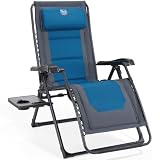
KingCamp makes camp furniture in many styles, and this lounge chair is described with a padded seat and an extended leg panel. The idea is a roomy seat for a long evening without leaving the chair for a separate stool.
It suits car camping, where weight is a lesser concern than seat size and space. A padded seat helps on cool nights, and the leg rest means you can keep your boots off the ground and stay away from damp grass.
The trade-off is that padded chairs take longer to dry after rain. Skip it if you camp in wet climates and cannot store gear indoors. Check the listing for the frame material, packed size, and pocket or cup holder layout.
Coleman Oasis Lounger
Coleman is among the most recognized camping brands, and the Oasis Lounger is a folding seat in the lounger style. It brings a familiar look and a practical folding frame that makes sense for tailgating and picnics.
It suits people who buy from a well-known brand and want straightforward gear. For a weekend trip to a state park, the lounger shape offers more stretch than a standard quad chair without becoming a complicated machine.
The trade-off is that a simple lounger gives you fewer adjustments than a zero-gravity frame. Skip it if you want multiple recline angles. Check the listing for the leg rest details, the dimensions, and the included carry bag.
Marchway Reclining Camping Lounge Chair with Footrest
Marchway sells outdoor folding chairs, and this lounge model is described with an adjustable recline and a footrest. The adjustability lets you sit up to eat and tilt back later when the fire is burning low.
It suits campers who like to shift positions through the evening, and it fits backyard fire pits as well as campsites. Because the layout is adjustable, one chair can serve for dinner and for watching the night sky.
The trade-off is that adjustment mechanisms add moving parts, so the chair needs a quick look before each trip. Skip it if you want the simplest design possible. Check the listing for how the adjustment works and how the footrest is attached.
Pacific Pass Folding Camping Chair with Footrest
Pacific Pass sells camping chairs in a variety of styles, and this model features a leg rest on a folding frame. It is aimed at people who want to try a footrest chair without moving into a large zero-gravity design.
It suits short trips and occasional campers who are shopping for an easy upgrade over a plain chair. A leg panel makes sitting by a fire more relaxed, and a straightforward fold keeps loading simple.
The trade-off is that simpler designs may offer less padding and fewer features. Skip it if you want a table, tray, or deep recline. Check the listing for the dimensions, fabric description, and the way the footrest is connected.
Best for Long Campfire Nights
The Timber Ridge Zero Gravity Lounge Chair is the natural choice for hours beside the flames. The tilted frame and extended leg support let you lean back and look up, which is what a late-night fire is about. Leave enough room around it, and keep it at a sensible distance from the fire pit.
Best for Car Camping Weekends
The KingCamp Folding Lounge Camp Chair with Footrest is built for the car camper who has room in the trunk. A padded seat and leg panel create a lounge feel, and you can keep it near the tent when you are not at the fire.
Best for Tailgates
For a parking lot before a game, the Coleman Oasis Lounger is an easy way to bring a lounge seat without the fuss. It is simple to set up, and the brand is easy to recognize on the listing. Check the stadium rules on chairs before you bring one.
Best for Changing Positions
The Marchway Reclining Camping Lounge Chair with Footrest suits campers who like to adjust. Sit up for dinner, tilt back for stories, and flatten out for a quiet moment. Check the mechanism before each trip and follow the maker’s directions.
How to Choose a Camp Chair With a Footrest
Begin with the way you travel. If you camp from the car, a larger lounger is realistic, and the main question is whether it fits in the trunk beside coolers and tents. If you walk to the site, a footrest chair is probably too bulky. Check the packed length and width on the listing, and compare them against your cargo space. Remember that some chairs fold in a way that is long but thin, while others fold into a wide bundle.
Next, think about the footrest style. There are three common arrangements. One is a fixed leg panel attached to the seat, which is simple and sturdy. Another is a zero-gravity frame, where the whole chair tilts and lifts the legs together. A third is a separate or detachable footrest, which gives flexibility but adds a part to manage. Each style suits a different kind of camper.
Then look at the ground you will use:
- Firm, level ground suits nearly any lounger.
- Soft sand or wet grass can let feet sink, so look at feet design and consider a mat.
- Rocky or uneven campsites call for a chair with a steady frame, and you may need to adjust the spot.
Look at the fabric and padding as well. Mesh dries quickly and feels airy in summer, while padded fabric is warmer in cool weather but may take longer to dry. Check whether the cover is removable and what the maker says about cleaning. Features such as cup holders, side pockets, and carry bags are nice to have, but they should not matter more than frame quality.
Common mistakes include buying a footrest chair without measuring the trunk, forgetting how much room the chair needs by the fire, and putting a lounger too close to the flames. Another is leaving a damp chair packed in its bag, which can cause odors. Dry it before storing. Also think about whether you will use it at home; a lounger that works on a patio gets more use than one that only comes out twice a year.
Finally, plan the layout. A fire ring with two or three loungers needs space for legs and a path for walking. Place chairs so that footrests point toward the fire without being too close, and so that nobody has to step over legs to get to the cooler.
Many campers also add a small side table or a hook for a lantern near the chairs. Keep these items on the side away from the fire, and arrange the whole seating group so that everyone can see the flames and each other without crowding.
Setup, Placement and Local Rules
Unfold the chair as shown in the maker’s instructions and make sure each lock or latch is engaged before you sit. Use it as the maker describes. Campgrounds and parks have rules about fires, spacing, and quiet hours, so check local rules and posted notices. Keep chairs and fabrics well away from open flames, sparks, and hot grills. For any work involving electrical equipment, fuel, or structures at your site, follow venue rules and consult a licensed professional.
Care and Troubleshooting
A few simple habits keep a lounger ready for the next trip.
| Issue | What to try |
|---|---|
| Squeaky joints | Check for grit and follow the maker’s guidance on lubrication. |
| Sticky locks | Wipe clean and dry the mechanism. |
| Damp fabric | Open the chair and let it dry fully before packing. |
| Smoke smell | Air the chair out and wipe as the care label allows. |
Store the chair in a dry spot, in its bag, and check bolts and fasteners at the beginning of each season.
Weight Capacity and Frame Construction
A chair with a footrest places the load differently from a standard folding chair, with the weight spread across the seat, the back and the leg support. The listing should state a maximum weight capacity, and it is worth treating that number as a limit rather than a target. If you are close to it, look at a higher-rated chair. Steel frames usually carry more than aluminum at the same price, but aluminum is lighter to carry, so the trade-off is strength versus effort at the trunk.
Inspect how the frame is joined. Rivets and bolts that pivot under load are the parts most likely to wear, so look for reinforced joints and a stable base. Wide feet spread pressure on soft ground. For a chair that reclines, check the lock mechanism or adjustment points and confirm that they hold position without creeping. A tilt that slowly sinks is annoying and can be a safety issue, particularly on uneven ground.
Zero-Gravity Versus Fixed Footrest Designs
Reclining designs like the Timber Ridge raise your legs as the back tilts, so you move through one adjustable position. Chairs with a fixed or flip-out panel, such as the Coleman Oasis style, give a simpler upright seat and a rest for your legs. Think about whether you want to nap or simply put your feet up.
Packing, Carrying and Vehicle Fit
A footrest chair is longer than a standard camp chair, even when folded. Measure the trunk or cargo area first, and remember that the chair has to share space with a cooler, tent and bags. Some fold flat like a board, others collapse into a bulky bundle. A carry bag with a shoulder strap makes the walk from the parking spot easier, and a padded handle is welcome when the chair weighs more than a few pounds.
- Check folded length, width and thickness, not just the open dimensions.
- Check weight, and decide if you are willing to carry it more than a short distance.
- Look for a cover or bag that closes securely, since loose fabric catches on cargo.
- If you share a vehicle with several people, remember that each footrest chair adds noticeable bulk.
Weather, Ground and Seasonal Use
Ground conditions change how a chair behaves. On firm grass or packed dirt a normal footprint works well. On sand, gravel or soft soil, narrow legs sink, so look for wide feet or add small boards under them. Slopes are a risk with any recline, so find the flattest spot you can and unfold the chair slowly before settling in.
Weather matters for the fabric. Direct sun fades dyes over time and makes fabric brittle, so store the chair out of the light. Rain is manageable if the fabric dries quickly, but wet chairs should never go into a bag for long periods, since moisture leads to mildew and rust at the joints. In cold weather, a thick padded chair holds warmth better than mesh, which cools down fast. In summer, mesh offers airflow and dries quickly, which is a comfort when you are sitting for hours.
Comfort for Different Body Types
Seat width, back height and the length of the leg support decide whether a chair suits you. Taller users should check that the back reaches the shoulders and that the footrest supports the calves instead of leaving the heels hanging. Shorter users may find a deep seat pushes the knees too far forward. If two people of different heights share one chair, an adjustable recline helps. Wide armrests give a place to rest the arms but narrow the seat, so check the interior width on the listing.
Budget Versus Premium: What You Are Paying For
Camp loungers vary in price mainly because of frame material, fabric weight, adjustability and extras like side tables, cup holders and padded headrests. A basic steel-frame chair with a fixed footrest, in the Coleman style, covers the needs of most car campers and tailgaters. Spending more usually buys lighter aluminum, stronger fabric, smoother reclining mechanisms and a higher weight rating, which suit people who haul the chair far or use it often.
Ask yourself how many nights per year the chair will see use. For a few weekends, a simple model is sensible. For regular trips, a better frame and fabric are easier to justify because they last longer and are more comfortable at the end of a day. Avoid paying for gadgets that duplicate things you already have, such as extra pockets or coolers built into the arms. Finally, read the listing for replacement parts and warranty terms, since a chair with repairable components is better value than one that ends up in the trash when a single piece fails.
Reading a Footrest Chair Listing Without Guessing
A footrest chair listing can look complete and still leave the most important questions unanswered, so it helps to read it in a fixed order rather than scrolling from the photos down. Start with the folded shape. Note whether the chair folds flat, folds in half, or collapses into a long bundle, because that single detail decides where it lives in your vehicle and in your home between trips. A flat-folding zero-gravity frame such as the Timber Ridge Zero Gravity Lounge Chair behaves very differently in a trunk from a simpler folding lounger such as the Pacific Pass Folding Camping Chair with Footrest, even if their open footprints look similar in a product photo. Next, read how the leg support is described. Words such as attached, extended, integrated, and detachable each mean something different for setup and for storage. An attached panel cannot be left behind, which is convenient, but it also cannot be removed on a night when space around the fire is tight. An integrated recline, where the leg rest rises as the back lowers, gives you one continuous movement instead of two separate adjustments.
Then look at the frame description before you look at the fabric. The frame is what you will notice on the third or fourth trip, when a joint has loosened or a foot has started to wobble on uneven ground. Listings that name the frame material and describe the feet give you more to work with than listings that only talk about comfort. After that, check the small features last: cup holders, side pockets, headrest pillows, and carry bags are genuinely useful, but they are the easiest things to add to any design and the least reliable guide to how the chair will feel after two hours. Finally, read the care note. A chair that can be hosed down and left to dry in the sun suits a muddy campsite in a way that a deeply padded chair does not, and the KingCamp Folding Lounge Camp Chair with Footrest, with its padded seat, asks for a little more drying time and a dry place to store it than a mesh or plain fabric design.
Comparing the Five Picks Head to Head
Recline range and how you get there
The clearest split in this group is between chairs that change shape and chairs that stay in one shape. The Timber Ridge and the Marchway Reclining Camping Lounge Chair with Footrest both let you shift position through an evening, which matters more than most buyers expect. Sitting upright to eat, leaning back to talk, and stretching out to watch the sky are three different postures, and a chair that only does one of them well will feel limiting by the second night. The Coleman Oasis Lounger, the KingCamp, and the Pacific Pass take the simpler route: a fixed lounger shape that you either like as it is or you do not. There is no shame in the fixed shape. It has fewer moving parts, it sets up faster, and there is nothing to adjust wrong in the dark. Choose a recliner if you know you fidget; choose a fixed lounger if you know you settle in one position and stay there.
Padding, airflow, and the time of year
Padding is a seasonal decision disguised as a comfort decision. The KingCamp padded seat feels welcoming on a cold evening and can make a long sit feel shorter, but padding holds moisture and dries slowly, so a rainy weekend changes the calculation. Lighter fabric designs dry faster and feel cooler in summer, at the cost of less cushioning under you. Think about when you actually camp. If most of your trips are in spring and autumn, padding earns its keep. If you mostly camp in hot weather or in places where rain is common, a quicker-drying seat is usually the wiser trade. None of these five is a backpacking chair, so the real question is never weight alone; it is whether the bulk you are carrying buys you an evening you will actually enjoy.
Footprint around the fire
A footrest chair takes up more ground than the chair it replaces, and it takes it up in the direction people walk. When you picture a circle of chairs around a fire pit, add the length of the extended leg rest to every seat and then ask whether there is still a path for someone carrying a mug or a log. Two loungers side by side can quietly turn a sociable circle into a row of people who cannot easily get up. If your group is large or your site is small, one or two footrest chairs mixed with ordinary chairs often works better than a full set of loungers. That mix also solves the fairness problem: the loungers become the seats people rotate into rather than permanent territory.
Setting Up a Comfortable Evening, Step by Step
Good evenings in these chairs are mostly about placement, and placement is easier to get right before the fire is lit than after. Walk the spot first in daylight and look for the flattest patch of ground within a sensible distance of the fire ring. Press each foot of the frame into the ground and sit down slowly, shifting your weight a little to feel whether anything rocks or sinks. If one corner gives, move the chair rather than trying to level it with a folded mat, which can slip later. Angle the chair so that your feet point slightly away from the direct line of heat; a leg rest puts your boots and socks closer to the fire than you would sit in a normal chair, and warmth that feels pleasant for ten minutes can feel like too much after an hour. Leave a gap behind the chair so you can stand up without stepping backwards into a tent guy line or a cooler.
Once the chair is placed, think about what needs to be within reach. A drink, a light, and a layer for when the temperature drops are the three things people most often get up for, and every trip out of a reclined chair is a small negotiation with the frame. Use the cup holder or side pocket if your chair has one, and put the rest on a small table, a flat rock, or the ground on the side away from the walkway. If you are using the Marchway or the Timber Ridge, set your preferred recline angle before it gets fully dark, so you are not hunting for a lever or a locking knob by feel. When the evening ends, brush off ash and debris before folding, because grit in a hinge or a fold is what makes a frame feel tired long before the fabric wears out. Let a damp chair stand open in the morning sun while you make breakfast rather than packing it wet and hoping for the best.
Comfort Over Hours, Not Minutes
Almost any chair feels fine for the length of a showroom sit. The differences in this group show up in the second hour, and they are worth thinking about in advance. A leg rest changes where your weight rests: with your legs raised and supported along their length, you are less likely to spend the evening shifting from one hip to the other or bracing your feet against the ground. That is a comfort point, not a medical one, and it is the main reason people who try a footrest chair rarely go back to a standard quad chair for long evenings. What still matters is the seat itself. A seat that is too deep leaves shorter sitters with their legs dangling or pressed against the front edge; a seat that is too narrow feels fine at first and restrictive later. If you are buying for two people of different builds, a mid-sized lounger such as the Coleman Oasis or the Pacific Pass is often the safer shared choice than the largest padded design.
Armrests deserve a mention too, because they decide how easy the chair is to leave. In a deep recline, getting up is a two-stage move: bring the back up, then push on the arms. Firm, well-placed armrests make that easy; soft or low arms make it an effort, which matters at the end of a long evening and matters more for older campers or anyone with stiff knees. If a listing shows the arm shape clearly, look at it. If it does not, that is a question worth checking on the current product page before you order, along with the seat height, since a very low lounger can be relaxing to sit in and awkward to climb out of.
Sharing, Guests, and Second Chairs
Many households buy one footrest chair, love it, and then face the question of what the second one should be. Buying an identical pair is the tidy answer and it keeps setup and storage simple, but a mixed pair is often more useful. Pair a full recliner, such as the Timber Ridge, with a simpler lounger, such as the Pacific Pass, and you have one seat for the person who wants to stretch out and one that is quicker to move, quicker to lend, and easier to fit into a crowded site. For guests, the simplest chair in the group is usually the best one to offer, because nobody wants to learn a recline mechanism in the dark at someone else’s campsite. Keep the adjustable chair for yourself, where the settings are already familiar.
Children change the picture as well. A leg rest is an invitation to climb, and a reclining frame has pinch points that a fixed frame does not. None of that rules these chairs out for family camping, but it does argue for setting the chair up yourself, showing younger campers how it moves, and folding recliners away rather than leaving them open and unattended. When you pack up, store the pair together with their bags labelled if the bags look alike; the small frustration of grabbing the wrong bag at the trailhead car park is easy to avoid and surprisingly common.
When a Footrest Chair Is the Wrong Buy
It is worth saying plainly who should skip this whole category. If your camping involves walking any real distance from the car, a footrest chair is the wrong tool, and a compact backpacking chair or a simple seat pad will serve you better. If your vehicle is small and already full, measure before you buy; a lounger that only fits by leaving the tent behind has not improved your trip. If you mostly attend events where you sit for forty minutes and then move on, the extra length buys you very little. And if you dislike gear with moving parts, choose the simplest fixed lounger here rather than the most adjustable recliner, because the chair you trust is the chair you will actually bring. For everyone else — car campers, tailgaters, backyard fire-pit regulars, and anyone whose favourite part of a trip is the evening — one of these five will fit, and the choice comes down to recline, padding, and packed size in that order.
A Season-by-Season View of Footrest Chairs
Spring camping rewards the chair that dries quickly and tolerates mud. You will arrive at sites that are still soft from winter, set up in changeable weather, and pack away in a hurry at least once. In those conditions the simpler loungers in this group, the Coleman Oasis and the Pacific Pass, are easy to wipe down and quick to stow, while a padded chair such as the KingCamp needs a dry spell and some patience before it goes back into its bag. Spring is also the season to check a chair over after winter storage: open it fully, look at the fabric where it folds, check the feet, and work any recline mechanism through its full range before you are depending on it at a site an hour from home.
Summer is when the footrest chair justifies itself most completely, because summer evenings are long and the chair is used for hours rather than minutes. Airflow matters then, and so does shade: a lounger placed in full sun becomes a place nobody wants to sit, however comfortable its shape. Move the chair with the shade, or create shade, and remember that a reclined position exposes more of you to the sun than an upright one. In autumn the balance shifts back towards padding and warmth, and a blanket over the legs turns a lounger into the best seat at the fire. Winter, for most owners, is storage season, and the kindest thing you can do for any of these chairs is to put them away clean, dry, and loosely folded, out of sunlight and away from anything heavy stacked on top.
Two Common Setups, Worked Through
Consider a couple camping from a small car with a tent, a cooler, and a box of cooking gear. Space is the constraint, so the choice falls between the Pacific Pass for its straightforward fold and the Coleman Oasis for its familiar lounger shape. Both leave room for the rest of the kit, both set up in moments, and either will feel like a genuine upgrade over a standard chair at the end of the day. What this couple should not buy is the largest recliner, however appealing it looks, because a chair that only fits by leaving something essential behind will be left at home by the third trip, and a chair left at home has no comfort to offer at all.
Now consider a family with a larger vehicle, a fire pit at home, and a campsite booked for a week. Here the calculus reverses: the chair will be used every evening, at home as well as away, so the Timber Ridge zero-gravity design or the Marchway with its adjustable recline earns its size many times over. Add the KingCamp as the second seat, with its padded seat for the person who feels the cold, and keep one simple chair for a child or a guest who wants to sit up and join in rather than recline. The lesson in both cases is the same: the right footrest chair is the one that fits your vehicle, your site, and your evenings, and the most fully featured model is only the right answer when all three of those allow it.
Small Habits That Keep a Lounger Working Well
Footrest chairs fail slowly and usually for avoidable reasons. Grit in a fold or a hinge grinds away at the mechanism every time the chair is opened, so a quick brush-down before folding is worth more than any later repair. Sitting down heavily, or letting someone drop into a reclined chair, stresses joints that were designed for a gentler load. Standing on a footrest to reach something is a surprisingly common cause of bent frames, and so is using the leg rest as a table for a heavy cooler or a bag of firewood. Keep the chair for sitting, keep it clean, and keep it dry in storage, and the design you chose for its comfort will keep delivering that comfort for many seasons. If a mechanism begins to feel stiff or uneven, stop and look at it rather than forcing it; a recline that is forced is a recline that may not work again, and a few minutes of inspection at home is a far better use of time than a broken chair at a campsite.
One Last Test Before You Order
Before you commit, run a simple rehearsal with what you already own. Take a tape measure into the car and measure the space your camping gear actually leaves, not the space the boot offers when it is empty, because tents, coolers, and bags claim most of it. Then measure the spot where the chair will be used most, whether that is a patio, a pitch, or a patch of grass by a fire pit, and picture the chair there with its leg rest fully extended and a person getting up from it. If both of those spaces work, the size question is settled and you can choose on recline and padding with confidence. If either space is tight, choose the smaller design now rather than hoping it will somehow fit later.
Do the same with your evenings. Think of the last three times you sat outdoors for a long while and ask what you actually did: talked, read, watched children, cooked, or simply sat. A chair that supports the thing you really do is worth more than a chair with features for evenings you imagine but rarely have. Campers who read want a position that holds a book comfortably and a place to put it down. Campers who talk want to face other people rather than the sky. Campers who cook want to be able to stand up quickly and often. Match the chair to the evening you repeat, and the purchase will feel right on the first trip and on the twentieth, which is the real test of any piece of camping furniture.
Finally, order with a plan for the first trip. Take the chair somewhere close and undemanding before you rely on it for a big weekend, set it up in daylight, sit in it for a full evening, and pack it away yourself. You will learn its fold, its weight, and its preferences about ground in one outing, and you will learn them at a moment when none of it matters very much. That small rehearsal is the difference between a chair that feels like yours by the second trip and one that still feels like a stranger at the end of the season.
One more consideration is worth a moment: buy the chair you will still be pleased to own when the novelty has worn off. Footrest chairs look dramatic in photographs, and it is easy to be drawn to the largest, most elaborate design in the group. What you will value in the second season is not drama but reliability: a frame that still feels solid, a fabric that still looks decent, a fold you can do without thinking, and a seat you reach for without hesitation. Judge these five by that standard, and by how they fit your vehicle and your evenings, and the choice will look after itself long after the first campfire has been forgotten.
Frequently Asked Questions
Do camp chairs with footrests take more space?
Yes. They are longer than standard chairs, so measure your trunk or storage area before buying.
Is a zero-gravity chair the same as a footrest chair?
A zero-gravity chair includes a raised leg position as part of its tilt, while other chairs have a separate or fixed footrest panel.
Can I use a camp lounger on a patio?
Yes. Many people use them in backyards and by fire pits at home.
How close should a chair be to a fire?
Follow the fire pit maker’s directions and campground rules, and keep fabric away from sparks.
What fabric dries fastest?
Mesh generally dries faster than thick padding, but always follow the maker’s care notes.
Do I need a cup holder?
It is a convenience. Check the listing for placement and size if you want one.
Are camp chairs with footrests good for back support?
They can be comfortable for relaxing, since a reclined position with raised legs reduces pressure for some people. Comfort is personal, though, and no camp chair replaces medical advice. Look at back height, padding and adjustability, and choose one that lets you change position easily.
How do I stop a reclining camp chair from tipping on uneven ground?
Pick the flattest spot you can find, open the chair fully before sitting, and recline slowly. Wide feet or small boards under the legs help on soft soil. Avoid slopes and rocky patches, and keep children from rocking the chair.
Will a footrest camp chair fit in a small car?
It might, but measure first. These chairs are longer folded than a standard model, so compare the packed length with your trunk, and allow room for your other gear. A hatchback or SUV is usually easier than a compact sedan.
How should I store a camp lounger between trips?
Clean and dry it fully, then store it in a cool, dry place out of sunlight. Leaving it damp in a bag invites mildew and rust. Keep it unfolded or loosely folded if the maker allows, and avoid stacking heavy items on top.
Bottom Line
If you want your legs up at camp, look at a chair with a footrest. The Timber Ridge suits long fire nights, the KingCamp is a padded car-camping seat, the Coleman Oasis keeps things familiar, the Marchway adjusts, and the Pacific Pass is a simple step up. Measure your trunk and check the current listing before you order.