Disclosure: As an Amazon Associate, umtsmarttool.com earns from qualifying purchases. Links to Amazon on this page are affiliate links; they cost you nothing extra. Listing details such as price and availability change often, so check the current Amazon listing before you buy.
The best lightweight camping mattresses are inflatable or self inflating pads that roll or fold down to the size of a water bottle, and the short answer is to pick the pad type first, then match the insulation level to the temperatures you camp in. For hiking and short trips, weight and packed size usually matter more than a thick, home style feel, so most picks below are slim, light pads from outdoor brands.
A camping mattress is really a sleeping pad, and it does two jobs: it adds cushioning between you and the ground, and it adds insulation, because the ground draws warmth from you faster than the air does. Makers describe insulation with an R-value, and a higher number means more resistance to heat loss. We do not quote numbers here, because versions change, but we tell you where to look.
This guide is for backpackers, weekend campers, scouts and anyone who wants a pad that fits in a small pack. We picked six real products with different designs: ultralight air pads, a self inflating pad and a V chamber pad. You will find a quick picks table, six product write ups with strengths, one limitation and a choose-it or skip-it line, a comparison table, a checklist, common mistakes and answers to questions about repair, care and packing.
In this guide
Quick Picks for Lightweight Camping Mattresses
How These Mattresses Were Chosen
This list comes from maker pages, product listings and the specification sheets the brands publish. We have not carried or slept on any of these pads, and we offer no personal impressions. We looked for recognizable outdoor brands, a clear pad type, a size range and a design that differs from the others. Weights, R-values and dimensions vary by size and model year, so we send you to the live listing for exact numbers.
Air Pads, Self Inflating Pads and Foam Pads
Three pad types cover most lightweight camping mattresses. An air pad is an airtight shell, usually with internal baffles, that you inflate by mouth, with a small pump sack or with a hand pump. It packs smaller and lighter than other types and is common among backpackers.
A self inflating pad is a mix of foam and air. Open the valve, and the foam expands and draws air in. It usually weighs more than a pure air pad, but the foam adds a little insulation and some simplicity, since you can top it off with a few breaths.
A closed cell foam pad is a flat, folding or rolling sheet that needs no inflation and cannot go flat. It is the simplest and most durable choice, but it is bulky. Some hikers carry one under an air pad as a backup, and this guide mentions the idea in the FAQ.
The type you choose should follow your trip. For overnight hikes, a light air pad is the usual choice. For car camping or short trips by the lake, a self inflating pad is simpler. If you are comparing, check the packed size and the weight on the listing and not just the thickness.
Therm-a-Rest NeoAir XLite NXT Sleeping Pad
The NeoAir XLite NXT is among the best known lightweight air pads. It suits backpackers who care about weight and packed size and who want a pad from a brand with a long record in outdoor gear.
- It is an air pad with internal construction designed to keep weight low.
- It packs down small, which saves space in a pack.
- It is sold in several sizes, so you can match length and width to your needs.
The limitation is that an air pad needs inflation and care. A puncture can deflate it, and the fabric can be noisy for some people. A repair kit is a sensible companion.
Choose it if you want a light, packable pad for hiking. Skip it if you want a pad you can leave on the ground without thinking about it.
When comparing sizes, read the length and width lines on the listing carefully. The same pad name covers several sizes, and the dimensions affect both the weight and the amount of room you have. A regular length suits many adults, while taller campers should look at the long version, and a wide version gives extra room for shoulders and elbows at the cost of a bigger pack.

Therm-a-Rest ProLite Sleeping Pad
The ProLite is a self inflating pad that sits between a foam pad and an air pad. It suits campers who want a quick setup and a lower chance of a flat in the middle of a trip.
- It is self inflating, so you open the valve and let it expand.
- Foam inside the pad adds some insulation and stability.
- It rolls up rather than folding, which suits a pack’s side straps.
The limitation is packed size. A self inflating pad rolls larger than a comparable air pad, so ultralight hikers may find it bulkier.
Choose it if you want a simple setup and a reliable pad for short trips. Skip it if you need the smallest packed size.
The ProLite also makes sense as a second pad. Families and scout groups often keep one self inflating pad per person for car trips, because the pads set up in a minute, tolerate rough handling and do not need a pump. If you already own an ultralight air pad for long hikes, adding a ProLite for casual outings can be a sensible pairing.

Sea to Summit Ether Light XT Insulated Sleeping Mat
The Ether Light XT Insulated is a thicker air mat with a design the maker calls Air Sprung Cells. It suits campers who want a more cushioned surface without moving to a heavy car camping pad.
- Air Sprung Cells are the maker’s name for the internal cell design.
- The pad is described as insulated, so it suits cooler nights.
- It is part of a range with several sizes and styles.
The limitation is weight and bulk compared with a minimalist pad. If every ounce matters, a thinner pad may suit you better.
Choose it if you want a cushioned, insulated air mat. Skip it if you want the lightest and smallest option.
The Ether Light XT sits in the middle of the Sea to Summit range, between very light pads and very thick ones, so it is a useful reference point. If you like the idea of a cushioned pad but worry about the weight, compare its listed weight with the NeoAir and the Q-Core before you decide. The numbers on the product pages make the trade very clear.

NEMO Tensor Insulated Ultralight Sleeping Pad
The NEMO Tensor Insulated is an ultralight air pad with a brushed fabric surface that the brand presents as quieter than a crinkly shell. It suits light packers who share a tent or who are sensitive to the sound of a pad when they move.
- It is an ultralight air pad built for hiking.
- The maker highlights a quiet surface.
- It is sold in several lengths and widths.
The limitation is that an ultralight pad uses thinner material, so it needs care with sharp objects. Check the ground before you set up.
Choose it if you want a light, quiet pad. Skip it if you camp on rough ground without a ground sheet.
Noise is a small detail that matters more in a shared tent than anywhere else. Many ultralight pads use a stiff shell fabric that crinkles when you move, and a brushed or softer surface changes that. If you are a light packer who shares a tent, read what the maker says about the surface fabric and look at the packed weight together.

Klymit Static V Sleeping Pad
The Static V is a well known entry level air pad with a V shaped chamber pattern. It suits newer campers who want a simple option for weekend trips.
- A V chamber pattern is its signature design.
- It is an air pad that packs smaller than a foam pad.
- It comes from an outdoor brand with a long line of pads.
The limitation is that it is not insulated in its standard form, so check the listing if you camp in cool weather. The Klymit brand sells insulated versions under other names.
Choose it if you want a simple air pad for warm weather trips. Skip it if you camp in the cold.
For a newer camper, the Static V is a useful way to learn what you like. After a few trips you will know whether you want more thickness, more insulation or a lighter weight, and that knowledge makes a later upgrade easier. Until then, a straightforward pad and a ground sheet are enough for warm nights.
Big Agnes Q-Core SLX Sleeping Pad
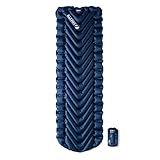
The Q-Core SLX is a thicker insulated air pad from Big Agnes. It suits campers who want a roomy, more cushioned surface and are willing to carry a little more weight than a minimalist pad.
- It is an insulated air pad.
- The brand offers wide sizes for more room.
- The thicker build gives a cushioned feel.
The limitation is packed size. A thicker pad takes more room in the pack than a slim ultralight one.
Choose it if you want a thicker, roomy pad. Skip it if your pack is already tight.
Lightweight Camping Mattress Comparison Table
| Pad | Type | Material and build | Key feature | Best use | Link |
|---|---|---|---|---|---|
| Therm-a-Rest NeoAir XLite NXT | Air pad | Baffled air chambers | Light and packable | Backpacking | Check on Amazon |
| Therm-a-Rest ProLite | Self inflating | Foam and air | Simple setup | Short trips | Check on Amazon |
| Sea to Summit Ether Light XT | Air mat | Air Sprung Cells | Cushioned and insulated | Comfort focused hikers | Check on Amazon |
| NEMO Tensor Insulated | Air pad | Ultralight fabric | Quiet surface | Shared tents | Check on Amazon |
| Klymit Static V | Air pad | V chamber design | Entry level option | Warm weather trips | Check on Amazon |
| Big Agnes Q-Core SLX | Air pad | Insulated, thicker | Roomy and cushioned | Camp and cabin | Check on Amazon |
How to Choose a Lightweight Camping Mattress
- Pad type. Air pads pack smallest, self inflating pads are simplest, and foam pads are the toughest.
- Insulation. Look for the R-value on the listing. A higher number resists heat loss more, which matters on cold ground.
- Weight and packed size. Check both. A light pad that packs bulky can still crowd a small pack.
- Length and width. Regular is common, long is available, and wide gives more room to move. Compare with your height and your tent floor.
- Inflation method. Some pads inflate with a few breaths, some use a pump sack. Know what the listing includes.
- Noise. Fabric and internal construction affect how loud a pad is when you move.
- Repair. Look for a repair kit in the box, or buy one.
- Tent fit. A wide pad needs a tent floor that can take it.
If you will camp in several seasons, an insulated pad is the more flexible pick, though you can also stack a foam pad under a lighter one when the weather turns.
Common Buying Mistakes
- Choosing by thickness alone and ignoring insulation.
- Buying a regular length when you need a long one.
- Skipping a ground sheet and puncturing a thin pad.
- Forgetting that a self inflating pad is bulkier than an air pad.
- Storing the pad tightly rolled with the valve closed for months.
Most of these are simple habits. Check the ground, carry a repair kit and read the listing for size and insulation.
One more habit is worth building: try the pad at home before a trip. Inflate it in the living room, lie on it briefly, and leave it for a while to see whether it holds its shape. A pad that has a problem is far easier to return or repair before you are on a trail, and a short practice run also teaches you how the valve works, how long inflation takes and how the pad folds into its sack. That few minutes of preparation is part of choosing well, because even the best pad is only useful if you can set it up quickly and trust it when you are tired at the end of a day outdoors.
Final Recommendation
For hikers who want light weight and small packed size, the Therm-a-Rest NeoAir XLite NXT is our top pick. If you prefer a simple pad that expands on its own, the ProLite is the straightforward choice. The Sea to Summit Ether Light XT and Big Agnes Q-Core SLX suit campers who want a more cushioned surface, the NEMO Tensor suits those who value a quiet surface, and the Klymit Static V suits warm weather trips and newer campers.
Our two leading picks are below. Confirm the size, weight and R-value on the live page before you order.
Weight, Packed Size and Trip Style
Weight and packed size are the two numbers that matter most when you carry a pad, and they pull in different directions. A slim air pad can weigh less than a pound and pack to the size of a water bottle, while a roomy insulated pad can weigh more and take up a quarter of a pack. Neither is wrong; the right one depends on how far you walk and how much you value a cushioned surface once you stop.
For a one night hike, almost any air pad in this list will do the job, so pick for comfort and for warmth. For a multi day trek, weight accumulates, and the difference between two pads becomes noticeable by the second afternoon. For car camping or a short walk to a lake, weight matters less, and a thicker pad such as the Big Agnes or the Sea to Summit becomes more attractive.
Think about shared gear too. If you and a partner each carry a pad, a wide pad on one side and a regular on the other will not fit the same tent floor well, so check the tent plan. Some makers also sell pads that clip together, which keeps two people on one surface, so read the listing if that matters to you.
Finally, factor in the pump. Many air pads come with a pump sack, and some need a separate pump. A pad that takes a lot of breaths to inflate can be a chore at altitude or in a tired state, so a small pump is a thoughtful addition to the kit.
Care, Repair and Storage
A camping mattress lasts longest when you treat it kindly. Set it up on a clear patch of ground, remove sharp sticks and stones, and use a ground sheet or the tent floor as a buffer. Avoid dragging the pad across rough surfaces, and keep pets with claws away from it.
After a trip, wipe the pad with a damp cloth and mild soap, rinse, and let it dry fully in the shade before packing. Moisture trapped inside a stored pad can cause odor and wear, so open the valve and let it air out. Many makers advise storing air pads loosely rolled or flat, and not compressed in the stuff sack for long periods.
Carry a repair kit on every trip. Most makers include patches, and they add almost no weight to a pack. If you find a leak, locate it with soapy water, dry the area, clean it and apply the patch as the instructions say. Small holes are often fixable, which is one of the reasons to choose a brand with a clear repair process.
Lastly, keep the valve clean and avoid blowing wet breath into the pad over many nights, which can leave moisture inside. A pump sack avoids that problem, and it is a good reason to check what is included in the box.
A Closer Look: Each Pick Across a Real Trip
Lightweight pads are judged on the trail, not the gear closet: how they feel on night three, how they behave on uneven ground, and how much fuss they demand when you are tired and the light is going. This section revisits each pick with trip reality in mind, from inflation habits to the small failures that ruin sleep.
Therm-a-Rest NeoAir XLite NXT: the benchmark ultralight air pad
The XLite line has been the reference point for lightweight backpacking pads for years, and the NXT version continues that role: very low weight and packed size for the warmth and thickness it offers. It suits backpackers who count grams, walk long days and accept an air pad’s care requirements as the price of the category. Its honest limitations are the ones its fans will tell you about: air pads can feel less stable than foam, the surface asks for a gentle touch around camp, and the premium position reflects its benchmark status. For a thru-hike or a weight-critical trip, it is the pick to beat.
Therm-a-Rest ProLite: the self-inflating simplicity pick
The ProLite trades a little packed size for a lot of simplicity: unroll it, open the valve, and the foam core does most of the work. It suits campers who dislike inflating pads by breath or pump every night, beginners building a first kit, and anyone who also wants a pad for car camping overflow or guests. Its limitation is that pure backpackers counting every gram will find lighter air options here, and its thickness is more modest than the plush air pads. As an only pad for mixed use, it is one of the easiest recommendations on this page.
Sea to Summit Ether Light XT Insulated: the comfort-first air mat
The Ether Light XT aims at campers who tried minimalist pads and slept badly: a thicker, quieter-feeling air construction with a surface designed to feel less like a pool toy. It suits side sleepers in the backcountry, who need thickness so hips and shoulders do not bottom out, and anyone upgrading from a basic pad. Its limitations are packed size relative to the most minimal air pads and the care any air mat needs. If sleep quality is your limiting factor on trips, this is the direction to look.
NEMO Tensor Insulated: the quiet, stable-feeling favorite
The Tensor has built a following for feeling more stable and less crinkly than many air pads, with a flat, calm sleeping surface that suits restless sleepers. It suits backpackers who move around at night and light sleepers bothered by pad noise, theirs or a tentmate’s. Its limitation is that it sits in the premium tier of a category where the basics are cheap, so occasional campers may not use it enough to justify the step. Frequent campers usually understand the price after one quiet night.
Klymit Static V: the accessible entry to real pads
The Static V is the pad that gets beginners off the ground properly without a premium outlay, with its distinctive chambered design and a packed size that fits starter kits. It suits new backpackers, scouts, festival campers and anyone furnishing a spare kit for friends. Its honest limitation is insulation and refinement: for cold ground or long, demanding trips, the insulated premium pads here are the better tools, and the Static V is best understood as a fair-weather, high-value starting point that many campers happily use for years.
Big Agnes Q-Core SLX: the plush, high-loft option
The Q-Core SLX leans into loft and a quilted, cushioned feel, suiting campers who prioritize sleeping well over shaving the last grams and who camp from a mix of backpacking and car-accessible sites. Its thicker profile helps on rough, uneven ground where thinner pads telegraph every root. The trade-offs are weight and bulk against the lightest air pads, and the usual air-pad care. Choose it when comfort is the trip’s bottleneck and your pack volume can absorb it.
Head-to-Head: The Closest Calls Among Lightweight Pads
NeoAir XLite NXT or NEMO Tensor?
The classic premium air-pad decision. The XLite leans into the lightest, most proven ultralight formula; the Tensor leans into a quieter, flatter, more stable feel. Gram-counters and long-distance walkers lean XLite; light sleepers and restless sleepers lean Tensor. Both are right answers to slightly different questions.
Ether Light XT or Q-Core SLX?
Both chase comfort through thickness. The Ether Light XT keeps a stronger backpacking brief with its packed profile, while the Q-Core SLX leans plusher and suits mixed car-and-pack use. If every trip is on your back, lean Sea to Summit; if half your nights are beside the car, lean Big Agnes.
ProLite or Static V for a beginner?
The ProLite is the simpler nightly routine and the more mattress-like feel; the Static V is the lighter, cheaper, smaller-packing start. Beginners who camp from cars and yards first often prefer the ProLite’s ease; beginners heading straight to backpacking often prefer the Static V’s packability, with a plan to upgrade insulation later.
Air pad or self-inflating for a restless sleeper?
Self-inflating foam cores feel grounded and move less under you, while the best air pads, the Tensor especially, have closed much of that gap. If you know pad movement bothers you, start self-inflating; if you need thickness for side sleeping, choose a comfort air pad and inflate it slightly soft, which settles the feel considerably.
Buying Criteria in More Depth
R-value, translated into trips
R-value measures resistance to heat flow: higher numbers mean the ground steals less warmth. Rather than memorizing a chart, map it to your trips. Warm summer lowland camping needs little; spring and autumn nights, higher elevations and any ground frost need meaningfully more. The expensive mistake is buying a summer pad for a shoulder-season trip and sleeping cold at full inflation, because no amount of air fixes missing insulation.
Width and length are comfort specs
Standard widths feel narrow to broad-shouldered and side sleepers, and elbows that fall off the pad all night are a real sleep cost. Wide versions exist across these lines and are worth their small weight penalty for many campers. Length can be trimmed by shorter sleepers or those who rest their legs on a pack, but beginners should buy full length and optimize later.
Inflation systems and camp routine
Consider how the pad fills: breath, pump sack or self-inflation. Pump sacks keep moisture out of the pad and save your lungs at altitude; self-inflation removes the task almost entirely. At the end of a long day, the system you will actually use happily beats the theoretically best system you resent.
Ground discipline extends any pad’s life
Clear the tent floor of sharp debris, use a ground sheet where the terrain is rough, and keep pads away from sparks and sharp kit in the tent. Most punctures happen in camp, not on the trail. A tiny repair kit matched to your pad weighs almost nothing and turns a trip-ending leak into a ten-minute fix.
Field Habits for Better Sleep on Any Pad
Inflate the pad fully while you make camp, then lie on it and let out small amounts of air until your hip sinks close to, but not onto, the ground; this slightly soft fill is the single biggest comfort upgrade available for free. Recheck after the temperature drops, since cooling air contracts and a pad set at dusk feels softer by midnight. Keep the valve closed during the day if the pad sits in a hot tent, and store the pad unrolled at home so materials rest in their natural shape. These habits, more than any model choice, separate campers who sleep well from campers who shop endlessly.
More Questions Lightweight Campers Ask
Can I use two thinner pads instead of one good pad?
Layering a foam pad under an air pad is a legitimate cold-weather and puncture-insurance strategy, and many experienced campers do exactly that. For ordinary three-season trips, one well-chosen pad from this list is simpler and usually more comfortable.
How do I find a slow leak at home?
Inflate the pad firmly, listen along the surface and seams, and use soapy water on suspect areas to watch for bubbles. Mark the spot, dry the pad fully, and apply the maker’s repair method. Testing at home beats discovering the leak at altitude.
Is a wider pad worth the extra weight?
For side sleepers, broad frames and anyone whose arms fall off a standard pad, yes: the sleep gained outweighs the grams. Petite back sleepers who sleep still are the campers who can skip the wide versions without noticing.
What is the best first upgrade from a basic foam pad?
If cold ground is your problem, move to an insulated air pad in the Tensor or Ether Light direction. If fuss is your problem, the ProLite’s self-inflation is the upgrade. Name the problem first; the pad follows.
A Simple Shortlist Method for Lightweight Pads
If the six pads still look like variations on a theme, decide with three facts about your trips rather than three opinions about gear.
Step one: name your coldest realistic night
Not your coldest imaginable night, your coldest plausible one: the highest elevation, the earliest spring or latest autumn trip you genuinely take. That night sets your insulation floor. Warm-weather-only campers can happily live at the Static V’s level. Anyone whose calendar includes frost should shortlist the insulated premium pads and treat the saving on a lesser pad as money spent sleeping cold.
Step two: name your carrying reality
Measure your pack’s volume and be honest about your total load. Campers already near their comfortable carrying limit should protect pad weight fiercely, which favors the XLite NXT and Tensor. Campers with room to spare can buy comfort in the Ether Light XT or Q-Core SLX direction and enjoy the trade every night. The pad is the largest single item in many packs, so this decision shapes the whole kit.
Step three: name your fuss tolerance
Some campers find inflating a pad by pump sack a pleasant camp ritual; others, after a hard day, want the ProLite’s unroll-and-rest simplicity. Neither temperament is wrong, but a pad that fights yours will be left at home by the fourth trip, and the best pad is always the one that actually gets carried.
What Experienced Backpackers Learn the Hard Way
Sleep is a skill, not just a purchase
Veterans sleep well on mid-range pads because they manage the system: a level pitch, a slightly soft inflation, a pillow improvised or carried, and a routine that winds the body down. Beginners often buy the flagship pad and sleep badly in a badly pitched tent, then blame the pad. Buy a good pad from this list, then invest the same attention in pitch and routine, and the combination outperforms any single purchase.
Your pad and bag are one system
A warm bag on an uninsulated pad still sleeps cold, because the ground drains heat from beneath while the bag’s insulation is compressed under you. Campers who upgrade the bag and ignore the pad repeat the same cold night with better equipment. When a trip demands more warmth, the pad is usually the correct first upgrade, which is why this category rewards research.
Small leaks are a when, not an if
Across years of use, most air pads eventually meet a thorn, an ember or a sharp tent-mate’s gear. Campers who carry the repair kit and have practiced once at home treat this as a minor event. Campers who have not, treat it as the end of the trip. The difference costs almost nothing, weighs almost nothing, and is entirely decided before you leave home.
Pads for Different Trip Styles
The long-distance walker
When the trip is measured in weeks, every gram compounds and durability across nightly use matters more than one plush night. The XLite NXT’s proven ultralight brief and the Tensor’s calm surface lead this shortlist, and the choice between them is the feel preference discussed earlier. Long-distance walkers should also favor pads whose repair systems they have genuinely practiced.
The weekend warrior
Two-night trips from a car park reward comfort per effort over absolute weight. The Ether Light XT and Q-Core SLX shine here, and even the ProLite’s simplicity suits campers whose packs are small but whose walks are short. Weekend campers get more joy from sleeping well than from owning the lightest kit on the trail.
The beginner building a first kit
Start with the pad that matches your first season’s trips: the Static V for warm, simple beginnings, the ProLite for mixed car and trail use. Both leave budget for the rest of the kit, and both teach you what you value before you spend flagship money. Most experienced campers’ first pads were humble; their knowledge was the real upgrade.
The side sleeper in the backcountry
Side sleeping concentrates weight on hip and shoulder, and thin or hard pads punish it. Thickness and a slightly soft inflation are your tools, which points to the Ether Light XT and Q-Core SLX, with the Tensor close behind. Side sleepers should treat pad thickness as a headline specification, not a luxury detail.
Testing a New Pad Before It Counts
Spend one night on the new pad at home, on a hard floor, before any trip depends on it. You will learn its true inflation sweet spot, whether its width suits your sleeping style, and how it sounds when you turn, all while a return is still easy. This single habit, more than any review, separates campers who trust their sleep system from campers who hope. Hope is not a strategy at altitude, in weather, a long walk from the car.
Building the Rest of the Sleep System Around the Pad
A pad is one third of a sleep system, and the other two thirds decide whether its strengths show. The sleeping bag or quilt must match the pad’s season: a warm pad under a summer bag in autumn still leaves the top of you cold, and campers routinely misdiagnose this as a pad failure. Treat the two as one purchase decision even if you buy them months apart, and let the coldest planned trip set the standard for both. The pillow is the third element and the most neglected: a jacket in a stuff sack works for some, but many campers sleep dramatically better with a small dedicated pillow, and the weight is trivial next to the pad’s. Ground insulation can be tuned further with clothing: the layers you wore during the day, laid under or over the pad’s edges, tidy up the cold spots at shoulders and feet that even good pads leave. Finally, site choice is part of the system. A sheltered, level pitch on soft ground makes a mid-range pad feel premium, while a wind-scoured slope makes a flagship feel ordinary. Experienced campers spend their attention in that order: site, system, then gear, and their mid-priced pads outperform beginners’ flagships with remarkable consistency.
When to Retire a Pad and What to Buy Next
Pads rarely die dramatically; they fade. The signs are a valve that needs nursing, a surface that will not hold its sweet-spot inflation past midnight, insulation that feels thinner than memory says, or a patch count that tells its own story. A pad that still works but no longer inspires trust belongs in the car kit, the guest pile or the loaner bag for friends, where its remaining life is genuinely useful. Your next purchase should be guided by a trip diary more than by reviews: which nights were cold, which were uncomfortable, which setups annoyed you. If cold dominates the diary, insulation is the upgrade and the premium insulated pads here earn their tier. If discomfort dominates, thickness and width are the upgrade. If annoyance dominates, the self-inflating simplicity of the ProLite may be the wisest money in the category. Campers who retire pads thoughtfully build, over years, a small quiver matched to their trips rather than a closet of near-duplicates, and that quiver, not any single flagship, is what experienced outdoors people actually mean by having their sleep sorted.
One Last Check Before You Order
Before you buy a pad, confirm it against your next real trip rather than your dream one. Name the destination, the season and the lowest temperature you honestly expect, and check the pad’s insulation brief against that night. Lay your pack out and confirm the packed pad leaves room for everything else without force. Decide how it inflates and whether that method still sounds pleasant at the end of your longest planned day. And put the matching repair kit in the same order, because the day you need it is not the day to shop for it. If those four checks pass, stop comparing: the remaining differences among the six pads in this guide are refinements, and any of them will sleep well inside a system that has been pitched, layered and inflated with the care described above. The trail rewards the camper whose gear decisions are finished at home, leaving the whole trip free for the walking, the weather and the sleep itself.
How Weather Changes the Way a Pad Performs
The same pad is a different product in different weather, and experienced campers plan for the version they will actually meet. In heat, air pads expand as the day warms them, so a pad filled firmly at a cool dusk can feel drum-tight by a hot afternoon if it stays inflated in a tent; vent a little before the heat builds. In cold, the air inside contracts overnight, which is why a pad that felt perfect at bedtime can feel thinner at three in the morning, and why topping up before sleep on cold nights is a habit worth building. Humidity works quietly on everything: pads put away even slightly damp come home with a smell that takes a full airing to forgive, so the last morning of a trip should include ten minutes of drying whenever the sun allows. None of this is a flaw in any model on this list; it is the physics of sleeping on air and foam outdoors. Campers who learn the weather’s part in the system stop blaming their gear and start managing their camp, and their pads, whatever tier they chose, perform like the flagship versions of themselves.
The quiet virtue of a dialed sleep system
There comes a point in a camper’s life when the sleep system stops being a shopping topic and becomes a trusted routine: the same pad, pitched the same way, paired with the same bag and pillow, producing the same good night in places that could hardly be more different. Reaching that point is worth more than any single upgrade, because it converts sleep from a variable into a constant, and trips get planned around daylight and distance instead of around dread of the night. Every pad in this guide can anchor that routine for the right camper. The habits in these sections, testing at home, managing inflation, respecting weather, retiring gear thoughtfully, are simply the road to that point, and they are traveled once, not every season.
Why your oldest pad teaches the most
If you already own any pad at all, sleep on it once more before you buy, and pay deliberate attention. Where exactly does it fail you: at the hip, in the cold that creeps from below, in the minutes of inflation when you are already tired, in the noise every time you turn? That failure, named precisely, is the most valuable specification sheet you own, because it converts this entire guide into a single question: which pick fixes that failure without creating a new one? Beginners shop for the best pad in the abstract and often buy a superb answer to somebody else’s problem. Campers with one honest night of diagnosis behind them shop for their pad, and they are the ones still using it, happily and without further research, five seasons later.
Frequently Asked Questions
What does R-value mean?
It is a measure of resistance to heat loss. A higher number means more insulation. Check the listing for the pad you are viewing.
How do I inflate a camping mattress?
Open the valve and blow, use a pump sack or use a small hand pump, as the maker describes. Self inflating pads expand on their own.
How do I find a leak?
Inflate the pad and brush soapy water over it, looking for bubbles. Patch it with the maker’s repair kit.
Can I use a camping mattress at home?
Many people do for guests or short stays, though a regular bed is built for different use.
How do I store a camping mattress?
Keep it clean and dry. Many makers suggest storing air pads unrolled or loosely rolled with the valve open.
Does the pad fit in my tent?
Check the pad’s width and the tent’s floor plan. Wide pads need roomier tents.
Do I need a ground sheet?
It is a sensible extra, especially for thin air pads on rough ground.
Can I carry a foam pad as a backup?
Some campers do, and it adds insulation and a fallback if an air pad fails.