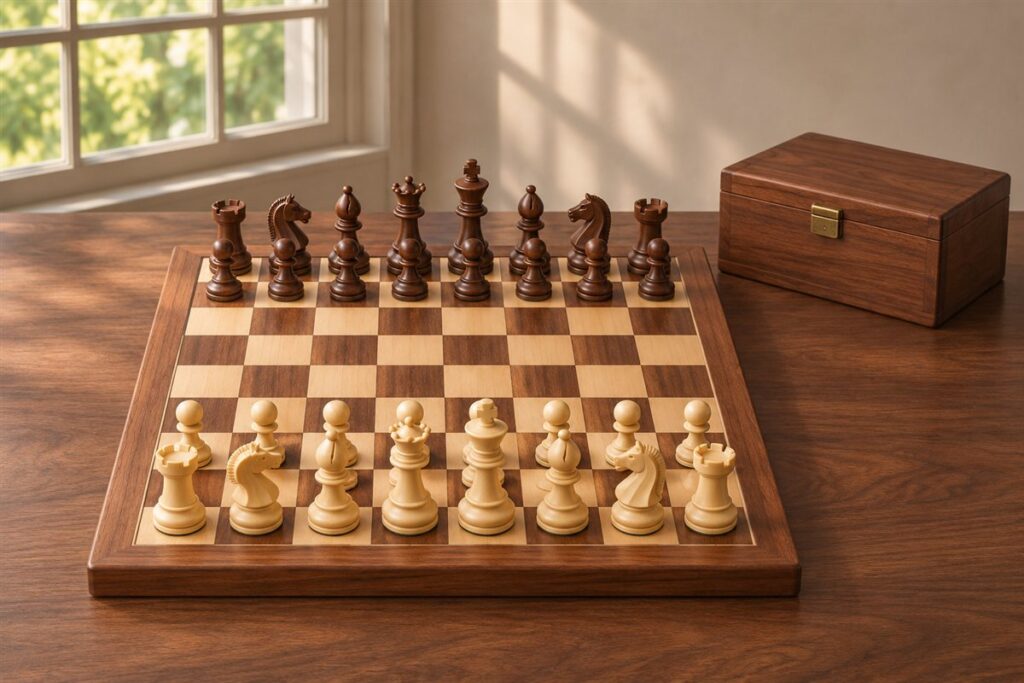
A chess table combines furniture and game board, so it has to look right in a room and work well over a long game. Antique-style designs often feature inlaid squares, turned legs and a warm wood finish. They can anchor a reading corner or a study.
We have not used these products ourselves, so this guide does not report results. It shows how to choose, based on construction details makers list. Use the factors below to compare listings, and measure your space before you decide. Think about how the table will be used day to day. A table in a busy family room needs a tough finish and rounded corners, while one in a quiet study can favor delicate detail. Settling this early narrows your options a great deal and avoids a poor fit later on. Photos help, but always rely on the dimensions in the listing, since pictures can make furniture look larger or smaller than it is.
As an Amazon Associate we earn from qualifying purchases. Links on this site are affiliate links, and they do not change the information we give.
What to Look For
| Factor | Why it matters | What to check |
|---|---|---|
| Table size | The table must fit the room and the players | Compare top size and height with your chairs and available floor space |
| Board squares | Square size decides which pieces fit | Check the square size listed and match it to your chess set |
| Construction | Frames and joints decide long term stability | Look for solid wood or sturdy frames and a stable, level base |
| Legs and base | Legs affect comfort and balance | Check leg spacing so knees fit, and look for floor protectors |
| Finish | Finish influences looks and care | Read whether the surface is lacquered, oiled or laminated |
| Storage | Drawers keep pieces with the table | Look for a drawer or compartment sized for a full set |
| Assembly | Some tables arrive in many parts | Read what tools are needed and how many people help |
Setup and Care Tips
- Measure the doorways and the room before the table arrives.
- Level the table on the floor and adjust the feet if there is any wobble.
- Use coasters or keep drinks away from the board surface.
- Dust with a soft cloth and follow the maker’s finish care directions.
- Place the table away from radiators and strong sun to protect the wood.
Mistakes to Avoid
- Buying a table with squares too small for the pieces you own.
- Overlooking the height, so seated play is awkward.
- Forgetting that very ornate legs can limit leg room.
- Skipping the assembly notes and finding parts missing late.
- Placing the table in a spot that blocks a walkway.
FAQ
What size should the squares be?
Match them to the king base of your set, leaving a little room around each piece. Many players like squares around two inches or a bit larger.
Can I use a chess table for other games?
Often yes, since many boards also suit draughts or backgammon, but check whether the surface is fixed or reversible.
Questions to Ask Before You Buy
- Will the table live in a fixed spot, or will you move it between rooms?
- Do the chairs or stools you own fit under the table at a comfortable height?
- Is the playing surface inlaid, colored, or a separate board that lifts out?
- Does the table have a drawer or shelf for pieces, and is it deep enough for the set you plan to use?
- Will the finish suit the other furniture in the room?
- Do you want a surface that also works for cards, puzzles or other games?
Matching It to Your Job or Space
A chess table is furniture first and a game accessory second. Think about where it will sit and who will use it.
| Setting | What suits it | Watch for |
|---|---|---|
| Study or library | Solid frame with a carved or turned base | Weight when moving it |
| Living room | Slim top that tucks near a sofa | Leg room for taller players |
| Game room | Larger top with storage | Space for chairs on both sides |
| Small apartment | Compact folding style | Wobble on uneven floors |
Who Should Skip It
A dedicated table is a poor match if floor space is tight or if the game is played only now and then. In that case a good board on a dining table works fine, and nothing needs to be stored. It may also not suit households with young children who climb on furniture, or homes where a decorative surface could be marked by drinks and daily use.
Collectors who hope for a true heirloom should also be careful. An antique-style table is built to resemble older designs, and the look can differ from a genuine period piece in materials and construction. Judge it for what it is, a pleasant piece of furniture made for play and display.
Before ordering, measure doorways and hallways so the table can actually reach its spot. Follow the maker’s manual for assembly and care, and consult a qualified professional where needed for heavy lifting or wall fixings. Compare your own seating against the stated height, because comfort over a long game depends on it more than any carving.
Finally, think about light and surroundings. A table near a sunny window can fade a finish over time, and one beside a radiator may dry out. Choose a calm corner with soft lighting where players can concentrate, and use coasters so drinks do not leave rings on the playing surface. Small habits like these keep furniture looking good for many years.
The Short Version
Choose a table that fits the room, has squares matched to your pieces, a stable frame and a finish you are happy to look after. Measure twice before buying.