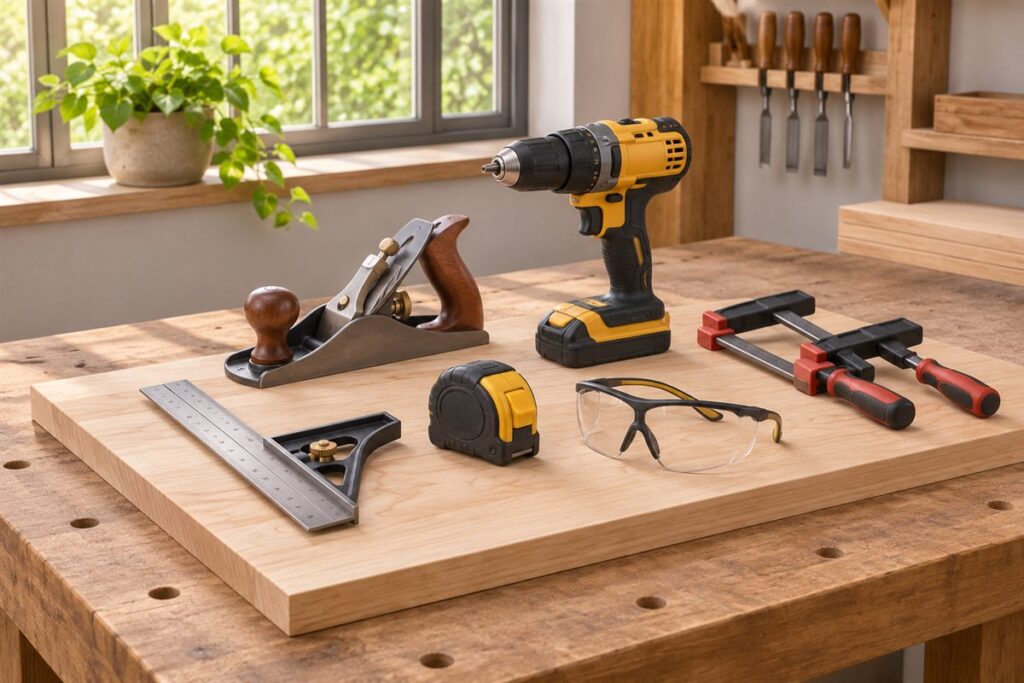
A garage storage system combines cabinets, shelves, rails and hooks into one planned layout instead of a pile of separate pieces. It suits people who want tools, sports gear and household overflow in a tidy arrangement that can grow over time. We have not used these products ourselves, so this guide is a framework for choosing rather than a verdict on any unit. Use it to narrow the field before you compare listings.
Begin with an inventory of what you actually own. Group items into tools, garden gear, sports equipment, car care and seasonal boxes, then decide which group needs closed storage and which can live on open shelves or hooks. Measure your walls, note where outlets, windows and doors sit, and mark the space your vehicle needs. A good system uses wall height as well as floor area, and it leaves a clear path to the door. Draw a simple plan with measurements before you compare options, because modular parts only help if they fit your room.
As an Amazon Associate we earn from qualifying purchases. Links on this site are affiliate links, and they do not change the information we give.
What to Look For
| Factor | Why it matters | What to check |
|---|---|---|
| Modularity | Needs change as hobbies and tools change | Look for add-on parts that match the same line |
| Load capacity | Shelves and rails carry very different weights | Read the maker’s limit for each component |
| Wall fit | Fixings depend on masonry, studs or panels | Check hardware against your wall type |
| Footprint | Depth can block car doors and walkways | Measure depth and the clearance beside the vehicle |
| Material and finish | Damp and temperature swings affect surfaces | Check coatings, edges and feet |
| Closed or open storage | Doors hide clutter but cost floor space | Decide what must stay out of dust and sight |
| Assembly effort | Large kits take hours and extra hands | Read the parts count and tools required |
Setup and Care Tips
- Plan the layout on paper first, then lay the parts on the floor before fixing anything.
- Place frequently used items between waist and shoulder height.
- Keep heavy tools low and light items high.
- Wipe surfaces periodically and keep chemicals away from bare edges.
- Revisit the layout each season and move what you no longer use.
Mistakes to Avoid
- Buying a full kit before measuring the room.
- Mixing parts from lines that do not interlock.
- Ignoring where outlets, switches and windows sit.
- Filling every inch so that nothing is easy to reach.
- Using the wrong fixings for the wall material.
FAQ
Is a modular system better than separate pieces?
It depends on your plan. Modular lines make it easier to add parts later, while separate pieces can suit a small or odd space. Compare the parts you need, not the whole kit.
How much floor space should I leave?
Leave enough for vehicle doors to open fully and for you to walk past with a bin. Measure with the vehicle in its usual spot.
Questions to Ask Before You Buy
- What do I actually need to store: tools, seasonal items, sports gear, or tires?
- Are my walls solid enough for mounted racks, and what material are they made of?
- How much of the floor do I need to keep clear for a vehicle or workbench?
- Do I need lockable doors, open shelves, or a mix?
- Will the garage see damp or large temperature swings that affect certain materials?
- Can I assemble it alone, or will I need a second person and extra tools?
Matching It to Your Job or Space
A one car garage with a vehicle parked inside usually favors wall mounted rails and overhead racks, which use vertical space and leave the floor free. A two car garage or a workshop can take freestanding cabinets and a long bench run. If the room doubles as a hobby area, choose systems that can be reconfigured as your projects change.
Measure ceiling height, door swing, and the clearance needed when a car door is open. Mark the plan on the floor with tape before ordering anything.
Compatibility Checks
- Stud spacing and wall material against the fasteners the system uses.
- Garage door track and opener position when planning overhead pieces.
- Weight limits listed by the maker for each shelf or hook.
- Whether accessories from one line fit rails from another.
Always follow the maker’s manual, local rules and a qualified professional where needed for mounting heavy items overhead.
Who Should Skip It
Renters who cannot drill into walls may prefer freestanding units. If you have little to store, a few hooks and one shelf may do the job without a full system.
Feature Trade-offs
| Option | Benefit | Compromise |
|---|---|---|
| Wall rails | Frees the floor | Needs solid mounting |
| Freestanding shelves | Move without tools | Uses floor area |
| Closed cabinets | Hide clutter and dust | Harder to see contents |
| Overhead racks | Use unused height | Awkward to load |
Planning in Phases
Plan the project in phases. Clear the floor first, sort items into keep, donate and discard piles, then install one zone at a time so the garage stays usable. Label shelves and bins as you go, and leave a little spare room for items you will add later.
The Short Version
List what you own, measure the room and decide which items need doors. A system that fits those facts and can grow will serve the garage for years. If an option fails on fit or load, set it aside. Treat every claim as the maker’s claim until you have handled the product yourself, and keep the return terms in mind when you buy.