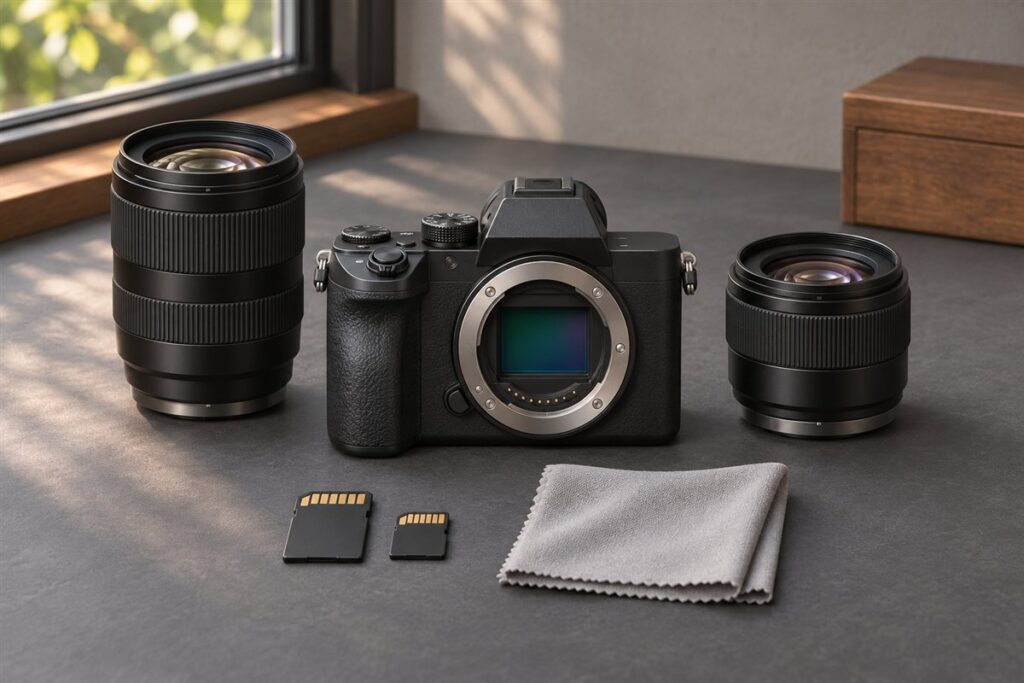
A waterproof memory card case is a small hard shell with a gasket seal that holds SD, microSD or other cards. We have not used these products ourselves, so this guide covers features and construction only and does not promise how any case will hold up in water.
The right case depends on the cards you carry and where you work. A hiker, a diver and a wedding photographer all need different capacity, size and ways to tell full cards from empty ones. Use the table to compare the key points, then check each maker’s listing for exact details.
As an Amazon Associate we earn from qualifying purchases. Links on this site are affiliate links, and they do not change the information we give.
What to Look For
| Factor | Why it matters | What to check |
|---|---|---|
| Seal design | A rubber gasket and a firm latch keep moisture out | The maker’s stated water resistance class and gasket condition |
| Card type | SD and microSD cards need different slots | Which card formats the case accepts and how many of each |
| Capacity | More slots mean fewer cases to carry | Slot count and whether slots are numbered |
| Shell material | Hard plastic resists crushing better than soft pouches | Wall thickness, hinge style and latch strength |
| Size and clip | A small case fits a pocket or camera bag | Outer size, weight and carabiner or lanyard loop |
| Labeling | Marking cards as used prevents mistakes | Write-on area, color tabs or a flip card system |
Setup and Care Tips
- Check that the gasket sits flat in its groove and is free of grit or hair before you close the case.
- Close the latch fully and press the lid to feel that it clicks.
- Rinse the shell with fresh water after salt or mud, and dry it before you open it.
- Keep used and unused cards in separate slots, and mark them with a clear system.
- Replace a case if the gasket cracks, the hinge loosens or the shell warps.
Mistakes to Avoid
- Opening a wet case in the field and letting droplets reach the cards.
- Overfilling a slot with a thick adapter that stops the lid from closing.
- Skipping the gasket check before each trip.
- Mixing used and blank cards with no labeling.
- Trusting a case with no stated water resistance class for wet conditions.
FAQ
Does waterproof mean it can go underwater?
Not necessarily. Makers use different terms such as water resistant or waterproof, with different depth or time limits. Read the maker’s own wording and limits in the listing.
How many slots do I need?
Count the cards you carry on a typical trip and add a few spares. A small case is easy to pocket, while a larger one keeps all your cards together. Some people also store spare adapters in similar cases, but a card case has slots shaped for cards, so check whether the insert can be removed and what else the listing says it fits. Think too about whether you want one case per trip or one per camera.
Questions to Ask Before You Buy
- How many cards do I carry on a normal shoot day, and do I want spare room for growth?
- Do I use full-size cards, micro cards, or both?
- Will the case clip to a bag strap, or live inside a pocket?
- Can I tell used cards from blank ones at a glance?
- Can I open and close the lid with gloves on?
- Does the seal look easy to clean, with no deep grooves where grit can hide?
Matching It to Your Shoot
A wedding or event shooter swaps cards often and needs fast access, so a wide opening with clear slot labels matters more than a tiny footprint. A trail runner or kayaker with an action camera may need only two or three slots, and a slim case that rides on a strap without bouncing. Travel photographers tend to like a mid-size case that holds backups, because spare cards are easy to misplace in a loose bag.
If you shoot in dusty or sandy places, think about how the lid closes. A hinge with a firm latch usually handles grit better than a thin snap. Always read the maker’s waterproof notes in the manual before trusting any case near water, and treat the seal as something to inspect regularly.
Feature Trade-offs
| Choice | Upside | Downside |
|---|---|---|
| Hard shell | Resists crushing in a packed bag | Bulkier in a pocket |
| Soft pouch | Flat and light | Cards can bend under pressure |
| Many slots | One case holds everything | Larger and slower to find a card |
| Few slots | Compact and quick | Little room for spares |
| Carabiner loop | Easy to clip on | Can snag on branches |
Who Should Skip It
If you only shoot a few frames at home and keep one card in the camera, a dedicated case may sit unused. A simple small box in a drawer can do the job. People who already own a padded camera bag with card pockets and rarely work outdoors can also skip it. Spend that effort on a good backup habit instead, such as copying files to a drive after each session and keeping original cards until the copy is checked.
Storage Notes
Keep the case in a dry spot between trips and let it air out with the lid open after a wet outing. Wipe the seal with a soft cloth, check it for grit or cracks, and label each slot so you always know which cards are full. Store spare cards in the same place every time so you never hunt for one at the beginning of a shoot.
The Short Version
Check the seal, the card formats and the slot count, then compare size and labeling. Read each maker’s details closely and choose the case that fits your cards and your trips.