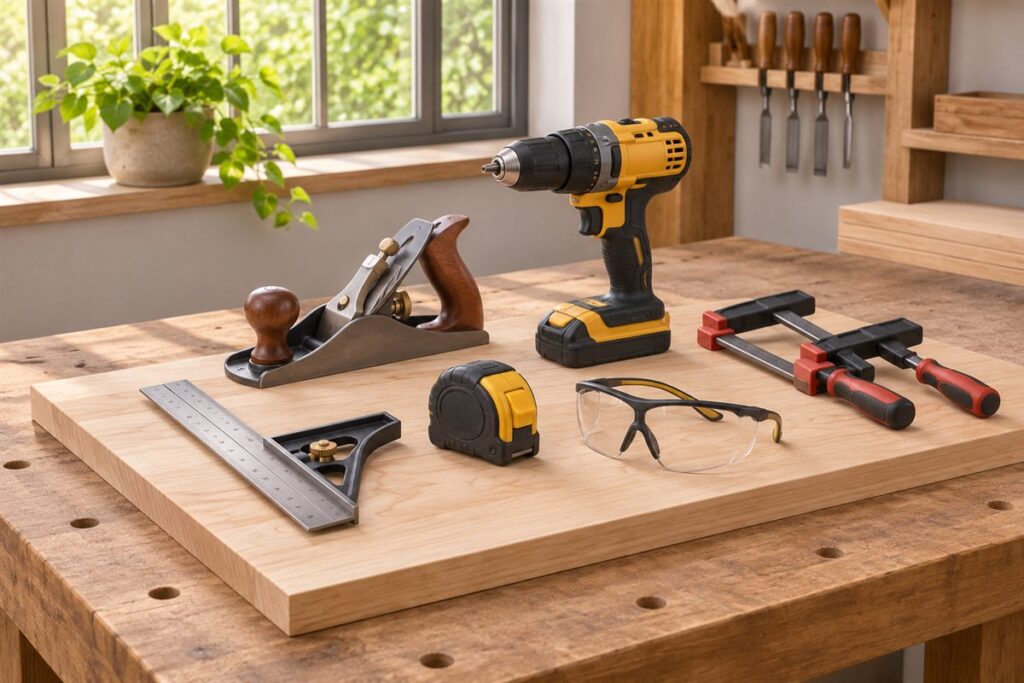
A tool box should match what you carry, where you work and how far you move it. A hand-carried case suits a small kit for home repairs, while a rolling chest suits a growing collection that lives in a garage. Think about the heaviest load you will lift before looking at looks or extras.
Four common styles
- Portable hard case: a single tray or two, good for a basic set of hand tools and fasteners.
- Soft tool bag: light, flexible and roomy, with outside pockets for quick access. It offers less protection against crushing.
- Rolling cabinet or chest: drawers on wheels that keep a large collection sorted. It needs floor space and a flat surface.
- Wall or pegboard systems: keep tools in view and off the floor, but do not travel with you.
Many people combine two styles, such as a small case for jobs around the house and a larger chest at home base.
Decision table
| Factor | Why it matters | What to check |
|---|---|---|
| Capacity | An overfull box is hard to carry and hard to search | Space for your longest tool, plus room to grow |
| Material | Affects weight, dent resistance and rust | Plastic is light, steel is stiff, fabric is flexible |
| Latches and hinges | Weak parts fail first when a box is full | Metal latches and a sturdy hinge pin |
| Handle | You carry the full weight by it | Wide grip, firm attachment points, comfortable feel |
| Wheels and drawers | Decide how easily a heavy chest moves and opens | Smooth slides, stoppers and the maker’s stated load limits |
Packing it sensibly
How you load a box matters as much as which one you buy. Heavy items belong low and near the handle so the box hangs level. Keep sharp edges covered or in a sleeve, and put small parts in lidded containers so they do not spill.
- Sort tools by job: measuring, cutting, driving and gripping.
- Place the heaviest items in the bottom tray.
- Keep the everyday tools in the top tray where you see them first.
- Wipe tools dry before packing to limit rust.
Sizing by Your Longest and Heaviest Tools
The best way to size a tool box is to start with the tools themselves. Lay out everything you plan to store and find the longest item, which is often a hand saw, a pry bar, a level or a long wrench. The interior must be long enough for it, or it will stick out and prevent the lid from closing. Then look at the tallest item and the bulkiest, such as a drill case or a hammer, and check whether the box has the depth to hold them.
Next, think about weight. A full box becomes heavy quickly, and a box that is too large invites you to overfill it. Estimate the total weight you will carry and compare it with the maker’s stated load rating, where one is given. If you need to carry the box up stairs or across a yard, size down. If it will live in one place and roll on wheels, you have more freedom.
Leave some room to grow, but not too much. A box that is slightly larger than your current needs lets you add a few tools. A box that is much larger encourages clutter and makes it harder to find things. It is usually easier to add a second box later than to manage a half-empty oversized one.
- Measure your longest tool and compare it with the interior length in the listing.
- Check the interior depth, not only the outside dimensions.
- Make sure the box fits where it will be stored, with the lid able to open fully.
- Check the trunk or vehicle space if you carry it regularly.
Inside the Box: Trays, Dividers and Organization
How the interior is organized affects how quickly you find tools and how well they are protected. Many boxes include a removable top tray for small items and a larger lower compartment for bulky tools. Check that the tray slides or lifts out easily and that it stays in place when you carry the box. A tray that is hard to remove becomes a nuisance, and one that falls out is worse.
Dividers, compartments and small bins are useful for loose items such as screws, bits and fuses. Adjustable dividers let you reorganize as your collection changes. Lidded organizers keep small parts secure, but they must close firmly or items will spill in transit. Look for places to secure long tools, such as loops or slots for screwdrivers and pliers.
Drawer-based systems offer a different style of organization, with each drawer holding a category. Check that drawers slide smoothly, lock in place when closed and have stops that keep them from pulling out fully. Liners can stop tools from sliding and protect surfaces, and some drawers come with them while others do not.
The way you organize inside matters as much as the box. Group tools by function, keep frequently used items at the top and put the heaviest items low and central. Separate sharp or delicate tools from others, or keep them in sleeves. A well-organized box saves time and reduces damage to tools and to your hands.
Material and Build Quality Checks
Tool boxes are made from plastic, steel, aluminum and fabric, and each has strengths and limits. Plastic is light, resists rust and is usually affordable, but some types can crack in cold or under heavy impact. Steel is strong and rigid, resists crushing, but is heavier and can rust if the finish is damaged. Aluminum is lighter than steel and resists rust, though it can dent. Fabric bags are light and flexible with many pockets, and they are less protective against crushing or sharp tools.
Whatever the material, examine the details that decide how long it lasts. Hinges are a common failure point, so look for sturdy hinge pins and reinforced mounting points. Latches should snap firmly and stay closed when the box is lifted. Metal latches generally outlast plastic ones, though good plastic latches exist, so read what buyers say about durability.
- Handles: check the attachment points, since they carry the whole weight.
- Seams and welds: look for clean, even joins, free from sharp edges.
- Finish: a good coating resists scratches and rust.
- Seals: some boxes are designed to resist dust and water, and the maker should state the claim.
- Locks: if security matters, check for a padlock hasp or built-in lock and how strong it appears.
When the box arrives, test it. Load it with your tools, lift it by the handle, open and close the latches and look for flexing, rattles or wobbles. If something feels weak, return it while you can.
Mobility: Wheels, Handles and Stacking
How you move your tools should guide the type of box you select. For short carries, a hand-held box with a comfortable handle is ideal. For longer distances or heavy loads, a box with wheels and a telescoping handle saves your back. Check the size and material of the wheels. Larger wheels cope better with rough surfaces and thresholds, while small wheels suit smooth floors. Wheels should be firmly attached, and the axle should look solid.
Rolling chests and cabinets are designed to stay in a workshop or garage and move across a flat floor. They should have locking casters, at least on some wheels, so the chest does not roll when you pull a drawer. Check the stated load capacity of both the chest and the drawers, and distribute weight evenly. Opening several drawers at once can tip a top-heavy chest, so many have interlocks that prevent this. Check whether the model has this feature.
Stackable systems let you build up a set of boxes of different sizes that lock together. They are convenient on job sites and in vehicles. Make sure the latches and the connectors between boxes feel secure, and check whether the system is compatible with others you may add later.
Handles come in several forms. Wide, padded or contoured grips distribute the weight better than narrow ones. A shoulder strap can help with bags and some cases. Always lift with your legs, keep the load close to your body and avoid carrying more than you can manage safely.
Protecting Tools and Your Space
A good tool box also protects your tools from the environment and your home from the tools. Moisture is the biggest enemy, so store the box in a dry place, off bare concrete if you can, because concrete can draw moisture. Wipe tools dry before putting them away, and consider silica gel packs or rust-inhibiting products designed for tool storage, following the instructions on the packaging. Avoid leaving the box in a hot car or in direct sun for long periods.
Keep sharp edges covered, and store blades and bits in cases or sleeves. Keep heavy items from pressing against delicate ones like measuring tools or levels, which can lose accuracy if knocked. If you store fuel, oil, solvents or batteries, follow the manufacturer’s storage instructions and keep them separate from your hand tools where possible.
Think about safety around children and pets. A lockable box or a high shelf keeps sharp and hazardous tools out of reach. Place the box where it will not be a tripping hazard, and where you do not have to lift it from an awkward height.
Review the contents occasionally. Remove duplicates, broken tools and items you no longer use. Replace the box when latches fail, the handle weakens, the bottom cracks or rust spreads through the body. Starting with a box that suits you and adding to it as your tool collection grows is a sound approach.
FAQ
Is plastic or metal better for a tool box?
Neither wins everywhere. Plastic is lighter and does not rust, while metal is stiff and handles rough use. Choose by how much you carry and the conditions where you work.
How big should my first tool box be?
Choose a size that holds your longest hand tool and a small tray for fasteners, and nothing much bigger. A box that fits your kit is easier to carry.
Should I buy a tool box that is bigger than I need?
A little extra space is useful, but a much larger box encourages clutter and is harder to carry. It is often easier to add a second box later.
What is the best tool box for a car?
A compact, sturdy box or bag that holds basic tools and stays put in the vehicle. Choose one with secure latches, and check how it fits in your trunk or storage area.
How do I stop tools from rusting in a box?
Wipe tools dry, store the box somewhere dry and consider rust-inhibiting products used as directed. Avoid leaving it in damp areas or on bare concrete.
Are rolling tool chests worth it?
They suit a large collection that stays in one place, since drawers keep tools sorted. Check the caster quality, drawer slides and load ratings, and keep weight evenly distributed.
Can I mix soft bags and hard cases?
Yes, many people use a bag for quick jobs and a hard box for storage. Choose based on how you carry and protect your tools.
How do I organize a tool box well?
Group tools by function, put heavy items low and central, and keep everyday tools in the top tray. Use dividers or bins for small parts.
When should I replace my tool box?
When the latches or handle fail, the base cracks, rust spreads or it no longer holds your tools securely. Replace it before a failure causes injury or damage.
The Short Version
Choose a box for your actual load and your actual route, then check latches, handle and capacity. Pack heavy tools low and keep them dry. A second, larger storage unit can come later.