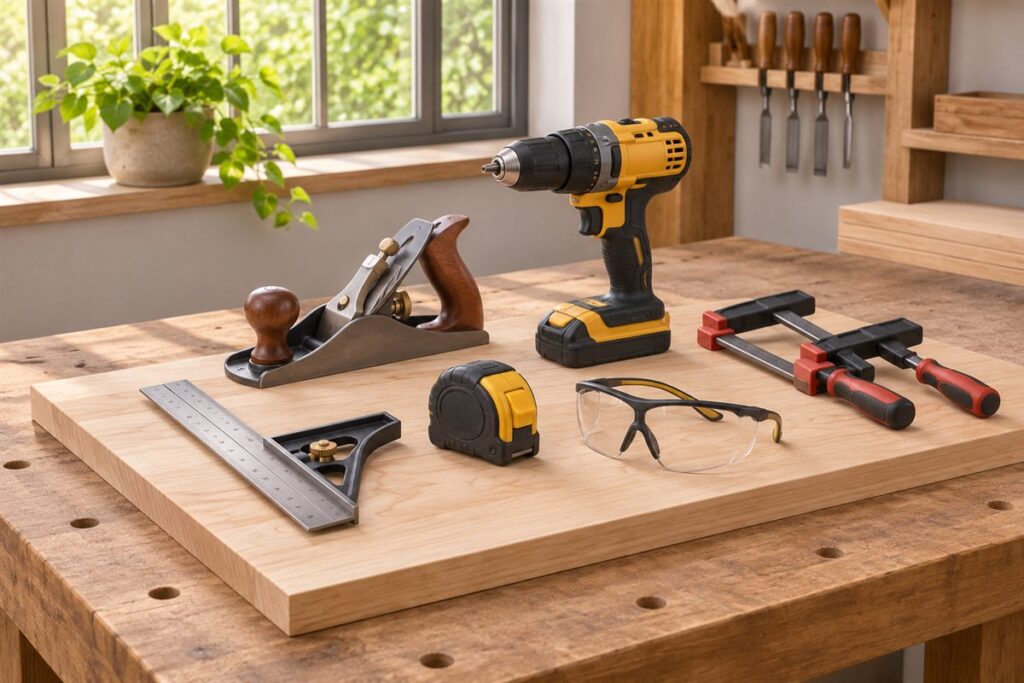
When floor space is tight, store tools up on the walls, behind doors and under furniture. A compact kit in one stackable case and a few wall hooks can serve an apartment well. The aim is simple: every tool has a home, and nothing sits on the floor.
Use the walls
- Pegboard or slat wall: a flexible panel with hooks and bins that you can rearrange as your kit changes.
- Magnetic strips: hold screwdrivers, pliers and other steel tools in view.
- Shelf above the door: uses wasted height for boxes you rarely open.
- Rail systems: hang buckets, tape measures and clamps.
Anchor racks to studs or use the correct wall anchors for the surface, and follow the weight limits stated by the hardware maker. If you rent, ask about wall rules first.
Hide it in other furniture
- Under-bed boxes: flat containers on wheels suit long or flat items.
- Over-door organizers: shoe-style pockets hold small tools, tape and glue.
- Storage bench or ottoman: a seat in the entryway can hide a toolbox.
- Cabinet doors: add small racks inside a closet or kitchen cabinet.
Space-saving ideas compared
| Idea | Best for | Watch out for |
|---|---|---|
| Stackable cases | Power tools and bit sets | Heavy boxes belong on the bottom |
| Wall rail | Everyday hand tools | Weight limits and wall type |
| Folding workbench | Small projects in a living area | Needs a flat wall space to fold against |
| Under-bed box | Seasonal or long items | Dust and damp, so keep it dry |
| Over-door pockets | Light small items | Do not overload the door hinges |
Organizing a small kit
- Lay out all your tools and remove duplicates and broken items.
- Decide which you use weekly, monthly and rarely.
- Give weekly tools the easiest spot, and rare tools the highest or lowest one.
- Use small lidded bins for screws and anchors, and label them.
- Store sharp tools in sleeves or with blades covered, and keep them out of reach of children.
- Keep batteries and chargers away from heat and damp, following the maker’s guidance.
Keep the setup flexible. If you move often, choose freestanding or removable systems such as stackable cases and over-door hangers rather than drilled-in racks. Photograph your layout so it is quick to set up again in a new place.
Check that nothing blocks exits, breaker panels or heating equipment, and keep heavy loads low so shelves are not top-heavy. Do not guess: read the weight limit on every bracket and shelf before you load it.
Renting and Temporary Living Considerations
Storage plans change when you do not own the walls. If you rent, review your lease and ask the landlord before drilling, mounting or adhering anything to surfaces. Rules vary, and some leases allow small holes while others require that walls be left intact. Getting permission in writing avoids disputes when you move out.
Plenty of options need no drilling. Freestanding shelving, stackable cases, rolling carts, over-door hangers, tension poles and furniture with built-in storage all work without marking the walls. Adhesive hooks and strips can be used for light items, but check their weight rating and whether they are safe for your wall finish, and follow the maker’s removal instructions to avoid damage. Do not use adhesive products for heavy or sharp tools.
If you may move often, think about portability. Choose containers that stack, carry easily and can be packed in a vehicle. A small collection in one sturdy bag or case is easy to move, while a wall-mounted system may be left behind. Keep a list of what each box contains. When you set up in a new place, photograph the arrangement, so you can reproduce it quickly. If your home is shared, agree on where the tools go, and label the case clearly so others know not to borrow without asking. Keep the kit away from heating equipment, exits and meters.
Choosing Containers and Cases
The container is often the most important decision in a small space, because it determines how much you can stack, carry and see. Look for containers that suit the shape of your tools, close securely and fit your available space. Measure the shelf, cupboard or corner before buying, including height and door clearance.
- Hard cases with compartments: protect power tools and keep accessories together. Check the dimensions and that the latches work well.
- Soft bags and rolls: bendy and easy to squeeze into odd spaces, good for hand tools. They protect less against crushing, so avoid packing sharp edges loose.
- Clear lidded bins: let you see contents at a glance and keep dust out. Labels still help.
- Drawer organizers and trays: divide small items and stop them rolling around.
- Wheeled carts: turn a corner into a mobile workstation, as long as the wheels lock.
Check how the containers stack. Locking systems help prevent toppling, and uniform sizes make better use of space. Look at the weight limit for each container and the shelf it sits on. Keep chemicals, sharp blades and batteries in appropriate, labelled containers away from children, and away from heat. Replace broken latches and cracked lids promptly, since a failing case can drop tools on a foot.
Vertical and Hidden Storage Ideas
When floor space is limited, height and hidden zones are your best assets. Take stock of unused areas: the top of a closet, the space behind a door, the gap beside a refrigerator, the area under a staircase or the inside of a cabinet door. Many of these can hold something useful with a bit of planning.
Narrow slide-out units can fit in slim gaps and hold tools or supplies. Closet shelving above the clothes rail suits boxes of items you use seldom. The space under a bed can hold flat tools, a tool roll or a long case, provided the area is dry and clean. A stool or bench with a lift-up lid doubles as seating. A fold-down shelf attached to a wall, where permitted, offers a work surface when you need one and folds flat when you do not.
Keep heavy items low and light items high, and avoid overloading upper shelves. Use sturdy brackets and check the wall type and load rating of any hardware. Leave a gap around electrical panels, water shutoffs and heating equipment so they remain accessible. Do not block exits or create trip hazards. Make sure items that could fall are secure, particularly in earthquake-prone regions or homes with children. Rotate contents with the seasons, moving things you rarely need to harder-to-reach spots, and keep what you use weekly at hand height.
Keeping Tools in Good Condition Indoors
Storing tools inside a home avoids many shed problems, but it brings its own care points. Indoor spaces are drier and more stable, yet kitchens, bathrooms, basements and laundry rooms can be humid. Avoid storing tools beside a washing machine or in a damp cupboard, where steel can rust. If you cannot avoid a humid location, use sealed containers and add moisture-absorbing packs, replacing them as directed.
Wipe tools after use, dry them and apply a light oil to bare steel if needed. Keep oily rags in a safe, closed metal container if the product label advises, as some oils can heat up when crumpled. Check labels on finishes, solvents and glues, and store them as directed, away from heat sources and out of reach of children and pets.
Batteries and chargers deserve special attention. Keep them away from heat, direct sun and damp, and do not leave them charging unattended for long periods unless the maker allows it. Store them where metal objects cannot touch the contacts. Check smoke alarms nearby are working. Keep sharp blades capped or sheathed. Every few months, take everything out, wipe shelves, check for rust, loose handles or damaged cords, and discard or repair what is unsafe. A regular review also stops the kit from growing past the space you have.
Decluttering and Deciding What to Keep
In a small space, every item competes for room, so the best storage idea is often owning fewer things. Sort your tools into categories: used often, used occasionally, used rarely and duplicates. Ask when you last used each item and whether you would miss it. Items you use once a year might be borrowed, rented or replaced with a multi-purpose tool.
Look for tools that do more than one job. A multi-bit screwdriver replaces a drawer of single ones, an adjustable wrench covers several sizes, and a combination square measures and marks. Resist buying large sets when you only need a few pieces. If you keep a spare, ask whether you really need it.
Consider borrowing from a neighbour, friend or tool library for one-off jobs. Renting large equipment is often more practical than storing it. When you sell, donate or recycle tools you no longer need, follow the guidance for responsible disposal, and handle batteries separately. Set a limit, such as one case or one shelf, and when something new arrives, something old leaves. Write a short inventory on your phone, so you know what you have before buying duplicates. A compact, well-chosen kit that is easy to reach will get used more than a large, buried collection.
FAQ
What is the smallest useful tool set?
A tape measure, screwdriver set, pliers, hammer, hex keys and a compact cordless drill fit in one case and handle most small jobs.
How do I keep noise and dust down in an apartment?
Do dusty work outdoors or in a shared space where allowed, and clean up straight away.
Can I store tools in a kitchen cabinet?
Yes, if the cabinet is dry and away from heat. Keep sharp tools sheathed and out of reach of children, and avoid placing them near food or cleaning products. Check weight limits on shelves.
How do I stop tools rusting in a damp apartment?
Keep them dry, wipe them after use and apply a light oil to bare steel. Store them in sealed containers with moisture-absorbing packs, and avoid damp areas like near a washing machine.
What is the safest way to store a drill and its batteries?
Keep the drill in its case, and store batteries separately in a cool, dry place away from metal objects. Follow the maker's advice on charging and storage.
Are magnetic strips safe for small spaces?
They hold steel tools neatly, but strong tools can fall if the strip is overloaded or not fixed properly. Check the weight rating and wall fixings, and keep sharp tools out of children's reach.
How can I organize screws and small parts?
Use small lidded bins or drawers with labels, or sort by type and size in a divided case. Keep a few common sizes handy and store the rest in a less accessible place.
Should I keep tools in a car trunk?
Extreme heat and cold can harm tools and batteries, and tools left in a vehicle are a theft risk. Take batteries indoors and keep only what you need in the car.
How do I plan storage before moving to a smaller home?
Measure the new space, list what you use regularly and decide what to sell, donate or recycle. Choose modular containers that adapt to different layouts.
The Short Version
Go vertical, hide tools in furniture and keep a small, labeled kit. Respect weight limits and building rules. Choose a spot for every item.