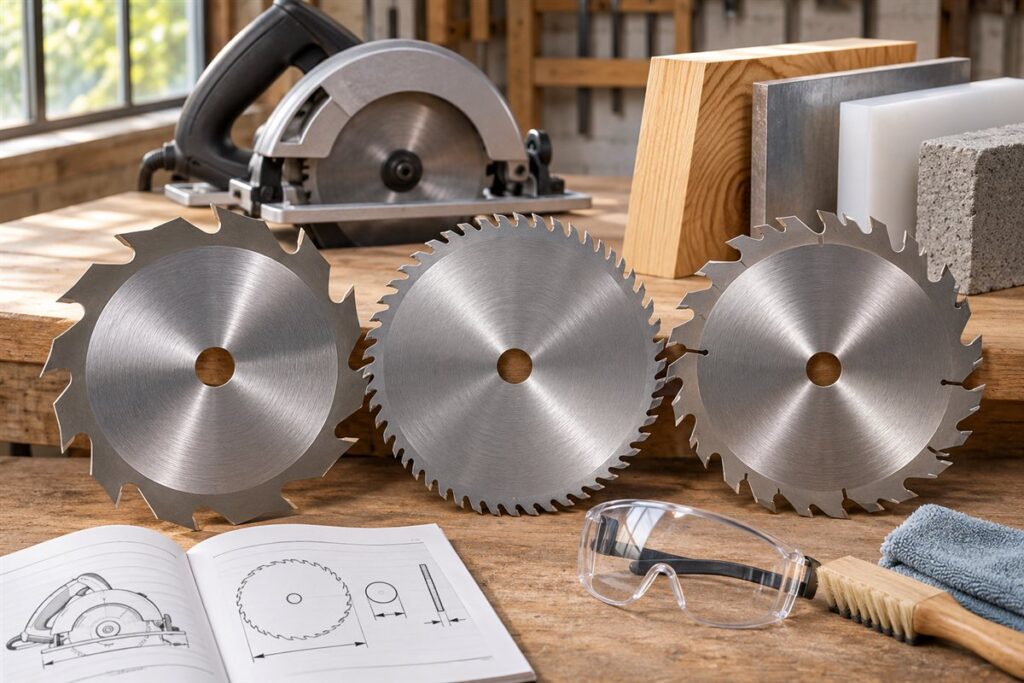
The right saw blade is the one that fits your saw, suits the material and matches the kind of cut you want. Begin with the size and mounting details in your saw’s manual, then match tooth count and tooth shape to the job.
Fit Comes Before Everything Else
A blade that does not match the saw should never be forced onto it. The maker’s manual lists the blade diameter, the center hole (arbor) size and the maximum speed the blade may run at. Print on the blade shows its own limits, so compare the two.
- Diameter: use only the size the saw is built for.
- Arbor hole: it should fit the shaft without bushings you have improvised.
- Thickness (kerf): a thin blade removes less material but can flex more.
- Speed limit: the blade’s maximum must be at or above the saw’s speed.
Reading Tooth Count and Tooth Shape
Fewer, larger teeth remove material quickly and leave a rougher edge. More, smaller teeth cut more slowly and leave a smoother one. Large gullets between the teeth clear sawdust, which matters when you are cutting thick or damp wood.
Tooth shape also matters. Ripping blades have teeth shaped to cut along the grain. Crosscut blades have teeth shaped to slice across it. Combination blades try to do both reasonably well, which suits a home shop that has room for only one blade.
A Quick Decision Table
| Factor | Why it matters | What to check |
|---|---|---|
| Material | Wood, metal, plastic and masonry need different tooth designs | The blade label and the saw manual |
| Cut direction | Ripping and crosscutting load the teeth differently | Rip, crosscut or combination marking |
| Finish wanted | Smooth edges need more teeth | Tooth count on the blade |
| Saw type | Circular, miter, jig and band blades are not interchangeable | Blade type named in the manual |
Looking After the Blade You Chose
Disconnect the power or remove the battery before you change a blade, and follow the manual’s steps for locking the shaft. Wear eye protection and keep hands clear of the cutting path. Resin and dust build up on teeth and make a blade work harder, so clean it with a cleaner the maker allows.
Signs of a dull blade include burn marks, extra effort to push the saw and ragged edges. A damaged or bent blade should be replaced, and a dull one can be sharpened by a qualified service if the maker supports that.
FAQ
Can one blade cut every material?
Usually not. Blades are built for particular materials, and using the wrong one can give poor cuts and extra wear. Check the label and the saw manual before you cut anything unfamiliar.
Is a thicker blade always better?
No. A thicker blade can stay steadier, but it also removes more material and needs more power. Choose the thickness your saw is designed to handle.
The Short Version
Match the blade to the saw first, then to the material, then to the cut and finish you want. When you are unsure, read the manual and the blade label, and ask a qualified professional about anything unusual.