Where to buy
Check the latest price, availability and delivery on Amazon. Orders are placed on Amazon. We may earn a commission from qualifying purchases.
- Best overall for side sleepers: Novilla Queen Mattress 10 Inch, Hybrid Gel Memory Foam — Check on Amazon
- FDW 8 Inch Queen Mattress, Gel Memory Foam — Check on Amazon
- Zinus 6 Inch Green Tea Memory Foam Mattress, Queen — Check on Amazon
- Novilla Mattress Queen Size 8 Inch, Hybrid — Check on Amazon
- Best Price Mattress 6 Inch Queen Mattress, Green Tea Memory Foam — Check on Amazon
- FP FLEXPEDIC Firm Queen Mattress 10 Inch, Cooling Hybrid — Check on Amazon
Read the full guide ↓
Disclosure: As an Amazon Associate, umtsmarttool.com earns from qualifying purchases. Links to Amazon on this page are affiliate links; they cost you nothing extra. Listing details such as price and availability change often, so check the current Amazon listing before you buy.
Side sleeping is the most demanding way to use a mattress. A back sleeper spreads their weight along the whole bed; a side sleeper parks it on two narrow points — a shoulder and a hip — and asks the mattress to do three things at once. It needs depth, so the shoulder can sink in without running out of mattress and landing on the firm support core. It needs the right surface, because the top layer sits under that one stationary shoulder for hours. And it needs local give: a support layer that yields where the shoulder presses, instead of pushing back like a plank. Two hundred dollars is the first budget where a queen buyer gets coils and ten inches, but only just: most queens in this tier are still six to eight inches thick, the one ten-inch hybrid positioned at an everyday place inside this budget sits right at the top of the tier, and the only other ten-inch option is a firm bed that belongs in this tier only when an offer brings it inside the budget — a build most side sleepers should think twice about, for reasons its review states plainly.
For most side sleepers we would start with the Novilla 10 inch hybrid: the deepest queen in this tier, and the one whose pocket coils can give locally under a shoulder in a way no foam slab here can — check the current price on Amazon before you buy. If you would rather spend toward the lower end of this budget, the FDW 8 inch foam queen is the thickest all-foam answer. And one exit deserves naming up front: a committed, heavier side sleeper is honestly better served by the $300 tier than by asking a six-inch budget bed to do a job its depth cannot do.
In this guide
Quick Picks
Short on time, or comparing several options at once? Each row below names a side-sleeper situation and the product that suits it, with a link to the listing.
| Buyer type | Pick | Why it stands out | Link |
|---|---|---|---|
| Best overall for side sleepers | Novilla Queen Mattress 10 Inch, Hybrid Gel Memory Foam | The deepest queen here — and its pocket coils give locally under a shoulder; check price on Amazon | Check on Amazon |
| Best value | FDW 8 Inch Queen Mattress, Gel Memory Foam | The thickest all-foam build, positioned toward the lower end of this tier; check price on Amazon | Check on Amazon |
| Best price-stable hybrid | Novilla Mattress Queen Size 8 Inch, Hybrid | Real coil give, positioned comfortably inside this budget tier; check price on Amazon | Check on Amazon |
| Best low-profile, lighter sleepers | Zinus 6 Inch Green Tea Memory Foam Mattress, Queen | The famous budget name in this tier — six inches, so match it to a lighter shoulder; check price on Amazon | Check on Amazon |
| Best for kids and light side sleepers | Best Price Mattress 6 Inch Queen Mattress, Green Tea Memory Foam | A long-running budget line with a softer-leaning reputation among lighter sleepers; check price on Amazon | Check on Amazon |
| Firm option — offer price only, read the warning | FP FLEXPEDIC Firm Queen Mattress 10 Inch, Cooling Hybrid | Ten inches and zoned coils — firm, and inside this tier only when an offer is live; check price on Amazon | Check on Amazon |
How These Picks Were Chosen
The first filter was size discipline, and it eliminated most of the internet. A queen mattress is 60 by 80 inches; anything whose listing belonged to a twin, a full or a “starting at” headline was rejected. Every pick in this guide was checked in queen size, and you should check the current price on Amazon for the queen specifically before you buy, because the headline on a budget listing often belongs to a smaller size.
The second filter was the side-sleeper test itself, applied in a fixed order. Depth first: how many inches stand between a shoulder and the bottom of the mattress, because a shoulder that sinks through the comfort layers and lands on the support core is the classic failure of a thin bed. Surface second: what the top layer does under one stationary shoulder over a full night — and here “cooling” is reported as the evidence supports, a maker-described, first-contact effect that fades as foam warms to body temperature, not active cooling. Local give third: whether the support underneath can yield at the shoulder and hip while holding the waist — what pocketed coils do by construction and a foam slab does not. Each review scores its pick against all three.
The third filter was the budget itself, applied the way a shopper experiences it. Five of the six picks sit at or under $200 as a normal state of affairs in this tier. The sixth — the FLEXPEDIC — does not. Its headline position sits above this budget and it belongs here only when an offer brings it inside the tier, so it is labeled as exactly that everywhere it appears: buy it only when the offer is live on the listing, and treat it as an over-budget mattress when it is not. The hero gets a disclosure of the same kind: it sits at the very top of this tier, so the live check matters for it too.
We did not sleep on these mattresses. We read the maker listings and specification pages, compared thicknesses, foam and coil stacks, certifications and warranty terms, and checked each listing carefully rather than trusting any single headline. Where a listing was vague — about its fire barrier, its trial, or which size a listing belonged to — we say so instead of guessing. Firmness is reported the way the makers describe it and flagged as subjective every time, because a “medium firm” label on a budget bed in a box is a starting point, not a measurement — and for a side sleeper the direction of a firmness label matters as much as its strength.
One more filter deserves naming: accountability. Roundups at this budget surface twelve-inch hybrid queens with no brand a buyer could hold to account — no verifiable warranty, no trackable product line. They were excluded. Every pick below comes from a brand with a stated warranty and a trackable product line.
The 6 Best Queen Mattresses for Side Sleepers Under $200
Novilla Queen Mattress 10 Inch, Hybrid Gel Memory Foam
Who it suits: Most side sleepers — anyone who wants the deepest, most complete bed this budget can honestly buy, with coils that give under a shoulder.
This is the pick the rest of the guide is measured against, because it is the only ten-inch hybrid queen positioned at an everyday place under $200 — and ten inches plus coils is precisely the combination the side-sleeper tests reward. On depth, it simply has more mattress than anything else here: more room for a shoulder to travel before it meets resistance. On local give, its individually pocketed coils — with targeted support zones, per the maker — compress where they are loaded, so the shoulder and hip sink further than the waist between them; that differential sink is the mechanical heart of side-sleeping comfort, and no all-foam pick here can reproduce it. The surface is gel memory foam over comfort foam in a cool-touch knit cover, with a reinforced edge — read the gel and the cover as a pleasant first contact, not a cooling system.
Check the current price on Amazon before you buy, because this pick sits at the top end of this budget tier and the live listing decides whether it belongs here on the day you shop. When it sits inside the $200 budget it is the best buy in this guide; in a week when it sits above the budget, it is not an under-$200 mattress at all, and the eight-inch Novilla hybrid below — positioned more comfortably inside the tier — is the buy instead. Novilla backs the line with a stated 10-year warranty; its advertised 100-night trial lives on its own website and is not credited to an Amazon purchase here.
- The only 10-inch hybrid queen positioned at an everyday place under $200.
- Pocketed coils that yield locally under shoulder and hip — the local-give test, passed by construction.
- Positioned at the top of this budget tier — check price on Amazon.
Honest limitation: Its position at the top of the tier means it can sit above the budget, so the live check matters — at that point, take the 8-inch hybrid below instead. And the brand’s 100-night trial does not travel with an Amazon order.
Choose it if the listing sits inside this budget and you want the most side-sleeper bed this budget buys. Skip it if it is sitting above this budget when you shop, or if you know you want twelve inches — that profile does not verifiably exist at this price.
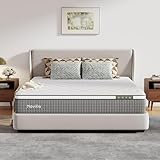
FDW 8 Inch Queen Mattress, Gel Memory Foam
Who it suits: Value-first side sleepers — anyone who wants the thickest all-foam answer in this tier and would rather keep spend toward the lower end of the budget than spend it on coils.
If the hero is the most bed this budget buys, this is the most bed for the lower end of the tier. The build is two inches of gel-infused memory foam over six inches of high-density base foam, in a removable, washable cover, with CertiPUR-US certified foams. Judged by the side-sleeper tests: on depth, eight inches is the working middle of this guide — a lighter or average side sleeper gets real shoulder travel from the two-inch comfort layer, while a heavier side sleeper will compress most of that layer and start borrowing from the base foam beneath it, where the bed begins to feel firm from underneath. On local give, be clear-eyed: this is a slab. Memory foam cradles and distributes pressure, but the support under your shoulder is the same support under your waist, and it does not step aside the way a pocket coil does. Many side sleepers never miss that; sleepers whose shoulder complains on flat foam are exactly the ones the hero exists for.
Check price on Amazon — this pick sits toward the lower end of this budget tier, well inside the $200 budget in its normal positioning, and that positioning is also a quiet side-sleeper argument: it leaves headroom in a $200 budget for the topper the honest-exit section below discusses.
The maker describes the feel as medium firm; treat that as the maker’s word, expect a firmer first impression than a thick pillow-top bed, and give it the full expansion window — 48 to 72 hours is the usual advice for beds in a box — before judging it. Brand support and warranty depth are thinner than the big names offer, which is part of what its tier position reflects.
- Positioned toward the lower end of this tier, well inside the budget — check price on Amazon.
- The thickest all-foam build here: 2 inches of gel memory foam over a 6-inch support core.
- Removable, washable cover — a genuine practical plus in this tier.
Honest limitation: All-foam: no coils, no local yield at the shoulder, and an edge that gives like foam. A heavier side sleeper will work through the comfort layer and feel the base foam; eight inches remains a compromise for heavier adults sleeping on it nightly.
Choose it if you want the value answer: real depth positioned toward the lower end of the tier, with budget left over. Skip it if your shoulder already tells you it needs a surface that gives locally — that is the hero’s job, at the top of the budget.

Zinus 6 Inch Green Tea Memory Foam Mattress, Queen
Who it suits: Lighter side sleepers who specifically want the Zinus name and a low profile — for bunks, platforms, trundles and rooms where a tall bed is a problem.
Zinus is the brand most shoppers picture when they picture a cheap mattress in a box, and its six-inch Green Tea queen — memory foam infused with green tea and charcoal over base foam, CertiPUR-US certified, backed by the line’s standard 10-year limited warranty — is a perfectly reasonable six-inch foam bed. The side-sleeper judgment, though, has to start with the number six. Six inches is the depth floor of this guide, and depth is the first test: a lighter side sleeper’s shoulder travels a short distance and this bed can absorb it, but a heavier side sleeper will compress the comfort foam nearly to the base layer, and what reads as “firm support” in the maker’s copy reads as bottoming out under a shoulder at 2 a.m. Match this mattress to the sleeper’s weight, not to the brand’s fame.
What makes it interesting here is a change of status: at the $150 tier this exact mattress sat above that budget as a straddler. At $200 the picture flips — in this tier it sits in the middle of the budget in its normal positioning, so check the current price on Amazon and confirm the queen sits inside this budget when you shop. The honest caution runs the other direction: this listing can also move above the budget entirely at times; if the queen sits over $200 when you shop, the FDW above is thicker and positioned lower in the tier. The famous name’s thicker queens sit in the tier above — this is the thin end of the line, bought for the name, the warranty and the low profile, not for depth.
One Zinus-specific topic — older Zinus models are the documented public case in the fiberglass story, while the brand’s current listings state the current line is made without fiberglass — is handled at length in the fiberglass section below.
- The best-known budget brand, with a stated 10-year limited warranty.
- Positioned in the middle of this budget tier — check price on Amazon.
- Green tea and charcoal infused memory foam; CertiPUR-US certified.
Honest limitation: Six inches is six inches — a heavier side sleeper’s shoulder will bottom out toward the base foam — and this listing can wander out of budget; check the queen price on Amazon the day you buy.
Choose it if you are a lighter side sleeper and the brand name, the warranty and the low profile are worth more to you than two inches of foam. Skip it if a heavier adult will side-sleep on it nightly — take the FDW 8 inch or the hero instead.

Novilla Mattress Queen Size 8 Inch, Hybrid
Who it suits: Side sleepers who want coil give without playing the hero’s position at the very top of the tier — and anyone who met this mattress one tier down and watched it miss.
This mattress has the best story in the guide. At the $150 tier it was the near-miss: the cheapest credible hybrid queen we could verify in that tier, sitting just above that budget, and which therefore could not honestly be recommended there. At $200 there is nothing near about it. Check the current price on Amazon — in this tier it sits in the middle of the budget, and it is the hybrid in this guide whose normal positioning fits most comfortably inside the tier. Of the three hybrids in this guide, it is the one whose positioning inside the budget is the most stable.
For a side sleeper, the build is the argument: individually wrapped pocket coils under gel memory foam and comfort foam, in an OEKO-TEX certified knitted cover. The coils give locally — the shoulder’s coils compress further than the waist’s — which is the third test passed by construction, in an eight-inch bed positioned like a foam bed in this tier. The honest limits are depth and dimension. Eight inches of hybrid spends some of its depth on springs rather than foam, so a heavier side sleeper gets less travel here than in the ten-inch hero; read this as the stable hybrid, not the deep one. And the maker’s spec block reads about 79 by 59 inches — a shade under the nominal queen footprint, worth knowing if your frame or bedding runs exact. Novilla’s terms mirror the hero’s: a stated 10-year warranty, and a 100-night trial that belongs to the brand’s website rather than to an Amazon purchase.
- A real pocket-coil hybrid queen positioned in the middle of this tier — check price on Amazon.
- The most comfortably positioned hybrid here, sitting well inside this budget in its normal positioning.
- OEKO-TEX certified knitted cover; gel memory foam comfort layer.
Honest limitation: Eight inches is a thinner travel for a heavier side sleeper’s shoulder than the ten-inch hero offers, and the maker’s dimensions read a shade under a nominal queen. The brand’s 100-night trial does not travel with an Amazon order.
Choose it if you want coils that give under your shoulder without watching a position at the very top of the tier. Skip it if you need maximum depth — that is the 10-inch hero, when it sits inside the budget.

Best Price Mattress 6 Inch Queen Mattress, Green Tea Memory Foam
Who it suits: Light side sleepers, kids’ rooms and anyone who wants the longest-running budget line in the business in this tier.
Best Price Mattress has sold inexpensive green tea memory foam beds for longer than most of this shelf has existed, and its six-inch queen follows the family recipe: green-tea-infused memory foam over support and base foams, CertiPUR-US certified, with a stated 10-year warranty. Within this guide it carries a specific side-sleeper reputation worth printing carefully: among lighter sleepers it leans softer than the firmer budget slabs, and for a light side sleeper — a child, a smaller adult — a slightly softer six inches can cradle a shoulder more kindly than a firm six inches does. That is a relative judgment about lighter bodies: the depth arithmetic does not change with the label. Six inches under a heavier side sleeper’s shoulder is six inches, and the bottoming-out warning given to the Zinus above applies here in full.
Like the Zinus, this pick changes status at this tier. In the $150 tier it sat above that budget, where it had to be treated as a straddler, and in this tier it sits in the middle of the budget in its normal positioning. Check the current price on Amazon to confirm it, because the positioning evidence for this pick is thinner than for the other clean picks in this guide. The pick stands on its place in this tier, and your live check confirms it; if the listing has drifted over $200 when you shop, the money is better spent on the FDW 8 inch above, which buys the same sleeper two more inches of travel. The brand’s longevity is itself a form of evidence, and it earns its place as the specialist pick: the bed for the light side sleeper who does not need depth.
- A long-running budget line with a stated 10-year warranty.
- Green tea memory foam build; CertiPUR-US certified.
- A softer-leaning reputation among lighter sleepers, relative to the firmer budget slabs.
Honest limitation: Its positioning evidence is thinner than for the other clean picks — so the live check on Amazon does more work here than for any other clean pick. And six inches of foam is a minimal bed: a heavier side sleeper will bottom out.
Choose it if the queen sits inside this budget on Amazon and the side sleeper is a lighter one. Skip it if it sits over the budget line, or if a heavier adult will use it nightly — the FDW 8 inch is the better spend on depth in this tier.

FP FLEXPEDIC Firm Queen Mattress 10 Inch, Cooling Hybrid
Who it suits: Firm-bed sleepers who happen to sleep on their side and know from experience that firm suits them — and who are willing to buy only when the offer price is live. Most other side sleepers should read this review as a warning label.
Two conditions attach to this pick, and a side sleeper needs both at full strength. The first is position in the tier. The listing’s headline position for the queen sits above this budget. Only when an offer is live does it come inside the tier. This mattress is therefore in an under-$200 guide at its offer only: if the listing shows its headline with no offer bringing it inside the budget, it is not an under-$200 mattress that day, and you should walk away or take the hero — check the current price on Amazon before you decide. A guide that treated an offer as if it were the normal position would be misleading. Its normal positioning adds context rather than comfort: it spends much of its time just over the budget line, dipping inside only when an offer is live — a recurring pattern, but one you have to catch, not a position you can assume.
The second condition is the one this guide exists to state: the build is firm, and firm is the wrong direction for most side sleepers’ shoulders. What you get when it sits inside the budget is genuinely substantial — a ten-inch hybrid on 7-zone individual pocket springs with gel memory foam, so the depth and local-give tests are both met on paper. But a firm comfort surface holds a shoulder up instead of letting it sink, and the pressure a side sleeper feels concentrates exactly there. The sleeper this suits is the exception who has already learned, on other beds, that they sleep better firm — a real group, and the reason this pick stays in the guide. The sleeper it does not suit is the typical side sleeper shopping this keyword because their current bed hurts their shoulder; for that reader, this is the one pick most likely to reproduce the problem at a higher specification. “Firm” is the maker’s own description, reported as such — but the warning’s direction does not depend on the label’s precision.
Two listing claims deserve their exact weight. The listing’s own title states the mattress is fiberglass-free and CertiPUR-US certified, and advertises a 365-night trial — the only pick here whose trial is printed as part of the Amazon listing itself rather than living on a brand website. Those are the maker’s listing claims, reported as such; the trial’s terms are the listing’s to honor, and the fiberglass section below explains why every such statement in this guide is attributed rather than asserted.
- Ten inches with 7-zone pocket springs — depth and coil give, in a firm build.
- Belongs here only when an offer brings it inside this budget — check price on Amazon.
- Listing states fiberglass-free construction and CertiPUR-US certified foams.
Honest limitation: Firm is the wrong direction for most side sleepers’ shoulders — it holds the shoulder up rather than letting it sink — and at its headline it is simply over budget: this is a buy-at-the-offer pick whose normal positioning says the offer is a dip, not the norm. The brand is younger, with a thinner track record than the famous names.
Choose it if the listing shows an offer that brings it inside this budget and you already know a firm bed suits your side sleeping. Skip it if you are shopping because your shoulder complains on your current bed — take the hero — or if the headline is all that is showing, in which case the 8-inch hybrid beats it on stability too.
Comparison Table
| Product | Depth | Build | Position in this tier | Link |
|---|---|---|---|---|
| Novilla 10 Inch Hybrid Queen | 10 in | Pocket coils + gel memory foam | Top of this budget tier — check price on Amazon | Check on Amazon |
| FDW 8 Inch Queen | 8 in | Gel memory foam over HD base foam | Lower end of this budget tier — check price on Amazon | Check on Amazon |
| Zinus 6 Inch Green Tea Queen | 6 in | Green tea memory foam, all-foam | Middle of this budget tier — check price on Amazon | Check on Amazon |
| Novilla 8 Inch Hybrid Queen | 8 in | Pocket coils + gel memory foam | Middle of this budget tier — check price on Amazon | Check on Amazon |
| Best Price Mattress 6 Inch Queen | 6 in | Green tea memory foam, all-foam | Middle of this budget tier — check price on Amazon | Check on Amazon |
| FP FLEXPEDIC 10 Inch Queen | 10 in | 7-zone pocket springs + gel memory foam | Inside this tier only when an offer is live — check price on Amazon | Check on Amazon |
How to Choose a Queen Mattress for Side Sleepers Under $200
- Verify the size before the price. Queen is 60 by 80 inches. On every listing, select Queen and read the price again — the headline number on budget mattress pages is routinely the twin’s price, and it is always lower.
- Spend on depth first. For a side sleeper, inches are shoulder travel. Ten inches is this budget’s ceiling and suits most adults; eight is the working middle; a six-inch bed is a lighter sleeper’s bed, whatever the brand. If you take one rule from this page, take that ordering.
- Weigh the sleeper, honestly. Bottoming out is a weight event, not a quality verdict: the same six-inch foam bed that serves a child or a light adult well will let a heavier side sleeper’s shoulder reach its base layer. Match the pick to the body that will actually use it.
- Prefer coils if your shoulder is the complaint. Pocketed coils compress where they are loaded, so the shoulder and hip sink further than the waist — the local give a foam slab cannot offer. Two picks here pass that test in their normal positioning inside the tier; the firm ten-inch passes it on paper and fails most shoulders on firmness instead.
- Treat “firm” as a side-sleeper warning, not a feature. Firmness labels are maker-described and subjective, but their direction is consistent: a firm surface holds a shoulder up and concentrates pressure on it. Unless you already know firm suits you, a side sleeper should shop the middle of the range, not the end of it.
- Discount every cooling claim to first contact. Gel infusions and cool-touch covers are maker-described surface effects that fade as foam warms to body temperature — and a side sleeper’s shoulder stays in one warm spot all night. Pleasant at lights-out; irrelevant by 3 a.m. Never let a cooling claim outrank depth.
- Respect the offer-price rule. One pick here belongs under $200 only at its offer price. Set your walk-away rule before you open the listing: queen inside this budget with the offer live, buy; headline only, close the tab.
- Plan the foundation. Thin beds need flat, even support: a platform, closely spaced slats or a solid base. Wide-spaced slats and worn box springs will make a six- or eight-inch bed feel broken within months — and a side sleeper feels a support gap at the hip first.
Depth First: Why a Side Sleeper’s Budget Buys Inches Before Anything Else
Every mattress purchase is an allocation, and the side sleeper’s allocation is the least forgiving. A shoulder does not rest on a mattress the way a back does; it drives into it, at one point, with a large share of the body’s weight behind it. What the shoulder meets on the way down is a stack: a comfort layer that gives, then progressively firmer material, then the bottom. Comfort, for a side sleeper, is mostly a question of how far the shoulder can travel inside that stack before the stack pushes back hard — and travel is bought in inches. That is why this guide ranks depth ahead of every feature — and why the sleeper’s weight decides which rung of its ladder, ten inches twice, eight twice, six twice, is honest for them.
It is also why the six-inch picks carry their warning in every appearance. Bottoming out is not a defect in those beds; a Zinus or Best Price Mattress six-inch queen is a coherent product for a light sleeper, a child, a bunk. It is a mismatch event between a specific shoulder and a specific stack: the bed feels pleasant for twenty minutes and hard by morning, because the shoulder spent the night resting on compressed foam over a support core. No surface treatment fixes it, because the problem is not the surface. It is the distance. A heavier side sleeper should treat the two ten-inch picks and the eight-inch pair as the list, and the six-inch pair as somebody else’s list. And twelve inches — the profile where shoulder travel stops being a negotiation — does not verifiably exist under $200 from an accountable brand: the famous names’ thicker queens sit in the tier above, including Novilla’s twelve-inch Bliss in the $300 tier.
Surface and Local Give: The Two Tests a Foam Slab Cannot Fake
Depth decides how far a shoulder can sink; the next two tests decide what the sinking feels like. The surface test’s honest finding at this price is deflationary: every “cooling” surface in this guide — gel-infused foam, cool-touch knit — is a first-contact effect. It feels cool when a cool body part first touches it, then warms to body temperature and stays there. For a side sleeper, whose shoulder occupies one spot for hours, it buys exactly one pleasant first contact. Judge these surfaces as comfort finishes, and never let one outrank an inch of depth or a coil layer — the marketing order and the mechanical order are opposites. Local give is the deeper test, and it is where this tier splits in two. A foam slab answers pressure at the shoulder with its whole surface, which is why foam beds feel even, still and — for a shoulder that needs to descend below the line of the waist — sometimes unyielding. A pocketed-coil core answers locally: each coil compresses under its own load, so the shoulder’s coils travel further than the ribs’ coils, and the spine can stay nearer level while the shoulder drops in. That is the specific mechanical thing a side sleeper is shopping for, and at this budget it exists in exactly three products — the two Novilla hybrids in their normal positioning inside the tier, and the firm FLEXPEDIC at its offer. It is also why the FLEXPEDIC’s firmness matters so much: local give in the core cannot rescue a comfort layer that refuses to let the shoulder start descending.
One famous name is missing from that list. The Linenspa eight-inch hybrid queen is the budget hybrid most shoppers meet first, and its queen sits above this budget in its normal positioning. It is named here without a link for two reasons: its position above this tier, and a caution carried from a law-label check of its line, which read its fire barrier as fiberglass (the next section explains how to weigh that). If a verified offer brings it inside this budget, it becomes the first swap-in for this guide; until then it is the mattress this budget almost buys, and “almost” is not a recommendation.
Fiberglass: The Fire-Barrier Question, Stated Plainly
Many mattresses in a box use a fire sock — a barrier layer under the cover that helps the mattress pass federal flammability standards. On some models that sock is woven fiberglass. Sealed inside the mattress, it does its job quietly. The problem arrives when a cover is unzipped and removed for washing: fiberglass fibers can escape, spread through a room, irritate skin and lungs, and contaminate bedding and clothing. It is the subject of lawsuits and settlements involving budget brands, with older models from Zinus — a pick in this very guide, for its current line — as the most documented public case.
What is the position on the picks here? Reported exactly as the evidence stands. Zinus’s current listings state the current Green Tea line is made without fiberglass; the FLEXPEDIC’s listing title states fiberglass-free construction outright. Those are brand and listing statements, attributed to their sources, not laboratory results verified by this guide — and for the FDW, Novilla and Best Price Mattress picks, no equally explicit statement could be verified, so none is claimed. Outside the picks, one famous budget hybrid line has had its law label — the tag listing a mattress’s contents — read as showing a fiberglass barrier: a reminder that the tag on the mattress itself is the most primary document available to a buyer.
The practical rules do not depend on any brand’s statement, and they are the same for every mattress in this guide. Never remove the cover, even if it has a zipper — a zipper is a manufacturing feature, not an invitation. Put a washable protector over the mattress and wash the protector instead. If a cover is ever damaged, contact the maker before sleeping on the exposed bed. And if fiberglass-free construction is a deciding factor, weight the picks whose makers state it in writing.
The Honest Exit: When a Side Sleeper Should Skip This Tier
A guide earns its keep on the readers it talks out of buying, so here is this one’s exit, stated as plainly as its recommendations. If you are a committed side sleeper of heavier build, nothing in this guide fully solves your problem, because the problem is depth and this tier’s depth ceiling is ten inches, reached by exactly two products, one of which is firm. The twelve-inch profiles your shoulder is asking for become ordinary in the $300 tier, and the internal links below point at that tier.
There is a second exit, and it runs through this tier rather than past it. A topper changes the surface and adds travel at exactly the point a side sleeper loads the bed, and two picks here are positioned to leave room for one: the FDW eight-inch, positioned toward the lower end of this tier, plus a decent topper can still sit inside this budget with more total depth than the hero alone, and the eight-inch Novilla hybrid, positioned in the middle of this tier, leaves a smaller but real margin. A topper is surface adjustment, not added support — it will not rescue a six-inch bed under a heavy shoulder, because the shoulder will compress topper and bed together and find the same bottom — but on an eight-inch base it is the one upgrade this tier genuinely allows.
Common Buying Mistakes
- Buying depth by the brand instead of the body. A famous six-inch bed under a heavy side sleeper is a bottoming-out appointment with a good warranty. The sleeper’s weight picks the rung of the ladder; the brand only picks which bed on that rung.
- Reading “firm” as “supportive” and buying it for a sore shoulder. Support is the support core’s job; the comfort layer’s job is to let a shoulder in. A firm surface over good coils still holds the shoulder up — the one combination this guide warns its exact audience against.
- Letting a cooling claim outrank an inch. Gel and cool-touch covers are first-contact effects that saturate at body temperature under a stationary shoulder. Depth and coil give work at 3 a.m.; a cool touch works at 10 p.m.
- Buying the offer-price pick at its headline. The FLEXPEDIC at its headline with no offer live is not an under-$200 mattress that day, whatever the guide that listed it said. Your walk-away rule is set before you open the tab.
- Unzipping the cover to wash it. The fiberglass mistake, and the only one on this list that can damage a room rather than a wallet. Protector over the top; cover stays on, forever.
- Judging the bed in its first hour. A bed in a box is still expanding. Sleep on the judgment after 48 to 72 hours, not on the compressed first impression — and keep the packaging until the verdict is in.
Final Recommendation
- Most side sleepers: Novilla 10 Inch Hybrid Queen — the deepest verified bed in this tier, with coils that give under a shoulder, when it sits inside this budget — check price on Amazon.
- Best value: FDW 8 Inch Queen — positioned toward the lower end of this tier, the thickest foam cradle here, with budget left over toward a topper — check price on Amazon.
- Most price-stable hybrid: Novilla 8 Inch Hybrid Queen — coil give positioned comfortably inside this budget — check price on Amazon.
- Light side sleepers, low profile: Zinus 6 Inch Green Tea Queen — positioned in the middle of this tier, matched to a lighter shoulder — check price on Amazon.
- Kids and light side sleepers: Best Price Mattress 6 Inch Queen — the long-running line, positioned in the middle of this tier — check price on Amazon.
- Firm, at the offer only, for the few it suits: FP FLEXPEDIC 10 Inch Queen — buy it only when an offer brings it inside this budget, and only if you already know firm suits your side sleeping; it is the wrong direction for most shoulders — check price on Amazon.
Our top two are the Novilla 10 inch hybrid for side sleepers who want the most bed this budget can verify, and the FDW 8 inch for side sleepers who would rather keep the change or spend it on a topper. Buy the pick whose evidence and depth match your body, confirm the queen price on Amazon before you pay, respect the one offer-price rule on this page, and if you are a heavier committed side sleeper, take the honest exit to the $300 tier without treating it as a defeat.
Frequently Asked Questions
Can a side sleeper really use a queen mattress under $200?
Yes — within honest limits. Real 60 by 80 inch queens sell inside this budget on ordinary days, including a ten-inch hybrid positioned at the top of this tier whose coils give locally under a shoulder — check the current price on Amazon. What the budget cannot do is give every side sleeper the same answer: lighter and average side sleepers are genuinely served by the deeper picks here, while a heavier side sleeper is working with a ten-inch ceiling and should read the honest-exit section before spending.
Is a hybrid or a foam mattress better for side sleepers under $200?
For most side sleepers, the hybrids have the structural argument: pocketed coils compress where they are loaded, so shoulder and hip sink further than the waist — the local give a foam slab cannot reproduce. Foam’s counter-argument is position in the tier and stillness: the FDW eight-inch is the thickest cradle here, positioned toward the lower end of this tier, with no coil noise or bounce — check price on Amazon. The exception is the firm hybrid: coil give underneath cannot rescue a comfort surface that will not let a shoulder descend.
Will a firm mattress help my shoulder feel better?
For most side sleepers, firm is the wrong direction: a firm surface holds the shoulder up instead of letting it sink in, and the pressure concentrates on the joint. A minority of side sleepers genuinely prefer firm and know it from experience — the FLEXPEDIC is in this guide for them. For everyone else, this guide makes comfort claims only: no mattress here is a treatment for shoulder or back pain, and persistent pain, pain that radiates, or numbness and weakness are reasons to see a clinician, not reasons to change a mattress category.
Does the sleep trial apply if I buy on Amazon?
Only if the Amazon listing itself says so — and in this guide, exactly one pick’s does: the FLEXPEDIC’s listing title advertises a 365-night trial as part of the listing. Novilla’s 100-night trial, by contrast, is an offer on Novilla’s own website; it is not a term of an Amazon purchase. For every pick, what an Amazon buyer can rely on is the listing’s own stated terms plus Amazon’s returns policy — read both on the page before you order.
My shoulder still feels pressure on my current budget bed. Topper or new mattress?
It depends on what is underneath the shoulder. If your current bed is a sound eight inches or more and the problem is surface feel, a topper adds travel and softness at exactly the loaded point, and can cost less than a new bed. If the bed is six inches, or softened and sagging, a topper will compress along with it and the shoulder will find the same bottom — that is a depth problem, and depth is bought with a mattress, at this tier or the next one up.
What if the price on the listing is different from the price in this guide?
Expect it, eventually — prices change often, so check the current price on Amazon before you buy. Two picks need specific handling. If the Novilla 10 inch hybrid is sitting above this budget, wait for it to settle inside the tier or take the 8 inch hybrid, which sits more comfortably inside the budget. If the FLEXPEDIC shows its headline with no offer live, it is not an under-$200 mattress that day — full stop. For the rest, let the live queen price on Amazon make the final call, including the walk-away call at anything over this budget.
- Best Queen Mattress Under $200
- Best Queen Mattress Under $300
- Best Queen Mattress Under $150
- Best Memory Foam Mattress Under $200
- Best Memory Foam Mattress Under $150