Where to buy
Shopping for the best obd2 scanner under $30? Start with the linked picks below — check the latest price, availability and delivery on Amazon, where orders are placed. We may earn a commission from qualifying purchases. Picks marked as step-ups carry no link at this budget — the review explains what they cost and why they are worth planning for.
- Best overall under $30: ANCEL AD310 Classic Enhanced OBD2 Scanner — Check on Amazon
- MOTOPOWER MP69033 OBD2 Scanner Code Reader — Check on Amazon
- Autel AutoLink AL319 OBD2 Scanner — Check on Amazon
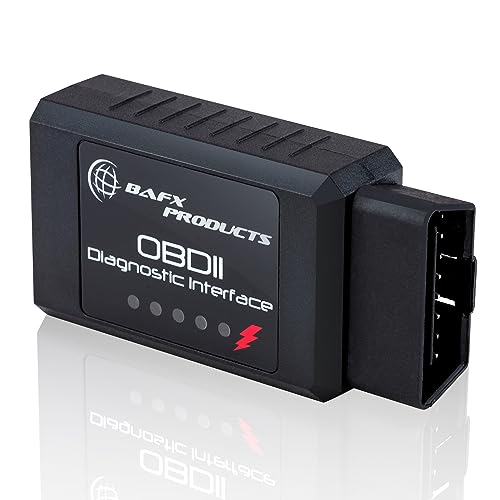
- Veepeak OBDCheck BLE Bluetooth OBD2 Scanner — Check on Amazon
- KONNWEI KW850 OBD2 Scanner — Check on Amazon
- Veepeak OBDCheck BLE+ Bluetooth OBD2 Scanner — Check on Amazon
Read the full guide ↓
Disclosure: As an Amazon Associate, umtsmarttool.com earns from qualifying purchases. Links to Amazon on this page are affiliate links; they cost you nothing extra. Listing details such as price and availability change often, so check the current Amazon listing before you buy.
The search for the best obd2 scanner under $30 starts with a reality this guide refuses to decorate: a budget is a ceiling, not a suggestion, and at this ceiling the honest differences between products are differences of completeness, construction and candor — not magic. What follows is built for the general buyer first: the driver whose car is an appliance, whose time is limited, and who wants the purchase that simply works, explained in the order a decision actually happens. We start with what this money genuinely buys in this category, name the picks that earn it, show the verified specifications behind each one, and mark — without flinching — the points where the honest answer is that the real product lives one tier up. If a pick in this guide carries a purchase link, it is because the product is real, its maker publishes its specifications, and its price belongs inside this budget; where any of those three tests fails, the pick is labeled a step-up and left unlinked, so you can plan the real purchase instead of funding a disappointment.
Thirty dollars is the tier where OBD2 scanning becomes genuinely complete for its core job. Every pick below reads and clears engine codes with built-in definitions; the differences are interface and extras — a color screen here, a phone’s big display there, battery voltage monitoring at the tier’s ceiling. What thirty dollars does not buy, anywhere, is access to ABS, airbag or transmission systems, and this guide will not pretend otherwise.
Below are the quick picks, full reviews of all six scanners with their verified specifications, a side-by-side comparison, a complete guide to choosing between wired and Bluetooth and basic and enhanced, two technique sections — reading codes like a mechanic, and emissions readiness without the panic — the mistakes that waste money in this category, and the questions drivers ask before they buy. Readers comparing the neighbouring budget should also see Best Obd2 Scanner For Beginners Under $30.
In this guide
Quick Picks
Short on time, or comparing several options at once? Each row names a buyer type and the product that suits it, with a link where this budget honestly supports one.
| Buyer type | Pick | Why it stands out | Link |
|---|---|---|---|
| Best overall under $30 | ANCEL AD310 Classic Enhanced OBD2 Scanner | 2.4-inch backlit display, 128 x 64, 2.5 ft cable | Check on Amazon |
| Best value code reader | MOTOPOWER MP69033 OBD2 Scanner Code Reader | Built-in DTC lookup, live data, freeze frame, I/M readiness | Check on Amazon |
| Best screen and readiness check | Autel AutoLink AL319 OBD2 Scanner | TFT color display 220 x 176, one-click I/M readiness key, LED indicators | Check on Amazon |
| Best Bluetooth pick | Veepeak OBDCheck BLE Bluetooth OBD2 Scanner | Bluetooth LE adapter for iOS and Android apps, no built-in screen | Check on Amazon |
| Best with battery monitoring | KONNWEI KW850 OBD2 Scanner | 2.8-inch color screen, real-time battery voltage monitoring, one-click I/M | Check on Amazon |
| Best Bluetooth step-up | Veepeak OBDCheck BLE+ Bluetooth OBD2 Scanner | Bluetooth LE adapter with faster connection and wider app support | Check on Amazon |
How These Picks Were Chosen
The budget was applied as a hard ceiling first: every linked pick in this guide is a real Amazon listing positioned within the $30 budget in the United States — check the current price on Amazon before you buy, because listing prices move. Scanners that only reach this tier through a temporary coupon trick or a stripped variant were treated as belonging to the tier where they normally live.
We did not use these scanners ourselves. We read maker listings, specification pages and reputable roundups, and compared the things that decide whether a cheap scanner actually gets used: which OBD2 protocols it speaks, whether code definitions are built in or left to a phone search, whether live data is present and how it is displayed, how readiness (I/M) checks work, and whether the tool needs a phone, an app or a battery to function at all. Every pick reads and clears engine codes and shows definitions — the core job — because a scanner that cannot do that in one plug-in is not a scanner, it is a ornament. The companion guide Best Obd2 Scanner For Car Owners Under $30 covers the adjacent case in the same detail.
Scope honesty governed the whole list. Every tool here reads the engine and emissions system, which is what the check engine light reports. None of them reads ABS, airbag or transmission systems, and none performs service resets — those are different, more expensive classes of tool, and any listing at this price claiming otherwise deserves suspicion. Within the engine scope, we favored completeness, legibility and the absence of subscriptions or app fees.
A word about what we excluded, because the exclusions are half the value of a guide like this. We excluded readers with partial protocol coverage that would strand older or newer cars, adapters whose Bluetooth standard locks out iPhones, tools whose definitions live entirely behind an app paywall, and every listing that implied ABS or multi-system powers at this price — a claim that is never true at this tier and marks a listing that cannot be trusted about anything else either. We also excluded the disposable class: unbranded readers with no maker specification page, no update path and no one to email when the firmware meets a car it does not recognize. What survived those filters is the list below — six tools whose makers publish their specifications, stand behind their protocol coverage, and have sold the same model long enough for its behavior to be known. That is the standard a diagnostic tool should meet, because the day you use it is never a day you have spare for surprises.
The 6 Best OBD2 scanners Under $30
Six picks, in the order most readers should consider them. Linked picks can be bought inside this budget today; step-up picks are the verified products this budget honestly points toward, presented without links so the planning is clean. For the related search, Best Obd2 Scanner For Daily Driving Under $30 applies the same standards.

ANCEL AD310 Classic Enhanced OBD2 Scanner
Who it suits: Drivers who want the proven, no-phone, no-app answer to a check engine light — the glovebox reader that simply works every time it is plugged in. For the general buyer, judge the ANCEL AD310 Classic Enhanced OBD2 Scanner against the criteria in this guide’s choosing section — it earns its place here on the strength of that match, not on any single headline figure.
The AD310 is the reader this whole price class is measured against, and the reason is boring in the best way: it does the core job completely. It reads and clears engine and emissions trouble codes, shows live sensor data, displays freeze frame data captured when a fault was set, runs I/M readiness checks before an emissions test, and retrieves vehicle information — all on a backlit 128 x 64 pixel display with a 2.4-inch screen. It supports every standard OBD2 protocol — CAN, ISO9141, KWP2000, J1850 VPW and J1850 PWM — so it talks to 1996-and-newer US cars and light trucks and the 2000-and-newer European and Asian models that followed.
Power comes from the car’s own diagnostic port, so there are no batteries to charge and nothing to pair. The 2.5-foot cable is thick and flexible, the housing shrugs off the drops that happen in every driveway, and the unit weighs about 12 ounces, so it lives in a glovebox without being in the way. Code definitions are built in, which means the screen tells you what a code means in plain language instead of leaving you with a bare number to search later.
The honest boundary is scope: this is an engine and emissions reader. It does not read ABS, airbag or transmission systems, and it will not perform resets or relearns. Within that boundary it is complete, and for the classic question — why is the light on, and is it serious — it remains the default recommendation at this budget.
- All five OBD2 protocols, so it works across old and new cars alike
- Built-in code definitions on a backlit screen — no phone needed
- Vehicle-powered through the port; nothing to charge or pair
Honest limitation: Engine and emissions codes only — no ABS, airbag or transmission access, and the monochrome screen is basic next to color rivals.
Choose it if you want one proven reader that answers a check engine light on almost any car, with zero setup. Skip it if you need ABS or airbag codes, or you want graphed data on a big color screen — step up a tier.

MOTOPOWER MP69033 OBD2 Scanner Code Reader
Who it suits: Budget-first drivers who want the full basic function set — read, clear, live data, readiness — in the simplest housing in this guide. For the general buyer, judge the MOTOPOWER MP69033 OBD2 Scanner Code Reader against the criteria in this guide’s choosing section — it earns its place here on the strength of that match, not on any single headline figure.
The MP69033 covers the complete entry-level checklist: it reads and clears diagnostic trouble codes, shows the code definition from its built-in lookup library, streams live sensor data, shows freeze frame data, and reports I/M readiness so you know whether the car is ready for an emissions test. It works across the standard OBD2 protocols on 1996-and-newer OBD2 cars, and like the ANCEL it is powered by the vehicle, so it is ready whenever the light comes on.
The bright yellow housing sounds like a gimmick until the tool is sitting in a dark footwell or a crowded toolbox — it is genuinely easier to find and harder to leave behind. The interface is a straightforward button layout with a clear screen, and the whole unit is light enough to keep in the car permanently rather than in the garage, which is where a code reader actually earns its keep.
Set expectations at the class level: the screen and menus are functional rather than polished, live data is a scrolling list rather than a graph, and the scope is engine and emissions only. Judged as a simple, complete code reader at the bottom of the price ladder, it does everything the job requires and nothing it does not.
- Complete basic function set: codes, definitions, live data, freeze frame, readiness
- Yellow housing is easy to spot in a dark footwell or toolbox
- Vehicle-powered and always ready — no charging, no apps
Honest limitation: Plain screen and list-style live data; no graphing, and engine/emissions scope only.
Choose it if you want the cheapest complete answer to a check engine light from a known budget brand. Skip it if you will use live data often and want it graphed on a color screen.
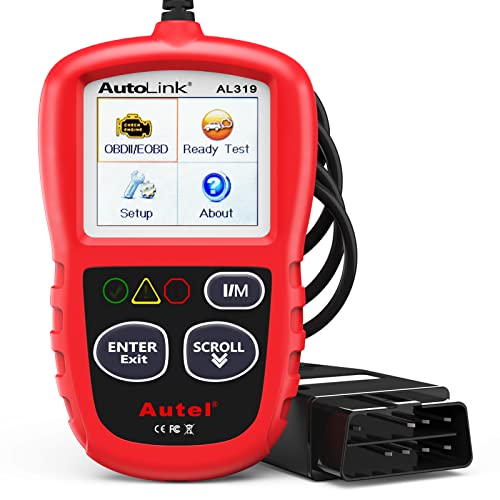
Autel AutoLink AL319 OBD2 Scanner
Who it suits: Drivers who face regular emissions inspections and want the readiness answer in one button press, on a color screen they can read at a glance. For the general buyer, judge the Autel AutoLink AL319 OBD2 Scanner against the criteria in this guide’s choosing section — it earns its place here on the strength of that match, not on any single headline figure.
Autel builds professional diagnostic tools, and the AL319 is its entry reader: a TFT color display at 220 x 176 resolution, a patented one-click I/M readiness key, and color-coded LEDs with a built-in speaker that give a visual and audible readiness verdict before an emissions test. It reads and clears generic and manufacturer-specific codes, turns off the malfunction indicator light, views freeze frame data, and displays live data and DTC definitions right on the screen.
The dimensions explain its glovebox appeal — about 4.6 x 2.8 x 0.7 inches and roughly 0.39 lb without the cable — and it draws its 8 to 18 volts from the vehicle port like the other wired readers here. Multilingual menus and internet update support round out a package that feels a class above its price, because it is built by a company whose other tools cost a great deal more.
The limits are the class limits: engine and emissions systems only, no ABS or airbag access, and live data on a small screen is for spot checks rather than long diagnostic sessions. Note also that Autel now treats the AL319 as a legacy model in its US catalog — the listing remains active and supported for its core job, but buyers who want the newest platform should look at the step-up tier.
- Color TFT screen with definitions displayed in full
- One-click I/M readiness with LED and audible alerts — ideal before inspections
- Compact, light and built by a professional diagnostics brand
Honest limitation: Engine/emissions scope only, and Autel lists the model as a legacy product in the US.
Choose it if emissions readiness checks are a regular event and you want the clearest small screen in the class. Skip it if you want the newest platform with battery testing — that is the under-$50 tier.

Veepeak OBDCheck BLE Bluetooth OBD2 Scanner
Who it suits: Phone-first drivers who would rather read codes and live data on the big screen already in their pocket, and keep a dashboard of gauges on road trips. For the general buyer, judge the Veepeak OBDCheck BLE Bluetooth OBD2 Scanner against the criteria in this guide’s choosing section — it earns its place here on the strength of that match, not on any single headline figure.
The OBDCheck BLE takes the opposite approach to the wired readers: the hardware is a small Bluetooth Low Energy plug that lives in the diagnostic port, and your phone becomes the scanner. Paired with a compatible iOS or Android app, it reads and clears check engine codes, shows code definitions, and streams live sensor data — RPM, coolant temperature, fuel trim, speed and more — on a screen far larger and clearer than any handheld at this price.
That app model has real advantages. The display can graph data, log a drive for later review, and present custom dashboards, and the adapter itself is small enough to leave plugged in. Veepeak is the established name in this adapter class, and the BLE version’s low-energy connection is the one that works with iPhones as well as Android phones, which is the detail that trips up buyers of cheaper Bluetooth adapters.
The trade-offs are equally real. There is no screen on the device, so no phone means no diagnosis; the experience depends on the app you choose, and the richer apps in this ecosystem are separate purchases or subscriptions. It reads engine codes — it is not an ABS or airbag tool. For a driver who is comfortable with apps, it is the most capable display in this guide; for anyone else, the wired readers are simpler.
- Your phone becomes a large, graph-capable diagnostic display
- Tiny adapter can stay plugged into the port
- Works with both iOS and Android via Bluetooth Low Energy
Honest limitation: No built-in screen at all — useless without a phone and app, and good apps may cost extra.
Choose it if you like app-based tools and want graphing and logging on your phone’s screen. Skip it if you want a self-contained tool that works with no phone, pairing or app store involved.

KONNWEI KW850 OBD2 Scanner
Who it suits: Drivers who want one extra diagnostic dimension — a live watch on battery voltage — plus a color screen and a carry case at the top of this budget. For the general buyer, judge the KONNWEI KW850 OBD2 Scanner against the criteria in this guide’s choosing section — it earns its place here on the strength of that match, not on any single headline figure.
The KW850 adds a trick the other wired readers here do not have: real-time battery voltage monitoring during diagnosis, so a weak battery or a charging problem shows up alongside the codes instead of hiding behind them. Around that it builds the full enhanced-reader set — read and clear codes, live data with graphing of up to four sensor readings, freeze frame, one-click I/M readiness, O2 sensor test and on-board monitoring — on a 2.8-inch TFT color screen.
It also behaves like a tool meant to be kept: a protective nylon carry case is included, data can be stored, played back and printed through a PC connection, and updates are free for the life of the product. The color-coded LEDs and built-in speaker give the same at-a-glance readiness verdict as the Autel, and the interface supports eight languages.
The cautions are positioning ones. This model commonly sells at the very top of this budget and sometimes a step above it, so check the current price on Amazon before assuming it fits an under-$30 plan — on a deal day it does, at full price it belongs to the next tier. And like every pick here, its diagnostic scope is the engine; the battery monitoring is a voltage watch, not a full conductance battery test.
- Battery voltage monitoring alongside code reading — catches weak batteries early
- 2.8-inch color screen with four-reading live data graphing
- Carry case included, with data playback, printing and lifetime free updates
Honest limitation: Often priced at or above this tier’s ceiling — verify the live price; engine scope only.
Choose it if you want battery health visibility and a color screen, and the live price lands inside your budget. Skip it if the live price has drifted above the tier — the same money buys the stronger under-$50 picks.

Veepeak OBDCheck BLE+ Bluetooth OBD2 Scanner
Who it suits: App-comfortable drivers who want the quickest, most capable version of the phone-as-scanner idea without leaving this budget. For the general buyer, judge the Veepeak OBDCheck BLE+ Bluetooth OBD2 Scanner against the criteria in this guide’s choosing section — it earns its place here on the strength of that match, not on any single headline figure.
The BLE+ is Veepeak’s upgraded adapter: the same leave-it-plugged-in Bluetooth Low Energy format as the standard BLE, with a faster, more stable connection and support for a wider range of diagnostic apps. In compatible apps it can go beyond generic engine codes on some vehicle brands, which is why it is the adapter recommended by several of the best-known OBD apps for their advanced features.
In daily use the experience mirrors its sibling: codes and definitions on your phone, live data you can graph and log, custom dashboards for trips, and an adapter small enough to forget is installed. For a driver who already lives in an app ecosystem, the plus version is the one that keeps up with it, and the price gap between the two adapters is the smallest step-up in this guide.
Everything said about the standard BLE applies here too: no phone, no diagnosis; app quality varies and premium app features can cost extra; and even the enhanced app diagnostics do not turn it into a full professional scan tool. Choose between the two Veepeaks by your app ambitions — casual code checks need only the standard model, while anyone planning to use advanced app features should start with the plus.
- Faster connection and the widest app compatibility of the two adapters
- Enables enhanced diagnostics on some brands inside compatible apps
- Same tiny, leave-in format with phone-based graphing and logging
Honest limitation: Still entirely phone-dependent, and the advanced features live in paid apps, not in the adapter itself.
Choose it if you already use, or plan to use, a full-featured diagnostic app and want the adapter it recommends. Skip it if you only need occasional code checks — the standard BLE covers that for less.
How the six divide the work: the wired handhelds — ANCEL, MOTOPOWER, Autel and KONNWEI — are self-contained instruments that ask nothing of a phone, and they split by interface and extras: definitions and simplicity at the bottom, color screens, battery awareness and one-press readiness as you climb. The two Veepeak adapters trade that self-containment for your phone’s display, and they are the right choice exactly when the phone is where you would rather work. No pick here is a placeholder; each is the best answer to a distinct version of the same question, and the comparison table above is designed to let you find your version in one pass.
Comparison Table
| Product | Format and key specification | Link |
|---|---|---|
| ANCEL AD310 Classic Enhanced OBD2 Scanner | Wired handheld; 2.4-inch monochrome display; all OBD2 protocols | Check on Amazon |
| MOTOPOWER MP69033 OBD2 Scanner Code Reader | Wired handheld; DTC lookup library; live data and freeze frame | Check on Amazon |
| Autel AutoLink AL319 OBD2 Scanner | Wired handheld; TFT color screen; one-click I/M key with LED and speaker alerts | Check on Amazon |
| Veepeak OBDCheck BLE Bluetooth OBD2 Scanner | Bluetooth LE plug-in adapter; phone app display; engine code reading and live data via app | Check on Amazon |
| KONNWEI KW850 OBD2 Scanner | Wired handheld; 2.8-inch color screen; battery voltage monitoring; data playback and print | Check on Amazon |
| Veepeak OBDCheck BLE+ Bluetooth OBD2 Scanner | Bluetooth LE plug-in adapter; enhanced app diagnostics for supported brands in compatible apps | Check on Amazon |
How to Choose: Best obd2 scanner under $30
The criteria below are the ones that separated the picks above from everything else in this category at $30. This pairs naturally with Best Obd2 Scanner For Road Trips Under $30 when you are equipping the whole car.
The general buyer’s emphasis, applied across all ten criteria, is balance: no single specification in this category is worth a weakness in the fundamentals. A pick that is complete, documented and honestly rated beats a pick that is spectacular in one column and silent in the rest — which is why the reviews above keep returning to published figures and stated limits. When two picks seem equal, choose the one whose maker tells you the most; information is the tiebreaker that never wears out.
- Start with the light you actually have. A check engine light is an engine and emissions report, and every pick here answers it. ABS, brake, airbag and transmission warning lights are separate systems that need a different class of scanner — do not buy a budget OBD2 reader expecting it to interrogate them, whatever a listing’s bullet points imply.
- Wired or Bluetooth is the first real fork. A wired handheld is self-contained: its own screen, its own buttons, power from the car. A Bluetooth adapter borrows your phone’s screen and an app’s brain — bigger displays, graphing and logging, but a dead phone or a paywalled app ends the session. Choose by temperament, honestly assessed.
- Built-in definitions are non-negotiable. A code number without its meaning sends you to a search engine mid-repair. Every pick here shows definitions on the device or in its app. This single feature separates a diagnostic tool from a code vending machine.
- Readiness (I/M) checks save a wasted inspection trip. After codes are cleared or a battery is disconnected, the car’s monitors need drive cycles to reset. A scanner that reports monitor readiness — ideally with a one-press check — tells you whether the car will pass before you queue at the inspection station.
- Live data is the step from codes to diagnosis. A code says a system reported a problem; live data — coolant temperature, fuel trims, oxygen sensor voltages, RPM — shows the problem happening. If you plan to do more than confirm a gas cap, prioritize a pick with live data and, ideally, graphing.
- Freeze frame is the snapshot that matters. When a fault sets, the car records the speed, load and temperatures at that moment. Freeze frame data turns an intermittent complaint into evidence. All the wired picks here include it; check for it in any app pairing.
- Protocol coverage is quietly decisive. Cars speak five standard OBD2 protocols. Full coverage — CAN, ISO9141, KWP2000, J1850 VPW and PWM — means the tool works on the next car too, and on your neighbor’s. Partial coverage is how a bargain becomes a paperweight.
- Power source shapes readiness. Port-powered wired readers are always ready. Bluetooth adapters draw little and can stay plugged in. Anything with its own battery will be flat the day you need it, unless it lives on a charger — one more reason the picks here are port-powered or phone-powered.
- Updates protect the purchase. Code libraries grow as cars do. Lifetime free updates — offered by several picks here — keep definitions current. A tool that charges for updates is a subscription wearing a scanner’s clothes.
- Buy for the second car, not just this one. Households change vehicles. A scanner with full protocol coverage and no vehicle lock-in serves the replacement car, the partner’s car and the borrowed car. That breadth is worth more than any single exotic feature.
Reading a Code Like a Mechanic: From Number to Decision
A diagnostic trouble code is a report, not a verdict. P0302 does not say ‘replace a part’; it says the computer detected a misfire on cylinder two. The mechanic’s discipline is to treat the code as the start of a short investigation: read the code and its definition, look at the freeze frame to see when it happened, then watch the relevant live data while the engine runs. That sequence — code, context, confirmation — is what separates diagnosis from parts-swapping, and every pick in this guide supports the first two steps and most support the third.
The codes themselves follow a grammar worth learning once. The first letter names the system: P for powertrain, B for body, C for chassis, U for network — budget readers speak P. The second character says whether the code is generic (0) or manufacturer-specific (1), and the remaining digits narrow to the circuit or condition. Generic codes mean the same thing on every car, which is why a library of definitions, like the tens of thousands built into the step-up picks here, covers most of what a home driver will ever meet. If your situation sits between the two, Best Obd2 Scanner Under $50 is the other half of the picture.
Clearing a code is the last step, never the first. Erasing codes also erases the freeze frame evidence and resets the readiness monitors, which is why a car that has just been cleared will fail an emissions inspection until it has been driven through its cycles. Read, record, repair, then clear — and keep the scanner in the glovebox for the verification drive, when a returning code tells you the repair missed and a silent light tells you it landed.
For the general buyer, the through-line is proportionality: buy the version of this product that matches the car, the load and the frequency of use you actually have — not the household you imagine for a brochure.
Emissions Readiness, Explained Without the Panic
Modern cars continuously self-test their emissions systems through a set of monitors — misfire, fuel system, catalyst, evaporative system, oxygen sensors and more. A readiness check reports which monitors have completed since codes were last cleared or the battery disconnected. Inspection stations in most states will turn away a car with too many incomplete monitors, not because it failed, but because it has not yet proven itself — the single most avoidable wasted trip in car ownership.
Completing the monitors takes a drive cycle: typically a mix of cold start, steady highway cruising, deceleration without braking, and idling, spread over one or several trips. There is no shortcut and no scanner can force it; what a scanner with a readiness function — ideally a one-press one, like the Autel and KONNWEI picks here — does is tell you exactly where you stand before you present the car. Green across the board means go; an incomplete EVAP monitor on a cold morning usually means a few more varied drives.
Two habits protect readiness. Never clear codes or disconnect the battery in the week before an inspection unless a repair genuinely requires it, and if the battery does die or get replaced, drive the car for several days of mixed use before the appointment — checking readiness the night before with your scanner, so the station holds no surprises.
For the general buyer, the through-line is proportionality: buy the version of this product that matches the car, the load and the frequency of use you actually have — not the household you imagine for a brochure.
What the Next Tier Up Buys in OBD2 Scanners
Readers who outgrow this tier usually do so in one of three directions, and knowing them helps you judge whether this budget is your destination or a waypoint. The first direction is depth within the engine: larger code libraries, better live-data graphing across more parameters at once, and data logging that survives the drive — the direction the MOTOPOWER MP69033 OBD2 Scanner Code Reader points toward with its battery testing and color display. The second direction is breadth: multi-system tools that add ABS, airbag and transmission access, and eventually the service functions — electronic parking brake release, battery registration, oil and steering resets — that turn a reader into a workshop instrument. That direction costs several times this entire budget and is worth it only when your warning lights actually live in those systems.
The third direction is the phone ecosystem itself: premium diagnostic apps paired with adapters like the KONNWEI KW850 OBD2 Scanner unlock brand-specific depth that surprises most buyers — on supported cars, an app-based setup can reach systems a basic handheld cannot. Its costs are subscriptions and dependence on a phone, which is why this guide presents it as a direction rather than a default. The practical advice is simple: buy this tier’s tool for the light you have today, keep it in the glovebox forever as the fast first answer, and let a future, specific need — a second system, a stubborn intermittent fault — justify the next purchase when it actually arrives.
Common Buying Mistakes
- Clearing the code before recording it — and wiping the freeze frame evidence and readiness status with it, so the fault becomes a rumor instead of a diagnosis.
- Expecting a budget engine scanner to read ABS, airbag or transmission lights, then blaming the tool for a boundary printed in its own description.
- Buying the cheapest adapter that only works with Android when the household phone is an iPhone — Bluetooth Low Energy is the standard that covers both.
- Paying for a scanner whose real features live behind an app subscription, without reading the app’s pricing page first.
- Clearing codes the day before an emissions inspection and arriving with incomplete readiness monitors — an automatic turn-away in most states.
- Treating a code as a parts order: replacing the sensor named in the code when the code actually reports the system the sensor monitors.
- Leaving a Bluetooth adapter plugged in for months in a car with a weak battery, then blaming the adapter for the parasitic draw conversation you should have had first.
- Buying a reader with no built-in definitions to save a few dollars, and paying the difference in phone searches at the roadside.
- Assuming a scanner that worked on a 2010 sedan will read a diesel truck’s systems the same way — protocol and system coverage are different questions.
Final Recommendation
Our top pick is the ANCEL AD310 Classic Enhanced OBD2 Scanner — best overall under $30 — because it answers this search most completely for the money this budget actually commands. The runner-up is the MOTOPOWER MP69033 OBD2 Scanner Code Reader, the right answer when your priorities tilt toward its particular strength: built-in dtc lookup, live data, freeze frame, i/m readiness.
Whichever you choose, apply the guide’s closing discipline: verify the specification that matters most for your car and your load against the live listing, keep the packaging until the product has proven itself in real use, and build the small routine — the monthly check, the seasonal audit — that keeps any purchase in this category earning its place. The companion guide Best Bluetooth Obd2 Scanner For Car Owners Under $30 covers the adjacent case in the same detail.
One last calibration before you buy: the right purchase in this category is the one matched to the car and the routine you have today, verified against the live listing’s specifications, and then actually used on the schedule the technique sections describe. Equipment earns its keep in rituals, not in receipts — set the monthly check, the seasonal audit or the pre-trip inspection on your calendar now, while the intention is fresh, and whichever pick you choose will still be serving you when the next version of this search comes around.
Frequently Asked Questions
Will a budget OBD2 scanner work on my car?
If your car is a gasoline model sold in the US from 1996 onward — or a European or Asian model from around 2000 onward — it has the standard OBD2 port and protocols these scanners speak. Diesels, hybrids and EVs expose the standard engine data to varying degrees; check the maker’s compatibility notes for your exact model, and remember that even on fully supported cars these tools read the engine system only.
What is the difference between a code reader and a scan tool?
In this guide’s price class, very little beyond marketing. All the picks read and clear engine codes with definitions; the richer ones add live data, graphing, readiness shortcuts and battery functions. The true scan tools — multi-system, bidirectional, capable of commanding components — live at much higher prices. For the related search, Best Bluetooth Obd2 Scanner For Daily Driving Under $30 applies the same standards.
Can I drive with the check engine light on?
A steady light with normal behavior usually means ‘diagnose soon’; a flashing light means a severe misfire that can damage the catalytic converter — slow down and diagnose now. Your scanner’s code and freeze frame tell you which situation you are in, which is the entire reason to own one.
Why did my car fail inspection right after I cleared a code?
Clearing codes resets the readiness monitors, and inspection stations require most of them to be complete. The fix is driving: several days of mixed trips — cold starts, highway cruising, gentle deceleration — until your scanner’s readiness check shows the monitors complete.
Do Bluetooth scanners drain the car battery?
A plugged-in adapter draws a small standby current. In a daily-driven car it is negligible; in a car that sits for weeks, unplug it — the same advice that applies to anything left drawing power in a parked car.
Can a scanner tell me exactly which part to replace?
No — and distrust anyone who says otherwise. A code identifies the system or circuit that reported a problem. Freeze frame and live data narrow it further, but the final step is inspection of the part and its wiring. The scanner’s job is to make that step targeted instead of a guess.
Is it worth paying more for a color screen and a bigger code library?
If you will use the tool a few times a year on one car, the basic picks serve well. If you maintain several household cars, chase intermittent faults with live data, or simply read screens in bright daylight, the step-up tier’s color displays, larger libraries and battery functions repay their premium quickly.
Where is the OBD2 port in my car?
By regulation it sits within reach of the driver’s seat — almost always under the dashboard on the driver’s side, near the steering column or the fuse panel. It is a trapezoidal 16-pin socket. A flashlight and ten seconds on your knees will find it on any car built for the US market since 1996.