Where to buy
Here are the six step ladder picks in this guide, in ranked order. Linked picks take you to the live Amazon listing — check price on Amazon there, since we never print static prices. Picks described as prose-only are honest step-ups or specialist options whose listing we present without a purchase link, for reasons explained in the reviews and the sourcing notes.
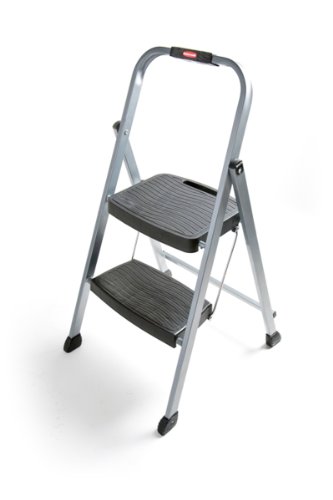
- Rubbermaid RM-2W 2-Step Steel Step Ladder — Check on Amazon
- Rubbermaid 2-Step Folding Foot Stool (FG420903WHT) — Check on Amazon
- Rubbermaid 2-Step Folding Foot Stool, Gray (FG420903CYLND) — Check on Amazon
- Cosco 11135CLG1E 2-Step Household Folding Step Stool — Check on Amazon
- HBTower 3-Step Ladder (KQ0003-BK) — Check on Amazon
- Little Giant Jumbo Step 3-Step (11903) — Check on Amazon
Read the full guide ↓
umtsmarttool.com is reader-supported. When you buy through links on this page we may earn a commission at no extra cost to you. Prices and availability change constantly, which is why every pick here says check price on Amazon rather than printing a figure that would go stale.
Finding the best step ladder under $30 is harder than the budget suggests, and this guide starts with the honest version: at the strictest tiers in this category, some of what fills shop shelves is closer to a toy than a tool, and a few of the price bands in this guide have no credible product at all from a mainstream maker. Rather than pretend otherwise, we ranked the six most defensible options for the best step ladder under $30 brief — the genuinely suitable budget picks first, then the closest honest step-ups, clearly labelled — and explained exactly what each dollar level can and cannot buy. This is the head-to-head guide: the same jobs, the same budgets and the same honesty about what the money can and cannot buy, with no lens narrowing the field.
The judging criteria for this guide were overall balance of capability, included kit and ownership cost, alongside the fundamentals that never change in this category: verified specifications from the maker or listing, an accessory or feature set that matches the real job list, and ownership practicality — storage, consumables, spares and the likelihood the tool is ready the moment you reach for it. Every specification quoted below was checked against a manufacturer page, retailer listing or reputable roundup during research, and the sourcing notes published with this article record exactly where each claim came from. Where a listing contradicted itself, we omitted the figure rather than guess. If your work overlaps with neighbouring categories, the companion guide at Best Step Ladder For Diy Projects Under $30 covers the closest alternative brief, and Best Cordless Drill Under $30 is worth reading before you commit a budget across both.
One framing note before the picks: a budget ceiling is a filter, not a target. Nothing in this guide recommends spending up to the cap for its own sake, and in several tiers the category’s sensible spending tops out well below it — we say so where that is true. Equally, where the honest answer at a tier is “the credible tools cost a little more”, we show you those tools as clearly-labelled step-ups instead of dressing up an inadequate product as a bargain. That honesty is the entire point of guides like this one, and it is why the best step ladder under $30 shortlist mixes linked budget picks with prose-only reference picks rather than forcing six links onto a tier that cannot support them.
In this guide
Quick Picks
| Pick | Best for | Key spec |
|---|---|---|
| Rubbermaid RM-2W 2-Step Steel Step Ladder | Best steel 2-step with hand grip | 2 steps; steel frame; 200 lb capacity; hand grip; highest standing height 19.1 in |
| Rubbermaid 2-Step Folding Foot Stool (FG420903WHT) | Best featherweight folding stool | 2 steps; 300 lb capacity; 14 in high; about 2.2 lb; skid-resistant foot pads |
| Rubbermaid 2-Step Folding Foot Stool, Gray (FG420903CYLND) | Best sturdier folding stool variant | 2 steps; 300 lb capacity; about 6.1 lb; folding design |
| Cosco 11135CLG1E 2-Step Household Folding Step Stool | Best slim steel folder | 2 steps; alloy steel; 200 lb capacity; 7.4 lb; 28.15 in maximum height |
| HBTower 3-Step Ladder (KQ0003-BK) | Best 3-step reach with handrail | 3 steps; steel frame; wide anti-slip pedals; handrail; 44.5 in maximum height; about 11.8 lb |
| Little Giant Jumbo Step 3-Step (11903) | Best premium step-up stool | 3 steps; aluminum; ANSI Type IAA 375 lb rating; 8.5 in wide treads; rotating safety handrail; about 16 lb |
How These Picks Were Chosen
We built the long list from manufacturer ranges and major retailer listings, then filtered it against the best step ladder under $30 brief: the price band, the core lens, and the real jobs that lens implies. Products survived only if their key specifications could be verified from a maker page, a retailer listing or a reputable specialist roundup — unverifiable claims were dropped, and any specification we could not confirm does not appear in this guide. We make no claim to have bench-tested these products; this is a research-based buying guide, and its judgements rest on verified specifications, feature analysis and the documented pattern of what each design does well and badly.
- Duty rating and capacity — the ladder must be rated for your weight plus whatever you carry; Type III (200 lb) is light duty, higher types carry more.
- Step count and standing height — match the top step to the reach your rooms and shelves actually demand.
- Step depth and tread — wide, slip-resistant steps decide comfort and confidence during longer tasks.
- Handhold — a grip or handrail transforms safety for anyone unsteady, older, or carrying tools up.
- Fold and storage — a ladder that folds flat and light gets stored where it is needed; a bulky one lives far from the job.
Two selection rules deserve emphasis. First, honest tiers: where the brief’s budget has no credible verifiable product, the slot goes to the closest honest option, described qualitatively as a step-up, rather than to an invented or mislabelled product. Second, lens fit: for a core brief, criteria weights shift — overall balance of capability, included kit and ownership cost move up the ranking, and raw capability moves down it. The same product can therefore rank differently across the lens variants of this guide, and each variant’s reviews were written for its own brief rather than copied between them. Readers comparing across budgets should also see Best Step Ladder For Small Workshops Under $30 and Best Workbench Under $15, which apply the same method to neighbouring briefs.
The 6 Best Step Ladder Options for the step ladder under $30 Brief
1. Rubbermaid RM-2W 2-Step Steel Step Ladder — Best steel 2-step with hand grip
Who it suits: buyers working to the best step ladder under $30 brief whose jobs match this pick’s strengths — it earned its place here on 2 steps; steel frame; 200 lb capacity; hand grip; highest standing height 19.1 in.
Verified specifications: a two-step steel stool with a solid steel frame, plastic steps, a hand grip for steadying yourself, and a maker-listed 200-pound capacity. It stands about 35.75 inches tall overall with a highest standing height of 19.1 inches and weighs roughly 9.8 pounds.
Pros: The hand grip is the feature that matters most in real kitchens and closets, and the steel frame feels planted in a way plastic stools do not.
Honest limitation: At nearly 10 pounds it is the carry-it-with-two-hands option, and two steps will not reach high garage shelving or ceiling fittings in tall rooms.
Choose it if its profile matches your job list and storage reality; skip it if the limitation above describes your main use case — a neighbouring pick in this guide will fit better. See the live listing to Check on Amazon for current price and availability.
Every home already owns a dangerous ladder substitute: the dining chair, the countertop edge, the wobbling stack of boxes. A step stool’s real competition is not other stools but those habits, and the best pick in this guide is the one that will actually be standing open in the right room when the moment comes. That is why weight, fold size and storage feature so heavily in our criteria alongside ratings: a technically superior ladder stored far away loses to a modest stool stored close, every single week of the year.
2. Rubbermaid 2-Step Folding Foot Stool (FG420903WHT) — Best featherweight folding stool
Who it suits: buyers working to the best step ladder under $30 brief whose jobs match this pick’s strengths — it earned its place here on 2 steps; 300 lb capacity; 14 in high; about 2.2 lb; skid-resistant foot pads.
Verified specifications: a two-step folding stool rated by the maker at 300 pounds capacity, standing 14 inches high and weighing only about 2.2 pounds, with four skid-resistant foot pads and a dent- and rust-resistant body that wipes clean.
Pros: The lightest pick here by a wide margin and the easiest to hang on a hook or slide beside a fridge; the 300-pound rating is generous for a stool this small.
Honest limitation: Fourteen inches of height is a boost, not a ladder — it will not get you to top kitchen cabinets in a high-ceilinged room.
Choose it if its profile matches your job list and storage reality; skip it if the limitation above describes your main use case — a neighbouring pick in this guide will fit better. See the live listing to Check on Amazon for current price and availability.
Buyers consistently under-rate the handhold. On paper it reads as a comfort feature; in use it is the difference between an older parent, a child on a supervised step, or anyone carrying a storage box feeling secure or feeling exposed. If the ladder will serve a mixed household — and most do — treat a grip or rail as a requirement, not an upgrade, and favour the picks that include one even when a plainer stool costs less. Confidence at height is not softness; it is what keeps movements slow, deliberate and safe.
3. Rubbermaid 2-Step Folding Foot Stool, Gray (FG420903CYLND) — Best sturdier folding stool variant
Who it suits: buyers working to the best step ladder under $30 brief whose jobs match this pick’s strengths — it earned its place here on 2 steps; 300 lb capacity; about 6.1 lb; folding design.
Verified specifications: the gray variant of Rubbermaid’s two-step folding stool (model FG420903CYLND), maker-rated at 300 pounds capacity and weighing about 6.1 pounds — noticeably more substantial in hand than the lightest version while keeping the same fold-flat idea.
Pros: A middle path between the featherweight stool and a steel ladder: still folds away, but with a more planted feel underfoot.
Honest limitation: Same 2-step height limit as its sibling, and the extra weight buys sturdiness rather than extra reach.
Choose it if its profile matches your job list and storage reality; skip it if the limitation above describes your main use case — a neighbouring pick in this guide will fit better. See the live listing to Check on Amazon for current price and availability.
Finally, respect the category’s honesty: a step stool is a short-range tool. It does not become a roof ladder by optimism, and no pick here should be used for gutter, roof or tree work. Those jobs need extension or platform ladders with their own ratings and rules. Within its honest range — cupboards, shelves, bulbs, rails, alarms, decorating — a good step stool is among the highest-value safety purchases a household can make, and the cheapest insurance against its commonest accident.
4. Cosco 11135CLG1E 2-Step Household Folding Step Stool — Best slim steel folder
Who it suits: buyers working to the best step ladder under $30 brief whose jobs match this pick’s strengths — it earned its place here on 2 steps; alloy steel; 200 lb capacity; 7.4 lb; 28.15 in maximum height.
Verified specifications: a two-step household folding stool in alloy steel (model 11135CLG1E), maker-rated at 200 pounds capacity, weighing 7.4 pounds with a maximum height of about 28.15 inches and slip-resistant feet, folding flat for closet or utility-room storage.
Pros: Lighter than the Rubbermaid steel stool with the same honest 200-pound rating, and the slim fold suits small homes and workshops.
Honest limitation: The 200-pound Type III rating is the lowest duty class here, so heavier users plus a carried load should choose a higher-rated pick.
Choose it if its profile matches your job list and storage reality; skip it if the limitation above describes your main use case — a neighbouring pick in this guide will fit better. See the live listing to Check on Amazon for current price and availability.
Every home already owns a dangerous ladder substitute: the dining chair, the countertop edge, the wobbling stack of boxes. A step stool’s real competition is not other stools but those habits, and the best pick in this guide is the one that will actually be standing open in the right room when the moment comes. That is why weight, fold size and storage feature so heavily in our criteria alongside ratings: a technically superior ladder stored far away loses to a modest stool stored close, every single week of the year.
5. HBTower 3-Step Ladder (KQ0003-BK) — Best 3-step reach with handrail
Who it suits: buyers working to the best step ladder under $30 brief whose jobs match this pick’s strengths — it earned its place here on 3 steps; steel frame; wide anti-slip pedals; handrail; 44.5 in maximum height; about 11.8 lb.
Verified specifications: a three-step folding ladder (model KQ0003-BK) with a steel frame, wide anti-slip pedals, a rubber handgrip handrail, a maximum height of about 44.5 inches and a weight of roughly 11.8 pounds. Note the listing’s own tables disagree on the load figure, so we do not quote one — check the current listing.
Pros: The third step plus a real handrail is the combination that makes ceiling bulbs, curtain rails and top shelves feel routine rather than adventurous.
Honest limitation: The conflicting capacity figures on the listing are a documentation wart; verify the rating on the physical ladder’s label before first use.
Choose it if its profile matches your job list and storage reality; skip it if the limitation above describes your main use case — a neighbouring pick in this guide will fit better. See the live listing to Check on Amazon for current price and availability.
Buyers consistently under-rate the handhold. On paper it reads as a comfort feature; in use it is the difference between an older parent, a child on a supervised step, or anyone carrying a storage box feeling secure or feeling exposed. If the ladder will serve a mixed household — and most do — treat a grip or rail as a requirement, not an upgrade, and favour the picks that include one even when a plainer stool costs less. Confidence at height is not softness; it is what keeps movements slow, deliberate and safe.
6. Little Giant Jumbo Step 3-Step (11903) — Best premium step-up stool
Who it suits: buyers working to the best step ladder under $30 brief whose jobs match this pick’s strengths — it earned its place here on 3 steps; aluminum; ansi type iaa 375 lb rating; 8.5 in wide treads; rotating safety handrail; about 16 lb.
Verified specifications: a three-step aluminum step stool with an ANSI Type IAA 375-pound duty rating, extra-wide 8.5-inch slip-resistant treads in a staircase layout, a rotating safety handrail, and a weight of about 16 pounds in the 3-step size.
Pros: The staircase treads and IAA rating make this the most confidence-inspiring climb in the guide, and the handrail rotates to suit the task.
Honest limitation: It costs several times the budget picks and is heavy for its size; it is a buy-once tool, not a budget answer.
Choose it if its profile matches your job list and storage reality; skip it if the limitation above describes your main use case — a neighbouring pick in this guide will fit better. See the live listing to Check on Amazon for current price and availability.
Finally, respect the category’s honesty: a step stool is a short-range tool. It does not become a roof ladder by optimism, and no pick here should be used for gutter, roof or tree work. Those jobs need extension or platform ladders with their own ratings and rules. Within its honest range — cupboards, shelves, bulbs, rails, alarms, decorating — a good step stool is among the highest-value safety purchases a household can make, and the cheapest insurance against its commonest accident.
Comparison Table
| Pick | Best for | Key specification |
|---|---|---|
| Rubbermaid RM-2W 2-Step Steel Step Ladder | Best steel 2-step with hand grip | 2 steps; steel frame; 200 lb capacity; hand grip; highest standing height 19.1 in |
| Rubbermaid 2-Step Folding Foot Stool (FG420903WHT) | Best featherweight folding stool | 2 steps; 300 lb capacity; 14 in high; about 2.2 lb; skid-resistant foot pads |
| Rubbermaid 2-Step Folding Foot Stool, Gray (FG420903CYLND) | Best sturdier folding stool variant | 2 steps; 300 lb capacity; about 6.1 lb; folding design |
| Cosco 11135CLG1E 2-Step Household Folding Step Stool | Best slim steel folder | 2 steps; alloy steel; 200 lb capacity; 7.4 lb; 28.15 in maximum height |
| HBTower 3-Step Ladder (KQ0003-BK) | Best 3-step reach with handrail | 3 steps; steel frame; wide anti-slip pedals; handrail; 44.5 in maximum height; about 11.8 lb |
| Little Giant Jumbo Step 3-Step (11903) | Best premium step-up stool | 3 steps; aluminum; ANSI Type IAA 375 lb rating; 8.5 in wide treads; rotating safety handrail; about 16 lb |
Every home already owns a dangerous ladder substitute: the dining chair, the countertop edge, the wobbling stack of boxes. A step stool’s real competition is not other stools but those habits, and the best pick in this guide is the one that will actually be standing open in the right room when the moment comes. That is why weight, fold size and storage feature so heavily in our criteria alongside ratings: a technically superior ladder stored far away loses to a modest stool stored close, every single week of the year.
Buyers consistently under-rate the handhold. On paper it reads as a comfort feature; in use it is the difference between an older parent, a child on a supervised step, or anyone carrying a storage box feeling secure or feeling exposed. If the ladder will serve a mixed household — and most do — treat a grip or rail as a requirement, not an upgrade, and favour the picks that include one even when a plainer stool costs less. Confidence at height is not softness; it is what keeps movements slow, deliberate and safe.
Finally, respect the category’s honesty: a step stool is a short-range tool. It does not become a roof ladder by optimism, and no pick here should be used for gutter, roof or tree work. Those jobs need extension or platform ladders with their own ratings and rules. Within its honest range — cupboards, shelves, bulbs, rails, alarms, decorating — a good step stool is among the highest-value safety purchases a household can make, and the cheapest insurance against its commonest accident.
Specifications only, by design: no prices and no ratings appear in this table, because both change faster than any guide can track. For the neighbouring brief most readers compare against, see Best Step Ladder For Beginners Under $15.
How to Choose the Right Step Ladder for Your Jobs
Duty ratings, in plain language Ladder ratings describe total load: you, your clothes, your tools and the paint pot combined. Type III is rated 200 pounds, Type II 225, Type I 250, Type IA 300 and Type IAA 375. Add your weight to a realistic carried load and choose the rating that covers it with margin. A rating is not a challenge or a suggestion; it is the line the maker tested to. In this guide the ratings are quoted exactly as the makers list them, and where a listing contradicts itself we say so rather than guess.
How much ladder do you need? Measure your real reaches: top kitchen shelf, curtain rail, ceiling bulb, smoke alarm, garage shelf. The top step you may stand on is not the top of the ladder, and comfortable work happens when the task is between waist and shoulder height as you stand. For most homes a two-step stool covers cupboards and wardrobes; three steps reach ceiling fittings in standard rooms. Taller rooms, stairwell bulbs and high garage storage justify stepping up beyond this guide’s sizes.
Steps, treads and standing comfort Narrow rungs are for climbing; wide steps are for standing and working. If your tasks involve minutes at height — painting a ceiling edge, fitting a curtain rail, cleaning atop cupboards — step depth and a slip-resistant surface decide whether the job is comfortable or a calf-burning balancing act. Staircase-style wide treads, like the premium pick here, are the comfort ceiling of the category.
Materials and weight Steel stools feel planted and cost least, at the price of carry weight. Aluminium sheds pounds and shrugs off damp, at higher cost. Plastic and resin folding stools are the lightest and store anywhere, with lower, boost-level heights. Match material to how far the ladder travels: a stool that lives in the kitchen can be steel; one that tours the whole house and garden should be light enough to carry one-handed.
Finally, plan the ecosystem, not just the tool: storage, consumables, spares and the companion purchases your first jobs will demand. Readers building out a wider kit should cross-check Best Hammer Drill Under $30 and Best Step Ladder For Home Use Under $15 so the whole budget lands coherently rather than tool by tool.
Ladder Safety: The Rules That Prevent the Fall
Most home ladder injuries come from ordinary moments, not dramatic ones. Set the stool fully open on a flat, firm surface with any spreader bars locked; never use it half-folded against a wall. Face the steps when climbing, keep three points of contact where the design allows, and use the hand grip — it is fitted for exactly the moment a foot lands awkwardly. Never stand on the top cap or above the highest marked step, never lean sideways to reach — move the ladder instead — and never carry loads that block your view of the steps or occupy both hands. Keep stools away from door swings, off rugs and mats that slide, and out of wet floors unless the feet are rated for it. Inspect feet, hinges and step treads each season; a worn rubber foot is a cheap part and an expensive fall. These are the manufacturers’ standard rules, and they are boring right up until they are the whole story.
The Household Reach Audit
Before buying, walk the house with a tape measure and list the reaches: the shelf you currently climb a chair for, the alarm whose battery chirps at 3 a.m., the curtain rail, the top of the wardrobe, the garage racking, the porch light. Note the floor each stands on — carpet, tile, decking — because feet and stability differ by surface. Most households discover two distinct needs: a low, instant boost for daily cupboard reaches, and a taller, steadier platform for periodic jobs. That is why this guide spans featherweight folding stools and three-step ladders with handrails: they are different tools answering different lines of the same audit. Buy for your list, not for the showroom’s tallest display.
Care and Storage
A step stool asks little: keep hinges and folding joints clean of paint and grit, wipe steps before storage so grit does not grind the tread surface, and check rubber feet for wear or hardening — replacements matter more than any other part. Store folding stools flat or hung in the room cluster where they work; a stool stored in a distant garage will be substituted by a chair, which is the unsafe outcome storage exists to prevent. Keep steel stools dry to protect the finish, and never store anything on the steps themselves. Once a year, open the stool, stand it on a hard floor and rock it gently: any wobble means a foot, hinge or frame needs attention before the next climb.
Ownership Notes: Living With the Tool
Every home already owns a dangerous ladder substitute: the dining chair, the countertop edge, the wobbling stack of boxes. A step stool’s real competition is not other stools but those habits, and the best pick in this guide is the one that will actually be standing open in the right room when the moment comes. That is why weight, fold size and storage feature so heavily in our criteria alongside ratings: a technically superior ladder stored far away loses to a modest stool stored close, every single week of the year.
Buyers consistently under-rate the handhold. On paper it reads as a comfort feature; in use it is the difference between an older parent, a child on a supervised step, or anyone carrying a storage box feeling secure or feeling exposed. If the ladder will serve a mixed household — and most do — treat a grip or rail as a requirement, not an upgrade, and favour the picks that include one even when a plainer stool costs less. Confidence at height is not softness; it is what keeps movements slow, deliberate and safe.
Finally, respect the category’s honesty: a step stool is a short-range tool. It does not become a roof ladder by optimism, and no pick here should be used for gutter, roof or tree work. Those jobs need extension or platform ladders with their own ratings and rules. Within its honest range — cupboards, shelves, bulbs, rails, alarms, decorating — a good step stool is among the highest-value safety purchases a household can make, and the cheapest insurance against its commonest accident.
One Stool or Two? Planning Household Coverage
Many households end up happiest with coverage in two places rather than one heroic ladder: a light folding stool that lives where daily reaches happen — kitchen, hallway cupboard, utility room — and a steadier two or three-step ladder, ideally with a handhold, stationed for the periodic jobs. The reasoning is behavioural, not technical. Daily reaches are spontaneous: the stool that is three steps away gets used, the ladder in the garage gets substituted by a chair. Periodic jobs are planned: fetching the bigger ladder is part of the task, and its stability and handrail repay the walk. If this guide’s budget buys only one item, choose by your dominant pattern — frequent low reaches favour the folding stools; regular ceiling-height work favours the stepped ladders with grips — and let the second purchase follow when the pattern proves itself. Households with older members or children old enough for supervised helping should weight the handhold and the widest steps more heavily than any other feature in this guide, including price.
Reading the Label: What to Check on Arrival
Ownership Notes: The Long View
Height confidence deserves honest treatment, because it decides real purchases in this category and is often left unspoken. Many adults — more than will say so in a shop — dislike standing on narrow steps at even modest heights, and a stool that feels uncertain will simply not be used for the jobs it was bought for; the chair comes back, with all its risks. Wide steps, a handhold and a frame without perceptible flex are therefore not luxury features but usage features, and buyers who know their household includes a cautious climber should weight them above every other criterion in this guide. Test the feeling in the first days while returns are easy: stand on each step, shift weight gently, reach as you would for a shelf. A stool that passes that test with its actual users will serve for years; one that fails it is the wrong purchase at any price, including the lowest prices in this guide.
Children change the calculation in one specific way worth naming. A step stool will be climbed by children whether or not it was bought for them, so households with young children should prefer designs without finger-trap folding gaps at toddler height, store folding stools latched or hung out of casual reach, and treat the stool as supervised equipment rather than furniture. Several picks in this guide — the light folding stools especially — are also legitimately useful as supervised child helpers at sinks and counters, which is a genuine virtue when it is deliberate and supervised, and a hazard when it is accidental. As with every tool in the home, the safe pattern is a known storage place, a known rule, and equipment whose stability does not depend on the user’s experience.
Three Buyers, Three Right Answers
The daily-reach buyer — top cupboards, wardrobe shelves, the good glasses — should choose the lightest folding stool they will genuinely keep in the kitchen. Their metric is seconds: the stool that opens in one motion, three steps from where the reach happens, wins against every technically superior ladder stored elsewhere. Capacity and step comfort still matter, but at this pattern of use the ranking inverts the showroom’s: portability first, then rating, then height. This buyer should measure their highest daily shelf, confirm the stool’s standing height covers it, and stop shopping.
The decorating and maintenance buyer — painting, curtain rails, ceiling bulbs, alarms, seasonal deep cleans — needs the stepped ladders with handholds. Their work happens in minutes-long stands at ceiling height, where step width and a grip decide comfort and safety together. This buyer should weight the duty rating for body-plus-tools, favour the widest steps in the guide, and treat the premium staircase-tread pick as a legitimate health purchase rather than an extravagance, especially where the household’s climbers span a wide age range.
The workshop and garage buyer — racking, stored boxes, workshop lighting, the high shelf over the bench — should buy for the floor and the load: a planted steel frame, a rating with real margin for carried loads, and feet that suit concrete. Their ladder travels least and carries most, so weight matters less and stability more. This buyer should also site the ladder deliberately — a fixed home position near the racking — because workshop reaches are planned reaches, and a ladder with an address gets used instead of the bench, the bucket or the forklift improvisation it replaces.
Before You Order: Four Final Checks
Before ordering, run four checks that take two minutes and prevent the commonest disappointments in this category. First, do the load sum honestly: your weight, plus clothes, plus the heaviest thing you will carry up — then compare it with the duty rating and choose with margin, not optimism. Second, measure your highest real reach — shelf, rail, bulb — and compare it with the pick’s standing height rather than its overall height, which is the number that flatters and misleads. Third, decide where the ladder will live and confirm the folded size fits that exact space; a ladder stored far from its work is a ladder replaced by a chair. Fourth, if anyone in the household is a cautious climber, treat the handhold and the widest steps as requirements and re-read those picks before deciding. None of these checks appears in a headline, and together they decide safety and satisfaction more reliably than any single figure. Do them in order, and the ladder that survives all four is very likely the right one.
A Note on Prices and This Guide’s Budget
A final note on how to read the budget in this guide’s title. The figure in the keyword is the brief we were given, and this guide treats it as a ceiling to respect honestly rather than a number to decorate. Tool pricing moves constantly — promotions, renewed stock, bundle changes and seasonal swings all shift what a given model costs on a given day — which is precisely why no article in this series prints a static product price: a printed figure would be wrong within weeks and misleading within months, and a buying guide that misleads on price has failed at its first job. Instead, every linked pick says check price on Amazon, where the live figure, the current bundle contents and the delivery terms are the ones that will actually govern your purchase. Judge the picks here on the durable things — verified specifications, design, included kit, ratings and ownership practicality — and let the live listing supply the one fact that refuses to sit still. If a pick’s live price has drifted far from this guide’s brief when you check it, the rankings still tell you what the category’s honest options are and in what order we would buy them; simply work down the list until the live figures and the brief agree.
Common Buying Mistakes
- Buying by height alone and ignoring the duty rating, then loading the ladder with body weight plus a full paint pot beyond its class.
- Standing on the top cap or the highest step to gain a few inches instead of moving up a ladder size.
- Using a chair, box or countertop as a substitute — the classic home-injury pattern these stools exist to replace.
- Choosing a heavy steel ladder for whole-house use, then leaving it in the garage because carrying it is a chore.
- Trusting a headline capacity figure without checking it against the physical ladder’s own label, especially where listings conflict.
Final Recommendation
For most readers working to the best step ladder under $30 brief, start with the Rubbermaid RM-2W 2-Step Steel Step Ladder: The hand grip is the feature that matters most in real kitchens and closets, and the steel frame feels planted in a way plastic stools do not. Check the current price and availability — Check on Amazon.
The runner-up is the Rubbermaid 2-Step Folding Foot Stool (FG420903WHT), the better answer when the top pick’s stated limitation matches your situation. Its listing is here — Check on Amazon. And if your budget can stretch one step beyond this brief, the step-up picks reviewed above show precisely what the extra money buys — in this category it buys capability and longevity, not decoration. For the closest related brief, Best Cordless Drill For Beginners Under $30 applies the same analysis.
Frequently Asked Questions
What duty rating do I need?
Add your weight to the heaviest load you will carry up — tools, paint, a storage box — and choose a ladder rated above that total. Type III (200 lb) suits lighter users with empty hands; most adults carrying anything should look at Type II or above.
Is a 2-step stool enough for a kitchen?
For standard cupboards and wardrobes, usually yes: two steps plus your natural reach covers most kitchen storage. Ceiling bulbs, curtain rails and tall rooms generally need three steps or a small ladder.
Steel, aluminium or plastic — which is best?
Steel feels most planted and costs least but is heaviest. Aluminium is the light, rust-proof all-rounder. Plastic folding stools are the lightest and cheapest boost for low reaches. Match to how far you will carry it and how high you must stand.
Can I stand on the top of a step stool?
Only on a step the maker designates for standing — never on the top cap, handle or a folded section. The highest safe step is marked on the ladder’s label; respect it.
How should I store a folding step stool?
Folded flat in the room where it works — beside the fridge, in the utility cupboard, hung on a hook. Storage distance is a safety feature: the closer the stool, the less likely a chair gets used instead.
Why do listings show different capacities for the same ladder?
Retail listings are assembled from multiple data feeds and do conflict — one pick in this guide shows two figures in its own tables. The physical ladder’s printed label is authoritative; check it on arrival.