Where to buy
These portable power station Black Friday deals are sold on Amazon, and the three picks below are the ones to check first. Prices during Black Friday Week can change by the hour, so the figure on the live listing is the one that counts.
- Best overall: EF ECOFLOW Delta 3 Classic Portable Power Station, 1024Wh
- Best 1kWh output for the money: Anker SOLIX C1000 Gen 2 Portable Power Station, 1024Wh
- Best large home-backup station: BLUETTI Elite 200 V2 Portable Power Station, 2080Wh
Disclosure: As an Amazon Associate, umtsmarttool.com earns from qualifying purchases. Links to Amazon on this page are affiliate links; they cost you nothing extra. Listing details such as price and availability change often — during this event they can change several times a day — so check the current Amazon listing before you buy.
Portable Power Station Black Friday Deals: What Is Actually Worth Buying in 2026
Amazon Black Friday Week runs from November 19 to November 30, 2026. Black Friday itself is November 27, and Cyber Monday closes the event on November 30. Portable power stations have become one of the headline categories of that window, and for a simple reason: a battery box that can run a fridge, a CPAP machine, a work laptop, lights and phones through an outage — silently, indoors, with no fuel to store — solves a problem that a petrol generator solves loudly and a phone power bank cannot solve at all. Every station in this guide uses a LiFePO4 (LFP) battery, the chemistry that has taken over the category because it tolerates thousands of charge cycles and years of standby duty in a closet without the degradation worries of older lithium packs.
Every price in this guide was checked through Amazon’s Creators API on November 20, 2026, and is printed only as a dated sighting: seen at a stated price on November 20, 2026. That discipline matters more in this category than in almost any other, because power station pricing is the most theatrical on Amazon. List prices are routinely set far above what a station ever sells for, bundles appear and disappear, and a coupon checkbox can change the real price between the search page and checkout. Where the API also returned an original price alongside the current price, we show the percentage that follows from those two API figures. Where it returned no original price, we print no percentage at all — a discount we cannot source is a discount we will not invent. Always check the live price on the listing before you buy, and re-check it in the cart, because the cart price is the price you pay.
The six stations below span the whole useful range of the category. At the small end is a 243Wh grab-and-go box for tents, tailgates and keeping phones and lights alive. In the middle are three 1024Wh stations — the sweet spot for most households — from EcoFlow, Anker and Jackery, each with a different strength: lowest sighted price, highest AC output, and the fastest headline charge time with UPS switchover. At the large end are a 2080Wh Bluetti with serious AC output for workshops and longer outages, and a 3600Wh EcoFlow DELTA Pro for buyers who want one box that can carry a home’s essentials through a long night and expand later. If you are comparing brand line-ups rather than individual boxes, our brand guides for Jackery and for EcoFlow go deeper on each maker’s full line, and their slugs are listed in the related guides at the foot of this page.
In this guide
Quick Picks
Short on time? These are the six deals, the buyer each one suits, and the price sighted through the Creators API on November 20, 2026. Every price is a dated sighting — check the live price before you buy.
| Best for | Deal | Sighted price | Link |
|---|---|---|---|
| Best overall | EF ECOFLOW Delta 3 Classic, 1024Wh, 1800W AC | seen at $438.90 on November 20, 2026 (API original price $559) | Check on Amazon |
| Most AC output per dollar at 1kWh | Anker SOLIX C1000 Gen 2, 1024Wh, 2000W | seen at $469.99 on November 20, 2026 (API original price $799) | Check on Amazon |
| Fast charging and UPS duty | Jackery Explorer 1000 v2, 1024Wh, 1500W | seen at $559 on November 20, 2026 | Check on Amazon |
| Workshops and longer outages | BLUETTI Elite 200 V2, 2080Wh, 2600W | seen at $999 on November 20, 2026 (API original price $1,399) | Check on Amazon |
| Best budget and camping | EF ECOFLOW RIVER 2 240, 243Wh, 300W | seen at $189 on November 20, 2026 (API original price $279) | Check on Amazon |
| Biggest single box | EF ECOFLOW DELTA Pro, 3600Wh, 3600W | seen at $1,799 on November 20, 2026 (API original price $2,599) | Check on Amazon |
How These Deals Were Chosen
We started from capacity classes, not brand names. A portable power station is bought in watt-hours: roughly 250Wh for phones, lights and a weekend tent; roughly 1000Wh for a fridge overnight, a CPAP through the night, or a proper camping kitchen; roughly 2000Wh and up for multi-room outage cover, power tools, or an RV that wants air conditioning for a few hours. Within each class we searched the Creators API by brand and model, matched the returned title to the exact model, and recorded the ASIN, the current API price, the API original price where one was returned, and the official product image. Only stations whose API title matched the model unambiguously made the list with a purchase link. That process is also why this guide contains no recalled pocket power banks and no mystery brands: the small pick is a proper EcoFlow station, and every pick is a current model from EcoFlow, Anker, Jackery or Bluetti.
Three further filters shaped the final six. First, chemistry: every pick is LiFePO4, because a station bought in 2026 should still hold useful capacity in 2031, and LFP cycle life is what makes the cost per year of ownership fall. Second, honest configuration: every pick is the station itself, clearly labelled where a solar panel is optional and not included, so the sighted price is never quietly a bundle price or a battery-only price. Expansion batteries and panel bundles exist for several of these models and are easy to mistake for the station itself in search results; we deliberately chose the base station listings. Third, price integrity: we compared each sighted price with the API original price where one existed, and we treated the sighted figure — not the banner percentage — as the story. A 1024Wh station seen at $438.90 is a strong deal because of what 1024Wh of LFP capacity normally costs, whatever any banner claims.
Finally, a note on what the numbers in the spec boxes mean. Capacity in watt-hours tells you how long a load runs: divide watt-hours by the watts the load draws, then discount by roughly 15 percent for inverter losses, and you have a realistic runtime estimate. AC output in watts tells you what the station can start and run at once: a fridge may draw only 120W running but several times that for a second at start-up, which is why surge ratings appear in several titles below. Charge time tells you how fast the box recovers between outages or camping days. We quote only figures stated in the API-returned titles and listings — maker figures, stated as such — and where a figure is not in the verified data, we do not print it.
The Six Deals, In Detail

1. EF ECOFLOW Delta 3 Classic, 1024Wh — Best Overall
Badge: Best Overall. The Delta 3 Classic is the station we would point most households to first this Black Friday, because it pairs the category’s most useful capacity — 1024Wh of LiFePO4 storage — with 1800W of AC output and the lowest sighted price of any 1kWh station we verified. That combination covers the real outage list for most homes: a full-size fridge cycling through the night, a CPAP machine, a router and lights, phones and laptops, with capacity to spare for a microwave burst or a kettle in the morning. The API title also confirms a 3600W surge figure, which is the headroom that lets motor loads like fridge compressors and small pumps start without tripping the inverter, and a 100W USB-C output for fast laptop charging without waking the AC inverter at all.
Spec mini (from the API listing): Capacity 1024Wh, LiFePO4 battery; AC output 1800W (3600W surge); full charge in about 1 hour by the maker’s rating; 100W USB-C output; 10ms UPS switchover; solar panel optional and not included. The one-hour charge claim is the practical headline: a station that refills during a brief grid restoration, or from a car and a wall socket between camping stops, is a station that is ready for the second night of an outage, not just the first.
Strengths: Lowest verified price in its class in this guide; genuine 1800W output rather than the 1000–1200W many 1kWh rivals offer; 10ms UPS switchover makes it credible as always-on backup for a router, a NAS or a home-office desk; fast recharge shortens every recovery window. Trade-offs: It is a single fixed battery — buyers who later want 2kWh or 3kWh in the same box should look at expandable systems instead; 1024Wh will not run high-draw heating appliances for long, because a 1500W space heater empties any 1kWh station in well under an hour; and the solar panel is an extra purchase, not part of this listing.
Deal details: Seen at $438.90 on November 20, 2026, against an API original price of $559 — 21% below that original price on the API’s own figures. For a current-generation 1024Wh LFP station with 1800W output, that sighted figure is the strongest value in this guide, and it is why this pick leads the where-to-buy box as well as the table.
Best for: Households buying their first serious outage station, campers who want fridge-and-lights capacity in one box, and home workers who want UPS cover for a desk. Not suited for: Whole-home ambitions, long space-heater or air-conditioner runtimes, or buyers who know they will expand capacity within a year.
Check on Amazon · See the Delta 3 Classic listing · View the current Delta 3 Classic price

2. Anker SOLIX C1000 Gen 2, 1024Wh — Most AC Output Per Dollar at 1kWh
Badge: Best for High-Draw Appliances at 1kWh. Anker’s second-generation C1000 keeps the same 1024Wh LiFePO4 capacity as the EcoFlow above but raises continuous AC output to 2000W, with a 3000W peak by the maker’s rating. That extra 200W of continuous output is not a spec-sheet vanity: it is the difference between running a microwave, a coffee maker or a hair dryer one at a time with care, and running them without doing arithmetic first. For buyers whose outage plan is really a kitchen plan — keep cooking, keep the kettle, keep normal life recognisable — output headroom is the feature that gets used every single day of an outage, long after the novelty of the purchase has worn off.
Spec mini (from the API listing): Capacity 1024Wh, LiFePO4 battery; AC output 2000W (3000W peak); full charge in 49 minutes by the maker’s rating; positioned by Anker for UPS, outdoor and emergency use; solar panel optional. The 49-minute full-charge figure is the fastest headline recharge among the 1kWh picks here, and it changes how the station fits a day: plug it in when the grid flickers back, and it is effectively full again before the next failure window.
Strengths: Highest continuous AC output in the 1kWh class in this guide; fastest stated full-charge time; Anker’s SOLIX line is a current, supported platform rather than a clearance model; the sighted price sits close to the EcoFlow’s while buying more output. Trade-offs: The same fixed-capacity caveat applies — 1024Wh is 1024Wh, and 2000W of output can empty it in about half an hour if you actually run a 2000W load continuously; buyers prone to running everything at once will drain this box faster than a lower-output rival precisely because it lets them; and as with every pick here, panel and expansion accessories are separate purchases.
Deal details: Seen at $469.99 on November 20, 2026, against an API original price of $799 — 41% below that original price on the API’s own figures, the deepest API-supported percentage among the 1kWh picks. Judged on output per dollar at the sighted price, this is arguably the strongest hardware bargain in the guide; it takes second place overall only because the Delta 3 Classic is sighted slightly cheaper for buyers who do not need the extra output.
Best for: Kitchen-focused outage plans, buyers who run microwaves and coffee makers from their station, and anyone who values the fastest possible recharge. Not suited for: Buyers who need expandable capacity, or who want the absolute lowest price at 1kWh and will never plug in a high-draw appliance.
Check on Amazon · See the SOLIX C1000 Gen 2 listing · View the current C1000 Gen 2 price

3. Jackery Explorer 1000 v2, 1024Wh — Fast Charging and UPS Duty
Badge: Best for Camping and RV Buyers Who Know the Jackery Ecosystem. The third 1024Wh station in this guide takes a different route to the same capacity: 1500W of continuous AC output with a 3000W peak, a maker-rated 50-minute fast charge, and a 10ms UPS switchover, all in Jackery’s Explorer format. Jackery’s long history in exactly this product class is part of the purchase — the Explorer line is the one many first-time buyers have already seen in a friend’s van or campsite, its accessories and solar panels are widely stocked, and its controls are designed for people who do not want a manual between them and a working fridge. Buyers who want the full Jackery line compared model by model should read the Jackery Black Friday deals guide linked at the foot of this page after this overview.
Spec mini (from the API listing): Capacity 1024Wh, LiFePO4 battery; AC output 1500W (3000W peak); 50-minute fast charge by the maker’s rating; 10ms UPS; positioned for home emergency, camping and RV use; solar panel optional and not included in this listing. Note that Jackery sells the same station bundled with its own panels under separate listings — the sighted price here is for the station alone, which is the right comparison against the EcoFlow and Anker above.
Strengths: UPS switchover fast enough for sensitive electronics duty; fast-charge figure close to the class best; a mature accessory ecosystem of panels, cases and cables; 3000W peak handles compressor starts comfortably. Trade-offs: Continuous output is 1500W rather than the Anker’s 2000W, so simultaneous high-draw appliances need more care; the sighted price is the highest of the three 1kWh picks here; and the API returned no original price for this listing, so we make no discount claim for it at all — judge it purely on whether $559 for this hardware is right for you.
Deal details: Seen at $559 on November 20, 2026. No percentage is printed because the Creators API returned no original price for this ASIN on the check date. That honesty cuts both ways: the absence of a banner discount does not make this a bad buy, it makes it a hardware decision. If your campsite or RV already runs Jackery panels, staying in the ecosystem at this price is defensible; if you are brand-neutral, the two picks above are sighted cheaper.
Best for: Existing Jackery owners, campers and RV users who value the ecosystem and the UPS feature, and buyers who prefer the most established name in the class. Not suited for: Pure price-per-watt-hour shoppers, or buyers who need 2000W of continuous output.
Check on Amazon · See the Explorer 1000 v2 listing · View the current Explorer 1000 v2 price

4. BLUETTI Elite 200 V2, 2080Wh — Workshops and Longer Outages
Badge: Best 2kWh Station. Doubling capacity changes what a station is for. At 2080Wh with 2600W of AC output across four AC outlets — and a maker-rated 3900W power-lifting mode for resistive loads — the Elite 200 V2 stops being an overnight fridge box and becomes a genuine outage and workshop tool: a fridge plus a freezer, a sump pump’s duty cycle, power tools at a bench with no mains, or an RV’s evening loads with margin to spare. The API title confirms a 0–80% fast charge in 50 minutes, which matters at this size, because a 2kWh battery that takes all day to refill is a one-night answer; one that recovers most of its charge in under an hour can cycle through a multi-day outage on brief grid windows or a few hours of good sun.
Spec mini (from the API listing): Capacity 2080Wh, LFP battery; AC output 2600W via 4 AC outlets (3900W power lifting by the maker’s rating); 0–80% charge in 50 minutes by the maker’s rating; positioned for camping, off-grid and emergency use; solar charging supported, panel not included. This is a two-hand lift and a permanent spot on a garage floor or RV bay, not a grab-and-go box — plan where it lives before it arrives.
Strengths: Twice the capacity of the 1kWh picks at well under twice their sighted prices; the highest continuous AC output in this guide short of the DELTA Pro; four AC outlets reduce power-strip improvisation during an outage; fast partial charging suits real outage patterns. Trade-offs: Size and weight rule it out as a casual camping carry for many buyers; the sighted price crosses the four-figure line’s neighbourhood, so the purchase deserves the runtime maths in the how-to-choose section below; and buyers who mainly need phones, lights and a laptop are paying for capacity they will never touch.
Deal details: Seen at $999 on November 20, 2026, against an API original price of $1,399 — 29% below that original price on the API’s own figures. On a simple price-per-watt-hour basis at the sighted prices, this is the most efficient large-station buy in the guide, which is why it anchors the where-to-buy box alongside the two 1kWh leaders.
Best for: Homes with fridge-plus-freezer outage lists, workshop and jobsite users, RV owners, and anyone whose outage plan runs past one night. Not suited for: Tent campers counting every kilo, or buyers whose real load list fits in 300Wh.
Check on Amazon · See the Elite 200 V2 listing · View the current Elite 200 V2 price
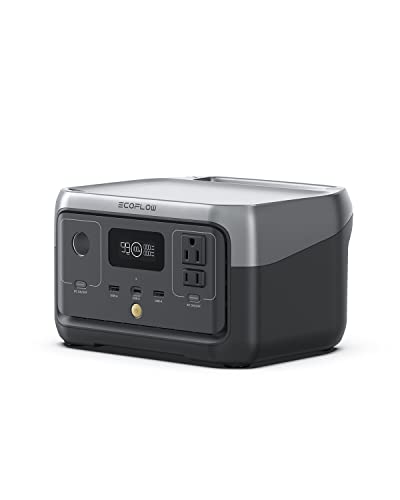
5. EF ECOFLOW RIVER 2 240, 243Wh — Best Budget and Camping
Badge: Best Budget. Not every power problem needs a kilowatt-hour. The RIVER 2 240 packs 243Wh of LiFePO4 storage and 300W of AC output — up to 600W by the maker’s rating for supported loads — into the class of box you can carry in one hand to a tent, a picnic table, a market stall or a car boot. Its honest jobs are phones many times over, lights all evening, a laptop through a workday away from mains, camera and drone batteries, and a router through a short outage. The API title confirms a one-hour fast charge, which suits its role perfectly: top it up over breakfast and it is ready for the day.
Spec mini (from the API listing): Capacity 243Wh, LiFePO4 battery; AC output 300W (up to 600W by the maker’s rating); 1-hour fast charge; solar panel optional and not included. One safety note that belongs in every small-station review: this is a proper AC power station, not a pocket power bank, and it should be shopped and compared as one — the recalled pocket banks that periodically make headlines are a different product class entirely, and none appears anywhere in this guide.
Strengths: Lowest sighted price in the guide by a wide margin; genuinely portable in a way no 1kWh box is; LFP chemistry at a starter price, so it ages like its bigger siblings; fast recharge fits camping and market-day rhythms. Trade-offs: 243Wh is a hard ceiling — it will not run a full-size fridge overnight, a CPAP plan should be tested against your machine’s actual draw before an outage depends on it, and anything with a heating element is out of the question; 300W of AC output excludes most kitchen appliances entirely; and buyers who later discover they needed 1kWh will own a second station, not an expansion.
Deal details: Seen at $189 on November 20, 2026, against an API original price of $279 — 32% below that original price on the API’s own figures. As a first station, a car-and-tent station, or a gift that introduces someone to backup power without a four-figure commitment, the sighted price is easy to defend.
Best for: Campers, drivers, market and event sellers, students, and anyone whose load list is phones, lights and laptops. Not suited for: Fridge backup, medical-device plans that have not been runtime-tested, or any heating appliance.
Check on Amazon · See the RIVER 2 240 listing · View the current RIVER 2 240 price

6. EF ECOFLOW DELTA Pro, 3600Wh — Biggest Single Box
Badge: Best for Serious Home Backup. The DELTA Pro is where this category stops being portable in the casual sense and starts being infrastructure. The API title confirms 3600Wh of capacity, 3600W of 120V AC output, a maker-rated 2.7-hour fast charge, and expansion headroom up to 25kWh within the EcoFlow system. In practical terms, one box can carry a home’s essentials — fridge, lights, network, a television, device charging, intermittent microwave and kettle use — through a long outage day, and the expansion path means a buyer can start here and grow toward multi-day cover with extra batteries rather than replacing the station. Buyers comparing the full EcoFlow ladder, from RIVER to DELTA Pro, will find every rung priced in the EcoFlow Black Friday deals guide linked below.
Spec mini (from the API listing): Capacity 3600Wh; AC output 3600W at 120V; fast charge in 2.7 hours by the maker’s rating; expandable up to 25kWh within the maker’s ecosystem; positioned for home use, outages, camping and RV emergencies; solar panel optional. At this size, delivery and placement deserve a thought before ordering: confirm the listing’s delivery window, and decide which room the station lives in and which circuits or appliances it will actually serve.
Strengths: Largest capacity and joint-highest output in this guide; a genuine expansion path protects the purchase as needs grow; output headroom runs multiple serious loads at once; fast charging for its size keeps multi-day outages manageable. Trade-offs: The sighted price is the highest here by far, and the value case depends entirely on actually needing multi-kilowatt-hour cover; it is heavy infrastructure, not a camping accessory; and whole-home ambitions beyond essentials still belong to a electrician-installed transfer-switch conversation, not a single portable box, however large.
Deal details: Seen at $1,799 on November 20, 2026, against an API original price of $2,599 — 31% below that original price on the API’s own figures, and the largest absolute gap between sighted and original price in this guide. Big-ticket purchases are exactly where the dated-sighting discipline matters most: confirm the live figure, the seller, and that the listing is the station itself before committing.
Best for: Homes with frequent or long outages, buyers planning an expandable backup system, and RV or cabin owners with serious loads. Not suited for: Casual campers, first-time buyers still learning their load list, or anyone whose essentials fit a 1kWh box.
Check on Amazon · See the DELTA Pro listing · View the current DELTA Pro price
Comparison Table
| Pick | Capacity | AC output | Sighted price (November 20, 2026) | Watch out for |
|---|---|---|---|---|
| EcoFlow Delta 3 Classic | 1024Wh LFP | 1800W (3600W surge) | $438.90 (API original $559) | Fixed capacity, panel extra |
| Anker SOLIX C1000 Gen 2 | 1024Wh LFP | 2000W (3000W peak) | $469.99 (API original $799) | High output drains it fast |
| Jackery Explorer 1000 v2 | 1024Wh LFP | 1500W (3000W peak) | $559 (no API original price) | Highest 1kWh sighted price here |
| BLUETTI Elite 200 V2 | 2080Wh LFP | 2600W (3900W lifting) | $999 (API original $1,399) | Size and weight |
| EcoFlow RIVER 2 240 | 243Wh LFP | 300W (up to 600W) | $189 (API original $279) | No fridge or heating loads |
| EcoFlow DELTA Pro | 3600Wh | 3600W | $1,799 (API original $2,599) | Infrastructure price and size |
How to Choose the Right Size of Power Station
Start from a load list, not a headline capacity. Write down everything the station must run in its real job — an outage night, a camping weekend, a market day — with the watts each item draws and the hours it runs. Multiply watts by hours for each item, add the results, and that total in watt-hours is your minimum usable capacity. Then add a margin: inverter losses and sensible reserve mean you should shop for a rated capacity roughly a quarter larger than your calculated need. A fridge is the classic trap in this maths. It might average 100–150W across a day as it cycles, which sounds like 2400Wh for 24 hours, but its duty cycle in a warm kitchen can push real consumption far above the tidy estimate — which is why a 1024Wh station is honestly an overnight fridge answer, and a 2080Wh station is the comfortable full-day answer.
Separate running watts from starting watts. Anything with a motor or compressor — fridges, freezers, pumps, power tools — draws a brief surge when it starts. Your station’s continuous rating must cover the sum of everything running at once, and its surge or peak rating must cover the largest start on top of that. The titles in this guide state both figures for most picks; if a listing you find elsewhere states only one number, assume it is the flattering one and dig before buying.
Decide whether expansion matters before you buy, not after. A fixed 1024Wh station is cheaper and simpler. An expandable system costs more per watt-hour on day one but lets capacity grow with extra batteries. If your outage history is worsening, your home is gaining medical or work-from-home loads, or an RV is on the horizon, expansion headroom like the DELTA Pro’s is worth paying for now. If your load list has been stable for years, it is not.
Match charging to your recovery window. Fast AC charging — the one-hour class figures quoted by several picks here — is what makes a station practical across back-to-back outage days. Solar charging is slower, weather-dependent, and sold separately in every listing in this guide; treat panels as a second purchase with its own maths, sized to refill in a day of good sun only the capacity you actually used overnight. Buyers planning a tool-and-power Black Friday cart together can cross-check the rest of our event coverage in the tool deals guide linked below.
How to Check a Power Station Deal Is Real
Price the station, not the bundle — and not the battery. Search results for every popular station mix four different products: the station alone, the station with a panel, an expansion battery with no inverter at all, and last year’s model. Their prices differ by hundreds of dollars and their photos look nearly identical. Before comparing any two prices, confirm from the listing title that both are the same configuration. Every sighted price in this guide is for the station itself, with panels optional, precisely so the comparison is honest.
Use the sighted price and the original price, and distrust everything else. A percentage is only meaningful if both numbers behind it are real. That is why this guide prints a percentage only where the Creators API returned an original price alongside the current one, and prints none for the Jackery 1000 v2, where it did not. Apply the same rule to any deal you find yourself: no verifiable original price, no believable percentage.
Check the cart price and the seller. During Black Friday Week, coupon checkboxes, marketplace sellers rotating into a listing, and expired lightning prices can all make the checkout figure differ from the deal-page figure. The cart is the truth. If the price has jumped, back out and re-check rather than completing the purchase on momentum — stations at this level restock and re-discount across the November 19–30 window more often than the banners suggest.
Do the cost-per-watt-hour sum last, not first. Dividing sighted price by capacity is a useful tiebreaker between similar stations — at the prices sighted here, the Bluetti’s 2080Wh at $999 is remarkably efficient, and the RIVER 2’s small premium per watt-hour buys genuine portability. But a cheap watt-hour in a box with too little AC output, the wrong outlets, or no expansion path is not a saving. Fit first, efficiency second.
Runtime Examples: What Each Size Actually Does
Abstract watt-hours become decisions when they are translated into evenings. Take a typical outage night list: a fridge averaging 120W across its cycle for ten hours (about 1200Wh before losses), a router and modem at 15W for ten hours (150Wh), two LED lamps at 10W each for five hours (100Wh), four phone charges (roughly 60Wh in total), and a laptop for three hours of work at 50W (150Wh). That realistic night totals roughly 1660Wh of demand before inverter losses — beyond any 1024Wh station once losses are counted, comfortable for the 2080Wh Bluetti with reserve, and easy for the DELTA Pro. Shrink the same night by moving the fridge to a cooler room, opening it less, and dropping the laptop, and a 1024Wh station becomes a credible one-night answer, which is exactly why two households can read the same capacity figure and honestly need different stations.
Camping maths is kinder. A weekend tent list — lights for two evenings, phones, a camera, a small 12V cooler cycling lightly, and a speaker — often totals only a few hundred watt-hours, which is why the RIVER 2 240 earns its place despite its small rating, and why many campers who buy a 1kWh station discover they have purchased silence and margin rather than necessity. The opposite trap waits at home: a single evening of space heating can consume more energy than an entire weekend of camping electronics. A 1500W heater running for three hours asks for 4500Wh — more than the largest station in this guide. Heating is the load that breaks portable-station plans, and the honest answers are blankets, smaller rooms, and shorter bursts, not a bigger box bought in hope.
Work use sits between the two. A cordless-tool battery charger, a work light, a laptop and a small fan through a jobsite day is a modest few hundred watt-hours, well inside the 1kWh class. Add a mitre saw or a compressor with serious start-up surge and the question stops being capacity at all and becomes output and surge — the territory of the Bluetti’s 2600W and the DELTA Pro’s 3600W. This is why the comparison table lists capacity and output side by side, and why choosing on either number alone misleads.
Common Mistakes
Buying capacity for the appliance you use once a year. Sizing a station around a space heater, a kettle running all day, or whole-home air conditioning inflates the purchase enormously. Size for the loads that matter every outage — refrigeration, light, communications, medical and work devices — and let rare luxuries stay rare.
Confusing watts with watt-hours. A 2000W station is not twice as long-running as a 1000W station; output and capacity are different numbers answering different questions. Most disappointed buyers made exactly this swap in their heads at the moment of purchase.
Assuming the solar panel is included. In this category, “solar generator” in a title usually means solar-capable, not solar-equipped. Every pick in this guide is the station alone unless a bundle is explicitly named. Budget the panel separately or plan on wall charging.
Storing the station empty or full for a year. LFP batteries are forgiving, but the outage you bought the station for will eventually arrive on the one week you forgot it. Follow the maker’s storage guidance, keep a sensible partial-to-high charge, and run the station a few times a year so the purchase is a habit, not a museum piece.
Waiting for Black Friday itself. The event runs November 19–30, and popular capacities sell through in waves. If a sighted price matches your maths today, the remaining days of the sale are for the accessories, not for hoping the headline box gets cheaper.
Final Recommendation
For most households, the EcoFlow Delta 3 Classic, seen at $438.90 on November 20, 2026, is the portable power station Black Friday deal to buy first: the right capacity, strong 1800W output, UPS switchover and the lowest verified 1kWh price in this guide. If your outage life runs through the kitchen, step sideways to the Anker SOLIX C1000 Gen 2, seen at $469.99 on November 20, 2026, for its 2000W output and 49-minute recharge. If your plan is bigger — a workshop, a freezer as well as a fridge, a second night without worry — the BLUETTI Elite 200 V2, seen at $999 on November 20, 2026, is the most efficient large buy here, and the DELTA Pro waits above it for buyers building real home backup. Whatever you choose, do the load-list maths first and check the live price in the cart: in this category, the right size at a fair sighted price beats the biggest banner discount every time.
One last discipline before you buy: photograph or save the listing details at the moment you order — model, capacity, configuration and price paid. Power station line-ups change quietly between seasons, bundles rotate, and having the exact configuration you purchased on record makes any later warranty conversation, accessory purchase or expansion-battery match straightforward instead of archaeological. It takes thirty seconds during the sale and saves real time in year three.
Frequently Asked Questions
How long will a 1024Wh power station run a fridge?
As a planning estimate, divide usable capacity — roughly 85% of rated watt-hours after inverter losses — by the fridge’s average draw. A fridge averaging around 100W across its cycle gives roughly eight to nine hours from a 1024Wh station; a efficient modern fridge in a cool room can do better, and an old fridge in a warm kitchen will do worse. For a comfortable full day of refrigeration, look at the 2080Wh class and above.
What does LiFePO4 mean, and why does it matter?
LiFePO4, or LFP, is a lithium battery chemistry known for long cycle life and stable behaviour. In practice it means a station bought this Black Friday should still deliver useful capacity after years of regular use and long standby periods, which is why every pick in this guide uses it and why cost per year, not cost per purchase, is the right way to judge these prices.
Are solar panels included with these stations?
No. Every pick in this guide is the station itself, with solar charging supported and panels sold separately, unless a listing title explicitly names a bundle. We deliberately chose base station listings so the sighted prices compare like with like.
Can a portable power station run a CPAP machine overnight?
Usually, yes — CPAP machines are modest loads, and a 1024Wh station is the comfortable class for a full night with reserve. Actual draw varies by machine and settings, especially heated humidification, so test your own machine at home on the station before an outage depends on it, and treat that test, not any guide’s estimate, as your plan.
Should I wait for Cyber Monday for a better power station price?
Cyber Monday, November 30, 2026, usually repeats some Black Friday pricing and occasionally deepens a specific model, but stock is the risk: popular capacities that sell out during Black Friday Week do not reliably return. If a station fits your load list at a sighted price you have verified, buying during the main event is the safer play. Our Cyber Monday tool deals guide, linked below, tracks the closing day of the event.
Why does one pick in this guide have no discount percentage?
Because the Creators API returned no original price for the Jackery Explorer 1000 v2 on November 20, 2026, and we only print a percentage when both the current and original prices come from the API. A missing percentage is missing data, not a missing deal.