Disclosure: As an Amazon Associate, umtsmarttool.com earns from qualifying purchases. Links to Amazon on this page are affiliate links; they cost you nothing extra. Listing details such as price and availability change often, so check the current Amazon listing before you buy.
American Standard has been making bathtubs for a very long time, and its name shows up on a surprising share of the tubs already sitting in family homes. That history is the main reason people search for the best American Standard bathtubs: they want a familiar brand, a tub that is easy to find replacement parts for, and a plumber who has probably installed one before. This guide looks at five models from the brand that cover different jobs, from a standard 60-inch alcove replacement to a deep drop-in soaker.
It is written for homeowners planning a remodel, landlords refreshing a rental, and anyone who has measured an old tub and now needs to match the footprint. You will get a quick comparison table, a short note on how the models were picked, a section on each tub with honest trade-offs, advice on matching drain side and installation style, and a set of answers to the questions that come up most. Read the fit notes before you click through, because the wrong drain side or the wrong mounting style is the most common reason a tub gets sent back.
Quick Comparison
| Product | Best for | Main point | Link |
|---|---|---|---|
| American Standard Princeton Americast Alcove Bathtub 2391.202.020 | Like-for-like 60 x 30 replacement | Americast material, apron and tiling flange | Check on Amazon |
| American Standard Evolution Deep Soak Drop-In Bathtub 2422V002.020 | Tiled deck remodels | Deep 60 x 32 acrylic soaking bowl | Check on Amazon |
| American Standard Evolution Integral Apron Bathtub 2425V-RHO002.020 | Alcoves that want a finished front | Apron front with right-hand drain | Check on Amazon |
| American Standard Studio Drop-In Soaking Bathtub 2932002-D0.020 | Modern, clean-edged bathrooms | Zero edge look with reversible drain | Check on Amazon |
| American Standard Value 48 Soaking Bathtub 2848.509.SRL | Very short alcoves | Shortest option in this list | Check on Amazon |
In this guide
How These Options Were Chosen
We have not tried these products ourselves. The five tubs here were picked from the manufacturer’s own listings and the specifications published by retailers, with the aim of covering different installation styles and different materials from one brand. Where a detail varies between listings, such as drain hand or finish, we say so and tell you to confirm it on the page you buy from. Model codes carry suffixes for color and drain side, so read the full code carefully before ordering.
The 5 Best American Standard Bathtubs
American Standard Princeton Americast Alcove Bathtub 2391.202.020
The Princeton is the tub most people picture when they say a classic American Standard alcove bath. It is a 60 by 30 inch tub with a right-hand drain, an integral apron and a tiling flange, so it slides into a three-wall alcove and the flange takes the wall tile. Retailers describe the material as Americast, a porcelain surface bonded to enameled steel with a molded composite backing, which the maker positions as a quieter and warmer alternative to bare steel.
Who is it for? Anyone swapping an older 60 by 30 tub where the plumbing stays where it is. The listed lumbar support and beveled headrest make the interior feel more shaped than a plain rectangle, and the slip-resistant base area is a sensible detail for a shared family bath.
The trade-offs are practical. Americast is heavier than a thin acrylic shell, so check the floor and stairs before delivery day. The right-hand drain is fixed, which means a left-drain bathroom needs a different code. It is also a soaker, not a deep tub, so tall bathers may not find it roomy.
Skip it if your alcove is wider than 30 inches, or if you want a deck-mounted look.
American Standard Evolution Deep Soak Drop-In Bathtub 2422V002.020
The Evolution family is American Standard’s deeper acrylic line, and the 2422V002.020 is the drop-in version in a 60 by 32 inch footprint. Drop-in means the tub sits inside a built deck or surround, so you finish the outside with tile, stone or panels of your choosing. Retailer pages describe a drain that can be set for either side, which gives you more freedom than a fixed-hand alcove model.
It suits a remodel where you are building a new platform and want the bath to feel generous without moving to a freestanding tub. Because acrylic holds a smooth, warm surface, it is a pleasant choice if you like long baths in a cooler room.
Be careful with one detail. Listings note that the deep soak versions work with a dedicated deep soak drain, and that it may be a separate item. Confirm what is included before the tile setter arrives, because a missing drain part can stall a job for days.
The deck framing, support and waterproofing are carpentry and plumbing work, so follow the installation sheet and use a licensed professional if you are unsure. Skip this model if you have a ready-made alcove with no deck.
American Standard Evolution Integral Apron Bathtub 2425V-RHO002.020
This is the same Evolution deep soak idea, but built with an integral apron, so the front of the tub is already finished. The code ends in RHO for the right-hand version, and the left-hand twin carries LHO in its code. That makes it a good fit where you want a deep 60 by 32 inch bath in an alcove without building any front paneling.
If you stood at the foot of the tub, the right-hand version is the one with the drain on your right. Always check this from the foot end before ordering, since it is the most common mix-up with alcove tubs.
It appeals to people who want more room than a 30-inch-wide tub gives, yet still have a standard-length alcove. The extra width and acrylic shell also suit couples who share one bathroom and want a little more elbow room.
The cost of that comfort is water volume and weight when full, so confirm your water heater and the floor structure with the maker’s instructions and a qualified contractor. If your alcove is only 30 inches wide, this model will not fit and the Princeton is the better match.
American Standard Studio Drop-In Soaking Bathtub 2932002-D0.020
The Studio is the design-led choice in this group. Its zero edge detail gives the rim a thin, clean line when it sits in a deck, which pairs well with large-format tile and minimal fittings. The listing describes a reversible drain, so one tub can work on either side.
It is best for a bathroom where the look matters as much as the function. A modern, quiet-colored room with simple lines is where this tub earns its place, and the soaking style is meant for sitting in the water rather than a quick rinse.
The trade-off is the build effort. A drop-in with a crisp edge asks for accurate framing and careful tile cuts around the rim, and sloppy work is far more visible than on a traditional tub with a thick flange. Plan for a tile setter who has done this before.
Check the listing for the exact overall size and the drain parts that are included, because we have not quoted dimensions here. Skip it if you prefer a traditional rolled rim or you need an apron-front tub.
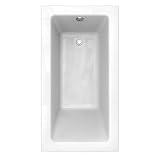
American Standard Value 48 Soaking Bathtub 2848.509.SRL
The Value 48 is the odd one out in this list, and that is the point. It is a short, gelcoat soaking tub aimed at spaces where a standard 60-inch tub simply will not go, such as a compact secondary bathroom or a conversion. The listing calls it a walk-in soaking tub for alcove installation with a right drain, so read the description carefully to confirm how the tub is entered and whether any door or seat is part of the design.
Gelcoat over a molded shell is a lighter and simpler build than Americast, which can make delivery and handling easier. It is a sensible pick for a rental unit, a guest bath, or a house where the old tub was smaller than the modern standard.
The compromises are obvious. You get less length, and gelcoat is generally less glossy and less resistant to scuffing than a thick acrylic or porcelain surface, so use non-abrasive cleaners. Tall bathers will probably want a longer tub.
Verify the model code on the listing before purchase, because the suffix controls drain side and finish.
Best for First-Time Remodelers
If this is your first bathroom project, the Princeton 2391.202.020 is the least risky route. It matches the long-standing 60 by 30 inch alcove, the apron and flange simplify the wall finish, and plumbers know the layout. Measure your existing alcove and drain side first, and you will avoid most surprises.
Best for Tile Decks and Custom Surrounds
The Evolution drop-in 2422V002.020 is the better choice when you are building a deck. Because the exterior is yours to finish, you can match stone, tile or paneling to the rest of the room, and the reversible drain gives you flexibility if the plumbing wall changes during planning.
Best for Long, Quiet Soaks
For people who want to settle in and stay a while, the Evolution apron model 2425V-RHO002.020 gives the extra width and deep soaking bowl in an alcove-friendly shape. It keeps the finished front, so no framing is needed and the bath still feels like a proper soaker.
Best for Tight, Short Spaces
When floor length is the constraint, the Value 48 2848.509.SRL is the one that shortens the footprint. Pair it with a handheld shower and good storage nearby, and a small bathroom can still offer a full bath without crowding the doorway.
How to Choose an American Standard Tub
Begin with the footprint, because everything else depends on it. Measure the alcove from wall to wall along the length and width, and note whether it has three walls or fewer. American Standard sells similar looking tubs in several sizes, so a tub that looks right in a photo can still be several inches off.
Next, find the drain side. Stand at the foot of the tub, facing the faucet wall, and note whether the existing drain is on your left or right. Fixed-hand alcove models are sold separately for each side, while some drop-in models offer a reversible drain. Matching the hand avoids moving plumbing.
Then decide on the material. Americast, as on the Princeton, has a porcelain surface over steel and a composite backing and tends to feel solid and quiet. Acrylic, as on the Evolution and Studio, is lighter, warms quickly and is easy to wipe clean. Gelcoat, as on the Value 48, is the simplest build. Neither is better in every case; weigh weight, finish and how you bathe.
Think about depth and width next. A deeper bowl lets you sit lower in the water, while a wider one gives room to shift position. Do not rely on a single number from a listing. Compare the interior space on the maker’s specification sheet.
Finally, check the small parts. Many tubs are sold without the drain and overflow kit, and deep soak models may need a particular drain. Faucets and wall surrounds are also usually separate. Set aside a little time to confirm the full parts list so the plumber is not waiting on a missing piece.
Common mistakes include ordering from a photo, forgetting the stairs and doorway width on delivery day, and assuming a drop-in can be used in an alcove without framing it. Treat the maker’s installation sheet as the final word.
Installation, Safety and Legal Notes
Always follow the maker’s installation instructions for the exact model code you buy. Tub support, leveling, drain connection and sealing differ between Americast, acrylic and gelcoat shells, and skipping a step may affect the maker coverage. Plumbing connections, any new supply lines and any electrical work near the bath should be done by a licensed professional.
A full tub is heavy. Floor loading and joist support are structural matters, so ask a qualified contractor to check older or lightly built floors before you install a deep or cast-style bath. Local building and plumbing rules differ, and some areas require permits for tub replacement, so check with your local building office rather than assuming.
Use a non-slip mat or the textured base area where provided, and keep electrical devices well away from the water.
Care and Troubleshooting
Wipe the tub down after use and rinse away soap film. Use mild, non-abrasive cleaners, and read the maker’s care sheet before trying anything stronger on the surface.
| Problem | Likely cause | What to try |
|---|---|---|
| Dull patches | Abrasive cleaner or hard water | Switch to a gentle cleaner and wipe dry |
| Slow drain | Hair or soap in the trap | Clean the stopper and trap by hand |
| Weeping at the rim | Aged sealant | Re-seal with a suitable bath sealant |
Check the sealant line each year, since that is where small leaks begin. If water appears below the tub, stop using it and call a plumber.
Americast, Acrylic and Other Tub Materials Compared
The tubs in this guide come in more than one material, and the material shapes how the bath feels and behaves every day. Americast, as described for the Princeton, is a porcelain surface bonded to enameled steel with a molded composite backing. That construction aims for a hard, glossy surface that resists scratching and a quieter, warmer feel than bare steel. The cost is weight, so plan for a sturdy floor and a delivery route that can handle it. Acrylic, used for the Evolution tubs, is a molded plastic shell. It is lighter and holds heat well, which makes it pleasant for long soaks, though a thin shell may flex without proper support underneath.
Beyond those two, you will run into cast iron, enameled steel and fiberglass in the wider market. Cast iron is very heavy and holds heat extremely well. Enameled steel is hard but can feel cold and noisy. Fiberglass is light and inexpensive but can scuff and fade over time. None is automatically best. Match the material to your priorities: weight limits, how long you like to soak, how much noise you can tolerate and how careful you will be with cleaners.
- Americast: tough surface, heavy, warmer than bare steel.
- Acrylic: lighter, warm to the touch, needs good support.
- Cleaning: use non-abrasive products on any glossy finish.
Measuring Your Alcove and the Path to the Bathroom
A tub that fits the alcove but cannot get through the front door is a costly mistake. Before you order, measure three things. First, the alcove itself: the length from wall to wall, the depth from back wall to front, and the height of any window or fixture that might interfere. Measure at several heights, since older walls are rarely square. Second, the rough-in plumbing: note which side the drain falls on and how far it sits from the wall, because that drives the choice between left-hand and right-hand versions. Third, the delivery path: doorways, tight hallway turns, stair landings and ceiling height at the bathroom door.
Compare your numbers with the listing’s published dimensions and the manufacturer’s installation sheet, not with a guess based on the model name. Tubs usually need a little clearance for the flange and for wall finishing, and a tub that matches the alcove to the last fraction of an inch may be impossible to slide in. If the tub is a drop-in, measure the deck or platform you will build as well, since the framing size depends on the product.
When a tub is heavy or large, ask the seller about delivery, curbside drop-off and how to inspect it. Check for damage before the carrier leaves, and keep the packaging until you have confirmed everything is correct.
Drains, Overflows and Other Parts You May Buy Separately
A bathtub rarely arrives as a complete working bath. Many models are sold as the shell alone, and the drain, overflow, faucet and wall surround are separate purchases. The listing for the deep soak versions in this guide noted a dedicated drain that may not be included, so confirm what comes in the box before the installer arrives. A missing part can stall the whole job, especially when a tile setter or plumber is scheduled.
Plan your parts list in advance. You will typically need a drain assembly sized to the tub, an overflow and a trim kit, a shower or tub faucet that suits your supply lines, and a method of sealing the tub to the walls. Some tubs also need a mortar or foam bed for support, and others need a ledger or framing. Follow the installation instructions for the exact requirements, and have a licensed plumber confirm anything that affects water supply or waste lines.
- Drain and overflow assembly, matched to the tub style.
- Faucet and valve compatible with your plumbing.
- Wall surround, tile or panels, plus waterproofing.
- Sealant rated for wet areas.
Budgeting for the Whole Project
The tub itself is only part of the cost. Removing the old tub can be labor intensive, particularly when it is cast iron or tiled into the wall. Expect to budget for demolition, disposal, any subfloor repair, plumbing work, new wall surround or tile, and finishing touches like paint and trim. If you discover water damage or rot behind the old tub, repairs can add time and money, so keep a contingency.
Labor often makes up a large share of the total, and hiring a licensed professional is worth it when the job involves plumbing changes. Get written quotes that list what is included, and ask about timelines and warranties. Check whether your area requires a permit for a bathroom remodel, since skipping one can cause problems at resale.
Finally, factor in the practical side: you will be without a bath for a few days or longer, so plan around that. A tub that costs a little more but fits the existing plumbing and alcove cleanly can end up cheaper than a bargain model that needs framing changes, a new drain location or custom tile work.
Frequently Asked Questions
Which American Standard tub fits a standard 60-inch alcove?
The Princeton 2391.202.020 is built for a 60 by 30 inch alcove, and the Evolution apron model suits a 60 by 32 inch alcove. Measure first, because width differs.
What does the RHO or right drain part of a code mean?
It refers to the drain side as seen from the foot of the tub. Confirm it against your plumbing before ordering.
Can I use a drop-in tub in an alcove?
Only if you build a support and surround as the instructions describe. A drop-in has no finished front, so an apron model is simpler for an alcove.
Is Americast better than acrylic?
They are different. Americast feels solid and quiet, while acrylic is lighter and quicker to warm. Choose by weight, finish and your floor.
Do these tubs include the drain?
Often they do not, and deep soak models may need a specific drain. Read the listing for what is included.
Can a short 48-inch tub work for an adult?
It can for seated soaking and rinsing, but taller bathers usually prefer more length.
How heavy is an Americast bathtub?
Americast is heavier than a thin acrylic shell because it uses a porcelain-coated steel layer with a composite backing. Check the listing and manufacturer’s sheet for the exact weight of your model, and confirm that the floor structure and delivery route can handle it.
Do I need a plumber to install an American Standard tub?
Many homeowners hire one. Tub installation involves drain, overflow and supply connections, and mistakes can cause leaks. If you are comfortable with plumbing you can follow the installation sheet, but a licensed professional is wise when changing the layout or working with older pipes.
Can I replace a left-hand drain tub with a right-hand one?
Only if the drain position can be moved, which usually means altering the plumbing. The simplest approach is to buy the matching hand version. Stand at the foot of the tub and note which side the drain is on, then confirm it in the model code and listing.
What should I check before a bathtub is delivered?
Confirm the model code, drain side, color and included parts match your order. Measure doors and halls, then inspect the packaging for damage before the carrier leaves. Keep the box until the tub is installed and tested so returns or claims are easier.
Bottom Line
For most remodels, the Princeton 2391.202.020 is the dependable like-for-like pick. Choose the Evolution drop-in if you are building a deck, the Evolution apron model for a deeper alcove bath, the Studio for a crisp modern edge, and the Value 48 only when length is your limit. Measure twice, match the drain side, and let a licensed professional handle the plumbing.