Disclosure: As an Amazon Associate, Reviews Took earns from qualifying purchases. Links to Amazon on this page are affiliate links; they cost you nothing extra.
Look for ANSI Z87.1 certification.
This guide is built from Amazon product listings and maker specs, not our own testing, so confirm size, contents and current price on each product page.
Check the current price on Amazon before you buy.
Last updated: November 2, 2026.
In this guide
Quick Picks
| Product | Type | Best for |
|---|---|---|
| Welding Helmet Auto Darkening BESTCLUB True Color Solar Powered | Welding helmet | welding eye protection |
| TRQWH Auto Darkening Welding Helmet with Light ANSI Z87.1 | Welding helmet | welding eye protection |
| VILSIN Welding Helmet Auto Darkening Solar Powered Welding Hood | Welding helmet | welding eye protection |
| YESWELDER Auto Darkening Welding Helmet 1/1/1/1 True Color | Welding helmet | welding eye protection |
| Miller Classic Series Welding Helmet ClearLight Shade 8-13 Black | Welding helmet | welding eye protection |
| Welding Helmet Auto Darkening True Color Large Viewing Welding | Welding helmet | welding eye protection |
| Auto-Darkening Welding Helmet True Color View UV IR Adjustable | Welding helmet | welding eye protection |
| YESWELDER Auto Darkening Welding Helmet Large View LYG-M800H | Welding helmet | welding eye protection |
Our Picks
Top pickBest for welding eye protection
1. Welding Helmet Auto Darkening BESTCLUB True Color Solar Powered
A Welding Helmet Auto Darkening BESTCLUB True Color Solar Powered (welding helmet), per the listing. Check price on Amazon.
Good for: welding eye protection. Watch out: Check shade range.

Best for welding eye protection
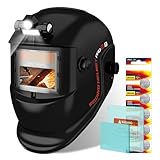
2. TRQWH Auto Darkening Welding Helmet with Light ANSI Z87.1
A TRQWH Auto Darkening Welding Helmet with Light ANSI Z87.1 (welding helmet), per the listing. Check price on Amazon.
Good for: welding eye protection. Watch out: Check shade range.
Best for welding eye protection
3. VILSIN Welding Helmet Auto Darkening Solar Powered Welding Hood
A VILSIN Welding Helmet Auto Darkening Solar Powered Welding Hood (welding helmet), per the listing. Check price on Amazon.
Good for: welding eye protection. Watch out: Check shade range.

Best for welding eye protection
4. YESWELDER Auto Darkening Welding Helmet 1/1/1/1 True Color
A YESWELDER Auto Darkening Welding Helmet 1/1/1/1 True Color (welding helmet), per the listing. Check price on Amazon.
Good for: welding eye protection. Watch out: Check shade range.

Best for welding eye protection
5. Miller Classic Series Welding Helmet ClearLight Shade 8-13 Black
A Miller Classic Series Welding Helmet ClearLight Shade 8-13 Black (welding helmet), per the listing. Check price on Amazon.
Good for: welding eye protection. Watch out: Check shade range.

Best for welding eye protection
6. Welding Helmet Auto Darkening True Color Large Viewing Welding
A Welding Helmet Auto Darkening True Color Large Viewing Welding (welding helmet), per the listing. Check price on Amazon.
Good for: welding eye protection. Watch out: Check shade range.
Best for welding eye protection
7. Auto-Darkening Welding Helmet True Color View UV IR Adjustable
An Auto-Darkening Welding Helmet True Color View UV IR Adjustable (welding helmet), per the listing. Check price on Amazon.
Good for: welding eye protection. Watch out: Check shade range.

Best for welding eye protection
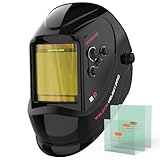
8. YESWELDER Auto Darkening Welding Helmet Large View LYG-M800H
A YESWELDER Auto Darkening Welding Helmet Large View LYG-M800H (welding helmet), per the listing. Check price on Amazon.
Good for: welding eye protection. Watch out: Check shade range.
Best Picks by Category
These labels summarize listing data and are not hands-on test results.
- Top rated: Miller Classic Series Welding Helmet ClearLight Shade 8-13 Black.
- Most reviewed: YESWELDER Auto Darkening Welding Helmet Large View LYG-M800H.
- Best value: TRQWH Auto Darkening Welding Helmet with Light ANSI Z87.1 — a budget-tier pick.
- Lowest price: Auto-Darkening Welding Helmet True Color View UV IR Adjustable — a budget-tier pick.
- Premium option: Miller Classic Series Welding Helmet ClearLight Shade 8-13 Black — a premium-tier pick.
Price, Rating and Review Comparison
The table lists the picks with their price tier. Prices change often, so check price on Amazon to confirm the current price.
| Product | Price | Rating | Ratings | Price tier |
|---|---|---|---|---|
| Auto-Darkening Welding Helmet True Color View UV IR Adjustable | Check price on Amazon | — | — | Budget |
| TRQWH Auto Darkening Welding Helmet with Light ANSI Z87.1 | Check price on Amazon | — | — | Budget |
| VILSIN Welding Helmet Auto Darkening Solar Powered Welding Hood | Check price on Amazon | — | — | Mid-range |
| Welding Helmet Auto Darkening BESTCLUB True Color Solar Powered | Check price on Amazon | — | — | Mid-range |
| YESWELDER Auto Darkening Welding Helmet 1/1/1/1 True Color | Check price on Amazon | — | — | Mid-range |
| YESWELDER Auto Darkening Welding Helmet Large View LYG-M800H | Check price on Amazon | — | — | Mid-range |
| Welding Helmet Auto Darkening True Color Large Viewing Welding | Check price on Amazon | — | — | Premium |
| Miller Classic Series Welding Helmet ClearLight Shade 8-13 Black | Check price on Amazon | — | — | Premium |
How Much Feedback Backs Each Rating
Check the listing on Amazon for current feedback on each pick.
How to Choose
Rating
Check amps, size or power ratings.
Build
Heavier materials last longer.
Safety
Use protective gear and follow instructions.
Understanding the Auto-Darkening Filter
The core of this type of helmet is the auto-darkening filter, a lens that stays light while you set up and darkens when sensors detect the bright arc. Specifications on listings describe how that filter behaves, and it helps to know what each one means without assuming that bigger numbers are always better.
- Shade range: this states how dark the lens can become. Some filters have a single dark shade, while others let you adjust across a range. Listings may show a range such as 8 to 13 for welding, with a lighter state for viewing before the arc. The shade you need depends on the process and the current, so check the maker’s chart.
- Optical class ratings: a four-number rating such as 1/1/1/1 appears on some listings. It generally refers to optical quality aspects like clarity, light diffusion, variation in light transmission and angle dependence, with the first number being the best class. Read the listing or the standard it refers to if this matters to you.
- Sensors: more sensors can help the filter see the arc when your hand or the workpiece blocks one, which matters for awkward positions. Check how many are described.
- Switching time: the filter takes a very short time to darken. The listing may state it, and a quicker switch generally reduces exposure to arc flash.
- Delay and sensitivity controls: delay sets how long the lens stays dark after the arc ends, and sensitivity sets how bright the light must be to trigger it. These help with different currents and bright backgrounds.
Be careful with claims that are not explained, and rely on the product page and manual for what is actually included. A feature that you never use does not add value, so match the filter to the work you do.
Matching Shade and Controls to Your Welding
Different welding processes and current levels need different lens shades, which is why adjustable helmets are common. Rather than guessing, find the shade chart in the helmet manual or from the maker of your welder, and use it as a starting point. Your own comfort and the nature of the work also influence the choice, but start with the recommended range and avoid going lighter than it advises.
- Stick and wire-feed processes often tolerate a standard range of shades suited to higher current.
- TIG work at low current can be harder for sensors to detect, so a filter with good low-amp sensitivity or a lighter low setting can be useful. Check the listing for whether it mentions low-current use.
- Grinding mode: many helmets include a switch that holds the lens in its light state so you can grind without the filter darkening from sparks. Never weld with the helmet in grind mode, and check that your helmet’s grind mode keeps appropriate protection for the task.
- Bright surroundings: sunlight, nearby arcs or work lights may trigger or confuse the sensors. Adjust sensitivity and, where possible, shield your work area.
Test the controls before you start a real project. Strike a short arc on scrap with the helmet at its recommended shade, and check that the lens darkens instantly and consistently, with no flicker. If you see flashes or the lens fails to darken, stop and consult the instructions. The view through the lens varies between models, and some listings mention a color tint that may suit you better or worse. If you can, compare a couple of options and choose the view that lets you see the puddle and the joint clearly.
Fit, Weight and Comfort
A helmet you can wear all day without strain is more likely to be worn properly. Fit is a personal matter, so check the details in the listing and the adjustments available.
Look at the headgear, the strap and ratchet system that holds the helmet on your head. It should allow adjustment of the head circumference, the tilt and the distance between your face and the lens. Without these, the helmet may sit too far forward or slip when you nod. Padding on the forehead and sweatband helps comfort and can often be replaced.
Weight and balance matter, especially for long sessions or overhead work. A heavier helmet can strain the neck, and a front-heavy design can tilt forward. Larger viewing windows give a wider field of view, but they can add size. Check the stated dimensions of the viewing area and think about what you need to see.
If you wear glasses or a respirator, check for room. Some helmets leave limited space around the face, and a respirator may push the helmet outward. Look for statements about use with respirators or safety glasses, and test the combination.
Also consider the shell’s shape and material, how well it covers your neck and ears, and whether there are gaps beside the lens where light or sparks could enter. The flip-up feature on some helmets lifts the front for grinding or chipping. Where possible, try the helmet on, or confirm a return policy that allows you to do so. A helmet that fits poorly can lead you to take shortcuts.
Power, Cover Lenses and Care
Several small parts affect how well the helmet keeps working over time. Learn how yours is powered, what must be replaced, and how to clean it without damaging it.
Power: many auto-darkening filters use a solar cell with a battery, and some use replaceable batteries only. Read the listing to see which kind it has, and check how to replace the battery. A weak battery can cause slow or unreliable darkening, so do not wait for a failure in the middle of a job. Test the lens before each session by pointing the sensors at a bright light or striking a short arc on scrap.
Cover lenses: the outer plastic plate in front of the filter protects it from spatter and scratches. These wear out and should be replaced when they become pitted, scratched or cloudy, because a damaged cover reduces visibility and can cause eye strain. Check that spare cover lenses for your model are available and what sizes they use. An inner cover lens may also be present on some helmets.
Cleaning: wipe the filter and covers gently with a soft cloth and a cleaner recommended by the maker. Avoid solvents or harsh chemicals that could damage the lens or housing. Keep the sensors clean, since dirt on them can affect the response.
Storage: keep the helmet in a dry place, protected from impacts and extreme heat. A bag or shelf away from grinding dust helps. Do not leave it in a hot vehicle for long periods.
Replacement: replace the helmet if the shell is cracked, the filter shows damage, or the lens does not darken reliably after replacing the battery and cover lens.
Beyond the Helmet: Markings and Workshop Safety
The listing for one helmet in this guide mentions ANSI Z87.1, which is a standard for eye and face protection. When a listing names a standard, look for the marking on the product itself and in the manual, and read the product page to see exactly what is claimed, because a label on a web page is not the same as a certification you can check. If you work under a workplace safety program, ask your supervisor which standards are required for your task, since requirements can differ by employer, region and process.
A helmet is only one part of safe welding. Arc light includes ultraviolet and infrared radiation that can burn exposed skin, so cover your arms, neck and hands with suitable clothing and gloves. Choose flame-resistant clothing made of materials that do not melt, and keep pockets and cuffs free of debris that could catch sparks.
Ventilation matters because welding produces fumes and gases. Work in a space with good airflow, and consider local extraction or a respirator suited to your materials and coatings. Some metals and coatings, such as certain plated or painted surfaces, give off harmful fumes, so check before you weld them.
Fire safety is also important. Clear the area of flammable materials, keep a suitable fire extinguisher close, and watch for smoldering sparks after you finish. Use safety glasses under the helmet for grinding and chipping, and ear protection where needed. Keep the work area dry and use equipment according to its instructions. If you are new to welding, consider a course or guidance from an experienced welder before you begin.
Pre-Weld Checklist for a Helmet
A helmet is only helpful if it is set up correctly each time. Go through these checks before you strike an arc, and follow the maker’s manual and workplace safety rules.
- Check the lens for cracks, scratches or heavy spatter marks.
- Make sure the cover lens is clean and in place.
- Adjust the headgear so the helmet sits securely and comfortably.
- Set the shade level and sensitivity as the manual suggests for the process you are using.
- Check any batteries, or the solar panel, and look for damage to the housing.
- Wear the other protective gear that the process calls for, such as gloves and flame-resistant clothing.
Common Welding Processes and Helmet Needs
| Process | What to think about |
|---|---|
| Stick welding | A clear, reliable lens and a sturdy shell |
| MIG welding | Good sensitivity and a wide viewing area |
| TIG welding | Fine control at low amperage, with adjustable sensitivity |
| Grinding | Use proper grinding protection, since a welding lens is not for this |
Looking After the Helmet
- Wipe the lens gently with a soft cloth and a cleaner the maker recommends.
- Replace the cover lens when it becomes pitted or hard to see through.
- Store the helmet away from heat, moisture and impacts.
- Keep spare cover lenses and batteries on hand.
- Retire any helmet with a cracked shell or a lens that fails to darken, and follow the maker’s guidance.
Welding carries serious hazards, including arc light, heat and fumes. Follow official safety guidance and the maker’s instructions, and seek training if you are new.
Remember that the people around you need eye and skin protection too. Use screens or curtains where the maker or your workplace requires them, and tell bystanders to look away before you strike an arc.
Frequently Asked Questions
Is it right for beginners?
Check the features and manual.
Do I need extras?
Often protective gear or accessories.
How do I store it?
Dry and covered.
What does the 1/1/1/1 rating on some listings mean?
It generally refers to four optical quality categories for the filter, with 1 being the top class in each. Read the product page to see what the maker says, and treat it as one detail among several.
Do I need an auto-darkening helmet for occasional use?
Not necessarily, but many people find them easier because you can position the work with the lens in its light state. Passive fixed-shade helmets are also used. Choose based on the work you do and how comfortable you are.
How often should I replace the cover lens?
Replace it when it is scratched, pitted or cloudy enough to affect your view. How soon that happens depends on the work and the amount of spatter, so inspect it before each session.
Can I use a welding helmet for grinding?
Many helmets have a grind mode, but a welding lens is not a substitute for proper grinding eye protection. Wear safety glasses or a face shield for grinding, and follow the helmet's manual.
What if the lens does not darken?
Stop welding and do not strike another arc. Check the battery, clean the sensors and test again on a bright light. If it still fails, stop using the helmet and contact the seller or maker.
Is a solar-powered helmet enough?
Solar cells usually work with a battery or backup, so the description matters. Read the listing to see whether the battery is replaceable and how to test the lens before use.
Can I wear glasses under a welding helmet?
Often yes, but fit varies. Look for room around the face and test the combination, including any respirator you plan to use.
How should I clean the filter?
Use a soft cloth and a cleaner approved by the maker. Avoid solvents and abrasive materials, and keep the sensors free of dust and smoke film.
Bottom Line
Pick a helmet rated for your welding type.
More Workshop Guides
- Best Leather Welding Gloves for Heat Resistance
- Best Portable Welding Tables
- Best Manual Transfer Switch Kits