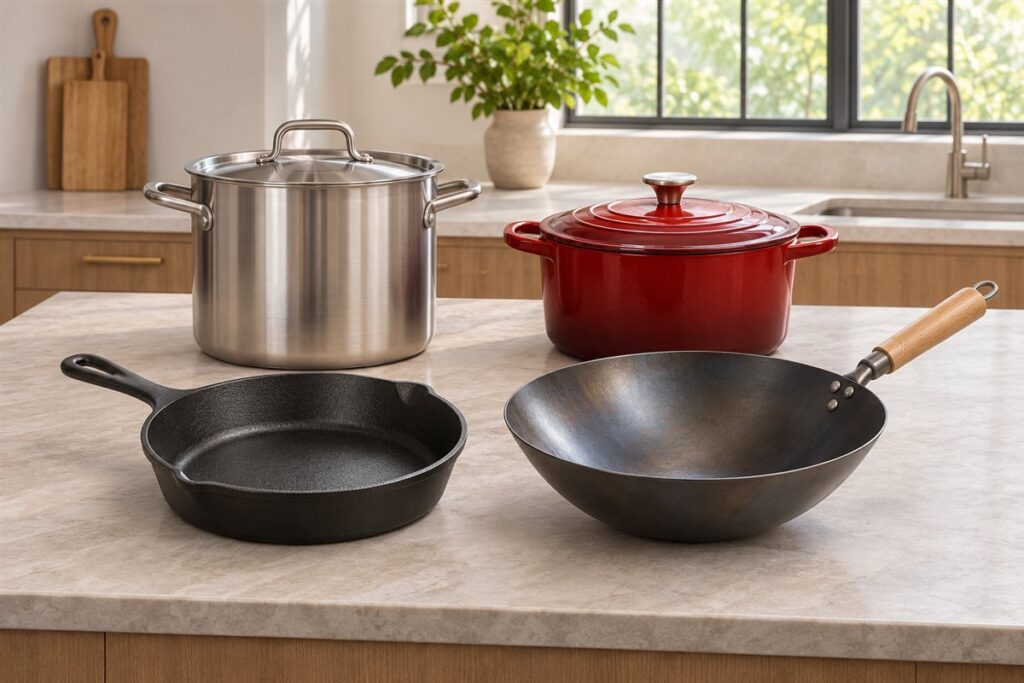
A camping cookware set bundles pots, pans and lids that nest together for travel. We have not used these products ourselves, so this guide focuses on how to choose rather than on results. The aim is to help you match a set to your group size and cooking style.
Sets range from a single pot for one hiker to a multi-piece kit for a family camp. Use the table below to compare materials and features, then read each maker’s listing for exact sizes and care notes. Think about the meals you cook most: boiling water for dried meals calls for very little, while frying and simmering call for pans with a wider base. Also decide whether the kit will live in a backpack, a car box or a trailer, since that sets how much weight and bulk matter.
As an Amazon Associate we earn from qualifying purchases. Links on this site are affiliate links, and they do not change the information we give.
What to Look For
| Factor | Why it matters | What to check |
|---|---|---|
| Material | Aluminum, steel, titanium and cast iron heat and weigh differently | Pick a material that suits your weight limit and cooking style |
| Nesting design | Pieces that stack save pack space | Check that lids, handles and any stove fit inside the largest pot |
| Capacity | The set must suit the number of people eating | Compare stated volumes with your usual meal size |
| Handles | Handles that fold or lock are easier to pack and hold | Look for heat-resistant grips and firm folding hinges |
| Surface coating | A non-stick layer eases cleanup but can scratch | Read the maker’s guidance on utensils and cleaning |
| Heat source fit | Wide pans suit grates, small pots suit canister stoves | Match base size and material to the stove you own |
| Weight and extras | Bowls, cups and sporks add convenience and weight | Decide which extras you will actually use |
Setup and Care Tips
- Wash new pieces before first use to remove manufacturing residue.
- Season cast iron items according to the maker’s directions.
- Use a heat diffuser on thin pans if your stove has a strong flame.
- Pack soft cloths between nested pieces to limit scratches.
- Dry every piece fully before storing to keep surfaces in good shape.
Mistakes to Avoid
- Choosing a set for six people when you usually cook for two.
- Ignoring whether the pot fits your stove base.
- Using metal tools on coated surfaces.
- Leaving food residue in pots overnight.
- Buying extra pieces that stay at home.
FAQ
Is titanium better than aluminum for camp cooking?
Titanium is light and strong but heats unevenly. Aluminum heats more evenly and is common in larger sets. The better choice depends on weight needs and the meals you cook.
Can I use camping cookware at home?
Often yes, though you should always check the maker’s notes on stovetops, especially induction, before doing so.
The Short Version
Match the material, size and nesting design of a camping cookware set to your group, your stove and the weight you are willing to carry. Whichever style you choose, check how the pieces pack together and whether the lid doubles as a plate or strainer. Read the maker care notes before the first trip, because some coatings and finishes need gentler cleaning than others, and plan a way to wash up with limited water.