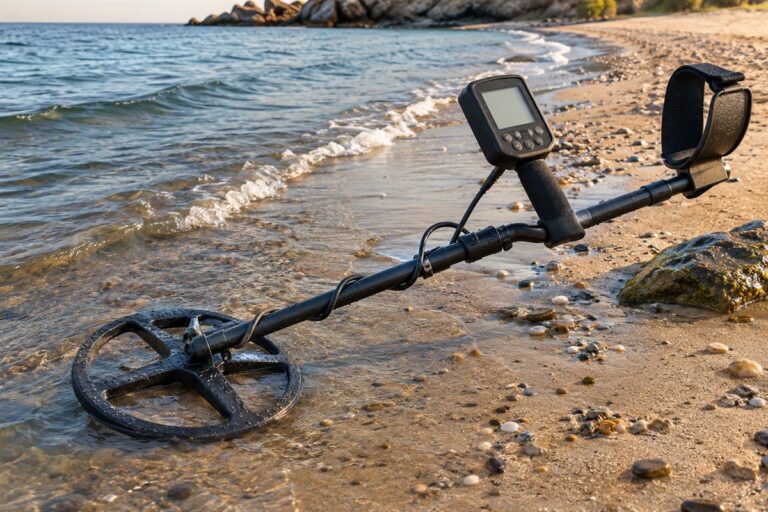
A kids metal detector turns a beach trip or a backyard into a treasure hunt. Most are light, battery powered and have an adjustable stem, with a search coil that is meant to get wet at the edges. The useful differences are coil size, weight, how the target is shown and which controls are included.
The six detectors below include two National Geographic models, two Bounty Hunter models and two lesser-known brands. Specs come from each product’s listing page. We have not used these detectors ourselves, and depth and waterproof claims are the makers’ own. Coil depth figures vary between listings.
As an Amazon Associate we earn from qualifying purchases. Links below are affiliate links, and they do not change the product information we give.
What to Look For
| Feature | Why it matters |
|---|---|
| Weight | A light detector is easier for a child to hold |
| Adjustable stem | Lets the length match the child |
| Coil | A waterproof coil suits wet sand; read what the maker covers |
| Display and sound | An LCD, LED or tone shows when metal is found |
| Extras | A trowel or discrimination control adds fun |
In this guide
Specs at a Glance
| Detector | Coil and weight | Display | Notes |
|---|---|---|---|
| NatGeo Starter | 7.4 in; 1.26 kg | LCD with LED and audio alert | Trowel and learning guide; claims 4 in depth |
| NatGeo Pinpoint | 7.4 in; 3.1 lb listed | LCD | Pinpoint and 3 modes; claims 6 in depth |
| Bounty Hunter Junior | 6.5 in; 1.3 lb | Digital target meter | Discrimination control; made in the USA |
| Bounty Hunter Gold Digger | 7 in | LCD | Trash eliminator; headphone-ready; claims 6 in depth |
| GoGonova PD16 | 6.8 in; 14.88 oz | LED with backlight | Trowel included; 9V battery; claims 4 in depth |
| RICOMAX | 7.4 in per title; 2 lb | LCD | 24 to 35 in stem; buzzer and vibration |
The 6 Best Kids Metal Detectors

Top pickBest for a first detector with a trowel
1. National Geographic Starter Metal Detector Kit
A battery powered kit for ages 8 to 12 with a 7.4 inch dual coil that the maker says is waterproof to 4 inches, an LCD, LED and audio alerts, an adjustable arm, a comfort grip, a trowel and a learning guide. It is listed at 1.26 kilograms and claims detection up to 4 inches deep.
Suits: a first detector with a trowel. Strengths: a trowel and guide in the box. Weaknesses: a shallow claimed depth. Skip it if you want a pinpoint mode.

View National Geographic Starter Metal Detector Kit Ages 8-12 on Amazon

Best for a child ready for a pinpoint feature
2. National Geographic Metal Detector with Pinpoint
A battery powered detector with a 7.4 inch waterproof coil, an LCD, adjustable sensitivity, three selectable modes and a pinpoint function. The maker claims depth up to 6 inches and a telescoping arm. The listing gives 3.1 pounds in the spec table but 1.4 pounds in the bullets.
Suits: a child ready for a pinpoint feature. Strengths: three modes and adjustable sensitivity. Weaknesses: the listing disagrees about its weight. Skip it if you need a confirmed weight.

View National Geographic Kids Metal Detector with Pinpoint on Amazon

Best for younger children
3. Bounty Hunter Junior Metal Detector
A 1.3 pound detector for ages 6 and up with a 6.5 inch coil, an audio signal that rises near a target, a target meter and a discrimination control. The maker claims coins up to 5 inches deep and larger objects deeper, and the listing says it is made in the USA.
Suits: younger children. Strengths: light weight and discrimination. Weaknesses: a small coil. Skip it if you want a larger search coil.


Best for a child who wants to skip junk metal
4. Bounty Hunter Gold Digger Kids Metal Detector
A beginner detector with a 7 inch waterproof coil, an LCD, adjustable sensitivity, a trash eliminator for nails and foil, and a headphone jack. The maker claims depth up to 6 inches. The spec table says 3 pounds while the bullets say 2.2 pounds.
Suits: a child who wants to skip junk metal. Strengths: a trash eliminator and headphone support. Weaknesses: conflicting weights. Skip it if weight is your main concern.

View Bounty Hunter Gold Digger Kids Metal Detector on Amazon
Best for a lightweight, simple unit
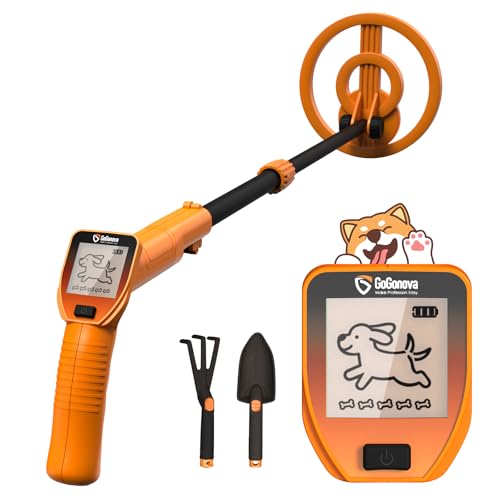
5. GoGonova PD16 Kids Metal Detector
A 6.8 inch waterproof coil with a puppy-themed LED display and backlight, a single-button design, a trowel and a 9V battery. It extends to 37.8 inches, weighs 14.88 ounces and claims depth up to 4 inches.
Suits: a lightweight, simple unit. Strengths: one button and a trowel. Weaknesses: a shallow claimed depth. Skip it if you want a discrimination control.


Best for a foldable unit for travel
6. RICOMAX Waterproof Kids Metal Detector
A two-pound detector with a 24 to 35 inch adjustable stem, a foldable coil, an LCD with an arrow and signal symbol, and buzzer and vibration alerts. The title says 7.4 inch coil while the spec table says 7.4 centimeters, and it lists a 4 inch working distance.
Suits: a foldable unit for travel. Strengths: a wide stem range and vibration alerts. Weaknesses: an unclear coil size. Skip it if you want a named brand.

Best Picks by Category
These labels summarize the features and price tiers covered in this guide. They are not hands-on test results.
- Top rated: National Geographic Starter Metal Detector Kit — check price on Amazon.
- Most reviewed: Bounty Hunter Junior Metal Detector — check price on Amazon.
- Best value: RICOMAX Waterproof Kids Metal Detector — a mid-range pick; check price on Amazon.
- Lowest price: GoGonova PD16 Kids Metal Detector — the budget-tier pick; check price on Amazon.
- Premium option: National Geographic Starter Metal Detector Kit — the upper-tier kit pick in this group; check price on Amazon.
Price, Rating and Review Comparison
The table lists each pick with its price tier. Prices and listing details change often, so check the current price on Amazon.
| Product | Price | Rating | Ratings | Price tier |
|---|---|---|---|---|
| GoGonova PD16 Kids Metal Detector | Check price on Amazon | See listing | See listing | Budget |
| Bounty Hunter Gold Digger Kids Metal Detector | Check price on Amazon | See listing | See listing | Mid-range |
| Bounty Hunter Junior Metal Detector | Check price on Amazon | See listing | See listing | Mid-range |
| RICOMAX Waterproof Kids Metal Detector | Check price on Amazon | See listing | See listing | Mid-range |
| National Geographic Starter Metal Detector Kit | Check price on Amazon | See listing | See listing | Mid-range |
| National Geographic Metal Detector with Pinpoint | Check price on Amazon | See listing | See listing | Mid-range |
Care and Setup
- Read the manual to see which parts are waterproof.
- Rinse sand off the coil and dry the unit.
- Remove the batteries for long storage.
- Check local rules before digging in parks or on beaches.
Mistakes to Avoid
- Assuming the whole unit is waterproof.
- Expecting the claimed depth in every kind of soil.
- Leaving the detector on a damp bag.
- Digging where it is not allowed.
How does a kids metal detector work?
A kids metal detector sends out a signal through its search coil and alerts the child when that signal is disturbed by metal in the ground. The alert can be a sound, a vibration, a light or a reading on a screen, depending on the model.
The coil is the flat disc at the end of the stem. When it passes over a metal object, the detector picks up the change and tells your child through its display or tone. Most beginner models are simple: you switch on, adjust the stem, sweep the coil slowly side to side and listen.
The makers in this guide claim depths of about 4 to 6 inches for coins. Those figures describe best-case conditions, and real depth depends on the soil, the size of the object and how the detector is swept. Damp sand, dry sand and garden soil can all behave differently, so set expectations as a fun hunt, not a guarantee.
- Coil: the part that senses metal. A waterproof coil can be used at the wet edge of the shore, but check what the maker covers.
- Control box: holds the display, buttons and batteries. This part usually should stay dry.
- Stem: adjusts so the child can hold the detector comfortably.
Teaching a child to sweep slowly and overlap each pass makes a big difference. Fast swinging is the most common reason a small find goes unnoticed.
What features matter most in a kids metal detector?
The most useful features are low weight, an adjustable stem, a clear signal and simple controls. Extra modes help older children, but too many buttons can frustrate a first-time user.
Look at each feature in turn:
- Weight and balance: a light detector reduces arm fatigue. The listings give different weights, and some even disagree between the spec table and the bullet points, so check the product page.
- Stem range: the RICOMAX lists a 24 to 35 inch stem, while the GoGonova lists an extension to 37.8 inches. A stem that fits your child saves their back and shoulders.
- Discrimination or trash elimination: the Bounty Hunter Junior has a discrimination control and the Gold Digger has a trash eliminator, both meant to cut down on digging up nails and foil.
- Pinpoint: the National Geographic Pinpoint model adds a pinpoint function that helps narrow down where to dig.
- Headphone jack: the Gold Digger lists headphone support, which can help in noisy places.
- Trowel: the National Geographic Starter and GoGonova list a trowel, which saves buying one separately.
For a younger or first-time user, simple often wins. A single-button unit like the GoGonova PD16 is easy to learn, while an older child may enjoy the extra modes on a pinpoint model.
Finally, check the power source. Some use AA or other cells and the GoGonova uses a 9V battery, so confirm what is needed and whether batteries come in the box.
Which kids metal detector should you buy?
Choose the detector that fits your child’s age, your budget tier and the features they will actually use. All six picks cover the basics, so the choice comes down to a few clear differences.
- If you want a kit with a trowel and a learning guide: go for the National Geographic Starter Metal Detector Kit, which the post lists for ages 8 to 12.
- If your child is ready for a pinpoint function and selectable modes: choose the National Geographic Metal Detector with Pinpoint, and check its weight on the listing because the page gives two figures.
- If your child is younger and you want a lighter, simple unit: choose the Bounty Hunter Junior Metal Detector, which the post lists for ages 6 and up.
- If you want fewer finds of nails and foil: choose the Bounty Hunter Gold Digger Kids Metal Detector with its trash eliminator.
- If you want the lowest price and a one-button design: choose the GoGonova PD16 Kids Metal Detector.
- If you want a foldable unit for travel: choose the RICOMAX Waterproof Kids Metal Detector, and confirm its coil size on the listing.
The most-reviewed picks tend to give more evidence of how a model holds up, while those with fewer ratings deserve a closer read of the listing.
If you are torn between two, choose the one whose weight and stem range suit your child’s size. A detector that is comfortable to hold gets used more often.
What to check before you buy a kids metal detector
Before buying, confirm the age range, the weight, the power source and which parts are waterproof. These details are where listings differ the most.
- Age range: the post lists ages 8 to 12 for one kit and 6 and up for another. Match the model to your child.
- Weight: some listings give conflicting weights, so check the product page and consider your child’s strength.
- Stem length: make sure it extends and folds to suit your child’s height.
- Waterproof coverage: read whether only the coil is waterproof or the whole unit.
- Batteries: see the type needed and whether they are included.
- What is in the box: a trowel, a guide, a bag or a case may or may not be included.
- Coil size: where a title and a spec table disagree, as with the RICOMAX, confirm before buying.
- Returns and warranty: read the terms on the listing.
- Local rules: check where digging is allowed before you go.
It also helps to look at recent feedback for comments about assembly, volume of the tone, and how well the detector copes with the kind of ground you have.
A quick review of these points helps you avoid a gift that disappoints on the first outing.
Beach vs backyard metal detecting: how should kids use a detector?
Kids can use a detector at the beach or in the backyard, but the setting changes what to expect. Dry sand and soil are the easiest, while wet and salty sand can be harder on detectors and may cause false signals.
In the backyard, mark an area and sweep slowly in neat rows. Hiding a few coins or small metal items for your child to find is a good way to practice and keeps the first hunt exciting. Garden soil may hold nails, bottle caps and foil, so a discrimination or trash elimination feature can reduce wasted digging.
At the beach, the coil may be allowed to get wet at the edge of the water, but only if the listing says so. Keep the control box above the waterline. Rinse the coil with fresh water after use and dry the unit before storing it.
- Sweep slowly: overlap each pass by a little.
- Keep the coil close to the ground: avoid raising it at the end of each swing.
- Dig carefully: use a small trowel and fill holes afterward.
- Respect the rules: some parks and beaches limit digging, so check first.
Adult supervision is wise, especially near water or when digging. Teach children to leave sharp or unfamiliar objects alone and to ask an adult before picking them up.
Care, storage and common problems with kids metal detectors
Most detector problems come from weak batteries, a loose connection or wet electronics, and most can be fixed in minutes. Good care also extends the life of the detector.
- No sound or display: replace the batteries first and check that the connections are tight.
- Constant beeping: lower the sensitivity if the model has that control, and move away from fences, pipes or power lines.
- Weak or missing signals: sweep more slowly and keep the coil close to the ground.
- Moisture inside the unit: let it dry fully and do not use it until it does.
After each trip, rinse sand off the coil, wipe the unit and let it dry. Remove the batteries before long storage to avoid leaks, and keep the detector somewhere dry and out of direct heat.
Check the stem locks and screws now and then, since children use detectors hard and fittings can loosen. If a part feels damaged, stop using it and check the warranty terms on the listing.
Following the manual for your exact model is the best way to keep it working. Different makers cover different parts with their waterproof claims, so do not assume.
Is a kids metal detector worth it, and who should skip one?
A kids metal detector is worth it if your child enjoys outdoor treasure hunts and you have a place to use it. It is a poor choice if you expect valuable finds or if your child loses interest quickly.
Honest trade-offs to consider:
- Upside: gets kids outside, teaches patience and gives a reason to explore.
- Downside: finds are often bottle caps, nails and foil, and depth claims are best-case.
- Is paying more worth it? A higher price may bring extra modes or a kit with accessories, but a younger child may enjoy a simple model just as much.
- Waterproof claims: check what is covered so you do not damage the control box.
You may want to skip a detector if your child is very young and may be frustrated by the sweeping and digging, if you have no suitable place where digging is allowed, or if you want a hobby-grade tool for serious hunting. In that case, a more advanced waterproof detector may suit an older child or adult better.
For a family that likes beach days and backyard projects, a simple model can offer a lot of fun for a modest outlay.
Compare the picks above, check the current listing for weight and what is included, then choose the detector that fits your child’s age and where you will use it.
How the Six Detectors Play Out on a Real Afternoon Hunt
A kids metal detector succeeds or fails on feelings, not specifications: does a child find something quickly enough to stay excited, can small hands hold it for the length of a park visit, and does the beeping reward effort without punishing every bottle cap with the same enthusiasm. The National Geographic Starter Kit, the National Geographic detector with pinpoint, the Bounty Hunter Junior, the Bounty Hunter Gold Digger, the GoGonova PD16 and the RICOMAX waterproof model all promise treasure; they differ in weight, adjustability, how they signal a find, and how wet and sandy a hunt they can survive.
The first fifteen minutes decide everything. A detector that finds a coin in the garden within the first few sweeps creates a treasure hunter; one that stays silent while an adult fiddles with settings creates a former treasure hunter. This is why the simpler models in this list so often outperform clever ones for younger children: fewer controls between the child and the first beep means the lesson the detector teaches is about searching, not about settings. Older children, and children hunting alongside an adult with a full-size detector, grow into the more featured models quickly, because they have the patience to learn what the extra signals mean.
Weight and length are the real specifications
For a child, a detector that is slightly too heavy is not slightly worse — it is a detector that gets carried by the adult after ten minutes. Adjustable shafts matter because children grow, and because a shaft set to the right length lets the coil sweep flat and close to the ground without the child stooping. Check the fit the way you would fit a bicycle: the child should hold the grip with a relaxed, slightly bent arm, the coil hovering just above the grass, able to sweep side to side without lifting the coil at the ends of each swing like a pendulum.
Head-to-Head: Choosing Between the Likely Finalists
The two National Geographic models frame the classic upgrade question. The Starter Kit is built for the very first hunts: simple operation, a kit that frames detecting as an adventure, and everything a beginner needs to start the same afternoon. The pinpoint model adds the feature that matters most once the novelty of beeping wears off — narrowing down exactly where in the plug of earth the target sits — which reduces digging time and garden damage alike. If the child is young and the hunts will be casual, start simple; if the child is already hooked, or the hunting ground is a tidy lawn someone cares about, the pinpoint step is worth it immediately.
Bounty Hunter Junior against Gold Digger is a choice between the lightest, simplest introduction and a step toward a real hobby tool with a treasure-minded feature set. GoGonova’s PD16 and the RICOMAX answer the environment question: hunts that will happen at the beach, around the shallow edge of a lake, or in wet grass after rain call for a coil — or a whole detector — that does not fear water. Decide where the hunting will actually happen before deciding anything else, because a detector that must be kept dry will spend beach holidays watching from the towel.
Discrimination and trash: teaching the honest lesson
Every hunting ground is mostly trash, and how a detector handles that fact shapes the child’s experience. Models with a trash-elimination or discrimination control let you tune out some of the iron clutter, at the risk of also tuning out interesting finds that read similarly. The healthy teaching approach is to dig generously at first: the child learns what common junk looks and sounds like, builds the pattern-recognition that real detectorists rely on, and keeps the small thrill of not knowing. Introduce discrimination later, as a tool for a specific noisy park, not as a promise that only treasure will beep — no detector at any price can keep that promise.
Running a Hunt That Ends With Something Found
Adults control the success rate more than the detector does. Seed the odds honestly: start in places where finds are likely — under swings and climbing frames where pockets empty, along the edges of picnic areas, in your own garden where coins and keys genuinely fall. For a very first hunt, quietly planting a few coins in a marked patch of garden is not cheating; it is teaching the sweep, the signal and the dig on easy mode, and the skill transfers to real finds immediately. Keep early hunts short and end them on a find whenever you can, even if the find is a humble bottle cap presented with ceremony.
Teach the sweep as the whole craft: low, flat, slow, overlapping, like mowing a lawn in strips. Most missed targets are swept over too fast or with the coil tilted up at the ends of the swing. Teach the dig as part of the hobby’s ethics from day one: a small trowel, a neat flap of turf folded back, the soil checked, the hole refilled and the flap pressed home so the ground looks untouched. And teach the rule that makes the hobby welcome everywhere: finds go home, trash goes in the bin — a child who picks up the cans they uncover leaves every park better than they found it, and that habit is worth more than any coin.
Permissions, safety and sensible boundaries
Keep hunts to places you have the right to be: your own garden freely, public parks within their local rules, beaches where detecting is commonly allowed, and private land only with the owner’s clear permission. Some places — historic sites, protected land, other people’s gardens without asking — are simply off limits, and teaching that boundary early is part of teaching the hobby properly. Add the ordinary outdoor common sense: sunscreen, water, awareness of sharp objects in the soil — children should show an adult anything sharp rather than grabbing it — and a finds pouch that keeps rusty metal away from pockets and hands until it can be washed at home.
Troubleshooting Quiet Detectors and Constant Beeping
A detector that will not beep at a coin waved under the coil wants its basics checked in order: batteries first — weak batteries are the cause of most mysterious behaviour in every model here — then the sensitivity setting, which if set very low can mute real targets, then the coil connection, which works loose in transit more often than families expect. A detector that beeps at everything usually has its sensitivity set too high for the ground it is on; mineralised soil, wet sand and even some playground surfaces chatter constantly until sensitivity comes down a step or two. Moving a few metres away from fences, buried pipes and overhead lines also calms many apparently faulty detectors — the interference was in the location, not the tool.
False signals when the coil bumps the ground teach the difference between a knock and a target: real targets repeat when you sweep back over the same spot from the same direction; knocks do not. Have the child practise the re-sweep habit — beep, stop, sweep again slowly, then dig — because it halves the holes dug and doubles the finds kept. A target that vanishes once the hole is open has usually been moved by the digging or was a small item sitting in the loose soil; sweep the dug soil itself, spread it thin, and the runaway coin reappears.
After the beach: the five-minute reset
Sand and salt are the enemies that follow a good day home. Rinse or wipe the coil as the maker allows, dry the shaft and controls before storage, empty the finds pouch, and check the battery compartment for grit before it grinds into the seal. Detectors stored wet and sandy develop stiff adjustments and corroded contacts; detectors given five minutes of care come out next weekend behaving like new. Make the child the keeper of this ritual — ownership of the care is ownership of the hobby.
Choosing, and Keeping the Hobby Alive
Choose from these six by the child’s age and strength first, the hunting ground second, and features third. A light, simple detector that finds things this weekend beats a sophisticated one that waits in a cupboard for the child to grow into it. Keep the hobby alive by rotating grounds before they are hunted out, keeping a finds jar or display where the collection visibly grows, and graduating the challenges: a new park, a beach trip, a hunt with a time limit, a friendly contest for the oldest coin. The detector is the excuse; the searching, the patience and the small ceremonies of the find are the hobby — and any of these six, matched honestly to the child, starts that story well.
Extended Buying Criteria Buyers Usually Miss
Look past the detector’s promises to its everyday practicalities. Battery type and appetite decide the hobby’s running cost and its readiness: a detector that eats batteries will be flat on the one sunny Saturday that matters, so consider how the model is powered and build a charging or spare-battery habit into the kit. The headphone question matters more than packaging suggests — a jack lets a child hunt in a busy park without broadcasting every beep, lets an adult coach quietly, and extends battery life — while a clear, pleasant speaker tone matters when headphones are refused, as they often are by younger children. Controls should be operable by the child alone: if every hunt begins with an adult configuring the machine, the hobby belongs to the adult.
Consider the finds kit around the detector as part of the purchase: a small digging trowel suited to small hands, a finds pouch with two sections — treasure and trash — gloves for handling rusty metal, and a magnifier for examining coins at home. None of it is expensive, and together it transforms a beeping stick into an expedition kit that children take seriously. Also consider growth: an adjustable shaft and a detector whose signals reward improving skill will serve a child for years, while a toy-grade unit with one unchanging beep is outgrown in a season — the honest middle of this list is where birthdays are best spent.
Reading the ground before the detector
The best accessory is a well-chosen hunting ground, and it costs nothing. Freshly used sports sidelines, the sand under park swings, the edges of car parks at the beach, tot lots with bark or sand surfacing, and the garden of an older house all concentrate dropped modern coins and small treasures where a child’s detector can genuinely find them. Old ground that has been hunted for decades by adults with professional machines will discourage a beginner; save it for later, when the child has the skill and the stories to enjoy the challenge. Scouting grounds is an adult’s quiet contribution to every successful hunt.
Decision Scenarios: Matching the Detector to the Child
For the youngest beginners, whose hunts are twenty minutes in the garden, choose light weight and one-button simplicity above all — the National Geographic Starter and Bounty Hunter Junior end of the list — because their success is measured in smiles per minute. For the school-age child who has watched detecting videos and wants the real hobby, step to the models with pinpoint help and discrimination to learn, since their questions will outgrow a basic beeper within months. For the beach family, waterproofing decides: a detector whose coil — or whole body — can work the wet sand and the shallows, like the RICOMAX direction, turns the holiday’s best hunting ground from forbidden to favourite.
For siblings hunting together, consider how the detector shares: a speaker both can hear, a weight the younger can borrow, and a finds ceremony both can join matter more than features either would use alone. For the child receiving a detector as a first step toward hunting alongside a parent’s full-size machine, choose the model whose signals and habits most resemble the adult version, so skills transfer in both directions and the pair can compare finds honestly. In every case, buy for the child in front of you this season — their strength, their patience, their hunting ground — and the detector will be used hard and remembered fondly, which is the entire point.
Keeping a finds log and building the story
Start a simple log from the first hunt: date, place, and the finds, with a photograph of the best one. Children who log their hunts begin to think like detectorists — noticing which grounds produce, which signals became coins, how the season changes the soil — and the log turns a scattering of afternoons into a collection with a narrative. Set gentle goals from the log: a coin from each of several parks, the first piece of jewellery, the oldest coin of the year. The detector starts the hobby; the log is what quietly turns it into a pursuit that can last into adulthood.
Going Deeper: From First Beep to Young Detectorist
The journey from a first detector to a lasting hobby follows a predictable path, and adults can smooth every step. The first stage is pure signal joy — everything that beeps is wonderful — and it should be fed with easy grounds and generous digging. The second stage is discrimination in the human sense: the child starts predicting what a signal will be before digging, celebrates being right, and begins keeping the interesting junk — old toy cars, curious keys, foreign coins — alongside the money. Support this stage with the finds log and with identification sessions at home, where a magnifier, a coin guide and a washing-up bowl turn the weekend’s pouch into an evening of detective work.
The third stage is place knowledge: the young detectorist develops theories about where things are lost — the shady side of the football pitch, the queue line at the ice-cream kiosk, the slope where sledges tip in winter — and tests them. This is genuine reasoning about human behaviour and landscape, learned through a beeping stick, and it is why the hobby’s veterans defend it so warmly as education in disguise. The fourth stage, for children who stay with it, is stewardship: joining a club if one exists locally, learning the recording schemes for interesting finds, and understanding that some discoveries matter to everyone’s history and come with responsibilities. Not every child travels the whole path, and none should be pushed; but a detector chosen well at the start — light enough, honest enough, suited to real grounds — never blocks the journey, and the six in this list were each selected with that journey in mind.
Rainy-day detecting culture
Keep the hobby alive between hunts with the culture around it: sorting and displaying the collection, reading about coins and local history, planning the next ground on a map, and maintaining the kit together. A child whose detecting life includes these quiet rituals owns a hobby; a child with only a detector owns a toy. The distinction decides whether the machine is still in use next year, and it costs nothing but an adult’s occasional half hour of shared enthusiasm.
A note on detecting with grandparents, clubs and cousins
Some of the best hunts are intergenerational. Grandparents bring patience, local history and an instinct for where the fair used to set up its stalls fifty years ago; children bring energy, low-to-the-ground enthusiasm and a willingness to dig every signal. Pairing a child’s detector with an adult’s local knowledge produces hunts that neither could manage alone, and the finds — a coin older than the grandparent, a toy from a vanished playground — become family stories rather than objects. Where a local detecting club welcomes families, a single visit teaches more about signals, grounds and etiquette than a season of solo guessing, and children rise noticeably when other young detectorists are finding things nearby. Even a cousin with a second detector transforms the dynamic: shared ground, friendly rivalry over the best find, and two coils covering a park in an afternoon. When you choose a detector from this list, you are really choosing the instrument for those afternoons; pick the one that gets the child outside, sweeping slowly, asking what the ground remembers — and the treasure, of several kinds, tends to follow.
When the child is ready for the next step
Readiness for a more capable detector announces itself clearly: the child predicts signals before digging and is usually right, hunts patiently through quiet stretches without losing heart, cares for the kit without being asked, and starts choosing grounds with reasons. At that point a step up — toward the pinpoint-equipped, discrimination-capable end of this list, or eventually toward a junior configuration of an adult machine — is earned rather than merely bought, and it lands on skills ready to use it. Until those signs appear, resist upgrading as a reward for enthusiasm alone; the detector they have, on better grounds with better technique, still has finds to give. Growth in this hobby is measured in judgement, and the equipment is healthiest when it follows the judgement rather than trying to substitute for it.
One last word for the adult doing the buying: your role does not end at the purchase. You are the keeper of the grounds list, the battery charger, the finds log and the enthusiasm on the quiet third hunt when the park gives up nothing but a washer. Children borrow their persistence from the adults beside them, and a detector outing that ends with hot chocolate and a review of the day’s finds — however humble — builds the association that brings the detector out again next weekend. Choose the machine that suits the child, then supply the rituals that suit the hobby, and the small beeping stick you bought will have done a surprisingly large job: it will have taught patience, observation, care for shared places, and the particular joy of finding something the ground had been keeping secret. That is a great deal to ask of any present, and it is why the right kids detector, honestly matched and cheerfully supported, is remembered long after louder gifts are forgotten.
And when the day’s hunt is done and the finds are washed and logged, let the child choose the next ground. Ownership of the map is ownership of the adventure, and a child who plans the expedition — checking the weather, packing the kit, predicting the finds — is learning the deepest lesson detecting teaches: that preparation and patience are what luck is actually made of.
That combination — the right ground, the right pace, and an adult who treats every small find as worth examining properly — is what turns an ordinary Saturday into the story the family retells.
Kids Metal Detector FAQ
How deep can they find things?
The makers claim 4 to 6 inches for coins. Results depend on the soil and the target.
What age are they for?
The National Geographic starter kit lists ages 8 to 12 and the Bounty Hunter Junior lists ages 6 and up.
What age is a kids metal detector for?
It depends on the model. In this guide, one kit lists ages 8 to 12 and another lists ages 6 and up. Check the listing and think about your child's strength and patience.
Can a kids metal detector go in water?
Some have a waterproof coil, but that usually does not cover the whole unit. Read the listing to see what is covered and keep the control box above the waterline.
What can a kids metal detector find?
It can find coins, jewelry and other metal items near the surface. It will also find nails, foil and bottle caps, so expect plenty of junk finds.
How deep can a kids metal detector detect?
Makers in this guide claim about 4 to 6 inches for coins. Real depth varies with the soil, the object and how slowly you sweep.
Do kids metal detectors need batteries?
Yes, they are battery powered. Check the type needed, such as AA or 9V, and whether batteries are included in the box.
What does a trash eliminator or discrimination control do?
It helps the detector ignore some common junk metals, such as nails and foil, so your child digs less. It may also skip some wanted items, so use it with care.
Where can kids use a metal detector?
Backyards are the simplest choice, and beaches and parks may be options too. Check local rules before digging in public places.
How do I clean a kids metal detector after the beach?
Rinse sand off the coil with fresh water, wipe the rest of the unit and let it dry fully. Remove the batteries before long storage.
The Short Version
For a kit with a trowel, the National Geographic Starter. For a pinpoint function, the National Geographic Pinpoint. For younger children, the Bounty Hunter Junior. For a trash eliminator, the Gold Digger. For a light single-button unit, the GoGonova. For a foldable stem, the RICOMAX.