A leather punch cuts a clean round or shaped hole so a strap, belt or bag can take a buckle, a rivet or a stitch. Rotary pliers carry several tube sizes on a wheel, hollow punches are struck with a mallet, and shaped punches cut slots. The choices that matter are the hole sizes, the way the punch is driven, the build and how the waste leather clears.
The six tools below range from classic rotary pliers to a nine piece hollow set and an oval belt punch. Sizes and materials come from each listing page and are the makers’ own claims. We have not used these punches ourselves. Where a listing disagrees with itself, we say so.
As an Amazon Associate we earn from qualifying purchases. Links below are affiliate links, and they do not change the product information we give.
What to Look For
| Feature | Why it matters |
|---|---|
| Hole sizes | Match the size to the buckle prong, rivet or lace |
| Drive style | Pliers need only hand force, hollow punches need a mallet and a mat |
| Hole shape | Round suits most work, oval suits belt slots |
| Waste clearing | Open tubes let the cut disc fall out instead of jamming |
In this guide
Specs at a Glance
| Punch | Type | Sizes | Notes |
|---|---|---|---|
| General Tools Model 72 | Rotary pliers | 6: 5/64 to 3/16 in | Rubber grip; material listed two ways |
| Tandy Craftool | Rotary punch | 6: 5/64 to 3/16 in | Replaceable tubes; copper anvil; weight listed wrongly |
| Herm Sprenger | Lever pliers | 6: 2.0 to 4.5 mm | Maker says 70 percent less force; made in Germany |
| OWDEN 9 piece | Hollow punches | 9: 1/8 to 1/2 in | 45 carbon steel; cutting mat; storage case |
| WUTA oval | Oval punch | 5 x 22 mm (5 sizes sold) | Martensitic stainless steel; black finish |
| KNIPEX 90 70 220 | Rotary pliers | 6; units unclear | Opening spring; locking lever; powder coat |
The 6 Best Leather Punches
Top pickBest for belt and strap holes
1. General Tools Leather Hole Punch, Model 72
Plier style rotary punch with six hardened steel tubes from 5/64 inch to 3/16 inch, a self-opening spring and a rubber grip. The maker lists it for belts, straps, pet collars and bags, and says it also cuts canvas, denim and cardboard. The overview table gives the material as plastic while a bullet says plated steel, so the body material is not clear. It weighs 6.4 ounces.
Suits: belt and strap holes. Strengths: six small sizes and a spring return. Weaknesses: body material is stated two ways. Skip it if you need holes wider than 3/16 inch.
View General Tools Leather Hole Punch for Belts, Fabric and Crafts Model 72 on Amazon

Best for general leather repair
2. Tandy Leather Craftool Rotary Leather Punch
A rotary punch described as hand-forged solid steel with a copper anvil and six replaceable steel tubes from 5/64 inch to 3/16 inch. The maker positions it for belts, straps, wallets, tack and repairs, and calls it simple to use for new leatherworkers. The listing weight of 0.27 g is plainly wrong, and the single pin hole diameter of 0.08 inch cannot describe all six tubes.
Suits: general leather repair. Strengths: replaceable tubes. Weaknesses: some listing figures are unreliable. Skip it if you want a lever to cut the effort.


Best for thicker straps and saddlery work
3. Herm Sprenger Leather Hole Punch
Revolving punch pliers made in Germany with an Easy-Squeeze lever that the maker says needs 70 percent less force. The wheel carries six hollow hardened steel punches: 2.0, 2.5, 3.0, 3.5, 4.0 and 4.5 mm. The body is plastic-coated stainless steel, 25 cm (10 inches) long and 378 grams. A bullet warns that material residue may be found in the punch tubes from production.
Suits: thicker straps and saddlery work. Strengths: lever action and a clear size list. Weaknesses: the largest hole is 4.5 mm. Skip it if you want a lighter, simpler tool.


Best for larger holes and gasket work
4. OWDEN 9 Piece Leather Hollow Punch Set with Cutting Mat
Nine round hollow punches from 1/8 inch to 1/2 inch (1/8, 5/32, 3/16, 7/32, 1/4, 5/16, 3/8, 7/16 and 1/2) in 45 carbon steel with a no-slip grip, plus a cutting mat to protect the edges. The maker says they cut leather, paper, rubber, cloth, canvas and gaskets, and the set comes in a blow case. They are struck with a mallet, which the listing implies by the hammering grip note.
Suits: larger holes and gasket work. Strengths: nine sizes and a mat. Weaknesses: you need a mallet and a solid surface. Skip it if you want a one-hand tool.

View OWDEN 9 Pieces Leather Hollow Punch Set (1/8″-1/2″) with a Cutting mat. on Amazon

Best for belt, strap and watch band slots
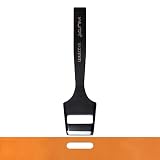
5. WUTA Oval Leather Belt Hole Puncher, 5 x 22 mm
A single oblong punch for belt slots and watch band holes, made of martensitic stainless steel with a hand-polished edge and black plating. The maker says it has a wide discharge port so the cut leather comes out easily, and that five oval sizes are available: 5 by 8, 16, 20, 22 and 25 mm. The title and table show only the 22 mm length for this listing.
Suits: belt, strap and watch band slots. Strengths: a clean oval shape. Weaknesses: one size per purchase. Skip it if you only need round holes.

Best for leather, fabric and plastic sheet
6. KNIPEX 90 70 220 Revolving Punch Pliers
Revolving pliers with six interchangeable punches, an opening spring and a locking lever, made from stamped high-strength sheet steel with a powder coat the maker says protects against rust. The bullet lists punch sizes as 20/25/30/35/40/50 dia with no unit, which may mean tenths of a millimeter, and the table shows 20 millimeters, so confirm before you buy. It weighs 9.28 ounces.
Suits: leather, fabric and plastic sheet. Strengths: locking lever and interchangeable punches. Weaknesses: unclear size units. Skip it if you need exact hole sizes confirmed in the listing.

Care and Setup
- Punch over a cutting mat or a scrap of soft board so the edge stays sharp.
- Test the size on a scrap piece of the same leather first.
- Clear cut discs from the tubes after each session.
- Wipe the tubes lightly with oil before storing them.
Mistakes to Avoid
- Choosing a set by piece count instead of the sizes you will use.
- Striking a hollow punch on a hard surface with no mat.
- Trusting listing weights or diameters that contradict the title.
- Forcing pliers through leather thicker than the maker intends.
Matching the Hole Size to the Hardware
The right hole size depends on what will go through it, so start from the hardware and not from the punch. A belt buckle prong needs a hole just large enough for the prong to pass without a loose fit. A rivet or snap post needs a hole sized to the post, and a lace or cord needs a hole a little larger than its thickness. A hole that is too small makes the hardware hard to fit and can tear the leather, while one that is too large leaves it loose and unsightly.
Check the dimensions of your hardware before choosing a tool. Buckles, rivets and snaps are often sold with the post or prong size in the product listing. Measure with a caliper or a drill bit gauge if you have one, and compare the number with the sizes your punch offers. The rotary pliers here cover small hole sizes up to about 3/16 inch, while the hollow punch set reaches larger sizes. The largest hole you can cut with each tool is a main limit on what projects it suits.
- Belt and strap holes: usually small to medium round holes or a slot.
- Rivets and snaps: size to the post, then test on scrap.
- Lacing and stitching: smaller holes, often spaced evenly.
- Large grommets and conchos: larger hollow punches.
If you are unsure, buy a tool with a range of sizes and test on scrap leather first. Keep a note of the sizes you use most, so you know which sizes to replace if a tube wears out.
Leather Type and Thickness
Leather varies in thickness and hardness, and both change how a punch performs. Thin garment leather and soft straps are easy to punch with hand pliers. Thick vegetable-tanned leather, such as belt or saddle leather, is dense and resists the punch, so you may need a lever action or a mallet and hollow punch. Leather thickness is often measured in ounces or millimeters, and the listing for your leather will state it.
Check what the punch maker says about maximum thickness. Pliers are designed for a limited range, and forcing them through leather that is too thick can bend the jaws, damage the tubes or leave a poor cut. A lever-assisted design may help with thicker material by multiplying force, but it still has a limit. Hollow punches driven with a mallet handle thick leather well because you control the force and can strike repeatedly.
- Thin and soft leather: pliers are quick and easy.
- Medium straps and belts: lever pliers or a hollow punch work well.
- Thick or dense leather: hollow punches with a mallet are often the better choice.
- Multiple layers: check that the tool can cut through the total thickness.
Dry or hard leather can crack around a hole. Condition or dampen the leather as appropriate for its type, and test on offcuts. Fabrics, thin plastic sheet and card can also be punched with some tools, but follow the maker’s guidance.
Getting Clean Holes with a Hollow Punch
A hollow punch can give neat, round holes, but only if you use it correctly. Mark the center of each hole with a pencil or scratch awl. Place the leather on a cutting mat, a poly board or a piece of scrap material, not on a bare metal or concrete surface, which dulls the edge and can damage the punch. Hold the punch straight up and down, since a tilted punch makes an oval or ragged hole.
Use a mallet that suits the work. Rawhide, poly and wooden mallets are gentler on the punch handle than a steel hammer, which can mushroom the top of the tool. Strike firmly and squarely, then rock the punch lightly or twist it to free it from the cut. If the leather is thick, you may need a couple of strikes, and a sharp punch should cut cleanly through with each strike.
- Mark first, check twice, then punch.
- Do not strike with a metal hammer unless the maker says it is safe.
- Remove cut discs from the tube after each strike so they do not jam.
- Work on a stable surface and keep fingers clear of the punch.
Practice on scrap pieces from the same leather to get a feel for the force required. If the hole looks crushed or rough instead of cut, the edge may be dull, or the surface under the leather may be too hard.
Using Rotary and Lever Pliers Well
Pliers are quick and convenient. A rotary design carries several tubes on a wheel, so you turn the wheel to select the size and squeeze the handles to cut. Before you squeeze, check that the selected tube lines up with the anvil or striker. Misaligned tubes can chip the edge or fail to cut, and a hole made with the wrong size is hard to fix.
Place the leather as deep in the jaws as the tool allows, but keep it flat. The distance from the edge of the leather to the hole matters, so measure from the edge and mark the spot. A hole too close to the edge can tear. Squeeze smoothly, and release to let the cut piece drop out. Some tools have a spring return, and a locking lever keeps the handles closed for storage.
- Check the tube size before every cut.
- Punch a test hole in scrap with each size you plan to use.
- Clear punched discs from the tube regularly.
- Use a lever or two-hand grip for thicker leather rather than forcing a single-hand squeeze.
If the pliers feel gritty, rotate unevenly or leave burrs, clean the pivot and check for debris in the wheel. Follow the maker’s manual for lubrication and tube replacement.
Keeping the Edges Sharp and When to Replace
A sharp edge is what makes a clean hole. Dull edges crush, tear and stretch the leather, and they require more force, which tires your hand and risks slips. Signs of a dull punch include fuzzy or ragged hole edges, leather that does not release a clean disc and a need to strike more than once. Hard surfaces, striking too hard and cutting dry or abrasive material all dull edges faster.
Basic care keeps a punch useful. Wipe off moisture after use, because rust on a tube edge ruins the cut. A light coat of oil protects steel parts when storing them. Some tools have replaceable tubes, which makes upkeep easy. Others have fixed tubes, which you may sharpen with a suitable tool or send away for sharpening. If you try to sharpen a hollow tube, take care to keep the edge angle consistent, and follow the maker’s advice.
- Store punches in a roll, case or holder so the edges do not knock together.
- Replace tubes that are dented, chipped or rusted.
- Replace pliers with loose or bent jaws, or a pivot that no longer holds alignment.
- Keep a spare tube size if you use one size heavily.
When you replace a punch, check the listing carefully for sizes and units. Some listings are unclear about whether sizes are in millimeters or inches, and mixing them leads to wrongly sized holes.
Which leather punch should you buy?
The best leather punch is the one whose drive style and hole sizes match your hardware, so decide what you will punch most before you compare brands. Here is how the six picks map to common buyer needs.
- Occasional belt and strap holes: the General Tools Model 72 or the Tandy Craftool give you six small sizes on a wheel and need only hand force.
- Thicker straps and saddlery work: the Herm Sprenger adds a lever the maker says reduces effort, which suits tougher material.
- Larger holes for gaskets, grommets and conchos: the OWDEN hollow set covers bigger sizes, but you need a mallet and a mat.
- Belt slots and watch band holes: the WUTA oval cuts a slot shape that round punches cannot match.
- Pliers you can lock closed for storage: the KNIPEX has a locking lever, though you should confirm the punch sizes on the listing first.
If you only make a few holes a year, a simple rotary punch is plenty. If you build belts, bags or straps regularly, a lever tool or a hollow set pays off in comfort and range. Many leatherworkers end up owning one pair of pliers for quick small holes plus a hollow punch for the odd large one, because the two tools cover different jobs.
Pick the tool for your most common task, not your rarest one. A tool that handles ninety percent of your work well is better than one that technically does everything but feels awkward to use.
What to check before you buy, and who should skip it
Before buying a leather punch, confirm the sizes, the drive style and what is in the box, because listings for this category are often unclear. Use this checklist on the current listing.
- Are hole sizes given with a clear unit, inches or millimeters?
- Do the sizes match the prong, post or lace you plan to use?
- Does the listing say what thickness of leather the tool is meant for?
- Are replacement tubes available, or are the tubes fixed?
- Is a mat, case or mallet included, or sold separately?
- Do the weight and body material read the same in every part of the listing?
Now the honest trade-offs. Rotary pliers are quick but limited to small holes and modest thickness. Hollow punches reach larger sizes and handle thick leather, but they are slower, louder and need a solid surface. A single oval punch does one size and one shape only. Several listings here contradict themselves on weight, material or size units, so read the full description and compare it with the title.
You can skip this category if you punch leather only once or twice, since a basic awl and a borrowed tool may do. Skip pliers if your holes are large, and skip hollow sets if you want a one-hand tool. When you are ready, compare the picks above, check the current listing for size and what is included, then choose the one that fits how you will use it.
Planning a Leather Project Around the Holes It Needs
A punch is chosen by the holes, and the holes are chosen by the hardware, so the useful way to plan is to list the hardware first. A belt needs one size of hole for the buckle pin, repeated at even spacing, plus often a larger or oval hole where the buckle’s bar passes. A bag strap needs holes for rivets, for a buckle, and sometimes a decorative row whose only job is appearance. A dog collar needs pin holes that will not tear out under load, which means spacing and distance from the edge matter as much as diameter. A watch strap needs small, closely spaced holes punched cleanly through thin leather without stretching the strap out of shape. Reading the picks in this guide against such a list clarifies everything: the rotary pliers in the list shine when a project needs several sizes in modest thicknesses and the work is done in hand, the hollow punch set shines when the same size must be repeated accurately or the leather is thick, and the oval punch exists because a round hole in one specific job — the belt slot that takes a buckle bar or a pin under sideways load — stretches and tears where an oval survives. Start every project by dry-fitting the hardware against the leather and marking hole positions with an awl point or a light pencil dot through the actual buckle, rivet or snap, rather than trusting a measurement from a drawing. Leather moves, stretches and varies in thickness in ways paper does not, and the hardware itself is the most truthful template you own.
Spacing is the second planning decision, and it is structural, not decorative. Holes placed too close together leave a web of leather between them that tears under load, turning a row of holes into a perforated tear line. Holes placed too close to an edge fail the same way, outward. A sound habit is to keep a margin of leather around each hole at least comparable to the hole’s own diameter, and to keep the spacing of a buckle row even by marking all positions before punching any of them, then standing back and checking the row with fresh eyes. Punch the least visible hole first — the one furthest from the buckle in a belt row — so your technique settles before you reach the holes everyone sees. On a project with several kinds of holes, punch in order of size from largest to smallest: a mistake on a large hole can sometimes be absorbed by repositioning smaller work, while a strap already weakened by a full row of small holes tolerates no errors at all.
Test punching: the scrap that saves the project
Keep an offcut from the same hide, ideally from beside the project piece, and punch your first holes there. The test tells you three things no specification can: whether the punch size you chose actually fits the hardware once the leather’s thickness and slight stretch are involved, whether the tool cuts this leather cleanly or crushes it, and how much force the job needs, which decides whether pliers, a mallet, or a press-style approach is right. Leather from a different hide, or even a different part of the same hide, behaves differently enough that a test on random scrap can mislead. Punch the test hole, fit the hardware, flex the piece as it will flex in use, and look at the hole’s edge under good light: a clean, vertical wall means a sharp punch and a correct backing; a ragged, bevelled wall means the punch is dull, the backing is too soft, or the leather moved during the cut. Two minutes of testing converts the first project hole from an experiment into a repetition.
Head-to-Head: Rotary Pliers, Hollow Sets and the Oval Specialist
The three rotary pliers in this guide — the General Tools model, the Tandy Craftool, and the Herm Sprenger — share a mechanism and differ in execution, and the differences show exactly where rotary pliers are stressed. The revolving turret must index each tube into alignment and hold it there under squeezing force; a turret that shifts slightly delivers a half-moon cut instead of a circle. The handles must multiply force without flexing, because flex in the frame is force stolen from the cut. The tubes must be hard and cleanly ground, since a rotary punch cannot be struck or pressed — hand force is all it will ever get. The KNIPEX revolving punch pliers approach the same job from a toolmaker’s direction, with the emphasis on the precision of the mechanism and the quality of the compound leverage, and in the hand that shows as a cleaner cut in thicker leather for the same squeeze. Choose among the rotaries by the thickness you punch most: for light and medium work they are all convenient, but as thickness grows, the quality of the leverage and the tubes decides whether the last hole of a long row looks like the first.
The OWDEN hollow set plays a different game entirely. A hollow punch driven by a mallet, or set in a press, delivers the full force of the blow through a single, well-supported edge, so it cuts thick leather, multiple layers, and firm temper that would defeat hand pliers. The set format brings a ladder of sizes, and the included cutting mat signals the intended workflow: punch down into a proper backing, repeat accurately, and use the same punch for gaskets, washers and craft materials beyond leather. Its costs are noise, the need for a mallet and a suitable surface, and the discipline of striking squarely — a glancing blow bends a punch lip and every hole after it is ragged until the lip is dressed. The WUTA oval punch is the specialist that generalists forget until a belt slot tears: its elongated profile matches the way a buckle bar loads a hole, spreading stress along the slot instead of concentrating it at two points of a circle. If belts are your main work, the oval punch is not an accessory but a core tool, and pairing it with one good rotary or a small hollow set covers nearly every belt task that exists.
One tool or a system: deciding honestly
Most leatherworkers end with a small system — one rotary for convenience, a hollow set for thick and repeated work, and one or two single punches in the sizes their hardware uses most — but the order of purchase matters. Buy first for the project in front of you, choosing the tool that makes its holes best. Add the second tool when a project exposes a real limit: pliers that cannot close through a harness strap are a real limit, and so is a hollow set when you need one quick hole in a finished piece you cannot lay flat on a mat. Avoid buying the largest set as insurance; unused sizes in a set still need storage and maintenance, and the money usually serves better spent on the quality of the two tools you will use weekly. The picks in this guide were chosen so that any one of them can be that first tool for somebody, depending on the work.
First Punching Session: Setup for Clean Holes
Set up the backing before anything else, because backing decides hole quality as much as the punch does. A proper punching surface is firm, flat and slightly forgiving: a dedicated cutting mat, a block of dense plastic, or the end grain of a thick wooden block all work, while a steel bench top destroys punch edges and a soft foam pad lets the leather sink and the hole distort. Lay the leather flat and smooth, grain side as it will be in the finished piece, and mark every hole position before the first cut. For hollow punches, stand the punch truly vertical on the mark — a punch tilted even slightly cuts an oval-ish hole with one crushed wall — and strike once, firmly, rather than tapping repeatedly, because repeated light taps walk the punch sideways between blows. Check the first hole by holding it to the light and fitting the hardware before continuing the row.
For rotary pliers, position the tube over the mark, keep the pliers square to the leather rather than angled with your wrist, and close with a smooth, complete squeeze; a hole half-cut and then re-squeezed almost always finishes with a ragged flap. Support the work on the bench rather than punching mid-air whenever the piece allows it, since a supported piece cannot twist away from the tube. Keep your free hand clear of the closing handles and the cutting tube, clamp or weight small pieces so no hand needs to hold them near the punch point, and keep a first aid kit in the workshop as routine. After the session, eject the punched discs from the tubes — a rotary left clogged with compressed leather discs cuts worse next time and can rust from the moisture the discs hold — and wipe the edges dry before storage. The session habit that matters most is inspection: look at every fifth hole as critically as the first, because tool drift, a dulling edge or a shifting backing announces itself gradually, in holes that are almost as good as the first ones.
Punching multiple layers and lined leather
Belts, straps and bag handles are often two layers, sometimes with a lining, and punching the assembled piece is usually better than punching layers separately, because separately punched holes rarely align after glue-up. The assembled stack demands more force and a sharper edge, so this is hollow punch territory, or the strongest rotary work at the edge of its ability. Mark through the top layer only, punch in one decisive action, and check that the bottom layer’s hole is complete rather than hinged by a flap of fibres. If the bottom layer hangs by a flap, the punch is dull or the backing too soft; fix the cause rather than trimming flaps with a knife, which leaves a hole that stretches unevenly in use. For lined pieces where the lining must not show a cut edge, punch before lining as a deliberate design choice, accepting the alignment care that demands.
Troubleshooting Ragged, Stretched and Misplaced Holes
Diagnose hole problems in a fixed order and most causes reveal themselves quickly. First, the edge: a dull punch crushes and tears instead of cutting, and it is the cause behind most ragged holes, most excessive force, and most holes that look acceptable from the top and ragged from below. Second, the backing: too hard damages the edge, too soft lets the leather deflect and the hole cut incompletely, and a backing scarred with old cuts lets the punch wander into a previous crater. Third, alignment and squareness: a tilted punch or a twisted squeeze produces oval holes and one-sided walls. Fourth, the leather’s state: very dry leather cuts harshly and can crack around a hole, while leather that is too damp stretches around the punch and closes up smaller than intended. Fifth, position: holes that tear out in use were usually placed too near an edge or too near each other, which is a layout error no sharpness can fix, and the repair is a redesigned strap or a reinforcement patch, not a better punch.
Stretched holes in finished work deserve separate thought because they are a wear pattern, not a punching error. A buckle pin loaded sideways will elongate any round hole over time; the counters are to punch the working hole oval where the design allows, to choose the hole size that fits the pin snugly from the start, and to ensure the strap’s holes are not oversized from a punch chosen by guesswork. A hole that has closed up smaller after punching was cut in leather under tension or in damp leather that dried and contracted; punch at the leather’s resting state, and size by the hardware test on scrap rather than by the number stamped on the tool. Keep notes on which punch size suited which hardware in which leather — a small workshop notebook of these pairings is worth more than a second set of punches, because it removes the guesswork from every future project.
Sharpening, Cleaning and Storage
Punch edges are maintained from the outside on hollow punches and tubes: a fine stone or a strop worked around the outer bevel restores the edge, while grinding the inside of the tube changes its diameter and should be left alone except for removing a burr with the lightest touch. The goal is a smooth, unbroken bevel that meets the inner wall cleanly; nicks in that line print directly into every hole. Clean leather discs and fibre out of tubes after every session, since packed discs hold moisture and tannins against the steel. Store punches where the edges cannot strike each other or other tools — a roll, a block with drilled holes, or individual slots — and keep them dry, with a light protective wipe in damp workshops. Rotary pliers need their pivot kept clean and very lightly lubricated, and their turret checked for play: a turret that no longer locks a tube in line is a mechanism at the end of its adjustment, and holes will show it before your hands feel it. Retire or repair a punch whose lip is bent; a bent lip cannot be coaxed back into cutting round holes by force, and every project punched with it carries the evidence.
Choosing by User: Belts, Tack, Craft and Repair
The belt maker should build around the oval punch and one accurate way of making pin holes, because those two hole types are the whole structural story of a belt. The tack and harness repairer, facing thick leather and holes that must be made in finished, awkward pieces, should weight the choice toward the strongest rotary for in-hand work and a hollow set for the bench. The general crafter, whose projects change monthly, gets the most from the hollow set’s size range plus a rotary for convenience, covering paper, fabric, gasket material and leather with the same kit. The occasional repairer — the person who needs two new holes in a belt and a fix for a bag strap each year — is best served by one good rotary kept sharp and accessible, because a tool that is present and ready beats a comprehensive set stored in a loft. In every case, the backing surface and a mallet where needed are part of the purchase, not extras; a fine punch over a bad backing produces bad holes with complete reliability.
Extra questions readers ask about leather punches
Can I punch a new hole in a belt I am wearing or holding in my lap? No — take the belt off, lay it flat on a proper backing, and keep hands clear of the punch path; the small convenience is not worth a slipped tube. Why does my rotary punch leave the disc stuck in the leather? The cut is incomplete, usually from insufficient force, a dull tube or a backing that gave way; complete the cut with the work fully supported rather than twisting the pliers, which bends tubes. How do I punch a hole exactly on an existing stitch line’s spacing? Mark from the stitches themselves, counting and measuring the actual spacing on the piece, because nominal spacing and real spacing on a handmade item often differ slightly. Should I condition leather before or after punching? Punch first on clean, dry leather for the crispest holes, then condition; conditioner before punching can make the surface slippery under the punch and soften fibres so they tear rather than cut.
Repair Work: Adding Holes to Finished Belts, Straps and Tack
Much real punching is not making new goods but rescuing finished ones, and repair work has its own rules. The commonest job is the belt that needs a hole beyond the existing row, because the owner’s fit has changed. Match the existing holes, not the tool you wish you had: measure the diameter and the spacing of the original row and punch the new hole to agree with both, even if that means choosing a punch size you would not have chosen for a new belt. A new hole that differs visibly from its neighbours advertises the repair every time the belt is worn. Punch from the grain side so the cleanest edge faces outward, support the belt fully on the backing rather than punching the tail end dangling off the bench, and check the fit with the actual buckle pin before declaring the job done. Where the belt has stretched holes already, resist the temptation to fix them by punching larger; a stretched hole is a leather problem, and the honest repairs are a reinforcement, a new tip section, or accepting the wear.
Strap and tack repairs add the complication of hardware already fitted. A torn-out hole near a rivet or a buckle usually means the replacement hole must move to sound leather, which changes the strap’s effective length and may mean its mate must be adjusted too; think through the whole item before the first punch, because a hole cannot be un-punched when the geometry dawns on you afterward. When punching near stitching, keep the new hole clear of the stitch line by a margin that leaves the stitches their full grip on the leather, and never punch through a stitch if a small shift of position avoids it. Keep hands clear of the punch path, clamp awkward finished pieces rather than holding them, and test on a scrap of similar thickness first, since a finished item offers no second chances. Done carefully, repair punching is invisible work: the item returns to service and nobody can tell where the new hole joined the row. That invisibility, more than speed, is the standard to work to.
Leather Punch FAQ
What is the difference between rotary pliers and hollow punches?
Rotary pliers hold six tubes on a wheel and cut with hand force. Hollow punches are separate tools that you strike with a mallet, and they usually cover larger sizes.
Which set covers the widest range of hole sizes?
The OWDEN set lists nine sizes up to 1/2 inch. The rotary pliers on this list top out near 3/16 inch.
What size hole punch do I need for a belt?
It depends on the buckle prong and the belt. Measure the prong and pick a hole size that lets it pass without slop. Test on scrap leather first.
Can I punch thick leather with rotary pliers?
Only within the maker's stated limit. Thick or dense leather often needs a hollow punch and mallet, or lever pliers designed for more force.
Do I need a mallet for hollow punches?
Yes, usually. A rawhide, poly or wooden mallet is gentler on the tool than a steel hammer. Use a cutting mat or poly board underneath.
Why are my holes ragged or crushed?
The punch may be dull, the backing surface may be too hard, or the punch may be tilted. Check the edge, use a proper mat and strike straight.
How do I stop a hole tearing near the edge?
Leave enough space between the hole and the edge, and avoid very dry leather. Measure from the edge and test on a scrap piece.
Can leather punches cut other materials?
Some can cut fabric, thin plastic or card, but check the maker's notes. Using them on harder materials can dull or damage the tubes.
How should I store a leather punch?
Keep it dry, wipe the tubes and apply a thin film of oil if the maker allows. Store punches so the cutting edges do not hit each other.
Is a rotary leather punch better than a hollow punch?
Neither is better overall, because they suit different jobs. A rotary punch is faster for small holes and needs only hand force, while a hollow punch handles larger sizes and thicker leather but needs a mallet and a mat.
What is the best leather punch for a beginner?
A rotary punch with several small sizes is usually the easiest start, since it needs no mallet and gives you a range of sizes on one tool. Look for a model with replaceable tubes and clear size markings on the listing.
Can I use a drill instead of a leather punch?
You can, but the result is usually rougher. A drill bit tends to tear and fray leather, while a sharp punch cuts a clean disc. If you do use a drill, back the leather with scrap wood and test on offcuts first.
How many punch sizes do I really need?
Most projects need only a few sizes, chosen by the hardware you use. Buckle prongs, rivets and laces each call for a particular hole, so list your hardware first and buy for those sizes instead of for the highest piece count.
Are oval leather punches worth buying?
They are worth it if you make belts, straps or watch bands, because the slot shape lets a buckle or keeper sit properly. For simple round holes they add little, and each oval punch usually covers a single size.
What should I put under leather when using a hollow punch?
Use a cutting mat, poly board or a similar soft, flat surface. Bare metal or concrete dulls the cutting edge quickly and can leave crushed holes, so a proper backing protects both the punch and the leather.
The Short Version
For classic rotary pliers, the General Tools or the Tandy. For lever assist, the Herm Sprenger. For large holes with a mallet, the OWDEN. For belt slots, the WUTA oval. For locking pliers, the KNIPEX.