Disclosure: As an Amazon Associate, umtsmarttool.com earns from qualifying purchases. Links to Amazon on this page are affiliate links; they cost you nothing extra. Listing details such as price and availability change often, so check the current Amazon listing before you buy.
A vacuum that cleans well but weighs a ton ends up in the cupboard. Anyone who has hauled a heavy upright up a flight of stairs knows the feeling. The best lightweight vacuums solve a real problem: they make a quick clean easy enough that you actually do it, whether you are tidying a small flat, cleaning stairs or simply have less strength in your wrists and arms than you used to.
This guide is for people who want a machine that is easy to carry and push, including older users and anyone with limited strength. We compare five current models: a cordless stick from Dyson, corded and battery sticks from Bissell, Levoit and Hoover, and a light bagged upright from Eureka. We explain what makes a vacuum feel light in daily use, which designs suit seniors, and where light models make compromises you should know about.
Quick Comparison
| Product | Best for | Main point | Link |
|---|---|---|---|
| Dyson Omni-glide | Hard floors and small rooms | Cordless stick with a swivelling head | Check on Amazon |
| Bissell Featherweight Stick 2033M | Quick cleaning with a cord | Corded, no battery to charge | Check on Amazon |
| Levoit LVAC-200 | A battery stick for stairs | Cordless with a detachable hand unit | Check on Amazon |
| Hoover Linx BH50010 | Light everyday sweeping | Simple cordless stick | Check on Amazon |
| Eureka Airspeed Ultra-Lightweight AS2110A | Rooms with carpet and a bag | Light corded bagged upright | Check on Amazon |
In this guide
How These Options Were Chosen
This list comes from manufacturer listings and published specifications. We have not used these products ourselves, and we do not state weights because they change with the attachments and battery you choose, so check the listing for the exact figure. We picked models that makers promote for light weight, then covered the main types: cordless, corded and bagged, so you can see how each approach changes the feel of a clean.
The Best Lightweight Vacuums for Everyday Cleaning
Dyson Omni-glide
The Omni-glide is Dyson’s answer to a light, manoeuvrable stick. Its cleaner head is built to swivel in several directions, so you can steer around table legs and into corners without twisting your wrist, and it turns into a handheld for quick jobs.
It suits hard floors in a small home, where agility matters more than raw carpet pull. Because it is cordless, there is no cable to wrangle on stairs.
The trade-offs are runtime and fit. A small battery means it is meant for light, frequent clean-ups rather than a whole house in one go, and it is not the tool for deep carpet. Skip it if your floors are mostly thick carpet or you want a large bin.

Bissell Featherweight Stick 2033M
Bissell’s Featherweight is simple on purpose. It is a corded stick with a bagless dustbin, so there is no battery to charge or replace, and it will run for as long as you have an outlet.
That makes it a practical second vacuum for a kitchen or a flat, and the name signals its focus. Check the listing for how it handles stairs and upholstery.
The downside of the cord is obvious: you need to plug in and keep track of the cable. It is also a lighter-duty machine, so skip it if you have large rooms or heavy shedding.
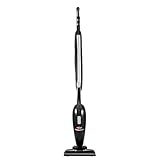
Levoit LVAC-200
The LVAC-200 is a battery stick from Levoit, aimed at people who want a cordless clean in a fairly light body. The hand unit detaches so you can reach stairs, car seats and shelves without carrying the whole machine.
It is a natural match for a small house where you vacuum often and in short bursts. Charging is done by the dock or cable, as the manual describes.
Check the listing for the runtime and attachments for your version, and for the filter type used. Skip it if you want self-propelled help on thick carpet or need a long uninterrupted clean.
Hoover Linx BH50010
Hoover’s Linx is a simple cordless stick that targets everyday sweeping. It uses a swivelling head and a stick-and-handheld design, and its plain design is easy to pick up and use.
It suits someone who wants a vacuum that is straightforward to pick up, with no app or extras. Check the listing for assembly details if small screws are a worry.
It is a light-duty design, so expect to do more passes on carpet and to empty the bin often. Skip it if you want a premium finish or long battery life.
Eureka Airspeed Ultra-Lightweight AS2110A
Where the others are sticks, the Airspeed is a compact upright that uses bags. Making an upright light matters for stairs and for people who find a stick head too narrow to be comfortable on carpet.
Bags can be a plus: you remove one and throw it away, with less dust handling than emptying a bin. The cord gives you power without a battery.
The cost is the bag supply and the cord. Skip it if you want a cordless machine or a handheld for upholstery.
One more consideration is what you give up in return for the lighter body. Smaller bins mean more frequent emptying, smaller batteries mean shorter runs, and slimmer heads mean more passes across a wide room. None of this is a flaw, as long as you pick a machine whose limits match your home. A small flat is happy with a light stick, while a three-bedroom house with wall-to-wall carpet may want a heavier main vacuum and a light stick for quick jobs.
Best Lightweight Vacuum for Seniors
The Hoover Linx and the Bissell Featherweight are plain and easy to operate: few parts, simple switches and no app. The Featherweight also avoids battery charging, which some older users prefer.
Best Lightweight Cordless Option
The Dyson Omni-glide leads for agility on hard floors, while the Levoit LVAC-200 is the choice if a detachable hand unit for stairs is the priority.
Best Light Vacuum for Carpet
The Eureka Airspeed is a compact upright that gives the push-along feel many people prefer on carpet.
Best for Small Spaces
All five fit a cupboard easily, but the Omni-glide and the Featherweight take the least room to store.
How to Choose a Lightweight Vacuum
The word lightweight can mean many things, so look at how the vacuum feels in use rather than only the number on the box. A balanced machine with a low centre of gravity can feel lighter than a machine that weighs less but carries its weight at the top of the handle.
Cordless, corded and battery with a cord
Cordless models are the easiest to carry but depend on battery runtime. Corded models give steady power without charging but require a plug. Some people want both, a cordless stick with a spare battery. Always follow the maker’s guidance on charging and storage.
Bagless or bagged
Bagless bins avoid ongoing bag costs but need emptying into a trash can. Bagged vacuums keep dust sealed in and are easier for those who dislike handling dust, but need replacement bags.
Upright, stick or canister
Sticks are the lightest to carry. Uprights push easily on carpet. Canisters leave a light wand in your hand while the body rolls behind you, which suits users who want less weight on the arm. Check the hose and wand lengths.
Floor types and self-propelled help
Hard floors and short carpet suit light models. Thick carpet is better with a heavier machine, or one that is self-propelled. If you have vinyl or hardwood, a soft roller head protects the surface.
Filters
Many makers list sealed filtration or HEPA-type filters. Treat that as a feature to check in the listing, and follow the filter care guide. We make no health claims about any vacuum.
Features that help older users and seniors
Some small details make a bigger difference than any specification. Look for a trigger or a button that is easy to press, a handle that does not force the wrist into an awkward angle, and a bin that opens with a simple release. A wand that locks firmly into place is better than one held by a fiddly clip. If bending is hard, a stick that stands up on its own, or a dock that holds it upright, saves effort. For people with limited grip strength, a machine with a low-effort power switch rather than a hold-to-run trigger is easier to use over a whole room.
Stairs, storage and carrying
If you vacuum stairs, a detachable hand unit is more useful than a lower weight alone, since you carry only the small part. Think about where the vacuum lives, too. A cordless model on a wall dock is always ready, while a corded upright needs a floor space and a cable wrap. Measure the cupboard or corner before you buy.
Balance matters as much as weight
Two machines with the same listed weight can feel very different. A motor mounted low, near the floor head, makes pushing feel easy, while a motor at the top of the handle makes the machine feel top-heavy during long sessions. If you can, hold the machine in a shop and imagine using it for ten minutes before deciding.
Attachments that earn their place
Light vacuums are often used for the odd jobs: stairs, sofas, car seats and the top of shelves. A crevice tool and a small brush cover most of them. More attachments mean more things to store and lose, so favour a model with a few well-designed tools over one with a drawer full of extras.
Noise and everyday comfort
Small motors can be high-pitched. If you vacuum early or late, or share a wall with neighbours, look for a low-noise mode, and use it on hard floors where a reduced setting is often enough. Comfort also means a grip you can hold without tension and a cord or battery that does not tug the machine off course.
Common mistakes: choosing by weight alone, forgetting the battery adds weight, and ignoring how tall the handle is for your height.
Installation, Safety and Legal Notes
Read the maker’s manual before first use, charge the battery only with the charger supplied, and keep it away from heat and water. Unplug corded machines before you clear blockages or change bags. Do not use any vacuum to pick up hot ash or liquids unless the maker says it can.
If you need new wall outlets or storage for a charging dock, have a licensed electrician or installer do the work. Store on a stable surface, away from the edges of stairs, to avoid trips.
Care and Troubleshooting
| Problem | Likely cause | What to do |
|---|---|---|
| Suction drops | Full bin or bag, or a dirty filter | Empty the bin or change the bag and clean the filter |
| Head stops spinning | Hair wrapped around the roller | Switch off and cut the hair away |
| Short runtime | Battery ageing or high-power mode | Use a lower mode and check the maker’s guide |
Wipe the machine after use and clean the roller every few weeks. Light vacuums rely on small parts, so keep them clear.
What a Weight Figure Does and Does Not Tell You
Product pages love to quote a weight in pounds, and it is a helpful starting point. It rarely tells the whole story, though, and comparing two vacuums by that one number can mislead you.
First, find out what the number includes. Some listings quote the weight of the main body only, while others include the wand, the battery or the floor head. A cordless stick vacuum may feel very different with and without its battery attached. A canister vacuum might list a low weight for the canister but ignore the hose and wand you will be holding for the entire job.
Second, remember that the weight you feel depends on where it sits. A vacuum with its motor at the top of the wand puts more strain on your wrist than one with the motor low or on the floor head, even when the numbers match. Lifting is also different from pushing. A heavy vacuum that glides on wheels may be easier to use than a lighter one that needs lifting at every stair.
- Check whether the listed weight includes the battery, the bin and the attachments.
- Consider whether you will carry the vacuum often or mostly roll it.
- Think about the weight with a full dust bin, because debris adds up.
- Compare the handle position with how you naturally hold and push.
If you can handle a model in a shop, hold it at arm’s length for a few seconds and then push it across a floor. That quick test says more than any specification.
Matching a Light Vacuum to Your Home Layout
The best machine for a one-room apartment is not always the best for a two-story house. Thinking through the layout helps you pick the right type and avoid frustration.
Small apartments and studios
Storage and quick pickups matter most. A slim stick or handheld combination that hangs on a wall or tucks into a closet suits this situation. Cord length matters less when rooms are close together, though outlets can be scarce.
Multi-level homes
Carrying the machine upstairs is the hard part, so a compact cordless model or a second vacuum kept on the upper floor can save effort. A cord that runs out on stairs is annoying, and moving a plug repeatedly adds time.
Mostly hard floors
A lightweight vacuum with a soft roller or a gentle brush head can pick up dust and crumbs quickly without scattering them. Watch out for brushes that fling debris on bare floors or scratch delicate finishes.
Rugs and carpet
Lighter vacuums often have less suction than heavy ones, and thick carpet makes the difference obvious. If most of your home is carpeted, look for a model that advertises carpet use and adjustable height, and be realistic about how deep it cleans.
Homes with pets
Hair wraps around brush rolls and clogs small bins. Easy access to the brush and a bin that empties cleanly are worth more than extra attachments.
Ongoing Costs and Parts to Plan For
A vacuum looks cheap at the checkout and gets more expensive over years of use if parts are hard to find. Before buying, think about what you will need to replace and how easy it will be.
- Filters: most vacuums have filters that need washing or replacing on a schedule. Check whether replacements are easy to find and what they cost.
- Bags: bagged models need a steady supply, and bag types differ between models.
- Belts and brush rolls: belt-driven heads eventually wear out. Look for designs that make belt changes simple.
- Batteries: cordless batteries lose capacity over time. Find out whether the battery is replaceable and whether the manufacturer sells spares.
- Warranty: read what is covered and for how long, particularly for the battery and motor.
Lightweight machines often use smaller motors and cheaper parts, so treat the maker’s support and parts availability as part of the purchase. A slightly pricier model with a simple way to buy filters and brushes may be better value than a cheap model you throw away after one broken part.
A Practical Fit Check Before You Commit
Once you have a shortlist, run through a short checklist to confirm the vacuum suits you in daily use.
- Can you switch it on and off easily with your usual grip?
- Is the handle comfortable for your hand size and wrist strength?
- Can you empty the bin without touching the dust?
- Does it stand upright on its own, or will it fall when you step away?
- Can you clean the filter and brush without tools?
- Is the storage footprint reasonable for your closet?
Anyone with joint pain, limited grip or a small frame should pay particular attention to the handle shape and trigger or switch design. Some people prefer a simple on and off switch to a trigger that needs constant pressure. Returns policies differ by seller, so read them before ordering in case the feel is not right.
Frequently Asked Questions
What is the lightest type of vacuum?
Cordless sticks are usually the lightest to carry, though that depends on the model and the battery.
Are lightweight vacuums less powerful?
Often they use smaller motors, so they suit light cleaning better than deep carpet work.
Is a corded vacuum easier for seniors?
Many find it simpler, since there is no battery to charge, but the cord can be a trip risk.
Can a light vacuum handle kitty litter?
It can pick up scattered litter on hard floors. Check that the bin or bag size suits the amount.
Do I need a self-propelled vacuum?
Not for hard floors, but it helps on thick carpet. None of the five here is self-propelled.
How long does a cordless battery last?
It varies by mode and model. Check the listing and avoid relying on one number.
Is a lightweight canister a good idea for seniors?
Often yes. A canister lets you hold only a wand and a head while the body rolls behind you. None of our five is a canister, so look at that type separately if arm strain is your main worry.
Can a lightweight vacuum replace a full-size one?
For a small home with mostly hard floors, yes. For large houses with thick carpet, it works best as a second vacuum for quick jobs.
Does the listed weight include the battery and attachments?
Not always. Some listings quote only the main body, while others include the wand, battery or floor head. Read the product details carefully and compare like with like. Remember that a full dust bin also adds weight during use.
Is a lightweight vacuum good for pet hair?
It can be, but results depend on the brush design and bin. Pet hair wraps around brush rolls and clogs small bins, so look for easy brush access and a bin that empties cleanly. Lightweight models may need more frequent emptying in homes with heavy shedding.
What costs come after buying a lightweight vacuum?
Expect filters, bags if the model uses them, belts or brush rolls, and eventually a replacement battery for cordless units. Check that these parts are available and reasonably priced before buying, because hard-to-find parts can shorten a vacuum’s useful life.
How do I choose a lightweight vacuum for a two-story home?
Consider a compact cordless stick that is easy to carry, or keep one vacuum on each floor. Check the weight with the battery, how it balances in one hand, and whether the battery runtime covers a full floor of cleaning without recharging.
Bottom Line
The right light vacuum depends on how you clean. The Dyson Omni-glide is the agile cordless pick, the Bissell Featherweight keeps things corded and simple, the Levoit LVAC-200 offers a detachable hand unit, the Hoover Linx is a plain everyday stick and the Eureka Airspeed brings a bagged upright. Choose by floor type and by how much effort you want to save.