A good pillow does one job: it fills the gap between your head, neck, and mattress so your spine stays in a neutral line. Height matters more than brand, and the right choice depends mostly on your sleep position and body size. The six pillows below cover the main fill types and needs, from adjustable shredded foam to responsive latex and a low-cost pair for a guest room.
Disclosure: As an Amazon Associate, UMT Smart Tool earns from qualifying purchases. This guide is built from product listings and maker specifications, not our own direct testing. Listing details are approximate and should be checked before you buy. Health-related notes are general information, not medical advice; for ongoing neck, back, or sleep problems, talk to a qualified clinician. Last updated: November 9, 2026.
Quick Choices
Short on time? Begin here. If you are unsure of your preferred height, choose the adjustable choice — it can be changed at home instead of returned.
| Choice | Pillow | Fill | Best for |
|---|---|---|---|
| Best overall | Coop Home Goods Original Loft Pillow | Shredded memory foam blend | Most sleepers |
| Best solid foam | Tempur-Pedic TEMPUR-Cloud Pillow | Solid memory foam | Back and stomach sleepers |
| Best cooling | Purple Harmony Pillow | Talalay latex and GelFlex Grid | Hot sleepers |
| Best latex | Saatva Latex Pillow | Shredded Talalay latex core | Responsive, springy support |
| Best for combination sleepers | Casper Original Pillow | Pillow-in-pillow fiber | Position changers |
| Best value | Beckham Hotel Collection Bed Pillows | Gel fiber down alternative | Guest rooms, value pairs |
In this guide
Our Choices
1. Coop Home Goods Original Loft Pillow — Best Overall
The Coop Original Loft is the safest first step for most people because its loft is not fixed. Inside a zippered liner is a blend of cross-cut shredded memory foam and microfiber that you can add to or remove by the handful, and the pillow ships with extra fill for sleepers who need more height. That solves the most common pillow problem: a pillow that is almost right but slightly too high or low.
At its default fill the feel is medium-firm and moldable rather than bouncy. Side sleepers usually keep it full, back sleepers remove some fill, and stomach sleepers remove more. The foam is CertiPUR-US certified, the cover is removable, and the whole pillow is machine washable, which is uncommon for foam. Trade-offs are manageable: shredded fill can shift and needs fluffing, dialing in the height takes a few nights, and new foam can have a brief odor that fades after airing. Choose it if you have returned pillows before over height alone.

2. Tempur-Pedic TEMPUR-Cloud Pillow — Best Solid Memory Foam
The TEMPUR-Cloud is the opposite approach to the Coop: a single solid piece of Tempur-Pedic’s TEMPUR memory foam, shaped as a standard low-profile pillow with a soft, slowly conforming feel. You choose it because you already know you like a lower, softer pillow that lets your head sink in and stay put.
That makes it a sensible match for back sleepers and many stomach sleepers, who need less height than side sleepers, and for people who dislike fluffing a pillow at night. The solid core holds a consistent shape, the knit cover is removable and washable, and the feel is softer than Tempur-Pedic’s firmer neck-shaped models. The trade-offs follow from the material: solid foam sleeps warmer than latex or shredded fills, it is not adjustable, a low loft leaves many side sleepers tipping down toward the mattress, and it sits in a premium listing detail tier. Choice it if you want simple, soft, solid-foam support without height adjustment.


3. Purple Harmony Pillow — Best for Hot Sleepers
The Purple Harmony wraps a Talalay latex core in Purple’s GelFlex Grid, a flexible polymer grid full of open air channels. That is why it earns the cooling spot: air moves through the grid instead of being trapped in a solid foam block, and the surface tends to feel less warm than conventional memory foam.
The feel is medium and responsive, with more bounce than memory foam, and Purple sells it in different loft heights, so check the options against your sleep position before ordering. The cover is a moisture-wicking stretch knit and is removable. Trade-offs: it is a premium-tier pillow, heavier than a fiber or foam pillow of similar size, and the springy grid feel is distinctive — some sleepers love it and others never get used to it. The loft is also fixed once chosen, unlike the adjustable Coop. Choose it if heat is the main reason you are replacing your pillow.

4. Saatva Latex Pillow — Best Latex
Saatva’s Latex Pillow pairs a shredded natural Talalay latex core with a softer outer layer of down-alternative microfiber, inside an organic cotton cover. The combination gives you latex’s main advantages — responsive support that pushes back gently instead of letting your head sink and stay sunk, good airflow, and a fill that holds its shape well — softened by a plusher surface than bare latex.
Saatva offers two heights — a standard loft for back and stomach sleepers and a higher loft for side sleepers — and that choice is your main fit decision. Latex suits people who change position and want a quick response, and sleepers who find memory foam too warm or too slow. Trade-offs: it is premium-tier, the loft is not adjustable, and the springy, less contouring feel may seem too lively to committed memory foam fans. Consider it if you want durable, breathable, natural-leaning materials and a bouncy rather than hugging feel.
5. Casper Original Pillow — Best for Combination Sleepers
Casper’s Original Pillow uses a pillow-in-pillow design: a firmer, more supportive inner pillow filled with short fibers sits inside a softer outer pillow with longer, clump-resistant fibers, finished with a cotton percale cover and a gusset around the edge that helps the pillow keep a fuller shape.
The point is balance. The inner core keeps your head from sinking straight through, while the outer layer stays soft when you roll from back to side — why it works well for combination sleepers. It is medium-feel, medium-loft, machine washable, and simple to live with — no fill to add or remove, no contoured shape to get used to, and a familiar feel for anyone switching from a standard fiber pillow. Trade-offs: loft and firmness are fixed, broad-shouldered side sleepers may want more height, stomach sleepers may find a medium loft a touch high, and fiber gradually compresses, so expect to replace it sooner than latex. Choose it for an easy, balanced, no-adjustment option.

6. Beckham Hotel Collection Bed Pillows — Best Value
Beckham Hotel Collection pillows are gel fiber down-alternative pillows sold as a pair, with a cotton cover and a plush, hotel-style feel. They are the straightforward value choice here: soft, lofty out of the package, machine washable, and in a value tier that makes a pair for a guest room an easy purchase.
That softness is both the appeal and the limit. Back sleepers who like a cushioned feel and stomach sleepers who need a pillow that compresses low often get on well with them, and they are a practical way to test a soft pillow before spending more. Broad-shouldered side sleepers may find the fill compresses too much to keep the neck in line, and gel fiber flattens faster than latex or foam, so fluff regularly and expect to replace them sooner. There is no loft adjustment or specialty cooling. Treat them as a comfortable, low-risk value choice for guests and spares, not a long-term support solution.

Best by Category
- Best overall: Coop Home Goods Original Loft, adjustable fill.
- Best solid memory foam: Tempur-Pedic TEMPUR-Cloud, soft, low, fixed shape.
- Best cooling: Purple Harmony, ventilated grid and latex core.
- Best latex: Saatva Latex Pillow, responsive shredded Talalay latex.
- Best for combination sleepers: Casper Original, balanced pillow-in-pillow build.
- Best value: Beckham Hotel Collection, value pair for guests and spares.
- Best for side sleepers: Coop at full fill, or the Saatva in its higher loft.
- Best for stomach sleepers: TEMPUR-Cloud, or the Coop with fill removed.
How to Choose
Fill Types: Memory Foam, Latex, Down, Down Alternative, and Shredded or Adjustable
Solid memory foam contours closely and holds your head still, but it sleeps warmer and its height is fixed. Latex is springier, breathes better, and usually lasts longer, at a higher listing detail. Real down is the softest, most moldable option, but offers the least firm support, needs frequent fluffing, and does not suit people with relevant allergies. Down alternative — usually polyester or gel fiber — copies that softness for less and is machine washable, but flattens sooner. Shredded and adjustable pillows let you add or remove fill to set your own height, the single most useful feature if you are unsure what you need.
Loft and Firmness by Sleep Position
Side sleepers need the highest loft, enough to fill the shoulder gap and keep the head level; medium-firm to firm usually works best. Back sleepers need a medium loft that supports the neck without pushing the chin to the chest. Stomach sleepers need the lowest, softest pillow — or sometimes none. Combination sleepers should aim for a medium, quick-responding loft, such as latex, adjustable fill, or balanced fiber. Broader shoulders need more height, and a softer mattress changes the gap to fill.
Cooling
If you sleep hot, judge construction, not the word cooling on a label. Open grids, latex, and shredded fills move more air than solid foam. Gel infusions and cool-touch covers feel cool at first but matter less over a full night, and no pillow offsets a hot room alone.
Pillow Size
Standard and queen sizes suit most sleepers and fit most cases. King pillows are wider, for a king bed or reading in bed, but extra width adds no support. Check stated dimensions, since brands measure differently, and confirm your cases fit.
Care and Lifespan
Use a washable cover or protector and wash it regularly. Whether the pillow itself can be machine washed depends on the fill: fiber often can, solid foam and latex usually cannot and should be spot cleaned. Fluff fiber and shredded fills to restore loft. Roughly, fiber needs replacing after one to two years, memory foam after two to three, and latex lasts longer. Replace any pillow that stays flat or lumpy, or leaves you waking stiff.
Inside the Pillow: Construction and Cover Fabrics
The fill gets most of the attention, but how a pillow is built affects its feel just as much. Two pillows with the same fill can behave differently depending on the cover, stitching and internal design.
Covers
Cotton covers feel familiar and breathable, while knit blends stretch and can feel softer. Some covers are quilted to hold fill in place and help the pillow keep its shape. Check whether the cover is removable and washable, which makes upkeep much simpler.
Internal design
Some pillows use baffle boxes, gusset sides or zoned sections to give different heights across the surface. Others are a single mass of fill with no internal structure. A gusseted pillow keeps a flatter sleeping surface, while an unstructured pillow can be pushed into whatever shape you prefer.
Read the listing for the cover material, whether a zipper is included and how the pillow is described to be cleaned.
Pillows for Specific Uses
A standard bed pillow is only one option. Several specialty shapes exist for particular situations, and choosing the right one avoids using a pillow for something it was not made to do.
| Type | Typical use | Consideration |
|---|---|---|
| Body pillow | Hugging or supporting while lying on your side | Needs space and a long pillowcase |
| Wedge pillow | Reading or sitting up in bed | Firm foam, limited softness |
| Travel pillow | Planes, trains and cars | Compact size, easy to clean |
| Toddler pillow | Smaller, flatter sleeping surface | Follow the maker’s age guidance |
For young children, read the maker’s age recommendations and follow any pediatric guidance you have been given, since a flat, small pillow is different from an adult one.
Common Pillow Buying Mistakes
Pillow shopping is personal, so mistakes often come from copying someone else’s preference. A few habits lead to avoidable disappointment.
- Choosing the softest pillow because it feels nice in a store, then finding it too low once you lie down.
- Ignoring the mattress, since a softer mattress lets your shoulder sink and changes the loft you need.
- Buying a set of four without trying one first.
- Forgetting the return policy, which matters because feel is hard to judge from a listing.
- Using a pillow protector that is too small and bunches the cover.
A smarter approach is to buy one pillow, use it for a couple of weeks and then decide whether to buy more.
Trial Periods, Warranties and Protectors
Because comfort is subjective, a clear return window is among the most useful features a seller can offer. Read what condition the pillow must be in for a return, whether the cost of shipping back falls on you and how long the window lasts.
Warranties are usually about manufacturing defects rather than whether you like the feel, so treat them as separate from a trial. Check what counts as normal wear, such as flattening over time.
A zippered pillow protector placed under the pillowcase adds a layer against sweat, spills and dust, and it can be washed more often than the pillow itself. Choose a breathable fabric, make sure it fits snugly and confirm that it does not change the surface feel in a way you dislike. Keep the original tag or listing details until you have decided to keep the pillow.
More Pillows Worth a Look

Malouf Z Zoned Dough Memory Foam Pillow
This pillow uses a blend of shredded memory foam that can be shaped and pressed into position, making it a flexible option for people who like some control over the surface. It suits those who prefer a moldable feel to a solid block of foam. Check the listing for the available sizes, cover care and any removable-fill details.


Layla Kapok Pillow
Layla fills this pillow with a mix of kapok fiber and memory foam, aimed at people who like a plush but responsive feel. The fill can be adjusted by adding or removing material through the zipper. Look at the listing for size options, cover washing guidance and how the fill is described, so you know what to expect before ordering.


Brooklinen Down Pillow
Brooklinen sells a down-filled pillow in several firmness levels, a natural choice for people who like a soft, squishy feel they can fluff and reshape. Down needs periodic fluffing and gentle cleaning. Read the listing for fill power, cover fabric and the care guidance, and look at the firmness options to match your usual sleeping position.

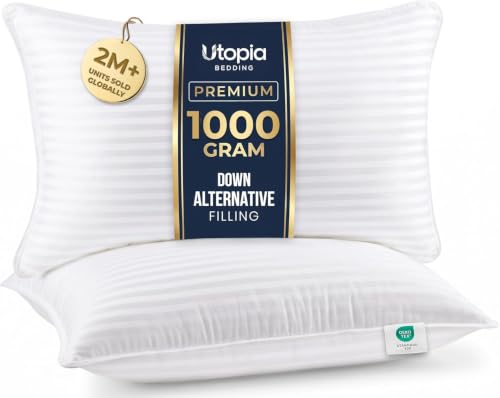
Utopia Bedding Bed Pillows
This pack of fiber-filled pillows is a common choice for guest rooms, rentals and households that need several at once. Fiber fill is light and fluffs easily, though it can flatten sooner than denser materials. Check the pack size, listed dimensions and washing instructions, and think about whether you want a firmer or softer version.

More Questions Buyers Ask
Should I buy pillows in pairs?
Only after you are sure you like the feel. Try one first, since a pair is a bigger commitment if it turns out to be too high or too firm. Some brands sell singles, so compare those against multipacks.
Can I wash my pillow in the machine?
Some fiber and down pillows can be machine washed, while solid foam usually cannot. Check the care tag, use a gentle cycle if allowed and dry thoroughly before using again. Wet fill left in a pillow can develop odor.
What size pillowcase fits a standard pillow?
Standard pillows pair with standard cases, queen pillows with queen cases and so on. A case that is slightly bigger than the pillow is fine, but a case that is too small will bunch the fill and look uneven.
Do pillow protectors change how a pillow feels?
Some do. Thin, soft knit protectors are barely noticeable, while plasticky or noisy ones can change the surface feel. Look for a breathable fabric and a snug fit, and wash the protector regularly according to its care tag.
A Closer Look at Each Pick in Daily Use
The Coop Home Goods Original Loft earns its top spot because adjustability solves the single most common pillow problem: a loft that is almost right. In daily use the difference shows up in the first week, as you remove or add fill in small handfuls and the pillow gradually matches the gap between your head, neck and mattress. Side sleepers tend to keep most of the fill in, back sleepers usually take some out, and stomach sleepers often remove a surprising amount before the pillow stops pushing the head upward. The honest limitation is the adjustment period itself. If you want a pillow that feels perfect the first night with no experimentation, an adjustable design asks more patience than a fixed one, and the shredded fill can feel slightly less uniform than a solid block of foam.
The Tempur-Pedic TEMPUR-Cloud takes the opposite approach: nothing to adjust, nothing to fluff, just a single piece of pressure-relieving foam that responds slowly as you settle in. It suits sleepers who like a close, contouring feel and who tend to stay in one position for long stretches, because the material needs a moment to soften with body warmth each time you change position. Combination sleepers who roll frequently sometimes find that lag noticeable. It also sleeps warmer than the ventilated and gel-infused options in this list, so hot sleepers should weigh the Purple Harmony or a latex pick more heavily. Choose the TEMPUR-Cloud if you value a consistent, molded feel night after night; skip it if you like to punch and reshape your pillow before sleep.
The Purple Harmony pairs a latex core with the brand’s stretchy grid layer, and the result is a bouncy, responsive pillow that never needs fluffing and allows a lot of airflow. That combination is why it is our pick for hot sleepers: the surface feels cool at first touch and stays closer to room temperature than dense foam. The trade-off is a distinctive feel that divides people. If you love the sinking hug of memory foam, the Harmony’s springy pushback can feel unfamiliar for several nights. Saatva’s latex pillow sits nearby in spirit but with a more conventional shredded-latex core inside a cotton cover, giving a softer, more traditional pillow shape with latex resilience. It suits sleepers who want natural materials and durability without the grid texture.
The Casper Original uses a pillow-in-pillow design, with a supportive inner core and a softer outer layer, which is exactly why it works for combination sleepers: the soft surface welcomes position changes while the core stops the head sinking straight through. Its limitation is loft. Determined side sleepers with broad shoulders may find it compresses more than the Coop at full fill or the Saatva. The Beckham Hotel Collection pair closes the list as the value route to that plush hotel feel, with a down-alternative fill that is easy to wash and easy to share across a guest bed. Expect a softer, flatter profile over time compared with latex or foam, and plan on regular fluffing to keep the loft even.
Head-to-Head: Adjustable Fill vs Solid Foam vs Latex
These three constructions answer the same question in different ways. Adjustable shredded fill, represented here by the Coop, is the most forgiving of an uncertain purchase because you can correct a loft mistake at home instead of returning the pillow. Its weakness is consistency: the fill can shift, and the feel depends on how evenly you distribute it after each adjustment. Solid memory foam, like the TEMPUR-Cloud, is the most consistent night to night and holds the head in a steady cradle, but you live with the loft and firmness the manufacturer chose. If your mattress is very soft, your shoulders sink deeper and a fixed medium loft can end up effectively too high, with no way to correct it.
Latex, in both the Purple Harmony and the Saatva, is the durable middle path. It responds instantly, resists permanent body impressions better than most foams, and sleeps cooler because its open structure lets air move. The cost of that resilience is pushback: latex gently pushes back against the head rather than letting it sink, which some sleepers describe as supportive and others as restless. A practical way to decide is to think about what annoyed you most about your last pillow. If it was the wrong height, choose adjustable. If it was going flat, choose latex or solid foam. If it was heat, choose the Harmony or a ventilated latex design. If it was simply that you move around all night, the Casper’s layered design is the safest match.
Getting the First Two Weeks Right
Treat any new pillow as a two-week project rather than a one-night verdict. Your neck and shoulders have adapted to the old pillow’s height, even if that height was wrong, and a change often feels strange before it feels better. Change one variable at a time: keep the same mattress, the same sleeping position habits and, for adjustable models, make fill changes every two or three nights rather than nightly, so you can tell what each change actually did. Take a quick phone photo of your alignment from the side, or ask a partner to check whether your head sits level with your spine rather than tilted up or dropped down toward the mattress.
Protectors and pillowcases influence the feel more than most buyers expect. A thick, quilted protector adds a layer of loft and warmth and can make a cooling pillow feel ordinary, while a tight pillowcase can compress shredded fill and make an adjustable pillow feel firmer than it is. During the trial period, use the case and protector you actually plan to sleep with, so the verdict reflects real conditions. If a pillow offers a home trial, note the deadline on your calendar the day it arrives, and keep the packaging until you are sure. Returning a pillow you have slept on is normal in this category, but only within the seller’s stated window and condition rules.
Care Habits That Extend Pillow Life
Most pillow failures are care failures. Foam and latex cores should never be soaked or machine washed unless the maker explicitly allows it; spot clean instead, and wash the removable cover and protector on a regular cycle, since those layers absorb the sweat and skin oils that would otherwise migrate into the fill. Down-alternative pillows such as the Beckham pair usually tolerate gentle machine washing, but they need complete drying, ideally with dryer balls or clean tennis balls to break up clumps, because fill that stays damp in the middle will smell and flatten. Shredded fill pillows benefit from a short tumble on low heat or a fluff cycle every few weeks to redistribute the pieces.
Sunlight and air help every type. Standing pillows upright near an open window for an hour refreshes them between washes, and rotating two pillows across the week lets each one recover its loft instead of being compressed every single night. Watch for the real end-of-life signals rather than a calendar date: a pillow that stays folded in half when you fold it and let go, visible lumps that no longer shake out, or waking with a stiff neck that eases once you are up and moving. Those signs mean the support has gone, whatever the fill. Replacing on evidence rather than on a schedule saves money and usually improves sleep sooner.
Buying for Two: Couples, Guest Rooms and Second Pillows
Households rarely buy one pillow at a time, and the strategy differs by bed. For the main bed, buy per person and accept mismatched models; sleep quality is personal in a way matching shams can disguise but not fix. For a guest room, versatility wins over specialization: a medium adjustable pillow or a pair of washable down-alternative pillows such as the Beckham set serves the widest range of visitors, because guests will not adjust shredded fill but will forgive a middle-of-the-road loft for two nights. Keep one firmer spare in the closet for the guest who asks, since that request is common and easily answered if you plan for it.
Many sleepers also benefit from a second pillow with a different job. A firmer pillow for reading in bed, a thin pillow for stomach-sleeping nights, or a spare of your main pillow for laundry day all extend the life and usefulness of the primary choice. Rotating two main pillows across the week, as noted in the care section, roughly doubles the interval before either feels tired, because each gets recovery nights. When you find a model that truly suits you, buying its twin during a sale is one of the few pillow purchases that almost never disappoints, since pillow models are discontinued more often than buyers expect.
Budget allocation deserves one honest paragraph. Within this list, the spread from the Beckham pair to the Purple Harmony is wide, and the extra money buys durability, adjustability and materials rather than a guaranteed better night. A sleeper whose needs are simple is genuinely well served by the value pick plus a good protector, while a sleeper with a hard-to-fit shoulder gap or strong heat issues gets real value from the specialist picks. Spend where your problem is; save where it is not.
Pillow Myths Worth Retiring
The first myth is that a pillow should hold the head high and proud. In reality the pillow’s job is neutral alignment: the head, neck and spine in a line that matches your position, which for back sleepers is a surprisingly modest height and for stomach sleepers is barely any height at all. The second myth is that firmness equals support. A pillow supports by holding its shape under your head’s weight through the night, and a soft pillow that holds a steady loft supports better than a firm one that collapses at the edges. Judge support at four in the morning, not in the shop squeeze test.
The third myth is that one miracle material suits everyone. Memory foam, latex, down and shredded fills each fail somebody, which is why this guide keeps six different constructions rather than crowning one material. The fourth myth is that a new pillow should feel perfect immediately; as the trial guidance above explains, adaptation takes nights, and the pillows people love at month two are often merely tolerated at night two. The final myth is that price guarantees hygiene or longevity. Care guarantees those things: protectors washed regularly, covers laundered, fills aired and replaced on evidence. A modest pillow cared for well outlasts a premium one neglected, every time.
Decision Checklist: Narrowing Six Pillows to Your One
If you have read this far and still face six good options, decide by elimination using your last pillow’s failure. Was it too high or too low by morning? That is a loft failure, and the Coop’s adjustability is the direct answer, because it converts a guess into a dial. Did it start well and go flat within the year? That is a durability failure, and latex, in the Saatva or the Purple Harmony, or the solid TEMPUR-Cloud foam, is the correction. Did you wake hot with your head on the cool edge of the pillow, hunting for the cold spot? That is a heat failure, and the Harmony’s airflow design is built for exactly that search. Did you toss between back and side all night, never settling? That is a versatility failure, and the Casper’s layered design exists for restless sleepers. Did you simply resent the price of admission? The Beckham pair, refreshed by regular fluffing and replaced without guilt when it tires, is a perfectly respectable answer.
Run the final test in your own bed, in your own position, with your own pillowcase, for at least a week before the verdict, because every variable in that sentence changes the result. Photograph your alignment once, adjust once, and then leave the pillow alone for several nights; constant fiddling produces constant novelty and no information. If two pillows survive the week equally, keep the one that is easier to care for in your household’s real laundry routine, since the pillow you maintain is the pillow that performs in year two. And keep the runner-up, if budget allows, as the rotation partner described above: two good pillows alternating will outlast and outperform either one used alone, which is the closest thing this category has to a cheat code.
How Pillow Choice Interacts With Sleep Position Changes
Many adults do not hold one position all night, and the pillow that serves the position you fall asleep in may betray the position you wake in. Back-to-side changers are the most common pattern, and they need a pillow whose center is moderate and whose edges are supportive, which is why contoured and layered designs exist. The Casper’s pillow-in-pillow build handles the transition gracefully, soft on the back and structured when you roll. The Coop handles it by loft distribution: keep the center slightly lower and the sides fuller, and the pillow effectively becomes two pillows in one case. Solid foam designs handle transitions least flexibly, because their shape is fixed, so restless sleepers should weight that honestly against foam’s consistency.
Side-to-stomach changers face the sharpest conflict, since the two positions want opposite lofts. The practical compromise is a medium, compressible pillow that a side sleeper can bunch for height and a stomach sleeper can flatten under the chest with an arm’s help, which is where shredded and down-alternative fills earn their keep. A tall, firm pillow in this household will be fought all night and blamed every morning. If you share a bed with a partner whose position pattern differs from yours, resist the matching-pair instinct for the main pillows and match only the shams; the pillows themselves should be as individual as the sleepers.
Children and teenagers deserve a sentence of their own, because their pillow needs change as they grow and their shoulders widen. A thin, washable pillow suits younger children, with loft added as the frame grows, and the value end of this list serves that rotating need sensibly. Guest beds follow the opposite logic: there, the medium, forgiving, washable choice serves the widest range, and a spare firmer pillow in the closet covers the outlier guest. Across every case, the principle is constant: the pillow serves the sleeper’s actual night, positions and changes included, not the position in the brochure photograph.
Finally, a word on pillow height and snoring-adjacent comfort, kept carefully in the comfort lane where it belongs: many sleepers find that a head position that keeps the airways’ path gentle and the chin un-tucked simply feels more restful, and a pillow that is too tall, forcing the chin toward the chest on your back, is worth adjusting downward for comfort alone. Adjustable designs make that experiment free. Treat it as one more comfort variable to tune during the two-week trial, alongside loft, firmness and temperature, and let your own mornings grade the result.
Frequently Asked Questions
How do I know if my pillow is the wrong height?
On your side, your head should sit level, not tipping down or propped up. On your back, your chin should not be pushed toward your chest. If you fold your pillow to get comfortable, wake to adjust it often, or sleep with an arm under it, the loft is probably wrong.
Which pillow is best for side sleepers?
Side sleepers need the highest, firmest option: the Coop at near full fill, or the Saatva in its higher loft, filling the ear-to-shoulder space without your head dropping.
Are adjustable pillows worth it?
For many people, yes. Height is the variable most likely to be wrong and hardest to judge in a store, and an adjustable pillow lets you correct it at home. The trade-off is trial and error, plus regular fluffing.
Do cooling pillows really work?
They help by degrees, not dramatically. Ventilated designs such as a latex core with an open grid move more air and feel less warm than solid foam, reducing heat build-up around your head rather than cooling the whole bed.
How often should I replace a pillow?
It depends on the fill. Value fiber may flatten within a year or two, memory foam commonly lasts two to three years, and latex often lasts longer. Replace a pillow when it no longer recovers its shape or keeps your head in a neutral position.
Can a pillow fix neck discomfort?
A pillow of the right height can remove one common source of strain — a head held too high or low all night — but it is not a treatment. Persistent discomfort has many causes, and this guide is general information, not medical advice. If discomfort continues, see a clinician rather than cycling through more pillows.
Should I match my pillow to my mattress firmness?
Yes, because the mattress changes the effective loft you need. On a soft mattress your shoulder sinks in, narrowing the gap your pillow must fill, so side sleepers often need slightly less loft than the same person on a firm mattress, where the shoulder stays higher and the gap stays wide. If you change mattresses, give your current pillow a fresh two-week trial before replacing it, since the pillow may not have been the problem at all.
Is a firmer pillow better for side sleeping?
Not automatically. Side sleepers need enough support to fill the shoulder gap, but firmness and loft are different things. A tall, soft pillow can support a side sleeper well because it compresses into the gap, while a short, firm pillow can leave the head dropping toward the bed. Judge the combination of height when compressed and how steadily it holds that height through the night, rather than the firmness label alone.
Why does my new pillow smell, and will it fade?
New foam and latex pillows often carry a manufacturing odor when first unboxed. Airing the pillow in a ventilated room for a day or two before first use fades it in most cases, and a washable cover plus protector keeps everyday odors from building up afterward. If a strong smell persists well beyond the first week, contact the seller, since that is outside the normal pattern for the picks in this guide.
Can two people share the same pillow model?
They can, but it works best when their sleep positions and shoulder widths are similar. Couples with different needs are usually happier choosing per person: an adjustable model such as the Coop for the partner who is hardest to fit, and a fixed model for the partner who already knows what they like. Buying a matched pair for looks is fine for a guest room, but the main bed deserves individual choices.
Do travel pillows and bed pillows follow the same rules?
Broadly, yes: alignment and personal comfort govern both, but travel compresses every compromise into a smaller package. A travel pillow must earn its carry-on space by working in a seat, which favors wraparound and compressible designs over loft. Do not judge a bed pillow by travel standards or the reverse; each is a specialist, and the bed pillow deserves the fuller two-week trial because you will spend far more hours on it.
When is a pillow topper or wedge a better answer than a new pillow?
When the problem is the bed’s angle or surface rather than the head’s support: readers, people who prefer an inclined rest position, and households bridging a too-firm mattress sometimes solve more with the layer under the body than the one under the head. If your current pillow feels right whenever you test it on a different bed, suspect the mattress or the setup before replacing the pillow again.
Bottom Line
Begin with sleep position, choose a loft that keeps your head level, then choice the fill feel you prefer. If you are unsure, the Coop Original Loft is the most forgiving choice because you can change its height at home. Hot sleepers should look at the Purple Harmony, latex fans at the Saatva, back and stomach sleepers at the TEMPUR-Cloud, combination sleepers at the Casper, and guest rooms at the Beckham pair. Check listing detail, size, and return terms before you order.