Disclosure: As an Amazon Associate, Reviews Took earns from qualifying purchases. Links to Amazon on this page are affiliate links; they cost you nothing extra.
Check insulation and jaw design.
This guide is built from Amazon product listings and maker specs, not our own testing, so confirm size, contents and current price on each product page. Health products are for general information and are not medical advice.
Check the current price on Amazon.com.
Last updated: November 2, 2026.
In this guide
Quick Picks
| Product | Type | Best for |
|---|---|---|
| HURRICANE 7-Piece Pliers Set 8″ Water Pump 8″/6″ Slip Joint 7″ | Pliers set | gripping and cutting |
| IRWIN VISE-GRIP MIG Pliers 8-Inch (1873303) | Pliers set | gripping and cutting |
| 5 Pieces Electrical Disconnect Pliers for Cars | Pliers set | gripping and cutting |
| Klein Tools D5052KIT Classic Klaw Pump Pliers Set 2-Piece | Pliers set | gripping and cutting |
| ANGELSWORD 8″ Wire Stripper Wire Cutter Wire Crimper Electrician | Pliers set | gripping and cutting |
| IRWIN Tools VISE-GRIP GrooveLock Pliers Set 8 Piece 2078712 | Pliers set | gripping and cutting |
| Amazon Basics Pliers Set Hand Tools for Precision Cutting Wire | Pliers set | gripping and cutting |
Our Picks
Top pickBest for gripping and cutting
1. HURRICANE 7-Piece Pliers Set 8″ Water Pump 8″/6″ Slip Joint 7″
A HURRICANE 7-Piece Pliers Set 8″ Water Pump 8″/6″ Slip Joint 7″ (pliers set), per the listing. Check price on Amazon.
Good for: gripping and cutting. Watch out: Check included types.
Best for gripping and cutting
2. IRWIN VISE-GRIP MIG Pliers 8-Inch (1873303)
An IRWIN VISE-GRIP MIG Pliers 8-Inch (1873303) (pliers set), per the listing. Check price on Amazon.
Good for: gripping and cutting. Watch out: Check included types.

Best for gripping and cutting
3. 5 Pieces Electrical Disconnect Pliers for Cars
A 5 Pieces Electrical Disconnect Pliers for Cars (pliers set), per the listing. Check price on Amazon.
Good for: gripping and cutting. Watch out: Check included types.

Best for gripping and cutting
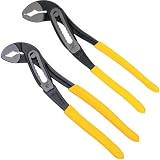
4. Klein Tools D5052KIT Classic Klaw Pump Pliers Set 2-Piece
A Klein Tools D5052KIT Classic Klaw Pump Pliers Set 2-Piece (pliers set), per the listing. Check price on Amazon.
Good for: gripping and cutting. Watch out: Check included types.
Best for gripping and cutting
5. ANGELSWORD 8″ Wire Stripper Wire Cutter Wire Crimper Electrician
An ANGELSWORD 8″ Wire Stripper Wire Cutter Wire Crimper Electrician (pliers set), per the listing. Check price on Amazon.
Good for: gripping and cutting. Watch out: Check included types.

Best for gripping and cutting
6. IRWIN Tools VISE-GRIP GrooveLock Pliers Set 8 Piece 2078712
An IRWIN Tools VISE-GRIP GrooveLock Pliers Set 8 Piece 2078712 (pliers set), per the listing. Check price on Amazon.
Good for: gripping and cutting. Watch out: Check included types.

Best for gripping and cutting
7. Amazon Basics Pliers Set Hand Tools for Precision Cutting Wire
An Amazon Basics Pliers Set Hand Tools for Precision Cutting Wire (pliers set), per the listing. Check price on Amazon.
Good for: gripping and cutting. Watch out: Check included types.

How to Choose
Rating
Check size, strength or protection ratings.
Build
Durable materials last longer.
Safety
Use protective gear and follow instructions.
The core pliers types and what each does
A good set covers the main jobs, so know what each type is for.
- Slip-joint pliers have an adjustable pivot for two jaw widths and are a general-purpose gripper.
- Needle-nose pliers reach into tight spaces and hold small parts or bend wire.
- Linesman pliers have a flat gripping face and a built-in cutter, popular for electrical work and heavier wire.
- Diagonal cutters snip wire close to the surface.
- Tongue-and-groove pliers adjust to several jaw sizes and grip pipes and nuts.
- Locking pliers clamp onto a workpiece and stay shut until released.
Check which types a set includes and how many you will use. Pliers are not wrenches, and using them on fasteners can round off corners, so use the right tool where possible.
Steel, forging and jaw quality
The metal and how it was shaped determine how long a plier lasts.
- Forged steel is generally stronger than stamped steel, though the listing may not always say which was used.
- Heat-treated cutting edges stay sharp longer, but they can chip if used on hardened wire they were not designed for.
- Look for aligned jaws that meet cleanly with no gap, and check that teeth are crisp and even.
- Check the joint for smooth action with no wobble.
Read the listing for what each plier is rated to cut or grip, and avoid exceeding that. A plier that flexes or has jaws that slip is a sign of poor fit. Finishes like chrome or oxide help reduce rust.
Handle grips, comfort and insulation
Handles affect comfort during long jobs.
- Cushioned grips reduce hand fatigue, but check they are firmly attached.
- Handle length and spread should suit your hand size, especially if your hands are small or large.
- Spring-loaded handles reduce strain on repetitive tasks.
- Insulated handles are intended for electrical work, but they are not a substitute for turning off power. Check the listing for any rating and look for damage before use.
Do not assume that rubber grips are insulated for electrical use. Always follow safety guidance and de-energize circuits before working.
Set contents, case and value
Sets can offer value, but only if the pieces are useful.
- Count the pieces and consider whether you already own some.
- A case, roll, or rack keeps the tools organized and easy to carry.
- For general home use, a smaller set of core pliers is often enough.
- Trade work usually justifies a higher-quality set with specialized types.
Compare individual items rather than the headline number of pieces. Some sets add filler tools. Look at what is included, and whether single replacements are available later.
Maintenance and safe use
Basic care keeps pliers working.
- Wipe them clean and dry after use to prevent rust.
- Apply a light oil on the pivot occasionally.
- Do not use pliers as hammers or pry bars, and avoid extending the handles with pipes.
- Wear eye protection when cutting wire, since pieces can fly.
Replace pliers when the jaws no longer meet, the teeth are worn smooth, the cutting edge is chipped, or the joint is loose.
Specialty pliers in this guide
Not every item here is a general-purpose set. The listings include pump pliers, a welding-style locking plier, a wire tool aimed at electricians, and a set of disconnect pliers meant for car electrical work. Each solves a particular problem, so it helps to match the tool to the job rather than assuming any plier will do.
Pump pliers, also called tongue-and-groove pliers, adjust to several jaw widths and are useful for gripping round or irregular shapes. Locking pliers clamp onto a workpiece and hold it without hand pressure, which frees both hands for another task. A wire stripper and crimper combination handles preparing wire ends but is not a substitute for a dedicated cutting plier on heavy wire. Electrical disconnect pliers are designed to release certain connectors, and you should confirm in the listing which connector types they are meant for.
- Check the intended use stated in the listing before assuming a tool fits your task.
- Do not use specialty tools for jobs outside their purpose, since this can damage them or the workpiece.
- Read the manual for limits on wire size and material.
If you are unsure which tool you need, describe your project to a hardware store employee or check the manual of the item you are working on.
Jaw opening, reach and leverage
Three physical features decide how a plier performs: how wide the jaws open, how far they reach, and how much leverage the handles give. Each affects what you can do with the tool.
A wide jaw opening lets you grip larger objects such as pipe or big nuts, while a narrow opening gives finer control on small parts. Reach is the length of the jaws beyond the pivot. Long, slim jaws can get into recessed spaces, and short, thick jaws provide stronger grip. Leverage comes from the handle length and the position of the pivot. Longer handles give more force with less effort but need more room to swing.
- For tight spaces such as behind panels, favor slim jaws with a longer reach.
- For heavy gripping, choose a robust joint and a deeper jaw.
- For frequent cutting, look at where the cutter sits relative to the pivot, since closer placement increases cutting force.
These dimensions are usually listed or visible in photos. Compare them with the jobs you plan to do. A plier that opens only slightly will frustrate you when working on larger items, and one that is too bulky may not fit where you need it.
Beginner kit versus professional needs
People buy pliers for very different reasons, and the same set can be an excellent choice for one person and a poor match for another. A beginner or occasional user wants a few reliable types that cover household repairs: gripping, bending, and cutting. A basic set with clear labeling and a case may be all that is needed.
A professional or heavy user has different priorities. Frequent use rewards stronger materials, more comfortable handles, and parts that can be replaced or serviced. They may also need tools that comply with the rules of their trade. For these users, individual pliers chosen for specific jobs can be more sensible than a multi-piece bundle.
- Beginner: look for a handful of useful types and straightforward instructions.
- Hobbyist: consider adding a specialty plier, such as a locking or wire tool, if your projects call for it.
- Tradesperson: focus on durability, comfort over long days, and any requirements from your employer or your trade.
Budget tiers follow this pattern. Lower-priced sets are a reasonable fit for light use, mid-range options suit regular home projects, and higher-priced tools make more sense where reliability and comfort are daily needs. Always check what is included rather than the headline piece count.
Pliers for electrical and automotive work
Electrical and car repair jobs add safety and compatibility concerns that go beyond general gripping. Before working on any circuit, switch off power and confirm that it is off. Insulated handles are a layer of protection but not a guarantee, and damaged insulation should never be trusted. Inspect handles for cracks, cuts, or worn spots each time.
For wiring work, pliers that cut and strip must match the wire size. Using a cutter on wire that is too thick can chip the edge or damage the tool. For automotive tasks, consider whether you are working with fuel, brake, or electrical connectors, since the right tool depends on the connector. Disconnect pliers for vehicles are designed for particular connector styles, so read the listing and your vehicle documentation before use.
- Never work on live circuits unless you are trained and equipped to do so.
- Replace tools with cracked or loose handle coverings.
- Keep wire cutters for wire only. Cutting hardened items such as screws or nails can ruin the edge.
- Wear eye protection, since cut ends and spring tension can cause injuries.
When a job is outside your comfort zone, ask a qualified professional.
Storage, organization and keeping track of pliers
A set only helps if you can find the tool you need. Pliers are easy to misplace, so a bit of organization saves time and extends the life of the tools.
A case or roll keeps a set together and protects the jaws from knocking against other metal. A wall rack or pegboard makes each plier visible and quick to grab. Drawer organizers with slots keep the heads from clashing. Choose the method that suits where you work: a toolbox for a vehicle, a rack for a garage wall, or a small case for a household drawer.
- Return each plier to its place after use so you always know where it is.
- Wipe off moisture, grease, and dust before storing.
- Keep specialty tools separate from general ones so you do not grab the wrong one.
- Store them away from damp areas such as under sinks or in uninsulated sheds.
Check any case that comes with a set for sturdy latches and hinges, since a weak case becomes a source of frustration. If the case is not what you want, you can store the tools in a separate organizer. And if you travel with tools, check applicable rules for carrying them, since some situations limit what you can bring.
Frequently Asked Questions
Is it right for beginners?
Check the features and manual.
Do I need extras?
Often protective gear or accessories.
How do I store it?
Dry and covered.
What pliers should every home have?
Many households get by with slip-joint, needle-nose, and diagonal cutters, with locking pliers as a useful extra.
Are insulated pliers safe for live wires?
Do not rely on them alone. Turn off power and follow safety guidance, and check the rating in the product documentation.
Can I use pliers on nuts and bolts?
You can in a pinch, but wrenches and sockets fit better and avoid rounding corners.
How do I stop pliers from rusting?
Keep them dry, wipe them after use, and apply a light oil. Store them in a dry place.
What is the difference between linesman and diagonal pliers?
Linesman pliers have a gripping face and a cutting edge in one tool, while diagonal cutters are mainly for snipping.
Do I need a full set or individual pliers?
A set can be good value if you need several types. If you only need one or two, buying individually may be better.
What are pump pliers used for?
Pump pliers, often called tongue-and-groove pliers, adjust to several jaw widths and are used to grip pipes, nuts, and other round or irregular objects. They provide strong grip, but wrenches fit fasteners more precisely.
What are locking pliers good for?
Locking pliers clamp onto a workpiece and stay closed without hand pressure. They are useful for holding parts while you work, for gripping stripped fasteners, and for temporary clamping. Release them carefully, since they can spring open.
Can wire strippers cut through any wire?
No. Strippers and cutters are rated for specific wire sizes and types. Check the listing and the markings on the tool, and avoid forcing it on wire that is thicker or harder than it was designed for.
Do I need a separate plier for electrical work?
Many people prefer tools made for electrical tasks, particularly those with insulated handles and suitable cutters. Check the product information for rating details, and always turn off power before you work.
How do I know if a pliers set contains good tools?
Look at the listing for descriptions of materials, finishing, and handle design, and check whether replacement parts are offered. Read the details rather than relying on the piece count, and check the return terms.
Why do my pliers feel loose at the joint?
A loose joint can come from wear or from rivets that have worked loose over time. A little light oil may smooth movement, but a joint that wobbles noticeably can reduce grip and cutting accuracy and may mean it is time to replace the tool.
Can I sharpen the cutting edge of diagonal pliers?
Some cutting edges can be sharpened carefully, while others cannot. Check the maker's advice. A badly chipped edge is usually better replaced than repaired.
Should I wear gloves when using pliers?
Gloves can protect against cuts and improve grip, but they can also reduce feel and get caught in moving parts. Choose a fit that lets you keep control, and wear eye protection when cutting.
Questions to Ask Before You Buy
- Which jobs do you actually do most: gripping, cutting, bending, crimping or holding things in place?
- Do you need the jaws to open wide, or reach into narrow gaps?
- Is the carrying case or pouch something you will use, or would a wall rack suit you better?
- Are the handles comfortable for the size of your hand, including when you wear gloves?
- Do you already own some of the included types, making duplicates a waste?
- What does the maker’s listing say about intended use and any limits on materials?
Matching It to Your Use
A household drawer set looks different from what a car enthusiast or a hobby electronics fan needs. If most of your work is light repairs, a modest assortment covering the common shapes will serve well. If you work on vehicles, plumbing or wiring on a regular basis, think about which specialty shapes you will reach for repeatedly, and whether single higher-grade tools make more sense than a large bundle.
Weight and balance matter during longer sessions. Hold a tool in your hand if you can, or compare the dimensions in the listing against a pair you already like.
Who Should Skip It
If you already own a well-kept collection that covers your usual work, adding a second bundle may only fill a drawer. Likewise, anyone who needs a regulated trade tool for a certified job should follow the requirements of their trade and check the maker’s listing and instructions rather than relying on a general-purpose set.
Occasional users who only need one shape for one task might do better buying that single tool. A beginner learning a new craft can also build a kit gradually, adding items as real needs show up instead of buying everything at once.
Whatever you choose, wipe the tools down after dirty work and keep them dry so they are ready the next time.
Bottom Line
Get versatile pliers for general use.
More Workshop Guides
- Best Battery Circular Saws for DIY
- Best Jigsaws for Home Projects
- Best Palm and Cordless Sanders
- Best Heavy-Duty Tool Totes
- Best 25-Foot Tape Measures
- Best Mechanic Tool Sets with Case
- Best Wrench Sets
- Best Folding Work Tables with Vise