A whetstone wears hollow with use, and a hollow stone cannot sharpen a straight edge. A stone flattener, often called a lapping plate, is a harder and flatter surface that you rub against the stone until it is level again. The main choices are the material, the grit, the size and whether the plate can handle both soft and hard stones.
The six tools below include three diamond plates, two silicon carbide slabs and a double sided diamond plate. Sizes and grits come from each listing page and are the makers’ own claims. We have not used these tools ourselves. Where a listing disagrees with itself, we say so.
As an Amazon Associate we earn from qualifying purchases. Links below are affiliate links, and they do not change the product information we give.
What to Look For
| Feature | Why it matters |
|---|---|
| Material | Diamond is harder than silicon carbide |
| Size | The plate should be at least as long as your stone |
| Grit | Coarser cuts faster, finer leaves a smoother stone face |
| Sides | Two grits on one plate cover rough and fine work |
In this guide
Specs at a Glance
| Flattener | Size | Grit | Notes |
|---|---|---|---|
| SHARPAL 145H | 10 x 4 in | 220 (60 micron) | Diamond; rubber base; 1.84 kg |
| DMT Dia-Flat | 10 x 4 in in title | 95 micron or 160 mesh | Diamond; table says extra fine |
| Norton Flatstone | 9 x 3 x 0.75 in | Coarse silicon carbide | Holder and case; 1.4 lb |
| Atoma #1200 | 10.6 x 4.3 x 0.6 in | 1200 super fine | Diamond plate; 0.58 kg |
| POWERTEC 72124 | 8 x 3 in in bullet | 120 and 320 | Silicon carbide; grooved; 1.8 lb |
| SCOTTCHEN | 10 x 2-11/16 in | 120 and 180 | Diamond, steel, ABS; wet or dry |
The 6 Best Stone Flatteners

Top pickBest for large whetstones
1. SHARPAL 145H 10 x 4 Inch Diamond Lapping Plate
A 10 by 4 inch plate with monocrystalline diamonds in a 220 grit, 60 micron surface. The maker lists flatness to plus or minus 0.002 inch, an anti-slip rubber base and a surface 60 percent larger than its smaller plates. It says the finish suits even very fine Japanese waterstones. The listing weight is 1.84 kg.
Suits: large whetstones. Strengths: a listed flatness figure and a rubber base. Weaknesses: heavy at 1.84 kg. Skip it if you only own small stones.

View SHARPAL 145H 10 x 4 Inch Diamond Lapping Plate, Whetstone Flattener on Amazon
Best for waterstones and oilstones
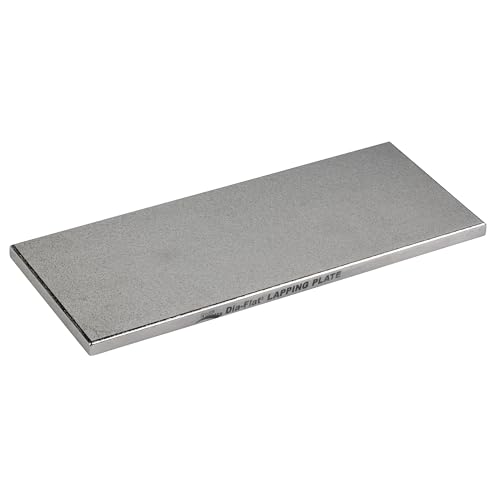
2. DMT Dia-Flat Diamond Lapping Plate, 4 by 10 Inch
A 4 by 10 inch plate with a micronized monocrystalline diamond coating, listed at 95 micron or 160 mesh, with a surface the maker says is 40 square inches. It is described as made in the USA and as flattening water, oil and Arkansas stones. The table lists the grit as extra fine and the size as 7.4 by 3.3 inches, so those entries conflict with the title.
Suits: waterstones and oilstones. Strengths: a large plate and a named grit. Weaknesses: conflicting table entries. Skip it if you want a grooved slab.

Best for waterstones
3. Norton Waterstone Flatstone
A silicon carbide slab measuring about 9 by 3 by 0.75 inches with diagonal grooves that the maker says give removed material a place to go. It comes with a stone holder and a protective case, and the maker says it suits all whetstone grits. The listing weight is 1.4 pounds.
Suits: waterstones. Strengths: holder and case included. Weaknesses: silicon carbide wears over time. Skip it if you want a diamond surface.
View Norton Waterstone Flatstone, Flattening Stone with Stone Holder and Case, Pack of 1 on Amazon

Best for fine flattening and stone refreshing
4. Atoma Diamond Plate 1200
A diamond plate measuring 10.6 by 4.3 by 0.6 inches with model number ATM75-12E and a listed super fine 1200 grade. The listing is brief, with only the grit, the type and the size in its bullets. At 1200 grade it reads more like a finishing plate than a coarse flattener, so check which grade matches your stones.
Suits: fine flattening and stone refreshing. Strengths: a large plate at 0.58 kg. Weaknesses: very little listing detail. Skip it if you need fast removal.
View Atoma Diamond Plate Knife Sharpening Flattening Whetstone #1200 on Amazon

Best for rough then fine flattening
5. POWERTEC Large Flattening Stone 120/320, 72124
A dual grit silicon carbide slab with 120 grit on one side and 320 on the other, with a grid of diamond shaped grooves. The bullet gives 8 by 3 by 1-3/16 inches while the table says 8.86 by 3.74 inches, and the table calls the grit extra fine. The listing weight is 1.8 pounds.
Suits: rough then fine flattening. Strengths: two grits in one slab. Weaknesses: conflicting size and grit entries. Skip it if you want diamond.

Best for flattening and re-beveling edges
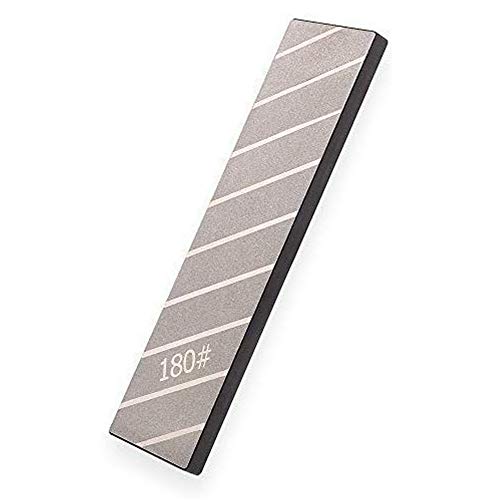
6. SCOTTCHEN Diamond Flattening Stone, 10 x 3 Inch
A two sided diamond plate with 120 grit on one face and 180 on the other, built from diamond, steel and ABS. The bullet gives 10 by 2-11/16 inches and the table 10 by 2.72 inches. The maker says it works dry or wet, with a note to dry it after wet use. The listing weight is 16 ounces.
Suits: flattening and re-beveling edges. Strengths: two grits and a light weight. Weaknesses: both grits are coarse. Skip it if you want a fine finish.

Care and Setup
- Follow the maker’s instructions for the plate you choose.
- Use a wet plate and stone unless the maker says dry use is fine.
- Draw pencil lines on the stone and rub until they vanish.
- Rinse and dry the plate after use.
Mistakes to Avoid
- Buying a plate shorter than your stone.
- Assuming a fine grade plate removes material quickly.
- Leaving a diamond plate wet.
- Trusting a size that conflicts within the listing.
How to Tell a Stone Has Worn Hollow
Sharpening stones wear unevenly, because most people use the same central area. Over time the middle dishes out and the edges stay high. A hollow stone causes real problems: the edge you are sharpening rocks on the high points, the bevel angle changes between strokes and chisels and plane irons can pick up a curved edge. A knife may sharpen only at the tip or heel instead of along the whole edge.
There are simple ways to check. Lay a straightedge across the stone, then shine a light behind it and look for gaps. You can also draw a grid of pencil lines on the surface with a soft pencil, then rub a few strokes on the stone, and see where the pencil disappears. If the lines vanish only in the middle, the stone is hollow. Look for a visible shine pattern or uneven wear and for a lip at the edges.
- Check the stone before each major sharpening session.
- Flatten sooner when sharpening plane irons or chisels, which need a true face.
- Soft, fast-cutting stones dish more quickly, so they need checking more often.
A small amount of dishing in a stone used for kitchen knives may be tolerable, but chisels and plane irons need a flat back. Catching the problem early also means less flattening and a longer stone life.
A Step-by-Step Flattening Method
The method is simple and the same for most plates and slabs. Start by drawing a pencil grid across the stone face, with lines about a finger-width apart. This works as a progress indicator. Place the flattener on a stable surface, such as a bench with a damp cloth or the plate’s own rubber base, or hold the stone in a holder if one is provided. Wet both the stone and the plate if the maker recommends it, because water carries away swarf and keeps the plate cutting well.
Rub the stone back and forth across the plate with even pressure, using straight strokes along the full length. Some people prefer a circular or figure-eight motion, which helps use the whole plate and avoids wearing a groove in it. Lift the stone often and check the pencil marks. When all the lines have been removed, the surface is flat. Rinse the stone and the plate, and inspect.
Avoid pressing hard, which can chip the edge of a soft stone and does not make the process faster. Light, even pressure and a clean plate are enough. Rotate the stone from time to time. If the stone is very hollow, begin with a coarse plate and then move to a finer one to leave a smoother surface. Afterward, you may want to lightly rub the stone with a fine nagura or a similar fixing stone to round the edges, which makes chipping less likely.
Diamond Plates, Silicon Carbide Slabs and Other Options
The material of the flattener affects cutting speed, durability and what it suits. Diamond plates use diamond particles bonded to a flat base. They cut fast, resist wear and can flatten even very hard stones. Quality varies, and a plate that is not truly flat will pass its error on to your stone, so the listing’s flatness information is worth reading. Diamond plates can lose cutting power as particles wear or if they are damaged by misuse.
Silicon carbide slabs cut well on waterstones and often have grooves that clear slurry. They wear down over time, which can reduce their flatness, so they should be checked periodically. They are generally cheaper than diamond but need replacing sooner. Both types come in various grits, with coarser surfaces cutting faster and finer ones leaving a smoother face.
Other methods exist. Many people use wet and dry sandpaper stuck to a flat surface, such as a granite tile or thick plate glass, to flatten a stone. This costs little but wears out and needs a truly flat base. Some makers sell a companion stone or a lapping stone designed for flattening. Whichever method you choose, make sure it is flatter than the stone you want to correct, and that the manufacturer says it suits the type of stone you own. Oil stones and waterstones differ, and some flatteners are marked for wet use only.
Matching Size and Grit to Your Stones
A flattener should be at least as long as your stone and ideally longer, so that the stone does not overhang the plate at the end of a stroke. An overhang can create a ridge or a rounded end. If you own large bench stones, a large plate is worth the extra weight, while a smaller plate is fine for pocket stones and small slips. Check the listing for the actual working surface, and note any difference between the title and the details.
Grit changes the result. A coarse plate flattens quickly and is ideal for deeply dished stones, but it leaves scratches on the stone face that may transfer to your edge until the stone smooths out. A finer plate leaves a smoother surface but takes longer to remove material. Some people keep a coarse plate for major flattening and a finer one for finishing, and others choose a mid-range grit to handle most stones. A fine plate alone will work, just slowly on a very dished stone.
Think about the stones you use. Soft waterstones need gentler handling than hard ones, and fine finishing stones are easy to scratch if the plate is coarse. Two-sided plates offer two grits in one tool and save space. Check weight, too, because a heavy plate sits steady but is harder to store, while a light one can slide around. A non-slip base or a holder is a helpful feature if the plate does not stay put during use.
Caring for the Plate and Avoiding Common Mistakes
A flattener keeps working only if you look after it. Rinse it thoroughly after each use to remove slurry and stone particles, and dry it, as the care notes above suggest. Use a soft brush to clean grooves or the diamond surface, and do not scrub hard with metal tools. Keep it flat in a drawer or its case, away from items that could scratch the surface. Never use the flattener to sharpen a blade or for anything beyond its purpose.
Several mistakes are common. Pressing too hard wears the plate and stone faster. Using only one part of the plate wears a hollow in it, which defeats the purpose, so use the whole surface. Flattening too often removes stone unnecessarily, so only flatten when it is needed. Neglecting to check the stone’s back can leave an uneven base, so make sure it sits firmly on the bench. And mixing up stones of different types on a plate not meant for them may clog or damage the surface.
Know when to replace the flattener. Signs include:
- It no longer cuts, which means the abrasive is worn or clogged beyond cleaning.
- A straightedge shows the plate itself is no longer flat.
- Diamond particles have come off in patches.
- Deep gouges or a bent base have appeared.
Wear eye protection if you flatten dry or with dusty stones, and follow the maker’s guidance about water and dust.
Which stone flattener should you buy?
The right stone flattener depends on the size of your stones, how hollow they get and whether you want one plate or two grits. Match your needs to the six picks above, then confirm the details on the listing.
- Large bench stones: choose the SHARPAL 145H or the DMT Dia-Flat, both long diamond plates. The SHARPAL adds a rubber base, while the DMT listing has conflicting size and grit entries, so read it closely.
- A slab with a holder and case: the Norton Waterstone Flatstone is the one that includes both, and it is a silicon carbide slab for waterstones.
- A fine, light touch: the Atoma #1200 is listed as super fine, so it suits refreshing a stone face more than rescuing a deeply dished one.
- Rough and fine work in one slab: the POWERTEC 72124 pairs two grits in silicon carbide, but its size and grit entries disagree between the bullet and the table.
- Two diamond faces: the SCOTTCHEN has two coarse grits, which suits fast flattening and re-beveling rather than a polished finish.
If you own only one or two stones and sharpen kitchen knives, one mid-sized plate is usually enough. If you work with chisels and plane irons, a longer diamond plate that keeps its flatness matters more, because those tools need a true face. Pairing a coarse plate with a fine one is a common approach for very dished stones.
What to check before you buy, and who should skip it
Before you buy a stone flattener, check that the plate is longer than your stone, that the grit suits your stones and that the listing agrees with itself. Then weigh the trade-offs honestly.
- Measure your longest stone and compare it with the plate length on the listing, not just the title.
- Look for conflicts between the title, bullets and table on size and grit, and trust the maker’s own page or manual if they differ.
- Confirm whether the plate is made for wet use, dry use or both, and for which stone types.
- Check what is included, such as a holder, a case or a rubber base.
- Read the warranty and return terms on the listing.
- Think about storage, because heavy plates are harder to keep in a small kit.
The trade-offs are real. Diamond plates cut fast and last, but the surface can wear or lose particles if misused. Silicon carbide slabs are simple and clear slurry well, yet they wear and need checking for flatness. Coarse plates work quickly but leave scratches on the stone face. A fine plate is gentle but slow on a hollow stone.
You can skip a dedicated flattener if you rarely sharpen, use a single small stone or already flatten reliably on wet and dry sandpaper over glass. Also skip it if your stones are not sharpening stones at all, since a flattener is only worth owning when the stone dishes.
One more practical point: a flattener only fixes a stone as well as it is held. Keep the plate clean, use its whole surface and check it with a straightedge now and then, so it stays a reliable reference.
Compare the picks above, check the current listing for size and what is included, then choose the one that fits how you will use it.
Flat Is a Process, Not a Purchase: How Flattening Fits Your Sharpening System
A flattener only earns its place inside a routine. Waterstones dish because the middle does the work, edges round because blades rock, and the moment a stone stops being flat, every sharpening stroke becomes a negotiation with a curved surface. The picks above divide into diamond plates, which cut fast and stay flat themselves, and grooved silicon carbide slabs, which are forgiving and economical for heavy work. Choosing between them is really choosing a rhythm: frequent quick laps on a plate to keep a stone honest, or periodic heavier sessions on a slab to rescue a stone that has drifted. Most serious sharpeners eventually do the first; the second is what happens when the first was skipped for a year.
Reading the stone before you flatten it
Diagnose before you abrade. The pencil grid described earlier in this guide is the standard test because it shows exactly where material remains after a few strokes: lines that vanish in the middle while surviving at the edges confirm a hollow, while lines surviving in the centre point to a crowned stone, which happens with narrow tools worked in one spot. A straightedge held to the light tells the same story faster once your eye is trained. Also check the stone’s edges and corners, since a stone can be flat in the field and still carry a chipped arris that catches a blade. Note which of your stones dish fastest; fine polishing stones worked with slurry often wear differently from coarse stones, and flattening everything on one fixed schedule wastes the slow-wearing stones while under-serving the fast ones.
Slurry, water and pressure: the three working variables
Flattening is grinding, and the same variables apply. Water keeps the swarf moving and prevents the plate or slab from loading; a flattener that stops cutting is usually clogged rather than worn, and a rinse restores it. Pressure should be modest and even, spread through the whole stone rather than pushed through your thumbs in the middle, which simply grinds a new hollow in a different place. Stroke pattern matters as much: long strokes that use the full length of the plate, with the stone rotated a quarter turn regularly, wear both stone and flattener evenly. Short, scrubbing strokes in one orientation are how plates develop their own worn track, after which the plate starts copying its flaw into every stone it touches.
Each Pick at Work: Six Flattening Routines
SHARPAL 145H: the big plate for big stones
A large diamond plate such as the SHARPAL suits a bench with large waterstones, where the plate should be at least as long as the stone so strokes stay supported from end to end. Its routine is the classic one: wet surface, pencil grid, long strokes under a stream or in a shallow tray, rinse, re-grid, stop when the last line disappears evenly. Because a large plate also serves to lap other flat references and can flatten the soles and backs of tools in a pinch, it tends to become the flat heart of the sharpening bench. Keep it that way by reserving it for lapping and resisting its use as a coarse grinder for damaged edges, work that wears a plate unevenly.
DMT Dia-Flat: the established reference plate
The DMT plate is the long-standing choice of users who want a purpose-built lapping plate with a reputation for staying flat, used by woodworkers who flatten stones weekly and check the plate itself against a known reference from time to time. It rewards the user who works wet, rinses often and stores the plate protected, face safe from knocks. In return it gives fast, predictable cutting that makes the flattening chore short enough to do before it becomes urgent, which is the entire secret of stones that are always flat.
Norton Flatstone: the grooved slab with a case
The Norton takes the silicon carbide slab approach, with grooves that channel water and swarf so the stone keeps moving instead of hydroplaning on its own slurry. A slab like this suits users who flatten larger stones, who like the forgiving feel of a stone-on-stone action, and who appreciate a case that keeps a wet, gritty tool contained in the drawer. Remember that a slab itself wears and must be checked and occasionally flattened in turn, on a flat surface with loose grit or against a known reference, a small chore that keeps the whole system honest.
Atoma 1200: the fine plate for fine stones
A finer diamond plate such as the Atoma 1200 has a different job from its coarse cousins: maintaining fine finishing stones without leaving a scratched, aggressive surface, and conditioning a stone’s face so it cuts keenly rather than skating. It is also the plate many users choose for light, frequent maintenance across the whole stone set, accepting slower material removal in exchange for a finer result and excellent control. The diamond sheet pattern on this type resists loading, and a rinse and a soft brush keep it cutting. Use it little and often, and coarse rescue work will rarely be needed at all.
POWERTEC 120/320: two grits of silicon carbide
The POWERTEC slab offers a coarse face for reshaping a badly dished stone and a finer face for finishing the job, in one economical tool. It suits the user rescuing neglected stones, the school or shared bench where stones take abuse, and anyone whose flattening sessions are occasional and heavy rather than weekly and light. Work the coarse side until the pencil grid nearly clears, then refine on the finer side so the stone’s face is left in a condition to sharpen rather than to scratch. As with any slab, check the slab’s own flatness periodically.
SCOTTCHEN diamond stone: two faces, compact footprint
A double-faced diamond stone such as the SCOTTCHEN gives a smaller bench the two-step routine in a single tool that stores easily: one face to do the removal, the other to finish. It suits users with small to medium stones and limited space, and those who flatten at the sink with the stone held in hand. The technique point for hand-held work is stability: brace the flattener on a non-slip mat or board so your strokes are long and level, because a flattener that rocks in the hand dishes stones as reliably as any other curved surface.
Head-to-Head: Diamond Plate Against Silicon Carbide Slab
Diamond wins on speed, on staying flat, and on suiting frequent light maintenance; a plate asks only for water, a rinse and protected storage. Silicon carbide wins on forgiveness and on heavy rescue work, and its consumable nature is less of a concern when sessions are rare and hard. The finish each leaves differs: a coarse diamond plate can leave a stone face that feels scratchy until it settles, while a slab tends to leave a smoother, more conditioned face, which is why some users flatten on diamond and finish with a few strokes on a slab or a finer plate. Budget the decision over years rather than at the till: a plate bought once and used weekly costs little per session, while a slab that must be replaced or re-flattened after heavy use suits the user who flattens twice a year and works hard when they do.
Your First Flattening Session, Step by Step
Set up at a sink or over a tray, with water at hand, a pencil, a straightedge if you have one, and a towel or non-slip mat. Soak stones that need soaking and wet the flattener. Draw the grid across the whole face of the stone, including near the edges. Place the flattener on the mat so it cannot slide, or hold the stone and move it across a fixed plate, whichever your setup keeps steadier. Use long strokes covering the full length, light even pressure, and rotate the stone a quarter turn every several strokes. After a short spell, rinse both surfaces and read the grid: the pattern of surviving lines is a map of your stone, so let it direct the next strokes rather than grinding blindly. Repeat until the last pencil vanishes in the same pass across the whole face. Rinse everything thoroughly, because loose grit left on a fine stone will scratch the next blade, and finish by chamfering the stone’s edges lightly if they feel sharp or crumbly, a small touch that prevents chipping and makes the stone pleasanter to use. Let stones dry slowly and evenly, away from heat, before they go back in the box.
Troubleshooting in Diagnostic Order
When flattening disappoints, check in this order. First, is the flattener itself flat and clean? A loaded plate or a worn slab reproduces its own errors, so rinse it, brush it and verify it before blaming the stone. Second, is your surface stable? A plate sliding on the bench or a stone rocking in the hand defeats any abrasive, so fix the setup with a mat or holder. Third, is your stroke using the whole flattener? Short strokes wear a track and leave the stone’s ends untouched, which the pencil grid will show plainly. Fourth, are you pressing in the middle? Thumb pressure dishes; palm-spread pressure flattens. Fifth, is the stone itself the problem, with a crack, a lamination issue or grit contamination that no amount of lapping will cure? A stone that sheds grit unevenly or shows a crack line should be retired from fine work. Work the list in order and most mysteries resolve at step one or two.
Care and Storage for Plates, Slabs and Stones
Rinse plates after use, dry them rather than storing them wet, and keep them in a sleeve or case so the diamond face is not abraded by neighbouring tools or used as a shelf. Never use a lapping plate as a pry, a hammer surface or a coarse grinder for damaged tools if you want it to stay flat. Store slabs dry, check their flatness on a schedule if they see regular work, and re-flatten them as described above. Store waterstones on edge or in their boxes once dry, away from frost and direct heat, and keep coarse and fine stones’ grit from cross-contaminating by rinsing hands and surfaces between them. The system-level habit that ties it together is a note: a small card in the sharpening drawer recording when each stone was last flattened and which flattener was used. Flat stones stop being an event and become a background fact of the bench, which is exactly where good sharpening starts.
Flattening for Different Stones: Coarse, Medium, Fine and Natural
Each class of stone asks something slightly different of the flattener. Coarse stones dish fastest and carry the deepest wear; they reward a coarse, fast flattener and a tolerance for a working surface that is flat rather than pretty, since their job is grinding, not polishing. Medium stones, the heart of most sharpening, want regular light maintenance so they never reach the rescue stage, and they are where a mid-grit diamond plate earns its keep week after week. Fine finishing stones dish slowly but show every flaw in the finish they leave on a polished bevel, so they pair best with a fine flattener such as the Atoma 1200 class, which conditions the face without scratching it into aggression. Natural stones vary stone by stone; some are hard and slow to dish, others softer, and the honest approach is to test with the pencil grid more often and flatten only when the grid says so, rather than imposing a waterstone schedule on a stone that keeps its own counsel. Ceramic and bonded stones that are very hard may resist a worn plate entirely, which is information in itself: if a known-flat, freshly rinsed plate skates on a stone, the pairing is wrong, not your technique.
Decision Guide: Matching the Flattener to the Sharpener
The woodworker with a standard set of waterstones used weekly should own one good diamond plate sized to the largest stone, the SHARPAL or the DMT pattern, and flatten little and often; that single purchase transforms the whole sharpening bench. The knife enthusiast whose stones are smaller and whose finishing stone matters most should weight the decision toward the fine plate, the Atoma class, accepting slower heavy work in exchange for the finish their edges live by. The restorer or school inheriting neglected, dished stones should start with the silicon carbide muscle of the POWERTEC or the Norton slab, rescue the set, and only then consider a plate for maintenance. The space-pressed user with a sink-side setup and small stones is well served by the double-faced SCOTTCHEN pattern, provided the setup is braced so strokes stay level. And the user who flattens rarely and hates the chore should choose whichever tool makes the session shortest, because the best flattener is the one whose use you will not postpone; a stone flattened late and reluctantly is a stone that spent months quietly ruining edges.
Building the Habit: Flattening Inside the Sharpening Session
The users whose stones are always flat share one behaviour: flattening is not a separate project but a two-minute movement inside sharpening itself. The plate lives where the stones live, the pencil lives with the plate, and the grid test happens while the stone soaks, so the information arrives before the first blade does. If the grid clears in a few strokes, the stone was honest and almost no material was lost; if it does not, you have caught the dish while it is still shallow, when correction is cheap. Contrast the alternative rhythm, the quarterly rescue, where a deep hollow demands long grinding, the stone loses real thickness, the flattener wears in sympathy, and the whole session feels like penance for a crime nobody remembers committing. Thickness is a stone’s life: every deep rescue spends it, while every light maintenance pass barely touches it. That arithmetic, more than any product difference among the six picks, is what decides how many years your stones serve, and it is entirely in your hands from the next session onward.
Testing the Result: How a Freshly Flattened Stone Proves Itself
Flattening is only finished when a blade confirms it, so build a verdict step into the routine. Take a familiar tool, ideally a wide chisel or a plane blade whose behaviour you know well, and take a few sharpening strokes across the whole face of the stone, using its full width rather than your habitual patch. A truly flat stone contacts evenly, the scratch pattern develops uniformly, and the tool’s edge progresses without the rocking and chasing that a dished stone imposes. Pay attention to the slurry and the sound as well: an even hiss and an even grey across the stone suggest even contact, while a quiet patch or a bright, untouched island in the swarf pattern marks the low spot the pencil grid may have missed. If the stone passes, note the session on the drawer card and sharpen with confidence. If it fails, return to the grid with fresh eyes, because a second diagnosis after a real test is sharper than the first. This habit of proving the stone also protects your edges from a subtler fault: a stone can be flat and still be glazed or loaded from the flattening itself, in which case a few conditioning strokes, or a brief session with a nagura-style rubbing stone where your stone type suits one, restores its bite. Flat, clean and cutting is the full standard, and the test takes under a minute once the blade is already in your hand. Make it the closing movement of every flattening session and the question of whether your stones are flat stops being a worry and becomes a fact you check the way you check a tyre’s pressure: briefly, routinely and before it matters.
Water Management at the Sharpening Bench
Flattening lives in water, and managing that water well is an unglamorous skill with real consequences. Work over a tray or at a sink so slurry goes where you choose rather than across the bench, and change or rinse away loaded water during a long session, because water thick with coarse grit carried onto a fine stone undoes the care you took choosing a fine flattener. Keep coarse and fine work separated in sequence and in space: rescue a dished coarse stone first, clean everything, then maintain the fine stones in clean water, so grit grades never travel uphill into finer work. Dry stones slowly and evenly afterwards, standing them so air reaches both faces, away from radiators and sun, since uneven drying stresses a stone the way uneven wear does. Wipe the flattener and the work area down at the end, because dried slurry is tomorrow’s contamination. None of this is technique in the glamorous sense, yet it is exactly the layer where careful sharpeners quietly separate themselves from everyone else: their water, grit and surfaces are managed as deliberately as their strokes, and their stones reward that management every single session.
Stone Flattener FAQ
How do I know a stone needs flattening?
If the surface looks dished or the edge does not sharpen evenly across its width, the stone has probably worn hollow.
Is diamond better than silicon carbide?
Diamond is harder and wears slowly. Silicon carbide slabs wear faster but are simple to use on softer stones.
How often should I flatten a whetstone?
Flatten when you see dishing or when your edges stop sharpening evenly. Soft stones and heavy users will need it more often.
Can I flatten a stone on sandpaper?
Yes, wet and dry sandpaper on a truly flat surface such as glass or a granite tile can work. It wears out and costs more over time if you flatten often.
Is a bigger flattening plate better?
A plate at least as long as your stone is helpful. Beyond that, larger plates are heavier and harder to store.
Why use a pencil grid?
The grid shows where the stone is high or low. When the lines are gone across the whole face, the stone is flat.
Can I flatten oil stones with the same plate?
Only if the maker says the plate suits them. Some plates are for wet use only or are meant for particular stone types.
Does flattening scratch the stone?
A coarse plate leaves scratches that the stone may wear smooth in use. A finer plate or a quick pass on a fixing stone reduces them.
Do I need to wet the plate?
Most makers recommend water for waterstones to carry away swarf. Follow the instructions for your plate and stone.
How can I check if my plate is flat?
Hold a reliable straightedge across it and look for light gaps. A plate that is not flat will pass its error on to the stone.
How long should a lapping plate be compared with my stone?
It should be at least as long as the stone and ideally a little longer. That keeps the stone from overhanging at the end of a stroke and leaving a ridge. Check the working surface on the listing rather than relying on the title alone.
Is a coarse or fine flattener better for waterstones?
A coarse plate removes material quickly and suits deeply dished stones, while a fine plate leaves a smoother face but works slowly. Many people use a coarse plate first and a finer one to finish. A single mid-range plate can cover most stones.
Can I use a diamond plate dry?
Only if the maker says dry use is fine. Many plates are meant for wet use, and some makers ask you to dry the plate after wet use. Follow the instructions for the plate you buy.
Why does my flattener stop cutting?
The surface may be clogged with slurry, or the abrasive may be worn. Rinse it and clean it gently with a soft brush first. If it still does not cut, the abrasive is likely worn and the plate needs replacing.
Should I flatten a new stone before first use?
It can be worth checking a new stone with a straightedge or a pencil grid. Some stones arrive slightly uneven, and a quick pass will correct that. If the stone is already flat, leave it alone to avoid removing material for no reason.
How do I stop the plate sliding while I work?
Use a plate with a non-slip base, place it on a damp cloth or hold the stone in a holder if one is included. A stable bench matters more than extra pressure. Light, even strokes are enough once everything is steady.
The Short Version
For a large diamond plate, the SHARPAL. For a classic 4 by 10 plate, the DMT. For a slab with a case, the Norton. For a fine plate, the Atoma. For two grits in silicon carbide, the POWERTEC. For two diamond faces, the SCOTTCHEN.