Disclosure: As an Amazon Associate, UMT Smart Tool earns from qualifying purchases. This guide is built from product listings and maker specifications, not from our own hands-on testing. Prices are approximate and can change, so check the current price before you buy. Last updated: November 10, 2026.
A twin window fan does a job no ordinary room fan can: it sits in the window opening and trades air with the outdoors. Run it as intake on a cool evening and it pulls fresh air in; switch it to exhaust and it pushes hot, stale air out; on the better models, each head can run in a different direction, so one side draws air in while the other sends it out. Which model suits you depends on your window width and whether you want a thermostat and remote or simple dials. This guide is organized by use case, so you can start with the feature that matters most.
In this guide
Quick Picks
The short version: six twin window fans we would look at first, one per use case.
| Pick | Type | Best for |
|---|---|---|
| Bionaire BW2300-N | Twin fan with remote and thermostat | All-round use and set-and-forget cooling |
| Lasko W09550 | Twin fan with independent motors | Exchanging air through a single window |
| Holmes 9″ Twin Digital | Digital twin fan with remote | Bedrooms and higher airflow |
| Comfort Zone CZ310R | Twin fan with remote, expandable | Wide windows up to 37 inches |
| Amazon Basics WDF9-1 | Manual twin fan | Simple, budget-friendly night cooling |
| Holmes HAWF2041-N | Compact manual twin fan | Smaller windows and basic controls |
Our Picks
1. Bionaire BW2300-N — Best Overall
The Bionaire BW2300-N is the most complete package here. Its twin 8.5-inch blades are electronically reversible and independently controlled, so you can draw fresh air in, exhaust warm air out, or run one head each way for a true air exchange. A programmable thermostat with an LED display lets the fan manage itself: set a target temperature and it cycles to hold it. Three speeds, a remote and extender panels cover windows from 24 to 36 inches, including double-hung, slider and casement types.
The trade-offs are the usual ones for a full-featured fan. It sits in the mid-range tier, and as a slim unit (about 4 inches deep, 24 inches wide) it will not match a large whole-house fan for raw air volume. Its thermostat also reads air at the window, where temperatures swing most. For most bedrooms and living rooms, though, remote plus thermostat plus reversible independent blades is the combination to beat — backed by a 3-year limited warranty.
2. Lasko W09550 — Best for Air Exchange
The Lasko W09550 is built around the trick that makes twin fans special: two independently controlled motors. Each 9-inch fan can run in either direction, so a single window can pull cool air in on one side and push warm air out on the other. It is electrically reversible, with three speeds, a thermostat and a remote. Lasko rates it at up to 560 CFM while drawing roughly 22 to 31 watts depending on speed, and it fits windows 24 to 32 inches wide.
That efficiency is the headline: useful air movement for a fraction of what a window air conditioner draws, which matters if it runs all night, every night. The compromise is availability — Lasko sells much of its range through dealers, so stock comes and goes. For genuine two-way exchange in one opening, this is the specialist pick.

3. Holmes 9″ Twin Digital — Best for Bedrooms
The current Holmes 9-inch Twin Digital is the airflow pick. The listing rates it at up to 850 CFM from its twin five-blade heads — the strongest figure in this roundup — with three speeds and a remote so you can adjust it from bed. The blades reverse for intake, exhaust and in/out exchange modes, and built-in extender panels help it seat in double-hung and slider windows. At about 60 watts and roughly 23 inches wide, it is a standard-size unit that behaves like a bigger one.
Bedroom use is where it earns its place: strong intake on a cool night drops a room’s temperature quickly, and the remote means the last adjustment of the night happens without getting up. The cautions are practical: airflow figures are maker numbers, every twin fan gets audible on high, and digital controls mean more to go wrong over the years than a simple dial. If you want maximum air movement with bedside control, this is the one.

4. Comfort Zone CZ310R — Best for Wide Windows
Window width is the first filter in this category, and the Comfort Zone CZ310R covers the widest range here: its expanders stretch from 23.5 to 37 inches, taking in broad windows that leave other twin fans rattling in the opening. It is a full-featured unit, not just a wide one — twin 9-inch blades, three speeds, three functions (intake, exhaust and circulate) and a remote that controls power, function, direction and speed. A removable fabric cover blocks drafts and dust when the fan is off.
The reverse is manual on some functions, so flipping between intake and exhaust can mean a trip to the window despite the remote. It is also a budget-to-mid-range build whose plastic panels reward careful handling. Choose it if your window is wider than the standard 24 to 32 inches.
5. Amazon Basics WDF9-1 — Best Budget
The Amazon Basics WDF9-1 strips the idea back to what matters. Twin 9-inch blades, two speeds, and one genuinely useful detail: each head is set independently, so one side can intake while the other exhausts — the exchange trick without paying for electronics. It fits windows from 25 to 32 inches, draws 68 watts, and includes feet so it can stand on its own out of the window.
What you give up is automation: no thermostat, timer or remote, and two speeds means less fine control over noise at night. The build is plain, functional plastic. But as a first window fan, a guest-room fan, or a cheap way to test whether night cooling works in your home, it covers the essentials honestly at a budget-friendly tier.
6. Holmes HAWF2041-N — Best Simple Manual Fan
The Holmes HAWF2041-N is the long-running classic of the category: twin 8-inch blades (8.5 inches in diameter, per the manual), three speeds, manual controls and a manual reverse, drawing 60 watts. There is no app, remote or thermostat to configure — you slide it into a double-hung or slider window, extend the side panels, and turn it on. For a rental, dorm, workshop or spare room, that simplicity is the feature.
Manual reverse is the honest limitation: changing direction happens at the unit, and with no thermostat the fan runs until you turn it off — not the set-and-forget overnight choice the Bionaire is. It is also an older design, so confirm the listing is the manual-control version before ordering. Pick it when you want a proven fan with dials instead of menus.
Best Picks by Category
- Overall: Bionaire BW2300-N — thermostat, remote and independently reversible blades in one slim unit.
- Air exchange: Lasko W09550 — two independent motors let one window intake and exhaust at the same time.
- Bedroom: Holmes 9″ Twin Digital — the strongest rated airflow here, with a remote for bedside control.
- Wide windows: Comfort Zone CZ310R — expanders cover openings from 23.5 to 37 inches.
- Budget: Amazon Basics WDF9-1 — independent head direction and freestanding feet at a budget-friendly tier.
- Simple manual: Holmes HAWF2041-N — three speeds and manual reverse, with nothing electronic to configure.
How to Choose
Measure your window first
Width is the hard constraint. Most twin fans fit openings of about 24 to 32 inches using extender panels; a few reach 36 or 37 inches. Measure the opening where the fan will sit, check the fan’s stated range — not just the body width — and confirm your window type: these units are made for double-hung and slider windows, and only some suit casement windows. Height matters too; most need an opening at least 12 inches tall.
Intake, exhaust and exchange modes
Intake pulls cooler outside air in — the evening cool-down mode. Exhaust pushes hot indoor air out, which works best with another window open elsewhere so replacement air can flow in. Exchange mode runs one head in and one head out, changing a room’s air through a single window; only models with independently controlled, reversible heads can do it.
Manual vs electronic reversing
Cheaper fans reverse with a manual switch at the unit, or by physically turning the fan around in the window. Electronic reversing changes direction from the panel or remote — minor-sounding, until you are changing modes twice a day, all summer. If the fan will live above a bed or behind furniture, electronic reversing and a remote stop being luxuries.
Thermostat, timer and remote
A thermostat turns a window fan into a cooling strategy: set it in the evening and the fan runs while the outside air is worth having, then cycles off when the room reaches the target. Without one, the fan runs all night whether or not it is still helping. A remote matters in proportion to how awkward the window is to reach.
Airflow (CFM) and noise
Maker CFM figures are measured under ideal conditions; use them to compare models within this list, not as a guarantee. In practice, twin fans earn their keep with sustained air exchange over hours, not a single gust. Noise follows speed: every model here is pleasant on low and audible on high, so for bedrooms the question is whether low moves enough air — where higher-rated models give you headroom.
Cooling a Whole Home With a Window Fan
A twin window fan works best as part of an airflow plan rather than a lone appliance. The idea is simple: when the air outside is cooler than the air inside, you move cooler air in at one point and push warm air out at another. On a summer evening that often means opening the windows that face the shade and running a fan in a second window to pull air through the house.
- Open a window on the opposite side of the home from the fan, so air travels through the rooms rather than circling near the fan.
- Run the fan in exhaust mode in the room with the most heat, such as a top-floor bedroom, to pull cooler air up through the stairwell.
- Close the interior doors of rooms you do not want to cool, so the airflow stays focused.
- Start in the early evening when the outdoor temperature drops, and shut windows and blinds in the morning to hold on to the cool air.
Models with independent fans, like the Lasko W09550 described above, can bring air in and push it out through the same window, which helps when you only have one opening to work with.
Window Types and Installation Variations
Most twin fans are designed for the classic double-hung window that slides up and down. Other styles need a little more thought, and some do not work at all.
- Double-hung: the standard case. Raise the lower sash, set the fan on the sill, and lower the sash on its frame.
- Sliding windows that move sideways: a fan may sit in the opening, but you need a way to fill the gap, and the frame height has to match the fan. A rigid panel or board can help.
- Casement windows that crank out: usually a poor fit, since the sash swings away from the frame.
- Very small or very high windows: check the minimum and maximum width and the height, and think about how you will reach the controls.
Whatever the style, seal the open space around the fan with the side panels or a strip of foam, so insects, rain and warm air do not leak in. A fan that rattles in its seat will also be noisy.
Safety, Security and Weather
An open window is an open door, and a fan can hold it in an unlocked position. Take a few precautions so cooling does not become a risk.
- Use a window lock or a wooden dowel in the track so that the window cannot be opened wider from outside.
- Keep the fan on the ground floor only if you are comfortable with it, and weigh the security trade-off for street-level windows.
- Remove or unplug the fan when storms are expected. Rain on electrical parts is a hazard.
- Keep fingers, pets and children away from the blades, and choose a unit with a grille that keeps small hands out.
- Use the power cord as supplied, without a thin extension, and avoid running it across a walkway.
Fan blades also draw in dust, pollen and smoke. If the air outside is smoky or the pollen count is high, a closed window and a filter may be a better answer.
Noise and Sleep
A fan that moves air steadily can be soothing, but a rattle or a high whine will keep you awake. Placement makes a difference. A fan pointed directly at the bed can dry out your throat and eyes, while one across the room draws a gentle flow.
Use lower speeds for sleeping and rely on a timer if the model has one. If the sound is rough, check that the unit is level, the side panels are seated, and nothing is touching the grille. Foam strips between the fan and the sash often reduce vibration noticeably. If outside noise is the bigger issue, remember that an open window lets it in, and a quieter alternative may be needed.
Energy Use and Running Cost
One reason people choose a window fan over an air conditioner is the small power draw. A twin fan uses far less electricity than a cooling unit, and so running it for a night costs little. The exact wattage differs by model, so check the label or listing, and multiply watts by hours and your local rate per kilowatt-hour for a rough figure.
- Lower speeds use less power and make less noise.
- A thermostat or timer prevents the fan from running when it is no longer helpful.
- Exhausting hot air at night, then closing up by morning, gets more value from the same power than running all day.
Keep in mind that a fan cools by moving air, and it does not lower the temperature of the air itself. On very hot, humid days, a fan may only move warm air around, and an air conditioner is a better fit.
Frequently Asked Questions
Can a twin window fan cool a room as well as an air conditioner?
No — a fan does not refrigerate air. It replaces warm indoor air with cooler outdoor air, which on evenings when the outside temperature drops below the indoor one can cool a room quickly and cheaply. On a humid afternoon when it is hotter outside than in, an air conditioner is the only real answer; intake mode would make things worse,.
Which direction should I run the fan at night?
Intake, once the outside air is cooler than the air in the room — the cool-down mode most people buy these fans for. Earlier in the evening, when the room is hot but the outside is hotter, run exhaust with a window open in another room, or wait. If your model supports exchange mode, it is the best single-window compromise.
Will a twin window fan fit my window?
If your double-hung or slider window opens to between about 24 and 32 inches wide, most models here will fit with their extender panels; wider openings up to 37 inches need a model with long expanders, like the Comfort Zone above. Casement (crank-out) windows are the hard case — only some fans suit them, and the Bionaire lists casement compatibility. Measure before ordering, including the opening height.
Can I leave a window fan in during rain?
Treat it as a fair-weather appliance unless the maker says otherwise. Some models have weather-resistant motors, but the unit is still an electrical appliance in an open window, and driving rain can get water inside. The safe habit is to close the window or remove the fan ahead of storms.
How do I install one?
Typically: open the window, set the fan in the opening, slide the extender panels out to the frame so there are no gaps, then lower the sash onto the unit to lock it in place. Gaps undo much of the benefit — you want air going through the fan, not around it. Most models also come with feet so the fan can stand on its own out of the window.
Twin fan or a single box fan in the window?
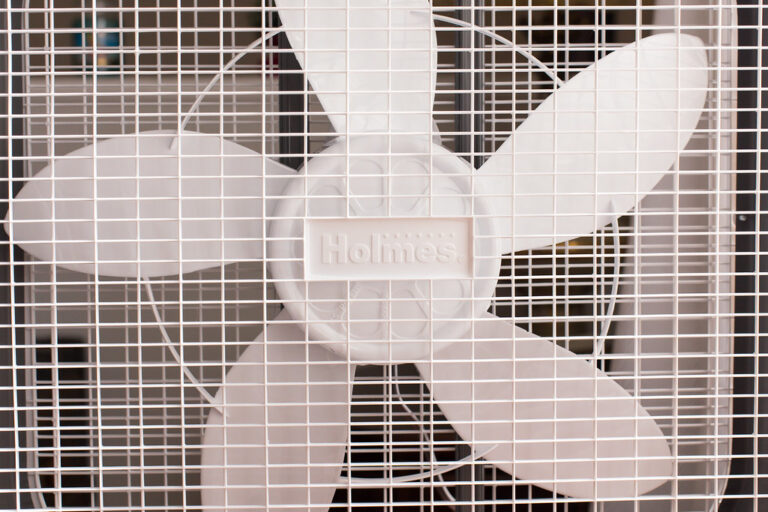
A box fan moves more air for the money but only in one direction, and changing direction means flipping the whole fan around. A twin fan adds reversing, independent heads, exchange mode, thermostats and remotes in a slimmer body made to seal a window opening. For occasional exhaust, the box fan is fine; for nightly air management, the twin is the better tool.
Can I use a window fan with sliding windows?
Sometimes. A twin fan is built for windows that open vertically, so a sideways-sliding window needs a fan sized to the opening and a way to close the gaps, such as a board or panel cut to fit. Measure carefully and check the minimum height in the listing before you order.
Do window fans help remove cooking smells?
They can. Running the fan in exhaust mode near the kitchen, with another window open elsewhere for makeup air, pulls odors and heat outside. It works best when you start while cooking and keep it on for a short while after. A range hood is more effective for grease and smoke.
Is it safe to run a window fan all night?
Generally yes, if the unit is in good condition, the cord is undamaged and the plug is not hot. Use a timer if the model offers one, keep the window secured, and unplug it if you leave home or if storms are expected. Stop using any fan that smells hot or sounds unusual.
How often should I clean a window fan?
Wipe the grille and blades a few times each season, or whenever you see dust building up, since dust slows airflow and adds noise. Unplug the fan first, and use a damp cloth or a soft brush. Do not spray liquid into the motor housing.
Bottom Line
Start with the Bionaire BW2300-N if you want the complete package — thermostat, remote and independently reversible blades. Choose the Lasko W09550 if single-window air exchange and very low running watts are the priority, the Holmes 9″ Twin Digital for the strongest rated airflow, and the Comfort Zone CZ310R if your window is wider than standard. On a tight budget, the Amazon Basics WDF9-1 keeps the essential independent-head trick; the Holmes HAWF2041-N is the pick for simple manual controls. Measure your window opening and check the current price and fit range on the listing before you order.