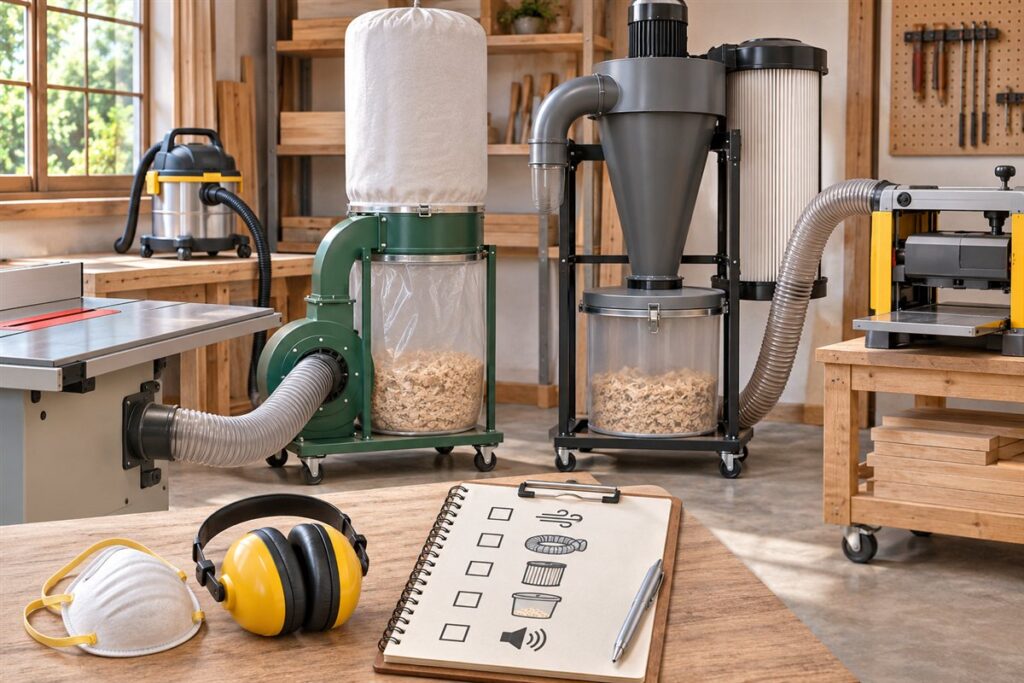
A dust collector pulls chips and fine dust away from your tools, and the right one is matched to your machines, your hose runs and the kind of dust you create. Airflow, filter quality and bin size are the details to compare.
What a Collector Does
Dust collectors move a large volume of air through a wide hose to catch chips and dust at the source. This differs from a shop vacuum, which moves less air at higher suction and suits small tools and cleanup. Many home shops use both: a collector for larger machines and a vacuum for portable tools and sweeping.
Key Features to Compare
- Airflow: usually listed as cubic feet per minute. Your machines’ manuals often state what they need.
- Hose and port size: smaller hoses and long runs reduce airflow.
- Filter quality: finer filters catch more of the fine dust that is hard to see.
- Collection bin: a larger bin means fewer trips to empty it.
- Noise: stationary collectors can be loud, so ear protection may be needed.
Single Stage or Two Stage
A single-stage unit pulls everything through the fan into a bag or bin and filter. A two-stage setup uses a separator, often a cyclone, to drop most debris before it reaches the filter. That helps keep the filter from clogging as quickly. Two-stage systems take up more room, so measure your space.
Decision Table
| Factor | Why it matters | What to check |
|---|---|---|
| Machines served | Larger machines need more airflow | Dust port sizes in each manual |
| Duct layout | Long, bent runs lose suction | Hose length and number of turns |
| Filter | Fine dust affects breathing | Filter details in the guide |
| Space | Collectors can be tall or wide | Footprint and height |
| Power supply | Larger units draw more current | Requirements in the manual |
Using One Responsibly
- Connect the hose to each machine’s dust port using proper fittings.
- Switch the collector on before the tool and let it run briefly after you finish.
- Empty the bin before it is full and wear a dust mask while doing so.
- Clean or replace the filter as the maker directs.
- Keep ignition sources away from fine dust, and keep the area tidy.
Some fine dust, such as certain wood dusts, can irritate the lungs, so keep wearing a suitable mask. Fixed wiring or a new outlet for a large unit should be done by a qualified electrician. Dispose of collected dust following local rules, especially if it came from treated materials.
FAQ
Can a shop vacuum replace a dust collector?
For small tools it can work well. For larger machines that make heavy chips, a collector moves more air and fills up less quickly.
Where should I place the unit?
Close to the machines, with short, straight hose runs, and in a spot where you can reach the bin and filter easily.
The Short Version
Check your machines’ needs, choose a unit with enough airflow and a good filter, and keep hose runs short. Keep wearing a mask and follow the manual.