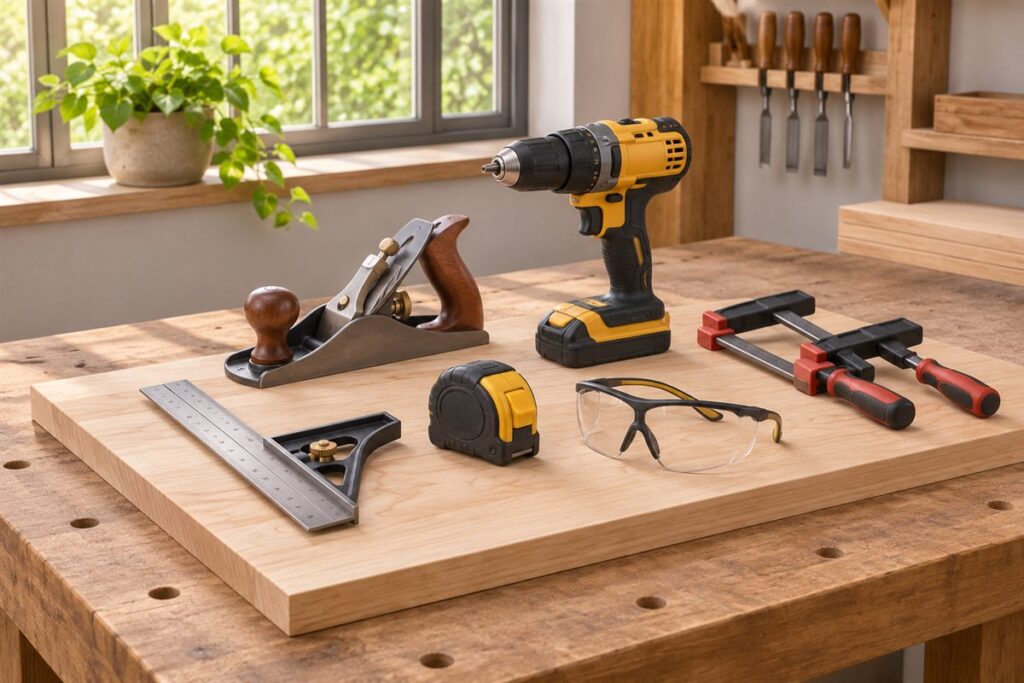
The right hammer is the one that matches the work in front of you: a claw hammer for general carpentry, a ball-peen for metal, a mallet for tapping parts together. Weight, handle material and head shape matter more than looks. This guide walks through the choices in plain terms so you can narrow them down quickly.
Know the Job First
Hammers are shaped for different tasks, so the first decision is what you will hit most often. A hammer that suits framing may feel clumsy when you tap a small finishing nail.
- Claw hammer: driving nails and pulling them out, the usual all-round choice.
- Ball-peen hammer: shaping and striking metal, often used with punches and chisels.
- Rubber or dead-blow mallet: tapping parts into place without marking the surface.
- Club or sledge hammer: heavy striking and demolition-style work.
Decision Criteria at a Glance
| Factor | Why it matters | What to check |
|---|---|---|
| Head weight | Heavier heads drive nails with less effort but tire the arm sooner | Hold it and swing slowly; it should feel controllable, not dragging |
| Handle material | Affects vibration, grip and how the tool wears | Wood, fiberglass and steel all differ in feel; check the maker’s description |
| Face | A smooth face marks less; a textured face grips the nail | Match the face to the material and the finish you need |
| Balance | Poor balance makes you miss the nail | Hold it near the end of the handle and see if the head tips forward too much |
| Grip | Slippery handles are hard to control | Look for a texture that suits your hand and gloves, if you wear them |
How to Check a Hammer Before Buying
- Lift the hammer with your normal grip and hold it out level for a few seconds to judge fatigue.
- Make a few slow practice swings in open space, away from people.
- Look at how the head joins the handle. Any gap or looseness is a reason to leave it.
- Check the face for chips, dents or mushrooming, especially on used tools.
- Read the maker’s guide for the intended use and follow its instructions.
Care and Habits
Keep the face clean and free of oil so it does not slip off the nail. Replace a cracked or loose-headed hammer instead of trying to patch it. Wear eye protection as your local rules and the maker’s manual recommend, because struck metal can chip. Follow those instructions every time; no habit can promise a particular outcome.
FAQ
What weight of claw hammer suits most home jobs?
Many people find a mid-range weight comfortable for general work, but comfort varies from person to person. Check the maker’s guide and try the hammer in your hand before you decide.
Is a fiberglass handle better than wood?
Neither is better in every case. Wood is familiar and easy to replace, while fiberglass and steel handles are often chosen for durability. Choose the one that feels steady in your grip.
The Short Version
Decide the job, then choose the head type, then weight and handle. Hold the hammer, check the joint and face, and avoid anything loose or damaged. Always follow the maker’s manual and local rules.