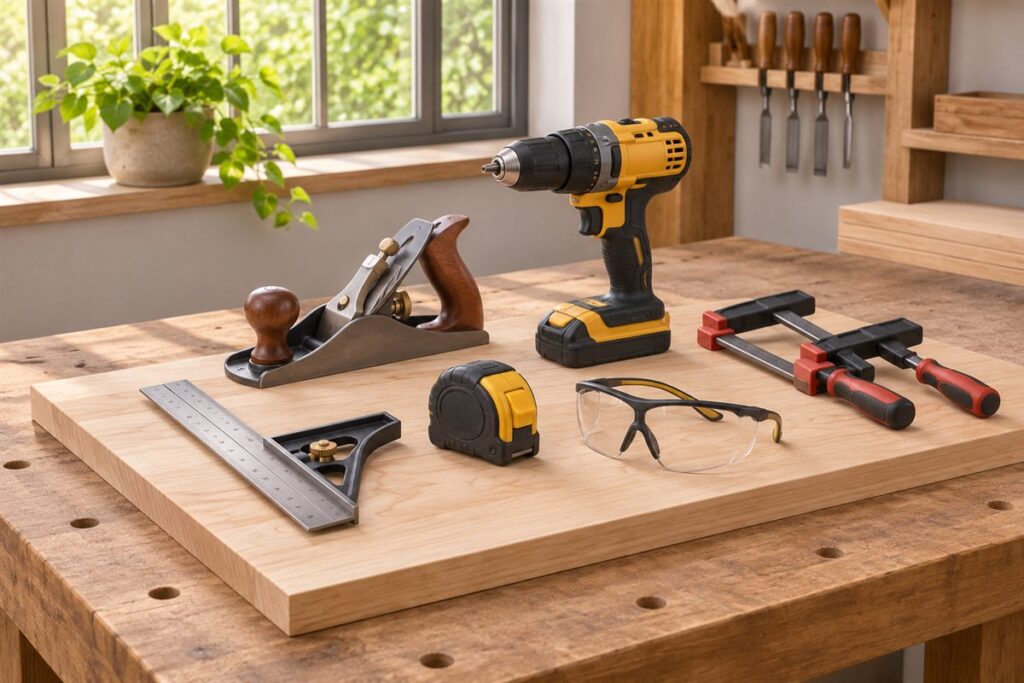
A tape measure seems simple, but small differences in blade width, markings and the hook make it easier or harder to use. To choose one, think about the length you need, how easy the markings are to read and how well the blade stays straight when extended. The table gives a quick checklist.
What to Look At
| Factor | Why it matters | What to check |
|---|---|---|
| Length | Longer tapes are bulkier | Match the length to your usual jobs |
| Blade width | Wider blades extend farther without bending | Standout distance stated by the maker |
| Markings | Easy reading prevents mistakes | High contrast, clear fractions or millimeters |
| End hook | Hooks onto edges for one-person measuring | Rivets move slightly to account for hook thickness |
| Lock | Holds the blade at a measurement | Smooth lock that does not slip |
| Case | Fits the hand and the belt | Size, belt clip, grip surface |
Understanding the Terms
- Standout: how far the blade extends before it folds. Useful for measuring ceilings or across gaps alone.
- Blade coating: a surface layer that resists wear. Check the maker’s description.
- Hook play: the end hook slides a tiny amount so inside and outside measurements both read correctly. This is normal.
- Metric or inch: some tapes show both on opposite edges.
Match the Tape to the Job
For general household work, a tape around 5 meters or 16 feet suits most people. Short pocket tapes fit sewing, small crafts and quick checks. Long tapes help with room layout and fencing, though a long open-reel tape is slower to roll up.
Steps Before You Buy
- Decide the longest measurement you make regularly.
- Choose metric, inch or dual markings.
- Extend the tape in the store, if possible, and see how far it stands.
- Check that the lock holds and the markings are easy to read.
- Hold the case and see if it fits your hand.
Let the blade retract slowly so it does not snap back against your fingers. The edges can be sharp, so handle them with care. Keep the blade away from live electrical equipment, and read the maker’s guidance.
Measuring Well
Hook the end over the edge when you can, and hold the blade flat against the surface. For inside measurements, read the number on the blade and add the case width printed on the tape, as the maker describes. Mark your measurement with a fine line instead of a thick one. Check the blade is straight and not twisted, because kinks cause errors, and always double-check important measurements before cutting.
FAQ
Why does my first measurement look off?
The hook may be bent or dirty. Check it against a known length, and measure from the 1 inch mark if needed to confirm.
How often should I replace a tape?
When markings fade, the blade kinks or the hook no longer sits properly, a new one is worth having.
The Short Version
Choose a tape measure with a readable blade, good standout and a reliable lock, in the length you actually use. Measure twice before you cut.