Disclosure: As an Amazon Associate, umtsmarttool.com earns from qualifying purchases. Links to Amazon on this page are affiliate links; they cost you nothing extra. Prices and availability change often, so check the current Amazon listing before you buy.
This portable inverter buying guide reduces the purchase to five decisions, made in the right order, with the shortlist those decisions produce.
Where to buy
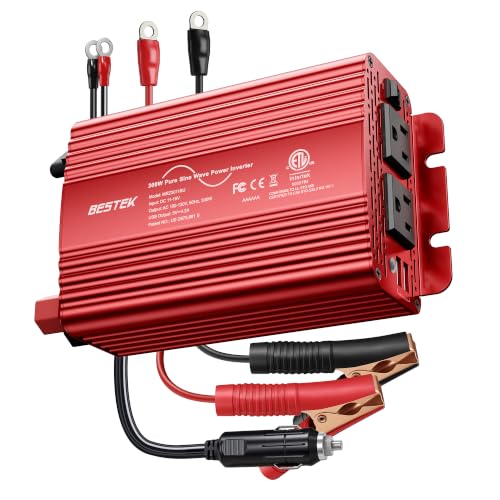
- BESTEK 300W Pure Sine Wave Power Inverter — Best Pure Sine Pick — Check on Amazon
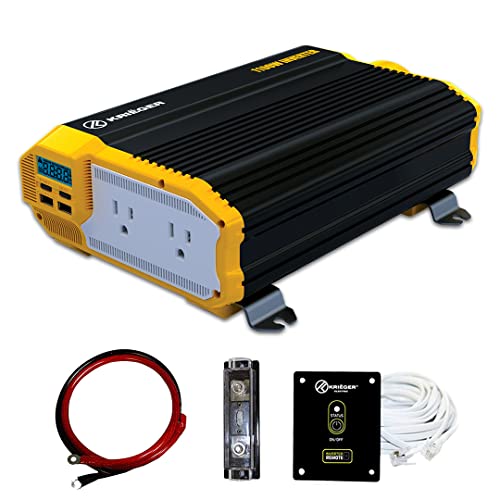
- Krieger 1100W Power Inverter (KR1100) — Best High-Power Pick — Check on Amazon
- FOVAL 150W Car Power Inverter — Best Compact Pick — Check on Amazon
- BESTEK 500W Power Inverter — Best Flexible Pick — Check on Amazon
Read the full guide ↓
A portable inverter buying guide has one job: to stop you buying the wrong box confidently. The wrong box is rarely broken — it is simply mismatched, too small for its loads, too large for its battery, or the wrong waveform for its fussiest device. This portable inverter buying guide works through the five decisions that determine the match, in the order they should be made, and then shows the shortlist those decisions produce. The budget-led shortlists sit in Best Portable Inverter Under $75 Best Portable Inverter Under $75 and Best Portable Inverter Under $150 Best Portable Inverter Under $150; the worksheet version of the same logic sits in How To Choose A Portable Inverter How To Choose A Portable Inverter.
Portable Inverter Buying Guide: Decision One — Total Your Real Simultaneous Load
List what will genuinely run at the same time, take running watts from device labels, and total them without optimism. Simultaneity is where estimates collapse: the laptop is easy, but the laptop plus monitor plus router plus light is the real number, and it is the real number the inverter must carry continuously.
Honest runtime arithmetic keeps a trip or an outage calm. Take the watts your combined load genuinely draws, allow a margin for conversion losses, and divide the battery’s realistically usable energy by the result. The result is nearly always shorter than optimism suggested, which is why experienced users stage their loads by importance: essentials first, luxuries only while charge is plentiful, and a firm stop while a reserve still sits in the battery. Portable power rewards planners and embarrasses improvisers, gently but reliably.
The economics of this category contain one reliable rule. The least expensive inverter that satisfies your continuous load, your waveform requirement, and your connection method is usually the correct purchase, because the savings fund the battery capacity that actually governs how long anything runs. Conversely, the expensive mistake is the undersized unit bought twice. One careful sizing exercise, done once, is worth more than any single feature on any box in this guide.
Decision Two: Respect Startup Surges
Motors and compressors ask for a brief multiple of their running draw at startup. The peak rating exists for exactly that blink. If a load has a motor, its surge — not its label — decides the class of inverter, and no amount of continuous headroom elsewhere compensates.
The economics of this category contain one reliable rule. The least expensive inverter that satisfies your continuous load, your waveform requirement, and your connection method is usually the correct purchase, because the savings fund the battery capacity that actually governs how long anything runs. The genuinely expensive mistake is the undersized unit purchased twice in a row. One careful sizing exercise, done once with a written list, is worth more than any single feature printed on any box in this guide.
Decision Three: Choose the Waveform Your Fussiest Device Needs
Modified sine serves chargers and simple loads well. Pure sine is the safe specification for sensitive power supplies, some motors, and anything that buzzes or runs hot on a stepped wave. Decide by device, not by fashion, and test where you can.
There is a quiet economics to this category worth stating plainly. The cheapest inverter that meets your continuous load, your waveform needs, and your connection method is usually the right purchase, because money saved here buys the battery capacity that actually determines how long anything runs. The expensive mistake is the undersized unit bought twice. A single careful sizing exercise, done once with a written load list, outweighs any individual feature printed on any box in this guide.
Decision Four: Match the Connection to the Ambition
Socket power is for charging-class loads. Clamp or hardwired battery connections are for everything ambitious. The connection is not an accessory choice; it is the ceiling on the whole system, and it should be chosen before the inverter, not after the first blown fuse.
Safety around portable inverters is housekeeping performed in advance. Keep the unit dry, because 12V gear lives in damp boots, footwells, and campsites. Keep cables where doors cannot pinch them and feet cannot catch them. Never substitute a heavier fuse to silence nuisance trips, because the fuse is reporting a real mismatch. And treat the AC output with exactly the respect owed to a wall socket, because after conversion it is one: children, water, and damaged cords demand the same caution as at home.
Decision Five: Budget by Tier, Honestly
The entry tier buys compact socket units. The middle tier buys flexibility — dual connection paths, more outlets, calmer thermals. The upper portable tier buys pure sine output and clamp-fed headroom. Money beyond the match buys little; money short of it buys the same inverter twice. Whether the category itself earns a place in your kit is argued in Is A Portable Inverter Worth It Is A Portable Inverter Worth It.
In this guide
Quick Picks
| Pick | Badge | Key spec |
|---|---|---|
| BESTEK 300W Pure Sine Wave Power Inverter | Best Pure Sine Pick | 300W continuous, 700W peak; Pure sine wave |
| Krieger 1100W Power Inverter (KR1100) | Best High-Power Pick | 1100W continuous, 2200W peak; Modified sine wave |
| FOVAL 150W Car Power Inverter | Best Compact Pick | 150W continuous, 300W peak; Modified sine wave |
| BESTEK 500W Power Inverter | Best Flexible Pick | 500W continuous, 1000W peak; Modified sine wave |
Comparison Table
| Model | Continuous / peak | Waveform | AC outlets | USB | Connection |
|---|---|---|---|---|---|
| BESTEK 300W Pure Sine Wave Power Inverter | 300W continuous, 700W peak | Pure sine wave | 2 AC outlets | Dual USB, 4.8A total | 12V socket plug, optional battery clips |
| Krieger 1100W Power Inverter (KR1100) | 1100W continuous, 2200W peak | Modified sine wave | 2 AC outlets | USB charging port | Battery clamps and cables included |
| FOVAL 150W Car Power Inverter | 150W continuous, 300W peak | Modified sine wave | 1 AC outlet | Dual USB, 3.1A total | 12V socket plug |
| BESTEK 500W Power Inverter | 500W continuous, 1000W peak | Modified sine wave | 2 AC outlets | Dual USB, 4.2A total | 12V socket plug or battery clips |

BESTEK 300W Pure Sine Wave Power Inverter — Best Pure Sine Pick
Some inverters impress in the first five minutes and irritate for years; this one does the opposite. Inside that envelope — 300w continuous, 700w peak, pure sine wave output — it is a calm, predictable piece of kit.
At a glance:
- Waveform: Pure sine wave
- Connection: 12V socket plug, optional battery clips
- USB provision: Dual USB, 4.8A total
- AC provision: 2 AC outlets
- Continuous / peak output: 300W continuous, 700W peak
Household power is a smooth wave, and this unit reproduces it faithfully. It mirrors household current closely enough that finicky electronics operate without the extra heat and noise a stepped wave can introduce.
There is no installation story to tell, and that is the feature. The unit lives wherever it is left — a door pocket, a glovebox, a kit bag — and deploys in the time it takes to push a plug home. Portability this complete is why the type exists.
Long sessions reveal the engineering priorities here. Heat is managed progressively rather than in a panic, indicators stay truthful as the battery fades, and the unit’s behaviour at the edge of its envelope is a graceful protection trip instead of anything exciting. It behaves like a product that was tested by people who actually use inverters, rather than one specified from a spreadsheet.
Picture the ordinary moments this pick is actually bought for: a laptop refill at a rest stop, or phones and a tablet recovering after a long day. In both, the pattern of demand is identical — modest watts, long stretches, and zero patience for drama. That is the environment the BESTEK 300W Pure Sine Wave Power Inverter was specified for, and its pure sine wave output, 2 ac outlets, and dual usb, 4.8a total provision map onto it without waste.
Strengths
- 2 AC outlets with dual usb, 4.8a total covering mixed kits without adapters
- Pure sine wave output matched to the loads this class serves
- Connection path (12v socket plug, optional battery clips) suited to how the unit will really be fed
Trade-offs
- Battery runtime, not the inverter, ends long sessions
- Fan noise joins in under sustained load
- No inverter in this class forgives heating-element loads
No review of this model is honest without the runtime warning: the inverter can only spend what the battery holds, and at high continuous loads it spends it quickly. Sustained loads near the rated ceiling heat the unit and shorten battery runtime dramatically, so treat the printed maximum as a short-burst figure and cruise well below it.
Best for: general kits built around the continuous rating, honestly applied / Not suited for: sustained loads chosen from the peak figure

Krieger 1100W Power Inverter (KR1100) — Best High-Power Pick
If your shortlist has narrowed to units that can live in a glovebox, a tote, or a battery box, study this entry closely. It pairs 1100w continuous, 2200w peak with 2 ac outlets, a combination that suits general work better than the marketing suggests.
At a glance:
- Continuous / peak output: 1100W continuous, 2200W peak
- Waveform: Modified sine wave
- AC provision: 2 AC outlets
- USB provision: USB charging port
- Connection: Battery clamps and cables included
A stepped waveform is this class’s standard compromise, and it is worth being precise about what it costs: nothing at all for chargers and lighting, a little extra warmth and noise for some motors, and a polite refusal from a minority of sensitive supplies. Most kits never meet the third case.
Plan to run it from the battery, not the dashboard. Clamp-connected, the unit can actually sustain the output printed on the housing; socket-connected, the vehicle wiring becomes the ceiling long before the inverter does. That distinction decides whether this pick feels generous or disappointing.
Long sessions reveal the engineering priorities here. Heat is managed progressively rather than in a panic, indicators stay truthful as the battery fades, and the unit’s behaviour at the edge of its envelope is a graceful protection trip instead of anything exciting. Those traits rarely appear in a bullet list, yet they are precisely what you feel across a season of use.
Picture the ordinary moments this pick is actually bought for: an evening of lighting during a short outage, or a laptop refill at a rest stop. In both, the pattern of demand is identical — modest watts, long stretches, and zero patience for drama. That is the environment the Krieger 1100W Power Inverter (KR1100) was specified for, and its modified sine wave output, 2 ac outlets, and usb charging port provision map onto it without waste.
Strengths
- Housing and layout that tolerate travel, storage, and daily handling
- Protection set covering overload, overheating, and low battery voltage
- Modified sine wave output matched to the loads this class serves
Trade-offs
- Battery runtime, not the inverter, ends long sessions
- No inverter in this class forgives heating-element loads
- Socket-fed running caps output well below the case rating
The honest limitation is headroom. The unit is a sprinter by design; marathon expectations belong to a bigger battery bank.
Best for: readers who want this class’s output without drama in general service / Not suited for: heating elements, big motors, and all-day heavy loads
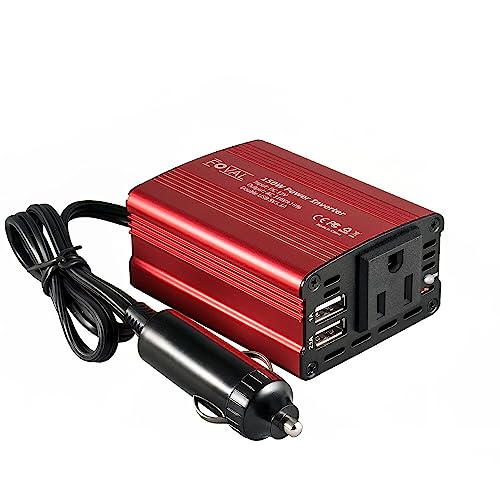
FOVAL 150W Car Power Inverter — Best Compact Pick
The headline number only tells half the story here. It covers the everyday middle of the market — 150w continuous, 300w peak — with fewer compromises than most rivals manage.
At a glance:
Specification snapshot — output: 150W continuous, 300W peak; waveform: Modified sine wave; AC provision: 1 AC outlet; USB provision: Dual USB, 3.1A total; connection: 12V socket plug.
A stepped waveform is this class’s standard compromise, and it is worth being precise about what it costs: nothing at all for chargers and lighting, a little extra warmth and noise for some motors, and a polite refusal from a minority of sensitive supplies. Plan sensitive electronics accordingly.
Connection is deliberately simple: a single plug into a 12V socket, which caps sensible continuous draw well below what a dashboard circuit can fuse at. Treat the socket limit as the real ceiling for long sessions and this unit will never surprise you with a blown fuse mid-task.
What separates this pick from the no-name crowd is consistency. Output stays composed as loads stack up, the cooling fan tracks temperature instead of running flat-out from the first watt, and the protection circuits intervene before drama rather than after it. None of it photographs well, and all of it decides whether the unit is reached for or left behind.
Picture the ordinary moments this pick is actually bought for: a laptop refill at a rest stop, or a small fan keeping a workspace bearable. In both, the pattern of demand is identical — modest watts, long stretches, and zero patience for drama. That is the environment the FOVAL 150W Car Power Inverter was specified for, and its modified sine wave output, 1 ac outlet, and dual usb, 3.1a total provision map onto it without waste.
Strengths
- Connection path (12v socket plug) suited to how the unit will really be fed
- Modified sine wave output matched to the loads this class serves
- 1 AC outlet with dual usb, 3.1a total covering mixed kits without adapters
Trade-offs
- Battery runtime, not the inverter, ends long sessions
- Socket-fed running caps output well below the case rating
- No inverter in this class forgives heating-element loads
The limitation to respect is thermal. This is not a workshop inverter and it will not forgive loads chosen from the peak number rather than the continuous one; size your expectations to the continuous rating with margin to spare.
Best for: general users who size loads to the continuous rating / Not suited for: anyone expecting generator-class output from a battery alone
BESTEK 500W Power Inverter — Best Flexible Pick
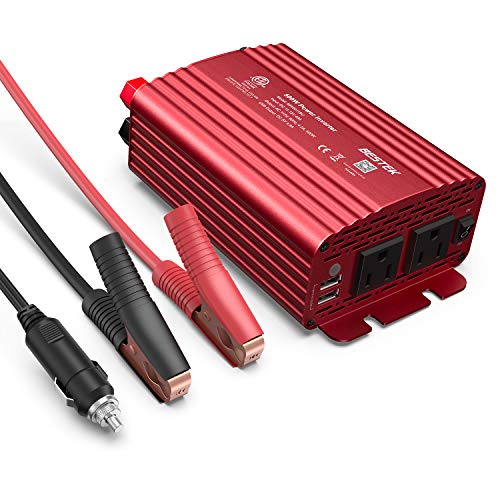
Some inverters impress in the first five minutes and irritate for years; this one does the opposite. It pairs 500w continuous, 1000w peak with 2 ac outlets, a combination that suits general work better than the marketing suggests.
At a glance:
- Waveform: Modified sine wave
- Connection: 12V socket plug or battery clips
- USB provision: Dual USB, 4.2A total
- AC provision: 2 AC outlets
- Continuous / peak output: 500W continuous, 1000W peak
A stepped waveform is this class’s standard compromise, and it is worth being precise about what it costs: nothing at all for chargers and lighting, a little extra warmth and noise for some motors, and a polite refusal from a minority of sensitive supplies. None of that stops this unit doing the everyday jobs it was bought for.
Connection is deliberately simple: a single plug into a 12V socket, which caps sensible continuous draw well below what a dashboard circuit can fuse at. Treat the socket limit as the real ceiling for long sessions and this unit will never surprise you with a blown fuse mid-task.
What separates this pick from the no-name crowd is consistency. Output stays composed as loads stack up, the cooling fan tracks temperature instead of running flat-out from the first watt, and the protection circuits intervene before drama rather than after it. Boredom, in portable power, is a design achievement.
Picture the ordinary moments this pick is actually bought for: phones and a tablet recovering after a long day, or a camera battery rotation on a work trip. In both, the pattern of demand is identical — modest watts, long stretches, and zero patience for drama. That is the environment the BESTEK 500W Power Inverter was specified for, and its modified sine wave output, 2 ac outlets, and dual usb, 4.2a total provision map onto it without waste.
Strengths
- Connection path (12v socket plug or battery clips) suited to how the unit will really be fed
- Protection set covering overload, overheating, and low battery voltage
- Housing and layout that tolerate travel, storage, and daily handling
Trade-offs
- The peak figure flatters; the continuous figure governs
- Fan noise joins in under sustained load
- No inverter in this class forgives heating-element loads
No review of this model is honest without the runtime warning: the inverter can only spend what the battery holds, and at high continuous loads it spends it quickly. Sustained loads near the rated ceiling heat the unit and shorten battery runtime dramatically, so treat the printed maximum as a short-burst figure and cruise well below it.
Best for: readers who want this class’s output without drama in general service / Not suited for: heating elements, big motors, and all-day heavy loads
Common Buying Mistakes
Buying waveform by habit. Some kits genuinely need pure sine; many do not. Test your actual devices before paying for a waveform your loads cannot hear.
Ignoring the battery. An inverter converts stored energy; it does not create it. Sessions planned without runtime maths end early and age batteries fast.
Sizing from the peak number. The peak figure covers a blink of startup surge; everything you run for more than a few seconds lives under the continuous rating, and confusing the two is the fastest route to shutdowns.
Feeding a big inverter through a dashboard socket. The socket circuit becomes the ceiling long before the inverter does, and the fuse will explain this to you at the worst possible moment.
Burying the unit. Blocked vents and soft furnishings turn a correctly sized inverter into a thermal shutdown with a power cord.
Final Recommendation
Start from the load list, not the listings. Readers who do will land on one of the four models above almost every time — most often the BESTEK 300W Pure Sine Wave Power Inverter for sensitive mixed loads, or the Krieger 1100W Power Inverter (KR1100) when the battery and the loads are both serious.
A Load Audit, Worked in the Open
Worked through properly, load auditing is the least glamorous and most valuable ten minutes in portable power. Take a representative session and price it in watts. It opens with a small fan that never quite stops. Before long a small cooler opened rarely and closed quickly joins it, and the two together — not either alone — set the first real number. Later, a headtorch topping up for tomorrow enters the rotation, and by the time a tablet running a film for the back seat is running as well, the session has become the thing sizing must answer: four modest demands, coinciding. Individually, every one of those loads is a rounding error. Coinciding, they are a specification. That gap between the individual and the simultaneous is where most disappointing purchases are made, and it closes the moment a buyer totals honestly instead of glancing at labels one at a time.
From the battery’s side of the clamps, the session is a single number: the combined draw, plus conversion losses, multiplied by hours. Usable capacity divided by that number is the runtime, and no feature on any inverter changes the division. Owners who internalise this stop asking how long an inverter runs and start asking how long their battery runs their loads — the same question, finally pointed the right way.
The Rhythm of a Session That Goes Well
Watch a well-run session and a pattern emerges. The essentials connect first, while the battery is full and every option is open: in our worked session, that means a desk lamp over a spread of paperwork and the load the session exists for. Secondary comforts — a radio murmuring in the background among them — join once the essentials are stable and the inverter’s behaviour is known. Luxuries arrive last and leave first: a laptop drawing modest watts through its brick is welcome while charge is plentiful and is the first thing sacrificed when the battery’s gauge, real or estimated, starts to argue. Staged this way, a session degrades gracefully instead of collapsing. Nothing about the staging requires equipment; it requires only that the order of connection be a decision rather than an accident.
Heat narrates the session for anyone who listens. A case that warms gently and settles is a system in balance; a case that climbs steadily is a system spending beyond its means, whatever the ratings claim. The fan’s voice tells the same story in parallel. Experienced users check both the way drivers check mirrors — briefly, often, and without drama — and act on the trend rather than waiting for the protection circuits to deliver the verdict less gently.
The Method, Compressed
The method, compressed, is short enough to memorise. Total simultaneous running watts before looking at a single product. Hold headroom above the total. Audit startup surges separately, because motors live by different rules. Let the fussiest device choose the waveform. Let the load choose the connection — socket for charging scale, battery connection for anything ambitious. Run the runtime division before the session, not during it. Stage loads by importance, watch heat and fan as instruments, and recharge promptly when the session ends. None of those steps requires expertise, and together they are the entire difference between portable power that feels like a utility and portable power that feels like a gamble. The products in this guide were chosen to reward exactly that method.
A Worked Example: The Session Behind the Specifications
Consider how this plays out in practice, in the boot of a work van on a Tuesday. What gets plugged in is unremarkable, and that is the point: a radio carrying the news first, a laptop and its charger once the first device settles, and a desk lamp over paperwork when someone remembers it. The combined draw would fit on the back of an envelope, yet it runs long enough to expose every weakness a setup has — heat, noise, a battery fading faster than promised, a protection circuit with no patience.
Two lessons fall out of scenes like this. The first is that simultaneity, not size, is the usual trap: devices that are each trivial become a real load only when they coincide, which is why the sizing method in this guide insists on totalling simultaneous draw before anything else. The second is that the battery’s state at the start decides the ending, and no inverter, however well chosen, can spend charge that was never stored.
Going Deeper
Protection circuits deserve gratitude rather than resentment. Overload, over-temperature, short-circuit, and low-voltage cutoffs are the inverter standing between a simple mistake and a damaged battery or device. The low-voltage cutoff in particular is a battery’s friend, halting a session early to prevent the deep discharge that shortens working life. Whenever a protection intervenes, identify which of load, battery, or airflow caused it, and correct that cause instead of seeking an inverter with laxer manners.
The wiring run between battery and inverter quietly taxes careless setups. Every clamp, terminal, and metre of cable adds resistance, and under load that resistance wastes energy as heat while the voltage arriving at the inverter sags. Short runs, bright clean contact metal, and firmly seated clamps are not fussiness; they mark the distance between the output printed on the housing and the output actually delivered at the outlet. When behaviour disappoints, audit the path before blaming the box.
Going Deeper
Read protective shutdowns as information rather than failure. Overload, over-temperature, short-circuit, and low-voltage cutoffs exist to stand between a mistake and a damaged battery or appliance. The low-voltage cutoff is especially friendly, ending a session early to spare the battery the deep discharge that shortens its life. When a protection trips, read it as information about the load, the battery, or the ventilation, then fix that cause instead of hunting for an inverter with weaker manners.
Conversion losses leave an inverter as heat, which makes cooling a performance specification in disguise. A generously rated unit sealed in an airless locker will throttle or trip, while a smaller unit breathing freely holds its full rating through a long evening. Placement is therefore a performance decision: flat, ventilated, away from soft furnishings and direct sun, with the fan path unobstructed. Treat cooling as part of the purchase and the specifications start meaning what they say.
Going Deeper
Real-world runtime follows a simple chain that rewards those who work it in advance. Device watts, grossed up for conversion losses, drawn against the battery’s usable amp-hours: that is the whole calculation. A healthy vehicle battery offers only part of its capacity before voltage sags, which is why modest loads run for hours while hungry loads end sessions early. Work the figures at the kitchen table before a trip or an outage, never during one.
Standby draw is the specification nobody reads and everybody feels. An inverter idling with nothing plugged in still sips current to keep itself ready, and across a long parked weekend that sip becomes a meaningful share of a small battery. The countermeasure is free and takes seconds: switch the unit off at its own control when the session ends, and disconnect it entirely for long storage. Energy never wasted is runtime that never needs buying.
Going Deeper
The specification nobody reads is the one everybody feels: standby draw. An inverter resting with nothing plugged in still consumes a small current to hold itself ready, and across a vehicle parked for weeks that trickle becomes a real share of a small battery. The countermeasure costs nothing: switch the unit off at its own control when the session ends, and disconnect it entirely before long storage. Energy that is never wasted is runtime that never needs to be bought.
Begin with paper, not product pages. Write out everything you honestly expect to power at the same time, lift the running watts from each rating plate, and add them without flattering the total. Next, scan that same list for anything containing a motor, a compressor, or a heating coil, because those loads behave very differently in their first second of operation than their labels suggest. Equipment chosen from a list built this way simply works when switched on, and that absence of drama is the real product being bought.
Going Deeper
Start every sizing exercise on paper. Jot down each appliance or gadget you truly expect to run simultaneously, copy the running watts from its rating plate, and add the figures without rounding in your favour. Next, scan that same list for anything containing a motor, a compressor, or a heating coil, because those loads behave very differently in their first second of operation than their labels suggest. Equipment chosen from a list built this way simply works when switched on, and that absence of drama is the real product being bought.
Every connection between battery and inverter quietly charges rent. Each clamp, terminal, and metre of cable adds resistance, and under load that resistance burns energy as heat while the voltage arriving at the inverter sags. Short runs, clean terminals, and clamps seated firmly are the difference between the rating on the case and the power at the outlet. When an inverter disappoints, the wiring run should be the first suspect interviewed.
Going Deeper
One economic rule holds across this whole category. The cheapest inverter that meets your continuous load, your waveform needs, and your connection method is usually the right purchase, because the savings buy the battery capacity that actually decides how long anything runs. The genuinely expensive mistake is the undersized unit purchased twice in a row. One careful sizing exercise, done once with a written list, is worth more than any single feature printed on any box in this guide.
A few minutes of waveform literacy repays itself quickly. Modified sine output is a stepped approximation that most chargers and simple loads accept without complaint, while pure sine output reproduces household current closely enough for the fussiest power supplies. The empirical approach beats the theoretical one: run your actual kit on the waveform under consideration and listen. Buzzing transformers, bricks running oddly warm, and timers that drift are the signals that a cleaner wave is worth its premium in your case.
Going Deeper
Protective shutdowns are a conversation, not a malfunction. Overload, over-temperature, short-circuit, and low-voltage cutoffs are the inverter standing between an honest mistake and a damaged battery or appliance. The low-voltage cutoff is especially friendly, ending a session early to spare the battery the deep discharge that shortens its life. When a protection trips, read it as information about the load, the battery, or the ventilation, then fix that cause instead of hunting for an inverter with weaker manners.
Idle consumption is the specification everyone skips and everyone eventually notices. An inverter waiting with nothing attached still draws a small current to keep itself ready, and across a long weekend parked up, that trickle becomes a real share of a modest battery. The countermeasure costs nothing: switch the unit off at its own control when the session ends, and disconnect it entirely before long storage. Energy that is never wasted is runtime that never needs to be bought.
Going Deeper
A written load list turns inverter shopping from guesswork into arithmetic. Note every device that will genuinely run at once, take its running watts from the rating plate, and total the figures plainly. Then scan the same list once more for anything with a motor, a compressor, or a heating element, since those loads ask for a brief multiple of their label figure at startup. Kit chosen against a list built that way feels uneventful in service, and uneventful is the highest compliment portable power can earn.
There is a quiet economics to this category worth stating plainly. The cheapest inverter that meets your continuous load, your waveform needs, and your connection method is usually the right purchase, because money saved here buys the battery capacity that actually determines how long anything runs. The genuinely expensive mistake is the undersized unit purchased twice in a row. One careful sizing exercise, done once with a written list, is worth more than any single feature printed on any box in this guide.
Going Deeper
One economic rule holds across this whole category. The cheapest inverter that meets your continuous load, your waveform needs, and your connection method is usually the right purchase, because the savings buy the battery capacity that actually decides how long anything runs. The genuinely costly error is the undersized unit bought twice in succession. A single careful sizing exercise, performed once with a written load list, is worth more than any individual feature printed on any carton in this guide.
The battery underneath an inverter shapes the experience more than the inverter does. Starter batteries are engineered for one violent burst followed by immediate recharging, and they resent slow, deep discharges. Leisure and deep-cycle batteries hold the opposite temperament, releasing charge gradually over hours without complaint. Both can feed an inverter, but the session must match the chemistry: modest and brief from a starter battery, longer and calmer from a battery designed for cycling. Whichever you choose, a battery that starts tired ends everything early.
Going Deeper
Start every sizing exercise on paper. Jot down each appliance or gadget you truly expect to run simultaneously, copy the running watts from its rating plate, and add the figures without rounding in your favour. Those are the loads whose startup behaviour, not their label figure, decides whether an inverter holds or trips. A kit planned this way feels uneventful in use, and uneventful is the highest compliment portable power can earn.
Safety around portable inverters is housekeeping performed in advance. Keep the unit dry, because 12V gear lives in damp boots, footwells, and campsites. Keep cables where doors cannot pinch them and feet cannot catch them. Never fit a heavier fuse to silence nuisance trips, since the fuse is reporting a real mismatch. And respect the AC side exactly as you would a wall outlet, because once converted, that is precisely what it is.
Going Deeper
A written load list turns inverter shopping from guesswork into arithmetic. Note every device that will genuinely run at once, take its running watts from the rating plate, and total the figures plainly. Next, scan that same list for anything containing a motor, a compressor, or a heating coil, because those loads behave very differently in their first second of operation than their labels suggest. Equipment chosen from a list built this way simply works when switched on, and that absence of drama is the real product being bought.
A few minutes spent understanding waveform pays for itself quickly. Modified sine output is a staircase approximation that the majority of chargers and simple appliances tolerate without any fuss at all. Pure sine output tracks household electricity closely enough to satisfy the most fastidious power supplies. The empirical approach beats the theoretical one: run your actual kit on the waveform under consideration and listen. Buzzing transformers, bricks running oddly warm, and timers that drift are the signals that a cleaner wave is worth its premium in your case.
Going Deeper
Runtime arithmetic, done honestly, keeps both trips and outages calm. Take the watts the load truly draws, add a margin for conversion losses, and divide the battery’s genuinely usable energy by that figure. The answer is almost always shorter than optimism suggests, which is why experienced users stage their loads: essentials first, luxuries only while charge is plentiful, and a hard stop while the battery still holds a reserve. An inverter rewards planners and embarrasses improvisers, gently but reliably.
The economics of this category reduce to one plain rule. The cheapest inverter that meets your continuous load, your waveform needs, and your connection method is usually the right buy, because the savings fund the battery capacity that actually decides how long anything runs. The genuinely expensive mistake is the undersized unit purchased twice in a row. One careful sizing exercise, done once with a written list, is worth more than any single feature printed on any box in this guide.
Frequently Asked Questions
Is it safe to use an inverter while driving?
Yes, with ordinary care. Secure the unit so it cannot slide into pedals or block vents, route cables where they will not be pinched or tripped over, and let the driver drive — passengers handle plugging and switching. Keep the inverter ventilated, because a unit buried under luggage in summer heat will protect itself by shutting down.
Why does my inverter keep shutting off?
Shutdowns are the protection system reporting, not failing. Check the usual causes in order: a startup overload from one ambitious device, battery voltage sagging under load, or heat building where air cannot reach. Reduce the load, verify the battery and its connections, then restore airflow. A device that trips the unit instantly on every attempt is advertising a startup surge beyond the peak rating.
Can I run an inverter from a cigarette lighter socket at full power?
You cannot, and grasping this early prevents most disappointments in the category. Dashboard socket circuits are fused for modest current, so the power honestly available through a socket is a small fraction of what a larger inverter delivers from a direct battery connection. Match the connection method to the load: socket for charging-class loads, clamps or hardwiring for anything ambitious.
Can I use a portable inverter indoors during an outage?
Yes — producing no exhaust is precisely the inverter’s advantage over a fuel generator indoors. The constraints are battery capacity and ordinary ventilation for the unit itself. Position the battery somewhere airy, keep cables out of walkways, and frame expectations honestly: hours of cover for essential loads, not a substitute for the whole house.
What is the difference between continuous and peak watts?
Continuous watts describe what the unit can sustain indefinitely inside its thermal limits. Peak watts describe the momentary surge available for a motor or compressor spinning up from rest. Plan the purchase around the continuous number, then verify separately that each motorised device’s startup surge fits beneath the peak ceiling with room to spare.
Can a portable inverter power a fridge or a CPAP-class device?
A fridge is a surge problem before it is a wattage problem: its compressor can demand several times the running figure at startup, so only a generously peaked inverter on a direct battery connection should try, and even then runtime on one battery stays short. Devices with sensitive power supplies generally prefer pure sine output, which is the safer specification for anything that must run all night.