Disclosure: As an Amazon Associate, umtsmarttool.com earns from qualifying purchases. Links to Amazon on this page are affiliate links; they cost you nothing extra. Prices and availability change often, so check the current Amazon listing before you buy.
Where to buy
Short on time? These are the best skinning knives picks from this guide, each linked to its Amazon listing where one is verified:
- Havalon Piranta-Edge — Check on Amazon
- Outdoor Edge SwingBlade — Check on Amazon
- Buck 113 Ranger Skinner — Check on Amazon
- Benchmade Steep Country — Check on Amazon
- Outdoor Edge RazorLite — Check on Amazon
- Knives of Alaska Cub Bear — Check on Amazon
Read the full guide ↓
Choosing the best skinning knives is different from choosing any other hunting knife, because skinning is the one job where the blade’s shape matters more than its steel, its size, or its brand. A skinning knife exists to separate hide from carcass in long, controlled strokes without puncturing the hide, nicking the meat, or slicing into the gut cavity — and that work is done with the belly of the blade, ideally with a swept, upswept edge and a tip that stays out of trouble. The six knives in this guide cover every serious approach to that job: two replaceable-blade systems that never need sharpening in the field, a dual-blade design that combines skinning and gutting in one handle, and three fixed blades that represent the traditional, the premium, and the specialist caping ends of the craft.
Skinning also punishes dull edges faster than almost any other task. A blade that felt sharp at the truck will be skating across a deer’s hide twenty minutes into the work, which is why this guide gives real weight to your sharpening plan: replaceable blades you swap in seconds, steels that touch up quickly on a steel or stone, and edges you can maintain with the systems in our best sharpening guides for knives roundup. If you are assembling a complete field kit, pair this guide with our best hunting knives coverage for the general-purpose blade that handles camp and quartering work around the skinner.
One safety note belongs at the top rather than the bottom. Skinning is close work done with cold, wet, sometimes bloody hands, often by headlamp, often tired at the end of a long day. Every pick here was chosen partly for grip security under exactly those conditions — textured handles, finger protection, and blade shapes that forgive a tired stroke. Work slowly, cut away from yourself, keep the non-knife hand behind the edge, and never rush the last animal of the trip. The knives below will do their part; the technique sections later in this guide cover yours.
In this guide
Quick Picks
| Pick | Badge | Key spec |
|---|---|---|
| Havalon Piranta-Edge | Best Overall | Replaceable #60A scalpel blades, folding, nylon holster included |
| Outdoor Edge SwingBlade | Best for Field Dressing | 3.6 in drop-point skinner plus 3.2 in gutting blade, rotating design |
| Buck 113 Ranger Skinner | Best Traditional Skinner | 3.125 in 420HC blade, ebony handle, brass bolster, leather sheath |
| Benchmade Steep Country | Best Premium Fixed Blade | Drop-point hunter in premium steel, Santoprene handle |
| Outdoor Edge RazorLite | Best Replaceable-Blade Folder | 3.5 in replaceable blades, push-button change, folding format |
| Knives of Alaska Cub Bear | Best for Caping | Compact caping knife, D2 tool steel on the classic model |
How These Picks Were Chosen
Picks were screened on the criteria that decide skinning performance. Blade geometry came first: a pronounced belly, a sweeping edge, and a tip profile that glides under hide without digging in. A deep-bellied drop point can qualify; a tanto or a straight clip point cannot, whatever its other virtues. Second came edge management: how the knife stays sharp across a whole animal — replaceable blades, easily steeled edges, or premium steel that simply holds on longer. Third came grip security when wet, because a skinning knife is used with the slipperiest hands in all of hunting. Fourth came cleanability: designs that trap fat and tissue in pivots and seams were marked down, and fixed blades with simple, washable construction were marked up.
The shortlist was built from manufacturer specifications and established hunting-retail listings, cross-checked across sources before any Amazon link was attached. Two picks carry verified links; the remaining four are presented without purchase links where an exact model-to-listing match could not be confirmed from a source we opened, and single-source specifications are flagged in the source notes. No hands-on testing is claimed; the assessments synthesize published specifications and each design’s documented record in the hunting community.
The 6 Best Skinning Knives

Havalon Piranta-Edge — Best Overall
- Blade system: replaceable #60A surgical scalpel blades
- Format: folding knife with liner lock
- Handle: rugged polymer with rubber grip panels on common variants
- Carry: nylon holster included
- Use: skinning and field dressing with zero field sharpening
Strengths
- A fresh scalpel edge is thirty seconds away, always
- Featherweight carry you will not notice on a belt or in a pack
- Surgical edge does the cleanest hide work in this guide
Trade-offs
- Thin scalpel blades snap if twisted or pried — technique matters
- Replacement blades are a running cost and a packing discipline
- Used blades demand careful disposal in the field
The Piranta-Edge changed how a generation of hunters skin game, and the reason is embarrassingly simple: it replaces the hardest part of skinning — keeping a knife sharp through an entire animal — with a blade swap. The knife is a slim folder built around the #60A surgical scalpel blade, and when the edge fades, you fit a fresh one and continue with a literally surgical edge. For hide work, where a keen, thin edge glides between hide and membrane with almost no downward pressure, nothing else in this guide cuts as cleanly.
That sharpness is also a safety argument when used correctly. A scalpel edge requires so little force that your strokes stay controlled, and controlled strokes are safe strokes. The light weight matters too: skinning a deer is an hour of wrist work, and the Piranta asks almost nothing of your forearm, which is why it is the knife experienced hunters reach for on the second and third animal of a trip. Carry spare blades in the included holster, and pair it with a sturdier general blade from our best hunting knives guide for the heavy work around it.
The limitations are real and must be respected. Scalpel blades are thin by design and will snap if you twist them against bone, pry at a joint, or lever them sideways — all technique errors, but the blade forgives none of them. Blade changes with cold, bloody hands require care and practice at home first, used blades must be packed out and disposed of safely, and the system creates a lifelong dependency on carrying spares. Hunters who accept those terms get the finest skinning edge in the field. Hunters who know they will twist and pry should buy the SwingBlade below instead.
Best for: Best for: experienced skinners who value a perpetually surgical edge and will master blade changes. / Not suited for: beginners who have not yet learned edge discipline, or any prying and joint work.


Outdoor Edge SwingBlade — Best for Field Dressing
- Blades: 3.6 in drop-point skinner and 3.2 in gutting blade in one handle
- Mechanism: push-button rotating blade change
- Steel: AUS-8 stainless on the classic model
- Handle: rubberized Kraton with blaze orange option
- Carry: nylon sheath included
Strengths
- Two specialist blades in one tool — no second knife to find in the dark
- Gutting blade opens a carcass without puncturing the paunch
- AUS-8 touches up quickly on a steel or stone between animals
Trade-offs
- Mechanism needs rinsing and care to stay smooth after messy work
- Heavier and bulkier than a single-blade skinner
- Rotating design is a folder-style pivot, so deep cleaning matters
The SwingBlade solves the field-dressing problem as a system rather than a blade. Press the lock button and the handle rotates between two tools: a 3.6-inch drop-point skinner with the belly hide work demands, and a 3.2-inch gutting blade whose blunt-guided edge opens the abdomen without puncturing what is inside. Anyone who has field-dressed an animal by headlamp, juggling two knives with cold hands, understands immediately why this design has sold for years.
The skinner itself is honestly shaped — a sweeping belly in easy-sharpening AUS-8 stainless, in a rubberized handle that stays put when wet, with a high-visibility orange option that is genuinely easier to find when you set it down in grass or snow. Between animals, a few strokes on a steel restore the edge, and the guided systems in our best sharpening guides for knives guide handle the deeper resharpening at home. For a one-knife field-dressing kit, nothing else in this guide is as complete.
The mechanism is the price of the versatility. A rotating pivot collects what skinning produces — fat, hair, tissue — and it must be rinsed and worked clean after every animal or it will stiffen over a season. The package is also bulkier than a fixed skinner of similar blade size. Neither issue is a deal-breaker for the hunters this knife targets, but fastidious minimalists and fixed-blade purists should look at the Buck or the Benchmade below. For everyone who field-dresses where the animal falls, the SwingBlade remains the most practical tool in this article.
Best for: Best for: hunters who field-dress in place and want skinning plus gutting in one tool. / Not suited for: minimalists, or anyone who will not rinse a mechanism after messy work.
Buck 113 Ranger Skinner — Best Traditional Skinner
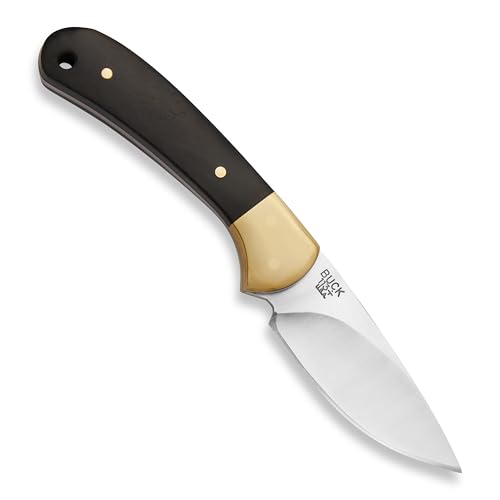
- Blade: 3.125 in, 420HC stainless steel
- Handle: ebony with brass bolster
- Format: fixed blade, leather sheath included
- Design: fixed-blade companion to the 112 Ranger folder
- Origin: made in the USA
Strengths
- Classic skinner profile with a controlled, compact blade
- 420HC with Buck heat treatment edges easily and resists corrosion
- Fixed blade cleans completely — no pivot, no mechanism
Trade-offs
- Compact blade asks for more strokes on large animals
- Smooth wood handle is less grippy when wet than rubberized rivals
- Leather sheath needs drying care after wet trips
The 113 Ranger Skinner is the traditionalist’s answer, and it has the pedigree to back the claim: Buck took the proportions of its famous 112 Ranger folder and fixed the blade, producing a compact skinner with a brass bolster, an ebony handle, and a leather sheath. The 3.125-inch blade in Buck’s 420HC stainless is shaped exactly for its work — a deep, continuous belly with the tip kept high and out of the hide — and the whole knife has the dense, finished feel of an object made to be handed down.
In use, the compactness is the point. Skinning rewards control over reach, and the short blade with a full-size handle lets your index finger ride close to the edge for the delicate work around legs, ears, and the cape — the work that decides whether a mount looks right. Buck’s heat treatment of 420HC is the steel’s best-known expression: it takes a fine edge quickly, touches up on a steel in seconds, and simply does not rust in a wet pack. It is the easiest fixed blade here to maintain with the stones in our best knife sharpeners for pocket knives coverage.
Its limits are the flip side of its virtues. On a moose or an elk, a 3.125-inch blade means more strokes and more time than the bigger tools here, and the polished wood handle, while beautiful, is the least secure grip in this guide when your hands are bloody — work deliberately and keep a rag in reach. The leather sheath also wants drying at home rather than a season in a damp truck box. Buy the 113 for deer-size game, for camp, and for the pleasure of a classic American skinner that will outlast its owner.
Best for: Best for: deer hunters and traditionalists who want a compact, heirloom-quality fixed skinner. / Not suited for: elk and moose specialists, or anyone who prioritizes wet grip above all else.

Benchmade Steep Country — Best Premium Fixed Blade
- Format: fixed-blade hunting knife
- Handle: textured Santoprene for wet grip
- Blade: drop point with a wide belly for skinning strokes
- Sheath: molded Kydex-style sheath on common configurations
- Maker: Benchmade, USA
Strengths
- Premium blade steel holds a skinning edge across large animals
- Santoprene handle is among the grippiest here when wet
- Benchmade support and sharpening services back the purchase
Trade-offs
- Premium pricing well above the replaceable-blade systems
- Harder steel takes longer to resharpen when it finally dulls
- Too nice, for some hunters, to abuse around camp
The Steep Country is the pick for the hunter who skins big animals, hates stopping to sharpen, and is willing to pay for steel that simply keeps cutting. Benchmade built it as a dedicated hunting fixed blade: a wide-bellied drop point that spends its whole edge in the hide, a textured Santoprene handle that grips like a work glove even when everything is wet, and premium blade steel whose edge life across an elk is the entire reason for its price.
That edge life changes the rhythm of the work. Where AUS-8 and 420HC picks in this guide want a steel every animal or two, the Steep Country holds a working edge through the biggest jobs most hunters will ever do, and when it finally needs attention, it rewards a proper session on a guided system — the diamond-capable kits in our best sharpening guides for knives roundup are the right match for harder steels. The molded sheath carries securely and rinses clean, completing a package with no mechanism to foul and nothing to swap.
The honest costs are money and maintenance time. This is the most expensive approach to skinning in the guide, and harder steel is slower to bring back once genuinely dull — budget the sharpening session, not the thirty-second blade swap. Hunters who process one deer a year will never feel the advantage that justifies it. Hunters who skin elk, moose, and multiple deer a season, in the cold, far from the truck, will feel it on every animal.
Best for: Best for: serious big-game hunters who want maximum edge life from a fixed blade. / Not suited for: one-deer-a-year hunters, for whom the replaceable systems are smarter money.

Outdoor Edge RazorLite — Best Replaceable-Blade Folder
- Blade system: 3.5 in replaceable blades, push-button change
- Format: folding knife with lock
- Handle: glass-nylon with rubberized inserts on common variants
- Blades: drop-point style replacement packs widely available
- Use: skinning and general field dressing
Strengths
- Blade changes are push-button simple, even with gloves
- Sturdier blades than scalpel systems — more forgiving of technique
- Folding format carries like a normal pocket knife
Trade-offs
- Replacement blades are a running cost, like all replaceable systems
- Folder pivot needs the same cleaning discipline as the SwingBlade
- Edge quality is very good, not surgical like the Piranta
The RazorLite takes the replaceable-blade idea and makes it forgiving. Instead of surgical scalpel blades, it uses full-size 3.5-inch knife blades that swap with a push-button mechanism — blades stout enough to tolerate the slight twisting and imperfect angles that real skinning involves, especially for hunters still building their technique. When the edge fades mid-animal, ten seconds restores it completely.
As a folder, it also carries and handles like the pocket knives most hunters already know, with a glass-nylon handle and rubberized grip inserts that stay secure when wet. Replacement blade packs are inexpensive and widely stocked, and the blades themselves are proper drop points that double for general field-dressing work — a versatility the scalpel-based Piranta deliberately trades away for ultimate edge finesse. It is the replaceable system we recommend to the widest range of hunters, and it pairs well with a fixed camp blade from our best fixed blade knives for hiking guide.
Choose the Piranta instead if your technique is already clean and you want the finest possible edge; choose the RazorLite if you want most of the replaceable advantage with far more tolerance for learning. The running costs and cleaning discipline of all replaceable and folding systems apply: carry spare blades, rinse the pivot after every animal, and pack out used blades safely. Accept those habits and the RazorLite may be the most practical skinner in this guide for the money.
Best for: Best for: most hunters, especially those new to replaceable blades. / Not suited for: hunters who want a surgical edge, or a zero-maintenance fixed blade.

Knives of Alaska Cub Bear — Best for Caping
- Role: dedicated caping and fine-detail knife
- Blade: compact, short, and highly controlled profile
- Steel: D2 tool steel on the classic model
- Format: small fixed blade with leather sheath
- Maker: Knives of Alaska, USA
Strengths
- Purpose-built for ears, eyes, lips, and fine cape work
- Small blade gives fingertip-level control where it matters most
- D2 holds a fine edge through detailed sessions
Trade-offs
- A specialist — far too small as a primary skinner
- D2 is semi-stainless and wants a wipe of oil after use
- Premium niche pricing for a second knife
Every guide needs one honest specialist, and the Cub Bear is this one’s: a compact caping knife built for the work that decides whether a trophy is saved or ruined. Turning ears, splitting lips, working around eyes and tear ducts — this is fingertip surgery, and it demands a short, controllable blade that goes exactly where your index finger points and nowhere else. The Cub Bear’s small fixed blade and close-coupled handle are designed for nothing else, and taxidermists’ benches have hosted them for years.
The classic model runs D2 tool steel, a fitting choice for detail work: it takes a fine, durable edge and holds it through long, careful sessions without the constant steeling that softer steels demand during delicate cuts. Used alongside a primary skinner — the SwingBlade or the RazorLite doing the long hide strokes, the Cub Bear taking over at the head — it completes a two-knife system that serious trophy hunters have relied on for decades.
Do not buy it as your only skinning knife. It is deliberately too small for body work, its D2 wants a wipe of oil after a bloody session, and as a second, single-purpose knife it is a considered purchase rather than a casual one. But if you cape animals for mounting, or you guide hunters who do, this little specialist earns its sheath space on the first head you turn with it — and it will still be earning it twenty seasons from now.
Best for: Best for: trophy hunters and anyone who capes heads for mounting. / Not suited for: use as a primary or only skinning knife.
Comparison Table
| Pick | Key spec | Badge |
|---|---|---|
| Havalon Piranta-Edge | Replaceable #60A scalpel blades, folding, nylon holster included | Best Overall |
| Outdoor Edge SwingBlade | 3.6 in drop-point skinner plus 3.2 in gutting blade, rotating design | Best for Field Dressing |
| Buck 113 Ranger Skinner | 3.125 in 420HC blade, ebony handle, brass bolster, leather sheath | Best Traditional Skinner |
| Benchmade Steep Country | Drop-point hunter in premium steel, Santoprene handle | Best Premium Fixed Blade |
| Outdoor Edge RazorLite | 3.5 in replaceable blades, push-button change, folding format | Best Replaceable-Blade Folder |
| Knives of Alaska Cub Bear | Compact caping knife, D2 tool steel on the classic model | Best for Caping |
The table sorts the guide into its three philosophies. The replaceable systems — Piranta and RazorLite — outsource sharpness to a blade swap and win on edge quality per minute of effort. The SwingBlade outsources versatility to a mechanism and wins on completeness for field dressing. The fixed blades — Buck, Benchmade, and the little Cub Bear — outsource nothing: they win on simplicity, cleanability, and the particular virtues of their steels, and they ask you to own the sharpening.
Blade size misleads in this category more than any other. The biggest blade here is not the best skinner, and the smallest — the Cub Bear — is the best tool in the guide at its specific job. Match the knife to the animal and the task: body skinning, gutting, or caping are three different cuts, and this guide’s badges name which knife owns each one.
How to Choose a Skinning Knife
Blade geometry is the whole game, so learn to read it. A skinning blade wants belly: a long, curved sweep of edge that keeps a generous section of sharp steel in contact with the hide through each stroke. It wants the tip tamed — upswept or dropped so the point rides above the cut line rather than digging toward meat and gut. And it wants enough blade height that your knuckles and the handle stay clear of the carcass while the edge works. When you evaluate any skinner not in this guide, run your eye along the edge first and ignore everything else until the belly convinces you.
Edge strategy: replace, steel, or endure
Decide how your knife stays sharp before you decide which knife it is. Replaceable systems (Piranta, RazorLite) guarantee a perfect edge and demand spare-blade discipline. Easily steeled steels (Buck’s 420HC, the SwingBlade’s AUS-8) restore a working edge in seconds with a smooth steel or ceramic rod, mid-animal, with cold hands — the traditional workflow, and still the most forgiving. Premium steels (Benchmade, the Cub Bear’s D2) simply endure, trading rare but longer sharpening sessions for uninterrupted work. All three strategies are legitimate; the mistake is buying a knife whose strategy does not match your habits, a theme our best sharpening guides for knives guide develops in full.
Grip when everything is slippery
Skinning is done with the wettest hands in hunting. Rubberized and textured handles — the SwingBlade, the Steep Country, the RazorLite — hold a clear advantage over smooth wood and polished synthetics, however beautiful the latter are. A finger guard or a handle shape that locks your index finger matters for the same reason: most skinning cuts are pull strokes toward your braced hand’s side, and the knife must not be able to slide forward onto its own edge. If you choose a traditional smooth-handled skinner like the Buck 113, compensate with technique: slower strokes, a rag in rotation, and a grip checked before every cut.
Fixed blade or folder: the cleaning question
Fixed blades rinse clean in seconds and dry completely; folders and mechanisms trap fat and tissue that will announce themselves in your pack a week later if you let them. That is not an argument against the excellent folders here — it is a maintenance instruction. If you choose the SwingBlade, the RazorLite, or the Piranta, build the hot-water rinse and pivot flush into your post-hunt routine the same evening, and your folder will serve as long as any fixed blade in this guide.
Sheath and carry deserve a paragraph of their own, because a skinning knife lives a strange double life: it must ride accessibly on a belt or pack all day, then work for an hour in the messiest conditions in hunting, then ride home again without contaminating everything it touches. Prefer sheaths that rinse — molded polymer and Kydex-style designs shed fat and blood under a tap, while leather, for all its beauty on the Buck 113, absorbs and must be dried and conditioned. Prefer also a sheath that retains the knife positively when you are bent over a carcass with the knife on your hip; a skinner lost in the gut pile or the grass at dark is a hazard, not an inconvenience. High-visibility handles and sheaths, like the SwingBlade’s blaze option, exist precisely because this category of knife gets set down in grass, snow, and leaves more than any other.
Size the knife to the animal
Deer-size game is the center of this category, and every pick here handles it. Step up to elk and moose and the calculus favors the Steep Country’s edge life and the SwingBlade’s two-blade completeness, while the compact Buck and the Cub Bear move to detail roles. Step down to small game and fur-bearers and the Piranta’s scalpel precision becomes the obvious tool. Buying for the animal you actually hunt — not the one in the advertisement — is the last and easiest way to get this purchase right.
Key Takeaways
- Skinning is geometry first: belly, a tamed tip, and handle clearance decide performance before steel does.
- Pick an edge strategy — replaceable blades, easily steeled steel, or premium endurance — and match it to your habits.
- The Piranta-Edge owns pure skinning; the SwingBlade owns complete field dressing.
- Wet grip is a safety specification, not a comfort feature.
- Caping is a separate job with a separate tool: the Cub Bear.
- Clean the knife the same evening, every single time — hot water now prevents corrosion, odor, and a stiff, unreliable mechanism later in the season.
How to Skin an Animal Cleanly: The Core Technique
Technique outweighs equipment, and the fundamentals are the same whether your knife cost the least or the most in this guide. Work on a clean surface or a gambrel, keep the hide under tension with your free hand — tension is what lets the edge glide — and let the blade’s belly do the work in long strokes rather than sawing with the tip.
- Ring the legs and make your opening cuts with the tip controlled and shallow, cutting from inside outward wherever possible so hair and hide are cut, not the meat beneath.
- Open the hide along the belly and legs, using short, deliberate strokes and keeping the edge angled slightly toward the hide, never toward the carcass.
- Work the hide free with the belly of the blade in long, sweeping strokes, pulling the hide taut with your free hand and letting the edge separate the membrane.
- Slow down at the legs, neck, and head; these are the places hides tear and capes are ruined, and they repay patience disproportionately.
- Steel or swap your edge the moment it begins to skate rather than cut — a fading edge is where punctures and slips are born.
- At the head, switch to your smallest, most controlled blade for ears, eyes, and lips, or slow your primary knife to fingertip control.
Problem: the hide keeps tearing. Fix: your edge is dull or your strokes are too short; restore the edge and lengthen the stroke so the belly, not the tip, does the separating. Problem: you keep nicking meat or, worse, the paunch. Fix: angle the edge toward the hide, increase hide tension, and slow down — nearly every puncture is a speed error. Problem: your hand is cramping and slipping. Fix: stop, dry your hands and the handle, and rotate in a rag; fatigue plus a slippery grip is the exact setup for the one cut you must not make.
How to Clean and Maintain a Skinning Knife
Wash the knife in hot soapy water the same day, working hinges and mechanisms under the tap until they run clean, then dry completely — a hair dryer or a warm oven door finishes folders properly. Touch up edges before storage rather than before the next hunt, oil carbon and tool steels lightly, and store fixed blades out of damp leather for long periods. Replaceable-blade users should restock spares while the season’s lessons are fresh. Five disciplined minutes after each hunt is the entire maintenance secret behind every ‘my knife has lasted twenty years’ story you have ever heard.
Skinning Knives by Animal: A Practical Matching Guide
For deer and antelope — the animals most readers will skin most often — every pick in this guide is genuinely sufficient, and the choice reduces to edge strategy and grip preference. The Piranta and RazorLite finish a deer fastest with the least skill demanded of your sharpening; the SwingBlade adds the gutting blade that makes it the best single-tool answer; the Buck 113 does the same work with traditional satisfaction and a little more time. There is no wrong answer in this row of the table, only the answer that matches your habits.
For elk, moose, and bear, edge life and blade presence start to matter. A big animal is two or three deer worth of hide, often skinned in the cold, often quartered in place. The Steep Country’s endurance earns its price here, the SwingBlade’s second blade earns its bulk, and the replaceable systems remain viable only if you carry blades generously — running out of fresh edges on a half-skinned moose is a planning failure, not a knife failure. The Cub Bear, meanwhile, becomes more valuable, not less, because big trophies are exactly the ones worth caping carefully.
For small game, fur-bearers, and birds, precision replaces power entirely. The Piranta is the standout — its scalpel edge does the fine work around feet, tails, and masks that decides a pelt’s value — with the Cub Bear as the fixed-blade alternative for trappers who process volume and want an edge that endures a full day at the fleshing beam’s companion tasks. Whatever the animal, the pattern holds: name the job precisely, and the right knife from this guide names itself.
A note on learning the craft with these tools, because the knife you learn on shapes the technique you keep. Beginners consistently do best starting on the forgiving end of this guide: the RazorLite’s sturdy replaceable blades tolerate the angled, slightly twisting strokes every learner makes, and the SwingBlade’s guided gutting blade removes the single most anxious cut in field dressing. The Piranta, for all its brilliance, punishes learner technique with snapped blades and demands respect from the first animal. None of this is a criticism of any design — it is a sequence. Learn on the forgiving tools, and graduate to the scalpel when your strokes have become the long, flat, belly-led sweeps this guide describes.
Experienced hunters, meanwhile, should audit their kit against a simple question: where does my current setup waste motion? If the answer is stopping to steel a fading edge on every animal, a replaceable system or a premium fixed blade removes the pause. If the answer is hunting for a second knife in the dark, the SwingBlade’s two-in-one design removes the search. If the answer is a cape that came back from the taxidermist with repairs, the Cub Bear removes the regret. Skinning rewards this kind of honest accounting more than almost any other hunting skill, because the work is repetitive enough that small efficiencies compound across every animal, every season, for a career.
Common Buying Mistakes
Skinning with a dull knife ‘to finish the job’. A dull skinner tears hides, punctures paunches, and forces the hard strokes that slip. Steel it, swap it, or stop — those are the only safe options.
Using the tip instead of the belly. Tip-led strokes dig and puncture. Tension the hide, lay the belly in, and sweep.
Prying and twisting scalpel blades. Replaceable surgical blades are edges, not levers. The Piranta’s blades snap under torsion by design; do joint work with a sturdier knife.
Leaving a folder unwashed after the hunt. Fat and tissue in a pivot will corrode, stink, and stiffen the knife by next season. Hot water, the same evening, every time.
Buying a general hunting knife and calling it a skinner. Straight edges and aggressive tips make skinning harder and hides worse. Geometry is the job; buy the shape that does it.
Rushing the head and cape. The last ten minutes decide the trophy. Slow down, switch to the small blade, and finish carefully.
Final Recommendation
Start with the Havalon Piranta-Edge if your technique is sound and you want the cleanest skinning edge in the field with zero sharpening — for pure hide work, it remains the benchmark. If you field-dress where the animal falls and want one tool that opens and skins, the Outdoor Edge SwingBlade is the runner-up and the most complete single purchase in this guide.
Fixed-blade hunters should choose by animal and habit: the Buck 113 for deer and tradition, the Steep Country for big game and edge life, the Cub Bear as the caping specialist beside either. And if your technique is still developing, the RazorLite’s forgiving replaceable blades may serve you better than any of them. What matters is that the shape is a skinner’s shape and the edge strategy is one you will actually follow — get those two decisions right and the hide comes off clean.
Frequently Asked Questions
What makes a knife a skinning knife?
Geometry: a pronounced belly that keeps a long section of edge in the hide, a tip profile that rides above the cut instead of digging in, and enough handle clearance to work without raking your knuckles. Steel and size are secondary, which is why this guide includes everything from a scalpel folder to a compact caping knife.
Are replaceable-blade knives really better for skinning?
For edge quality and speed, yes — a fresh blade is always sharper than a field-touched edge. For forgiveness and simplicity, no: scalpel blades snap under twisting, and all replaceable systems demand spare-blade discipline. The RazorLite’s sturdier blades are the middle path for most hunters.
What size skinning knife do I need for deer?
Less than most people buy. A blade in the three-to-four-inch class with a real belly — the Buck 113 at the compact end, the SwingBlade at the fuller end — handles deer completely. Technique and edge condition matter far more than an extra inch of blade.
How do I keep a skinning knife sharp in the field?
Either swap blades, or carry a small smooth steel or ceramic rod and touch up the moment the edge begins to skate. At home, a guided system from our best sharpening guides for knives guide restores the edge fully. The rule is little and often, never a heroic resharpening on a dead edge.
Can I use my regular hunting knife for skinning?
You can, and hunters do — but a deep-bellied skinner will do the same work faster, cleaner, and with fewer hide punctures. If you skin more than an animal or two a year, a dedicated skinner such as those in this guide pays for itself in saved hides and saved time.
How do I clean a skinning knife after use?
Hot soapy water the same day, with special attention to pivots and mechanisms on folders, then complete drying and a light oil on carbon and tool steels. Never put a working hunting knife away bloody, and never store a fixed blade long-term in a damp leather sheath. If the knife will ride in a pack for the hike out, a field wipe with a clean cloth and a rinse at the first water source keeps the worst of the residue off the mechanism until the full wash at home — the habit that separates knives that last decades from knives that seize up by their third season.
Do I need a gut hook on my skinning knife?
Not on the skinner itself, no. A dedicated gutting blade or a separate gut-hook tool opens the abdomen more safely than a hook ground into a skinning blade’s spine, which is why the SwingBlade’s two-blade approach is the strongest expression of the idea in this guide. A simple, well-shaped skinner plus a careful opening technique — two fingers guiding the edge, cutting up and away — serves most hunters perfectly well, and keeps the skinning edge’s geometry clean for the work it is actually shaped to do.
What is caping, and do I need a special knife for it?
Caping is the careful skinning of the head and shoulders for a taxidermy mount — ears, eyes, lips, and nose worked in fine detail. It is the one skinning job that genuinely rewards a dedicated small knife like the Cub Bear, because a full-size skinner is simply too much blade at a deer’s eye.