Disclosure: As an Amazon Associate, umtsmarttool.com earns from qualifying purchases. Links to Amazon on this page are affiliate links; they cost you nothing extra. Prices and availability change often, so check the current Amazon listing before you buy.
Where to buy
Shop the best bushcraft knives in one place — the Morakniv Garberg Carbon with Survival Kit leads the list. Linked picks go straight to their Amazon listing; unlinked picks are listed by name so you can search the exact model.
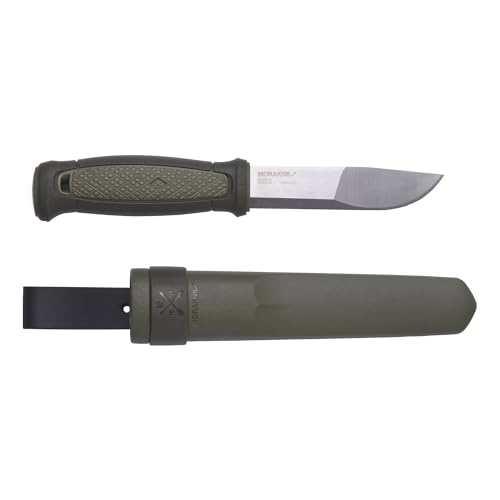
- Morakniv Garberg Carbon with Survival Kit — Check on Amazon
- ESEE 4 — Check on Amazon
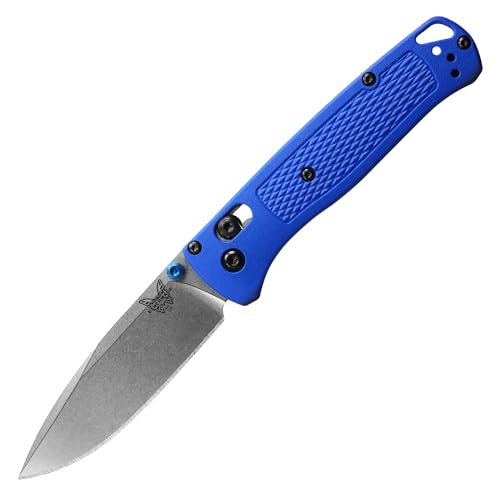
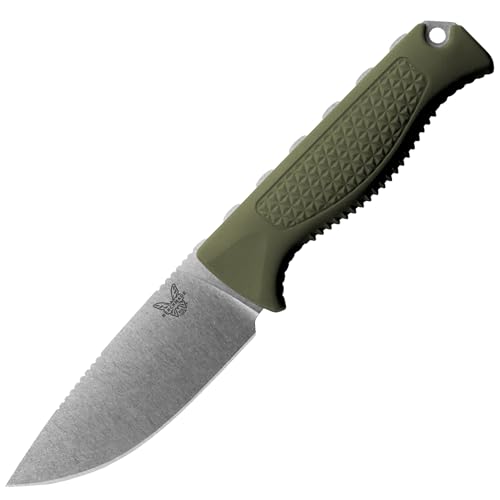
- Benchmade Bushcrafter 162 — Check on Amazon
- Condor Terrasaur (search the exact model name on Amazon)
- KA-BAR Becker BK2 Campanion — Check on Amazon
- Morakniv Companion — Check on Amazon
Read the full guide ↓
The best bushcraft knives are not survival billboards and they are not kitchen knives with outdoorsy marketing. A bushcraft knife is a woodworking tool first: it carves feather sticks, shapes tent pegs and pot hangers, splits small kindling by batoning, strikes a ferro rod from a squared spine, and still slices food at the end of the day without tearing it. That combination is why the pattern has barely changed in a century — a blade around four to four and a half inches, a grind that bites into wood without wedging, a handle that fills the hand in several grips, and steel you can restore on a simple stone far from home.
This guide compares six knives that cover the real spread of the category, from a budget Swedish classic that has taught generations of beginners to carve, through mid-priced American and El Salvadorian workhorses, to a premium powder-steel option for people who sharpen rarely and travel far between resupplies. We judged them on published manufacturer and retailer specifications — steel, blade length, thickness, tang construction and grind — and on how those specifications map to the actual tasks bushcraft asks of a knife. We did not handle these knives ourselves, and we say so plainly: check the current listing for the exact variant, sheath and steel before you buy, because several of these models are sold in more than one configuration.
One honest note before the picks: bushcraft rewards skill more than spending. The cheapest knife below, used with good technique, will out-carve an expensive blade in untrained hands, and the most expensive knife here will still rust, roll or chip if it is abused or neglected. Buy the knife whose maintenance you will actually do, whose handle shape suits long carving sessions, and whose sheath carries the way you walk. If you are also building out the rest of a woodcraft kit, our guides to best survival knives and best leather knife sheaths cover the neighbouring choices, and a dedicated sharpener from best sharpening guides for knives will matter more to your results than any single upgrade on this page.
In this guide
Quick Picks
| Knife | Badge | Key spec |
|---|---|---|
| Morakniv Garberg Carbon with Survival Kit | Best Overall | Blade length: 4.3 inches; Blade steel: carbon steel |
| ESEE 4 | Best for Hard Use | Blade length: 4.5 inches; Blade steel: 1095 high-carbon steel |
| Benchmade Bushcrafter 162 | Best Premium | Blade length: 4.43 inches; Blade steel: CPM-S30V stainless steel |
| Condor Terrasaur | Best Budget Full Tang | Blade length: 4.375 inches; Blade steel: 1075 high-carbon steel |
| KA-BAR Becker BK2 Campanion | Best for Batoning | Blade length: 5.25 inches; Blade steel: 1095 Cro-Van carbon steel |
| Morakniv Companion | Best First Knife | Blade length: 4.1 inches; Blade steel: Sandvik 12C27 stainless steel |
How These Picks Were Chosen
We built the shortlist from manufacturer specification sheets and established retailer listings, then cross-checked each model’s steel, blade length, blade thickness, tang and grind against at least one second source where the model is commonly documented. A bushcraft candidate had to meet four tests. First, a blade between roughly four and five and a half inches — long enough to baton wrist-thick kindling, short enough for controlled carving. Second, a grind suited to wood: Scandinavian, flat or high saber grinds that plane curls off a stick rather than wedging into it. Third, construction that tolerates batoning and twisting cuts, which in practice means full tang on the heavier-duty picks and an honestly labelled partial tang on the budget Mora. Fourth, a sheath that retains the knife securely and a spine sharp enough, on most picks, to throw sparks from a ferro rod. Steels were weighed for field maintenance: carbon steels that strop back quickly scored well for remote use, while stainless and powder steels scored for wet climates and long trips.
Two rules governed every judgement below. First, specifications beat stories: where a marketing claim and a published spec disagreed, the spec won. Second, honesty about limits: every pick in this guide has a stated trade-off section, because a knife with no downside is a knife whose reviewer was not paying attention. If a pick is listed without an Amazon link, that means our research verified the product and its specifications from manufacturer or retailer sources but did not tie a verified listing identifier to the exact model — we would rather send you to search the exact model name than print a link we could not verify.
The 6 Best Bushcraft Knives

Morakniv Garberg Carbon with Survival Kit — Best Overall
Who it suits: Bushcrafters who want one knife that carves, batons light kindling and starts fires, with the fire kit already on the sheath.
- Blade length: 4.3 inches
- Blade steel: carbon steel
- Blade thickness: 3.2 mm
- Grind: Scandi
- Construction: full tang
Strengths
- Full tang — Morakniv’s strongest construction, built for batoning
- Scandi grind planes wood curls with very little effort
- Survival kit adds a ferro rod, diamond sharpener and paracord on the sheath
Trade-offs
- Carbon steel needs drying and a light oil film to prevent rust
- Polymer sheath is functional rather than handsome
- Thicker spine makes fine food slicing less nimble than a thin kitchen-style blade
The Garberg is the knife Morakniv built to answer the one criticism levelled at its cheaper models: the tang. Where the classic Mora pattern stops partway through the handle, the Garberg runs full tang with a ground, squared spine that scrapes a ferro rod properly and a pommel end designed to be struck. In carbon steel with the survival kit, it arrives as a complete fire-and-wood system rather than a bare blade: the sheath carries the striker and a diamond sharpener, so the two jobs a bushcrafter does most — making sparks and restoring an edge — are covered without extra pouches. For most buyers this is the sensible centre of the category.
Consider how the Morakniv Garberg Carbon with Survival Kit behaves across a full day of the work it was chosen for. Its defining specification — blade length: 4.3 inches — sets the rhythm: it determines how the knife carries between tasks, how it feels on the tenth repetition of a cut rather than the first, and how much attention it asks for in return. The headline strength, full tang — morakniv’s strongest construction, built for batoning, is not a laboratory virtue; it is the thing owners notice when conditions are poor and time is short, which is exactly when a knife earns or loses its place in a kit.
It also helps to place this pick against the rest of the table before deciding. Every guide like this one contains a knife that is cheaper, one that is lighter or stronger, and one that is more specialised; the Morakniv Garberg Carbon with Survival Kit survives that comparison when its particular balance — summarised in the verdict line below — matches the way you actually spend your time outdoors. If it does not, the honest move is to choose the pick whose badge names your real priority, not the pick with the most impressive single specification.
Best for: Bushcrafters who want one knife that carves, batons light kindling and starts fires, with the fire kit already on the sheath. / Not suited for: buyers whose main work contradicts the trade-offs above.

ESEE 4 — Best for Hard Use
Who it suits: Users who baton regularly, work in all weathers and want the toughest warranty attitude in the group.
- Blade length: 4.5 inches
- Blade steel: 1095 high-carbon steel
- Grind: flat
- Construction: full tang
- Handle: Micarta scales
Strengths
- Thick, tough 1095 blade shrugs off batoning and prying-adjacent camp abuse
- Flat grind slices better than a pure Scandi once the wood work is done
- 1095 resharpens quickly on almost any stone or flat rock
Trade-offs
- 1095 rusts readily — the coating helps the flats, not the edge
- Factory handle scales feel blocky to smaller hands during long carving
- Heavier in the pack than the Swedish picks
The ESEE 4 comes out of a survival-training school rather than a carving tradition, and it shows in the priorities: toughness first, slicing second, tradition nowhere. The flat-ground 1095 blade splits kindling with authority, the exposed tang and Micarta scales tolerate being hammered, soaked and dropped, and the steel’s forgiving nature means a rolled edge is a two-minute fix rather than a ruined trip. It is less elegant in a feather stick than the Scandi-ground knives here — the thicker stock wedges a little more — but for a knife that must never be the thing that fails, it earns its place near the top of almost every hard-use list, this one included.
What separates the ESEE 4 from near-neighbours in this guide is the combination, not any single line of its specification box. Blade steel: 1095 high-carbon steel works together with blade length: 4.5 inches to produce a tool with a clear personality: it rewards the user it was designed for and quietly penalises everyone else. That is why the badge matters — Best for Hard Use is a statement about fit, not a rank — and why reading the trade-off list matters more than reading the strength list twice.
It also helps to place this pick against the rest of the table before deciding. Every guide like this one contains a knife that is cheaper, one that is lighter or stronger, and one that is more specialised; the ESEE 4 survives that comparison when its particular balance — summarised in the verdict line below — matches the way you actually spend your time outdoors. If it does not, the honest move is to choose the pick whose badge names your real priority, not the pick with the most impressive single specification.
Best for: Users who baton regularly, work in all weathers and want the toughest warranty attitude in the group. / Not suited for: buyers whose main work contradicts the trade-offs above.
Check on Amazon
Benchmade Bushcrafter 162 — Best Premium
Who it suits: Experienced users who travel far between sharpening opportunities and want stainless convenience with premium edge holding.
- Blade length: 4.43 inches
- Blade steel: CPM-S30V stainless steel
- Grind: high flat / Scandi-influenced bushcraft grind
- Construction: full tang
- Handle: contoured G10
Strengths
- CPM-S30V holds a working edge far longer than the carbon steels here
- Stainless steel removes the rust anxiety of wet, multi-day trips
- Deeply contoured handle is the most comfortable here for hours of carving
Trade-offs
- S30V is slower to resharpen in the field and wants a diamond abrasive
- Premium tier cost for a knife that will be struck with a wooden baton
- Edge can chip rather than roll if it is twisted out of a split
The Bushcrafter is what happens when a modern American maker applies powder metallurgy to a traditional pattern. The S30V blade simply keeps cutting after the carbon steels on this page have asked for a strop, which matters on a week-long trip where sharpening time competes with daylight. The trade is real, though: when the edge finally does dull, it needs a proper diamond plate and more patience, and the steel prefers rolling loads to lateral ones. Buy it if your bushcraft is long-distance and wet; the carbon picks are better teachers and cheaper lessons if your trips are short and close to home.
Ownership of the Benchmade Bushcrafter 162 is mostly a story about its first-listed trade-off: s30v is slower to resharpen in the field and wants a diamond abrasive. Buyers who accept that cost up front tend to keep this knife for years, because nothing about it surprises them later. Buyers who discover it in the field tend to blame the knife for a mismatch that was printed in its specifications all along. Read the box above as a contract: the knife promises cpm-s30v holds a working edge far longer than the carbon steels here, and in exchange asks you to live with the compromises listed honestly beside it.
It also helps to place this pick against the rest of the table before deciding. Every guide like this one contains a knife that is cheaper, one that is lighter or stronger, and one that is more specialised; the Benchmade Bushcrafter 162 survives that comparison when its particular balance — summarised in the verdict line below — matches the way you actually spend your time outdoors. If it does not, the honest move is to choose the pick whose badge names your real priority, not the pick with the most impressive single specification.
Best for: Experienced users who travel far between sharpening opportunities and want stainless convenience with premium edge holding. / Not suited for: buyers whose main work contradicts the trade-offs above.
Check on Amazon
Condor Terrasaur — Best Budget Full Tang
Who it suits: Beginners and course instructors who want a genuine full-tang bushcraft pattern at an entry-level commitment.
- Blade length: 4.375 inches
- Blade steel: 1075 high-carbon steel
- Construction: full tang
- Handle: polypropylene
Strengths
- Full-tang construction at a budget tier where partial tangs are common
- 1075 steel is exceptionally forgiving and easy to sharpen
- Deep-carry sheath keeps the knife secure and out of the way
Trade-offs
- Fit and finish can be rougher than the Swedish and American picks
- 1075 needs the same rust care as any carbon steel
- Sheath sits deep, which some users find slow to draw
Designed with input from a well-known bushcraft instructor, the Terrasaur distils the pattern to its essentials: a full tang, a sensible blade length, forgiving 1075 steel and nothing decorative. It is the knife a school can hand to a first-time student without worrying about the bill if it is dropped in leaf litter, and it is honest enough that the same student may still be using it years later. Expect to spend a few minutes with a file or stone tidying the edge and spine when it arrives — that small ritual is part of the budget tier’s bargain, and the skills it teaches transfer to every knife on this page.
Consider how the Condor Terrasaur behaves across a full day of the work it was chosen for. Its defining specification — blade length: 4.375 inches — sets the rhythm: it determines how the knife carries between tasks, how it feels on the tenth repetition of a cut rather than the first, and how much attention it asks for in return. The headline strength, full-tang construction at a budget tier where partial tangs are common, is not a laboratory virtue; it is the thing owners notice when conditions are poor and time is short, which is exactly when a knife earns or loses its place in a kit.
It also helps to place this pick against the rest of the table before deciding. Every guide like this one contains a knife that is cheaper, one that is lighter or stronger, and one that is more specialised; the Condor Terrasaur survives that comparison when its particular balance — summarised in the verdict line below — matches the way you actually spend your time outdoors. If it does not, the honest move is to choose the pick whose badge names your real priority, not the pick with the most impressive single specification.
Best for: Beginners and course instructors who want a genuine full-tang bushcraft pattern at an entry-level commitment. / Not suited for: buyers whose main work contradicts the trade-offs above.
Check price on Amazon

KA-BAR Becker BK2 Campanion — Best for Batoning
Who it suits: Camp-focused users whose knife work is mostly splitting, chopping-adjacent tasks and rough shelter building.
- Blade length: 5.25 inches
- Blade steel: 1095 Cro-Van carbon steel
- Blade thickness: 0.25 inch
- Grind: flat
- Construction: full tang
Strengths
- Quarter-inch spine is the strongest batoning platform in this group
- 1095 Cro-Van is tough and simple to maintain
- Generous handle suits gloved hands and heavy grips
Trade-offs
- Heavy — noticeably more pack weight than any other pick here
- Thick stock wedges in fine carving and food prep
- Too much knife for delicate woodcraft like spoon carving
The BK2 sits at the outer edge of what ‘bushcraft knife’ means, and we include it deliberately as the heavy-work pole of the category. A quarter inch of 1095 Cro-Van does not finesse a feather stick the way a thin Scandi blade does, but it splits firewood-sized rounds that would stall the lighter knives, and it tolerates the kind of camp abuse — prying lids, hammering pegs — that voids the warranty of lesser tools in spirit if not in letter. Pair it mentally with a small carving knife rather than instead of one; many experienced campers carry exactly that combination, a splitter and a slicer, instead of asking one blade to be both.
What separates the KA-BAR Becker BK2 Campanion from near-neighbours in this guide is the combination, not any single line of its specification box. Blade steel: 1095 Cro-Van carbon steel works together with blade length: 5.25 inches to produce a tool with a clear personality: it rewards the user it was designed for and quietly penalises everyone else. That is why the badge matters — Best for Batoning is a statement about fit, not a rank — and why reading the trade-off list matters more than reading the strength list twice.
It also helps to place this pick against the rest of the table before deciding. Every guide like this one contains a knife that is cheaper, one that is lighter or stronger, and one that is more specialised; the KA-BAR Becker BK2 Campanion survives that comparison when its particular balance — summarised in the verdict line below — matches the way you actually spend your time outdoors. If it does not, the honest move is to choose the pick whose badge names your real priority, not the pick with the most impressive single specification.
Best for: Camp-focused users whose knife work is mostly splitting, chopping-adjacent tasks and rough shelter building. / Not suited for: buyers whose main work contradicts the trade-offs above.
Morakniv Companion — Best First Knife
Who it suits: Complete beginners, scouts and anyone who wants to learn carving technique on a knife that costs very little to replace.
- Blade length: 4.1 inches
- Blade steel: Sandvik 12C27 stainless steel
- Grind: Scandi
- Construction: partial (stick) tang
- Weight: about 4.1 oz with sheath
Strengths
- Scandi grind is the easiest edge geometry for a beginner to sharpen
- Stainless steel forgives the neglect every first knife receives
- Light, comfortable handle encourages long, safe practice sessions
Trade-offs
- Partial tang is not built for heavy batoning — split only small kindling
- Thin blade flexes under lateral loads that full-tang picks ignore
- Basic polymer sheath is secure but offers few carry options
Every bushcraft instructor knows this knife, because most of them started on one or hand them out by the dozen. The Companion’s Scandi grind teaches sharpening better than any other geometry — lay the bevel flat on the stone and the angle sets itself — and its stainless blade survives being left damp in a sheath, dropped in a stream and lent to a teenager, which is the real curriculum of a first knife. Its limit is equally clear: the partial tang and thin stock are for carving and light kindling, not for splitting rounds. Respect that limit and it may be the best-value knife purchase in the entire outdoor category.
Ownership of the Morakniv Companion is mostly a story about its first-listed trade-off: partial tang is not built for heavy batoning — split only small kindling. Buyers who accept that cost up front tend to keep this knife for years, because nothing about it surprises them later. Buyers who discover it in the field tend to blame the knife for a mismatch that was printed in its specifications all along. Read the box above as a contract: the knife promises scandi grind is the easiest edge geometry for a beginner to sharpen, and in exchange asks you to live with the compromises listed honestly beside it.
It also helps to place this pick against the rest of the table before deciding. Every guide like this one contains a knife that is cheaper, one that is lighter or stronger, and one that is more specialised; the Morakniv Companion survives that comparison when its particular balance — summarised in the verdict line below — matches the way you actually spend your time outdoors. If it does not, the honest move is to choose the pick whose badge names your real priority, not the pick with the most impressive single specification.
Best for: Complete beginners, scouts and anyone who wants to learn carving technique on a knife that costs very little to replace. / Not suited for: buyers whose main work contradicts the trade-offs above.
Check on Amazon
Comparison Table
| Knife | Blade | Steel | Badge |
|---|---|---|---|
| Morakniv Garberg Carbon with Survival Kit | 4.3 inches | carbon steel | Best Overall |
| ESEE 4 | 4.5 inches | 1095 high-carbon steel | Best for Hard Use |
| Benchmade Bushcrafter 162 | 4.43 inches | CPM-S30V stainless steel | Best Premium |
| Condor Terrasaur | 4.375 inches | 1075 high-carbon steel | Best Budget Full Tang |
| KA-BAR Becker BK2 Campanion | 5.25 inches | 1095 Cro-Van carbon steel | Best for Batoning |
| Morakniv Companion | 4.1 inches | Sandvik 12C27 stainless steel | Best First Knife |
Read the table as a map, not a ranking: the rows differ because the jobs differ. The badge column tells you the job each knife won; the blade and steel columns tell you the physical reason it won it. If your main task is not represented by any badge, the buying guide below will help you judge which compromise is cheapest for the work you actually do — and whether a neighbouring category, linked throughout this guide, fits you better than any pick here.
How to Choose Bushcraft Knives
Steel: carbon, stainless or powder — choose by climate and sharpening habit
Carbon steels such as 1095, 1075 and 1095 Cro-Van dominate traditional bushcraft for one reason: they are tough and they resharpen on almost anything, including the fine stones sold for field kits and, in a pinch, smooth river rock. Their cost is corrosion — a carbon blade left wet in a sheath overnight can show rust by morning, so the habit of wiping, drying and lightly oiling is part of ownership. Stainless steels such as 12C27 and 14C28N trade a little toughness for near-total rust forgiveness, which suits coastal, tropical and winter-wet use. Powder steels such as CPM-S30V hold an edge the longest and resist rust, but they ask for diamond abrasives and more time when they finally dull. There is no best steel here, only the steel whose maintenance rhythm matches your trips.
Grind: why Scandi rules the woods, and when flat is better
A Scandinavian grind has a single wide bevel that runs straight to the edge with no secondary bevel. On wood it behaves like a chisel-plane: it bites, holds its line and produces long curls, and on a sharpening stone the wide bevel registers flat, making the correct angle almost automatic. That is why most knives in this guide use it or nod toward it. A flat grind, as on the ESEE 4 and BK2, starts thinner behind the edge across the whole blade height; it slices food, cordage and hide better and wedges less in deep splits, but it gives the carver less guidance and the beginner a harder sharpening lesson. Convex and saber grinds sit between the two. Match the grind to your dominant task: carving first means Scandi, camp kitchen and general utility first means flat.
Tang and thickness: the honest limits of batoning
Batoning — driving a blade through wood by striking its spine with a wooden baton — is the signature bushcraft technique and the one most likely to break a knife. Full-tang construction, where the steel runs the full width and length of the handle, tolerates it best, especially at spine thicknesses around 3.2 mm and above. Partial-tang knives like the Companion are not fragile, but they should baton only small, straight-grained kindling, never knotty rounds. Whatever you carry, follow the manufacturer’s guidance: baton with a wooden baton, never metal; keep the blade centred; stop if the wood is wider than the exposed blade; and never pry sideways with the tip to free a stuck blade — tap the blade back out instead.
Finally, buy from a listing that states the exact model, steel and configuration in writing, from a seller who accepts returns. Knife categories are full of variants that share a name and differ in the one specification that made you choose the knife. The few minutes spent confirming the listing are the cheapest insurance in this entire guide, and they are the difference between the knife reviewed here and a near-namesake that merely looks like it in photographs.
Key Takeaways
- Match the knife to your dominant task first; every pick here is the best answer to a different question.
- Specifications — steel, blade length, thickness, tang or lock — predict field behaviour better than brand or price.
- Maintenance is part of the purchase: choose the steel and materials whose care routine you will actually keep.
- Safety is technique, not equipment: follow manufacturer-style guidance on grips, carry and storage every time.
- Verify the exact variant on the listing before buying; model names cover more configurations than ever.
How to Carve a Feather Stick and Split Kindling Safely
- Choose your wood: a dry, straight-grained stick about thumb-thickness for feather sticks; straight-grained rounds no wider than your exposed blade for splitting.
- Set your position: kneel or sit with the work on a stable stump or log section, blade moving away from your body and legs at all times.
- Lock your grip: use a firm full-hand grip behind the edge, thumb on the handle — never on the blade spine near the edge when pushing.
- For feather sticks, brace the stick on the stump, hold the knife steady at a shallow angle and push the wood into the edge with your other hand kept well behind the blade path, shaving thin curls that stay attached.
- Work around the stick, thinning curls until they are fine enough to catch a spark; finer and drier beats more and thicker.
- For kindling, place the blade centred on the end grain, then strike the exposed spine — never the handle or tip — with a wooden baton until the split opens.
- If the blade sticks, do not lever it sideways; tap the protruding tip section down with the baton or lift the wood and blade together and strike the wood down onto a solid base.
- Finish by wiping the blade clean and dry, checking the edge for rolls or chips, and sheathing the knife before you stand up or move.
Field Sharpening and Carbon-Steel Care
Problem: the edge stops biting into wood and skates across a feather stick. Fix: strop first — a dozen light strokes per side on leather or even a belt restores most working edges; only reach for a stone when stropping stops working.
Problem: a Scandi edge feels dull after sharpening. Fix: lay the whole bevel flat on the stone and push the blade away from you, keeping the bevel in full contact; lifting the spine creates a secondary bevel and spoils the geometry that makes the grind work.
Problem: orange rust spots on a carbon blade. Fix: scrub with a scouring pad and a drop of oil, dry thoroughly, and store the knife out of its sheath for long periods; a light food-safe oil film before storage prevents most recurrence.
Problem: the spine will not spark a ferro rod. Fix: check that the spine is a crisp 90 degrees — many spines are rounded from the factory and can be squared carefully with a file, following the maker’s guidance; always strike away from your body with the rod braced, not held in your fingers near the edge.
Keep a small field kit paired with the knife: a pocket stone or diamond plate matched to your steel, a strop, a ferro rod and a few waxed-cotton or birch-bark fire starters. The sharpening accessories in best knife sharpeners for pocket knives and a protective carry option from best leather knife sheaths round out a kit that will serve for years. Store any knife dry, sheathed only for transport, and out of reach of children.
Bushcraft Technique: The Knife Is Only Half the System
Experienced bushcrafters talk about systems, not knives, because the knife’s results depend on what surrounds it. A squared spine is only useful with a ferro rod and prepared tinder; a Scandi grind only shines with wood that is dry, straight-grained and sensibly sized; a full tang only matters if the user knows how to baton with a wooden baton, centred strikes and an exit plan for a stuck blade. This is why instructors hand beginners an inexpensive Mora and a skills curriculum rather than an expensive blade and good wishes. When you budget for a bushcraft knife, budget alongside it for the ferro rod, the pocket stone, a strop and — most valuable of all — structured practice time close to home, where a failed feather stick costs nothing but a walk back to the woodpile. The picks in this guide were chosen to grow with that practice: none of them will be the limiting factor in your first two years of woodcraft, and the best of them will not be the limiting factor in your tenth year either.
Sheaths, Carry and Camp Etiquette
A bushcraft knife lives on the belt, and its sheath decides whether that is safe and comfortable or neither. Check three things on any sheath in this guide: retention that holds the knife through a stumble or a scramble, a draw that does not require your other hand near the edge, and a belt attachment that keeps the handle clear of pack hip-belts. Leather sheaths, traditional on several picks, mould to the knife and carry quietly but need drying after wet trips; polymer sheaths shrug off weather and click positively but can rattle and can dull an edge if grit gets inside. Around other people, camp etiquette is simple and manufacturer-standard: the knife is sheathed before you stand, passed handle-first and closed or sheathed, and never left lying in grass, on a log end or beside a path where a hand, knee or dog can find it. These habits, more than any steel, are what separate experienced knife users from lucky ones.
A Note on Learning Bushcraft With These Knives
Every knife in this guide will carve a feather stick on its first day; the differences appear on the fiftieth. By then the Scandi grinds have taught their owners sharpening almost by osmosis, the flat grinds have proven themselves at the camp kitchen, and the heavy BK2 has either become a beloved basecamp institution or been honestly reclassified as a car-camping tool. That learning curve is the real product being bought, and it argues for a sequencing many instructors recommend: start with the Companion or Terrasaur, learn grips, sharpening and fire craft until the knife feels like an extension of the hand, then upgrade — if you upgrade at all — toward the Garberg’s full tang or the Bushcrafter’s premium steel with a clear sense of which limitation you are paying to remove. Buyers who skip the first step often own beautiful knives and shallow skills; buyers who take it discover that the second purchase, informed by a year of calluses, is the one they keep for life.
Which Pick Fits Which Buyer?
If this sounds like you — Bushcrafters who want one knife that carves, batons light kindling and starts fires, with the fire kit already on the sheath. — then the Morakniv Garberg Carbon with Survival Kit is your pick. Its badge, Best Overall, was assigned for exactly that profile, and its trade-offs were written with your use in mind. If the description nearly fits but one trade-off touches the work you do most, move one row up or down the comparison table rather than abandoning the category: the neighbouring picks in this guide were chosen to cover the adjacent profiles, and the distance between a good knife and the right knife is usually a single honest sentence about your own habits.
If this sounds like you — Users who baton regularly, work in all weathers and want the toughest warranty attitude in the group. — then the ESEE 4 is your pick. Its badge, Best for Hard Use, was assigned for exactly that profile, and its trade-offs were written with your use in mind. If the description nearly fits but one trade-off touches the work you do most, move one row up or down the comparison table rather than abandoning the category: the neighbouring picks in this guide were chosen to cover the adjacent profiles, and the distance between a good knife and the right knife is usually a single honest sentence about your own habits.
If this sounds like you — Experienced users who travel far between sharpening opportunities and want stainless convenience with premium edge holding. — then the Benchmade Bushcrafter 162 is your pick. Its badge, Best Premium, was assigned for exactly that profile, and its trade-offs were written with your use in mind. If the description nearly fits but one trade-off touches the work you do most, move one row up or down the comparison table rather than abandoning the category: the neighbouring picks in this guide were chosen to cover the adjacent profiles, and the distance between a good knife and the right knife is usually a single honest sentence about your own habits.
If this sounds like you — Beginners and course instructors who want a genuine full-tang bushcraft pattern at an entry-level commitment. — then the Condor Terrasaur is your pick. Its badge, Best Budget Full Tang, was assigned for exactly that profile, and its trade-offs were written with your use in mind. If the description nearly fits but one trade-off touches the work you do most, move one row up or down the comparison table rather than abandoning the category: the neighbouring picks in this guide were chosen to cover the adjacent profiles, and the distance between a good knife and the right knife is usually a single honest sentence about your own habits.
If this sounds like you — Camp-focused users whose knife work is mostly splitting, chopping-adjacent tasks and rough shelter building. — then the KA-BAR Becker BK2 Campanion is your pick. Its badge, Best for Batoning, was assigned for exactly that profile, and its trade-offs were written with your use in mind. If the description nearly fits but one trade-off touches the work you do most, move one row up or down the comparison table rather than abandoning the category: the neighbouring picks in this guide were chosen to cover the adjacent profiles, and the distance between a good knife and the right knife is usually a single honest sentence about your own habits.
If this sounds like you — Complete beginners, scouts and anyone who wants to learn carving technique on a knife that costs very little to replace. — then the Morakniv Companion is your pick. Its badge, Best First Knife, was assigned for exactly that profile, and its trade-offs were written with your use in mind. If the description nearly fits but one trade-off touches the work you do most, move one row up or down the comparison table rather than abandoning the category: the neighbouring picks in this guide were chosen to cover the adjacent profiles, and the distance between a good knife and the right knife is usually a single honest sentence about your own habits.
Common Buying Mistakes
Buying by blade length alone
A longer blade is not a better bushcraft knife. Beyond about five inches, carving control falls and pack weight rises. Most woodcraft happens in the first four inches of edge.
Batoning any knife like the thickest one
Partial-tang and thin-stock knives have honest limits. Splitting knotty hardwood with a carving knife is how tangs bend and tips snap.
Neglecting carbon steel ‘because it has a coating’
Coatings protect the flats, not the sharpened edge or spine. The edge is bare steel and rusts first — dry and oil it.
Sharpening a Scandi grind like a kitchen knife
Raising the spine on the stone adds a secondary bevel, after which the knife carves worse and worse. Keep the bevel flat.
Ignoring the sheath
A knife that rattles, dulls on its own sheath or falls out on the trail is a hazard, not a tool. Retention and a safe draw matter as much as steel.
Skipping the small backup
Many experienced users pair a bushcraft knife with a compact folder or a multitool from best multitools for edc for the fiddly jobs a fixed blade does badly.
Final Recommendation
Start with the Morakniv Garberg Carbon with Survival Kit (Best Overall). It earned the lead because its specification set answers the most common version of the question this guide’s title asks, with the fewest compromises a buyer has to manage. Its strengths are the ones most users feel every time they use it, and its trade-offs are the kind that good technique and honest expectations fully cover.
The runner-up is the ESEE 4 (Best for Hard Use) — the better answer when your priorities tilt toward its speciality, and close enough overall that choosing it instead is a preference, not a mistake. Whichever you choose, confirm the exact variant on the listing, keep the maintenance routine your steel asks for, and let the knife’s stated limits, not enthusiasm, set the work you ask of it. A well-matched knife in this category is a decade-long tool, not a season’s experiment.
Frequently Asked Questions
What blade length is best for bushcraft?
For most people, 4 to 4.5 inches. That range carves with control, batons wrist-thick kindling and still handles food prep. Go longer only if splitting is your dominant task, and shorter only for a dedicated carving knife.
Is a Scandi grind really better for wood?
For carving, yes — the wide single bevel tracks in wood like a plane and is the easiest geometry to sharpen correctly. For slicing food and general camp utility, a flat grind is at least as good. Choose by your main task, not by fashion.
Can a folding knife do bushcraft?
A folder can carve, cut cordage and prep food, and our guide to best folding knives for camping covers the strongest options. But no folding lock should be batoned or twisted like a fixed blade; treat folders as companions to a fixed blade, not replacements.
How do I stop a carbon steel knife rusting?
Wipe it dry after use, keep a thin film of food-safe oil on the blade, and avoid long storage inside a leather sheath, which can hold moisture. Light surface patina is normal and harmless; flaking rust should be cleaned off promptly.
What is the difference between bushcraft and survival knives?
The categories overlap, but bushcraft knives are optimised for woodcraft — carving, fire prep and shelter building — while survival knives lean toward heavier, thicker emergency tools. Our best survival knives guide covers the heavier end of the spectrum.
Do I need a ferro rod if my knife has a sharp spine?
Yes. The squared spine is the scraper; the ferro rod is the consumable it scrapes. A spine alone makes no sparks. Carry both, plus prepared tinder, and practise before you need the skill in wet weather.