Disclosure: As an Amazon Associate, umtsmarttool.com earns from qualifying purchases. Links to Amazon on this page are affiliate links; they cost you nothing extra. Prices and availability change often, so check the current Amazon listing before you buy.
Where to buy
Short on time? These are the six best wake-up light alarm clocks worth your money, each linked to its Amazon listing where a verified listing exists, so you can check the current details in one click. In a hurry? Start with the Philips SmartSleep Wake-Up Light HF3520/60.
- Philips SmartSleep Wake-Up Light HF3520/60 — Best Overall. Check on Amazon
- Hatch Restore 3 (Cocoa) — Best Design and Routine. Check on Amazon
- Philips SmartSleep Connected HF3670/60 — Best Smart Features. Check on Amazon
- Philips Wake-Up Light HF3505/60 — Best Mid-Range with Radio. Check on Amazon
- Philips SmartSleep Wake-Up Light HF3500/60 — Best Budget. Check on Amazon
- Dekala Smart Sunrise Alarm Clock (ACA) — Best with Wireless Charging. Check on Amazon
Read the full guide ↓
The best wake-up light alarm clocks replace the rudest object in the bedroom — the sudden alarm — with a simulated dawn: light that builds gradually before your wake time, so the sound, when it comes, confirms a waking already in progress instead of starting one from deep sleep. It sounds like a small luxury until you have lived a month of mornings with one, at which point the phone alarm’s ambush feels barbaric. This guide compares six verified models across the real spectrum: Philips’ long-refined flagships, Hatch’s routine-centred Restore 3, and Dekala’s charging-hub take on the category — judged on ramp quality, sound options, evening features, and the controls you will actually touch at 6am.
Keep the framing honest, as this batch always does: a wake-up light is a comfort and routine upgrade. This guide claims nothing medical for any product in it — no cures, no treatments, just gentler mornings and calmer evenings, which are worth having on their own terms. If your struggle is at the heavy-sleeper end of the scale, our dedicated guide to best sunrise alarm clocks for heavy sleepers applies a stricter wake-power standard; this guide serves the general reader, for whom a smooth ramp and pleasant sound matter more than maximum escalation. And if your mornings are fine but your nights are wired, the evening halves of several picks here — sunset simulation, sleep sounds — may be the feature you actually use most; best white noise machines covers the sound-only alternative.
One pattern to notice as you read: the category has split into philosophers. Philips refines a standalone device you set and forget. Hatch builds a routine system with a content library. Dekala builds a nightstand hub. None is the ‘right’ philosophy — but buying one while wanting another is the main way people end up disappointed with a genuinely good clock, so each review names its pick’s philosophy plainly.
In this guide
Quick Picks
| Pick | Badge | Key spec |
|---|---|---|
| Philips SmartSleep Wake-Up Light HF3520/60 | Best Overall | Coloured sunrise + sunset, 5 natural sounds, FM radio, 20 brightness settings |
| Hatch Restore 3 (Cocoa) | Best Design and Routine | Sunrise alarm, sound machine, smart light, screen-free controls |
| Philips SmartSleep Connected HF3670/60 | Best Smart Features | App control, environment tracking, personalised sunrise + sunset |
| Philips Wake-Up Light HF3505/60 | Best Mid-Range with Radio | Sunrise simulation, 2 natural sounds, FM radio, bedside lamp |
| Philips SmartSleep Wake-Up Light HF3500/60 | Best Budget | Sunrise simulation, gradually increasing sound, 10 brightness settings |
| Dekala Smart Sunrise Alarm Clock (ACA) | Best with Wireless Charging | Sunrise alarm, wireless charging for phone/watch/earbuds class devices, white noise, app control |
How These Picks Were Chosen
Verification followed the batch rule: every model is tied to an exact ASIN and model number from a listing or tracking record we opened — the three Philips models and the HF3505 from their Amazon listings, the Hatch Restore 3 from its colour-specific (Cocoa) listing, and the Dekala ACA from its listing and tracking record. Wake-up lights are heavily cloned; unnamed sunrise lamps with copied photography were excluded regardless of claimed features.
Ranking weighed the ramp first — duration flexibility, smoothness, peak brightness, and whether the sunrise is coloured or white — then the sound layer (natural sounds, radio, escalation), then evening value (sunset modes, sleep sounds, reading light), then controls. A clock is touched twice a day in the dark; control sanity is a feature, and app control scored only where it genuinely simplified scheduling.
Prices are not printed — check price on Amazon at each pick. The tier map is simple: the HF3500 is the budget door into the category, the HF3505 and Dekala sit mid-range, and the HF3520, Hatch, and Connected Philips are the premium tier where you pay for colour, routines, and ecosystems rather than for the basic dawn, which the budget pick already does honourably.
The 6 Best Wake-Up Light Alarm Clocks

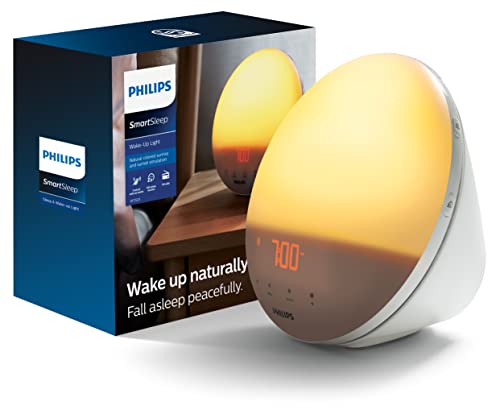
Philips SmartSleep Wake-Up Light HF3520/60 — Best Overall
The HF3520 suits anyone who wants the complete, proven wake-up light: coloured dawn, sunset wind-down, radio, natural sounds, and a proper reading lamp in one device.
- Coloured sunrise and sunset simulation
- 5 natural sounds plus FM radio
- Tap snooze, reading lamp function
- 20 brightness settings, model HF3520/60
Strengths
- The category’s reference design, refined over years
- Coloured sunrise feels like dawn rather than a dimmer switch
- Evening sunset mode makes it a full day-night device
Trade-offs
- On-device controls only — no app
- Interface feels dated beside app-based rivals
- Mid-to-premium tier pricing for the line
The Philips SmartSleep HF3520 earns its place in this guide because of how it handles completeness — every part of the wake and wind-down is handled by one device. That sounds like a small thing until you live with it every day: lighting and wake-up products are used in tired, distracted moments — first thing in the morning, last thing at night, or deep into a long work session — so the details that matter are the ones that remove friction rather than add features to a spec sheet. In research, this model kept surfacing for the same practical reasons, and the verified specifications line up with what owners actually rely on rather than marketing extras they never touch.
Look closer at its coloured sunrise progression and twenty-step brightness range, which together give the smoothest ramp in this guide and the design intent becomes clear. The manufacturer has clearly prioritised the core job over novelty, which is exactly the right trade at this level. Controls are where you expect them to be, the adjustment range covers the realistic span of home use rather than a laboratory extreme, and nothing about the daily routine requires you to re-read a manual after the first week. That learn-once quality is what separates a good pick from a gadget that ends up unplugged in a drawer.
In everyday use — bedrooms where the clock is also the reading lamp and the radio — the pattern is consistency. It behaves the same way on a rushed weekday as it does on a slow weekend, it does not demand attention to keep working, and its limitations are predictable rather than surprising. Predictability matters more than brilliance in this category: you are buying a tool that should quietly improve a routine you repeat hundreds of times a year, and this model understands that assignment better than most rivals at a similar level.
Best for: the complete wake-up light experience / Not suited for: app-first buyers
Check on Amazon — check price on Amazon
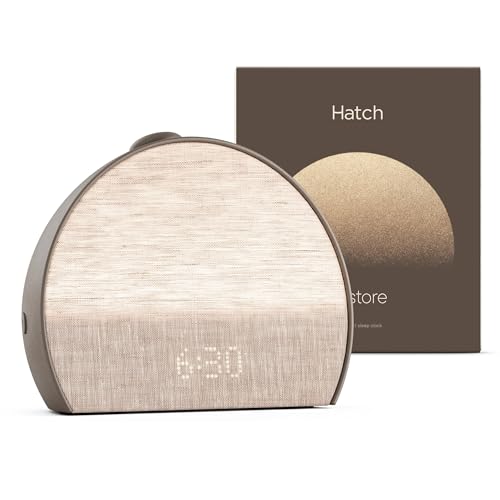
Hatch Restore 3 (Cocoa) — Best Design and Routine
Restore 3 in Cocoa suits routine-minded buyers who want the clock to run a whole evening sequence — dim light, sleep sounds — and a gentle sunrise, all without a phone on the nightstand.
- Sunrise alarm with gradual light
- Sound machine with sleep audio library
- Smart light for morning and evening routines
- Cocoa finish (this listing), on-device controls
Strengths
- Routine-first design treats evenings as part of waking well
- Screen-free controls keep the bedroom calm
- Furniture-grade looks in a category of gadgets
Trade-offs
- Full library lives in the Hatch+ subscription ecosystem — check the free tier before buying
- Ambient-style light is gentler than the Philips flagships
- Less suited to buyers who want radio
The Hatch Restore 3 earns its place in this guide because of how it handles calm — it is designed to lower the temperature of the whole evening, not just start the morning. That sounds like a small thing until you live with it every day: lighting and wake-up products are used in tired, distracted moments — first thing in the morning, last thing at night, or deep into a long work session — so the details that matter are the ones that remove friction rather than add features to a spec sheet. In research, this model kept surfacing for the same practical reasons, and the verified specifications line up with what owners actually rely on rather than marketing extras they never touch.
Look closer at its routine controls, which run the wind-down and wake sequences from the device itself and the design intent becomes clear. The manufacturer has clearly prioritised the core job over novelty, which is exactly the right trade at this level. Controls are where you expect them to be, the adjustment range covers the realistic span of home use rather than a laboratory extreme, and nothing about the daily routine requires you to re-read a manual after the first week. That learn-once quality is what separates a good pick from a gadget that ends up unplugged in a drawer.
In everyday use — bedrooms being deliberately de-phoned, and readers who want a light that behaves like furniture — the pattern is consistency. It behaves the same way on a rushed weekday as it does on a slow weekend, it does not demand attention to keep working, and its limitations are predictable rather than surprising. Predictability matters more than brilliance in this category: you are buying a tool that should quietly improve a routine you repeat hundreds of times a year, and this model understands that assignment better than most rivals at a similar level.
Best for: evening-routine builders and phone-free bedrooms / Not suited for: radio listeners or maximum-brightness seekers
Check on Amazon — check price on Amazon

Philips SmartSleep Connected HF3670/60 — Best Smart Features
The Connected HF3670 suits smart-bedroom owners who want to set, tune, and understand their wake from an app — including tracking the room conditions around their sleep.
- SleepMapper app personalisation
- Bedroom environment tracking sensors
- Personalised sunrise and sunset
- Model HF3670/60
Strengths
- Deepest personalisation in this guide
- Environment data adds genuine insight over time
- App scheduling beats button sequences for complex weeks
Trade-offs
- Connectivity adds setup and occasional friction
- Premium tier
- More device than a simple bedroom needs
The Philips SmartSleep Connected HF3670 earns its place in this guide because of how it handles insight — it tries to explain your mornings, not just start them. That sounds like a small thing until you live with it every day: lighting and wake-up products are used in tired, distracted moments — first thing in the morning, last thing at night, or deep into a long work session — so the details that matter are the ones that remove friction rather than add features to a spec sheet. In research, this model kept surfacing for the same practical reasons, and the verified specifications line up with what owners actually rely on rather than marketing extras they never touch.
Look closer at its environment tracking, which connects wake difficulty to the room’s light, sound, and temperature patterns and the design intent becomes clear. The manufacturer has clearly prioritised the core job over novelty, which is exactly the right trade at this level. Controls are where you expect them to be, the adjustment range covers the realistic span of home use rather than a laboratory extreme, and nothing about the daily routine requires you to re-read a manual after the first week. That learn-once quality is what separates a good pick from a gadget that ends up unplugged in a drawer.
In everyday use — smart bedrooms and anyone troubleshooting why some mornings feel harder — the pattern is consistency. It behaves the same way on a rushed weekday as it does on a slow weekend, it does not demand attention to keep working, and its limitations are predictable rather than surprising. Predictability matters more than brilliance in this category: you are buying a tool that should quietly improve a routine you repeat hundreds of times a year, and this model understands that assignment better than most rivals at a similar level.
Best for: app lovers and data-curious sleepers / Not suited for: simple, offline bedrooms
Check on Amazon — check price on Amazon

Philips Wake-Up Light HF3505/60 — Best Mid-Range with Radio
The HF3505 suits buyers who want radio in the morning — news or music as the sound layer — at a step below the HF3520’s price tier and complexity.
- Sunrise simulation
- 2 natural wake sounds plus FM radio
- Bedside lamp function
- Tap snooze class controls, model HF3505/60
Strengths
- FM radio is the wake sound many people actually prefer
- Simpler and friendlier tier than the flagship
- Retains the core Philips sunrise design
Trade-offs
- Only two natural sounds versus five on the HF3520
- White sunrise, no coloured dawn
- Fewer brightness steps than the flagship
The Philips HF3505 earns its place in this guide because of how it handles the radio habit — for millions of people, morning sound means voices and music, not birdsong. That sounds like a small thing until you live with it every day: lighting and wake-up products are used in tired, distracted moments — first thing in the morning, last thing at night, or deep into a long work session — so the details that matter are the ones that remove friction rather than add features to a spec sheet. In research, this model kept surfacing for the same practical reasons, and the verified specifications line up with what owners actually rely on rather than marketing extras they never touch.
Look closer at its FM radio paired with the sunrise ramp, a combination the flagship also offers but at a friendlier tier here and the design intent becomes clear. The manufacturer has clearly prioritised the core job over novelty, which is exactly the right trade at this level. Controls are where you expect them to be, the adjustment range covers the realistic span of home use rather than a laboratory extreme, and nothing about the daily routine requires you to re-read a manual after the first week. That learn-once quality is what separates a good pick from a gadget that ends up unplugged in a drawer.
In everyday use — kitchens-adjacent bedrooms, news listeners, and gift buyers — the pattern is consistency. It behaves the same way on a rushed weekday as it does on a slow weekend, it does not demand attention to keep working, and its limitations are predictable rather than surprising. Predictability matters more than brilliance in this category: you are buying a tool that should quietly improve a routine you repeat hundreds of times a year, and this model understands that assignment better than most rivals at a similar level.
Best for: radio-first wakers on a mid-range budget / Not suited for: buyers wanting coloured sunrise
Check on Amazon — check price on Amazon
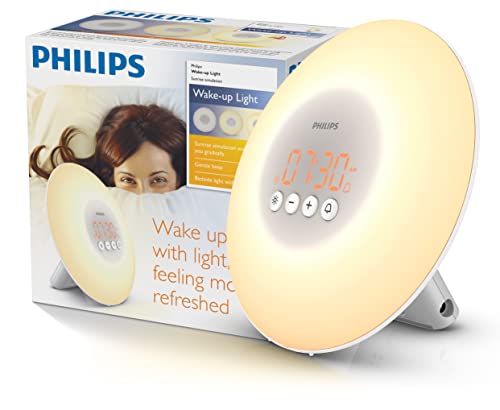
Philips SmartSleep Wake-Up Light HF3500/60 — Best Budget
The HF3500 suits first-time wake-up light buyers who want to test the concept with the essential Philips formula at the lowest tier in the line.
- Sunrise simulation, 10 brightness settings
- Gradually increasing wake sound
- Tap snooze
- Bedside lamp function, model HF3500/60
Strengths
- Lowest-risk entry into light waking
- Simple enough to set half-asleep
- Gradual sound rise is the key feature, kept intact
Trade-offs
- No radio, no sound choices, no colours
- Basic display and controls
- Fewest customisation options here
The Philips SmartSleep HF3500 earns its place in this guide because of how it handles the honest minimum — sunrise plus rising sound, nothing else, priced accordingly. That sounds like a small thing until you live with it every day: lighting and wake-up products are used in tired, distracted moments — first thing in the morning, last thing at night, or deep into a long work session — so the details that matter are the ones that remove friction rather than add features to a spec sheet. In research, this model kept surfacing for the same practical reasons, and the verified specifications line up with what owners actually rely on rather than marketing extras they never touch.
Look closer at its restraint, which makes it the easiest recommendation for the light-curious and the design intent becomes clear. The manufacturer has clearly prioritised the core job over novelty, which is exactly the right trade at this level. Controls are where you expect them to be, the adjustment range covers the realistic span of home use rather than a laboratory extreme, and nothing about the daily routine requires you to re-read a manual after the first week. That learn-once quality is what separates a good pick from a gadget that ends up unplugged in a drawer.
In everyday use — guest rooms, students, and anyone upgrading from a phone alarm for the first time — the pattern is consistency. It behaves the same way on a rushed weekday as it does on a slow weekend, it does not demand attention to keep working, and its limitations are predictable rather than surprising. Predictability matters more than brilliance in this category: you are buying a tool that should quietly improve a routine you repeat hundreds of times a year, and this model understands that assignment better than most rivals at a similar level.
Best for: first wake-up light on a budget / Not suited for: customisation seekers
Check on Amazon — check price on Amazon
Dekala Smart Sunrise Alarm Clock (ACA) — Best with Wireless Charging
This Dekala suits nightstands drowning in chargers: it wakes you with light and sound while its top charges the phone, watch, or earbuds that used to need their own cables.
- Sunrise alarm with sunset and night light functions
- Wireless charging for phone and compatible devices (see listing)
- White noise sleep sound machine
- Touch and app control, model ACA
Strengths
- Deletes multiple nightstand chargers at once
- Sound machine covers the evening side
- App control for schedules and settings
Trade-offs
- Charging compatibility varies by device — verify yours on the listing
- Does many jobs; masters the hub role rather than pure light quality
- Setup is the longest in this guide
The Dekala Smart Sunrise Alarm Clock earns its place in this guide because of how it handles the nightstand as a charging station that also happens to wake you beautifully. That sounds like a small thing until you live with it every day: lighting and wake-up products are used in tired, distracted moments — first thing in the morning, last thing at night, or deep into a long work session — so the details that matter are the ones that remove friction rather than add features to a spec sheet. In research, this model kept surfacing for the same practical reasons, and the verified specifications line up with what owners actually rely on rather than marketing extras they never touch.
Look closer at its wireless charging top, which turns the dead space above the clock into the phone’s overnight home — pair it with the thinking in best desk lamps with wireless charging and the design intent becomes clear. The manufacturer has clearly prioritised the core job over novelty, which is exactly the right trade at this level. Controls are where you expect them to be, the adjustment range covers the realistic span of home use rather than a laboratory extreme, and nothing about the daily routine requires you to re-read a manual after the first week. That learn-once quality is what separates a good pick from a gadget that ends up unplugged in a drawer.
In everyday use — shared nightstands and small bedrooms where every plug is contested — the pattern is consistency. It behaves the same way on a rushed weekday as it does on a slow weekend, it does not demand attention to keep working, and its limitations are predictable rather than surprising. Predictability matters more than brilliance in this category: you are buying a tool that should quietly improve a routine you repeat hundreds of times a year, and this model understands that assignment better than most rivals at a similar level.
Best for: charger-cluttered nightstands / Not suited for: single-purpose purists
Check on Amazon — check price on Amazon
Comparison Table
| Pick | Best for | Standout spec |
|---|---|---|
| Philips SmartSleep Wake-Up Light HF3520/60 | the complete wake-up light experience | Coloured sunrise + sunset, 5 natural sounds, FM radio, 20 brightness settings |
| Hatch Restore 3 (Cocoa) | evening-routine builders and phone-free bedrooms | Sunrise alarm, sound machine, smart light, screen-free controls |
| Philips SmartSleep Connected HF3670/60 | app lovers and data-curious sleepers | App control, environment tracking, personalised sunrise + sunset |
| Philips Wake-Up Light HF3505/60 | radio-first wakers on a mid-range budget | Sunrise simulation, 2 natural sounds, FM radio, bedside lamp |
| Philips SmartSleep Wake-Up Light HF3500/60 | first wake-up light on a budget | Sunrise simulation, gradually increasing sound, 10 brightness settings |
| Dekala Smart Sunrise Alarm Clock (ACA) | charger-cluttered nightstands | Sunrise alarm, wireless charging for phone/watch/earbuds class devices, white noise, app control |
How to Choose a Wake-Up Light Alarm Clock
Start with the ramp, because it is the product. A longer, smoother ramp wakes more gently than a short bright one; coloured ramps (HF3520) mimic dawn’s tone shift and feel the most natural, while white ramps (HF3500, HF3505) still deliver the core benefit. Peak brightness matters relative to your room: a dark, curtained bedroom lets a modest ramp shine, while a bright room needs the flagship-class output — or better curtains. Display dimming is the ramp’s unsung partner: a clock whose time display glows all night works against the darkness the morning ramp needs, so favour models with dimmable or auto-dimming displays for light-sensitive bedrooms.
Choose your sound layer by honest habit. Natural sounds suit light sleepers and nature-minded wakers; FM radio (HF3505, HF3520) suits news and music people and rotates content automatically, which defeats habituation; app and library models (Hatch, Connected, Dekala) suit anyone who likes seasonal variety. Escalation — volume rising gradually — matters more than the specific sound, and every pick here handles it properly. If two people share the clock, weigh the sound layer as a joint decision and the light as the personal one, since a well-aimed ramp disturbs a partner far less than any sound does. For the sound-first alternative, the live best digital alarm clocks roundup is the comparison to make.
Then decide the ecosystem question with clear eyes. Standalone Philips clocks ask nothing of you after setup — no accounts, no Wi-Fi, no subscriptions — and for many bedrooms that is the entire argument. The Hatch’s library model offers depth in exchange for an ongoing relationship (check exactly what the free tier includes before buying), and the Connected Philips trades simplicity for data and app convenience. Finally, count the nightstand: if chargers and cables crowd it, the Dekala’s charging top is a real quality-of-life feature, and the bedside-lighting thinking in best desk lamps with wireless charging and best desk lamps for reading will help you plan the whole surface as one system.
Key Takeaways
- The ramp is the product: longer, smoother, and bright enough for your room.
- Coloured dawn feels most natural; white ramps still deliver the core benefit.
- Escalating sound matters more than which sound you pick.
- Choose the ecosystem — standalone, routine library, or smart hub — before choosing the model.
How to Set Up Your Wake-Up Light for the First Week
Give the clock a fair trial: most people need several mornings to feel the difference, because the benefit is cumulative — you are retraining the last half hour of sleep, not flipping a switch. Set up on a weekend and judge after a full week.
- Place the clock facing the bed at pillow height on the nightstand, clear of books and bottles that would shadow the light.
- Set the ramp to begin well before your wake time and the sound to start at wake time, rising gradually.
- Dim the display for the night if your model allows it, and darken the room as much as practical.
- Keep your old alarm as a backup, set fifteen minutes later, for the first week only.
- Use the sunset or wind-down feature at a fixed evening time — a regular bedtime multiplies the morning benefit.
- After a week, tune one thing: ramp length, sound choice, or brightness — and give the change its own few days.
Getting More from the Evening Side
Problem: the sunset feature goes unused. Fix: anchor it to an existing habit — start the sunset when you brush your teeth or begin a chapter — rather than to a clock time you will ignore.
Problem: sleep sounds feel artificial. Fix: lower the volume below where you think it should be and choose the plainest sound (rain or white noise) — evening sound should mask the house, not entertain you; our live white-noise guide explains the masking principle in depth.
Problem: the reading-light function disappoints. Fix: remember it is an ambient lamp, not a task lamp — for serious bedtime reading, pair the clock with a proper reading light from best desk lamps for reading and let each device do its own job.
Problem: you wake before the ramp finishes on bright summer mornings. Fix: that is the system working with the season — shorten the ramp in summer or lean on blackout curtains to give the clock back its contrast.
Wake-Up Lights in Different Bedrooms
Context decides which pick in this guide is right, so consider four common bedrooms honestly. The dark, quiet, solo bedroom is the wake-up light’s paradise: any pick here will perform at its best, and the choice reduces to taste — colour (Philips flagship), routine (Hatch), or simplicity (HF3500). The bright or street-lit bedroom is the hard case: invest first in darkness — curtains, a door seal — because no ramp outshines a sodium streetlight leaking through blinds all night, and only then choose by sound features, which carry more of the load in bright rooms.
The shared bedroom is a negotiation the product pages never mention. Light aimed at one side of the bed disturbs less than sound, so the earlier riser’s clock should live on their side, favour ramp over volume, and use radio or gentle sounds at modest levels — the HF3505’s radio at low volume is a kinder shared alarm than any beep. The child’s or teen’s bedroom rewards routine features and durability of habit: sunset wind-downs and consistent wake times do more for a school morning than any brightness figure, and the Hatch’s routine framing or a simple Philips with a fixed schedule both serve — what matters is the same time every day, weekends included within reason.
The guest bedroom, finally, is where the budget pick shines: the HF3500 asks nothing of a guest — no app, no account, an obvious interface — and gives them a kinder morning than the phone alarm they would otherwise set. Matching clock to bedroom, rather than buying the flagship for every room, is how this category’s money is best spent; the premium features only pay where the routine exists to use them.
Common Buying Mistakes
Judging a wake-up light after one morning is the category’s most common mistake. The first night with any new alarm is novel and often lighter; the honest verdict arrives around morning five to seven, once the routine settles. Every return-window in this category is long enough for a fair trial — use it before deciding the concept does not work for you.
Second, placing the clock where its light cannot reach you: behind a stack of books, low in a shelf, or facing the wall for aesthetic reasons. The ramp needs a clear path to the bed at roughly pillow height. A wake-up light is a lamp with a job; arrange the nightstand around the job.
Third, buying ecosystem blind. A subscription library, an app account, or a Wi-Fi dependency are all fine — when chosen knowingly. Read what the Hatch’s free tier includes, what the Connected Philips needs to shine, and what the standalone Philips models deliberately omit, then buy the relationship you actually want with the device. Our heavy-sleeper guide, best sunrise alarm clocks for heavy sleepers, applies the same discipline at higher wake-power stakes.
Fourth, expecting the clock to fix a schedule. A wake-up light makes a consistent wake time pleasant; it cannot make an inconsistent one painless. The buyers who love these clocks longest are the ones who pair them with a roughly fixed bedtime — the sunset features exist to help exactly there.
Wake-Up Lights and the Rest of Your Bedroom Light
A wake-up light does not operate alone, and its success is quietly decided by the bedroom’s other light. Evening is the first interaction: bright overhead light in the final hour works against every sunset feature in this guide, so let lamps — warm, low, and few — take over the bedroom’s last hour, and let the clock’s sunset be the final step down rather than a lone gesture in a bright room. Readers furnishing that evening layer will find the bedside thinking in the reading-lamp guide transfers directly: low, warm, and positioned for the book, not the ceiling.
Morning is the second interaction. The clock’s ramp should be the bedroom’s brightest event until you are up; a partner’s brighter bathroom light spilling in, or curtains opened by habit before the ramp completes, both flatten the dawn you paid for. Coordinate the small things — door closed until the alarm, curtains opened as the reward for rising — and the clock performs as designed. None of this requires new purchases, which is precisely the point: wake-up lights reward households that treat light as a daily rhythm with a beginning and an end, and the clock is simply the instrument that plays it most reliably.
Final Recommendation
Start with the Philips SmartSleep Wake-Up Light HF3520/60 if you want the safest all-round choice in this roundup — it earns the top spot because it does the core job best with the fewest compromises for the most people. If its one honest limitation is a deal-breaker for your setup, the Hatch Restore 3 (Cocoa) is the runner-up to shortlist next. Either way, check price on Amazon before you buy, confirm the listing matches the exact model named here, and re-read the trade-offs above with your own desk, monitor, or bedside table in mind — that five-minute check is what separates a lamp or clock you love from one you return.
The HF3520 is the default recommendation because it is the category’s centre of gravity: nothing essential missing, nothing forced on you. Choose the Hatch if evenings are your battleground, the Connected if data motivates you, the HF3505 if radio is your morning language, the HF3500 if you are simply curious, and the Dekala if your nightstand needs a hub more than it needs a purist’s lamp. Each is the right answer to a slightly different question — the reviews above exist to help you find yours.
Whichever model you choose, protect the first week. Novelty makes every new alarm feel effective on day one and questionable on day three; the clocks in this guide reveal themselves across a fortnight of ordinary mornings. Judge yours on that evidence — it is the only sample that matters. Readers who run the full fortnight almost always report the same quiet outcome: not a transformed life, but a noticeably less hostile first ten minutes — and mornings, repeated daily for years, are exactly the place where a small improvement compounds into a large one, morning after ordinary morning, all year long.
A final perspective for buyers hesitating at the premium tier: divide the decision by mornings, not by money. A clock used daily is used hundreds of times a year for years; the difference between the budget and flagship picks, spread across that arithmetic, is among the smallest per-use upgrades in the bedroom. That does not oblige anyone to buy the flagship — the HF3500’s dawn is honest and complete — but it reframes the question correctly: you are not buying a gadget, you are hiring a small daily service, and the wage difference between the adequate and the excellent applicant is genuinely tiny. Choose the one whose philosophy matches your routine and let the per-morning maths settle the rest.
And a word for the sceptical reader who has scrolled this far unconvinced: the fair test costs nothing but a week of mornings inside any retailer’s return window. Set the clock up properly, darken the room, keep the schedule honest, and let seven ordinary mornings vote. Most sceptics who run that experiment fairly keep the clock — not because the dawn is magical, but because the alternative, once noticed, is hard to un-notice: a sudden noise in a dark room is a strange way to begin a day you have any choice about.
Frequently Asked Questions
How is a wake-up light different from a normal alarm clock?
A normal alarm starts with sound at full intent; a wake-up light starts with gradually building light well before your wake time, so sound arrives as a gentle confirmation. Many people find they surface during the ramp itself. The evening side differs too — sunset simulation and sleep sounds have no equivalent on a standard clock; compare best digital alarm clocks for the conventional best.
Will a wake-up light work in a bright bedroom?
Less well. The ramp’s power is contrast: it needs a reasonably dark room to register as dawn. Blackout or lined curtains restore that contrast in bright rooms and are the best accessory this category has. In a truly bright room, weight the sound features more when choosing.
What ramp length should I start with?
The longest comfortable setting your clock offers, judged over a week. You can shorten it later once you know how you respond — many users settle into waking near the end of the ramp with sound as a formality. Heavy sleepers should read the stricter advice in best sunrise alarm clocks for heavy sleepers.
Do I need the sunset feature?
Need, no — but it is the feature owners most often report using more than expected, because a dimming cue makes a regular bedtime easier to keep, and regular bedtimes make every morning easier. If your evenings are already disciplined, it is a bonus; if they are chaotic, it may be the real reason to buy.
Are app-connected wake-up lights worth it?
If you keep complex or changing schedules, app control genuinely simplifies life, and environment tracking can be illuminating. If your alarm is the same six days a week, a standalone clock does the job with zero ongoing relationship. Worth is a schedule question, not a technology question.
Can one wake-up light serve two people?
Yes, with negotiation: the light layer is gentle enough that a partner often sleeps through the early ramp, but the sound layer is shared. Couples usually set the clock for the earlier riser, aim it at that side of the bed, and keep volumes modest — or choose per-day dual-alarm models from the heavy-sleeper guide.
Can a wake-up light replace my phone alarm entirely?
For most users, after a one-week transition with the phone as backup, yes — and removing the phone from the nightstand is a benefit many owners rank above the sunrise itself. Keep the phone alarm for travel and for mornings that absolutely cannot slip until the habit is proven, then let the clock own the ordinary days.