Disclosure: As an Amazon Associate, umtsmarttool.com earns from qualifying purchases. Links to Amazon on this page are affiliate links; they cost you nothing extra. Prices and availability change often, so check the current Amazon listing before you buy.
Where to buy
Short on time? These are the six best desk lamps for reading worth your money, each linked to its Amazon listing where a verified listing exists, so you can check the current details in one click. In a hurry? Start with the BenQ WiT e-Reading Lamp.
- BenQ WiT e-Reading Lamp — Best Overall. Check on Amazon
- TaoTronics TT-DL13 LED Desk Lamp — Best Value. Check on Amazon
- OttLite Dual Shade LED Desk Lamp — Best for Shared Desks. Check on Amazon
- OttLite 13W Slimline Desk Lamp — Best Compact Classic. Check on Amazon
- OttLite Folding Task Lamp — Best Portable. Check on Amazon
- OttLite Creative Curves LED Desk Lamp — Best for Bedside Style. Check on Amazon
Read the full guide ↓
Finding the best desk lamps for reading sounds simple until you spend a winter with the wrong one: light that pools in one hot spot and leaves the page edges grey, a colour tone that makes paper look dingy, or an arm that drifts down mid-chapter until the lamp is reading over your shoulder whether you asked it to or not. Reading is the most demanding everyday task you can give a lamp — hours of sustained focus on small contrast differences — so this guide judges six verifiable lamps by the standards that actually matter to readers: even coverage across two open pages, honest colour, stable arms, and controls you can work half-asleep.
Our six picks span three philosophies. BenQ’s WiT e-Reading Lamp is the wide-field premium answer, built for desks where paper and screen share the evening. TaoTronics’ TT-DL13 is the value benchmark with fine-grained control and a USB port for your e-reader. The four OttLite models each solve a specific reading life: sharing a desk, folding away, travelling room to room, or simply looking right on a bedside table. If your reading happens at a monitor-first desk, compare the approach in best desk lamps for monitors; if eye comfort is your primary concern above all, best desk lamps for eye strain goes deeper on that lens, and artists should detour to best desk lamps for drawing where colour fidelity rules everything.
A word on honesty: no lamp here will fix tired eyes caused by reading in an otherwise pitch-black room for three hours — ambient light in the room matters too, and we cover that in the how-to section. What a good reading lamp does is remove every lighting excuse: even pages, no glare stripe across glossy paper, and a tone that keeps black print truly black. That is the standard each review below is held to.
In this guide
Quick Picks
| Pick | Badge | Key spec |
|---|---|---|
| BenQ WiT e-Reading Lamp | Best Overall | 35-inch wide illumination, 13 colour modes, auto-dimming, CRI95-class |
| TaoTronics TT-DL13 LED Desk Lamp | Best Value | 5 colour modes, 7 brightness levels, USB charging port, 12W |
| OttLite Dual Shade LED Desk Lamp | Best for Shared Desks | Dual heads, 3 colour modes, 40-minute auto-off timer |
| OttLite 13W Slimline Desk Lamp | Best Compact Classic | 13W replaceable bulb, articulating arm 14.75–19.75 in, folding design |
| OttLite Folding Task Lamp | Best Portable | Fold-up design with handle, multi-position shade, low glare |
| OttLite Creative Curves LED Desk Lamp | Best for Bedside Style | 4 brightness settings, natural daylight LEDs, curved flexible neck |
How These Picks Were Chosen
Every model in this guide was verified against a real listing or manufacturer source we opened: the BenQ WiT’s model identity and modes from its Amazon listing, the TT-DL13’s specifications from its long-running listing history and the manufacturer’s own product page, and the OttLite models from listings that state their ASIN, head design, and control scheme explicitly. Models we could not tie to a verifiable listing — however glowing their generic roundup coverage — were excluded.
Ranking weighed four reader-specific criteria. Coverage first: does the light pool span an open hardback or two notebook pages without a dim gutter in the middle? Stability second: does the arm hold its angle at full extension, session after session? Third, control granularity: readers fine-tune brightness more than any other lamp users, so steps, sliders, and timers all scored. Fourth, colour quality: balanced, high-rendering light keeps print contrast high and colours honest for illustrated books, comics, and crafts.
As with every guide in this batch, there are no invented hands-on claims and no printed prices — check price on Amazon at each pick, because lighting prices move with seasons and sales. Tiers are described qualitatively. Where a lamp’s honest limitation matters to readers — a small light pool, a fixed colour tone — it is stated in its review, not buried.
The 6 Best Desk Lamps for Reading

BenQ WiT e-Reading Lamp — Best Overall
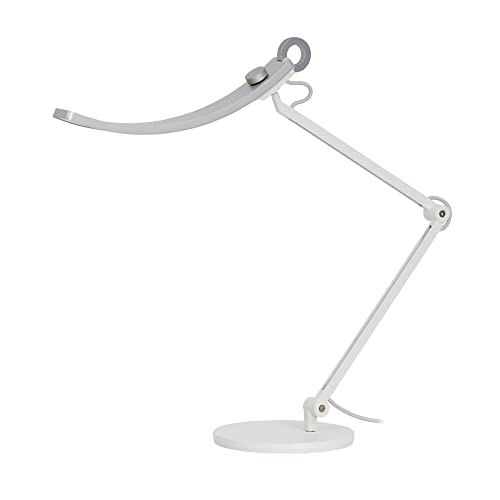
The BenQ WiT e-Reading Lamp suits serious readers and desk workers who split time between paper and screen and want one wide, even field of light over both.
- Curved wide head for broad, even coverage
- 13 colour temperature modes, dual smart modes
- Auto-dimming sensor
- Adjustable swing arm, matte silver (model WiT)
Strengths
- Widest, most even light pool in this roundup
- Paper and screen modes genuinely differ in a useful way
- Build quality and arm stability are a class above budget lamps
Trade-offs
- Premium tier — the most expensive style of pick here
- Large footprint; overkill for a tiny bedside table
- Arm is substantial — check your desk depth first
The BenQ WiT e-Reading Lamp earns its place in this guide because of how it handles breadth — its curved head lights an open book and a notebook at once. That sounds like a small thing until you live with it every day: lighting and wake-up products are used in tired, distracted moments — first thing in the morning, last thing at night, or deep into a long work session — so the details that matter are the ones that remove friction rather than add features to a spec sheet. In research, this model kept surfacing for the same practical reasons, and the verified specifications line up with what owners actually rely on rather than marketing extras they never touch.
Look closer at its dual smart modes, which bias the light differently for paper reading versus screen work and the design intent becomes clear. The manufacturer has clearly prioritised the core job over novelty, which is exactly the right trade at this level. Controls are where you expect them to be, the adjustment range covers the realistic span of home use rather than a laboratory extreme, and nothing about the daily routine requires you to re-read a manual after the first week. That learn-once quality is what separates a good pick from a gadget that ends up unplugged in a drawer.
In everyday use — evening novels, study sessions, and craft work where colour judgement matters — the pattern is consistency. It behaves the same way on a rushed weekday as it does on a slow weekend, it does not demand attention to keep working, and its limitations are predictable rather than surprising. Predictability matters more than brilliance in this category: you are buying a tool that should quietly improve a routine you repeat hundreds of times a year, and this model understands that assignment better than most rivals at a similar level.
Best for: long reading and mixed paper-plus-screen desk work / Not suited for: small bedside tables or tight budgets
Check on Amazon — check price on Amazon
TaoTronics TT-DL13 LED Desk Lamp — Best Value
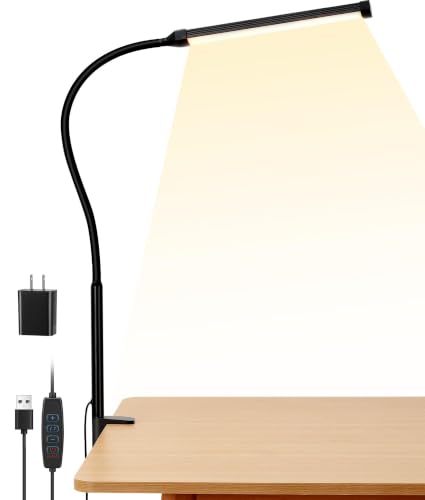
The TT-DL13 suits students and home readers who want a proven, flexible lamp with a handy USB port for the e-reader or phone that lives beside the book.
- 5 lighting modes with 7 brightness levels (35 combinations)
- Touch control slider
- USB charging port for a phone or e-reader
- 12W LED, model TT-DL13
Strengths
- Huge, well-documented track record for this exact model
- Fine-grained brightness control suits sensitive eyes
- USB port removes one charger from the nightstand
Trade-offs
- Plastic-and-alloy build feels less premium than BenQ or OttLite flagships
- No auto-dimming sensor
- Design is functional rather than decorative
The TaoTronics TT-DL13 earns its place in this guide because of how it handles choice — thirty-five combinations means your exact comfort setting exists. That sounds like a small thing until you live with it every day: lighting and wake-up products are used in tired, distracted moments — first thing in the morning, last thing at night, or deep into a long work session — so the details that matter are the ones that remove friction rather than add features to a spec sheet. In research, this model kept surfacing for the same practical reasons, and the verified specifications line up with what owners actually rely on rather than marketing extras they never touch.
Look closer at its touch slider, which makes small brightness changes a one-finger habit rather than a button-mashing chore and the design intent becomes clear. The manufacturer has clearly prioritised the core job over novelty, which is exactly the right trade at this level. Controls are where you expect them to be, the adjustment range covers the realistic span of home use rather than a laboratory extreme, and nothing about the daily routine requires you to re-read a manual after the first week. That learn-once quality is what separates a good pick from a gadget that ends up unplugged in a drawer.
In everyday use — dorm desks, bedside reading, and homework stations — the pattern is consistency. It behaves the same way on a rushed weekday as it does on a slow weekend, it does not demand attention to keep working, and its limitations are predictable rather than surprising. Predictability matters more than brilliance in this category: you are buying a tool that should quietly improve a routine you repeat hundreds of times a year, and this model understands that assignment better than most rivals at a similar level.
Best for: students and everyday reading on a sensible budget / Not suited for: buyers wanting auto-dimming or heirloom build
Check on Amazon — check price on Amazon

OttLite Dual Shade LED Desk Lamp — Best for Shared Desks
This OttLite suits couples, siblings, or a reader-plus-laptop pair sharing one desk — two heads mean two pools of light that do not fight each other.
- Dual-shade (Pivot) design lights two zones
- 3 colour temperature modes, 3 brightness settings each
- 40-minute auto shut-off timer
- Flexible neck, height adjusts roughly 13.25–26 in per brand listing
Strengths
- Two independently aimed heads solve the shared-desk problem properly
- ClearSun LED technology with high colour rendering
- Timer is perfect for readers who fall asleep mid-chapter
Trade-offs
- Two heads need a bigger desk corner than a single lamp
- Touch controls for two heads take a day to memorise
- Not the cheapest way to light one small desk
The OttLite Dual Shade LED Desk Lamp earns its place in this guide because of how it handles sharing — it treats a two-person desk as the normal case, not an edge case. That sounds like a small thing until you live with it every day: lighting and wake-up products are used in tired, distracted moments — first thing in the morning, last thing at night, or deep into a long work session — so the details that matter are the ones that remove friction rather than add features to a spec sheet. In research, this model kept surfacing for the same practical reasons, and the verified specifications line up with what owners actually rely on rather than marketing extras they never touch.
Look closer at its dual pivoting shades and ClearSun LEDs, designed to render print crisply with balanced, natural-feeling light and the design intent becomes clear. The manufacturer has clearly prioritised the core job over novelty, which is exactly the right trade at this level. Controls are where you expect them to be, the adjustment range covers the realistic span of home use rather than a laboratory extreme, and nothing about the daily routine requires you to re-read a manual after the first week. That learn-once quality is what separates a good pick from a gadget that ends up unplugged in a drawer.
In everyday use — family homework tables and partner desks — the pattern is consistency. It behaves the same way on a rushed weekday as it does on a slow weekend, it does not demand attention to keep working, and its limitations are predictable rather than surprising. Predictability matters more than brilliance in this category: you are buying a tool that should quietly improve a routine you repeat hundreds of times a year, and this model understands that assignment better than most rivals at a similar level.
Best for: shared desks and two-person reading nooks / Not suited for: solo minimal desks
Check on Amazon — check price on Amazon

OttLite 13W Slimline Desk Lamp — Best Compact Classic
The Slimline suits readers in small spaces who want a lamp that folds away completely and uses a replaceable bulb instead of a sealed LED board.
- 13W Type E bulb, replaceable, rated up to 10,000 hours
- Articulating arm adjusts about 14.75–19.75 in
- Rotating shade, folds flat to stow
- Black finish (this listing)
Strengths
- Folds flat — genuinely disappears when not in use
- Replaceable bulb extends the lamp’s working life
- Long-proven OttLite daylight-style illumination for print
Trade-offs
- Single fixed colour character — no temperature adjustment
- Bulb technology is older than the LED picks here
- Smaller light pool than the wide-head models
The OttLite 13W Slimline Desk Lamp earns its place in this guide because of how it handles disappearing — it folds to almost nothing between reading sessions. That sounds like a small thing until you live with it every day: lighting and wake-up products are used in tired, distracted moments — first thing in the morning, last thing at night, or deep into a long work session — so the details that matter are the ones that remove friction rather than add features to a spec sheet. In research, this model kept surfacing for the same practical reasons, and the verified specifications line up with what owners actually rely on rather than marketing extras they never touch.
Look closer at its articulating arm and rotating shade, a simple mechanism that has outlasted many smarter rivals and the design intent becomes clear. The manufacturer has clearly prioritised the core job over novelty, which is exactly the right trade at this level. Controls are where you expect them to be, the adjustment range covers the realistic span of home use rather than a laboratory extreme, and nothing about the daily routine requires you to re-read a manual after the first week. That learn-once quality is what separates a good pick from a gadget that ends up unplugged in a drawer.
In everyday use — guest-room desks, sewing corners, and travel-adjacent reading spots — the pattern is consistency. It behaves the same way on a rushed weekday as it does on a slow weekend, it does not demand attention to keep working, and its limitations are predictable rather than surprising. Predictability matters more than brilliance in this category: you are buying a tool that should quietly improve a routine you repeat hundreds of times a year, and this model understands that assignment better than most rivals at a similar level.
Best for: small desks, guest rooms, and folding workspaces / Not suited for: readers who want colour temperature control
Check on Amazon — check price on Amazon
OttLite Folding Task Lamp — Best Portable
The Folding Task Lamp suits readers who read in more than one place — bed, armchair, kitchen table — and want one lamp that follows them with a handle.
- Fold-up portable design with carry handle
- Multi-position shade
- Low-heat, low-glare illumination
- White finish (this listing)
Strengths
- Purpose-built to be carried room to room
- Shade positions cover book-on-lap through desk angles
- Low glare suits long, relaxed reading sessions
Trade-offs
- Portability trades away arm reach and light-pool size
- No colour temperature modes
- Best as a second lamp rather than a desk’s only light
The OttLite Folding Task Lamp earns its place in this guide because of how it handles mobility — it is a reading lamp that behaves like a book, going where you go. That sounds like a small thing until you live with it every day: lighting and wake-up products are used in tired, distracted moments — first thing in the morning, last thing at night, or deep into a long work session — so the details that matter are the ones that remove friction rather than add features to a spec sheet. In research, this model kept surfacing for the same practical reasons, and the verified specifications line up with what owners actually rely on rather than marketing extras they never touch.
Look closer at its fold-flat body and handle, which make the move from desk to bedside a ten-second job and the design intent becomes clear. The manufacturer has clearly prioritised the core job over novelty, which is exactly the right trade at this level. Controls are where you expect them to be, the adjustment range covers the realistic span of home use rather than a laboratory extreme, and nothing about the daily routine requires you to re-read a manual after the first week. That learn-once quality is what separates a good pick from a gadget that ends up unplugged in a drawer.
In everyday use — armchair readers, carers, and anyone whose reading chair migrates with the sun — the pattern is consistency. It behaves the same way on a rushed weekday as it does on a slow weekend, it does not demand attention to keep working, and its limitations are predictable rather than surprising. Predictability matters more than brilliance in this category: you are buying a tool that should quietly improve a routine you repeat hundreds of times a year, and this model understands that assignment better than most rivals at a similar level.
Best for: reading in multiple rooms / Not suited for: a single fixed desk needing maximum coverage
Check on Amazon — check price on Amazon

OttLite Creative Curves LED Desk Lamp — Best for Bedside Style
Creative Curves suits bedside and dorm readers who care how the lamp looks at 2pm as much as how it lights a page at 10pm.
- 4 dimmable brightness settings
- Natural daylight LED illumination
- Flexible curved neck design
- Touch-style controls, dorm- and desk-friendly size
Strengths
- Sculptural curved design suits bedrooms and dorms
- Four brightness levels cover novel-to-manual reading
- Daylight-balanced light keeps print contrast high
Trade-offs
- Fewer settings than the TaoTronics or BenQ picks
- Neck flexibility is good, reach is modest
- No timer or USB port at this level
The OttLite Creative Curves LED Desk Lamp earns its place in this guide because of how it handles blending in — it looks like bedroom furniture, not office equipment. That sounds like a small thing until you live with it every day: lighting and wake-up products are used in tired, distracted moments — first thing in the morning, last thing at night, or deep into a long work session — so the details that matter are the ones that remove friction rather than add features to a spec sheet. In research, this model kept surfacing for the same practical reasons, and the verified specifications line up with what owners actually rely on rather than marketing extras they never touch.
Look closer at its smooth curved neck, which arcs light over a book from behind your shoulder — the classic reading geometry and the design intent becomes clear. The manufacturer has clearly prioritised the core job over novelty, which is exactly the right trade at this level. Controls are where you expect them to be, the adjustment range covers the realistic span of home use rather than a laboratory extreme, and nothing about the daily routine requires you to re-read a manual after the first week. That learn-once quality is what separates a good pick from a gadget that ends up unplugged in a drawer.
In everyday use — bedside tables, dorm desks, and reading chairs — the pattern is consistency. It behaves the same way on a rushed weekday as it does on a slow weekend, it does not demand attention to keep working, and its limitations are predictable rather than surprising. Predictability matters more than brilliance in this category: you are buying a tool that should quietly improve a routine you repeat hundreds of times a year, and this model understands that assignment better than most rivals at a similar level.
Best for: bedside and dorm reading with style / Not suited for: feature-maximalists
Check on Amazon — check price on Amazon
Comparison Table
| Pick | Best for | Standout spec |
|---|---|---|
| BenQ WiT e-Reading Lamp | long reading and mixed paper-plus-screen desk work | 35-inch wide illumination, 13 colour modes, auto-dimming, CRI95-class |
| TaoTronics TT-DL13 LED Desk Lamp | students and everyday reading on a sensible budget | 5 colour modes, 7 brightness levels, USB charging port, 12W |
| OttLite Dual Shade LED Desk Lamp | shared desks and two-person reading nooks | Dual heads, 3 colour modes, 40-minute auto-off timer |
| OttLite 13W Slimline Desk Lamp | small desks, guest rooms, and folding workspaces | 13W replaceable bulb, articulating arm 14.75–19.75 in, folding design |
| OttLite Folding Task Lamp | reading in multiple rooms | Fold-up design with handle, multi-position shade, low glare |
| OttLite Creative Curves LED Desk Lamp | bedside and dorm reading with style | 4 brightness settings, natural daylight LEDs, curved flexible neck |
How to Choose a Desk Lamp for Reading
Begin with geometry, because reading light is geometry. The lamp head should sit behind and above your shoulder line, angled down at roughly thirty to forty-five degrees onto the page, so light rakes across print without bouncing off glossy paper into your eyes. Wide heads like the BenQ WiT achieve this for a whole desk; gooseneck and curved designs like the OttLite Creative Curves achieve it for one book in one chair. Measure your situation honestly: a bedside reader needs reach over a pillow stack, a desk reader needs span over an open textbook, and buying the wrong geometry is the mistake no brightness level can fix. If your reading spot is also your drawing spot, cross-check best architect desk lamps for the long-arm alternatives.
Colour temperature deserves a calmer discussion than it usually gets. Warm light feels relaxing and suits fiction before sleep; neutral daylight tones keep print contrast punchy and suit study, manuals, and anything with small type or diagrams. The best answer for most readers is a lamp that offers both — the BenQ and TaoTronics picks here do — set warm for the novel and neutral for the textbook. Colour rendering matters separately: high-rendering light (OttLite’s ClearSun approach, BenQ’s high-CRI design) shows illustrations, maps, and fabric colours truthfully, which casual reading forgives but craft and study reading does not.
Controls are the third decision, and the most personal. Sliders and dials (TaoTronics) reward readers who fine-tune; stepped touch buttons (OttLite models) reward readers who want two or three known settings and nothing to think about. A timer — the Dual Shade’s forty-minute auto-off is the example here — is a genuine quality-of-life feature for anyone who reads themselves to sleep. Finally, decide the lamp’s social life: a shared desk justifies the dual-head OttLite outright, a lamp that migrates rooms justifies the folding portable, and a fixed solo desk justifies spending on coverage and build — the BenQ — because you will use it daily for years. Readers building a full desk setup may also want best clip-on desk lamps for a secondary spot and the live best led desk lamps roundup for more LED-only options.
One last filter: bulb philosophy. Sealed LED lamps (most here) are fit-and-forget for years. The OttLite Slimline’s replaceable bulb is the exception, and for some readers that repairability is a feature worth choosing deliberately — a lamp you can keep alive with a bulb swap beats a lamp you replace whole. Neither philosophy is wrong; buying one while wanting the other is the only real error.
Key Takeaways
- Reading light is geometry first: head behind your shoulder, angled down, no glare stripe on the page.
- Wide heads for desks, curved necks for chairs — match the lamp to the reading spot.
- Adjustable colour temperature lets one lamp serve novels and textbooks.
- A sleep timer is a small feature readers end up loving most.
How to Position a Reading Lamp for Comfortable Long Sessions
Position decides comfort more than any specification. Set up once, properly, at the time of evening you actually read, and your eyes will tell you within one chapter whether you got it right. The steps below work for every lamp in this guide, from the wide BenQ to the folding OttLite.
- Place the lamp on the opposite side from your writing hand if you annotate, so your hand’s shadow falls away from the page.
- Raise the head above shoulder height and angle it down so the pool centres on the book, not on the desk in front of it.
- Set a neutral tone and medium brightness; the page should look white and calm, never glowing.
- Add gentle ambient room light — a lamp in a black room forces your eyes to bridge a huge contrast gap at every glance up.
- After twenty minutes, adjust once: most readers need slightly less brightness than their first instinct.
- For bed reading, angle the lamp from behind the pillows rather than from the side table straight across your partner’s side.
Caring for Your Reading Lamp
Problem: the arm slowly sinks during long sessions. Fix: tighten the arm’s pivot screws a quarter-turn at a time — most quality arms (BenQ, OttLite Slimline) are designed to be re-tensioned, and sinking is maintenance, not failure.
Problem: the light feels harsher than when the lamp was new. Fix: dust the diffuser. A month of household dust on an LED diffuser scatters light noticeably; a dry microfibre wipe restores the original softness in seconds.
Problem: touch controls respond inconsistently. Fix: dry your hands and clean the control surface — touch panels read moisture and skin oils as input, and a quick wipe usually ends the ghost touches.
Problem: you keep waking with the lamp on. Fix: use the timer if your model has one, or put any lamp on a simple outlet timer — falling asleep under full light fragments the last part of the night for many readers.
Reading Light for Different Kinds of Reading
Not all reading asks the same of a lamp, and matching the lamp to your dominant reading type sharpens every recommendation in this guide. Fiction asks for comfort over hours: warm-to-neutral light, a pool that covers two pages without hotspots, and controls you can dim without breaking the spell of the book. Study and textbook reading asks for contrast and span: neutral tones, high rendering, and coverage wide enough for a textbook plus a notebook — the BenQ WiT’s home ground. Reference and craft reading — manuals, scores, patterns, maps — asks for honesty: colour and detail rendered truthfully at close range, which is where OttLite’s high-rendering designs earn their reputation.
Children’s reading deserves its own sentence: a stable, cool-to-touch lamp with simple controls and a timer, positioned so the light comes over the shoulder rather than into the eyes, will serve a young reader better than any brightness specification. The dual-head OttLite earns a quiet second look from parents for exactly this reason — one head for the child, one for the adult reading alongside. And for readers whose eyes tire quickly regardless of setup, remember the division of labour this guide keeps repeating: the lamp removes lighting causes of strain, while breaks, distance, and room light do the rest. No single purchase carries the whole load.
If your reading life spans several of these types — most do — prioritise the type you do most evenings, not the type you do most impressively. A lamp perfect for weekend textbook sessions but wrong for nightly fiction will be resented five days a week. The versatile middle picks in this guide, the TT-DL13 above all, exist for readers whose mix is genuinely even: they are nobody’s perfect lamp and everybody’s good one, which is a more useful thing to be.
Common Buying Mistakes
Buying a lamp for its looks alone is the classic reading-lamp mistake — a beautiful lamp with a narrow, glaring pool loses to a plain lamp with even coverage within one long chapter. Judge by the lit page, not the product photo, and be suspicious of any lamp whose listing never shows the light pattern it produces.
Reading in a dark room with only the lamp on is the second mistake, and even good lamps cannot fully save it. The contrast between a bright page and a black room makes your eyes re-adapt at every glance. A low ambient light elsewhere in the room — a hallway light, a dim second lamp — makes long sessions measurably more comfortable.
Third, mismatching lamp and book size. A compact lamp that perfectly lights a paperback will leave a large textbook’s outer columns dim; a wide desk lamp is absurd over a bedside paperback and will light your partner too. Match pool to page, using the coverage notes in each review — and if you read both ways, the dual-head and wide-head picks exist precisely for you. The live guide to best desk lamps shows the full size spectrum.
Finally, ignoring the return window check: confirm the listing you order from names the exact model reviewed here. OttLite and TaoTronics both sell several similar-looking lamps, and the difference between the TT-DL13 and its siblings is exactly the control granularity this guide recommends it for.
Reading Lamp Habits That Protect the Habit Itself
The best reading lamp is the one that keeps you reading, and small rituals protect that outcome. Keep the lamp’s switch or slider reachable from your reading posture without sitting up — every physical interruption is a small tax on the session, and taxes accumulate into abandoned books. Keep a spare bulb if your model takes one, or note the exact model name somewhere durable if it does not, so a failure years from now is a errand rather than an archaeology project. And keep the book and the lamp together: a lamp that migrates to other duties — hallway, desk, kitchen — will be absent on the exact evening you wanted it, which is how reading corners quietly die.
It also helps to defend the reading hour at the lighting level. When the lamp goes on, let that be the household signal — to family and to yourself — that the reading time has begun, with phones in another room and the television’s glow out of the sightline. Readers consistently underestimate how much of ‘I cannot concentrate on books anymore’ is actually ‘my reading light competes with three brighter rectangles.’ Fix the light hierarchy in the room and concentration often returns on its own, with the lamp you already own suddenly seeming better than the day you bought it.
Final Recommendation
Start with the BenQ WiT e-Reading Lamp if you want the safest all-round choice in this roundup — it earns the top spot because it does the core job best with the fewest compromises for the most people. If its one honest limitation is a deal-breaker for your setup, the TaoTronics TT-DL13 LED Desk Lamp is the runner-up to shortlist next. Either way, check price on Amazon before you buy, confirm the listing matches the exact model named here, and re-read the trade-offs above with your own desk, monitor, or bedside table in mind — that five-minute check is what separates a lamp or clock you love from one you return.
The TaoTronics TT-DL13 remains the pick we would hand to most people without knowing anything else about them — its control range and track record make it the lowest-regret purchase in the guide. The BenQ WiT takes the top badge because readers who spend on it are buying the one thing cheaper lamps cannot fake: a wide, even, honest field of light that makes a three-hour reading session feel like a one-hour one. Choose by your reading life, not by the badge order.
Finally, trust the week, not the evening. Any new lamp feels bright and strange on night one. Give your chosen settings a week of real reading before judging them — eyes calibrate slowly, and the lamp that wins the month is usually the one that felt unremarkable on the first night and indispensable by the fourth.
Consider, too, the secondhand and hand-me-down reality of reading lamps: good ones circulate for decades. If you are equipping a student or a first flat, a proven model from this guide bought once will outlast several cheap lamps bought in sequence — the arithmetic of cost-per-year quietly favours the mid-range picks here over the very cheapest lights in the wider market. And if you inherit or receive a lamp instead, judge it by this guide’s tests — even pool, stable arm, sane controls — rather than by its age; several designs in this roundup have been in production long enough to be inherited, and they earned that longevity honestly.
Frequently Asked Questions
What brightness is right for reading?
Enough that the page looks clean white without glowing, at a level you can sustain for an hour without squinting or leaning in. Because lamps differ, use the adjustment range: start mid-setting and fine-tune after twenty minutes, when your eyes have settled. Granular control — the TaoTronics slider, the BenQ’s many modes — exists precisely for this tuning.
Is warm or cool light better for reading before bed?
Warmer tones feel calmer and are the popular choice for fiction before sleep; neutral tones keep small print crisper for study. If you do both, an adjustable lamp ends the debate. Our best desk lamps for eye strain guide discusses comfort settings in more depth.
Can a desk lamp really reduce eye tiredness?
A good lamp removes lighting causes of tiredness — glare, uneven pools, flicker, and page-to-room contrast — but it cannot fix marathon sessions without breaks. Pair the lamp with ambient room light and regular look-away breaks, and lighting stops being the limiting factor in your reading.
Are OttLite lamps good for reading, or just crafts?
Both. OttLite built its reputation on balanced, high-rendering light for detail work, and exactly those qualities — honest colour, low glare, even pools — serve print reading exceptionally well, which is why four OttLite models earn places in this guide on merit.
Should I choose a lamp with a USB port?
Only if something you own charges nightly beside your reading spot — an e-reader is the classic case, and the TT-DL13’s port is genuinely handy there. Otherwise the port is harmless but should not sway the decision; buy light quality first.
What if I read in bed and at a desk?
Choose portability (the Folding Task Lamp) or accept two modest lamps rather than one premium lamp in the wrong room. A lamp’s value is where it is used; the best desk lamp in the study does nothing for the novel by the bed. See best desk lamps with wireless charging if your bedside also needs phone charging.
Can I use a reading lamp for laptop work too?
Yes — a reading lamp aimed at the desk beside a laptop lights your notebook and keyboard surround pleasantly, and its warm evening settings are kinder than a bare ceiling light. Just keep the lamp’s light off the laptop screen itself to avoid reflections, angling it at the paper zone. For screen-first desks, a monitor bar from best desk lamps for monitors is the more precise tool.