Disclosure: As an Amazon Associate, umtsmarttool.com earns from qualifying purchases. Links to Amazon on this page are affiliate links; they cost you nothing extra. Prices and availability change often, so check the current Amazon listing before you buy.
Where to buy
Start here for best emergency radio under $50: check the latest price, availability and delivery on Amazon. Orders are placed on Amazon. We may earn a commission from qualifying purchases.
- Best Overall: RunningSnail MD-090P Emergency Crank Radio — Check on Amazon
- Best Budget: FosPower Emergency Weather Radio A1 — Check on Amazon
- Best Battery: Mesqool CR1009 Emergency Radio — Check on Amazon
- Best for Shortwave: Kaito KA500 Voyager Emergency Radio — Check on Amazon
- Best Compact: Midland ER210 Compact Emergency Crank Radio — Check on Amazon
- Best Reception: Sangean MMR-88 Emergency Radio — Check on Amazon
Read the full guide ↓
Finding the best emergency radio under $50 means judging radios by the worst night of the year, not the best. An emergency radio has one job that outranks all others — delivering official warnings and information when power, networks and routines have all failed at once — and a dozen smaller jobs that decide whether it is actually there, charged and comprehensible when that night arrives. This guide ranks six radios against that standard, inside a $50 budget, with every claim tied to a verified specification or a maker’s own published figure.
This is the generalist’s list: no special constraint, just the best balance of alerting, power and reception available inside the budget. It assumes the radio will live at home, serve during outages and storms, and occasionally travel to a car or a campsite. If your situation has a twist — a lease that forbids permanent fixtures, a first apartment, a household that has never owned a radio — the sibling guides in this cluster re-rank the same field through that lens, and the differences are real rather than cosmetic.
The under-$50 tier is the heart of this category: every pick below is a genuine in-tier model in typical US listings, and the competition is real. What the tier does not buy is SAME county filtering in a portable or flagship battery capacity — those live one tier up, and the guide says where. If you are still deciding whether the category itself earns its shelf space, our analysis of Is An Emergency Radio Worth It works through the case honestly; readers comparing formats should also see the Emergency Radio Pros And Cons before choosing.
In this guide
Quick Picks
| Product | Badge | Key spec |
|---|---|---|
| RunningSnail MD-090P Emergency Crank Radio | Best Overall | 4,000 mAh battery, motion-sensor lamp |
| FosPower Emergency Weather Radio A1 | Best Budget | 2,000 mAh power bank, IPX3, AAA backup |
| Mesqool CR1009 Emergency Radio | Best Battery | 5,000 mAh battery, 5-way power, shortwave |
| Kaito KA500 Voyager Emergency Radio | Best for Shortwave | AM/FM/shortwave/NOAA + 5-way power |
| Midland ER210 Compact Emergency Crank Radio | Best Compact | 2,000 mAh battery, compact 6.5-inch body |
| Sangean MMR-88 Emergency Radio | Best Reception | DSP tuner, 19 presets, IPX3 shell |
How These Picks Were Chosen
These picks were chosen by research, not by catalogue order. We compared manufacturer specifications and manuals, reputable roundups and long-term owner reporting for every model, and verified each linked product’s identity against a real listing before it earned a link. The criteria, in order: alert behaviour first, because a radio that cannot wake you is a torch with a speaker; then power redundancy — how many independent ways the radio can be kept alive; then reception quality, battery honesty and the small things that decide whether a radio is used or drawer-bound, like a headphone jack and a display you can read at night. No hands-on testing is claimed anywhere in this guide; where a figure is a maker’s rating, the review says so. Models that could not be tied to a verified listing appear as prose-only picks rather than guesses, and any pick whose listing fails the central verification pass will be stripped to prose before publication.
The 6 Best Options: Best emergency radio under $50
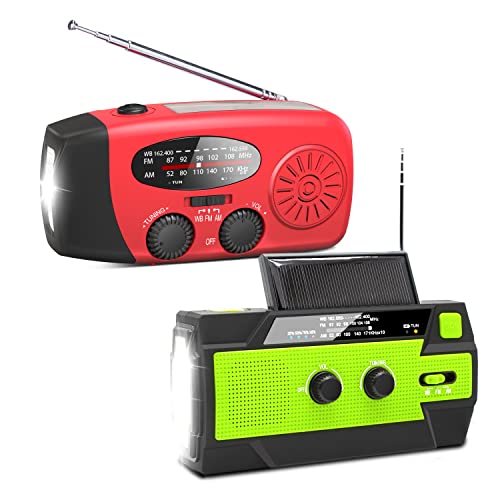
RunningSnail MD-090P Emergency Crank Radio — Best Overall
For most households, the deciding details are the ones that show up in real outages. It suits value hunters who want the biggest battery in the budget tier and lighting that behaves like it was designed for outages — including a reading lamp that lights itself when you walk up.
- Battery: 4,000 mAh rechargeable battery, replaceable
- Bands: AM, FM and NOAA weather band with 7 channels
- Charging: micro-USB, solar panel, hand crank or the replaceable battery pack — four modes
- Lighting: 3-mode flashlight (far beam, dipped beam, both) plus a motion-sensor reading lamp
- Extras: SOS alarm, USB phone-charging output, 18-month warranty
Strengths
- 4,000 mAh battery doubles the stored energy of most budget rivals
- Motion-sensor reading lamp is genuinely useful during night outages
- Replaceable battery pack keeps the radio serviceable for years
Trade-offs
- Alert behaviour is basic weather-band listening rather than SAME filtering
- Solar panel is a maintainer, not a charger — plan on cable or crank for real refills
- Fit and finish are functional rather than premium
The MD-090P’s pitch is simple: the budget tier’s biggest battery, wrapped around the full emergency checklist. Four thousand milliamp-hours is twice what most entry radios carry, and it changes how the radio behaves in a real outage — more hours of listening per charge, and a phone top-up that is a meaningful fraction of a charge rather than a token gesture. The battery is replaceable, too, which quietly makes this one of the longest-lived designs at its tier.
Its lighting deserves the second paragraph. The three-mode flashlight covers distance and close work, but the motion-sensor reading lamp is the feature owners end up praising: stuck on a counter during an outage, it wakes when someone approaches and sleeps when the room empties, stretching the battery through the night. Add the SOS alarm, the four charging modes and an eighteen-month warranty, and the RunningSnail is the budget pick for buyers who read spec sheets. What it does not do is filter alerts by county, and its solar panel — like every panel here — maintains charge rather than creating it from empty.
The honest limitation is alerting sophistication: it receives the weather band well but offers no county-level filtering, so overnight warning duty belongs to a SAME or tone-alert model set up for standby.
Best for: best overall shoppers who value its class-leading battery and outage-friendly lighting / Not suited for: buyers who need a different strength than this design prioritises

FosPower Emergency Weather Radio A1 — Best Budget
This is the pick we would hand to most households first when the forecast turns. It suits budget-first buyers who want a real NOAA-capable crank radio with a phone top-up in the smallest sensible spend — for a first kit, a dorm room or a second car.
- Battery: 2,000 mAh (7,400 mWh) lithium-ion power bank
- Bands: AM 520–1710 kHz, FM 87–108 MHz, weather band 162.400–162.550 MHz
- Power: solar panel, hand crank, USB charging or AAA batteries
- Lighting: 1W LED flashlight with zoom, plus reading light and SOS alarm
- Build: IPX3 water resistance; 6.2 x 2.9 x 2.1 inches, 10.9 oz
Strengths
- Covers the full emergency checklist — NOAA band, crank, solar, flashlight, phone output — at the entry tier
- AAA backup gives it a disposable-cell fallback many budget radios skip
- Compact, light body disappears into a backpack or glovebox
Trade-offs
- No alert standby: it will not wake itself for a warning while switched off
- Phone charging is a partial top-up; the USB output is deliberately modest
- Analog-style tuning and a small speaker reflect the entry tier
The FosPower A1 is the honest floor of this category: the least you can spend and still get a radio that does the actual job. It receives AM, FM and the NOAA weather band, it charges by sun, crank or cable, it runs on AAA cells when the rechargeable pack is empty, and its flashlight and SOS alarm cover the walk-and-signal basics. As a first emergency radio — or a spare for a car, a dorm or a rental — that completeness matters more than polish.
Know its one structural gap before you buy: the A1 has no alert standby. It will not sit silently on a shelf and wake you when a warning posts; you have to switch it on and tune in. Households in tornado country should treat it as the portable second radio beside a true alerting model, while households whose main risk is outage news — hurricanes with days of warning, winter storms, wildfire smoke days — will find it entirely sufficient. Set expectations that way and the little FosPower is one of the best-value tools in this guide.
The honest limitation is the missing alert standby: for overnight severe-weather warning, pair it with a radio that can wake itself — and you.
Best for: best budget shoppers who value its completeness at the entry tier, including the AAA fallback rivals skip / Not suited for: buyers who need a different strength than this design prioritises

Mesqool CR1009 Emergency Radio — Best Battery
Judged through the lens of most households, its balance of strengths is hard to beat. It suits kit builders who want maximum stored energy and power-path redundancy in a single portable — the radio for multi-day outages and off-grid weekends.
- Battery: 5,000 mAh (18,500 mWh) rechargeable lithium-ion
- Power: five ways — solar panel, hand crank, USB-C input, wall adapter or 3 AAA batteries
- Bands: AM, FM, shortwave and 7 NOAA weather channels
- Lighting: 3W flashlight and reading lamp; 116 dB SOS siren with red beacon
- Maker-rated listening time: up to 13 hours at half volume on a full charge; 6.8 x 2.9 x 3.7 inches, 0.93 lb
Strengths
- 5,000 mAh battery is the largest in a hand-crank radio in this guide
- Five power paths including USB-C input and AAA backup
- Shortwave coverage adds distant-broadcast listening the Midlands lack
Trade-offs
- Maker's own runtime figure at half volume is modest for the battery size — the flashlight and lamps draw real power
- Bigger and heavier than the compact picks
- A newer brand without the decades-long track record of Midland, Eton or Sangean
The CR1009 is what happens when a maker reads the budget category’s complaints and answers them in order. Battery too small? Five thousand milliamp-hours. Charging too slow or proprietary? USB-C input, plus solar, crank, wall adapter and an AAA compartment for five separate power paths. Bands too few? AM, FM, NOAA and shortwave. The result is the most self-sufficient portable in this guide, and the one best shaped for the multi-day outage where the radio, the light and the phone top-up all draw on the same reservoir.
Read the maker’s own numbers with clear eyes, though: Mesqool rates listening time at half volume in the low teens of hours, which tells you the big battery is shared with a bright 3W flashlight, a reading lamp and that phone output. Used as a radio first, it stretches much further; used as a lantern with a radio attached, it behaves like a lantern. It is also the largest portable here and the youngest brand in the guide. For buyers who prioritise energy above all, neither point outweighs the spec sheet.
The honest limitation is brand history: Mesqool cannot point to a decade of owner reports the way the legacy makers can, so long-term durability is a reasonable bet rather than a proven record.
Best for: best battery shoppers who value its 5,000 mAh battery and five power paths, the most energy redundancy here / Not suited for: buyers who need a different strength than this design prioritises

Kaito KA500 Voyager Emergency Radio — Best for Shortwave
For most households, what matters is how it behaves at 3 a.m., not how it photographs. It suits listeners who want the widest band coverage in the class — including real shortwave — and the most ways to keep a radio alive when every other power source runs out.
- Bands: AM, FM, two shortwave bands (SW1 3.20–8.00 MHz, SW2 9.00–22.00 MHz) and 7 pre-set NOAA weather channels
- Power: rechargeable Ni-MH pack, hand crank, 180-degree tilting solar panel, 3 AA batteries, or AC/USB input
- Lighting: LED flashlight plus a 5-LED reading lamp under the solar panel
- Antenna: 14.5-inch telescopic antenna for FM, weather band and shortwave
- Extras: USB output for emergency phone charging, NOAA alert standby mode
Strengths
- The only radio in this guide with genuine shortwave coverage for distant and international broadcasts
- Five power paths, and the crank works even with no battery installed
- Tilting solar panel angles toward the sun instead of forcing you to angle the whole radio
Trade-offs
- Analog tuning dial is less precise and less repeatable than digital tuning
- The Ni-MH pack is small; the design expects you to feed it sun, crank turns or AA cells
- Alert is tone-based standby, not SAME county filtering
The KA500 Voyager has been the preparedness world’s favourite generalist for well over a decade, and the reason is breadth. It is the one radio here that adds two shortwave bands to the usual AM, FM and NOAA set, which matters more than it first appears: shortwave signals bounce off the ionosphere, so in a wide-area disaster you can hear broadcasters from far outside the affected region when local stations are down. Its weather channels are pre-set, its alert mode stands by for the attention tone, and a reading lamp hides under the tilting solar panel.
Power flexibility is the second half of the design. The Voyager runs from its rechargeable pack, from three AA cells, from its crank, from its solar panel, or from a wall adapter or USB input — and uniquely here, the crank will run the radio directly with no battery in the circuit at all. The trade-offs are the analog dial, which drifts and guesses where digital tuners lock, and a rechargeable pack that is a buffer rather than a reservoir. Treat the KA500 as a radio you feed, and it will outlast almost anything; treat it as a radio you charge once and forget, and it will ask for a crank session at the worst moment.
The honest limitation is refinement: analog tuning, a small rechargeable pack and basic audio make it a tool for capability, not for comfort.
Best for: best for shortwave shoppers who value its shortwave bands and five power sources, which no rival here matches / Not suited for: buyers who need a different strength than this design prioritises
Midland ER210 Compact Emergency Crank Radio — Best Compact
Among the field for most households, this one makes the fewest wrong compromises. It suits drivers, campers and apartment dwellers who want the Midland alert-and-crank formula in a body small enough for a glovebox, drawer or go-bag.
- Bands: AM, FM and all 7 NOAA weather channels (162.400–162.550 MHz)
- Battery: 2,000 mAh rechargeable lithium-ion (Midland spec sheet), rated for up to 25 hours of normal use
- Charging: hand crank, solar panel or micro-USB cable
- Flashlight: 130-lumen Cree LED with SOS beacon mode
- Size: 6.5 x 2.8 x 1.9 inches; no AA battery backup
Strengths
- Same automatic NOAA weather scan and alert behaviour as its bigger sibling
- Compact body genuinely fits a glovebox or a jacket-sized kit pocket
- Replaceable battery pack extends the radio's working life
Trade-offs
- No AA backup, so a flat pack leaves the crank as the only option
- Smaller battery gives shorter runtime and a smaller phone top-up
- Midland's own documents list the battery variously at 2,000–2,200 mAh; check the label on the pack
Think of the ER210 as the ER310’s travelling sibling. It keeps the parts that define the line — digital AM, FM and NOAA reception, automatic weather scan with alert standby, a bright Cree flashlight with an SOS beacon, and charging by crank, solar panel or cable — and trims the body down to glovebox size. For a second radio that lives in a car, an office drawer or a child’s overnight bag, that smaller footprint is the whole point.
The trims are real, though. There is no AA compartment, so the radio’s stored energy is whatever sits in its rechargeable pack, and Midland’s paperwork has quoted that pack at slightly different capacities over the years; the current spec sheet figure is the one used here. Kept topped up on a windowsill or by a monthly cable charge, it is a set-and-forget companion. Left forgotten in a hot car for two summers, it will need cranking before it sings — true of every radio in this guide, and worth planning around.
The honest limitation is the missing AA backup: in a long outage with a depleted pack, your only power source is your own arm on the crank.
Best for: best compact shoppers who value its compact body, which keeps the Midland alert system within reach of small spaces / Not suited for: buyers who need a different strength than this design prioritises
Check on Amazon
Sangean MMR-88 Emergency Radio — Best Reception
Ranked for most households, this pick earns its place on working merits. It suits listeners who care about reception quality and build — the radio for people who will actually listen to it every week, not only during storms.
- Tuner: DSP digital AM/FM tuner with all 7 NOAA weather channels and Public Alert certification
- Battery: 850 mAh rechargeable lithium-ion
- Presets: 19 station presets shared across AM and FM
- Charging: hand crank, solar panel or micro-USB; Sangean rates about one minute of cranking for five minutes of listening
- Build: IPX3 water resistance, rubber-reinforced corners, USB output (5V/0.3A) for emergency phone top-ups, 90-minute auto shut-off
Strengths
- DSP receiver pulls cleaner, steadier FM and weather-band signals than cheap analog sets
- Rubber-armoured corners and IPX3 sealing shrug off drops and rain
- 19 presets make it behave like a proper everyday radio
Trade-offs
- The 850 mAh battery is the smallest here; endurance is measured in hours, not days
- No AA or AAA backup compartment
- USB output is a gentle 0.3A — a true last-resort phone top-up
Sangean is a radio company first and an emergency-gear company second, and the MMR-88 shows it. Its DSP tuner is the best receiver in this guide: stations lock cleanly, weak weather-band signals hold steadier, and the nineteen presets mean your regular stations are one press away instead of a tuning expedition. It is Public Alert certified, stands by for weather alerts, and wraps the whole thing in a rubber-cornered shell with IPX3 splash resistance that treats a drop onto concrete as an inconvenience rather than a funeral.
The compromise is stored energy. The rechargeable pack is small — the smallest in this guide — because Sangean designed the radio around its crank and solar panel as primary outage power, with honest published ratios for what a minute of cranking buys. Owners who use it as a kitchen or workshop radio and keep it charged will never notice. Owners who file it in a drawer for a year will meet the crank first and the broadcast second. As a second radio beside a big-battery Midland, or as the one radio for someone who values listening quality, it earns its place.
The honest limitation is endurance: with the smallest battery here and no disposable-cell backup, long outages mean regular dates with the hand crank.
Best for: best reception shoppers who value its DSP receiver and rugged build, which make it the best-sounding radio here / Not suited for: buyers who need a different strength than this design prioritises
Check on Amazon
Comparison Table
| Product | Badge | Bands | Battery / power |
|---|---|---|---|
| RunningSnail MD-090P Emergency Crank Radio | Best Overall | 4,000 mAh rechargeable battery, replaceable | AM, FM and NOAA weather band with 7 channels |
| FosPower Emergency Weather Radio A1 | Best Budget | 2,000 mAh (7,400 mWh) lithium-ion power bank | AM 520–1710 kHz, FM 87–108 MHz, weather band 162.400–162.550 MHz |
| Mesqool CR1009 Emergency Radio | Best Battery | 5,000 mAh (18,500 mWh) rechargeable lithium-ion | five ways — solar panel, hand crank, USB-C input, wall adapter or 3 AAA batteries |
| Kaito KA500 Voyager Emergency Radio | Best for Shortwave | AM, FM, two shortwave bands (SW1 3.20–8.00 MHz, SW2 9.00–22.00 MHz) and 7 pre-set NOAA weather channels | rechargeable Ni-MH pack, hand crank, 180-degree tilting solar panel, 3 AA batteries, or AC/USB input |
| Midland ER210 Compact Emergency Crank Radio | Best Compact | AM, FM and all 7 NOAA weather channels (162.400–162.550 MHz) | 2,000 mAh rechargeable lithium-ion (Midland spec sheet), rated for up to 25 hours of normal use |
| Sangean MMR-88 Emergency Radio | Best Reception | DSP digital AM/FM tuner with all 7 NOAA weather channels and Public Alert certification | 850 mAh rechargeable lithium-ion |
How to Choose emergency radio under $50
Five decisions decide whether an emergency radio serves you well, and they matter in this order for most households: alert behaviour, power redundancy, reception, stored energy, and everyday usability. Work through them in sequence and the right model usually identifies itself; skip the first two and even a beautifully made radio can fail at its one essential job.
Top pick
1. Alert behaviour: tone, SAME, or none
Decide how the radio should wake you. Tone alerting is simple and universal on portables: the radio stands by on a weather channel and sounds off for any warning in the transmitter’s area. SAME decoding filters by county and is the right choice for a fixed bedroom radio in a multi-county coverage area. The third option — no standby at all — is acceptable only for a radio bought purely for outage listening, and this guide flags it wherever it appears. For most households, we weighted alert reliability and power redundancy above all most heavily in this section of the ranking.
2. Power redundancy: count the independent paths
List the ways the radio can be powered and count only the genuinely independent ones. A rechargeable pack plus a cable is one path, not two. Add a crank and you have muscle power; add a solar panel and you have weather-dependent maintenance; add a disposable-cell compartment and you have the closest thing to guaranteed energy, because fresh AA or AAA cells store for years and are sold everywhere. Two paths is the minimum for a serious kit; three is comfortable; the best designs here offer four or five.
3. Reception: the tuner and the antenna
Digital tuners lock onto stations precisely and return to them exactly; analog dials are cheaper and more forgiving of rough handling but drift and guess. For the weather band specifically, what matters is a sensitive receiver behind a fully extending telescopic antenna — and your placement of it. A DSP design, where offered, earns its keep in difficult buildings and fringe areas. Shortwave is a separate question entirely: valuable for wide-area events, irrelevant to local warnings, and never a reason to compromise the weather band.
4. Stored energy: read runtime, not just capacity
Milliamp-hours describe the reservoir; the maker’s runtime figure at a stated volume describes what reaches you. A radio that shares its battery with a bright flashlight, a reading lamp and a phone output spends it faster than a radio that only listens. Prefer designs whose makers publish honest runtime numbers, and treat any capacity claim without a runtime figure as marketing. For phone charging, scale your expectations with the maths in our topical section: small radios give back a fraction of a phone charge, and only the largest class refills one.
5. Everyday usability: the drawer test
Finally, ask whether the radio will be used, charged and findable in ordinary life. An alarm clock earns a nightstand. Bluetooth earns a kitchen. A headphone jack earns a place in a shared bedroom. A radio that fails the drawer test — bought, stored, forgotten, flat — fails completely, regardless of its specifications. Choose the model your household will touch weekly, and the emergency performance takes care of itself. Readers who want the criteria without the product rankings will find them expanded in our How To Choose An Emergency Radio walkthrough and the Emergency Radio Buying Guide.
Tone Alerts vs SAME: The Difference That Decides Your Sleep
Two alert systems hide behind the single word ‘alert’ on emergency radio boxes, and they behave very differently at 3 a.m. A tone-alert radio stands by silently on a weather channel and wakes when it hears the 1050 Hz attention tone that opens every watch and warning broadcast. It is simple, reliable and completely unselective: you hear every warning for the transmitter’s whole coverage area, which can span several counties. A SAME radio decodes the digital header in the broadcast and compares the county codes inside it with the codes you programmed, waking you only for your own area.
Neither is strictly better. Tone alerting can never be mis-programmed, never misses because of a typo in a county code, and suits portable radios that travel between places. SAME filtering suits a fixed bedside radio in a large coverage area, where tone alerting would otherwise mean several false wake-ups a month. Many households end up with both: a SAME desktop in the bedroom and a tone-alert crank radio for the rest of the house. Our dedicated explainer, Emergency Radio Buying Guide, walks through programming a SAME code step by step.
Crank and Solar: What the Numbers Actually Buy You
Hand cranks and solar panels are the features that sell emergency radios, and the two most misunderstood. A crank is a sprinter: a minute or two of steady turning buys minutes of listening — makers publish ratios in the range of one minute of cranking for five to fifteen minutes of radio, depending on volume. That is exactly enough to catch a forecast update or a warning repeat, and nowhere near enough to refill a battery. Treat the crank as a bridge between charges, never as the charge itself, and turn it at the steady pace the manual suggests rather than in frantic bursts that stress the handle.
A solar panel is a maintainer. Sized to fit a radio’s case, it can offset the slow self-discharge of a stored battery and stretch listening time on a sunny porch, but filling an empty multi-thousand-milliamp-hour battery from panel alone takes days of good sun. The practical routine is boring and effective: charge fully by cable, store the radio where the panel sees daylight if possible, and top up by cable every few months. Radios that also accept ordinary AA or AAA cells add the outage-proof layer no rechargeable can match — a drawer of fresh alkalines is a power station that never needs charging.
Understanding NOAA Weather Radio and the Seven Channels
Every radio in this guide receives the same public service: NOAA Weather Radio, a nationwide network of transmitters broadcasting forecasts, watches and warnings around the clock on seven channels between 162.400 and 162.550 MHz. The broadcasts are free, require no subscription and no licence to receive, and they keep transmitting when mobile networks are congested or down — which is precisely when you need them. Your first setup task with any emergency radio is finding which of the seven channels comes in strongest at your address; radios with automatic weather scan do this for you, while manual models ask you to step through the channels and pick the clearest voice.
Reception follows terrain, not hope. A transmitter’s useful range is typically a few dozen miles, shortened by hills, valleys and the steel and concrete of large buildings. Raising the telescopic antenna fully, placing the radio near an exterior wall or window, and keeping it away from interference sources like LED power supplies and computer chargers all make a measurable difference. Test reception on a calm day, at the spot where the radio will live, rather than during the storm — the weekly NOAA test, usually on Wednesday late morning, confirms your alert setup end to end.
How Much Phone Charging to Expect — Honestly
Almost every radio here offers a USB output, and almost every buyer overestimates it. The maths is unforgiving: a phone battery today holds roughly as much energy as the radio’s own pack, and conversion losses take their share of whatever moves. A 2,000 mAh radio can therefore return a modern phone from flat to perhaps a third charged; a 5,000 mAh model can do meaningfully better; the 10,000 mAh flagship class can refill a phone outright. On the smallest radios, think of the output as call-and-text money — enough for the essential messages — not as a power bank replacement.
Two habits make the feature work better. First, charge the phone in short sessions with the phone in airplane mode and its screen off, which dramatically improves how much of the transferred energy stays in the phone. Second, decide the priority before the outage: the radio’s first job is information, so keep a reserve for listening and spend only the surplus on the phone. Households that expect multi-day outages should pair the radio with a dedicated power bank — our roundup of the Best Power Bank For Emergencies Under $50 covers that layer — and let each tool do the job it is sized for.
Storing an Emergency Radio So It Works in Year Three
Emergency radios rarely die in emergencies; they die in drawers. The failure pattern is almost always the same: a rechargeable battery left flat for a year loses capacity or refuses charge, alkaline cells left installed leak and corrode the contacts, and the radio is discovered dead at the moment it is needed. The fixes are a calendar habit, not a purchase. Charge the radio fully, note the date, and set a repeating reminder — every three to six months is the rhythm makers suggest — to top it up and run it for ten minutes.
Store backup AA or AAA cells beside the radio, not inside it, in their packaging with the date visible. Keep the radio somewhere it will be found in the dark: the same shelf, the same drawer, every time, with its cable coiled alongside. If your household has a go-bag, the radio lives in the bag and the calendar reminder includes checking it there. This unglamorous routine is the difference between the radios in long-term owner reports that ‘still work after six years’ and the ones that do not, and it costs nothing but attention.
Antennas, Placement and Reception Troubleshooting
When a weather radio sounds scratchy, the antenna and the address are usually both innocent — the placement is guilty. Weather-band signals at 162 MHz behave like light in some respects: they pass through wood and drywall, struggle with metal siding, foil-backed insulation and below-grade rooms, and improve dramatically with height and a window line. Start by fully extending the telescopic antenna vertically, then move the radio in a slow grid around the room while a broadcast plays; most rooms contain one or two spots where the signal turns clear, often near an exterior window.
Problem: the broadcast fades in and out as people move around the room. That is multipath interference, and the fix is relocation, not volume — shift the radio a foot or two and re-extend the antenna. Problem: a buzzing or pulsing interference under the voice. Move the radio away from LED bulbs, dimmers, chargers and computers, which radiate exactly this noise. Problem: no channel comes in clearly anywhere in the house. Check the NOAA coverage map for your county — fringe addresses exist, and the cure is a radio with an external antenna jack, mounted as high as the cable allows. These steps solve the overwhelming majority of ‘bad radio’ reports without spending anything.
Key Takeaways
- Set the radio up on a calm day: strongest channel found, alert mode armed, weekly test heard.
- Charge by cable on a calendar rhythm; crank and solar are bridges, not refills.
- Store backup cells beside the radio, never inside it.
Your First Outage: A Radio Routine That Works
- Put the radio where the household gathers and extend the antenna fully; information is a group activity in an outage.
- Start on the weather band for the official picture, then move to local AM or FM for utility and road information.
- Fix listening times — the top of each hour, for example — and switch off between them to stretch the battery across days.
- Run the flashlight on its lowest useful setting and use the reading lamp, not the main beam, for close tasks.
- Charge phones in short airplane-mode sessions, and stop while the radio still holds a comfortable listening reserve.
- Before bed, return the radio to alert standby with the volume up, even in a general outage — new warnings do not respect sleeping hours.
- In the morning, put the radio in the sun while you work; the panel will not refill it, but every bit of offset extends the day.
Common Buying Mistakes
Four mistakes account for most disappointed emergency-radio purchases at this budget; all four are avoidable in the ten minutes before you order.
Buying by battery size alone. A big milliamp-hour figure shared with a bright flashlight, a reading lamp and a phone output drains faster than a modest battery in a radio used only for listening. Match capacity to the jobs you will actually run, and read the maker’s runtime figures — at a stated volume — rather than the capacity headline.
Assuming every ‘alert’ radio filters by county. Most portable emergency radios use tone alerting and wake for the whole transmitter area. If county filtering is the feature you are picturing, confirm SAME decoding in the specifications before buying — it is standard on desktop sets and rare, though not unknown, on portables.
Spending the radio’s battery on the phone first. Information outranks entertainment and even messaging in most outages. Ration the phone output, keep a listening reserve, and let a dedicated power bank carry phone duty when outages in your area run long.
Ignoring the antenna until the storm. A bent or half-extended telescopic antenna is the most common cause of ‘this radio gets nothing here’. Extend it fully, keep it vertical for the weather band, and handle it by its base when adjusting — replacements are the one spare part worth ordering in advance for a much-loved radio.
Final Recommendation
Buy the RunningSnail MD-090P Emergency Crank Radio if you want one decision that covers the brief: it is the pick whose alert behaviour, power options and everyday usability best match what most households actually need, and it does so without spending the whole $50 budget on features that will never be touched. Choose the FosPower Emergency Weather Radio A1 instead if its particular strength — its completeness at the entry tier, including the AAA fallback rivals skip — matches your household’s real risk more closely. Either way, set the radio up the day it arrives, using the How To Choose An Emergency Radio walkthrough, and compare your choice against the wider field in the Emergency Radio Buying Guide before the return window closes.
Frequently Asked Questions
What is the difference between a weather radio and an emergency radio?
A weather radio is any receiver that picks up the NOAA weather band. An emergency radio is a weather radio built for outages: it adds self-charging (crank, solar or both), a flashlight, and usually a USB output for a phone. A plugged-in SAME desktop set is a weather radio but not really an emergency radio; every portable pick in this guide is both.
How long does hand cranking take to charge the battery?
Longer than the box implies. Cranking is designed to buy listening time directly — makers quote ratios from about five to about fifteen minutes of listening per minute of cranking — rather than to refill a battery, which would take hours of continuous turning. Charge by cable whenever a cable is available and save your arm for the outage.
Can an emergency radio really charge my phone?
Partly, and the bigger the radio’s battery the truer it gets. Small radios return a useful fraction of a charge — enough for calls and messages. The 5,000 mAh class does better, and a 10,000 mAh model can refill a phone outright. In all cases the radio’s own listening reserve comes first; a dedicated power bank is the right tool for heavy phone duty.
What does SAME mean and do I need it?
SAME — Specific Area Message Encoding — is the digital code at the start of NOAA alert broadcasts that names the counties affected. A SAME radio compares those codes with the counties you entered and only alarms for yours. You need it if your transmitter covers several counties and you are tired of irrelevant wake-ups; you can skip it in a portable that travels, where tone alerting’s simplicity wins.
Do these radios receive local news during an outage?
Yes — that is the AM/FM tuner’s job. Local stations carry utility updates, shelter information, road closures and official briefings long after the weather itself has passed, and they broadcast from generators when other media are dark. It is the strongest argument for choosing a full emergency radio over a weather-band-only desktop set as your portable.
Do emergency radios need a licence or subscription?
No. Receiving AM, FM, NOAA weather broadcasts and shortwave is free and licence-free everywhere in the United States. The radios in this guide are receivers only — they cannot transmit — so there is nothing to register and nothing to renew. Costs begin and end with the purchase and the occasional set of backup batteries.