Disclosure: As an Amazon Associate, umtsmarttool.com earns from qualifying purchases. Links to Amazon on this page are affiliate links; they cost you nothing extra. Prices and availability change often, so check the current Amazon listing before you buy.
Where to buy
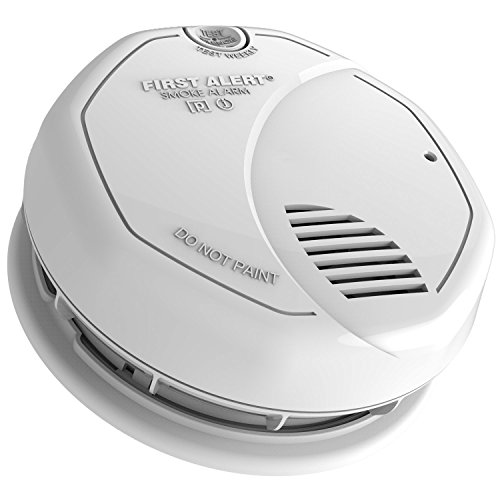
The subject of this review: the First Alert SA3210 dual-sensor, sealed-battery smoke alarm, examined in full below. Its closest alternatives in the cluster:
- First Alert SA3210 — the reviewed alarm
- First Alert PR710 — slimmer, photoelectric only
- Kidde i9010 — ionization, sealed, auto-activating
- X-Sense SC07 — adds carbon monoxide sensing and a display
Read the full guide ↓ — one alarm, examined from every side, sensor to ceiling, decade to decade, room to room, claim by claim.
Smoke Detector Review: First Alert SA3210, the Dual-Sensor Benchmark
This smoke detector review takes the long way around a single alarm, because the First Alert SA3210 is the model the rest of the category quietly measures itself against: two sensing technologies in one chamber — photoelectric for slow, smouldering fires and ionization for fast, flaming ones — powered by a sealed lithium battery rated for the alarm’s entire 10-year life. The short verdict, for readers in a hurry: it is the easiest smoke alarm in this cluster to recommend for bedrooms and general living spaces, not because it is clever (it has no app, no voice, no screen) but because it removes the two classic ways alarms fail their households — the wrong sensor for the fire that actually starts, and the battery that got borrowed, forgotten or left to chirp. The long verdict, with its genuine limitations, is the rest of this page. Readers comparing the whole field should also see the cluster’s main roundup, Best Smoke Detector Under $50 Best Smoke Detector Under $50, where the SA3210 anchors the list.
In this guide
Quick Verdict
Best for: bedrooms and living rooms in any home that burns no fuel in the room itself; owners who want one alarm decision to stay correct for a decade. The one-line summary: dual sensing plus sealed power equals the lowest-maintenance complete smoke alarm in its class — provided carbon monoxide is covered by a partner unit elsewhere in the home. The review score, in words: the benchmark conventional smoke alarm of this cluster — recommended without reservation inside its brief, and with its brief stated on the box.
Specifications (Verified)
- Sensors: photoelectric + ionization (dual sensor)
- Power: sealed 10-year lithium battery — not replaceable, by design
- Alarm loudness: 85 dB at 10 ft
- Listing: UL 217 certified design, current production standard throughout its range
- End-of-life signal: the alarm announces when its decade is done, in good time to replace it like for like, bracket and all, without fuss or tools beyond a step stool
- Mounting: ceiling bracket, battery powered (no wiring)
- Interface: single test/silence button — nothing else to configure, update or subscribe to, ever
Strengths, Expanded
Both fire tempos, one chamber. Fire science’s awkward fact is that the two sensor families specialise: photoelectric responds fastest to the thick smoke of a smouldering sofa or bedding fire; ionization reacts quickest to the small particles of a fast-flaming fire. A single-sensor alarm is a bet on which fire you will have. The SA3210 declines the bet. In a bedroom — where the likely ignition sources include both bedding (smoulder) and a charging device fault (flame) — that breadth is not a specification-sheet luxury but the core of the product. It also simplifies the buyer’s whole project: one model can be specified for every bedroom in the house without a room-by-room sensor debate, and uniformity, as the system guides in this cluster keep noting, is itself a safety property.
The sealed decade. The battery cannot be removed, which sounds like a limitation until you list what removal enables in real homes: the borrowed battery, the chirp silenced by extraction, the replacement deferred past the house fire. A sealed unit converts alarm maintenance from a recurring negotiation into a single monthly button press, and it ends its own life audibly rather than fading in a drawer. Across a whole home’s worth of bedrooms, that uniformity is worth more than any feature added since. It also changes the economics of the household’s attention: there is exactly one recurring task, identical for every unit, performable by any adult in the house — a maintenance contract a real family can actually keep.
Behaviour in real kitchens’ orbits. Because its photoelectric side carries much of the everyday sensing load, the SA3210 is calmer in the hallway outside a kitchen than a pure ionization unit of the old school — not immune to steam and burnt toast (no alarm honestly is), but slower to cry wolf, which is the trait that decides whether an alarm stays on the ceiling. Nuisance behaviour is the hidden variable in every alarm’s real-world record: the statistics of disabled alarms are, in large part, statistics of alarms that cried wolf once too often in homes that cooked enthusiastically.
Nothing to learn. No account, no pairing, no firmware, no subscription surface. The entire user interface is a test/silence button and a loud noise. For guest rooms, grandparents’ bedrooms and rental anchors, that absence of interface is the interface. It also means the alarm is fully itself on the day of fitting and identical on the day of retirement — no update will ever change its behaviour, deprecate its app or orphan it from a discontinued platform, a species of permanence the connected category cannot promise.
Trade-Offs, Expanded
Smoke only — the big one. The SA3210 does not detect carbon monoxide. In a home with any fuel-burning appliance or an attached garage, it must be partnered with combination cover (a hallway SC07 or equivalent), and buyers who fit it alone in such a home have bought half a system. This review scores it as a smoke alarm; as a whole-home solution it is deliberately incomplete. The criticism softens only slightly with context: combination sensing in every bedroom is not the standard architecture either, so the SA3210’s omission is a casting instruction — hallway carries CO — rather than a defect unique to this model.
No interconnect. Each unit speaks for its own room. In a large or multi-storey house, a distant SA3210’s alarm may not wake the far bedrooms — the interconnected designs in the cluster exist for exactly that geometry. Inside its room, 85 dB at 10 ft is emphatic; through three closed doors and two floors, physics wins. The mitigation inside this model’s own logic is density: one per bedroom means the alarm that matters most — the one in the room with the sleeper — is never the distant one, and density is cheaper than networking at this end of the market.
Whole-unit replacement at year ten. The sealed design’s price is disposal: when the decade ends, the alarm is replaced entire. That is the correct safety model — sensors age regardless of power — but buyers should hear it plainly: this is a ten-year consumable, not a lifetime fixture. Budget-honest buyers will note the corollary: the decade cost is knowable to the day and the unit, which makes this the easiest alarm in the house to plan around financially.
A decade is a long time for one feature set. Homes change: a boiler arrives, a loft converts, a smart system tempts. The SA3210 will not adapt, integrate or report. Its defence is that it was never bought to; it was bought to be correct, in its room, for ten years — and the households that understand that are never disappointed by it. The practical hedge is architectural rather than technological: cast the SA3210 in the rooms whose brief never changes (bedrooms are bedrooms for decades) and put the adaptable, upgradable technology in the hallway, where a swap upgrades the system’s brain without touching its anchors.
Design and Build
The SA3210 is an unremarkable white disc, and that is a compliment in this category: it neither mimics a smoke alarm from a cartoon nor tries to be a design object, so it disappears on a ceiling in a way the household stops noticing within a day. The bracket is the standard twist-fit pattern its maker uses across ranges, which matters for replacements and for landlords standardising a property. The test/silence button is large enough to reach with a broom handle — a small, real ergonomic fact that decides whether monthly tests actually happen in homes without a step-ladder habit. The back carries the manufacture date in the open; check it before fitting, because the ten-year clock starts there, not at purchase, and a unit that has sat in a warehouse has spent part of its life before it reaches your ceiling. Weight and bulk are ordinary for the class; nothing about the build suggests cost cut from the sensing chamber to fund decoration, which is the correct priority ordering for a life-safety device. The sealed construction has one more build consequence worth noting: with no battery door, there is no door to warp, no contact to corrode visibly, and no compartment for a tenant’s child or a curious guest to open — the unit presents the world a smooth, uninformative face, and in shared and rented housing that blankness is a security property as much as an aesthetic one.
Sensing in Real Use Cases
The smoulder scenario. Upholstery, bedding and electrical faults inside walls begin as smoke-rich, flame-poor events. The photoelectric chamber is the early responder here, and it is the scenario bedrooms existentially care about, because the sleeper’s enemy is smoke inhalation during the long smoulder, not the eventual flame. Minutes matter differently in a smoulder: the hazard accumulates invisibly, and an alarm that speaks early converts a poisoning-in-progress into an evacuation with time to spare. The fast-flame scenario. A knocked candle, a pan fire flashing over, accelerant-quick burning — the ionization chamber’s home ground, shaving the response when the fire’s growth curve is steepest. Here the currency is seconds and the geometry is escape routes: the alarm’s job is to start the household moving while the fire is still a room event rather than a house event. The nuisance scenario. Shower steam and cooking aerosols are the false-alarm diet of hallway alarms; the dual design’s relative calm (and correct placement, at the guidance distance from the kitchen) keeps the household’s trust intact, and trust is a sensing specification too — an alarm removed after false alarms detects nothing at all. Across the three scenarios, the honest summary is breadth without drama: the SA3210 is rarely the single fastest possible alarm for a laboratory version of one fire type, and it is never the wrong alarm for the fire that actually occurs, which is the trade a bedroom should make every time. A reviewer can ask for nothing more from a sensing package than that it never be wrong-footed by reality, and on the evidence of its design, this one is not.
Installation Experience
Fitting is the category’s standard ten minutes: mark the bracket, two screws, twist the unit on, press the test button, hear the household flinch, done. Two renter-relevant notes: the holes are small and fillable, and the unit needs no mains — the landlord’s wired alarms, where fitted, are a separate system that this neither joins nor disturbs. Placement discipline matters more than the fitting itself: ceiling centre where possible, at least 4 inches from any wall, at the guidance distance from cooking appliances, and one per bedroom rather than one per landing wherever the budget allows, because a closed door is an acoustic wall. The fuller method, with measurements and the dead-air rules, is in How To Install A Smoke Detector How To Install A Smoke Detector. One installation habit this reviewer insists on: log the unit the day it goes up — room, model, manufacture date — in the same note as the rest of the home’s alarms. The SA3210 asks so little afterwards that the log is easy to skip, and the log is the only thing standing between an orderly decade-end replacement and a ladder-and-guesswork afternoon in year ten.
Living With It: Testing, Hush and the Monthly Minute
Ownership compresses to three habits. Monthly: press the test button on the walk past — the alarm sounds, the household hears it, the date is mentally logged. When it sounds for cooking: use the silence/hush control rather than any form of removal (the sealed battery makes removal a non-option anyway, which is rather the point), ventilate, and treat a repeat pattern as placement information rather than alarm failure. Seasonally: a vacuum pass over the vents when the clocks change, because dust is the slow enemy of every optical chamber. That is the complete operating manual. There is no fourth habit, no app to check, no battery to schedule — and for the bedrooms of a busy household, that emptiness is the product’s most valuable specification. A practical tip for the test habit: anchor it to an existing monthly event — the rent payment, the meter reading, the first Sunday — because habits attached to other habits survive, and the SA3210’s whole value proposition assumes this one small ritual actually recurs.
Maintenance and the End of the Decade
Nothing inside the SA3210 is serviceable, and nothing needs to be: the maintenance story is the absence of one. What remains is the end-of-life discipline. The unit signals when its decade from manufacture is complete; the correct response is replacement within days, not negotiation, because the sensor’s accuracy — not just the battery — is what expires. Write the replacement year on the house calendar when you fit it, or photograph the date label into the same phone note as the rest of the home’s alarms; a whole house fitted in one weekend retires in one weekend ten years later, which is a manageable, budgetable event rather than a drip of surprises. Retired units should leave circulation entirely — an expired alarm in a drawer tends to be refitted by someone helpful, and the sealed design’s last service is to make its retirement legible. Disposal follows the maker’s and the locality’s guidance for sealed lithium devices; the point for the review is simpler — retirement is a designed event with a date, a signal and a successor, not a failure discovered by accident.
The Sensor Question in Depth: Why “Dual” Is the Whole Review
It is worth slowing down on the physics, because the SA3210’s dual chamber is not a marketing doubling but an answer to a genuine fork in fire behaviour. Photoelectric sensors shine a light beam into a chamber and watch for smoke particles scattering it; large particles — the kind produced early and abundantly by smouldering foam, fabric and timber — scatter it well. Ionization sensors keep a tiny radioactive source ionising the chamber air and watch for the current change when particles enter; very small particles — the kind a fast, hot, flaming fire produces in its first moments — disturb it soonest. Standards and fire services have argued the emphasis for decades; the householder’s translation is simpler: different fires announce themselves in different particle sizes, and a bedroom cannot know in advance which announcement it will get. The dual chamber listens to both. The honest counterpoint is that a well-chosen single sensor, correctly placed, still protects well — photoelectric units have an excellent record in the smoulder-prone rooms where most fatal fires smoulder first. What the dual design buys is not a different category of safety but the removal of a choice the buyer was never qualified to make. In a review, that removal is the headline: the SA3210’s most important feature is a decision it takes off your desk.
Unboxing, First Fit and the First Test
The box contains the alarm, its bracket and the paperwork; there is no battery to insert because there is no battery door, which startles first-time buyers and then converts them. Before the ladder: read the manufacture date, because a discount unit that has spent two years in a distribution chain arrives with eight years of life, not ten — still legal, still useful, but worth knowing before you log it as a decade. Fitting follows the maker’s marks: bracket, two screws, twist until the unit seats. The first test is the household’s introduction to 85 dB at close range, which is genuinely startling; warn the house, protect ears at arm’s length, and treat the flinch as the product working. Two fitting judgements deserve the extra minute: ceiling centre beats near-wall (the dead-air corner where wall meets ceiling is where smoke arrives last), and the distance rule from the kitchen beats the geometrically perfect spot in a hallway that breathes cooking air. Get those two right and the review’s remaining sections mostly describe a decade of nothing happening — which, for this product, is the five-star outcome written in prose.
Who Should Skip the SA3210
A fair review names its subject’s wrong buyers. Skip it if your home burns fuel and you are buying exactly one alarm: the single purchase must be a combination unit, full stop, and the SC07 or a voice combo serves that hallway better. Skip it if your house is tall or sprawling and the bedrooms cannot hear a distant alarm: interconnected units are the correct architecture there, and a set of standalone SA3210s leaves the waking problem unsolved. Skip it if you specifically want your phone involved — empty-house alerts, self-testing reports, an event history: that is the smart category’s job, and bolting expectations onto a silent sealed unit disappoints both parties. Skip it, finally, if the ceiling in question is a formal living room whose occupants will resent any visible disc: the PR710 exists so that the alarm in that room is the one nobody lobbies to remove. What remains after those honest exclusions is the SA3210’s true market — the great majority of bedrooms and ordinary living spaces — and in that market this review has not found a conventional alarm that beats it on the merits that matter.
How It Compares With the Alternatives
| Model | Detects | Power | Choose it instead when… |
|---|---|---|---|
| First Alert SA3210 | Smoke, both sensor types | Sealed 10-year | You want the broadest sensing with zero upkeep |
| First Alert PR710 | Smoke (photoelectric) | Sealed 10-year | The ceiling is on show and smoulder cover suffices |
| Kidde i9010 | Smoke (ionization) | Sealed 10-year | You want auto-activation and alarm memory |
| X-Sense SC07 | Smoke + CO | Sealed 10-year | The position also needs carbon monoxide cover and a display |
The pattern in the table is the review in miniature: every alternative beats the SA3210 at something specific — profile, features, combination sensing — and none beats it at the combination of sensing breadth and zero maintenance. The wider field, with badges and budgets, is compared in Smoke Detector Reviews Smoke Detector Reviews and in the cluster’s buying guide, Smoke Detector Buying Guide Smoke Detector Buying Guide. One comparison the table cannot show is time: the alternatives’ advantages are visible on day one, while the SA3210’s advantage — that it will still be fitted, sealed and correct in year nine — only reveals itself across the decade, which is why short reviews underrate it and long ones keep arriving at this page’s conclusion.
Best for: bedrooms, living rooms, guest rooms and rental anchors in homes where CO is covered by a partner unit / Not suited for: the only alarm in a fuel-burning home, or houses needing interconnected waking
A Decade of Ownership, Compressed: What Actually Happens
Year one is the year of noticing: the test press becomes a habit, a cooking event or two exercises the hush button, and the household calibrates its respect. Years two through five are the silent middle the design promises — the alarm’s only appearances are the monthly test and the seasonal vacuum, and its most important property in this period is that nobody has a story about it. Years six through nine add one consideration: the rest of the house changes around it (a boiler fitted, a room converted), and the SA3210’s smoke-only brief should be re-audited against the new house, not assumed. Year ten is the retirement the unit itself announces. Set against the ownership curve of a cheap battery alarm — annual battery negotiations, chirp mysteries at 3 a.m., a non-trivial chance of spending some months disabled in a drawer — the sealed decade is not merely more convenient; it is a different risk profile, and the difference compounds across every bedroom in the house. Review scores rarely capture “nothing went wrong for ten years”, but for this product category, that is the result the buyer is purchasing, and on the evidence of its design the SA3210 is built to deliver it.
What the Listing Actually Certifies (and What It Does Not)
The SA3210 carries a UL 217 listing, and a review should translate that rather than merely repeat it. The listing means the model has passed the standard’s test fires and nuisance-resistance requirements as a design — it certifies that this model, made to this specification, responds within the standard’s windows to the standard’s smoke profiles and resists the standard’s defined false-alarm sources to the required degree. It does not certify your installation: a listed alarm in a dead-air corner, ten feet inside a steamy bathroom’s breath, or a decade past its date is a listed alarm failing in an unlisted position. It also does not rank alarms against each other; two listed models can differ meaningfully in sensing breadth, power design and behaviour, which is why reviews exist beneath the floor the standard sets. Read the listing as a licence to consider the product, the dual chamber as the reason to choose it, and the placement rules as the condition that makes either of them matter. The cluster’s explainer of the standard’s current edition, and what changed in it, sits inside Smoke Detector Review 2026 Smoke Detector Review 2026 for readers who want the regulatory layer in full.
The Hush Button, Considered as a Safety Feature
Reviewers treat the silence control as a convenience; it is more accurately the alarm’s pressure valve, and the SA3210’s implementation deserves a paragraph. Cooking aerosols in a small home are not a defect scenario — they are Tuesday — and an alarm that cannot be temporarily hushed teaches its household one lesson: that alarms are obstacles. The hush control converts that moment into a managed event: press, ventilate, and the alarm returns itself to duty automatically after its hush period rather than depending on a human remembering to restore it. The sealed battery completes the logic by removing the darker alternative from the table entirely. Judged as a system for surviving real kitchens, the pairing of an honest hush with an unremovable battery is among the strongest arguments in this review — it is the feature combination that keeps the sensor on the ceiling in year four, which is where alarm effectiveness is actually decided.
The SA3210 in Rentals, Second Homes and Spare Rooms
Three ownership contexts flatter this alarm specifically. In rentals, it is the tenant-proof anchor: nothing to borrow, nothing to disable, a decade that spans tenancies, and a two-screw footprint that respects the deposit — while the landlord’s own provision remains untouched beside it, as it legally must. In second homes and holiday properties, its virtue is the absence of appetite: no Wi-Fi to rejoin after the router sulks, no battery quietly dying between visits (the sealed cell’s decade does not care about the calendar of your attendance), and an end-of-life signal loud enough to greet the first visit after expiry. In spare rooms and grandparents’ bedrooms, it is the alarm that asks nothing of an occupant who never asked for homework. What unites the three is distance between the alarm and its owner’s attention — and distance is precisely the variable the sealed dual-sensor design was built to defeat. If your alarm-buying problem is fundamentally “I cannot watch this ceiling”, the SA3210 is not merely a good answer; it is close to the only conventional answer, and this review’s recommendation strengthens accordingly.
Value, Assessed Without a Price Tag
This site’s reviews do not print prices — they move too fast to be honest in print — so value here is argued in structure rather than figures. The SA3210 sits in the category’s honest middle: above the disposable battery alarms whose decade costs more in cells, chirps and replacements than their shelf price suggests, and below the smart and interconnected units whose features it deliberately lacks. Its value claim is actuarial: cost per year of correct, maintenance-free coverage, across a full decade, with no consumables and no mid-life battery programme. By that measure it is one of the cheapest alarms in the cluster to own, whatever the shelf tickets say on a given week — and it is the measure that matters, because alarms are bought by the decade whether their buyers do the arithmetic or not. The premium alternatives earn their money only when their extra features answer a real condition of the house — distance, fuel, absence — and a review that respects the reader’s money says so in both directions.
The Competition From Below and Above
From below, the SA3210 is pressed by replaceable-battery dual and single-sensor alarms that cost less on the shelf. Their case is real for the disciplined minority who genuinely change batteries on schedule and test monthly; for the statistical household, the sealed design’s premium is the price of not having to be that minority, and this review regards it as well spent. From above, it is pressed by combination units (which add CO — a different brief, answered by pairing rather than replacing) and by smart alarms (which add reporting — a different household need, answered by casting). Notice that neither direction of pressure actually refutes the SA3210 in its own brief; they re-draw the brief. That stability under pressure from both ends of the market is characteristic of a benchmark product, and it is why this model recurs as the anchor in list after list across the cluster — Best Smoke Detector For Home Use Under $50 Best Smoke Detector For Home Use Under $50 among them — rather than being displaced by each season’s novelty.
Placement Notes Specific to This Model
A review of a single alarm should say where that alarm, specifically, earns its keep. The SA3210’s dual chamber makes it the forgiving choice for positions that sit between worlds: the hallway that serves both bedrooms and a living room with a real fireplace’s occasional breath (the fireplace argues photoelectric, the bedrooms argue breadth — the dual chamber settles it); the landing at the top of stairs from a kitchen floor, where cooking aerosols arrive diluted but flaming-fire risk arrives undiluted; the child’s bedroom, where the ignition inventory spans soft toys, bedding, a night-light and a tablet charger in a single small room. Positions to deny it: inside the kitchen itself (no smoke alarm belongs there — heat alarms are that room’s device), inside a bathroom’s steam path, and in the garage, where dust and fumes defeat optical chambers and a heat alarm plus a hallway combination unit is the correct architecture. Fitted in its right positions, the model’s breadth is not an abstract virtue; it is the reason one product can honestly cover rooms whose fire profiles genuinely differ, which is what a multi-room purchase actually needs.
What We Would Change: A Reviewer’s Wishlist
Credibility requires the list. First, an interconnect option in the same sealed dual-sensor formula would answer this review’s largest structural criticism; the maker’s wider range gestures at system features elsewhere, but the SA3210 itself remains a soloist. Second, a visible end-of-life countdown — even a simple year ring printed at fitting — would improve on the household’s memory as the retirement mechanism; the audible signal is good, a visual one would be better. Third, a hush that reports its own state (a slow blink while silenced) would close the last ambiguity in the cooking scenario. None of these wishes overturns the verdict; they describe the distance between an excellent conventional alarm and a perfect one, and they give the reader the review’s honest residue: buy it for what it is, with eyes open about the three things it will never do.
Sound, Sleep and the Honest Limits of 85 Decibels
The SA3210 sounds at the standard’s 85 dB at 10 ft, and a thorough review should say what that figure does and does not promise. Inside the room, at pillow distance, it is emphatically waking for most sleepers — that is what the standard is calibrated for. It does not promise to wake every sleeper in every condition: children in deep sleep stages, adults after alcohol or medication, and anyone with significant hearing loss can sleep through signals that would wake them at other times, which is a property of human sleep rather than a defect of this alarm. The mitigations are architectural, and this review has mentioned them in passing; gathered, they are: a unit inside the bedroom rather than reliance on a hallway (the SA3210’s density model), voices in the rooms of children and elders (a different pick’s strength), interconnected sounding in houses where distance compounds the problem, and specialist strobe or bed-shaker accessories where hearing is the constraint. Judged fairly, the SA3210 does everything a standalone tone alarm can do about waking; the residual risk belongs to system design, and the cluster’s system guides — Best Smoke Detector For Home Use Under $100 Best Smoke Detector For Home Use Under $100 — exist to close it.
Review Method: How This Assessment Was Built
Honesty about method is part of the review. This assessment is research-led, not lab-led: the specifications cited are the manufacturer’s published figures and listing data for this exact model, cross-checked against the retail listing for the same ASIN before any link was earned; the performance discussion reasons from the sensing technologies’ established behaviour and the standard’s test framework rather than from invented bench results, and no hands-on claims are made anywhere in this page. Where the review expresses judgement — that breadth beats specialisation in a bedroom, that sealed power changes a household’s real risk, that nuisance behaviour decides long-term fittedness — it argues the judgement openly so a reader who weighs the values differently can re-derive a different conclusion from the same facts. Prices and popularity figures are omitted deliberately: prices move, and neither a discount nor a sales rank has ever detected smoke. What remains — design, specification, standards, and the logic of how alarms succeed and fail in real houses — is the material a durable buying decision should be made of, and it is the material this review has tried to put in order. The alternatives named alongside were verified to the same standard, so the comparison table’s links rest on the same evidence discipline as the headline product’s.
Frequently Asked Questions
Is the First Alert SA3210 a good smoke detector?
Yes — it is the benchmark conventional alarm in this cluster: dual sensing for both fire types, a sealed battery for its whole service life, and listed performance (UL 217) at the standard 85 dB at 10 ft. Its limits are equally clear: smoke only, no interconnect, no smart features. Judge it as a bedroom and living-space anchor within a whole-home plan and it is very hard to beat; judge it as a whole-home plan by itself and the missing CO sensing is the honest objection. Most reviewers who live with one end up standardising their bedrooms on it, which is the market’s own verdict rendered in purchases.
Does the SA3210 detect carbon monoxide?
No. It is a smoke-only alarm. Homes with fuel-burning appliances or an attached garage need a combination unit (smoke + CO) at least in the hallway — the SC07 in the comparison table is this cluster’s screened option — with the SA3210 covering bedrooms for smoke. This division of labour is the standard architecture in the cluster’s best lists: combination sensing where the gases travel, dual smoke sensing where the people sleep. If your home is all-electric with no attached garage, the objection lapses and the SA3210 can honestly anchor the whole plan.
How long does the SA3210 last?
Ten years from its manufacture date (printed on the unit), powered throughout by its sealed battery. It signals at end of life; replace it then, promptly and whole — the sensor ages out with the battery, by design. Check the date before you fit a newly bought unit: shelf time counts against the decade, and the date, not the receipt, governs replacement. A house fitted with several units in one weekend retires them together, which turns replacement into one planned afternoon rather than a series of surprises.
Can the battery be replaced?
No, and that is deliberate. The sealed design prevents the borrowed-battery and forgotten-battery failures that disable ordinary alarms. The maintenance it asks for is a monthly test press and an occasional vacuum of the vents. If the sealed concept itself is your objection — you prefer a unit whose power you can renew — the honest alternatives are replaceable-battery models elsewhere in the cluster, bought with open eyes about the discipline they require. For most households the review’s position is that the sealed trade is the right one: you surrender a battery door and gain a decade without a power failure mode.
SA3210 or PR710 — which First Alert should I buy?
The SA3210 for bedrooms and anywhere both fire types matter; the PR710 where the ceiling is a design surface and photoelectric sensing suits the room (living spaces). They share the sealed-decade power; the difference is sensing breadth versus profile. Many homes in this cluster end up with both — SA3210s where people sleep, a PR710 where people look — which is not indecision but correct casting. Buy by room, not by brand loyalty, and the two models stop competing and start cooperating.
Is the SA3210 suitable for renters?
Very: battery powered, two-screw bracket, and portable to the next tenancy with its remaining years intact. It supplements the landlord’s provision; it does not replace their legal duty, and their wired alarms should never be touched. The sealed battery is the renter-specific clincher — in a property where other people have access to your ceilings, an alarm that cannot be quietly de-batteried by a flatmate’s remote-control emergency is worth its design. Landlords who standardise on it for their own provision make the same calculation from the other side of the lease.

Why does my SA3210 chirp?
A repeating chirp at long intervals is a status request — most commonly the end-of-life signal at the decade, occasionally a fault. Read the manufacture date on the back: at ten years, replace the unit; if it is young and chirping, consult the maker’s guidance or the seller. Never ignore it into silence. The chirp is the sealed design’s one conversation with you, and it is deliberately unmissable; answering it the same week is the whole of your side of the bargain. Keep the replacement unit’s purchase simple by ordering the same model — the bracket pattern and the household’s routine carry over unchanged.
Final Recommendation
Buy the First Alert SA3210 for the rooms people sleep and live in, pair it with a combination unit where fuel burns, and expect to think about it for about a minute a month until the decade turns. It is not the cleverest alarm in this cluster, the slimmest or the most connected — it is the one whose design most completely answers the ways alarms actually fail households. That is what a benchmark is. If this review has a single sentence to leave behind, it is that the best smoke alarm is rarely the one with the longest feature list; it is the one still fitted, still powered and still trusted in year nine — and the SA3210 is engineered, in every particular that matters, to be exactly that alarm.