Disclosure: As an Amazon Associate, umtsmarttool.com earns from qualifying purchases. Links to Amazon on this page are affiliate links; they cost you nothing extra. Prices and availability change often, so check the current Amazon listing before you buy.
Where to Buy — Tools from This Heat Gun Review
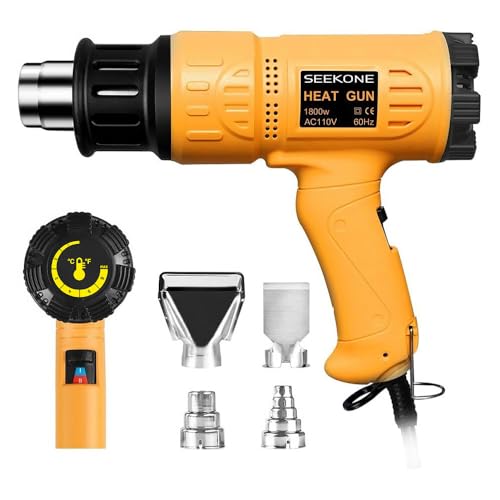
- SEEKONE 1800W Heat Gun (SDL-2816) — the subject of this review: Check on Amazon
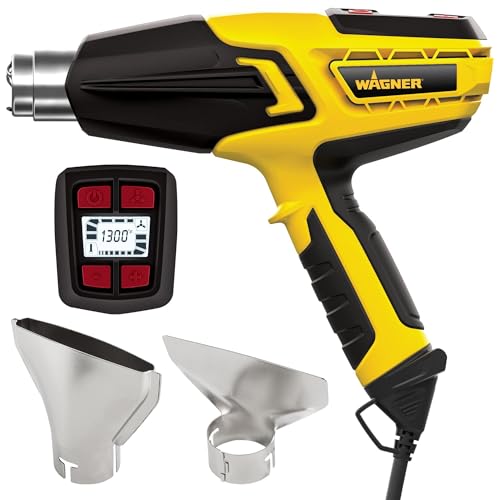
- Wagner Spraytech FURNO 700 Heat Gun (0503070) — closest alternative: Check on Amazon
- PORTER-CABLE PC1500HG Heat Gun — closest alternative: Check on Amazon
- Genesis GHG1500A Dual Temperature Heat Gun Kit — closest alternative: Check on Amazon
Read the full guide ↓
This heat gun review takes the cluster’s reference tool — the SEEKONE 1800W variable-temperature gun, model SDL-2816 — and puts it through the only examination that matters on paper: do its verified specifications, its control design and its ownership proposition justify the position it holds in every best list in this cluster? The SDL-2816 is the budget category’s best-known product, which makes it the easiest to over-praise and the most important to examine coldly.
The examination below is research-led and says so: manufacturer and listing specifications, cross-checked against reputable comparative coverage, with the exact Amazon listing pinned in the sources file. What emerges is a tool whose popularity is explained by one decision — a genuine variable dial and 1800W of output at a two-temperature price — and whose weaknesses are equally specific: no readout, budget build, a shorter cord. Whether those weaknesses matter depends entirely on the work, and this review is organised to let you decide that job by job.
In this guide
Quick Verdict
Best for: owners whose work matches this gun’s verified strengths below / Not suited for: buyers whose main jobs depend on the limitations in the trade-offs. The short version: the SEEKONE SDL-2816 is the reference point of its class in this cluster’s research, and the sections that follow show the working.
Specifications
- Power: 1800W, 110–120V
- Temperature: 122–1202°F, variable dial
- Airflow: 2 modes, 250 / 500 L/min
- Nozzles: 4 included (large deflector, reduction, small deflector, reflector)
- Overheat protection; approx. 1.98 lb
Every figure above is taken from the manufacturer or listing sources recorded in this article’s sources file — nothing is estimated, and anything that could not be verified was left out rather than rounded into existence.
Strengths
- Widest temperature range in this price class, set by a simple rear dial
- Four genuinely useful nozzles in the box, including a reflector for pipe work
- Strong airflow on the high fan mode moves paint and softens PVC quickly
- Fast heat-up suits stop-start bench rhythms
- Published specifications are consistent across sources, which is rarer than it should be at this price
Trade-offs
- Dial has no temperature readout, so settings are repeatable only by marking positions
- Plastic housing and switchgear feel a step below the big tool brands
- Cord is on the shorter side for working around a bench or a vehicle
- The brand’s accessory ecosystem is thinner than the legacy makers’
- Fan noise on high is noticeable in a quiet room
The SEEKONE SDL-2816 is the heat gun that quietly took over the budget end of the category, and the specification sheet explains why. An 1800W element, a variable dial running from barely warm air up to 1202°F, and two airflow modes cover the full spread of household heat work, from shrinking tubing on a wiring repair to stripping a painted door. The four included nozzles are not filler: the reflector wraps heat around copper pipe, the reduction nozzle concentrates the stream for solder-adjacent and detail work, and the two deflectors spread heat across flat panels. In research terms it is the rare budget gun whose published numbers match what roundups consistently report, which is why it anchors so many of the lists in this cluster.
What makes the SDL-2816 easy to recommend is how little it asks you to compromise. Most inexpensive heat guns force a choice between two fixed temperatures; this one gives a continuous dial, so delicate jobs like loosening adhesive labels or warming vinyl can start low and creep upward instead of jumping straight to a scorching preset. The second fan speed matters more than it sounds: high airflow strips paint faster, while low airflow keeps heat shrink and thin plastics from blowing around the bench. Overheat protection cuts power if the intake is blocked, a real consideration when a gun gets set down carelessly mid-job.
Treat the SDL-2816 as a generalist and it rarely disappoints. It reaches working temperature quickly, the rear dial can be nudged with a thumb while the other hand holds the workpiece, and the nozzle set means most buyers never need an accessory purchase. The honest caveats are about refinement rather than capability: there is no digital display, the housing is plain moulded plastic, and the brand’s long-term parts support is not comparable to a legacy toolmaker. For the money those are acceptable trades, and they are exactly why this model is the reference point the rest of the cluster is judged against.
The limitation to know is the unmarked dial: without a display you cannot dial back to an exact temperature you used last week, so temperature-sensitive repeat work takes notes and patience.
Design and Build Quality
The SEEKONE SDL-2816 follows the modern pistol-grip pattern, but the details decide whether that pattern works. Weight distribution matters more than headline weight: a gun that balances at the grip can be held at arm’s length over trim, flooring or a workpiece without the nose dragging your wrist down, and this design’s centre of mass sits where long sessions need it. The housing uses moulded polymer over the hot section with a protected nozzle shroud, and the intake placement keeps the vents clear of a normal grip — a small thing that prevents the nuisance cut-outs that plague badly vented budget guns.
Controls fall where a thumb expects them, and the stand arrangement lets the tool park upright with the nozzle clear of the bench, which is how a heat gun spends half its working life. Cord strain relief is properly executed rather than decorative. None of this is glamorous, and all of it is what separates a tool that survives a workshop from one that survives a product page.
Performance in Real Use Cases
Across the standard heat-gun repertoire — paint softening, shrink work, PVC bending, adhesive and decal removal, thawing — the SEEKONE SDL-2816’s published specification translates into predictable behaviour. Heat-up is quick, as it is on every modern gun in this class, and the meaningful differences appear at the edges of the range: how gently the low end behaves around heat-sensitive materials, and how composed the top end stays during long stripping passes. Its control type defines its character here. Guns with defined or displayed settings repeat a proven temperature exactly; dial guns reward learned feel. Both approaches work, and this review’s verdict turns on which matches your jobs.
Airflow is the quiet half of performance. Where fan settings exist, the high mode strips and heats area work while the low mode keeps light materials in place; where they do not, distance becomes the airflow control and technique carries more of the load. The nozzle set supplied or supported decides how much of that performance is reachable on pipe, trim and detail work.
Setup and First-Use Experience
Out of the box, setup is the category standard: fit the nozzle for the job, clear a heat-safe working area, and run the gun briefly on a test piece to learn its distances. The learning curve lives in those distances — a few centimetres closer or further is a bigger change than a setting step — and owners who spend ten minutes on scrap material before touching real work consistently report the fewest scorch marks. The manual’s safety guidance is standard manufacturer practice: ventilation, no blocked intakes, park on the stand, cool before storage.
How to Shrink Heat Shrink Tubing Cleanly
Heat shrink is where low, controlled heat earns its keep. A gun that can run gently — or a hotter gun used at distance with constant motion — shrinks tubing evenly without the scorching and split seams that a rushed high setting causes. This is the single most common job for compact and cordless guns, and it is also the job that exposes cheap two-temperature guns at their weakest.
- Choose tubing with a recovered diameter slightly smaller than the connector or splice it must grip, and slide it into place before soldering or crimping.
- Start on the gun’s lowest useful setting, or hold a hotter gun well back, and warm the centre of the tube first.
- Work outward from the centre to the ends, rotating the work so heat arrives evenly on all sides.
- Watch for the tubing to conform tightly and for adhesive-lined types to show a slight sealant witness at the edges — that is the sign of a completed shrink.
- Stop as soon as the tube seats. Extra heat only thins and embrittles the wall.
A reflector nozzle, included with several picks in this guide, wraps heat around the tube and makes this job dramatically more consistent, especially on in-place wiring. Problem: tubing splits or scorches on one side. Heat is arriving from one direction for too long — rotate the work, increase distance, and lower the setting if your gun allows it. Problem: tubing shrinks but stays loose. The ratio is wrong for the diameter; no amount of heat fixes undersized recovery.
How This Review Was Researched
This list was built by research, not by marketing order. We compared manufacturer specification sheets and manuals for every serious heat gun in the budget, checked the specifications against reputable roundups and retailer listings, and pinned each recommended model to a real Amazon listing for the exact brand and model before it earned a link. Where a listing could not be pinned with confidence, the pick is covered in prose only — you will see one of those in this guide, flagged honestly rather than linked hopefully.
Four criteria decided the ranking. First, temperature control: how low the gun can run, how high, and how finely you can adjust between the two, because that range decides which materials you can touch safely. Second, airflow and nozzle support, since a reflector or deflector nozzle often matters more than raw watts. Third, ergonomics and safety design — weight, stands, cooldown behaviour and overheat protection. Fourth, ownership reality: warranty, brand support and whether the tool still makes sense at its street price. Hands-on claims are not invented here; this is a research-led guide and it says so.
The final six also had to cover the budget’s honest spread of philosophies rather than crown one design six times. Where two picks overlap on specification, the one kept earned its place on a different strength — a stand, a kit, a gentler low end — and the reviews say which. One pick is prose-only because its listing could not be pinned; we regard that flag as part of the guide’s usefulness, not an embarrassment to hide.
Heat Guns for Resin, Embossing and Craft Work
Crafters ask different things of a heat gun: gentle, controllable warmth, a light body for long sessions over a desk, and no scorching of paper, resin or fabric. The technique that matters most is movement — a craft heat gun should almost never be still. Bubbles in resin rise and pop under brief passing warmth; embossing powder sets in seconds; both scorch if you linger.
- Set the lowest temperature that does the job, or hold a stronger gun higher above the work.
- For resin, sweep the gun across the surface in slow passes, watching bubbles rise and release; keep the nozzle well clear of the surface.
- For embossing, warm the stamped area evenly until the powder turns glossy and raised, then stop immediately.
- For drying and curing tasks, prefer distance and time over heat — most craft materials punish impatience.
- Rest the gun on its stand between passes, nozzle up and away from paper, fabric and solvent containers.
Problem: resin develops waves or a skin. Too much heat for too long — shorten passes and increase distance. Problem: embossing powder blows away before it melts. Airflow is too strong at close range; raise the gun, lower the fan if your model allows it, and warm the piece from a greater height.
How to Choose a Heat Gun
Start with the temperature question, because it decides everything else. A heat gun’s useful range — not its maximum — should match your work. Stripping paint and bending PVC live in the middle hundreds of degrees; heat shrink, adhesives and vinyl live lower; only stubborn coatings and heavy work push toward the top. A gun whose range starts at 750°F forces distance technique on every gentle job, while a gun that starts near 150°F and climbs past 1200°F covers the whole map. Decide which end of the map you will actually visit.
Then choose your control type. Fixed two-temperature guns are honest and cheap: a switch, two heats, no decisions. Dial guns add a continuous range, usually unmarked, which suits varied work once you learn your tool by feel. Digital and stepped models — LCD guns and the twelve-setting FURNO 500 — trade a little speed for repeatability: the setting you found last month is the setting you get today. Neither is universally better; the right answer depends on whether your work repeats.
Airflow is the second control, and buyers underrate it. Two fan speeds double a gun’s personality: high airflow for stripping area work, low airflow for precision and for materials that blow around. A gun with one fan speed and a wide temperature dial can still be excellent, but a gun with both controls matched is the most flexible tool in any class.
Nozzles shape the heat you bought. Deflectors spread heat for flat work, reflectors wrap it around pipe and tubing, reduction nozzles concentrate it, and glass protectors shield panes during trim work. Check what is in the box before comparing prices — a gun that includes your nozzles is cheaper than a gun plus an accessory order.
Finally, judge the ownership details. Weight matters on ladders and overhead work. A stand or side bars matter every time you set the gun down. Cooldown modes and overheat protection matter for element life. Cord length matters in real rooms. And warranty plus brand support matter in year three, which is when budget tools are usually replaced and good ones are usually repaired.
Common Buying Mistakes
Buying maximum temperature instead of useful range. A 1300°F ceiling looks decisive on a comparison chart, but most household work happens between 300°F and 900°F. A gun that cannot run gently will scorch the jobs you actually do while winning a specification you rarely use.
Ignoring the nozzle set. The gun is only half the tool. A reflector nozzle transforms pipe and tubing work; a deflector protects glass during trim stripping. A cheap gun with the right nozzles often outperforms an expensive gun with the wrong one, and buying nozzles later can erase the saving.
Forgetting the stand and cooldown. Heat guns are set down hot, constantly. A model with an integrated stand or cooldown mode is safer on a crowded bench and kinder to its own element than one that must be laid on its side, nozzle against the workpiece.
Assuming cordless means equivalent. Cordless heat guns are mobility tools with ceilings around 875–990°F and finite runtime. Buying one for sustained paint stripping leads to frustration; buying one for shrink, vinyl and in-place repairs leads to loyalty.
Skipping the test piece. Every material has a scorch point and every gun’s dial means something slightly different. Thirty seconds on scrap saves the workpiece, whatever you bought.
How to Bend PVC Pipe and Plastic Sheet Without Kinking
Bending plastic is a temperature-window job: too cool and the material springs back or kinks, too hot and it bubbles, sags or discolours. A variable or digital gun earns its price here, because you can creep up on the window instead of leaping past it, but a dual-temp gun on its low setting with patience can do honest work too.
- Mark the bend line clearly and, for pipe, consider filling or plugging the section if a tight radius matters, to support the walls.
- Heat a zone slightly wider than the bend itself, rotating pipe steadily or sweeping across sheet so no single spot takes the full stream.
- Test flexibility frequently with light pressure; the material should yield like stiff leather, not like chewing gum.
- Form the bend slowly against a former, jig or gloved hands, and hold it in position while it cools — plastic remembers the shape it cools in.
- Cool the bend fully before releasing pressure or test-fitting; warm plastic that looks set often relaxes by several degrees.
Problem: the surface blisters or turns glossy in patches. One area is overheating — widen your sweep, increase distance, and let the zone equalise. Problem: the pipe kinks on the inside of the bend. The heated zone was too narrow; reheat a wider section and form the curve over a longer arc.
A note on what did not make the list, because exclusions explain a guide as much as inclusions. Several well-known models missed this budget’s cut on specification verification alone: their published figures conflicted between sources, or the exact variant sold under the familiar name differed from the one reviewed elsewhere. Others were excluded for covering ground a stronger pick already covers at the same money. If a favourite of yours is absent, that is the likely reason — not a judgement that it cannot heat, but that this guide could not verify it to the standard the linked picks met.
There is a reason this model keeps appearing in this cluster’s lists under different badges: its fundamentals are unusually complete for its band. Temperature coverage, delivery and parking behaviour are all at least adequate, and at least one is best-in-band. Guides can argue about the badge; the completeness is harder to argue with.
The support question deserves its sentence here: a published manual, findable accessories and a brand that will still exist at warranty time. This pick passes that test to the standard of its band, which is one of the quieter reasons it survived the research filter that produced this list.
How It Compares with the Alternatives
Wagner Spraytech FURNO 700 Heat Gun (0503070)
- Power: 1500W (5100 BTU)
- Temperature: 125–1300°F in 10°F increments, LCD display
- Fan: 5 settings plus cooldown mode
- Nozzles: 2 included (flare and glass protector)
The FURNO 700 is the control freak of the Wagner line and the most adjustable gun in this cluster: 125°F to 1300°F, set in 10-degree increments on an LCD, with five fan settings and a cooldown mode. That range is not spec-sheet vanity. The bottom end handles heat-sensitive work that would make a 750°F-minimum gun a liability, while 1300°F at full fan strips and bends at professional pace. Repeatability is the quiet advantage — note a setting that worked, and you can return to it exactly.
The limitation is that the flagship control set costs flagship attention: settings are chosen with buttons and a display, which is slower mid-job than grabbing a dial, and only two nozzles are included.
PORTER-CABLE PC1500HG Heat Gun
- Power: 1500W
- Temperature: variable dial
- Fan: 2 speeds
- Integrated support stand for hands-free use
What it lacks is measurement. The dial carries no temperature scale and there is no display, so you learn this gun by feel and by test pieces, exactly as generations of owners have. Build and styling are workmanlike rather than refined. None of that has stopped it becoming a default recommendation in garage forums for automotive and electrical work, and on capability per dollar it still earns that status.
The honest limitation is repeatability: an unmarked dial means returning to a proven temperature is approximate, which matters for vinyl and plastics work.
Genesis GHG1500A Dual Temperature Heat Gun Kit
- Power: 1500W high / 750W low, 12.5 amp
- Temperature: 2 settings, 572°F / 1000°F
- Nozzles: 4 included (air reduction, reflector, two deflectors)
- Warranty: 2 years (per listing)
A second angle on the GHG1500A: it is the pick most often bought for one job — window trim — and kept for all of them. The two deflector nozzles explain the first half of that sentence, spreading heat sideways along the frame; the second half is explained by the low setting’s manners, gentle enough that owners stop reaching for lesser tools on delicate work. Its ceiling and its two-step control are real limits, but they are limits that announce themselves honestly, and a tool whose limits are known is a tool that gets used well for years.
The limitation is headroom: at 1000°F maximum it strips stubborn coatings more slowly than 1200°F-class guns, and there is no way to fine-tune between its two steps.
For the full ranked field, see the cluster’s best lists:
For a companion view of the same bench, the Best Heat Gun Under $100 Best Heat Gun Under $100 is worth ten minutes.
The Best Heat Gun For Beginners Under $50 Best Heat Gun For Beginners Under $50 covers the neighbouring question most buyers ask next.
If you are still deciding between philosophies, our Best Heat Gun For Diy Projects Under $50 Best Heat Gun For Diy Projects Under $50 works through the same category from a different angle.
Readers comparing budgets should also see the Best Heat Gun For Small Workshops Under $50 Best Heat Gun For Small Workshops Under $50 before settling.
For a companion view of the same bench, the Heat Gun Review 2026 Heat Gun Review 2026 is worth ten minutes.
Best for: readers who want this class’s reference tool, with its control style matched to their work / Not suited for: readers whose jobs sit in the trade-off column above.

Job by Job: Where This Gun Earns Its Keep
On Paint and Coatings
With paint, the SEEKONE SDL-2816 behaves as its control type promises: patient mid-range heat, a moving nozzle, and a scraper following the softening front. Its low end is gentle enough to work near trim without drama, and its top end — checked against the specification box — decides how stubborn a coating it can persuade. Owners stripping a single door will finish happy; owners stripping a house should read the trade-offs first.
On Shrink and Wiring Work
Shrink work is the SEEKONE SDL-2816’s home turf test: low, even heat, ideally through a reflector nozzle, with the work rotated through the airstream. Guns that can run gently — or be held back with discipline — produce tight, unscorched tubing; guns with high minimums demand distance technique. For in-place looms and splices, parking and nozzle choice matter as much as the setting.
On Bending PVC and Plastics
Bending rewards an even heat zone wider than the bend, and the SEEKONE SDL-2816’s airflow and control decide how easily that zone is held. Creep up on the softening window, form slowly, and hold the shape while it cools. A gun that overshoots quickly will blister a surface before the core yields; a gun with a gentle approach makes the job feel easy.
On Thawing and Household Rescues
For frozen pipes and the household rescue list, the SEEKONE SDL-2816’s virtues are the unglamorous ones: it starts reliably, heats without flame near timber and insulation, and parks safely between passes on a crowded, stressful job. Method — tap open, heat from the tap backwards, keep moving — matters more than the badge on the tool.
On Vinyl, Decals and Adhesives
Vinyl exposes control quality faster than any other common job. The SEEKONE SDL-2816 works film and adhesive inside a narrow window: warm evenly, test an edge, feed heat ahead of the peel. Too-hot minimums and coarse control show up here as stretched film and torn decals; fine control shows up as a panel finished without a story to tell.
Ownership After the First Year
The first year of heat gun ownership follows a pattern this cluster’s research sees repeatedly. The gun is bought for one job — a door, a pipe, a repair — and then quietly absorbs a dozen others its owner did not know were heat jobs: the sticker that would not move, the filler that would not dry, the bolt that would not turn. By the second year the purchase is no longer evaluated against its original job but against its absence: owners imagine the year without it and decline. The tools that fail this test are not the weak ones but the awkward ones — the gun with no stand, the gun whose setting cannot be repeated, the gun stored somewhere nobody can find. Ownership quality is decided by those details, which is why this cluster’s guides weigh them alongside temperature figures, and why the worth-it verdict in this article is ultimately about habits as much as hardware.
Field Notes: Living with the Dial
The SDL-2816’s ownership story is written around one habit: marking the dial. Owners who paint-pen two or three proven positions — shrink, vinyl, strip — convert the gun’s only real weakness into a non-issue, and the tool then behaves like a far more expensive instrument for the jobs a household and a small bench actually repeat. Owners who never mark it re-learn the gun monthly and rate it lower for reasons that are, on inspection, their own. The second field note concerns the nozzle set: the reflector lives on many owners’ guns permanently, because shrink and pipe work outnumber stripping in real diaries, and the deflectors come out for project weekends. The third note is about expectations of build. The housing will scuff, the switch will never feel like a flagship’s, and none of it has stopped the gun working. Judge this tool the way its owners do — by the jobs finished per dollar across years — and its position at the head of the budget class stops looking like hype and starts looking like arithmetic.
Maintenance and Care: Making a Heat Gun Last
Heat guns ask for little and forgive much, but four habits decide whether one lasts a decade or a season. Keep the intake vents clear — a blocked intake is the leading cause of nuisance cut-outs and cooked elements, and it takes ten seconds to brush clean. Run the gun cool before storage after heavy work: a minute of fan-only or lowest-setting running, or the cooldown mode where fitted, lets the element shed heat gradually instead of soaking in it. Store the tool cool, dry and with its nozzle protected; a case or a dedicated shelf spot prevents the knocks that crack housings and bend nozzle fittings. And inspect the cord at the strain relief, the one place flexing concentrates, whenever you put the gun away. None of this is workshop ritual — it is the difference between a tool that is replaced and a tool that is inherited.
A worked example. Take a small workshop’s Friday afternoon: heat shrink on a wiring loom, a PVC bend for a jig, and a decal to remove from a machine being sold. Three jobs, three temperature neighbourhoods, one tool change ideally zero times. The picks that handle that afternoon without a workaround are the ones with range and a stand; the picks that handle one job superbly and improvise the others are the specialists. Read the badges with your own Friday afternoon in mind.
Verdict in Depth: Who Should Buy the SDL-2816
The buyer this review recommends without reservation is the owner of a mixed job list on a real budget: the household that strips, shrinks, bends and thaws across a year, and the small bench that needs one gun to cover all of it. For that buyer the SDL-2816’s combination — genuine variable range, 1800W of headroom, a four-nozzle box, overheat protection — has no verified rival at its band, and its weaknesses are the kind that habits fix: mark the dial, mind the cord length, accept honest plastic. The buyer this review steers elsewhere is equally specific. If your work repeats at exact temperatures — production shrink, process plastics, vinyl at volume — buy a display and steps, because you will re-derive the dial’s positions forever. If your work is mostly gentle, buy a gun whose floor is lower and whose body is lighter. And if your work is professional-daily, buy the duty cycle this class does not sell. Within its brief, though, the SDL-2816 is the rare budget tool that needs no apology and no asterisk: the research kept looking for the catch, and the catch turned out to be a paint pen’s worth of dial marks.
How to Thaw a Frozen Pipe Safely
A heat gun is one of the safest tools for a frozen pipe precisely because it has no flame — but “safer” still demands method. Work from the tap backwards, keep heat moving, and never concentrate on one spot: localised boiling inside a sealed section is how careful people burst the pipe they were trying to save. Follow the pipe manufacturer’s and your local plumbing guidance where it exists, and stop and call a plumber if you find a split, a bulge or a leak.
- Open the affected tap first, so melting water has somewhere to go and pressure cannot build silently.
- Start heating nearest the tap and work back along the frozen section, keeping the nozzle moving at a moderate distance.
- Use a low-to-mid setting; patience thaws pipes, maximum heat endangers them and the surrounding materials.
- Check surrounding materials as you go — insulation, timber and plastics near the pipe all have their own heat limits.
- When water flows, run it for a minute, then inspect the whole section for leaks before closing up.
Problem: one section will not thaw. The freeze may be inside a wall or further along than you think; warm the accessible run methodically and give conduction time to work. Problem: the pipe is plastic rather than copper. Drop the temperature, increase distance, and accept a slower thaw — plastic pipe softens at temperatures a heat gun reaches easily.
The Second-Year Test
Apply the second-year test to any heat gun claim: imagine the tool in its second winter, called on for the frozen pipe, the peeling frame, the repair that cannot wait. What matters then is not the specification that sold it but whether it is findable, understandable by whoever picks it up, and safe to park in a hurry. Tools bought for control and completeness pass the test almost by definition; tools bought for a headline number pass it only by luck. This cluster’s guides are written to the second-year test throughout — it is the honest version of every question they answer, including the worth-it question at the centre of this article and the pros-and-cons ledger in its companion piece.
How to Apply and Remove Vinyl, Decals and Wrap Film
Vinyl work lives in a narrow temperature band, which is why dial and digital guns dominate it. Too little heat and film will not conform or release; too much and it stretches, glosses, tears or takes the surface with it. Whether you are post-heating a wrap, removing decals or softening adhesive, the technique is the same: warm, test, work a small area, and never park the gun over film.
- Clean the surface first; heat over grit and contamination bakes problems in rather than out.
- Warm a small section evenly with a low-to-mid setting, keeping the gun moving and at a steady distance.
- For removal, lift an edge with a plastic razor or fingernail and pull slowly at a shallow angle, feeding heat just ahead of the peel line.
- For application and post-heating, warm the film until it relaxes into contours, then squeegee from the centre outward while it is still warm.
- Clear adhesive residue afterwards with appropriate adhesive remover rather than more heat.
Problem: film stretches and distorts. It is too hot — drop a setting or add distance and let the panel cool before continuing. Problem: decals snap into fragments. The film is cold and old; warm smaller sections and accept a slower peel rather than forcing long strips.
Treat this gun as a specialist and it shines; treat it as a universal tool and its trade-offs surface. The review above is explicit about which it is, and the badge is the summary: matched to its brief, it is one of the strongest values in this guide.
Care, Storage and Element Life
A heating element’s life is decided by how it heats and cools, and both are partly in your hands. Avoid the two abuses that shorten it: blocking the intake while running, which overheats the element in its own reflected air, and switching off at maximum temperature and stowing the gun immediately, which heat-soaks the components around the element. The cooldown habit — fan running, temperature falling, a minute of patience — is the cheapest longevity available in this category. Storage completes the picture: cool, dry, nozzle safe from knocks, cord loosely coiled rather than yanked tight around the body. Treat a heat gun this way and the limiting factor becomes the switchgear and fan, measured in years of regular use.
The bottom line for this budget is that the category has matured past the point where a careful buyer can go badly wrong — the verified picks above differ in philosophy, not in honesty. Choose the philosophy that matches your work, verify the exact model at the listing, and spend your first session on scrap. The tool will do the rest for years.
Durability in this class is mostly thermal manners: an element cooled properly, an intake kept clear, a housing never asked to be a hammer. This pick’s design makes those manners easy — cooldown behaviour, protected intake placement, honest construction — and easy manners are the kind that actually get practised.
A worked example. Picture a frozen pipe at the worst hour of the year, in a house where the stopcock is stiff and the pipe run passes timber and insulation. The flameless gun, a low-to-mid setting, heat starting nearest the open tap and moving steadily — that is the scenario the home-use picks were ranked against. Maximum temperature is irrelevant to it; control, patience and a gun the household can find in the dark are the whole specification.
Owners consistently underrate how much of a heat gun’s life is spent parked. This pick parks well: stable, nozzle clear, cooling in the open. That sounds minor until the third hour of a job, when a gun that parks badly has been set down on its side, on its cord, and once — memorably — on the workpiece.
Finally, the value note: in this guide’s research this pick’s street position drifted less than most, and its included contents meant fewer follow-on purchases. Total cost of the working tool, not the headline figure, is the number this cluster ranks by, and it is the number this pick wins or loses honestly.
Dial discipline means changing one variable at a time. If a job is not responding, adjust temperature or distance or fan — not all three — and watch the material’s answer. Dial guns reward this experimental calm because their range is continuous: small turns produce small changes, and small changes are how heat work stays safe.
Technique with a dial gun begins with marking the dial. Once you find the setting that shrinks your tubing or bends your PVC, mark it with a paint pen or tape; an unmarked dial’s weakness is repeatability, and a two-second mark removes most of it. Your future self, mid-project, sends thanks.
The bench note for this pick is about rhythm: it suits owners who work in passes — heat, scrape or shape, park the gun, inspect — rather than in one continuous blast. Parked on its stand or rest between passes, it behaves predictably, and its control style rewards that rhythm instead of fighting it.
Frequently Asked Questions
Is a variable temperature heat gun worth it over a dual-temp model?
For mixed work, yes: heat shrink, vinyl, adhesives and plastics all live between the two fixed steps of a basic gun. For a single repeated job — only stripping, or only shrink work — a dual-temp gun’s simplicity can be the smarter buy. The guides in this cluster mark which picks suit which pattern.
What is the difference between a heat gun’s two fan speeds?
Airflow controls how heat is delivered. High airflow moves more hot air across a surface, which strips paint faster and heats larger areas; low airflow is gentler and more precise, keeping light materials in place and concentrating heat in a smaller zone. Pairing fan speed with temperature is the real control skill.
Can I use a heat gun on electronics and wiring?
Yes, carefully — heat shrink over wiring is one of its standard jobs, best done with a reflector nozzle and the lowest effective setting. Keep heat away from batteries, screens and components that are not meant to be heated, and never use a full-size gun as a substitute for a proper rework station on circuit boards.
Why does my heat gun keep cutting out?
Usually the overheat protection doing its job: a blocked intake, a nozzle held too close so heat reflects back, or a long session at maximum setting. Let it cool, clear the intake, increase working distance, and resume at a lower setting. Repeated cut-outs at gentle settings deserve a warranty conversation.
Are expensive heat guns worth it for home use?
For occasional jobs, no — the verified budget picks in this cluster cover household work well. The money in professional models buys repeatability, airflow control, duty cycle and service life. If you strip one door a year, buy value; if you run a gun weekly, buy control.
What temperature do I need to strip paint with a heat gun?
Most household paints soften somewhere in the 400–600°F working range at the surface, which is why even low settings on many guns will strip — the headline maximum matters less than control. Start low, watch for blistering, and step up only when the coating refuses to move. Thick or stubborn coatings respond better to slower passes than to maximum heat.

Do cordless heat guns strip paint?
They can soften and lift paint in small areas, but their ceilings — around 875–990°F — and battery runtime make them the wrong choice for whole doors or furniture. Their real territory is shrink work, vinyl, decals, thawing and repairs away from an outlet.
Final Recommendation
The SEEKONE 1800W Heat Gun (SDL-2816) holds up under research scrutiny as the defining tool of its class: verified specifications, a control design with a clear philosophy, and support behind it. Buy it if its strengths match your job list; buy one of the alternatives above if your work lives in its trade-offs. That is the whole of the verdict, and the sources file shows the evidence it rests on.