Disclosure: As an Amazon Associate, umtsmarttool.com earns from qualifying purchases. Links to Amazon on this page are affiliate links; they cost you nothing extra. Prices and availability change often, so check the current Amazon listing before you buy.
Where to buy
The alarms referenced in this verdict, if you decide the answer is yes. Each was verified against a real listing.
- She’s Birdie Original Personal Safety Alarm — Best Overall: Check on Amazon
- KOSIN Safe Sound Personal Alarm 12-Pack — Best Budget Multipack: Check on Amazon
- POM Personal Safety Alarm — Best Rechargeable: Check on Amazon
- GE Personal Security Window and Door Alarm 4-Pack (45174) — Best for Windows and Doors: Check on Amazon
Read the full guide ↓
Is a personal safety alarm worth it? The Short Answer First
Short answer: for most people, yes — with a definition attached. A personal safety alarm is worth it if you understand it as an attention tool that costs little, asks almost nothing, and might turn a private bad moment into a public one. It is not worth it if you are buying a feeling of guaranteed safety, because no such product exists at any price, and believing otherwise can quietly replace better habits — awareness, lighting, locks, company — with a keychain.
That distinction is the whole article. Below: what you actually get for the money, who genuinely benefits, who should skip the purchase, what ownership really costs in money and attention, and the alternatives worth considering instead. Readers who finish convinced can go straight to the ranked lists, starting with Best Personal Safety Alarm Under $50 Best Personal Safety Alarm Under $50; readers who finish unconvinced will at least know what to buy instead.
In this guide
What You Actually Get
You get a siren in the 120–140 dB maker-rated classes, usually with a strobe or LED, triggered by a pull and silenced by reversing it. You get a device that is legal in effectively all everyday contexts, needs no license, training, subscription or connectivity, and works for a ten-year-old and an eighty-year-old with the same ten seconds of instruction. You get, in the door and window branch of the family, a chime or siren that announces an opening in a home. And you get the less tangible item that owners consistently mention: the walk feels different with a plan in your hand. That feeling is real value and also the product’s danger, because a feeling is not a capability.
What you do not get deserves equal print. No alarm in this category contacts anyone. None records, tracks or summons. None physically impedes a person or a door (the single door-stop exception in our roundups resists a door, modestly). And none has evidence behind it strong enough for an honest guide to quote deterrence statistics — the mechanism is plausible and widely endorsed by safety practitioners, but plausibility is the claim, and we will not dress it as data.
Who Benefits, and Who Does Not
Best for: people with a specific, recurring exposed routine — the night-shift walk, the campus crossing, the dog’s last outing, the ground-floor flat — and households who will actually install and test the devices. For them, the cost-per-year of a carried alarm or a covered door is trivial against even a small chance of changing one bad minute.
Not suited for: anyone shopping for certainty, anyone whose real risk is inside the home from a known person (where an alarm’s logic does not apply), and anyone who knows the device will live in a drawer. The drawer test is the most honest one in this article: picture where the alarm will be in three months. If the answer is a bag or a door, buy. If it is a drawer, spend the money on lighting or a better lock instead.
The Real Cost of Ownership
Money: the category is cheap, and stays cheap — coin cells yearly for battery models, nothing but electricity for rechargeables, adhesive pads for door units. The honest currency is attention. An alarm demands a monthly two-second test, a yearly battery decision, and a permanent carry position. Owners who pay that small attention tax own a working device; owners who do not own a superstition. Factor your own reliability honestly — it is a legitimate reason to choose a low-battery-warning model or a rechargeable that joins an existing charging routine, and it is why our Personal Safety Alarm Pros And Cons Personal Safety Alarm Pros And Cons page weighs maintenance so heavily.
The Alternatives, Taken Seriously
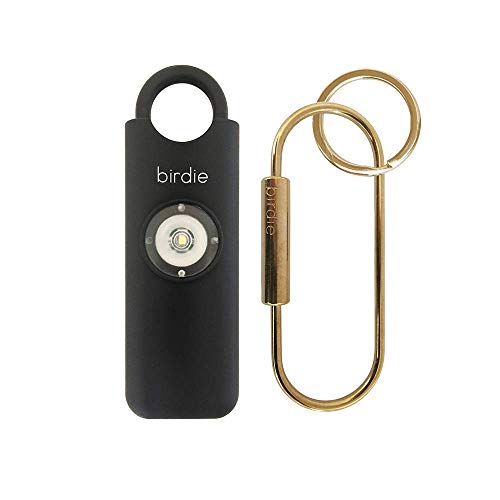
She’s Birdie Original Personal Safety Alarm — Best Overall
At a glance: 130 dB siren (maker-rated). Runs on 2 CR2032 batteries (included)
- 130 dB siren (maker-rated)
- Strobe light that flashes while the siren sounds
- Pull-top activation: pull the top ring to sound, push back to stop
- Runs on 2 CR2032 batteries (included)
- Keychain carry in a range of colors
Strengths
- Siren and strobe fire together, so the alert is both audible and visible
- Activation is a single gross-motor pull that works with cold or gloved hands
- Replaceable coin cells mean no charging cable to remember
Trade-offs
- Coin cells are a consumable you have to keep spares of
- The decorative shape can snag less smoothly in a tight pocket than a flat alarm
- No low-battery warning light, so periodic test pulls matter
The original Birdie built its reputation on a simple observation: a safety device only works if it is actually on your bag, and people leave ugly, tactical-looking gadgets in drawers. The bird-shaped body, the brass-look keychain and the color range make it read as an accessory first. Underneath the styling, the mechanism is a pull-top design — pull the top away from the body and a 130 dB siren starts together with a flashing strobe; push the top back down and it stops. That two-part motion is deliberate enough to avoid most accidental triggers in a handbag, yet simple enough to perform under stress without looking.
Power comes from two CR2032 coin cells, which keeps the body slim and means a flat battery is a two-minute fix rather than an overnight charge. The honest limitation is the absence of any battery warning: the only way to know the cells are healthy is a short test pull every month or two, ideally outdoors or into a cushion. Treat that test as part of the routine, like checking a smoke alarm, and the Birdie is one of the most carry-able alarms in this guide.
Best for: anyone who wants the alarm they will actually carry every day, in a design that suits work and social bags / Not suited for: buyers who want the cheapest route to covering a whole household

KOSIN Safe Sound Personal Alarm 12-Pack — Best Budget Multipack
At a glance: 140 dB siren (maker-rated), the loudest figure in this guide. Up to 50 minutes of continuous sounding per set of batteries
- 140 dB siren (maker-rated), the loudest figure in this guide
- LED light on each unit
- 3 AG13/LR44 button batteries per alarm (included)
- Up to 50 minutes of continuous sounding per set of batteries
- Twelve units in one pack for bags, doors and family members
Strengths
- Ideal for equipping a whole household, class or team in one order
- The LED is genuinely handy for keyholes and dark stairwells
- Standby life is quoted at up to a year, so a yearly test-and-replace rhythm works
Trade-offs
- No strobe; the light is a steady LED rather than an attention flash
- Pull-pin caps on budget units can loosen over time in a bag
- Not rechargeable, and LR44 cells are fiddly for arthritic hands
For home use, the multipack logic extends beyond carry: a unit taped inside a shed door, one on a teenager’s bike bag, one in the car glovebox. The LED is a small steady light rather than a strobe, useful for keyholes and fuse boxes. Nobody will mistake these for premium objects, and that is precisely why people actually distribute them instead of protecting them.
If your budget lens is a hard ceiling and your headcount is more than one person, this pack is usually the correct answer. If you want one beautiful, rechargeable alarm for yourself, it is not — and this guide has better fits for that job.
Best for: households equipping many people and bags on a tight budget / Not suited for: buyers who want premium build quality or rechargeable power

POM Personal Safety Alarm — Best Rechargeable
At a glance: 130 dB siren (maker-rated). Bright LED flashlight built in
- 130 dB siren (maker-rated)
- USB-C rechargeable lithium-ion battery
- Up to 60 minutes of continuous sounding on a full charge
- Bright LED flashlight built in
- Pull-pin activation with a pocket-clip style body
Strengths
- USB-C charging uses the same cable as a modern phone, so top-ups are painless
- A full hour of continuous sounding is generous for a rechargeable unit
- The flashlight mode makes it useful on ordinary evenings, not just emergencies
Trade-offs
- Rechargeable means a charging habit; a neglected unit can be flat when needed
- Costs more than the battery multipacks for a single unit
- The sleek body offers less grip texture than rubberized rivals
POM built its name on pepper spray, but its personal alarm applies the same design discipline to a noise-only device: a slim, pocket-clip body, a pull pin, a 130 dB siren, an LED flashlight, and a lithium-ion battery that charges over USB-C. The charging choice is the headline. A personal alarm that shares a cable with your phone actually gets charged; one that needs a proprietary lead joins the drawer of good intentions.
Runtime is quoted at up to 60 minutes of continuous sounding on a full charge, which is generous — real incidents need seconds to minutes of noise, and the margin covers months of standby plus a few false alarms. The flashlight is a proper everyday convenience, bright enough for locks, paths and dropped keys, and it means the device gets handled daily, which keeps its location habitual.
Best for: anyone with a USB-C charging routine who wants one polished alarm for daily carry / Not suited for: households needing several alarms at once on a budget

GE Personal Security Window and Door Alarm 4-Pack (45174) — Best for Windows and Doors
At a glance: Four magnetic contact alarms in the pack. Battery powered and fully wireless, no hub or wiring
- Four magnetic contact alarms in the pack
- Three modes on each unit: Off, Chime and Alarm
- Sounds when the magnet separates from the sensor body
- Battery powered and fully wireless, no hub or wiring
- Peel-and-stick or screw mounting for doors and windows
Strengths
- The Off position makes daytime coming and going painless
- Magnetic alignment is forgiving compared with older contact alarms
- A long-established design with replacement units easy to find years later
Trade-offs
- The alarm tone is a local deterrent, not a monitored security system
- Sliding doors need careful magnet placement to avoid false gaps
- Not portable protection; it guards the home, not the walk to it
Installation quality decides whether these delight or annoy. Clean the frame with alcohol, let it dry, align the magnet within the marked gap, and test each opening. Sliding doors and windows work, but the magnet spacing is less forgiving there; take the extra minute. The honest limitations: the alarm only helps people within earshot, and adhesive pads on rough or dirty frames will eventually let go — the screw-mount option exists for exactly that case.
For apartments and renters this 4-pack is the default recommendation in this cluster: cheap coverage of the openings that matter, in modes that fit daily life, from a brand whose replacement units will still exist in five years.
Best for: apartments and houses that need four doors or windows covered without tools or wiring / Not suited for: anyone who needs alerts sent to a phone or a monitoring service
Beyond other alarms, the honest alternatives are: better home lighting and locks (for the home-risk case, often the better spend), a connected security system with phone alerts (a different category, with subscriptions and setup), walking routes and routines changed (free, and underrated), and — for the specific fear of being unheard — simply a phone kept charged and reachable. A personal alarm complements most of these rather than replacing them, which is precisely why the verdict is a qualified yes rather than an enthusiastic one.
More Picks From the Same Research
Three more products sharpen the verdict: the forgiving rechargeable, the renter’s kit and the door specialist each change the worth-it calculation for a different reader.

Vantamo Personal Safety Alarm — Best with Low-Battery Warning
At a glance: 130 dB siren from double speakers (maker-rated). Keychain carry format
- 130 dB siren from double speakers (maker-rated)
- Strobe light for visual attention
- Rechargeable battery with a low-battery notice
- Keychain carry format
- Pull activation designed for one-handed use
Strengths
- The battery warning is the feature experienced owners ask for most
- Recharge-and-forget rhythm suits people who dislike buying button cells
- Compact enough for a child’s school bag as well as an adult’s keys
Trade-offs
- No multipack for whole-household equipping
- The strobe cannot be used as a standalone steady torch
- If you ignore the low-battery notice long enough, it will still go flat
Vantamo’s alarm attacks the two most common failure modes of the category. First, audibility: twin speakers earn it a 130 dB rating with sound pushed in two directions rather than muffled against a bag. Second, readiness: a low-battery notice warns you before the rechargeable cell is empty, fixing the silent failure that turns so many personal alarms into keychain ornaments.
A strobe light rounds out the alert, and the rechargeable design removes button cells from your life. The format is a standard keychain carry with pull activation, so the learning curve is the usual ten seconds. For parents equipping school bags and for anyone who has ever found a ‘safety’ device dead at the critical moment, the battery warning alone justifies attention.
Best for: owners whose past alarms died silently, thanks to the low-battery warning / Not suited for: multipack shoppers equipping a whole household

GE Personal Security Alarm Kit (45216) — Best Starter Kit
At a glance: Three-piece kit: keychain alarm, door stop alarm and window/door alarm. Fully wireless and battery powered
- Three-piece kit: keychain alarm, door stop alarm and window/door alarm
- 120 dB siren on the kit components (maker-rated)
- Door stop alarm sounds when pressure is applied to the door
- Fully wireless and battery powered
- Made for home, apartment, dorm and travel use
Strengths
- Three different alarm types cover the person, the door and the window in one box
- The door stop alarm is a genuinely clever travel and rental tool
- Everything works out of the box with no tools or wiring
Trade-offs
- One of each is a starter set; larger homes will want the 4-pack as well
- The keychain alarm is basic compared with dedicated carry alarms here
- Door stop alarm needs a gap under the door and a hard floor to bite on
The keychain component is a basic 120 dB-class unit — fine as a starter, outclassed by the dedicated carry alarms elsewhere in this guide. The window/door unit shares the virtues of the GE 4-pack in single form. Treat the kit as a sampler that solves real problems today and shows you which format your household actually uses; most owners later add a 4-pack of window units or a better carry alarm, informed by experience rather than guesswork.
Nothing in the box needs tools, wiring or permission from a landlord, and everything can move with you to the next home. That portability is why the kit anchors the home and renter lenses in this cluster.
Best for: first-time buyers who want the person, the door and the window covered in one box / Not suited for: large homes that need many window units — add the 4-pack instead

She’s Birdie Portable Door Alarm — Best for Doors and Windows
- Rechargeable battery with USB charging cord included
- Loud siren plus flashing light alert when triggered
- Built-in flashlight that works while the alarm is off
- Mounts with included Command Strips (3 sets plus 2 extra sets)
- Portable format for doors and windows at home or in rentals
Strengths
- Adhesive-strip mounting means zero drilling, which suits rentals and dorms
- The flashlight works independently, so the unit earns its place on the door every day
- Rechargeable power removes the coin-cell replacement cycle entirely
Best for: renters, dorm residents and travelers who need a door or window alarm with zero drilling / Not suited for: homeowners wanting permanent, wired-in protection for many rooms at once
The Verdict, Stress-Tested
Stress-test the yes with the hardest case: the owner who buys, carries faithfully, tests monthly — and never once needs the alarm. Was the money wasted? By the logic of insurance, no more than any premium on an unclaimed policy; the product sold was readiness, and readiness was delivered daily. By the logic of the drawer test, also no: the device was carried, which is the behavior the purchase was meant to produce. The wasted purchase is only ever the uncarried one, and that waste is recorded against the fit, not the category.
Stress-test the no, equally: the skeptic who skips the alarm and spends the money on a brighter porch light has made a coherent, even admirable choice — for the risk that lives at their door. The verdict on this page was never that everyone must buy one. It is that the purchase, made with open eyes and a real routine, earns its small keep. Both the buyer and the skeptic can be right; only the talisman-shopper is wrong.
The Question Behind the Question
People rarely ask whether a personal alarm is worth it in the abstract. They ask after a walk that felt wrong, a headline that landed close, a child who started traveling alone. The purchase under discussion is really a response to a specific new fact about a specific life — and judged against that fact, rather than against an imaginary average reader, the verdict usually makes itself.
This page has argued the general case as honestly as it can. But if you arrived here carrying one of those specific facts, weight it properly: it is data, not anxiety, and the alarm that answers it — carried, tested, understood — is worth its small price almost every time.
Keep reading in this cluster: the Personal Safety Alarm Review Personal Safety Alarm Review continues this line of thinking, the Best Personal Safety Alarm Under $100 Best Personal Safety Alarm Under $100 applies it to a specific situation, the Best Personal Safety Alarm For Apartments Under $100 Best Personal Safety Alarm For Apartments Under $100 argues the neighbouring case, and the How To Choose A Personal Safety Alarm How To Choose A Personal Safety Alarm completes the set.
And if the answer, after all of it, is still ‘not yet’ — that too is a respectable verdict, provided it is a decision and not a drift. Set the question a date to return to, the way you would set the alarm’s own test date, and let the routine you are building in the meantime — the lit route, the charged phone, the household that knows its doors — count as this page’s parting gift.
Worth it, then — not as a promise, but as a practice with a small price and an honest name. The name is readiness, and unlike the alarm itself, it cannot be counterfeited, substituted or left in a drawer. Build that, with this device or another, and the question in the title will never need asking again.
So the page ends where it began, with the short answer — yes, with a definition attached — now carrying the weight of everything argued since. If the definition fits your life, the ranked lists are waiting and the money is small. If it does not, you have lost nothing but reading time, and gained a clearer picture of what would actually serve the worry that brought you here. Either outcome is this article succeeding; the only failure it fears is the reader who buys the talisman version anyway, against its own evidence, because the talisman was easier to purchase than the habit was to build.
A truly final consideration, because worth-it questions are also timing questions. The worst time to buy a personal alarm is in the hour after a fright, when any price seems small and any promise seems plausible; the best time is a calm week later, when the routine that frightened you can be examined like a route on a map. This page cannot choose your week for you. It can only hand you the calm version of the argument — the four conditions, the honest limits, the prices in attention rather than money — and trust that the reader who found their way here, past the marketing and the fear, is exactly the reader equipped to answer the title’s question for the only household it was ever really about.
The article should close by returning the question to its proper owner with the terms clarified. Worth it, if: there is a routine in your life that this device honestly answers; a place it will live where your hand already goes; a date on which its power will be checked; and an understanding, shared with anyone who will hear it, that its sound means come. Under those four conditions the purchase is small, the upkeep is smaller, and the potential minute it exists for is very large indeed. Not worth it, if any of the four is missing and cannot be supplied — in which case the honest purchase is the lock, the light, the route or the conversation that supplies it. The alarm was never the point. The readiness was, and readiness, unlike the alarm, cannot be bought — only built, one small kept habit at a time, starting with whichever of the four conditions is cheapest for you to meet today.
The verdict’s final stress test is the reader who has been burgled, or worse, and arrives at this page angry at its qualifications. To that reader: the qualifications are not doubt about your experience; they are the page’s refusal to sell you a story about a keychain. What can honestly be offered is this — a device that makes your home announce itself and your person audible, at a price that does not exploit the moment you are in, with a maintenance burden small enough to keep on your worst month. If that is worth it to you, it is worth it with our full agreement, and the ranked lists linked above will spend your money as carefully as this page spent its words.
The worth-it question also has a geography. In a dense city, a siren’s audience is guaranteed and near; on a rural lane, the same siren may reach nobody but the person it was meant to startle — which still has value, but of a different kind, and the buyer should know which kind they are purchasing. Indoors, in the home and apartment cases, the audience is the household itself, and the alarm’s worth is the worth of instant information. None of this changes the verdict’s shape — a qualified yes, priced in attention — but it changes its flavor by postcode, and an honest page should say so before the final word rather than after the purchase.
There is a version of this article’s question that deserves its own paragraph, because it arrives in our research again and again: is it worth it for my mother, my daughter, my partner — someone whose routine I worry about but do not live? The honest answer adds one condition to everything above. It is worth it if they will carry it, and their willingness is not yours to assume. Ask them. Show them the size of the thing, the sound of the thing, the simplicity of the thing. A chosen alarm gets carried; an imposed one gets drawer-ed, and the difference between those outcomes is a five-minute conversation that no amount of product quality can substitute for. The worth-it question, asked about another person, is really a question about consent and habit — and it deserves to be asked out loud, to them, before it is answered here.
One more population deserves a direct answer: the person buying for someone else — a parent for a student, a partner for a night worker, an adult child for an aging parent. For gift buyers the worth-it calculus shifts in one crucial way: the device’s value depends on a habit you cannot give. So give the habit with the hardware. The ten-second lesson, the agreed carry place, the shared test date — delivered in person, these convert a keychain into a system. A personal alarm given that way is worth it almost by definition; given as a bare object in a birthday card, it is a coin toss dressed as concern. The difference is not the product. It is the two minutes of teaching that either accompany it or do not.
Weighing the Purchase Against the Criteria
How loud is loud enough?
Decibel ratings dominate personal alarm marketing, so start with what the numbers mean in practice. Each 10 dB step is a big jump in perceived loudness, which is why the market has settled into classes: around 120 dB for basic units, 130 dB for the mainstream, and 140 dB claims at the top. All of these are painfully loud at arm’s length. The differences show up at distance and against background noise — traffic, wind, a crowd — where the louder classes keep an edge.
Treat every figure as a maker rating, not a standardized test result; brands measure at different distances and conditions, and one maker in this guide quotes two different figures for the same model in different listings. The practical takeaway: buy within the 130 dB class or above for outdoor use, accept 120 dB for indoor and stairwell use, and never choose an alarm on decibels alone — a 130 dB alarm on your bag beats a 140 dB alarm in a drawer every single time.
Rechargeable or replaceable batteries?
This choice is really about which failure you prefer to manage. Coin cells fail by calendar — slowly, predictably, fixable in a minute with a spare. Rechargeables fail by neglect — silently, after one forgotten month too many.
USB-C is the rechargeable worth having because the cable is already in your life. A low-battery warning is worth more than either chemistry debate: it is the only feature that notices the problem before you do. Pick the system your household’s existing habits already support.
Pack size and the coverage question
A single premium alarm protects one person or one door. Multipacks protect a household. The arithmetic that matters is coverage per opening and per person: count your ground-floor doors and windows, count the bags that leave the house daily, and you have your real requirement. Budget multipacks exist precisely because this count is rarely one.
The compromise most households land on is mixed: one good alarm where quality matters most (your own keys, the front door), and multipack units everywhere else. When you buy a multipack, test every unit on arrival — an occasional dud is a known pattern at the budget end — and note that a dozen coin-cell devices means a dozen eventual battery swaps, best handled as one annual household ritual.
More of the Field, Priced in Attention

Hootie Personal Safety Alarm — Best for Beginners
- 130 dB siren (maker-rated)
- Strobe light paired with the siren
- Pull-pin activation: pull the pin out to sound, reinsert to stop
- Replaceable batteries (no charging required)
- Clips to keys, bags or a pocket
Strengths
- Works the same for adults and older kids because there is nothing to configure
- The pin tether keeps the stopper attached so it is hard to lose mid-incident
- Neutral colors keep it discreet on a work bag or school backpack
Best for: beginners, older relatives and kids who need one simple pull and no settings / Not suited for: people who want a rechargeable alarm or a door and window device

Original Defense Siren Personal Alarm — Best for Runners and Walkers
- 130 dB siren (maker-rated)
- High-intensity LED strobe light
- Carabiner clip included for bags, purses and belt loops
- Compact body: 1.25 x 0.5 x 3.75 inches, 1.41 ounces
- Water-resistant housing for everyday outdoor carry
Strengths
- The included carabiner clips outside a bag, where a stressed hand can find it fast
- Water resistance suits runners and dog walkers in changeable weather
- Feather-light; you will not feel it on a key set
Best for: runners, dog walkers and commuters who carry their alarm clipped outside the bag / Not suited for: people with limited grip who need a larger body to hold

Silent Beacon Personal Safety Alarm — Best Premium Pick
- 135 dB siren (maker-rated)
- Flashing light paired with the siren
- Two activation styles: pull activation and vibration activation
- USB-C rechargeable lithium-polymer battery
- Model SBL-SRN10 keychain format
Strengths
- Built by a company focused on panic-button products rather than general gadgets
- The flashing light helps others locate you once the siren draws attention
- Keychain size keeps it in the everyday-carry category, not the drawer category
Best for: lone workers, students and travelers who want the loudest rechargeable rating and two trigger styles / Not suited for: buyers who prefer a long-established brand and the simplest possible mechanism
SLFORCE Safe Personal Alarm Siren Song 5-Pack — Best Mid-Size Multipack
- 132 dB siren (maker-rated)
- Five alarms in assorted colors per pack
- Compact egg-shaped body under 2 inches long
- LED light on each unit
- Keychain ring on every alarm
Strengths
- Five color-coded units let each family member claim their own
- Assorted colors help you spot the right bag’s alarm at a glance
- Small rounded body is comfortable in a child’s or senior’s hand
Best for: families who want a color-coded alarm on every member’s bag / Not suited for: buyers who want strobe lights or rechargeable batteries
Check on Amazon

SABRE Personal Alarm with Key Ring — Best Trusted-Brand Basic
- 120 dB siren (maker-rated)
- Pull-apart activation: separate the alarm from its key chain to sound
- Attaches to a bag, backpack, key chain or purse
- Compact key-ring format from an established safety brand
- Battery powered; no charging or pairing
Strengths
- A conservative, proven design that has been sold for many years
- Works identically for every age group with no setup at all
- Easy to find replacement units and matching accessories
Best for: anyone who values a proven brand and the simplest possible pull-apart design / Not suited for: buyers who prioritize maximum loudness or a locating light
Common Buying Mistakes
Ignoring false-alarm behavior. An alarm that fires in every bag crush and luggage jostle gets abandoned within a month. Consider pin security, power switches and carry position before you need the device, not after your third airport incident.
Handing one to a child without practice. A personal alarm is not a toy, but a child who has never pulled the pin will not manage it under stress. Practice together, agree when it is for, and make sure the school bag carry position is reachable.
Treating maker range claims literally. Figures like ‘audible at 600 feet’ describe ideal open-air conditions. Walls, wind and traffic cut real-world reach dramatically. Judge an alarm by whether it dominates the spaces you actually move through.
Making a Yes Answer True
Attach it where your hand already goes
Clip the alarm to the outside of your everyday bag, the key ring you always take, or a belt loop — the same place every day. Reachability under stress is a habit, not a search. If you rotate bags, a multipack or a second unit is a better answer than moving one alarm around and forgetting it.
Test the pull and the stop
Before the alarm joins your routine, pull it once — outdoors, or pressed into a cushion — and then stop it. Learn the force the pin needs and the exact motion that silences it. Repeat once with your eyes closed; that is the condition you are actually preparing for.
Set the maintenance rhythm
Coin-cell models: test monthly, plan a battery swap about yearly. Rechargeable models: top up monthly or whenever the low-battery warning appears. Write the first test date on your calendar now, while the intention is fresh.
Agree the plan with family
Everyone carrying an alarm should know what the sound means and what to do when they hear someone else’s: look, move toward a public place, and get help. An alarm is a signal; a shared plan turns the signal into a response.
The worth-it question has a second half that product pages never ask: worth it compared to what else this money and attention could do? For the price of a mid-range alarm, a household could also buy two contact alarms, or a brighter porch light, or a better door chain. The alarm wins that comparison when the risk it addresses is the portable, away-from-home kind — the kind locks and lights cannot follow. It loses when the risk lives at home and the money was the home’s one security spend for the year. Naming your risk honestly is therefore not a preliminary to the purchase; it is the purchase decision itself.
There is also a time dimension. An alarm’s value is not consumed in an incident — most owners will never trigger one in earnest — but in the hundreds of ordinary walks taken with slightly straighter shoulders. Economists would call that a real, if unmeasurable, return. Skeptics would call it a placebo with a siren. This page’s position is that both descriptions are accurate, and that a buyer who can hold both at once is exactly the buyer for whom the answer is yes.
Frequently Asked Questions
Will a personal alarm actually deter anyone?
An alarm cannot physically stop anyone, and no honest guide should promise that it will. What it reliably does is remove anonymity and buy attention: noise and flashing light draw eyes, and most opportunistic trouble depends on nobody noticing. It is an attention tool, one layer among locks, lighting, awareness and other people.
Do these alarms work through walls or alert my phone?
No. These are local sound devices: they alert people within earshot and nothing else. If you need phone alerts or monitoring, that is a different product category — a connected security system — with subscriptions and setup to match. The simplicity is also the appeal: nothing to pair, hack or pay monthly for.
How loud is a personal safety alarm in real life?
Indoors, even a 120 dB-class alarm dominates a house and is uncomfortable in the same room. Outdoors, a 130 dB-class unit is startling at conversational distance and clearly audible down a residential street in quiet conditions. Treat maker distance claims as best-case open-air figures; buildings, wind and traffic shorten real reach considerably.
Can children and elderly relatives use these?
Yes — the category is popular with both groups precisely because activation is a simple pull with no strength, aim or training required. Choose models with an easy pull and an easy stop, practice together once, and for older hands avoid the smallest battery doors when battery swaps will be self-service.
How long do the batteries last?
Standby life for coin-cell alarms is typically quoted at up to a year, because the circuit draws almost nothing until triggered; continuous sounding drains a set in roughly 30 to 60 minutes depending on the model. Rechargeable models trade that long standby for convenience and need periodic top-ups. Either way, test monthly.
Final Verdict
Worth it — as a cheap, honest layer of attention-getting that you commit to carrying, installing and testing. Not worth it as a talisman. If you buy, buy the alarm that fits your existing habits from our Personal Safety Alarm Buying Guide Personal Safety Alarm Buying Guide, and let the category do its one job well.