Disclosure: As an Amazon Associate, umtsmarttool.com earns from qualifying purchases. Links to Amazon on this page are affiliate links; they cost you nothing extra. Prices and availability change often, so check the current Amazon listing before you buy.
Where to buy
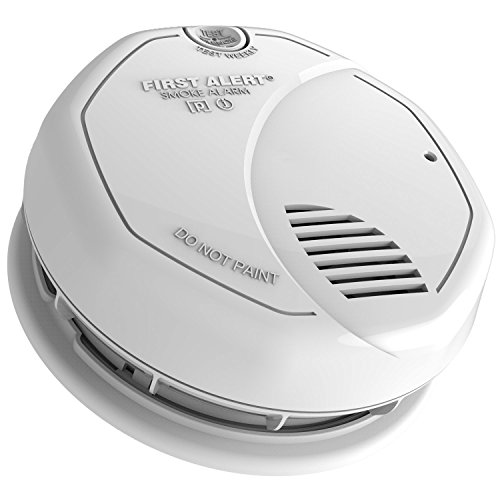
The three alarms this balance sheet is drawn from — each verified to its manufacturer and model: the dual-sensor anchor, the First Alert SA3210; the combination unit with a carbon monoxide display, the X-Sense SC07; and the simplest sealed workhorse, the Kidde i9010. Three different balances of the same ledger, which is the point of keeping one. Read the full guide ↓
Smoke Detector Pros and Cons: the Honest Balance Sheet
Every buying page in this cluster argues a position; this one keeps the ledger. Smoke detector pros and cons, weighed properly, are not a list of features and gripes but the two columns of a decade-long ownership: what the device quietly does for a household across ten years, set against what it asks, interrupts and occasionally gets wrong. The strengths column will win — it should, for a certified life-safety device at this price — but the trade-offs column is real, specific and worth reading before purchase rather than discovering after: false alarms, expiring sensors, ecosystem lock-in, the chirp at 3 a.m. Each entry below is expanded to the substance a buyer actually needs, and the alternatives section shows how the balance shifts between the category’s main designs, because most trade-offs in this category are not arguments against smoke detectors — they are arguments for choosing the right kind. Read the page as an accountant, not a fan: totals first, then the entries that compose them, then the footnotes where this category hides its real costs. Where your own experience contradicts an entry, trust the experience and pencil the correction in — a ledger annotated by its owner is worth more than a pristine one, here as in the house log this page keeps recommending.
In this guide
The Strengths, Expanded
It converts the deadliest scenario into a survivable one. The night fire — smouldering upholstery, sleeping household, smoke filling rooms before flame is visible — is the scenario fire statistics are made of, and a working alarm is the single intervention that changes its ending: detection in the first minutes, at 85 decibels, through closed doors. No other device in the home addresses this scenario at all, which is why this strength sits alone at the top of the column. Everything else in this article is commentary on a device whose first line already justifies it; the remaining pros explain why it is also easy to live with, and the cons explain what living with it honestly costs.
The cost of the protection is trivial against everything it guards. A sealed unit protects a room for a decade at a per-year cost below a takeaway coffee; the whole-house system typically totals less than a month of the insurance premium beside it. Few entries in any household ledger show this ratio of stake to spend, and none of the others stands watch while everyone sleeps. The cheapness has a second-order benefit: it removes budget as an excuse for incomplete coverage, so the count can be finished properly — the rare safety category where doing it entirely right is within every household’s reach. It also disciplines the premium end: when the floor is this capable, every step above it must justify itself in named criteria, which keeps the whole market honest.
Modern designs have engineered out the historic annoyances. Sealed ten-year batteries abolished the borrowed-battery failure and the annual battery ritual; the current UL 217 edition tests cooking-nuisance resistance explicitly; hush buttons made the correct response to a false alarm the easy one. The smoke detector of today is not the chirping disc of memory, and its pros list is substantially a list of solved problems. Buyers whose image of the category was formed by a landlord’s neglected unit in a student kitchen should re-run the ledger on current designs before trusting the memory.
Combination units retire a second, invisible hazard in the same fitting. Carbon monoxide cannot be seen, smelled or sensed by any human organ; an electrochemical sensor in the same ceiling position covers it for the same decade, and display models show levels before they become emergencies. Two hazards, one bracket, one date in the log. The combination form also simplifies the household’s mental model — one ceiling, both dangers, one test rhythm — and simplicity in safety systems is a pro that compounds quietly for ten years.
The device asks almost nothing and verifies itself. A monthly button press and a seasonal vacuum are the entire conventional contract; connected models go further and test their own sensors, power and horn, reporting the result. As ownership burdens go, this is among the lightest in the house — lighter than the boiler, the gutters or the car by an order of magnitude. The lightness matters strategically: safety devices that demand little get kept, and the kept device is the only kind that protects.
It documents well. Dates, tests and logs make the protection auditable — for insurers, buyers, landlords’ duties and the household’s own peace of mind. A fitted, logged, in-date ceiling is evidence, and evidence has value in every conversation that follows an incident or a sale. Few household devices produce a paper trail worth anything at all; this one produces the trail that discharges duties and settles arguments. The trail is also transferable wealth: a house sold with a young, logged ceiling hands its next owners protection and proof in the same envelope of documents.
It protects people who are not in the room — and not in the house. An early alarm shortens every response that follows: the neighbour who hears it, the fire crew whose job becomes rescue-and-contain rather than recovery, the adjoining home the fire never reaches. The pros column of a smoke detector is partly written in other people’s houses, which is a rare property for a private purchase and a fair part of why duties about alarms exist in tenancy and building rules at all. Terraced and apartment households should weight this entry double: their ceiling is, in a small but real sense, the building’s.
It is the most regulation-aligned purchase in the home. Standards, guidance, insurers and fire services all point the same way, so the buyer never has to wonder whether the consensus will reverse: the direction of every revision for decades has been toward more detection, earlier, in more rooms. Buying with the consensus is its own quiet pro — the purchase will never be embarrassed by next year’s advice. Contrast the gadgets whose standards, formats and ecosystems churn yearly; the smoke alarm’s stability across decades is a consumer benefit rarely priced into comparisons.
The Trade-Offs, Expanded
False alarms are the category’s original sin. Steam, cooking aerosols and dust can trigger alarms placed or specified carelessly, and each false alarm spends the household’s trust — the currency the real alarm will need. The mitigations are real (placement discipline, photoelectric or multi-criteria sensing near kitchens, hush buttons, current-standard nuisance testing) but they require the buyer to choose and place well; a badly bought alarm manufactures its own trade-off monthly. The con deserves its headline status for one reason above others: it is the only entry in either column that can convert a good device into no device, via a frustrated hand and a removed battery.
Every alarm is a wasting asset with a hidden clock. Sensors age; the ten-year replacement rule runs from manufacture, not purchase, so a stale bargain silently delivers a shorter decade. The end-of-life signal helps, but the household must still read dates, keep the log and act on the chirp — ownership includes a small, non-negotiable administrative duty, and households that ignore it own decoration. The clock has one redeeming feature: it is perfectly predictable, so the household that logs dates at fitting time will never be surprised by it.
Interconnection locks you into a family. Alarms that sound together must speak the same language, and brands do not interoperate: the first unit chooses the ecosystem for the decade. Wired systems deepen the lock with harnesses and discontinued families. The strength (a house that sounds as one) and the trade-off (a house committed to one maker) are the same fact viewed from two directions. The practical defence is to choose the family as deliberately as the model — a maker’s range breadth and longevity are, for networked buyers, specifications in their own right.
The 3 a.m. chirp is a design consequence, not a defect. Low-power and end-of-life warnings exist to be impossible to ignore, and they disproportionately announce themselves at night when the house is quiet and batteries cool. Sealed units reduce the battery branch of the problem; no design removes the end-of-life branch, nor should it — but buyers should know the chirp is scheduled into the decade like a tax. The grown-up response is in the log: a household that knows its dates hears the chirp as a diary entry arriving, not as a mystery in the dark.
Coverage has edges the device cannot cross. A smoke alarm does not detect carbon monoxide unless it is a combination unit, does not suit dusty workshops (heat detection’s territory), cannot wake a household it cannot reach acoustically without interconnection, and offers an absent household nothing unless it is connected. The category’s promise is enormous and specific at once; buying outside the specificity — wrong room, wrong hazard, wrong house — converts strengths into disappointments. Read generously, this con is a compliment to the category’s honesty: the edges are known, published and plannable, unlike the vague failure modes of most household technology. A buyer who maps the edges at purchase — combination where fuel is, heat where dust is, network where distance is — never meets them as surprises.
Connected models import platform risk. Apps, accounts and makers’ strategies now sit inside a ten-year safety device. The alarm function remains local, but the reporting layer’s decade is a company’s promise, not a physical property — a trade-off conventional units simply do not have, and the honest price of self-testing and phone alerts. The risk is manageable — buy the local virtues first and treat the reporting as a bonus with an unknown term — but a balance sheet that priced the smart layer as guaranteed for a decade would be lying in the pros column.
It ends as waste, on a schedule. Every decade, every alarm in the house becomes electronic waste with a battery inside, to be recycled as the manufacturer and local rules direct rather than binned. Multiplied across a housing stock this is a real, if modest, environmental line in the cons column — the honest reply is that the decade is long, the units are small, and take-back routes exist, but a balance sheet that omits disposal is flattering itself. Households can soften the entry by staggering replacements only where dates genuinely stagger — never by stretching a unit past its decade to save a trip to the recycling point.
It changes the ceiling, slightly, forever. A minor con, honestly recorded: alarms are visible, brackets mark paint, and a household that moves units inherits small holes and ghosts of old positions. Slim profiles have softened this to near-invisibility in living spaces, and no sane ledger weighs it against the pros — but renters negotiating deposits and minimalists alike are entitled to see it written down. Its presence in the column is also a calibration device: a cons list that includes items this small is a list that has stopped hunting for entries, which is what an honest total looks like.
The Context Box: What the Balance Sheet Assumes
Ledgers are only as honest as their assumptions, so this page prints its own before the verdict sections:
- Certified alarms (UL 217; UL 2034 for CO) — the pros column does not apply to uncertified imitations
- Ten-year service life from manufacture date; end-of-life signal fitted
- Standard loudness 85 dB at 10 feet; placement inside bedrooms, outside sleeping areas, every level
- Reference designs: dual-sensor sealed (SA3210), photoelectric combination with display (SC07), basic sealed ionisation (i9010)
- Costs discussed qualitatively — per-year framing, no static prices, per this cluster’s rules
- Household behaviour as the household honestly reports it, not as the manual hopes — several entries in both columns are behavioural, and the ledger prices them as such
Who Should Buy — and Who Should Skip
Best for: every household that sleeps under its own ceiling — with the specification tuned by the trade-offs above: sealed and calm-sensing for the maintenance-averse, combination where fuel burns, interconnected where doors and stairs intervene, connected where absence is the pattern. Not suited for: a household expecting a fit-and-forget-forever device (the decade ends; the log matters), a buyer wanting one unit to cover a whole house (geometry refuses), and anyone whose real problem is a dusty workshop or a CO-only boiler room, where the right device is a different member of the safety family. Skipping smoke detection entirely is the one option this page does not offer: the cons column argues about kinds, never about existence. Buyers between households — mid-move, mid-renovation — should read “not suited” as “not yet, at this address”, and let the new ceiling be among the first things the new home gets right. The first night in a new home is the wrong night to discover its ceiling; audit before the furniture arrives, while the rooms are empty and the ladder work is easy.
The Alternatives, and How the Balance Shifts
The First Alert SA3210 balances toward breadth: dual sensing answers both fire scenarios, sealed power removes the battery trade-offs, and its cons reduce to the universal ones (dates, placement). The X-Sense SC07 balances toward information: the CO display converts an invisible hazard into a readable one, at the price of a combination unit’s matched-horizon question. The Kidde i9010 balances toward simplicity and price: ionisation sensing is its honest limitation (flaming-fast, smoulder-slower, livelier near kitchens), repaid in the category’s plainest ownership. The connected tier, examined at Smoke Detector Review 2026 Smoke Detector Review 2026, adds self-verification to the pros and platform dependence to the cons. The cluster’s ranked fields, for converting this ledger into a purchase, are at Best Smoke Detector Under $50 Best Smoke Detector Under $50. The pattern across all four is the article’s thesis in miniature: the pros column is shared (certification, loudness, the decade) while the cons column is chosen — each design retires some trade-offs and accepts others, and buying well means picking the cons your household minds least. Two households can therefore buy different alarms from this same page, both correctly — the ledger is personal in its totals even though its entries are universal.
The Balance, Weighed by Household
The ledger’s totals move with the reader, and an honest page shows its working for the main cases. For the family in a multi-storey house, the pros column lengthens (interconnection, combination cover, early warning across stairs) and the cons column stays administrative — the most one-sided ledger in this article. Their one live con is coordination: more units mean more dates, which the log absorbs in a single afternoon a decade. For the solo flat-dweller, the pros shrink to the essential one and the cons shrink with them (two units, no network, no lock-in); the balance still lands firmly positive, at the smallest numbers on the page. Their discipline is the audit of whatever the flat came with, since furnished lets carry the category’s oldest stock. For the renter, a unique con appears — improving someone else’s property — answered by portability: sealed units leave with the tenant, decades intact. The renter’s pro column also gains an entry owners lack: the written request to a landlord, which costs nothing and frequently produces a landlord-funded ceiling. For the landlord, the pros gain the documentation line and the cons gain a duty’s paperwork; the ledger reads like a compliance exercise with a life-safety dividend. Sealed units are the landlord’s specification almost by definition, since they delete the tenant-behaviour entries from both columns at once. For the technology enthusiast, the connected tier’s self-testing pro is real and its platform con is the price of admission, knowingly paid. Their discipline is the reverse of the usual one: to keep the conventional virtues — dates, placement, count — from being crowded out by the pleasures of the app. No household’s honest arithmetic lands on the other side; the variation is in which entries dominate, and that variation — not the verdict — is what should drive the specification chosen. Households between the cases — the flat that will become a house-share, the cottage gaining a stove — should weight the entries by the household they are becoming, since the decade will be lived by that household, not by the one at the checkout. A reader who finds their household in none of the five cases should take the nearest one’s ledger and adjust the two entries their circumstances change; the method travels even when the examples do not.
Myths in Both Columns
Balance sheets attract folklore, and four entries deserve striking out. Myth (pro): “a smoke alarm guarantees survival” — it guarantees warning; the household’s drill, exits and doors complete the system, and a page that prints the guarantee sells the alarm short by overselling it. The honest pro is narrower and stronger: nothing else in the home provides the warning at all, and warning is the input every survival plan requires. Myth (con): “they go off all the time” — a property of badly placed, wrongly specified units of an older generation, generalised unfairly to a category whose current standard tests nuisance resistance. The myth survives because false alarms are memorable and silent decades are not; the ledger corrects for the memory’s bias by counting both. Myth (pro): “the expensive ones detect better” — certification sets the detection floor and ceiling alike; money buys criteria beyond sensing. Believing the myth distorts baskets toward one flagship and away from the count, which is the most expensive direction a myth can push a purchase. Myth (con): “the ten-year rule is a manufacturer’s racket” — sensor ageing is physics, the rule predates the sealed-battery business model, and the end-of-life signal is the manufacturer arguing against its own repeat sale being postponed. A racket, examined, usually points the other way: the incentive would be to let old units ride, and the industry instead built the chirp that ends them. Strike all four and the ledger that remains is the one this page has kept: smaller than the folklore in both directions, and true. Folklore matters commercially as well as intellectually — households buy against myths, overspending on the guarantee myth and underspending against the nuisance myth, and a corrected ledger corrects the basket at the same time.
The Ledger Over Time: Year One Against Year Nine
Pros and cons are usually weighed at purchase, but they distribute unevenly across the decade, and the distribution is itself informative. Year one is when the cons make their noise: fitting, placement corrections, the first false alarm while the household learns its cooking smoke, the log started or neglected. The pros in year one are silent — a ceiling doing nothing, correctly. By year five the columns have traded volumes: the cons have dwindled to the monthly button and the seasonal vacuum, while the pros have compounded into habit, documentation and the quiet confidence of a tested system. Year nine is the cons’ last stand — the approaching end-of-life, the replacement decision — met by the log the household either kept or wishes it had. The pattern teaches the purchase rule this page keeps returning to: choose for year five, not for the checkout, because the decade’s middle is where the alarm will actually live, and the specification that serves the middle — sealed, calm, correctly placed, logged — is the one whose ledger stays positive longest. Households replacing an old system can read their own history in this pattern: whichever year their previous ceiling became a resentment is the year its specification failed, and the entry that failed is the one to fix first. New households inherit the pattern in reverse — the resentments are all ahead of them, and therefore all still preventable at the specification stage, which is the cheapest moment any con ever offers.
The Alternatives Nobody Lists, Weighed on the Same Ledger
Completeness demands the ledger be run over the substitutes households actually consider. Monitored security-system sensors: pros — professional monitoring, one app, no ceiling clutter of one’s own; cons — subscription dependence, sensors that may not meet standalone placement guidance in every room, and a protection that lapses with the contract. The fair summary is that monitoring is an excellent second layer and a fragile only layer, and the ledger prices it accordingly. Listener devices that hear existing alarms: pros — reporting added without replacing units; cons — they inherit every weakness of the alarms they listen to, including expired ones, and add a second device to maintain. Their best use is transitional: reporting this year, while the standalone base is renewed on schedule, rather than as a permanent excuse to leave tired sensors on the ceiling. Doing nothing because the house is new: pros — none beyond inertia; cons — builder-fitted alarms age on the same clock as everyone’s, unexamined. Newness is a date, not a condition, and the audit converts it from an assumption into a fact in twenty minutes. Each substitute has its household; none displaces the standalone certified alarm as the ledger’s baseline, because each either depends on it, rents it by subscription, or ignores the clock it runs on. The substitutes earn their keep as additions — monitoring over a sound standalone base is a genuinely stronger ceiling — and a balance sheet should credit them as such rather than as rivals.
The Two Columns, Side by Side
| Pros | Cons |
|---|---|
| Only warning a sleeping household gets | False alarms spend trust if badly specified |
| Trivial cost per protected year | Ten-year expiry from manufacture, not purchase |
| Sealed power ends battery failures | Interconnection locks in one brand family |
| Combination units cover invisible CO | End-of-life and low-power chirps, often at night |
| Self-testing on connected models | Platform risk on connected models |
| Documents itself for insurers and buyers | Decadal e-waste and minor ceiling marks |
Read down either column and the asymmetry is the finding: every pro is about the event, every con is about the administration. Households are good at administration when it is light and scheduled — which is why this ledger, kept honestly, still ends where it ends. Pin the table inside the house log’s cover; at each replacement the household can re-weigh its own decade against the printed columns and correct the entries experience has revised. Tables like this one are also the fastest briefing for a partner or housemate who did not read the article — six lines a side, arguable in a kitchen in four minutes, which is where these decisions belong, at household scale, always.
A Sceptic’s Audit of This Page
A pros-and-cons page should survive the reader who trusts neither column, so here is the audit such a reader would run, with the page’s answers. Are the pros inflated? The headline pro is a physical claim — a certified sensor, a standard loudness, a sleeping household — checkable against the standard and the specification, and the page has printed no statistic it could not source. Where the page could not verify a number, it argued in structure instead, which is slower reading and better evidence. Are the cons understated? The page has listed the category’s embarrassments in its own words — false alarms, lock-in, chirps, waste, platform risk — including two (disposal, ceiling marks) that most buying pages omit entirely. A reader who can name a seventh structural con is invited to pencil it in; the format, unlike a verdict, improves with additions. Does the page sell? It links three verified products and one review, names the households that should spend less, and tells one class of reader (the dusty workshop) to buy a different device altogether. It also declines the two easiest sales in the category — replacing healthy systems early, and premium tiers for households that will not use them — which a sales document would never do. What would change the verdict? A certified alarm that false-alarmed unavoidably, or a decade that cost real money — neither describes the current category, and the page will be re-weighed if either ever does. Naming the falsifying conditions in advance is the difference between a balance sheet and a belief. The audit closes where the ledger does: the balance is not close, and it is not close for reasons a sceptic can verify without trusting this page at all. That verifiability is the page’s final entry in its own pros column — a verdict the reader can re-derive from the standard, the specification and the floor plan is worth more than a verdict that asks to be believed.
How to Shrink the Cons Column Before You Buy
The ledger is not fate; most of its right-hand entries shrink under specific choices, and collecting them in one place is this page’s practical payload. False alarms shrink with placement (ten feet from the cooker), sensing (photoelectric or multi-criteria near kitchens and bathrooms) and a hush used properly. The hidden-clock con shrinks with fresh stock, a photographed date and a log entry made on fitting day. Lock-in shrinks — it never vanishes — by choosing a broad, long-lived family deliberately and recording the choice. The chirp shrinks with sealed power (no battery branch) and a calendar that expects the end-of-life branch years early. Platform risk shrinks by buying local virtues first and pricing the reporting layer as a bonus. Waste shrinks at the margins through take-back recycling. Lock-in, alone among the entries, shrinks only by foresight — it cannot be renegotiated mid-decade — which is why the family choice deserves the ten minutes of thought this page keeps assigning it. What remains after all the shrinking is the irreducible column: a decade that ends, an occasional false alarm in a real kitchen, a device on the ceiling — a total so small, against the left-hand column, that the page can print it without the verdict trembling. That is the use of a pros-and-cons article: not to admire the balance, but to act on the entries that move. Work the shrinking list at purchase time, in order, and the cons column that remains is the one printed in the side-by-side table — six lines of administration against six lines of protection, which is the whole argument in one glance.
Cons That Are Actually User Errors, Reclassified
A fair ledger reclassifies entries charged to the wrong account, and several popular “cons of smoke detectors” belong to the household’s column, not the device’s. “It never goes off when it should” — almost always an expired, untested or wrongly placed unit: a maintenance failure wearing the device’s name. The correction is the annual keeping test, which exists precisely to catch this entry while it is still an embarrassment rather than a finding. “The battery died in a year” — a replaceable-cell unit in a household that needed sealed; a specification error at purchase. Its lesson generalises across the whole ledger: most cons attributed to products are specifications misread at the buying moment, which is the strongest argument for reading pages like this one before, not after. “It clashes with the room” — a living-space placement given a bulky unit when slim photoelectric models exist; a selection error. Assign each room its own priority — sensing breadth in bedrooms, profile in living spaces — and the aesthetic con evaporates without touching the protection. “The new one won’t join the system” — a family decision made unit-by-unit instead of once; a planning error. Its prevention costs one line in the log — the family’s name, written at the first purchase — and saves a decade of orphaned units. Reclassifying these does not flatter the category — the device’s genuine cons (expiry, lock-in’s residue, platform risk, the chirp) remain on its account in full — but it changes the buyer’s behaviour in the most useful way: the longest part of the cons column turns out to be a checklist, and checklists can be completed. The pros-and-cons format earns its place on this page precisely here, separating what must be accepted from what merely must be done. Households that internalise the reclassification stop shopping for a mythical con-free alarm — which does not exist at any price — and start completing the checklist that makes the real one behave.
The Ledger at Replacement Time: Re-Weighing After a Decade
The most honest pros-and-cons evidence a household ever gets is its own first decade, and the replacement purchase is where this page’s format pays its second dividend. Re-weigh with experience in hand: which cons actually materialised (most households find the column shorter in life than on paper — a handful of false alarms, one chirp season, no lock-in regrets), which pros proved load-bearing (usually the silence: ten years of a ceiling that asked nothing and was simply there), and which entries the household’s changed circumstances rewrite (a new stove adds the combination line; grown children leaving deletes an interconnection argument; a parent moving in adds the voice line). The second purchase, made from a lived ledger, is almost always calmer and more accurate than the first — typically the same family, the gaps filled, the one resented specification corrected. Keep the old log; it is the review no website can write for your house, and its totals outrank this page’s wherever the two disagree. Start the new log on the old one’s last page, so the house’s detection history reads as one continuous account across the decades — accountants and firefighters alike approve of unbroken records.
Frequently Asked Questions
What is the biggest con of smoke detectors?
False alarms — not because they are dangerous in themselves, but because they train households to ignore or disable the device. It is also the most solvable con: placement, sensing choice and a hush button address nearly all of it. A household that solves it has, in effect, deleted the cons column’s headline entry, which is why the buying guides in this cluster spend so many words on position and principle. Log each false alarm’s cause while the household remembers it; three entries usually reveal the pattern — a placement, a pan, a steamy door left open — and patterns, unlike incidents, can be fixed permanently.
Do the pros really outweigh the cons?
Decisively, for certified alarms correctly placed: the pro column contains a life-safety function nothing else provides, and the con column contains mostly manageable frictions. The weighing is not close, which is why this page spends its length on choosing kinds rather than debating existence. The closest the weighing ever gets is inside a single household’s specification choices — sealed versus replaceable, connected versus conventional — and even there the margins are comfort and information, never safety itself. That is the sentence to carry into the shop: the argument is never whether, only which — and “which” is a pleasant, soluble problem.
What is the most underrated pro?
The documentation value — a logged, in-date ceiling speaks for the household to insurers, buyers and landlords’ auditors long after fitting day. The most underrated con is the manufacture-date clock, which silently shortens bargain purchases. Both underrated entries share a property: they are invisible at the checkout and obvious at every later reckoning, which is exactly the kind of line a balance sheet exists to surface. A buyer who weighs only the visible entries will systematically overpay for features and underpay for freshness — the two commonest basket errors in the category, both curable by this one observation.
Are smart smoke detectors’ pros worth their cons?
For households that are often absent or unlikely to test manually, yes: self-testing and reporting outweigh platform dependence. For households home every night with a good test rhythm, the conventional balance is better — the same device, two different ledgers. The deciding question is not technological but biographical: whose diary, whose absences, whose discipline — answer those and the smart-versus-conventional line of the ledger fills itself in. Households that split the difference — one connected unit at the hallway, conventional anchors elsewhere — are not being indecisive; they are reading their own ledger accurately, and this page scores the hybrid as a legitimate total.
Are sealed-battery alarms better on balance than replaceable-battery ones?
For most households, yes: sealing deletes the borrowed-battery and forgotten-battery cons entirely and synchronises the power’s expiry with the sensor’s. Replaceable cells keep an edge where a household genuinely maintains them and dislikes whole-unit replacement — a smaller, disciplined minority, honestly served by its own column. The test remains behavioural: a household that can date its last battery change from memory may keep the replaceable column; one that cannot has already voted for sealed. Neither column is a moral judgement — the ledger prices habits, not virtue, and a sealed unit in a forgetful house outperforms a superior specification in a drawer.
Do smoke detectors have any effect on home value or insurance?
Directionally favourable and never adverse: a logged, in-date ceiling evidences maintenance to buyers and answers insurers’ first question after any incident. This page prints no figures, because none are universal — treat any benefit as a bonus on a purchase already justified in the bedroom. Keep the receipts with the log; in both the sale and the claim, the paperwork is the difference between the benefit existing and merely having happened. Photograph the fitted ceiling once, too — a dated image of alarms in place has settled more tenancy and insurance conversations than any paragraph of prose.

Can the cons be avoided entirely?
No — expiry, ecosystem lock-in and the occasional false alarm are structural. They can be minimised to the point of invisibility by the choices this page lists, which is the realistic goal: a decade in which the cons column never gets a hearing. Buyers who accept the structural cons in advance own their alarms more contentedly than buyers promised perfection, which is the practical reason this page prints the whole ledger. Contentment is not a soft benefit here: the contented household tests, logs and replaces on schedule, while the disillusioned one drifts toward the disabled alarm — the ledger’s mood is a safety variable.
The Bottom Line
The pros are existential and the cons are administrative: a smoke detector offers the only early warning a sleeping household gets, for a trivial sum and a light contract, and in exchange it asks for correct placement, a kept log, a tolerated chirp near its decade’s end and a replacement when the date arrives. Households that accept those terms get the best bargain in home safety; the alternatives above let every kind of household accept them on its own specification. Start with the First Alert SA3210 where breadth matters and the X-Sense SC07 where fuel burns, and let the ledger close for ten years. A balance sheet’s final duty is a signature: the household that has read both columns and bought anyway owns its alarms without illusions, and illusions — in this category above all — are the one unaffordable luxury. Sign it with the log’s first entry: model, room, date — the smallest signature in the house, and the one that will still be legible in ten years. Then close the book, in every sense, until the test rhythm or the decade calls it open again — the ledger balanced, the ceiling honest, and the household free to forget the subject for the best possible reason: that it has been dealt with properly.