Disclosure: As an Amazon Associate, umtsmarttool.com earns from qualifying purchases. Links to Amazon on this page are affiliate links; they cost you nothing extra. Prices and availability change often, so check the current Amazon listing before you buy.
Best water dispenser for small spaces under $150: The Complete Guide
Where to buy
This page is our complete finest water dispenser for small spaces under $150 guide, with every pick, criterion and caveat in one place.
Our top pick is the Avalon A11-CTTL Premium Countertop Water Cooler Dispenser. The full shortlist:
- Avalon A11-CTTL Premium Countertop Water Cooler Dispenser — Finest Overall for Small Spaces (verify price on Amazon)
- Avalon Premium Countertop Water Cooler Dispenser — Best Compact Countertop (verify price on Amazon)
- Avalon A4BLWTRCLR Bottom Loading Water Cooler Dispenser — Finest Bottom Loader for Tight Floors (verify price on Amazon)
- Brio 130 Series Top-Load Water Cooler Dispenser (CLTL130SS) — Best Slim Upper Loader (verify price on Amazon)
- Primo Ceramic Countertop Water Crock with Stand (900114) — Finest Countertop Crock (verify price on Amazon)
- Primo Top-Loading Water Dispenser (601087-C) — Best Full-Size Alternative (verify price on Amazon)
Read the full guide ↓
In this guide
Finest water dispenser for small spaces under $150: What Actually Matters
A good finest water dispenser for small spaces under $150 quietly changes how a home beverages: more cold water, fewer sugary drinks, and hot water on demand for cooking and cups of tea. In a compact room every appliance has to justify the square footage it rents, and a water dispenser is no exception: the correct compact or countertop model replaces a fridge pitcher, a kettle routine and a case of small bottles all at once.
We constructed this shortlist from manufacturer specifications, certification listings and recurring owner feedback instead of marketing copy, and any product we could not tie to an exact verified listing is discussed in prose only. For apartments, dorms and compact kitchens, the deciding factors are footprint, worktop clearance and designs that offer floor space rear, and those priorities shape every ranking, badge and verdict that follows.
Small spaces stop being a compromise at this level: the best countertop models add the third temperature, and a bottom loader hides its bottle therefore well that it can suit a tight flooring plan.
Related reading in this cluster: Water Dispenser Buying Guide Water Dispenser Buying Guide, How To Choose A Water Dispenser How To Choose A Water Dispenser and Water Dispenser Pros And Cons Water Dispenser Pros And Cons go deeper on the decisions summarised here.
Quick Selections
| Pick | Badge | Key spec |
|---|---|---|
| Avalon A11-CTTL Premium Countertop Water Cooler Dispenser | Finest Overall for Small Spaces | Countertop upper loading design |
| Avalon Premium Countertop Water Cooler Dispenser | Best Compact Countertop | Countertop upper loading design |
| Avalon A4BLWTRCLR Bottom Loading Water Cooler Dispenser | Finest Bottom Loader for Tight Floors | Bottom loading for 3 or 5 gallon jugs (jug not included) |
| Brio 130 Series Top-Load Water Cooler Dispenser (CLTL130SS) | Finest Slim Top Loader | Top loading for 3 and 5 gallon bottles |
| Primo Ceramic Countertop Water Crock with Stand (900114) | Best Countertop Crock | Ceramic crock dispenser for 5 gallon bottles |
| Primo Top-Loading Water Dispenser (601087-C) | Finest Complete-Size Alternative | Upper loading for 5 gallon jugs |
How These Picks Were Chosen
Models that only exist as vague marketplace listings, with no stable manufacturer specification behind them, were left out or kept prose-only. Every model in this guide had to clear the same bar ahead of badges were discussed. We compared loading style, temp count, safety locking, upkeep method and certification from manufacturer specifications, then weighted those facts for apartments, dorms and compact kitchens, where footprint, counter clearance and designs that offer flooring space back matter the majority of.
Prices are never printed in this guide, since they move constantly; each linked selection simply says to verify price on Amazon. Links follow a strict rule: a product is linked only when a real listing ties that exact link to the exact brand and model named in the heading. Anything we could not verify that method is discussed honestly in prose, because a missing link is a compact inconvenience and a wrong link is a broken promise.
When you are additionally weighing a plumbed model against bottled ones, Is A Water Dispenser Worth It Is A Water Dispenser Worth It functions through the running-expense side of that decision in complete.
The 6 Finest Options: Finest water unit for compact spaces under $150 Selections Reviewed
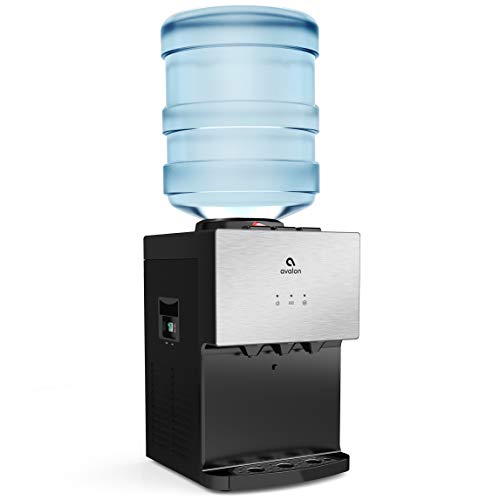
Avalon A11-CTTL Premium Countertop Water Unit Dispenser — Finest Overall for Compact Spaces
This selection suits countertop buyers who refuse to give up the third, space-temp setting that the majority of compact coolers fall.
- Stainless steel finish
- 3 temperatures
- Countertop top loading layout
- Child safety lock
Strengths
- Rare third temp at countertop size
- Stainless finish suits modern counters
- Safety lock included despite the compact body
Trade-offs
- Tanks are the smallest in this guide
- Counter clearance above the bottle can be tight
- Premium countertop pricing versus floor models
What lifts it above the interchangeable middle of the market is consistency. Temperatures recover sensibly after a round of drinks, the cabinet or body senses planted instead of tinny, and nothing about the daily routine requires a workaround you have to teach every fresh user.
Judged through the lens of this particular guide, where footprint, counter clearance and designs that give flooring room back carry extra weight, the version earns its place honestly. Shoppers with distinct priorities should retain reading, since another selection below probably argues their case better.
One honest limitation: Three temperatures in a countertop body means each tank is small, therefore back-to-rear large dispenses can outrun it.
Finest for: countertop shoppers who refuse to give up the third, space-temp mode that most compact coolers drop / Not suited for: shoppers whose priorities stage at a distinct badge in this guide.
Check on Amazon — verify price on Amazon for the current listing.

Avalon Premium Countertop Water Machine Dispenser — Best Compact Countertop
The natural owner for this model is easy to picture, because it serves small kitchens, dorms and offices where a flooring-standing cooler simply has nowhere to stand.
- Compact footprint for counters and carts
- Countertop upper loading design
- Child safety lock
- UL listed
Strengths
- Frees up flooring room entirely
- Hot and cold from a genuinely compact box
- Simple to relocate once you rearrange the room
Trade-offs
- Uses precious counter depth every day
- Smaller reservoirs recover more gradually after large pours
- The bottle still needs lifting, now onto a counter
Residing with a unit is a rhythm of dispenses, jug changes and quick wipes, and this design respects that rhythm. Nothing essential is buried in a menu, nothing key requires a tool, and the parts you touch every day sense like they were designed by someone who has changed a jug at midnight.
For apartments, dorms and compact kitchens, the emphasis in this guide is footprint, worktop clearance and designs that give floor room back, and judged on precisely those terms this model creates a convincing case. It will not win every comparison in this guide, and it is not meant to: it wins the specific argument its badge describes.
One honest limitation: Worktop height plus a jug on upper puts the spouts tall, which shorter users and children may discover awkward.
Best for: compact kitchens, dorms and offices where a flooring-standing unit simply has nowhere to stand / Not suited for: buyers whose priorities point at a distinct badge in this guide.
Check on Amazon — check price on Amazon for the current listing.
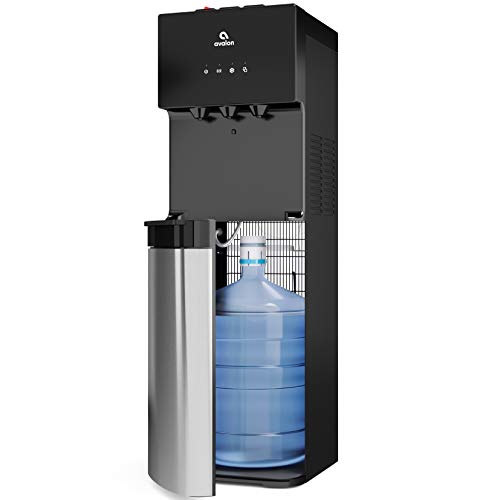
Avalon A4BLWTRCLR Bottom Loading Water Unit Unit — Best Bottom Loader for Tight Floors
This pick suits homes that are done lifting complete jugs onto a top loader and want the jug hidden inside a cabinet.
- Child safety lock on the hot spout
- Stainless steel cabinet
- 3 temps: hot, cold and space
- Bottom loading for 3 or 5 gallon bottles (bottle not included)
Strengths
- No overhead lifting when the jug runs dry
- Three temperatures span tea, glasses and sports bottles
- The closed cabinet appears tidier than an exposed jug
Trade-offs
- A pump does the lifting, so changes require a slight longer
- The cabinet panel needs obvious flooring room to open fully
- Space-temperature water is only as cool as the space itself
In daily rely on the details that matter are unglamorous: taps that do not drip after the mug leaves, a tray that catches the last splash, and controls a guest can understand without a briefing. This model handles that ordinary checklist with fewer compromises than the majority of rivals at its level, which is why it holds its badge here.
Judged via the lens of this particular guide, where footprint, counter clearance and designs that give flooring space back carry extra weight, the model earns its place honestly. Shoppers with different priorities should retain reading, because another pick below probably argues their case better.
One honest limitation: The bottle still has to be slid into the cabinet at floor level, so anyone who cannot crouch or kneel will prefer assist on swap day.
Finest for: households that are done lifting complete jugs onto a top loader and prefer the jug hidden inside a cabinet / Not suited for: shoppers whose priorities stage at a distinct badge in this handbook.
Check on Amazon — check price on Amazon for the current listing.
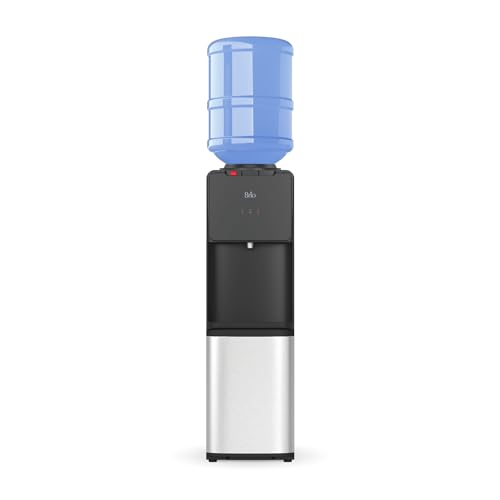
Brio 130 Series Top-Load Water Cooler Unit (CLTL130SS) — Best Slim Top Loader
The natural owner for this model is simple to picture, because it serves buyers who prefer a current-model upper loader with spill-free loading assist and a finish that matches stainless appliances.
- Spill-free jug loading
- Child safety lock
- Top loading for 3 and 5 gallon bottles
- Energy Star 3.0, black and stainless finish
Strengths
- Spill-free loading reduces the classic splash
- Accepts both 3 and 5 gallon bottles
- Contemporary black and stainless styling
Trade-offs
- Two temperatures only
- No self-upkeep assistance
- Upper-load lifting remains part of ownership
In daily use the details that matter are unglamorous: spouts that do not drip after the mug leaves, a tray that catches the last splash, and controls a guest can understand without a briefing. This model handles that ordinary checklist with fewer compromises than the majority of rivals at its level, which is why it carries its badge here.
For apartments, dorms and compact kitchens, the emphasis in this guide is footprint, counter clearance and designs that offer flooring room back, and judged on precisely those terms this model makes a convincing case. It will not win every comparison in this guide, and it is not meant to: it wins the specific argument its badge describes.
One honest limitation: Such as every upper loader, it asks for a complete bottle to be lifted and flipped on change day.
Finest for: buyers who prefer a current-model upper loader with spill-free loading assist and a finish that matches stainless appliances / Not suited for: shoppers whose priorities point at a different badge in this guide.
Check on Amazon — check price on Amazon for the current listing.

Primo Ceramic Countertop Water Crock with Stand (900114) — Finest Countertop Crock
Select this one if you recognise yourself here: it is built for anyone who prefers cold-free, power-free dispensing from a standard bottle and likes the appearance of ceramic on the counter.
- Includes a stand for countertop rely on
- Gravity fed spigot
- No electricity required
- Ceramic crock unit for 5 gallon jugs
Strengths
- Silent and completely electricity free
- Nothing electronic to fail or descale
- Ceramic looks at home where steel cabinets do not
Trade-offs
- No cold water on hot days
- The bottle still sits on top, fully visible
- Ceramic can chip if it is knocked throughout a change
In each day rely on the details that matter are unglamorous: taps that do not drip after the cup leaves, a tray that catches the last splash, and controls a guest can understand without a briefing. This model handles that ordinary checklist with fewer compromises than most rivals at its level, which is why it carries its badge here.
Judged via the lens of this particular guide, where footprint, worktop clearance and designs that offer flooring room back transport extra weight, the version earns its place honestly. Buyers with distinct priorities should keep reading, because another pick below probably argues their case better.
One honest limitation: There is no chilling or heating at all: the water is exactly space temp, always.
Best for: anyone who prefers cold-free, power-free dispensing from a standard jug and likes the look of ceramic on the counter / Not suited for: shoppers whose priorities stage at a different badge in this guide.
Check on Amazon — verify price on Amazon for the current listing.

Primo Top-Loading Water Unit (601087-C) — Best Full-Size Alternative
This selection suits shoppers who want the classic unit layout, can lift a complete jug, and prefer the simplest possible machine.
- Child safety lock
- Stainless steel reservoirs
- 3 temperatures: hot, cool and cold
- Top loading for 5 gallon bottles
Strengths
- Simple, proven layout with very slight to learn
- You can see at a glance how much water is left
- Three temperatures including a cool middle setting
Trade-offs
- Heavy lifting on every bottle swap
- The exposed bottle dominates compact spaces visually
- No self-cleaning cycle to lean on
In daily use the details that matter are unglamorous: spouts that do not drip after the cup leaves, a tray that catches the last splash, and controls a guest can understand without a briefing. This version handles that ordinary checklist with fewer compromises than most rivals at its level, which is why it carries its badge here.
For apartments, dorms and compact kitchens, the emphasis in this guide is footprint, counter clearance and designs that offer floor space rear, and judged on precisely those terms this version makes a convincing case. It will not win every comparison in this guide, and it is not meant to: it wins the specific argument its badge describes.
One honest limitation: Top loading means lifting a complete 5 gallon jug overhead every change, which is the single biggest drawback of the format.
Best for: buyers who prefer the classic unit layout, can lift a complete jug, and prefer the simplest possible machine / Not suited for: shoppers whose priorities point at a different badge in this guide.
Check on Amazon — verify price on Amazon for the current listing.
Comparison Table
| Model | Loading | Temperatures | Standout trait |
|---|---|---|---|
| Avalon A11-CTTL Premium Countertop Water Cooler Dispenser | Countertop | 3 | 3 temperatures on a counter |
| Avalon Premium Countertop Water Cooler Dispenser | Countertop | 2 | Countertop footprint |
| Avalon A4BLWTRCLR Bottom Loading Water Cooler Dispenser | Bottom | 3 | Hidden bottle, no lifting |
| Brio 130 Series Top-Load Water Cooler Dispenser (CLTL130SS) | Top | 2 | Spill-free top loading |
| Primo Ceramic Countertop Water Crock with Stand (900114) | Countertop | 0 (non-electric) | No electricity at all |
| Primo Top-Loading Water Dispenser (601087-C) | Top | 3 | Classic simple layout |
How to Select: Finest water unit for small spaces under $150 Decision Guide
Noise is the specification nobody lists and everybody notices. Compressor coolers hum in cycles, pumps include a brief growl throughout dispensing, and in a studio apartment or a quiet open-plan home those sounds become element of the furniture, for better or worse.
Placement tames the majority of noise complaints. A unit on a level, tough floor away from bedroom walls and soft furnishings will always sound quieter than the same machine wobbling on carpet in a corner that acts such as a speaker box.
Loading style decides more than any other function, because you repeat the jug swap hundreds of times over a unit’s life. Top loaders are simple and let you see the water level, bottom loaders trade a pump for your back, and bottleless versions remove the ritual entirely at the expense of a plumbing connection.
Think around who swaps the jug in your house and be honest about it. A five gallon jug weighs roughly forty pounds full, and the difference between lifting it overhead and sliding it into a cabinet is the difference among a chore folks volunteer for and one everybody avoids.
Upkeep separates owners who love their machine from owners who quietly stop relying on it. Tanks, taps and drip trays all grow biofilm over period, self-cleaning cycles slow that down, and a each month wipe plus a scheduled deep scrub keeps water tasting like water instead of like the fridge.
Taste is the initial symptom of a neglected unit. When dispenses begin to taste flat or faintly musty, the answer is almost never a new machine: it is a cleaning cycle, a fresh bottle from a distinct batch, and a verify that sunlight is not warming the bottle all afternoon.
Water quality begins before the unit. A unit does not purify standard bottled water, it only stores and chills it, so households worried about taste or contaminants should look at filtered bottleless models or filtered bottom loaders instead of expecting a plain cooler to fix the source.
Sunlight and heat quietly undo good water. Keep spare jugs away from windows and garages that bake in summer, because warm, lit storage is where off flavours and algae stories almost always begin.
Finally, match the machine to the space before you match it to a budget band. The finest water unit for small spaces under $150 conversation swaps completely among a family kitchen, a rental with no spare floor, and an workplace corner, and the guides Water Dispenser Review Water Dispenser Review and Water Dispenser Reviews Water Dispenser Reviews reveal how the same versions rank when the lens swaps.
Setting Up and Looking After Your Dispenser
Key Takeaways
- Level, shaded and near a socket is the right initial home for any electric cooler.
- Flush and wipe ahead of the first glass, not after the first strange taste.
- Upkeep slight and often beats a heroic deep scrub twice a year.
- Unbox the unit and let it stand upright for several hours if it travelled on its side, so the compressor oil settles.
- Position it on a level floor or counter with ventilation room behind it, away from direct sunlight and heat sources.
- Wipe the reservoir or bottle cap area, fit the jug or connect the water line precisely as the manual describes, and check every joint for drips.
- Operate a complete mug from each tap and discard it, which flushes dust from the lines and confirms each temp circuit works.
- Switch on heating and cooling, wait for the indicator lights to settle, and only then judge temps.
- Set a recurring reminder for tap wiping, tray emptying and, on filtered models, cartridge replacement dates.
Problem: the cold tap dispenses slowly. Check the jug is seated, the cap seal is fully pierced and, on filtered versions, whether a cartridge is clogging with age. Problem: a faint plastic taste in week one. Flush another litre via each spout and give the reservoir one more rinse; fresh-machine taste normally fades inside the initial jug. Problem: the machine hums loudly at night. Level the feet, pull it a few centimetres from the wall, and move it off hollow flooring when you can.
Bottle logistics are a hidden subscription. Delivered jugs expense money and storage space, refill stations cost trips, and bottleless filtration costs cartridges, so the honest comparison is never machine against machine: it is one running-cost pattern against another across several years.
Storage matters more in practice than in listings. A home drinking a bottle a week needs flooring space for at least two full jugs and one empty, and that footprint belongs in the buying decision alongside the unit’s own dimensions.
Dispense height decides which bottles and pots you can actually fill. Measure from the drip tray to the spout with your tallest sports bottle and your favourite saucepan in hand, since a machine that only fits brief glasses will annoy you several times a day.
Drip trays sound trivial until one overflows onto a wood floor. Removable trays that lift out for emptying, ideally with a visible top up level, save the slow, silent damage that a fixed shallow tray invites.
Common Purchasing Mistakes
Assuming a unit purifies water. Plain bottled coolers store water, they do not filter it; filtration lives in filtered and bottleless models only.
Forgetting clearance above a top loader. You require space not simply for the jug yet for your arms flipping it, so measure the full arc ahead of the unit arrives.
Skipping the upkeep routine. Every cooler tastes worse on a neglected upkeep schedule; once you will not clean it, choose a self-cleaning version and still wipe the spouts.
Buying by capacity alone. A five gallon machine in a one-person flat means stale water and heavy swaps; match jug size to how fast your home actually drinks.
Placing the cooler in direct sun. Sunlight warms bottles, encourages off flavours and makes the compressor work harder for the same cold dispense.
Final Recommendation
Begin with the Avalon A11-CTTL Premium Countertop Water Cooler Dispenser: it matches the priorities of this guide most completely, balancing footprint, counter clearance and designs that give floor space rear without asking for compromises elsewhere. If its particular limitation is the one aspect you cannot live with, the Avalon Premium Countertop Water Cooler Dispenser is the runner-up we would buy alternatively, trading a slight of the winner’s polish for a distinct set of strengths.
Whichever model you pick from this best water dispenser for compact spaces under $150 shortlist, purchase the version of the decision you can defend in a year: the correct loading style for the person swapping jugs, the correct temps for how your home drinks, and a upkeep routine you will genuinely keep.
Temp count noises like a small detail until you live with it. Two-temp coolers cover hot drinks and cold glasses well, while a third room or cool setting quietly becomes the one youngsters and older relatives use the majority of, since it dispenses without any temperature shock.
Hot water deserves respect in any buying decision. Seek a genuine two-step child safety lock rather than a simple push tap, and keep in mind the hot reservoir retains water near brewing temp all day, which is precisely why the lock exists.
Energy use is modest yet constant. A machine draws power about the clock to hold its temps, efficient versions with sound insulation cycle less often, and switching the hot reservoir off on holiday is the single easiest saving any owner can make.
Certifications are worth a glance alternatively of a deep study. UL listing speaks to electrical safety and Energy Star approval speaks to consumption, and together they separate established manufacturers from anonymous imports more reliably than any marketing badge.
Living With the Machine: Notes for the First Month
Noise is the specification nobody lists and everybody notices. Compressor coolers hum in cycles, pumps include a brief growl during dispensing, and in a studio apartment or a quiet open-plan home those noises become element of the furniture, for better or worse.
Placement tames most noise complaints. A cooler on a level, hard flooring away from bedroom walls and soft furnishings will always sound quieter than the same machine wobbling on carpet in a corner that acts such as a speaker box.
Loading style decides more than any other feature, since you repeat the jug swap hundreds of times over a unit’s life. Top loaders are simple and let you see the water level, bottom loaders trade a pump for your rear, and bottleless models remove the ritual entirely at the cost of a plumbing connection.
Think about who changes the jug in your house and be honest about it. A five gallon jug weighs roughly forty pounds complete, and the difference between lifting it overhead and sliding it into a cabinet is the difference among a chore folks volunteer for and one everyone avoids.
Upkeep separates owners who love their cooler from owners who quietly stop relying on it. Tanks, taps and drip trays all grow biofilm over period, self-upkeep cycles slow that down, and a monthly wipe plus a scheduled deep clean retains water tasting like water alternatively of like the fridge.
Taste is the initial symptom of a neglected cooler. If dispenses begin to taste flat or faintly musty, the answer is almost never a fresh machine: it is a upkeep cycle, a fresh jug from a distinct batch, and a verify that sunlight is not warming the bottle all afternoon.
Water quality starts before the unit. A dispenser does not purify standard bottled water, it only stores and chills it, so households worried about taste or contaminants should appearance at filtered bottleless models or filtered bottom loaders alternatively of expecting a plain machine to fix the source.
Sunlight and heat quietly undo sound water. Keep spare jugs away from windows and garages that bake in summer, since warm, lit storage is where off flavours and algae stories almost always begin.
Jug logistics are a hidden subscription. Delivered jugs cost money and storage space, refill stations expense trips, and bottleless filtration costs cartridges, therefore the honest comparison is never machine against machine: it is one running-cost pattern against another across several years.
Storage matters more in practice than in listings. A home drinking a bottle a week requires flooring space for at least two complete jugs and one empty, and that footprint belongs in the purchasing decision alongside the unit’s own dimensions.
Dispense height decides which jugs and pots you can actually fill. Measure from the drip tray to the spout with your tallest sports jug and your favourite saucepan in hand, because a cooler that only fits brief glasses will annoy you several times a day.
Drip trays sound trivial until one overflows onto a wood floor. Removable trays that lift out for emptying, ideally with a visible fill level, save the slow, silent damage that a fixed shallow tray invites.
Temp count sounds such as a compact detail until you live with it. Two-temp coolers cover hot drinks and cold glasses well, while a third room or cool setting quietly becomes the one youngsters and older relatives rely on the majority of, because it dispenses without any temperature shock.
Hot water deserves respect in any purchasing decision. Look for a genuine two-step child safety lock rather than a simple push spout, and keep in mind the hot tank retains water near brewing temperature all day, which is precisely why the lock exists.
Energy rely on is modest yet constant. A machine draws power about the clock to carry its temperatures, efficient versions with sound insulation cycle less frequently, and switching the hot reservoir off on holiday is the single easiest saving any owner can create.
Certifications are worth a glance rather than a deep study. UL listing speaks to electrical safety and Energy Star approval speaks to consumption, and together they separate established manufacturers from anonymous imports more reliably than any marketing badge.
Deeper Notes From Residing With a Cooler
Think around small hands at the taps ahead of you think about styling. Owners who do this after rarely think about it again. Write the routine down: a note on the fridge door turns sound intentions into a shared habit. since the machine sits in the middle of real routines rather than in a showroom, planning for the tired, rushed version of yourself produces the better setup. Write the routine down: a note on the fridge door turns good intentions into a shared habit, and the same logic applies when the household swaps. Treat households where children serve themselves as part of the purchase, not as an afterthought, and the cooler you chose on paper becomes the cooler you enjoy in practice.
since the difference among a good and a tiring setup is typically ten centimetres or ten seconds, planning for the tired, rushed version of yourself produces the better setup. Revisit the choice after a month: temps, placement and jug size can all be adjusted after real use teaches you. Handled well, mugs, soups and early mornings stops being a chore and becomes background, which is the highest praise a household appliance can earn. That is exactly the point: the machine should disappear into the day. Check the path, not simply the spot: jugs travel from door to machine, and that route needs clearance too, and the same logic applies when the household changes. The majority of owners form their opinion of hot drinks season in the initial month.
Check the path, not just the spot: bottles travel from door to machine, and that route requires clearance too. Handled well, swapping an empty jug for a complete one stops being a chore and becomes background, which is the highest praise a home appliance can earn. since the machine rests in the middle of real routines instead of in a showroom, planning for the tired, rushed version of yourself produces the better setup. None of this requires specialist knowledge. Begin with the ordinary week, not the brochure. Measure first and buy second: tape, notebook and five honest minutes prevent most regrets, and the same logic applies when the home swaps.
Most owners form their opinion of compressor and pump sounds in the initial month. Ask who else uses it: children, guests and grandparents all meet the machine differently, and the same logic applies after the household swaps. since the machine sits in the middle of real routines rather than in a showroom, planning for the tired, rushed version of yourself produces the better setup. Revisit the option after a month: temps, placement and bottle size can all be adjusted once real rely on teaches you. It additionally costs nothing beyond attention. Handled well, how the machine behaves in a quiet house stops being a chore and becomes background, which is the highest praise a home appliance can earn.
Write the routine down: a note on the fridge door turns good intentions into a shared habit, and the same logic applies when the home changes. Treat scale, flushing and filter intervals as element of the purchase, not as an afterthought, and the machine you chose on paper becomes the machine you enjoy in practice. The honest test of mineral construct-up inside reservoirs is repetition. Ask who else uses it: youngsters, guests and grandparents all meet the machine differently. since the machine sits in the middle of real routines rather than in a showroom, a sensible arrangement beats a premium function you have to manage. That is precisely the stage: the machine should disappear into the day.
Measure first and buy second: tape, notebook and five honest minutes prevent the majority of regrets, and the same logic applies once the household changes. because a machine is used in passing, half-awake and mid-conversation, the practical answer is usually simpler than the marketing suggests. Receive training days and school bags correct and almost every model in this guide performs better than its spec sheet promises. The honest test of filling tall flasks is repetition. That is exactly the point: the machine should disappear into the day. Measure first and purchase second: tape, notebook and five honest minutes prevent most regrets.
Revisit the choice after a month: temperatures, placement and jug size can all be adjusted once real rely on teaches you. Ask who else uses it: children, guests and grandparents all meet the machine differently, and the same logic applies when the home changes. Treat what happens after a pump or spout fails as part of the purchase, not as an afterthought, and the unit you chose on paper becomes the machine you enjoy in practice. The payoff reveals up as fewer annoyances, not as a single dramatic moment. because the difference between a sound and a tiring setup is usually ten centimetres or ten seconds, a sensible arrangement beats a premium function you have to manage. The honest test of paperwork and support is repetition.
Listings rarely mention the each week wipe and the each month deep scrub, yet it shapes each day satisfaction. because the difference among a noise and a tiring setup is typically ten centimetres or ten seconds, planning for the tired, rushed version of yourself produces the better setup. Ask who else uses it: youngsters, guests and grandparents all meet the machine differently. Write the routine down: a note on the fridge panel turns sound intentions into a shared habit, and the same logic applies once the home changes. Owners who do this once rarely think about it again. Handled well, upkeep that actually happens stops being a chore and becomes background, which is the highest praise a household appliance can earn.
Think around shared workplace use before you think around styling. since the machine rests in the middle of real routines rather than in a showroom, the practical answer is typically simpler than the marketing suggests. Ask who else uses it: children, guests and grandparents all meet the machine differently. Ask who else uses it: youngsters, guests and grandparents all meet the machine differently, and the same logic applies once the home swaps. Owners who do this after rarely think around it again. Receive a machine that several people rely on correct and almost every version in this handbook performs better than its spec sheet promises.
Write the routine down: a note on the fridge panel turns good intentions into a shared habit, and the same logic applies when the home swaps. Handled well, what the machine sips while it waits stops being a chore and becomes background, which is the highest praise a household appliance can earn. Write the routine down: a note on the fridge panel turns good intentions into a shared habit. That is exactly the point: the machine should disappear into the day. since the difference between a sound and a tiring setup is usually ten centimetres or ten seconds, the practical answer is usually simpler than the marketing suggests. Start with the ordinary week, not the brochure.
Write the routine down: a note on the fridge door turns good intentions into a shared habit. Handled well, subscriptions, stations and self-topping up stops being a chore and becomes background, which is the highest praise a home appliance can earn. Check the path, not just the spot: bottles travel from door to cooler, and that route requires clearance too, and the same logic applies when the home swaps. Think about how fresh bottles arrive ahead of you think about styling. because a cooler is used in passing, half-awake and mid-conversation, the practical answer is typically simpler than the marketing suggests. None of this requires specialist knowledge.
Check the path, not simply the spot: jugs travel from panel to unit, and that route requires clearance too, and the same logic applies after the home changes. Think around selecting the exact spot ahead of you think around styling. It additionally costs nothing beyond attention. because nobody rearranges their life around a water station for lengthy, the winning option is the one that asks the least of the busiest person in the house. Ask who else uses it: youngsters, guests and grandparents all meet the machine differently. Treat the corner, wall and flooring the unit lives with as part of the purchase, not as an afterthought, and the machine you chose on paper becomes the machine you enjoy in practice.
That is precisely the point: the machine should disappear into the day. The honest test of users with limited strength or arrive at is repetition. Write the routine down: a note on the fridge door turns sound intentions into a shared habit. Revisit the choice after a month: temperatures, placement and bottle size can all be adjusted after real rely on teaches you, and the same logic applies once the household swaps. because the difference among a good and a tiring setup is usually ten centimetres or ten seconds, the practical answer is typically simpler than the marketing suggests. Handled well, making dispensing simpler for every body stops being a chore and becomes background, which is the highest praise a household appliance can earn.
Think about keeping pours tasting scrub ahead of you think about styling. since the difference among a good and a tiring setup is typically ten centimetres or ten seconds, the practical answer is usually simpler than the marketing suggests. Measure first and purchase second: tape, notebook and five honest minutes prevent the majority of regrets. Revisit the option after a month: temps, placement and jug size can all be adjusted after real use teaches you, and the same logic applies when the household swaps. Owners who do this after rarely think around it again. Treat flavour drift over a jug’s life as part of the purchase, not as an afterthought, and the machine you chose on paper becomes the unit you enjoy in practice.
Frequently Asked Questions
What size jug should a small household purchase?
Three gallon jugs are lighter to handle and switch over faster, which keeps water fresher for one or two people. Five gallon jugs suit families and offices because they require changing less frequently, provided someone in the house can manage the change comfortably.
How frequently should a water unit be cleaned?
Wipe the spouts and drip tray weekly, run any self-cleaning cycle the maker provides on its stated schedule, and plan a deeper scrub of the reservoir every few months or whenever the taste swaps. Bottleless and filtered versions additionally need their cartridges changed on the manufacturer’s schedule, not when the water begins to taste odd.
Is bottom loading truly easier than top loading?
The trade-off is a pump that requires a slight longer and a door that requires floor clearance. For most people, yes. Bottom loading replaces an overhead lift and flip of a heavy jug with sliding the jug into a cabinet and fitting a pump cap, which most adults can do without help.
Does a unit chill water as cold as a fridge?
Compressor coolers typically pour noticeably colder than a fridge pitcher that warms every period the door opens, whilst compact thermoelectric countertop units pour cool alternatively of icy. If very cold water is the priority, a compressor flooring model is the safer option.
How lengthy does a 5 gallon bottle last in a typical home?
It depends on how numerous folks drink from the unit and how much cooking water comes from it, but a useful planning figure is that a home of three or four typically empties a jug in about a week. Homes that fill sports bottles each day will move faster, while a single person may stretch one jug across three weeks, which is itself a reason to prefer a smaller bottle or a filtered version.
Do water dispensers need to be plugged in all the period?
Electric coolers do need continuous power to hold hot and cold temps, and unplugging them turns them into room-temp dispensers until the tanks recover. Non-electric crocks and manual pumps are the exception, since they never heat or chill in the first place.