Disclosure: As an Amazon Associate, UMT Smart Tool earns from qualifying purchases. This guide is built from product listings and maker specifications, not from our own hands-on testing. Prices are approximate and can change, so check the current price before you buy. Last updated: November 10, 2026.
A dual window fan — two fan heads side by side in a single frame — does a job no ordinary room fan can: it exchanges the air in a room instead of just stirring it. Set it to intake and it pulls cooler evening air in; set it to exhaust and it pushes the day’s trapped heat out; the better models can run one head each way and do both at once. This guide compares six current twin window fans by fit, controls and airflow, so you can match one to your window and the way you actually live with it.
In this guide
Quick Picks
The short version: six dual window fans we would look at first, one per job.
| Pick | Type | Best for |
|---|---|---|
| Genesis Twin Fan (A1WINDOWFAN) | Twin fan with thermostat | Overall performance and air exchange |
| Comfort Zone LC310SWT | Smart WiFi twin fan | App and voice control |
| Shinic BP6-9D | Twin fan with remote | Remote plus thermostat control |
| Comfort Zone CZ319WT2 | Twin fan, narrow fit | Windows 22.25 to 33 inches wide |
| BLACK+DECKER BFW9M | Manual twin fan | Simple, budget-friendly basics |
| NEXAIR NF009-WH | Lightweight twin fan | Renters and seasonal use |
Our Picks
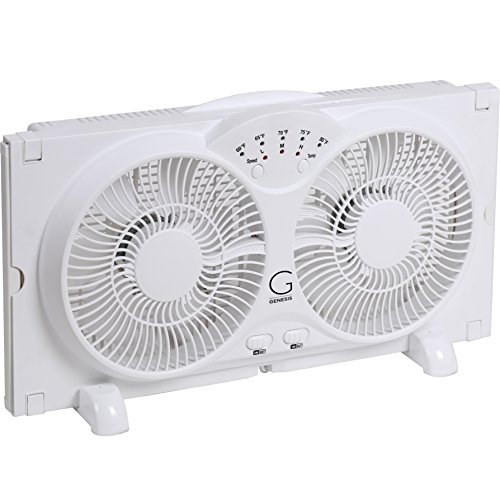
1. Genesis Twin Fan (A1WINDOWFAN) — Best Overall
The Genesis takes the top spot because it covers more of what a dual window fan should do than anything else here. Each of its two 9-inch heads runs on its own copper motor, and the heads work independently: set both to intake on a cool evening, both to exhaust after cooking, or one in and one out to exchange a room’s air continuously. Three speeds give a real range, and the built-in thermostat adjusts from 60 to 80 degrees Fahrenheit, with LED indicator lights showing the setting and Max Cool Technology cycling the fan to hold the temperature you choose.
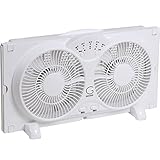
Fit is generous. Two expandable side panels stretch to fill windows up to 37 inches wide, the manual lists a minimum opening of about 24.4 inches wide by 13 inches high, and the fan is rated for double-hung, slider and casement windows. Removable legs let it stand on a table or floor out of season. The body measures 24 by 12 by 4 inches, the listed airflow is about 706 CFM, and the unit is ETL certified. The trade-offs are plain: there is no remote, so adjustments happen at the unit, and the control style is functional rather than fancy. For most rooms, it is simply the most complete package here.
2. Comfort Zone Smart WiFi Twin Window Fan (LC310SWT) — Best Smart Fan
The LC310SWT is the pick for anyone who would rather run a fan from the sofa or from bed. Its dual 9-inch heads offer three speeds and three airflow modes — Cool, Circulate and Exhaust — and the whole fan is controlled through a WiFi phone app or by voice, with a touchpad on the unit as backup. That means you can start the evening air exchange before you get home, or switch from intake to exhaust at night without getting up, which is exactly when a window fan earns its keep.
The three modes map neatly onto the day: Cool pulls outside air in through both heads, Exhaust pushes stale indoor air out through both, and Circulate runs one head each way for a steady exchange. Auto-locking expanders fit windows from 23.5 to 37 inches wide, and Comfort Zone includes a removable bug screen and a fabric cover for when the fan comes out of the window. The compromises are the usual smart-device ones: it needs a WiFi setup, and control lives in the app and touchpad rather than a handheld remote. If your home already runs on an app, that is no compromise at all.
3. Shinic Twin Window Fan (BP6-9D) — Best with Remote and Thermostat
Shinic’s BP6-9D pairs the two controls bedroom users ask for most: a full remote and a digital thermostat with an LED display. From the remote you can change the three speeds and switch between the fan’s three functions — intake, exhaust and circulation — without crossing the room, and the thermostat cycles the fan to hold the temperature you set instead of running flat-out all night. For light sleepers who cool the room down, then want the fan to ease off on its own, that combination is the point of this pick.
The fan expands to fit windows from about 23.8 to 37 inches, and Shinic includes a foam sealing strip to close the small gaps that accordion panels leave, plus standing feet so the twin 9-inch unit can sit on a table or the floor. It is ETL listed, and the manual lists a one-year warranty. The honest caveat is brand depth: Shinic is a newer name than the legacy fan brands here, so support runs through the seller rather than a long-established service network. In exchange, you get the remote-and-thermostat feature set without paying for smart-home extras you may not use.
4. Comfort Zone CZ319WT2 — Best for Narrow Windows
Window width is where many twin fans quietly fail: most need at least 23.5 to 24 inches of opening. The CZ319WT2’s auto-locking expanders start at 22.25 inches and run to 33, which makes it the fit-first pick for the narrower double-hung windows common in older houses, small kitchens and bathrooms. Behind those panels it is a straightforward, capable fan: two 9-inch heads, three speeds and reversible airflow, so it can pull cool air in or push warm air out as the evening changes.
Comfort Zone includes a removable bug screen, which matters more than it sounds on a fan designed to sit in an open window all summer, plus tabletop feet so the unit can work on a counter or dresser when it is not in the window. Controls are on the unit itself — there is no remote on this model — and the white finish keeps it visually quiet in a bedroom or kitchen. If your window is too narrow for the 37-inch class above, this is the dual fan that actually fits, and a fan that fits seals better and rattles less than one forced into place.

5. BLACK+DECKER 9-Inch Twin Window Fan (BFW9M) — Best Budget Pick
The BFW9M is the simplest fan in this guide, and that is its appeal. Two 9-inch heads, two speeds, one mechanical dial. Reversing is manual — you lift the unit out and turn it around — which sounds like a chore, but most owners set a window fan to intake or exhaust for the season and rarely flip it. In exchange for giving up electronic reversing, you get a fan with almost nothing to fail, no remote to lose and no app to set up, from a brand with a long history in household appliances.

Accordion side panels fit windows roughly 22.5 to 33 inches wide, removable legs convert it to tabletop use, and at about 4.5 pounds it is easy to move between rooms. The body measures about 23.8 by 12.6 inches, the draw is a modest 56 watts, and the fan is ETL listed. There is no thermostat, timer or remote, and two speeds will feel coarse next to the three-speed fans here. For a kitchen, guest room or dorm — anywhere the fan runs while you are in the room anyway — it is the budget-friendly tier done plainly and well.
6. NEXAIR NF009-WH — Best Lightweight Pick
At 5.5 pounds, the NEXAIR is the easiest fan here to lift into a window, take back out, and store in a closet when the season ends — which is why it suits renters and anyone who treats a window fan as a summer appliance. It does not skimp on controls to get there: a remote and push-button panel run three speeds and reversible airflow, with intake, exhaust and a circulate mode that runs one head each way. The maker’s manual rates it at 660 CFM and a 50 dB noise level, a useful figure for a bedroom fan.
Accordion panels extend the fan from 24 to 37 inches, removable feet allow table or floor use, and the body is a compact 23.5 by 12 by 4 inches drawing 56 watts. As with the Shinic above, NEXAIR is a newer, smaller brand, so read the seller’s warranty and support terms before you buy rather than assuming a legacy service network. Judged on what is in the manual — a quiet rating, a full remote, three airflow modes and the lowest weight here — it is the practical pick for apartments and seasonal cooling.
Best Picks by Category
- Best overall: Genesis Twin Fan (A1WINDOWFAN) — independent motors, a real thermostat and the widest role coverage.
- Best smart fan: Comfort Zone LC310SWT — app and voice control with three airflow modes.
- Best with remote and thermostat: Shinic BP6-9D — full remote control plus digital temperature control.
- Best for narrow windows: Comfort Zone CZ319WT2 — fits openings from 22.25 inches wide.
- Best budget pick: BLACK+DECKER BFW9M — two speeds and a dial, nothing you do not need.
- Best for renters: NEXAIR NF009-WH — 5.5 pounds, tool-free in and out, with a 50 dB rating.
Every fan here shares the same basic shape — two 9-inch heads, expanding side panels, reversible airflow. What separates them is how they are controlled and how wide a window they fit, which is why those two questions come first in the buying advice below.
How to Choose
Measure the window before anything else
Every dual window fan lists a width range, and it is the first spec to check: the fans here span from 22.25 inches at the narrowest to 37 inches fully extended. Measure the opening where the fan will sit, not the glass. Height matters too — most twin fans need the window raised about 12 to 13 inches. Most models are designed for double-hung windows and also work in horizontal sliders; casement fit varies, so check the maker’s fit notes for your window type before ordering.
Decide how you will reverse the airflow
Reversing is the whole point of a window fan, but the mechanism differs. Electronically reversible fans switch direction from the controls, and the best can run one head in and one out for a true air exchange. Manually reversible fans, like the BLACK+DECKER above, must be lifted out and turned around. If you plan to swap between intake in the evening and exhaust during the day, electronic reversing is worth paying for; if the fan will sit in one mode all season, manual is fine.
Match speeds and airflow to the room
Airflow is quoted in CFM where makers publish it — roughly 660 to 706 CFM for the rated models here — and it decides how fast a fan can exchange a room’s air. Three speeds are more useful than two, mostly because the low setting is what you will actually sleep with. A small bedroom needs less than a kitchen clearing cooking heat, so buy for the room the fan will serve rather than chasing the biggest number.
Choose controls you will actually use
Controls run from a plain dial to a phone app. A remote matters in a bedroom, where the fan is out of reach. A thermostat is the set-and-forget option: the fan cycles itself to hold a temperature instead of over-cooling at 3 a.m. App and voice control suit smart homes and let you start the fan before you get back. None of these change how much air the fan moves — they change how often you bother to adjust it, which in practice changes how well it works.
Check the seal, the screen and the safety mark
A fan that leaves gaps around its panels leaks the air it is trying to move, so look for locking expanders and, ideally, a foam sealing strip. A removable bug screen is close to essential for a fan that lives in an open window. Confirm the ETL or UL listing — every pick here is ETL listed. Finally, remember that almost no window fan is weather-sealed: plan to close the window or bring the fan in when driving rain is forecast.
Which dual window fan should you buy?
The best dual window fan for you comes down to window width, how you want to control it, and how often it will move in and out of the window. Here is how the picks map to common needs.
- One fan that does most jobs: the Genesis Twin Fan (A1WINDOWFAN) is the all-rounder, with independent motors and a thermostat.
- Phone or voice control: the Comfort Zone Smart WiFi Twin Window Fan (LC310SWT) is the smart option.
- Bedroom use from the bed: the Shinic Twin Window Fan (BP6-9D) pairs a remote with a thermostat.
- Narrow window: the Comfort Zone CZ319WT2 is the one to check first when the opening is small.
- Tight budget, simple dial: the BLACK+DECKER 9-Inch Twin Window Fan (BFW9M) keeps controls basic.
- Renters who store it each season: the NEXAIR NF009-WH is the lightweight pick.
If two fans both fit your window, choose on controls. A remote or thermostat is worth having only if you will use it.
What to check before you buy, and who should skip it
Before buying a dual window fan, measure the opening and check how the fan is reversed. Most returns come from a fan that does not fit or does not seal.
- Window type: confirm the fan suits sliding or double-hung windows, and measure both width and height.
- Sealing: look for locking panels and a foam strip to close gaps.
- Screen: check whether a bug screen is included.
- Controls: decide between dial, remote, thermostat or app.
- Warranty and returns: read the terms on the listing.
Be fair about the downsides. Window fans are not weatherproof, they block part of the view, and they cool by moving outdoor air, so they work poorly on a hot, humid night. They also offer no dehumidifying.
You can skip one if your window is an unusual shape, if you need air conditioning for real heat, or if a window cannot be left open safely. A portable fan may suit you better.
Think about safety and security as well. A fan in an open window can make a ground-floor room less secure, so check that you can still lock or brace the sash while the fan is installed. Keep the cord away from foot traffic and never run it under a rug.
Consider noise in the room where you will sleep. Two fan heads on high can be loud, so look at how the speeds are described and plan to use a lower setting overnight. A foam strip can also reduce rattling against the window frame.
Finally, think about storage. At the end of the season you will want to remove the fan, so check its weight and whether it can be stored flat, and keep the box or a bag to protect it.
It also helps to picture the window itself. Deep sills, handles or crank mechanisms can block a fan from sitting level, so look at where the frame, latch and any blinds will sit before you commit.
Compare the picks above, check the current listing for size and what is included, then choose the one that fits how you will use it.
Using a Dual Window Fan Well: Airflow Strategy for Real Rooms
Owning a twin window fan is only half the job. The other half is deciding, each evening, whether that fan should pull cool air in, push warm air out, or — with one fan each way where the model allows — move air through the room in a deliberate path. The six picks in this guide differ in controls, sizing and convenience, but all of them reward a little strategy far more than simply switching them on and hoping.
Intake, exhaust and the cross-breeze
On a cool evening after a hot day, intake is the instinctive choice: bring the outside air in and let the room’s warm air escape through a door gap or another open window. Exhaust mode earns its place when the room itself is the heat source — a kitchen-adjacent bedroom, a room full of electronics, a space that has baked in afternoon sun — because pushing the hot air out draws replacement air from the rest of the home. The most effective setup in many homes uses two openings: a fan exhausting in the warmest room and an open window, or a second fan on intake, in a cooler room, so air travels through the home instead of swirling in one corner. Even a single fan works noticeably better when you give the air somewhere to go, by opening an interior door or a second window a crack.
How the picks suit different strategies
The Genesis Twin Fan, our Best Overall, suits the straightforward household routine: set it in a main bedroom or living room window, choose intake on cool evenings and exhaust after hot days, and let its simplicity be the point. The Comfort Zone Smart WiFi model suits a different household — one that wants to start cooling a bedroom before arriving home, or adjust the fan from bed without getting up — and its smart controls pay off most for people who genuinely use schedules and remote adjustments rather than treating them as novelties. The Shinic, with remote and thermostat features, suits a set-and-maintain approach: pick a comfort goal and let the fan respond, which is especially useful overnight when no one wants to wake up to change a setting.
The Comfort Zone CZ319WT2 answers a physical problem first — a narrower window that rules out wider units — so measure before falling for features your window cannot host. The BLACK+DECKER twin fan is the budget route into the whole category, sensible for a first fan, a spare room or a rental where you want the benefit without committing much. The NEXAIR lightweight pick suits anyone who expects to move the fan between rooms or in and out of the window with the seasons, because a fan you can move easily is a fan you will actually reposition as conditions change, and that flexibility can matter more than a feature list.
Fit, Sealing and Everyday Comfort
Getting a seal that makes the fan effective
A window fan moves air through its blades or around its housing — your choice. Gaps at the sides waste airflow, admit insects and let rain find its way in more easily, so use the fan’s extendable side panels as intended, seat the unit firmly according to the maker’s instructions, and check the fit again after the first few uses, because vibration and window movement can open gaps. A well-sealed fan is also a quieter fan, since much of the rattle owners complain about comes from a loose unit vibrating against the frame rather than from the motor itself.
Noise, sleep and honest expectations
Many people love a window fan at night partly because of its sound: a steady, even hum that masks traffic and household noise. If you are a light sleeper, run the fan on a lower speed overnight and a higher speed for the pre-cooling hour before bed, so the room is already comfortable when the speed drops. Set expectations about cooling, too. A window fan moves air and exchanges it with outdoor air; it does not refrigerate. On a night when the outside air stays hot and humid, a fan makes the room feel better through airflow on skin, but it will not deliver the drop in temperature that air conditioning would. Knowing that in advance is the difference between a satisfied owner and a disappointed one.
Safety and Seasonal Care, in General Terms
Treat a window fan like any mains-powered appliance that lives near weather. Follow the maker’s instructions for where it may be used, keep the cord in good condition and routed so it is not trapped in the window mechanism or stretched across a walkway, and never use a unit with a damaged cord or housing. In general terms, electricity and water are a poor combination: take the fan out, or follow the maker’s stated guidance, when heavy wind-driven rain is expected, and do not leave a fan running unattended for long stretches in conditions the maker warns against. If your home has small children or pets, check that grilles are intact and that curious fingers or paws cannot reach moving parts, and place the cord where it will not be chewed or pulled.
Keep the basic safety habits that apply to any fan: use it on the electrical supply it is rated for, avoid makeshift extension arrangements that the maker does not approve, switch it off and unplug it before cleaning or moving it, and stop using it and seek the maker’s advice if it develops an unusual smell, sound or vibration. None of this is complicated, and a few seconds of attention at installation covers most of it for the season.
At the end of the season, clean the fan before storing it: unplug it, wipe dust from the grilles and blades with the methods the maker allows, let everything dry fully, and store it somewhere dry where the housing will not be crushed. A fan put away clean comes out in spring ready to use; a fan put away dusty starts its second season louder, weaker and smellier than it should. Check the cord and housing again when you reinstall it, re-seat the side panels carefully, and your second summer will go as smoothly as your first.
Skip this category if your windows cannot host a unit securely, if local rules or a landlord prohibit window units, or if your real problem is humidity rather than air movement — a fan will not dry a damp room the way dedicated equipment can. For everyone else, a twin window fan remains one of the simplest, lowest-commitment ways to make a warm home feel genuinely more comfortable.
Room-by-Room: Where a Twin Window Fan Helps Most
Bedrooms and sleeping spaces
The bedroom is the classic window fan room, because night is when outdoor air is coolest and when a stuffy room costs you the most. A fan on intake through the evening can make the difference between sleeping on top of the covers restlessly and actually resting, and the gentle, steady sound suits many sleepers better than silence broken by traffic. For a child’s bedroom, add the general safety checks described earlier — intact grilles, a secure fit, a cord out of reach and out of the way — and favour a model whose controls a child cannot easily turn into a game. For a guest room, a simple, obvious model like the Genesis or the BLACK+DECKER pick is kindest, because a guest should be able to work the fan at midnight without instructions.
Kitchens, home offices and living rooms
In a kitchen or a dining space, exhaust is usually the star: cooking adds heat and odours to a room faster than almost anything else in a home, and a fan pushing air out helps the whole space recover while drawing fresher air in from the rest of the house. In a home office, the calculation is about afternoons — a room with a computer, a monitor and a south-facing window can become the warmest room in the house by three o’clock, and a fan that starts exchanging air before the room bakes will keep it workable for longer. The smart and thermostat-equipped picks, the Comfort Zone WiFi model and the Shinic, suit these set-it-early patterns particularly well. In a living room, a window fan’s job is often social: keeping a room full of guests comfortable through an evening, where a slightly higher speed and a little more sound are acceptable in exchange for air that keeps moving.
Deciding between one fan and a system
One fan transforms one room. Two fans, or a fan paired with deliberate window opening elsewhere, can change how a whole floor feels on a summer night, because moving air needs a path. If you are unsure whether the category suits your home at all, start with one fan in the room that bothers you most — usually the main bedroom — live with it for a few warm weeks, and learn your home’s air patterns before buying a second. You will discover which windows draw, which rooms hold heat, and whether your second fan belongs on intake or exhaust, knowledge no listing can give you. That measured approach is also the cheapest: many households find one well-placed, well-sealed fan, chosen from the picks in this guide and used with a little strategy, is all they ever needed.
Window Fans and the Rest of Your Cooling Plan
Where a fan fits alongside other options
Few homes cool themselves with one device, and a twin window fan is best understood as one layer in a plan. Ceiling fans move air within a room but cannot exchange it with cooler outdoor air; a window fan does the exchange, which is why the two work so well together on a warm evening — the window fan brings the cool in, the ceiling fan spreads it around the people in the room. Blinds and curtains drawn against afternoon sun reduce the heat the fan must deal with later, and opening windows on the shaded side of a home while exhausting from the sunny side follows the building’s own temperature pattern instead of fighting it. Air conditioning, where a home has it, changes the fan’s role rather than ending it: on mild days and cool nights the fan can carry the whole job and let the costlier system rest, reserving full air conditioning for the genuinely hot stretches. Thinking in layers like this is how households stay comfortable through a whole season without relying on any single appliance to perform miracles outside the conditions it was designed for.
Renters, dorms and temporary homes
A window fan is one of the few cooling improvements a renter can usually make without altering the property: it installs in an existing window, leaves when you do, and asks for no permanent fitting. That portability shapes which pick suits temporary homes. A straightforward, good-value model such as the BLACK+DECKER or the Genesis covers a rental or a dorm room without over-investing in a home you will leave, while the lightweight NEXAIR suits anyone whose housing changes often enough that every possession is judged partly by how easily it moves. Check any building rules that apply to window units before buying, store the fan carefully between homes as the seasonal care section describes, and a single purchase can follow you through several addresses, cooling each one from the first warm week.
The habit that makes it all work
More than any feature, the owners who love their window fans share one habit: they think a few hours ahead. They start the fan when the outdoor air turns, not when the bedroom is already unbearable; they close windows and blinds against the next day’s heat once the house is cool; they switch between intake and exhaust as conditions change rather than leaving one setting all season. None of that requires a smart model, though the smart and thermostat picks in this guide automate parts of it gracefully. It requires only treating the fan as a tool you operate, not an appliance you abandon — and a fan operated that way punches far above its modest place in the cooling hierarchy.
Your First Week With the Fan: A Gentle Routine
Use the first week as an experiment rather than a verdict. On the first warm evening, try intake with an interior door open and notice how far into the home the cool feeling travels. On another evening, try exhaust from the warmest room and compare. Note which speed you can sleep through comfortably, whether the seal needs a second adjustment once the unit has vibrated through a few days of use, and whether the room’s furniture helps or blocks the air’s path — a small rearrangement of a chair or a door’s position sometimes improves airflow more than a higher speed does. By the end of the week you will know your fan, your window and your home’s evening air as a system, and the rest of the season becomes simple repetition of what worked. That is the quiet promise of every pick in this guide: not a miracle of cooling, but a reliable, low-cost ritual that makes warm homes feel like places you want to be in the evening — which, in the end, is the whole point of bringing one home.
And if you share your home, make one small agreement when the fan goes in: who adjusts it, and when. Most window-fan friction is not mechanical at all — it is one person who loves the hum and the moving air at full strength sharing a room with someone who prefers the lowest, quietest setting after midnight. The models in this guide with remotes, smart controls or thermostats make that negotiation easier, because a compromise setting can be scheduled rather than re-argued nightly. Agree the overnight setting once, in daylight, in good humour, and the fan becomes what it should be: the background to better sleep, not a subject of debate in the dark.
FAQ
What is the difference between a dual window fan and a box fan?
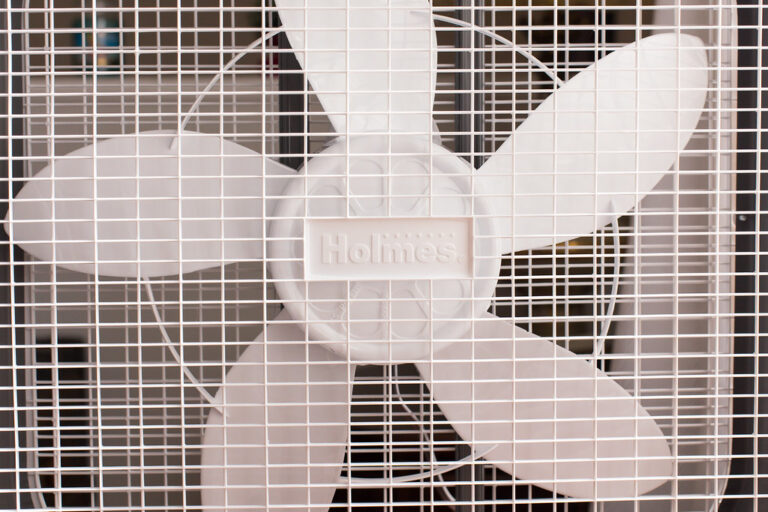
A box fan sits in front of a window or on the floor and blows in one direction; it mostly moves the air that is already indoors. A dual window fan seals into the window opening itself, is reversible, and its two heads can work together — both pulling air in, both pushing air out, or one each way to exchange the room’s air with fresh outdoor air. That exchange is what actually lowers a room’s temperature once the evening cools down.
Should a window fan blow in or out?
Both, at different times. In the evening, when outdoor air drops below indoor temperature, intake brings the cool air in. During the day, or after cooking, exhaust pushes hot, stale air out. Fans with an exchange or circulate mode do both at once and are the best choice for a room with a single window. As a rule, the fan only cools when the air it brings in is cooler than the air it replaces.
Can a dual window fan cool a whole house?
One fan cools the room it sits in. Whole-house cooling takes at least two: an intake fan on the shaded, ground-floor side and an exhaust fan in an upper window, so air travels through the home. Even then, a window fan exchanges air rather than refrigerating it — on a still, hot night it will make rooms noticeably fresher, but it is not a substitute for air conditioning in a heat wave.
Do dual window fans work in sliding windows?
Usually, yes. Most twin fans fit horizontal sliding windows as long as the opening falls inside the fan’s width range, and some — the Genesis in this guide, for example — are also rated by their makers for casement windows. What rarely works is mounting a twin fan vertically in a tall, narrow slider. Measure the opening first and compare it with the fan’s stated range before you buy.
Can I leave a dual window fan in the window when it rains?
It is safer not to. Most dual window fans are not weather-sealed, and their manuals generally advise removing the fan or closing the window when it rains; an ETL listing covers electrical safety, not waterproofing. Keeping your window screen in place, as most makers recommend, stops insects and debris but not wind-driven rain. If your window catches storms, choose a lightweight model that is easy to lift out quickly.
Do dual window fans use a lot of electricity?
They generally draw far less power than an air conditioner. Check the wattage on the listing and compare it with the speeds you plan to use.
Can I use a window fan in a double-hung window?
Usually yes, if the window opening falls within the fan's width range and the sash holds the fan firmly. Check the manual for the supported window types.
Are window fans safe to run overnight?
Many people do, but follow the maker's instructions. Make sure the fan is seated securely, the cord is clear, and the window cannot slam on it.
How do I keep bugs out when using a window fan?
Use a fan with a screen, or keep the existing window screen in place if the fan allows it. Seal gaps with the foam strip if one is supplied.
Are window fans loud?
Noise depends on the speed and the model. Lower speeds are quieter, and the listing may state a noise level, so check it if you sleep near the fan.
Where should the fan face for the best cooling?
Blow outdoor air in when it is cooler outside, and blow indoor air out when it is hotter indoors. Opening a second window helps air flow through the room.
Bottom Line
For most homes, the Genesis Twin Fan (A1WINDOWFAN) is the dual window fan to buy first: independent motors, a real thermostat and the flexibility to intake, exhaust or exchange air. Choose the Comfort Zone LC310SWT if you want app and voice control, the Shinic BP6-9D for a remote with a thermostat, and the BLACK+DECKER BFW9M if you want the simple, budget-friendly basics. Whichever you pick, measure your window first — the best dual window fan is the one that fits, seals, and gets your room’s air moving every single evening.