Disclosure: As an Amazon Associate, UMT Smart Tool earns from qualifying purchases. This guide is built from product listings and maker specifications, not from our own hands-on testing. Prices are approximate and can change, so check the current price before you buy. Last updated: November 10, 2026.
Dining room chairs are bought in multiples, sat on by everyone, and dragged across the floor several times a day — so the “best” one depends on your table, your room and how you actually eat. A formal set for long dinner parties needs a supportive back and a seat that stays comfortable for two hours. A family kitchen set needs surfaces that wipe clean and chairs narrow enough to fit four around a modest table. This guide is organized by use case: classic upholstered, solid wood, budget sets of four, modern, cane-back and stackable picks, so you can start with the job your chairs have to do.
In this guide
Quick Picks
The short version: six dining chairs we would look at first, one per style and budget.
| Pick | Type | Best for |
|---|---|---|
| Christopher Knight Home Phinnaeus (Set of 2) | Upholstered French country | Best overall for classic dining rooms |
| East West Furniture Norfolk (Set of 2) | Solid wood slat back | Traditional wood tables and everyday use |
| Furmax Upholstered (Set of 4) | PU leather, button tufted | Best budget full set of four |
| VASAGLE Boucle (Set of 2) | Modern boucle upholstery | Contemporary rooms and long, relaxed meals |
| Christopher Knight Home Lilia (Set of 2) | Cane webbing back | Light, airy and coastal-style rooms |
| Furmax Metal Trattoria (Set of 4) | Stackable iron | Small spaces and spare seating |
Our Picks

1. Christopher Knight Home Phinnaeus Dining Chairs, Set of 2, Gray Stripes/Light Beige — Best Overall
The Phinnaeus is the chair that makes a dining room look finished. It pairs an iconic round, fully upholstered backrest with fluted wooden legs in a French country style, and the two-tone upholstery — gray stripes with light beige — gives it more presence than a plain fabric chair. Each chair measures 19.75 inches wide by 25.25 inches deep by 39.75 inches high, with a 19.25-inch seat height and an 18-inch seat depth, so it suits standard 28- to 30-inch dining tables and gives taller backs proper support through a long meal. Christopher Knight Home rates each chair to 250 pounds.
The trade-offs are the usual ones for upholstered dining chairs. The polyester fabric needs spot cleaning rather than a quick wipe, and light beige upholstery around food asks for prompt attention to spills. The tall back and relatively deep seat also take up visual and floor space, so measure your table apron clearance and the room behind each chair before ordering a full set. Assembly is required. For a classic or transitional dining room where the chairs are part of the decor, this set of two is our first recommendation.


2. East West Furniture Norfolk Dining Chairs, Set of 2, Mahogany — Best Solid Wood
If you want chairs that match a wood table and shrug off daily use, the Norfolk keeps things simple: a slat back and a solid wooden seat, built from Asian solid wood (rubberwood) with a mahogany finish. Each chair is 18 inches wide by 19 inches deep by 35 inches high, with an 18-inch seat height and a 15-inch seat depth — a compact, upright profile that tucks neatly under most tables and fits smaller dining spaces better than bulky upholstered chairs. There is no fabric to stain and no cushion to compress; a damp cloth handles most cleanups.
The honest downside is the hard seat. A wooden seat is comfortable for a normal meal, but for two-hour dinners most people will want add-on seat pads, which are sold separately. The traditional slat-back styling also belongs with classic and farmhouse tables rather than sleek modern ones. Buy it as a set of two and add pairs as your table allows. For buyers who value solid wood construction and easy care over padding, the Norfolk is the durable, no-fuss choice in this guide.


3. Furmax Upholstered Dining Chairs, Set of 4, PU Leather Black — Best Budget Set of 4
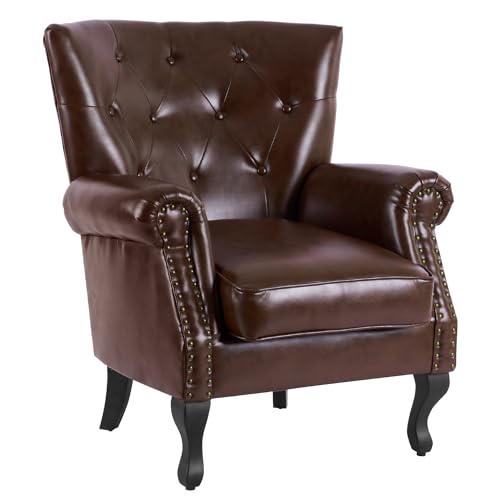
Most dining sets are priced per pair, which makes furnishing a whole table expensive fast. This Furmax set puts four chairs in one box at a budget-friendly tier. The chairs are upholstered in black PU leather with a button-tufted backrest, and the legs are wood with adjustable height feet, which helps level the chairs on uneven floors. At 17.1 inches wide by 19.2 inches deep by 37.4 inches high, each chair is narrower than the upholstered picks above, so four fit comfortably around a mid-size table without crowding shoulders.
PU leather is the practical draw here: it wipes clean after meals, which matters with kids and daily use, and it does not absorb spills the way fabric does. The trade-offs are long-term ones — faux leather will not age like real leather, and the narrower seat and lighter build suit everyday dining better than very long, formal dinners. If you need a complete, matching set of four on a tight budget and easy cleaning matters more than heirloom materials, this is the set to look at first.


4. VASAGLE Boucle Dining Chairs, Set of 2, Cream White — Best Modern
The VASAGLE boucle chair is the modern counterpoint to the traditional picks above: a rounded, curved backrest wrapped in soft cream-white teddy fleece, on a reinforced steel frame. The seat cushion is a generous 3.9 inches thick, the seat depth is 18.9 inches, and each chair measures 19 inches wide by 23.2 inches deep by 32.4 inches high — a lower, wider profile that reads contemporary and suits relaxed, lingering meals. VASAGLE rates the chair to 265 pounds, and adjustable feet help it sit steady on hard floors. Assembly is quoted by the maker at about ten minutes.
Boucle is a commitment, though. Cream-white textured fabric shows spills and crumbs more readily than leather or wood, and it calls for spot cleaning and a fabric-friendly household — think adult dining rooms rather than toddler headquarters. The low back is also a deliberate style choice: it keeps sightlines open in small rooms but offers less shoulder support than a tall-back chair. Choose this set of two if your room leans modern and you want the chairs to feel like lounge seating that happens to live at the table.


5. Christopher Knight Home Lilia Dining Chairs, Set of 2, Beige + Natural — Best Cane-Back
The Lilia mixes three textures well: a weathered rubberwood frame, a smooth upholstered seat cushion, and a cane webbing backrest that keeps the chair visually light and lets air move on warm evenings. Each chair measures 20.5 inches wide by 24.25 inches deep by 34.5 inches high and weighs about 17 pounds, so the chairs are easy to pull up, rearrange and carry between rooms. Christopher Knight Home advises a maximum load of 250 pounds per chair. The beige upholstery with the natural frame finish fits coastal, Scandinavian and relaxed country rooms especially well.
Cane asks for a little respect: it is a woven natural material, so it should not be stood on, leaned against with point loads, or scrubbed hard, and the fabric seat cushion needs the same spot-clean care as any upholstered chair. In return you get a dining chair that does not visually crowd a small room the way a solid back does. If your dining space is short on light or square footage, the Lilia set of two keeps it feeling open while still giving guests a padded seat.


6. Furmax Metal Trattoria Dining Chairs, Set of 4, Distressed White — Best Stackable
Sometimes the right dining chair is the one that disappears when you do not need it. This Furmax set of four is a Tolix-style trattoria chair in iron with a distressed white finish: stackable for storage, rated to 330 pounds per chair, and usable indoors or outdoors. Each chair is about 17 by 17 by 33.5 inches with an 18-inch seat height and a compact 14-by-14-inch seat, and at roughly 12 pounds per chair they are easy to carry out for a party and stack away afterward. The cross-brace under the seat adds stability, and the metal surface simply wipes down.
The compromises are plain: a bare metal seat is firm and cool to sit on, and the small seat suits average builds and shorter sittings better than long dinners — add inexpensive seat pads if these will be your everyday chairs. The bistro styling also leans industrial and casual rather than formal. As spare seating, kitchen seating, or a small-space set that stores in a closet corner, this set of four is the most flexible option in the guide.

Best Picks by Category
- Best overall: Christopher Knight Home Phinnaeus (Set of 2) — tall round back, fluted legs and two-tone upholstery for classic rooms.
- Best solid wood: East West Furniture Norfolk (Set of 2) — solid rubberwood slat back with a wipe-clean wooden seat.
- Best budget set of 4: Furmax Upholstered (Set of 4) — four PU leather chairs in one box, narrow enough for mid-size tables.
- Best modern: VASAGLE Boucle (Set of 2) — thick cushioned seat and curved boucle back on a steel frame.
- Best cane-back: Christopher Knight Home Lilia (Set of 2) — cane webbing and a weathered rubberwood frame keep rooms feeling open.
- Best stackable: Furmax Metal Trattoria (Set of 4) — stackable iron chairs rated to 330 lb, indoors or out.
Notice the pattern: the right pick is rarely about luxury. It is about matching the chair to your table size, your floors and how long people actually sit at your table.
How to Choose
Seat height and table fit
Most dining tables stand 28 to 30 inches high, and most dining chair seats sit 17 to 19 inches off the floor, leaving roughly 10 to 12 inches between the seat and the underside of the tabletop for legs. Before ordering, measure from your floor to the underside of the table apron — the horizontal board under the top — not just to the top surface. A chair with a 19.25-inch seat like the Phinnaeus fits a standard table but can feel tight under a low apron, and armchairs need their arm height checked against the apron too.
Set size and spacing around the table
Allow about 24 inches of table edge per diner, and at least 36 inches between the table edge and the wall or sideboard so chairs can pull out and people can pass behind. That math decides whether a table takes four chairs or six. Sets of two suit pairs of host chairs or gradual buying; sets of four are better value when you are furnishing a whole table at once. If you entertain often, two extra stackable chairs stored in a closet beat six permanent chairs crowding a small room.
Materials: upholstery, wood, metal and cane
Upholstered chairs are the most comfortable for long meals and the most demanding to keep clean — PU leather wipes down, while fabric and boucle need spot cleaning. Solid wood seats wipe clean and last for years but feel hard without pads. Metal trattoria chairs are the toughest and most compact, and the least forgiving to sit on. Cane backs split the difference: breathable and light-looking, with a padded seat doing the comfort work. Match the material to your household first and your decor second.
Seat width, depth and back height
Seat width decides how many chairs fit along a table side and how much elbow room each guest gets; 17- to 20-inch widths cover most designs here. Seat depth around 15 to 19 inches supports the thighs without pushing shorter diners forward. Back height is a style and support choice: tall backs like the Phinnaeus formalize a room and support shoulders, while low backs like the VASAGLE keep small rooms visually open. Sit-height consistency matters too — keep all chairs at one table within about an inch of each other.
Weight capacity and frame build
Check the maker’s stated capacity per chair and match it to your household with headroom to spare: the picks here range from 250 to 330 pounds per chair. Capacity is also a rough proxy for frame strength. Solid wood and steel frames generally shrug off daily dragging better than lightweight mixed-material frames, and adjustable feet — fitted to both Furmax and VASAGLE picks here — solve the common problem of wobble on uneven floors while protecting hard floors from scratches.
Assembly, care and floor protection
Most dining chairs ship flat and need basic assembly; budget about ten to twenty minutes per chair and retighten the bolts after the first week of use, because new joints settle. Add felt pads under every leg before the chairs meet a hard floor. For care: wipe wood and metal with a damp cloth, blot fabric spills immediately rather than rubbing them in, dust cane gently, and keep all of them out of prolonged direct sunlight, which fades fabric and dries out wood finishes.
Which dining room chairs should you buy?
The best dining room chairs are the ones that suit your table, your household and how long people sit. Match your situation to the picks below, then check the listing.
- If you want a classic, finished look: choose the Christopher Knight Home Phinnaeus (Set of 2), with its tall round upholstered back.
- If you want easy care and solid wood: go for the East West Furniture Norfolk (Set of 2). A damp cloth handles most cleanups, and seat pads can add comfort.
- If you need a full table on a budget: the Furmax Upholstered (Set of 4) puts four wipe-clean PU leather chairs in one purchase.
- If your room is modern: pick the VASAGLE Boucle (Set of 2). It suits adult dining rooms better than homes with toddlers.
- If you want a light, airy look: the Christopher Knight Home Lilia (Set of 2) has a cane back that keeps a small room open.
- If you need spare or small-space seating: the Furmax Metal Trattoria (Set of 4) stacks away and can serve indoors or out.
If you host long dinners, favor padded seats. If you have children, favor surfaces that wipe clean.
You can also mix. Many households use a wipeable set of four along the sides and add a pair of more decorative host chairs at the ends. Keep the seat heights close and repeat a color or material so the table looks planned. If space is limited, a stackable set stored in a closet gives you extra seats only on the days you need them.
What to check before you buy dining chairs, and who should skip them
Before ordering, measure your table, count how many chairs you need and read what is in the box. Dining chairs are used daily, so small mismatches become annoying quickly.
- Measure the floor to the underside of the table apron, not only the tabletop.
- Count the diners and check the chair width against the table edge.
- Confirm the set size: pair or set of four.
- Check the stated weight capacity and assembly requirements.
- Read the return terms and care notes on the current listing.
Be realistic about trade-offs. Light upholstery shows spills, PU leather will not age like real leather, wood seats feel hard without pads, cane needs gentle handling and bare metal is firm. Sets of two mean buying twice for a larger table.
Who should skip these: if your table has a very low apron or you need armchairs with specific arm heights, check the listing carefully first. If you need chairs for heavy daily use by many people, review the weight capacity. Compare the picks above, check the current listing for size and what is included, then choose the one that fits how you will use it.
Choosing Among These Picks: Matching Chairs to Real Dining Rooms
A dining chair is judged three times: when it arrives, when guests sit through a long meal, and a year later when the finish, joints and upholstery have met daily life. The six sets in this guide divide by material and mood more than by quality, so the useful question is which trade-offs your household will enjoy living with.
The balanced upholstered choice versus the modern statement
The Christopher Knight Home Phinnaeus set in the top spot and the VASAGLE Boucle set both offer soft, upholstered seating, but they create different rooms. The Phinnaeus, with its striped and neutral presentation, suits a dining space that leans traditional or transitional and needs chairs that cooperate with existing wood tones and table linens. Choose it when you want comfort that does not demand the whole room be redecorated around the chairs.
The VASAGLE boucle chairs are the more deliberate style choice. Their cream, textured look brightens a modern or minimalist table and photographs beautifully, which matters in open-plan spaces where the dining area is always on view. The honest cost of that look is vigilance: light, textured upholstery shows everyday marks more readily and asks for quicker attention to spills. Choose the boucle set if you love the look enough to maintain it; skip it if meals at your table regularly involve small children, dark sauces and a relaxed attitude to mess, because resentment of your own chairs is a poor seasoning.
Solid wood tradition versus cane-back lightness
The East West Furniture Norfolk chairs are the pick for buyers who think in decades. A solid wood chair in a rich mahogany tone brings weight, formality and a surface that can be dusted, polished and touched up in ways upholstery cannot. Choose the Norfolk set for a dedicated dining room, a darker wood table, or a home where chairs will be used daily and you want the frame itself to be the upholstery-free, wipe-clean answer.
The Christopher Knight Home Lilia set, with its cane back and lighter natural finish, solves the opposite problem: a room that feels heavy. Cane backs let light and sightlines through, which makes a small dining area feel less crowded even when the chair count is the same. They suit coastal, casual and mixed-material rooms where a solid bank of dark wood would close the space in. The trade-off is feel: a cane back has more give and texture than a solid or upholstered back, and some sitters strongly prefer a smooth, padded surface behind them. If you can, have the most particular sitter in your household try a cane-back chair somewhere before committing to a full set.
Budget coverage for a full table
The Furmax upholstered set of four in black PU leather answers a practical problem: seating a full table without a long saving-up period, in a finish that wipes clean easily. For first apartments, rental homes, and busy family tables where chairs take constant small abuse, that combination is genuinely sensible. Choose it when coverage and easy cleaning outrank heirloom ambitions, and when the black, contemporary look fits your table.
Know what you are trading. PU leather surfaces, on any brand, age differently from fabric or wood: they resist spills well but can show wear at edges and seams over time, especially in hot rooms or under constant friction. The Furmax set earns its place as a budget set of four, and it will serve best for owners who see it as hardworking everyday seating rather than a lifetime purchase.
Stackable metal for flexible spaces
The Furmax Metal Trattoria set solves a storage problem the other picks do not address. Stackable chairs let a small home seat extra guests and then reclaim the floor, which is transformative for apartment dining, multipurpose rooms and homes that host occasionally but live compactly. The distressed white finish also brings a casual, café-like character that softens a formal table.
The limitation is long-meal comfort. A metal seat, even a well-shaped one, is less forgiving over a slow dinner than the upholstered picks, and most owners of stackable metal chairs eventually add seat pads for longer gatherings — which then need storing too. Choose the Trattoria set when flexibility is the priority and meals are relatively brisk; choose an upholstered pick when your table is where people settle in for the evening.
Getting the Fit Right: Measurements and Mistakes That Matter
The table relationship comes first
More dining chair disappointment comes from fit than from style. Before ordering any set here, measure your table height and the underside clearance, then compare with the seat height and, where relevant, arm height of the chairs. A chair can be beautiful and still fail if knees feel trapped, the seat sits oddly low, or arms collide with the table apron so chairs cannot push in. Chairs that cannot push in steal a surprising amount of room and make a dining area feel permanently untidy.
Also measure the space behind the chairs, not just around the table. People need to slide back, stand, and walk past a seated person. In a tight room, a slightly slimmer chair profile or a back design that tucks lower can matter more than an extra inch of seat padding. Sketching the room footprint on paper, with the table and a realistic chair pull-out zone marked, takes minutes and prevents the most expensive mistake in this category.
Mixing sets without creating a muddle
Several picks in this guide pair well across sets — for example, using one upholstered style at the heads of the table and a simpler wood or metal chair along the sides. Mixing works when one element stays constant: similar seat height above all, then either a shared tone, a shared material family, or a shared silhouette. If seat heights differ noticeably, guests feel the mismatch every time they sit, no matter how good it looks in a photo.
If you are buying in stages, buy the side chairs first in the quantity you need and live with them before adding statement head chairs. Daily comfort is decided by the chairs used daily; the occasional head chairs can afford to be the more delicate or decorative choice, such as the cane-back or boucle styles.
Care by material, in plain terms
Upholstered chairs ask for prompt blotting of spills, regular vacuuming of seams where crumbs collect, and rotation if sunlight falls unevenly across the set, so one chair does not fade ahead of the others. Wood chairs ask for coasters and placemats discipline at the table above them more than for any treatment of their own, plus an occasional check of joints and glides. Metal chairs ask for dry storage when stacked and a quick wipe of feet and contact points, where grit trapped between stacked frames can mark finishes. Cane backs ask for gentleness: no leaning back hard on two legs, no standing on the seat to reach a shelf, and dusting with a soft brush rather than a soaking wipe.
Across all six picks, floor protection is the cheapest insurance you will ever buy for a dining room. Felt glides, checked and replaced when they wear or pick up grit, prevent the scratches that owners often blame on chair quality. A chair that wobbles on delivery usually needs its glides or leg level checked on a truly flat surface before you conclude the frame is at fault; many dining floors are less level than they look.
A Final Way to Decide
Picture your table on its hardest ordinary day — not a holiday, not a photo, but a wet Tuesday with everyday food, everyday clothes and no extra time. The set that still seems appealing in that picture is your set. If that image features long, lingering meals, lean upholstered: Phinnaeus for versatility, boucle for modern brightness. If it features homework, crafts and quick wipe-downs, lean wood, PU leather or metal. If it features extra guests appearing and floor space disappearing, the stackable Trattoria set earns its keep.
Then confirm the unglamorous details on the listing of the set you choose: how many chairs are actually in the box, what assembly is required, and what is included for floor protection. Sets in this guide are sold in different quantities, and miscounting boxes is a far more common ordering mistake than choosing the wrong style.
Real Rooms, Real Choices: Scenario Walkthroughs
Picture a family dining room used three times a day: meals, homework, laptops, board games. Chairs here are infrastructure, not decoration, and they will be dragged, leaned on and wiped down constantly. This room belongs with the Norfolk wood set for its wipe-clean solidity, or the Furmax PU leather set if the budget must cover the whole table at once. The boucle and cane-back sets, lovely as they are, would spend their lives being worried over in this room, and furniture you must protect from your own daily life has been chosen wrongly, however beautiful it looked in the listing photographs.
Now picture a small apartment dining corner that hosts friends twice a month and serves as a desk in between. Floor space is the scarcest resource in the home. The stackable Trattoria set transforms this corner: two chairs live at the table daily, the rest stack in a closet, and hosting expands the table without expanding the apartment. Add seat pads kept in the same closet and the comfort objection largely dissolves for the length of a friendly dinner. No upholstered set, at any quality level, can solve this room’s actual problem, which is geometry rather than comfort.
A third room: a light-filled dining space in a modern home, used for unhurried weekend meals and photographed by its proud owner more often than it hosts crowds. This is the boucle set’s natural habitat, or the Lilia cane-back set if the owner prefers natural texture to upholstery. In a room where meals are occasions and care is part of the pleasure, choosing the delicate, beautiful option is not impractical — it is accurate self-knowledge, which is what good buying is.
Assembly day and the first month
Most sets in this guide need some assembly, and the quality of that hour decides years of wobble or silence. Assemble on a soft surface to protect finishes, tighten fixings in sequence rather than fully one at a time, and check each chair on a hard, flat floor — not carpet, which hides unevenness — before declaring it finished. A chair that rocks slightly after careful assembly on a flat surface deserves attention while the purchase is new; a chair that only seems to rock on an old dining floor usually needs a glide adjusted, not a complaint filed.
In the first month, retighten. New chairs settle: wood adjusts, fixings seat themselves, and a brief check of every bolt and screw after a few weeks of use is the single most effective maintenance act in this category. It takes minutes per chair and prevents the slow loosening that owners later describe as the chair wearing out. Build it into the same afternoon as another household task and it will actually happen.
Rotate chairs around the table if wear is uneven — the chair at the family head and the chair beside the kitchen door live harder lives than the others. Rotation spreads sunlight, friction and spills across the set, so the whole set ages together and no single chair becomes the shabby one that makes a good set look tired. For upholstered sets, the same logic applies to cushions and to which chairs sit in direct sun.
The comfort test that actually predicts satisfaction
Showroom sitting lasts thirty seconds; dinner lasts two hours. When your chairs arrive, run the real test early, while decisions are still easy: sit through an actual long meal, at the table, doing what your household does — talking, lingering, shifting position. Notice the back support after an hour, not the first impression; notice whether the seat edge presses, whether the height still feels right with the table’s edge in front of you, whether getting in and out repeatedly is graceful or awkward. Those observations, made in the first week, are the ones that will still be true in the fifth year, and acting on them promptly is the buyer’s real quality control.
A Last Reminder Before You Order
Before you order, do one final, practical pass around your actual table. Measure its height, the clearance beneath its apron, and the distance to the nearest wall or sideboard where a pulled-out chair must fit, and write those numbers down before you look at any listing again. Then count the chairs you truly need on an ordinary week, not the largest gathering you host once a year, because extra chairs bought for a rare occasion must be stored, moved and cleaned for the other fifty weeks. If you regularly host more than you seat daily, let that fact argue for the stackable option or for a plan you have actually thought through. Check the listing for the number of chairs in each box, the assembly expected, and whether floor glides are included or should be ordered at the same time so the set can be used properly from its first meal. Sit in your decision for a moment, too: picture the set after a spilled drink, after a long evening, after a year of Tuesdays. The set that still pleases you in those pictures, in the material your household can maintain without resentment, is the right set. Dining chairs are among the most touched objects in a home, used by everyone, every day, and a careful hour spent matching them to your table, your room and your habits repays itself at literally every meal that follows.
One more consideration belongs in that final pass: who sits longest at your table, and does the chair serve them? A household member who works at the dining table all day, or an older relative who joins every Sunday dinner, experiences a chair differently from an occasional guest. Seat support, ease of getting in and out, and a back that remains comfortable after an hour matter most for those long sitters, and their comfort is a better design brief than a showroom’s first impression. If one chair at the table will be occupied for hours daily, consider whether that place deserves the most supportive pick in your chosen set’s family, even if the remaining places follow a simpler version of the same look. Consistency of seat height keeps the table visually calm while letting the hardest-working seat do its job properly.
Frequently Asked Questions
How many dining chairs fit around a 6-foot table?
Using the 24-inches-per-diner rule, a 72-inch rectangular table seats three per side, or six total, plus one at each end if the table legs allow it — eight at most. Chairs around 17 to 19 inches wide fit that spacing best; wide upholstered chairs may reduce you to two per side.
What seat height works with a standard dining table?
For a standard 28- to 30-inch table, choose a seat height of 17 to 19 inches. The goal is roughly 10 to 12 inches between the top of the seat and the underside of the tabletop. Measure to the bottom of the table apron, not the top of the table, before buying.
Are upholstered dining chairs practical with kids and pets?
They can be, if you pick the right surface. PU leather and other smooth faux leathers wipe clean and resist spills, while light fabrics and boucle show marks quickly and need prompt spot cleaning. Many households run wipeable chairs on the sides and save the upholstered pair for the ends of the table.
Can I mix different dining chairs at one table?
Yes — a common arrangement is a matched set along the sides with two different host chairs at the ends. Keep the seat heights within about an inch of each other and repeat at least one element — wood tone, color or material — so the mix looks deliberate rather than accidental.
Do dining room chairs come assembled?
Usually not. Most sets ship with the legs and sometimes the back detached, and assembly is typically a matter of bolts and an included hex key. Metal trattoria chairs are an exception worth noting: they commonly arrive fully assembled and ready to stack.
How long should dining chairs last?
It depends on frame material and use. Solid wood and steel frames can serve for many years of daily meals; upholstered chairs usually age at the foam and fabric first. Retightening hardware, using floor pads and keeping chairs out of constant sun exposure all extend the life of any set in this guide.
How much space should there be behind a dining chair?
Leave at least 36 inches between the table edge and the wall or sideboard so chairs can pull out and people can pass. Tighter rooms favor narrower chairs.
Should dining chairs have arms?
Arms add comfort and a formal look but need more width and enough apron clearance. For tight spaces, armless chairs tuck in more neatly. Check the arm height against your table.
Do I need seat pads for wooden dining chairs?
Not required, but many people want them for long meals. A wooden seat is fine for ordinary dinners. Pads add comfort and are usually sold separately.
How do I stop dining chairs from scratching the floor?
Add felt pads under every leg and check them from time to time. Adjustable feet help on uneven floors. Replace worn pads before the bare leg touches the floor.
Is PU leather or fabric better for dining chairs?
PU leather wipes clean easily, while fabric is softer but needs spot cleaning. Pick PU leather for messy households and fabric for adult dining rooms.
Why do my new dining chairs wobble?
Joints often settle after first use, so retighten the bolts after the first week. If wobble continues, check for an uneven floor and use adjustable feet if the chair has them.
Bottom Line
Start with the Christopher Knight Home Phinnaeus set of two if you want classic upholstered chairs that anchor a formal dining room. Choose the East West Furniture Norfolk for solid wood simplicity, the Furmax PU leather set of four to furnish a whole table on a budget, the VASAGLE boucle pair for a modern room, the Christopher Knight Home Lilia for a light cane-back look, and the Furmax metal set of four when stackable spare seating matters most. Whichever you choose, measure your table height, apron clearance and per-diner spacing first — and check the current price before you order.