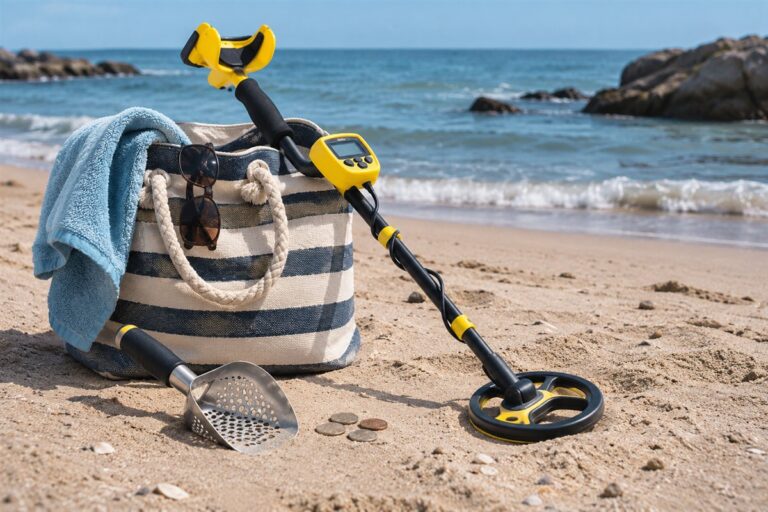
Some metal detectors are sold for use in wet sand, shallow creeks and damp ground. The word waterproof in a listing does not always cover the whole machine, though. On some models the listing describes only the search coil as sealed, and the control box is not.
The six detectors below span from a light entry model to a multi-frequency machine with ten search modes. Coil sizes, weights, modes and waterproof levels come from each product’s listing page. We have not used these detectors ourselves. Depth and waterproof figures are the makers’ own, and where a listing disagrees with itself we say so.
As an Amazon Associate we earn from qualifying purchases. Links below are affiliate links, and they do not change the product information we give.
What to Look For
| Feature | Why it matters |
|---|---|
| What is sealed | Whole machine, or the coil only |
| Coil size | Larger coils cover more ground; smaller ones suit tight spots |
| Search modes | Park, field, beach and all-metal presets save setup time |
| Weight and folding | Lighter, collapsible shafts are easier to swing and pack |
In this guide
Specs at a Glance
| Detector | Coil and weight | Waterproof claim | Notes |
|---|---|---|---|
| MINELAB X-Terra PRO | 12 in coil; 2.8 lb listed | IP68, to 16 ft | 6 preset modes; 30 discrimination segments |
| MINELAB Vanquish 360 | 10 x 7 in Double-D; 2.6 lb | IP68, to 16 ft | Park, Beach and All Metal modes; rechargeable battery |
| MINELAB Manticore | 11 in Double-D; 2340 g | IP68, to 16 ft | 10 search modes; folds from 56.7 to 24.8 in |
| Bounty Hunter TK4 | 8 in coil; 2 lb | Waterproof coil; IP54 listed | 3 modes; analog controls |
| DR.OTEK 10 in | 9.8 in coil; 2.2 lb | IP68 coil; control box not waterproof | 5 modes; 42.7 to 53.5 in stem |
| VEVOR 12 in | 12 in coil; 7.1 lb listed | IP68 | 7 modes; Bluetooth headset; 39 to 50 in stem |
The 6 Best Waterproof Metal Detectors

Top pickBest for a first serious detector for varied ground
1. MINELAB X-Terra PRO
A three-piece-shaft detector with a 12 inch coil and an IP68 level to 16 feet, per the maker. It has two park, two field and two beach preset modes, 30 discrimination segments, a pinpoint mode, a control pod flashlight and handgrip vibration, and it packs down to about 25 inches.
Suits: a first serious detector for varied ground. Strengths: preset modes and a full-machine waterproof claim. Weaknesses: the listing gives 2.8 lb in the specs and 2.9 lb in the text. Skip it if you want analog knobs.


Best for beginners who want little setup
2. MINELAB Vanquish 360
A 2.6 pound detector with a 10 by 7 inch Double-D coil and Multi-IQ technology that, per the maker, avoids frequency switching. It offers Park, Beach and All Metal modes, an IP68 level to 16 feet and a built-in lithium-ion battery quoted at up to 10 hours.
Suits: beginners who want little setup. Strengths: light weight and a rechargeable battery. Weaknesses: fewer modes than the larger Minelab models. Skip it if you want many manual settings.

Best for detectorists who like detail on the display
3. MINELAB Manticore
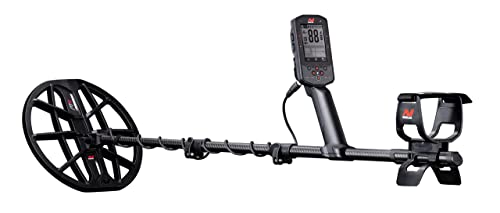
A multi-frequency detector with an 11 inch Double-D coil, an IP68 level to 16 feet, a 2D target ID map, ten search modes (including Beach and Goldfield) and a flashlight. It folds from 56.7 to 24.8 inches. The listing gives the weight as 2340 g, which is heavier than the entry models.
Suits: detectorists who like detail on the display. Strengths: ten modes and a target map. Weaknesses: more to learn. Skip it if you want a simple switch-on machine.

Best for shallow water and damp soil
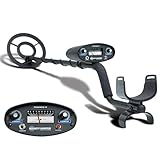
4. Bounty Hunter TK4 Tracker IV
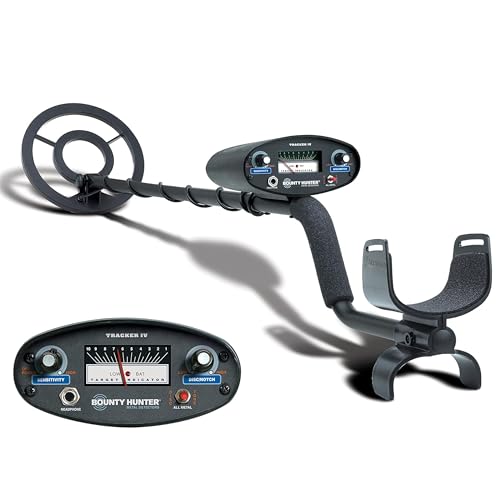
A two-pound analog detector with an 8 inch waterproof coil, adjustable sensitivity and three modes: all-metal, tone and discrimination. The listing calls the coil waterproof and gives an IP54 level for the unit, so treat the control housing as splash-resistant only. The title mentions a five-year limited warranty and US manufacture.
Suits: shallow water and damp soil. Strengths: simple analog controls. Weaknesses: the listing calls only the coil waterproof. Skip it if you plan to submerge the whole machine.
Best for beach and shallow-water edges
5. DR.OTEK 10 in IP68 Coil Detector
A 2.2 pound LCD detector with a 9.8 inch IP68 coil, five modes (all metal, discrimination, memory, jewelry and pinpoint), a backlit display and a stem that adjusts from 42.7 to 53.5 inches. The listing notes that the control box is not waterproof.
Suits: beach and shallow-water edges. Strengths: a light body and an adjustable stem. Weaknesses: the control box must stay dry. Skip it if you want a fully submersible unit.
View DR.OTEK 10 in IP68 Coil Metal Detector on Amazon

Best for a large coil with a wireless headset
6. VEVOR 12 in Waterproof Detector
A 12 inch coil detector with an IP68 claim, seven modes (including coins, jewelry and debris), an LCD, a Bluetooth headset and a 39 to 50 inch adjustable handle. The listing gives the weight as 7.1 pounds and mentions up to 10 feet underwater. It is called rechargeable in the title, but the battery type is listed as dry cell, so check which you get.
Suits: a large coil with a wireless headset. Strengths: seven modes and a long handle range. Weaknesses: the heaviest here and a conflicting battery note. Skip it if you want a light swing.

Best Picks by Category
These labels are based on the listing details shown for each pick on Amazon. They summarize listing data and are not hands-on test results.
- Highest listed rating (limited feedback): MINELAB Vanquish 360 — check price on Amazon. This is not an independent product-quality award.
- Most reviewed: Bounty Hunter TK4 Tracker IV — check price on Amazon.
- Best value: DR.OTEK 10 in IP68 Coil Detector — a budget-tier pick; check price on Amazon.
- Lowest price: DR.OTEK 10 in IP68 Coil Detector — check price on Amazon.
- Premium option: MINELAB Manticore — a premium-tier option; check price on Amazon.
Price, Rating and Review Comparison
The table lists the picks with their price tier for quick comparison. Prices change often, so confirm the current price on Amazon.
| Product | Price | Rating | Ratings | Price tier |
|---|---|---|---|---|
| DR.OTEK 10 in IP68 Coil Detector | Check price on Amazon | — | — | Budget |
| Bounty Hunter TK4 Tracker IV | Check price on Amazon | — | — | Budget |
| VEVOR 12 in Waterproof Detector | Check price on Amazon | — | — | Budget |
| MINELAB X-Terra PRO | Check price on Amazon | — | — | Mid-range |
| MINELAB Vanquish 360 | Check price on Amazon | — | — | Mid-range |
| MINELAB Manticore | Check price on Amazon | — | — | Premium |
How Much Feedback Backs Each Rating
A high average from a handful of ratings is weaker evidence than a slightly lower average from thousands.
Care and Setup
- Rinse the coil with fresh water after salt water, as the manual advises.
- Check whether the control box is sealed before wading in.
- Start with the preset mode that matches the ground.
- Follow local rules and get permission before digging on any land.
Mistakes to Avoid
- Assuming waterproof means the whole machine is submersible.
- Buying a heavy detector for long walks.
- Skipping the manual’s ground-balance and sensitivity steps.
- Treating depth figures as guaranteed.
What does waterproof really mean on a metal detector?
On a waterproof metal detector, the word can describe just the search coil or the whole machine, and the listing wording decides which. Always read the exact sentence before you plan to wade in.
Three situations show up in the six detectors above:
- Whole machine sealed: the MINELAB X-Terra PRO, Vanquish 360 and Manticore carry an IP68 claim from the maker, so the control housing is part of the claim.
- Coil only: the DR.OTEK lists an IP68 coil but says the control box is not waterproof. The Bounty Hunter TK4 calls only its coil waterproof.
- Unclear: the VEVOR listing gives an IP68 claim, so confirm in the manual what exactly is covered and what the depth limit is.
An IP rating is a standardized way of describing dust and water protection. A high second digit means protection against immersion, but the maker still sets the depth and time limits. Those limits matter more than the badge itself.
A coil-only design is not a flaw. It simply means you keep the control box above the surface, usually by staying in shallow water and wearing the box at waist height or higher. If you want to submerge the whole detector, only a fully sealed model fits that plan.
Fresh water and salt water also differ. Salt water is more corrosive and more conductive, so even a sealed machine needs a rinse afterward and a check of seals and connectors before the next outing.
How do you choose the right coil size for a waterproof detector?
Choose a larger coil to cover open beach or creek bed faster, and a smaller coil to pick targets out of rocky, trashy or tight ground. The coil is the part that touches the ground, so its size shapes how the whole detector behaves.
Here is how the trade-off plays out for a waterproof metal detector:
- Large coils sweep a wider strip with each pass and generally reach a little deeper on bigger targets. They are heavier at the end of the shaft and can struggle to separate close targets.
- Small coils are lighter, easier to maneuver around roots, rocks and pilings, and better at separating targets that sit close together. They cover less ground per swing.
- Double-D coils are a common design in this group and are often described as steady over uneven or mineralized ground. The Vanquish 360 and Manticore listings both name this style.
Wet sand and shallow water can be mineralized, which is why the ground-balance and beach settings in the manual are worth learning. Mineralization changes how the coil responds, and a coil that works well in a dry park can behave differently on a salty shore.
Weight matters here too. The VEVOR is the heaviest detector in the table above, and a long session with a heavy unit tires the arm and shoulder. If you plan hours of swinging, favor a lighter machine over a larger coil. The best coil is the one you can keep moving at a steady, low sweep for the whole outing.
Which waterproof metal detector should you buy?
Pick the detector that matches how wet you plan to get and how much setup you want to handle. Each answer below uses only what the listings above state.
- If you want a first serious detector for mixed ground, go for the MINELAB X-Terra PRO. It has park, field and beach presets plus a full-machine waterproof claim.
- If you want light weight and little setup, choose the MINELAB Vanquish 360. It offers Park, Beach and All Metal modes and a rechargeable battery.
- If you want detail on screen and many modes, choose the MINELAB Manticore. Expect a longer learning curve and a heavier body.
- If you like simple analog controls for damp soil and shallow water, the Bounty Hunter TK4 Tracker IV fits, as long as you accept that only the coil is called waterproof.
- If you want a light body and an adjustable stem for beach edges, the DR.OTEK 10 in is the match, with the control box kept dry.
- If you want a big coil and a wireless headset, consider the VEVOR 12 in, and read the battery notes closely because the listing is inconsistent.
If you are torn between two, ask which compromise you can live with: weight, setup effort, or the limits on getting the control box wet. Most buyers regret ignoring weight and wet-use limits more than any feature on the spec list.
What to check before you buy a waterproof metal detector
Before you buy, confirm what is sealed, how it is powered, and what is in the box. A short checklist on the listing page prevents most returns.
- Sealed area: find the sentence that says whether the whole detector or only the coil is waterproof, and any stated depth limit.
- Battery type: check whether it uses a built-in rechargeable battery or replaceable cells, and what charger or batteries come with it.
- Weight and shaft range: make sure the stem length suits your height, and check whether the shaft folds for travel.
- Headphones: see whether a headset is included, whether it is wired or wireless, and whether it is itself water resistant.
- Modes you will use: confirm the presets match your ground, such as beach or all-metal.
- Warranty and returns: read the warranty terms and the return window on the listing, since they differ between sellers.
- Manual access: check that a manual is included or downloadable, because ground balance and sensitivity steps decide your results.
- Local rules: look up beach, park and creek regulations, and get permission before digging on private land.
If two listings disagree with themselves, such as weight in the specs versus the text, treat that as a reason to ask the seller or check the maker’s page.
How do you use a waterproof metal detector in wet sand and shallow water?
Start with the beach or all-metal preset your detector offers, keep the coil low and level, and sweep slowly. Wet sand and salt water add interference, so a calm, steady swing matters more than speed.
These habits help in most wet conditions:
- Run the ground-balance routine from the manual before you start, and redo it if the ground changes from dry to wet sand.
- Lower sensitivity if the detector chatters, since salt and mineral signals can cause false tones.
- Overlap each sweep slightly so you do not leave gaps.
- Keep the control box above the waterline unless the listing clearly says it is sealed.
- Use a sturdy scoop or digging tool made for sand, and fill your holes.
After each outing, rinse the coil and shaft with fresh water, especially after salt water. Dry the connectors, check the cable for nicks, and store the detector with the coil resting safely. Fold-down models are convenient but check the joints for sand, which can wear locks over time.
Depth figures from makers are best-case numbers under set conditions. Real depth depends on the target, the soil and the settings, so treat any figure as a ceiling, not a promise.
Is a more expensive waterproof detector worth it, and who should skip it?
A pricier detector is worth it if you will use the extra modes, display detail and sealed construction regularly. If you detect a few times a year, a simpler model is usually enough.
Here are the honest trade-offs:
- Entry models like the TK4 or DR.OTEK keep things simple and light, but they limit how much of the machine can get wet and offer fewer controls.
- Mid-range Minelab models add presets and fully sealed construction, which shortens the learning curve for beginners.
- The Manticore gives the most detail and flexibility, but it is heavier and asks you to learn more before it pays off.
Who should skip this kind of purchase? Skip a heavy, high-feature detector if you want a casual walk with a switch-on machine. Skip a coil-only waterproof model if you plan to submerge the whole unit. Skip any model if you cannot confirm that detecting is allowed where you plan to go, because rules about digging vary.
The downsides to weigh are weight, battery handling, and the learning needed to read target signals. None of these are deal breakers, but they are worth a clear look before you commit.
What are the common problems with waterproof metal detectors, and how do you fix them?
The most common problems are false signals, unstable tones and battery trouble, and most have simple fixes. Start with settings before you suspect a fault.
- Chatter or false beeps: lower sensitivity, redo ground balance and move away from power lines, other detectors and metal fences.
- Erratic tones in wet sand: switch to the beach or salt-water preset if your model has one, and sweep slower with the coil level.
- Short battery life: check the battery type, charge fully before a trip and carry spares if the model takes replaceable cells.
- Cable or connector faults: inspect the coil cable for kinks and make sure the connector is seated and dry.
- Loose shaft joints: clean sand out of the locks and tighten them before each use.
Another frequent mistake is trusting the target display too much. Target ID numbers and tones are guides, and junk metal can read like a good target. Dig a few signals to learn what your detector is telling you in your local soil.
It is also worth learning what the signals sound like in each mode. Practice on a known test area, such as a patch of ground where you have buried a coin, so you can hear how the tone changes with depth and target size. That habit shortens the learning curve far more than switching models.
Signs it is time to replace a detector include a cracked coil housing, water getting into a control box that should be sealed, repeated cable failures, or a model that no longer suits the ground you search. Before replacing, check whether the maker sells a replacement coil or cable, since that can be cheaper than a new unit.
Compare the picks above, check the current listing for what is sealed and what is included, then choose the one that fits where and how often you will use it.
How Each Detector Fits a Different Kind of Hunting
The six picks divide by ambition as much as by budget. The MINELAB X-Terra PRO is the first serious step: a fully waterproof machine for the hunter who has outgrown dabbling and wants one detector that handles parks, wet sand, and shallow water without apology. Its appeal is commitment; it assumes you will learn proper technique, hunt regularly, and want the machine to keep up for years. The Vanquish 360 sits at the opposite temperament: light, simple, and quick to deploy, for the hunter whose sessions are spontaneous, whose patience for menus is short, and who values a machine that can be handed to a friend or a teenager without a training course.
The Manticore is the detail machine, built for hunters who read a screen the way anglers read water. Its richer target information rewards experience and punishes nothing, but a beginner will use a fraction of what it offers for a long while, which is either a reason to grow into it or a reason to spend less until the skills arrive. The Bounty Hunter Tracker IV is the traditionalist’s pick: analogue controls, a learning curve you can feel in your hands, and a simplicity that suits hunters who distrust screens and hunt familiar ground where their own ears do most of the work.
The DR.OTEK with its sealed coil and adjustable stem is the practical middle: a machine shaped for comfort and wet work, for hunters who know their main enemy is fatigue rather than depth. A detector that adjusts to your height and your swing gets hunted with longer and more often, and finds are made by hours in the field more reliably than by specifications on a box. The VEVOR with its larger coil and headset package leans toward coverage: more ground per sweep, private audio, and a setup aimed at open spaces like beaches and fields where the targets are scattered and the walking is the work.
Reading the list this way prevents the standard mistake of this category, which is buying the most capable machine for the hunting you imagine and then discovering that the hunting you actually do, an hour at the park, a morning on wet sand, rewards lightness, simplicity, and waterproofing you can trust. Match the machine to your real calendar, your real beaches and parks, and your real tolerance for settings, and every pick on this list becomes the right pick for somebody. The sections below sharpen that matching, pick against pick and problem against fix.
Head-to-Head: The Comparisons That Decide This Purchase
X-Terra PRO versus Vanquish 360
This is the category’s central argument: capability against immediacy. The X-Terra PRO asks more of you and gives more back, including full submersion confidence for wading and shallow work. The Vanquish asks almost nothing and starts finding things within minutes, but its waterproofing story is about the coil rather than the whole machine, which changes where it can go. A hunter whose future clearly includes water should take the PRO and grow. A hunter whose future is parks and dry sand with occasional wet edges should take the Vanquish and spend the difference in time, which is the currency finds are actually paid in.
Manticore versus X-Terra PRO
Both are serious MINELAB machines, and the gap between them is information. The Manticore tells you more about what is under the coil, which matters most in trashy ground where the decision to dig or walk on is made dozens of times an hour. In clean ground, that extra information changes little, and the PRO’s simpler read is arguably the calmer companion. Experienced hunters in iron-strewn sites will feel the Manticore’s value daily. Everyone else should be honest that a flagship’s screen only pays when the hunter’s skill is ready to spend it.
Tracker IV versus DR.OTEK
One is the old school, one is the wet school. The Tracker IV teaches detecting as a craft of sound and patience, with controls you set by feel. The DR.OTEK is shaped around sealed-coil confidence and ergonomic adjustment, for hunters whose ground is wet, whose sessions are long, and whose shoulders file complaints. A dry-land traditionalist will love the Tracker and find it honest. A beach regular will find the DR.OTEK’s priorities simply match the map of their hunting better. Neither machine is a compromise; they are optimised for different maps.
Field Technique: Getting Finds Out of the Machine You Bought
Technique multiplies any detector. Keep the coil low, level, and moving at a steady, unhurried pace, overlapping each sweep with the last so the ground gets no gaps to hide in. Most missed finds are not too deep; they are in the un-swept strips between hurried passes, or under a coil that was swinging like a pendulum, high at the ends of each arc where small targets vanish. Work a promising area in a grid rather than wandering it, and re-work it from a different direction on a second visit, because a target’s signal changes with the angle of approach and yesterday’s silence can be today’s clear tone.
Learn your machine’s sounds on your own ground before judging it. Bury a few known items at modest depths in a garden or a permitted patch, sweep them at different speeds, and listen to how the machine describes them as you adjust its settings. An afternoon of that teaches more than a month of frustrated park hunting, and it separates the machine’s real behaviour from the folklore around it. Keep notes, even rough ones, of where you hunted, what the ground was like, and what settings behaved; detecting rewards record-keepers because beaches and parks change with seasons, tides, and weather.
Respect the etiquette that keeps the hobby welcome: fill every hole as if the next visitor matters, carry out the junk you dig rather than reburying it, and treat permissions and local rules as part of the equipment list. Waterproof machines tempt hunters toward ever wetter places, which is exactly where rules about protected areas, private land, and historic sites need checking first. A detector is a licence to look, never a licence to dig anywhere, and the hunters who keep access open for everyone are the ones who check before they swing.
Troubleshooting: False Signals, Wet Sand and Silent Coils
If a machine chatters in wet sand, the ground itself is the usual author: salt and mineralisation talk back to detectors, and the fix is in the settings and the pace, not in anger at the coil. Slow down, adjust sensitivity and ground handling as the manual directs for beach work, and accept that the wettest band of a beach is the hardest classroom. If signals vanish when you dig, the target is often a small item that fell deeper into loose sand or hid in the spoil; sweep the hole and the pile separately, and use a pinpointer habit of checking both before refilling.
If a supposedly waterproof setup misbehaves after water work, dry everything before diagnosing: check seals and connections for grit, rinse salt away with fresh water as the care guidance above describes, and let the machine dry fully before the next outing. Grit in a seal is the quiet enemy of waterproofing, so a rinse and a visual check after every salt session is maintenance, not fussiness. If battery behaviour disappoints, look at session length and temperature before blaming the machine; cold mornings and long hunts shorten everything, and a spare power plan is part of serious kit.
If finds dry up in a favourite spot, the spot is rarely empty; it is usually hunted into a harder mode, where the easy shallow targets are gone and the remaining ones are masked, deep, or at odd angles. That is the moment technique, patience, and a slower grid pay, and the moment a more informative machine begins to justify itself. Hunters who keep a log recognise this transition and welcome it; hunters who do not tend to blame their detector and buy a new one to hunt the same easy layer somewhere else, which works too, but costs more.
Decision Scenarios: Which Detector, For Which Hunter
Buy the X-Terra PRO if you are committing to the hobby and water is in your future. Buy the Vanquish 360 if you want light, simple, and immediate, for parks and dry sand with wet edges. Buy the Manticore if you are experienced, hunt trashy ground, and will use the extra target information on every outing. Buy the Tracker IV if you prefer analogue control and hunt familiar dry ground. Buy the DR.OTEK if comfort and sealed-coil wet work define your sessions. Buy the VEVOR if coverage of open ground with a headset package is your pattern.
Skip the flagship temptation if your hunting is monthly and casual; an under-used flagship teaches nothing and gathers the same dust as any machine, just at a higher price per outing. Skip any machine whose waterproofing does not match your map: a coil-only rating and a wading habit are a repair bill in waiting. And buy for the hunter you are this season, with a clear head about the hunter you might become, because the best detector is the one that is charged, understood, and actually swinging over real ground this weekend.
Reading the Picks Again With Fresh Eyes: What Owners Notice After a Season
A season of hunting rewrites every owner’s priorities. X-Terra PRO owners talk about trust: the machine goes where they go, into the wet and the shallow, and the worry budget is spent on signals instead of on the equipment. Vanquish owners talk about frequency, the hunts that happened because the machine was light and ready, the half-hours between other plans that a heavier commitment would have talked them out of. In detecting, frequency is a feature with finds attached, and the simple machine that gets carried is quietly the most productive machine many hunters own.
Manticore owners talk about decisions: the dig-or-leave calls in trashy ground that used to be guesses becoming judgements, and the junk-to-treasure ratio of their pouches improving in a way their backs appreciate. Tracker IV owners talk about skill, about hearing differences they could not hear in spring, the analogue machine having taught them the hobby’s grammar by refusing to automate it. DR.OTEK owners talk about shoulders and session length, about comfort converting directly into ground covered. VEVOR owners talk about coverage, the big coil turning open, quiet ground from a wander into a system.
The season’s regrets are equally instructive and equally patterned: the flagship bought for monthly hunts and carried rarely, the coil-only waterproofing trusted one wade too far, the capable machine blamed for a trashy site that technique would have tamed. Every regret is a matching error between hunter, machine, and map, and every one was visible in advance to a buyer willing to describe their real hunting honestly. That description, written before the purchase, remains the cheapest accessory in the entire hobby.
A Longer Buying Checklist: Questions to Answer Before You Order
Map your hunting before pricing machines. List the places you will genuinely visit this season, note which involve water and how deep, and let that map rule the waterproofing question absolutely, because it is the one specification that cannot be adapted around later. Count your sessions per month and their honest length; a machine for four long hunts a month and a machine for twelve short ones are different machines wearing similar listings. Note your ground: clean parks reward simplicity, while iron-littered sites reward information, and the difference decides whether a detailed screen is a tool or a distraction.
Consider your tolerance for settings as honestly as your budget. Some hunters love a machine that invites adjustment and will spend happy hours learning it. Others want to switch on and swing, and will leave a complex machine’s abilities untouched until they curdle into resentment. Both temperaments find well; they simply need different picks from this list. Consider your body too: height, shoulder history, and the weight you can swing for your session length, because an adjustable, comfortable machine hunted for three hours outfinds a superior machine hunted for one, almost every time.
Finally, plan the kit around the machine in the same breath: the digging tool for your ground, the pouch, the audio arrangement, and the permission checks for your sites. A detector bought as a system arrives ready; a detector bought as a lone object spends its first month waiting for its supporting cast, losing exactly the early enthusiasm that turns a purchase into a hobby. The checklist’s last line should be a date: the first hunt, at a named place, because a machine with an appointment gets learned, and a machine without one gets stored.
Growing With the Machine: A Season-Long Path
The hunters who thrive treat the first season as tuition the machine provides. Begin on easy ground where signals are kind, learn the sounds of the common and the worthless, and keep the log suggested earlier, because the log converts scattered outings into a curriculum. Move to harder ground deliberately, one new challenge at a time: wet sand after dry, trash after clean, water after land. Each transition teaches a setting, a pace, or a patience, and arriving at them gradually means the lesson is learned rather than merely survived.
By the season’s end, the question of upgrading answers itself from evidence. If the log shows hunts limited by the machine, by information in trash, by waterproofing at the water’s edge, by fatigue the ergonomics cannot fix, then the next machine is a known quantity bought for named reasons. If the log shows hunts limited by time, permissions, and the hunter’s own technique, the wisest purchase is none at all, and the current machine, better understood, will produce a second season richer than the first. That is the real destination of this guide: not the right detector, but the right hunter for it.
Accessories follow the machine, not the other way round, but a few earn their place quickly: a digging tool suited to your ground, a finds pouch that separates keepers from junk, and headphones or a headset where the setting allows, because audio detail is half the information a detector gives you. Add them in that order, as your hunting proves the need, rather than assembling a expedition kit for a hobby still in its first month.
Seasons change detecting more than settings do. Beaches restock after storms and busy weekends, parks soften after rain in ways that change both digging and signals, and frozen or drought-hard ground argues for postponement rather than heroics. Hunters who plan around the calendar find more with the machine they own than hunters who shop for a new machine to fight the calendar. Let the year, not the catalogue, schedule your outings.
Finally, hunt with company when you can, especially while learning. A second hunter’s machine over the same signal is a free lesson in how detectors differ, a second pair of eyes keeps holes honest and sites tidy, and shared finds keep motivation alive through the quiet weeks every hunter meets. The social side of the hobby is not a distraction from the finds; over years, it is what keeps the machine leaving the house.
One practical note for households sharing a machine: agree whose settings live on it. Detectors remember their last configuration, and a shared machine reset by each hunter in turn teaches nobody anything. A small card in the carry bag noting each user’s preferred setup turns the sharing from a friction into a feature, and the machine becomes the household’s instrument rather than one hunter’s possession on loan.
And keep expectations seasoned. Every hunting ground has been visited before, every easy layer skimmed by somebody, and the finds that remain reward patience disproportionately. The hunter who measures a season in skills gained and places understood will still be hunting in five years, machine long since chosen and forgotten as a question, which is the quiet proof the choice was right.
Water hunting deserves its own closing note, because it changes the hobby’s texture. Wading slows the swing, softens the signals, and adds the simple pleasure of working where few others bother, which is precisely why finds wait there. It also demands the discipline this guide has repeated: seals checked, grit rinsed, permissions certain, and a machine whose waterproofing is rated for the depth actually entered rather than the depth described afterwards. The hunter who treats water as a different country, with its own rules and preparations, will enjoy it for years; the hunter who treats it as a wetter park will eventually pay the entry fee in repairs.
Night and early-morning hunting, where local rules allow it, reward the simpler machines in an unexpected way: fewer settings to fumble in the dark, audio doing the work eyes cannot, and a light machine forgiving tired arms. Hunters who favour those hours should weight simplicity and comfort even more heavily than this guide already does, and should practise their controls by touch at home until the machine can be run blind, because on a dark beach, it will be.
Whatever machine you choose, give it a full season before judging it, and judge it by the log rather than by memory. Memory keeps the best find and the worst outing and discards the truth between them, which is the steady accumulation of skill, ground knowledge, and small finds that makes a hunter. The right detector disappears into that accumulation until it feels like an extension of attention itself. When a machine reaches that invisibility, the question this guide began with has been answered, whatever badge the machine wears.
Waterproof Metal Detector FAQ
Can I use it in the sea?
Only if the listing says the whole detector is sealed. Salt water can cause interference, so read the manual.
Which is lightest?
The DR.OTEK at 2.2 lb and the TK4 at 2 lb are the lightest listed here.
Can you use a metal detector in the ocean?
Only if the listing says the whole detector is sealed and gives a depth limit. Otherwise keep the control box dry and use only the coil in shallow water. Rinse everything with fresh water afterward.
What does IP68 mean on a metal detector?
IP68 is a rating for dust protection and water immersion, and the second digit indicates protection against continuous immersion under conditions the maker sets. Check the listing or manual for the depth and time limits. The rating may apply to the whole unit or only the coil.
Is a waterproof coil the same as a waterproof detector?
No. A waterproof coil means only the search head can go under water, while the control box and electronics may not. Look for wording that says the entire detector is submersible.
What is the best metal detector for a beginner on the beach?
A model with a beach preset and simple controls is a good start, such as the Vanquish 360 or the X-Terra PRO from the list above. Light weight and easy setup matter more than extra features at first. Read the manual for ground balance.
Do waterproof metal detectors work in salt water?
Many can, but salt water adds interference and is more corrosive. Use a beach or salt-water setting if your model has one, lower the sensitivity if it chatters, and rinse the coil and shaft with fresh water after use.
How do you clean a metal detector after the beach?
Rinse the coil and shaft with fresh water, wipe the control area with a damp cloth, and let everything dry. Check the connectors and cable for sand and wear. Keep the control box out of running water unless the listing says it is sealed.
Does a bigger coil find deeper targets?
Often a larger coil reaches somewhat deeper on larger targets, but it also covers more ground at once and can miss small items near trash. Ground conditions and settings affect depth as much as coil size.
Do I need a permit to metal detect?
Rules vary by location. Beaches, parks and creeks may have restrictions, and private land needs the owner's permission. Check local regulations before you dig.
The Short Version
For a first serious detector, the X-Terra PRO. For light and simple, the Vanquish 360. For detail on screen, the Manticore. For analog controls, the TK4. For an adjustable stem, the DR.OTEK. For a large coil with a headset, the VEVOR.