A spring clamp is the simplest clamp in the shop. You squeeze the handles, place the jaws and let go, and a spring holds the work. They are quick for holding glue joints, jigs, templates and sheet goods while you work, and they are common in photography setups as well. The choices are the jaw opening, the material and the pad style.
The six sets below run from a 30 pack of 1 inch nylon minis to 6 inch metal clamps. Sizes, counts and materials come from each listing page and are the makers’ own claims. We have not used these clamps ourselves. Where a listing leaves out a detail such as the jaw opening, we say so rather than guess.
As an Amazon Associate we earn from qualifying purchases. Links below are affiliate links, and they do not change the product information we give.
What to Look For
| Feature | Why it matters |
|---|---|
| Jaw opening | Sets the thickest piece the clamp can hold |
| Material | Nylon is lighter; steel springs and bodies suit repeated use |
| Pads | Soft tips help avoid marks on finished surfaces |
| Mix of sizes | A set with several sizes covers more jobs |
In this guide
Specs at a Glance
| Clamp set | Count and sizes | Material | Notes |
|---|---|---|---|
| Amazon Basics 14 piece | 6 x 3-3/8, 4 x 4-1/2, 4 x 6-1/2 in | Nylon | Jaw openings 2-1/4, 1-3/4 and 1-3/8 in; 1 year warranty |
| Amazon Basics 20 piece | 15 x 3/4 in, 5 x 1 in jaw | Nickel-coated steel | PVC tips and handles; tempered steel springs |
| WORKPRO 16 piece | 6 x 3-3/8, 6 x 4-1/2, 4 x 6-1/2 in | Nylon | Three jaw openings listed; model W001400 |
| WORKPRO 6 inch | 6 x 6 in | Stamped steel, plated | PVC jaw pads; jaw opening not listed |
| POWERTEC mini | 30 x 1 in opening | Nylon | Pivoting jaw pad |
| EQUIPTZ 6 inch | 4 x 6 in | Plastic body, alloy steel spring | 3 in maximum jaw opening; pads held in place |
The 6 Best Spring Clamps

Top pickBest for a first set of clamps for gluing and photography backdrops
1. Amazon Basics 14-Piece Nylon Spring Clamp Set
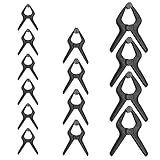
A mixed set of fourteen nylon clamps: six at 3-3/8 inch, four at 4-1/2 inch and four at 6-1/2 inch. The listing gives the three jaw openings as 2-1/4, 1-3/4 and 1-3/8 inches. The maker describes the nylon as reinforced and the pads as durable, and it backs the set with a one year limited warranty.
Suits: a first set of clamps for gluing and photography backdrops. Strengths: three sizes in one box. Weaknesses: nylon is lighter than steel. Skip it if you want an all-metal clamp.

Best for thin stock, veneer and craft work
2. Amazon Basics 20-Piece Steel Spring Clamp Set
Twenty small steel clamps: fifteen with a 3/4 inch jaw opening and five with a 1 inch opening. The maker lists nickel-coated steel, tempered steel springs, a pressure point near the jaw tips and non-marking PVC coated tips and handles. The listing also carries a one year limited warranty.
Suits: thin stock, veneer and craft work. Strengths: twenty clamps and PVC tips. Weaknesses: the small openings only suit thin pieces. Skip it if you need to hold thick boards.


Best for general shop and craft clamping
3. WORKPRO 16-Piece Nylon Spring Clamp Set
Sixteen reinforced nylon clamps in three sizes: six at 3-3/8 inch, six at 4-1/2 inch and four at 6-1/2 inch. The listing gives three jaw openings of 2-1/4, 1-3/4 and 1-3/8 inches and describes the pads as protecting the finish. The package weighs about 1.03 kg according to the details table.
Suits: general shop and craft clamping. Strengths: sixteen clamps in three sizes. Weaknesses: a very similar mix to the Amazon Basics nylon set. Skip it if you already own a nylon set.

View WORKPRO 16-Piece Nylon Spring Clamp Set for Woodworking and DIY Projects on Amazon

Best for larger glue-ups and repairs
4. WORKPRO 6-Inch Metal Spring Clamps, 6 Pack
Six 6 inch clamps with a stamped steel body, a corrosion-resistant plated finish and PVC jaw pads. The maker says the handles allow one handed positioning and release. The listing does not give the jaw opening, so check it before buying if you need to hold thick stock.
Suits: larger glue-ups and repairs. Strengths: a metal build in a larger size. Weaknesses: no jaw opening listed. Skip it if you want a mixed-size set.


Best for delicate work and many small holds
5. POWERTEC Mini Spring Clamps, 30 Pack
Thirty small nylon clamps, each with a 1 inch opening and a pivoting jaw pad that adapts to the workpiece. The maker describes the nylon as reinforced and the jaws as non-marring, and points to delicate woodworking, photography backdrops and DIY use.
Suits: delicate work and many small holds. Strengths: thirty clamps and pivoting pads. Weaknesses: a 1 inch opening is limiting. Skip it if you need to hold thick stock.


Best for tarps, covers and larger holds
6. EQUIPTZ 6 inch Spring Clamps, 4 Pack
Four large clamps with a plastic body, an alloy steel spring and rubber grips. The jaw opens to 3 inches and the maker says the jaw pads are held in place so they do not fall off. The details table lists 30 pounds in the tensile strength field, which is the maker’s figure and not explained further.
Suits: tarps, covers and larger holds. Strengths: a 3 inch opening. Weaknesses: only four clamps and a vague strength figure. Skip it if you need a high clamping force.

Care and Setup
- Check that the pads sit flat on the work before you let go.
- Wipe glue from the jaws before it dries.
- Store clamps open or hung up so the springs are not left squeezed.
- Keep metal clamps dry to protect the plating.
Mistakes to Avoid
- Buying small clamps for thick stock.
- Expecting a spring clamp to give the force of a screw clamp.
- Skipping scrap pads on soft or finished wood.
- Ignoring the jaw opening because the clamp length looks right.
What a Spring Clamp Can Hold and What It Cannot
A spring clamp holds with a coiled spring that pushes the jaws together. The force is modest and fixed by the spring, with no screw to wind in and no way to dial it up. That makes it quick and one-handed, but it also defines the limits. These clamps are right for holding parts in position while glue grabs, for keeping a template against a workpiece, for securing a cloth to a table, for clipping a backdrop to a stand and for a hundred small jobs where light pressure is enough.
They are the wrong choice for pulling a warped board flat, closing a wide glue joint against resistance or holding a part against the push of a power tool. For those, a screw-type or bar clamp provides the force you need. If you try to use a spring clamp where a firm squeeze is needed, the joint can slide, leave gaps or squeeze out too much glue. A good habit is to ask whether the job needs holding or squeezing. Holding is for spring clamps. Squeezing calls for something else.
Force also varies with the size and the spring design. Larger clamps usually have longer handles and stronger springs, but the force is still limited compared with a screw clamp. Small clamps with thin springs are meant for thin or light parts such as veneer, paper, fabric, craft items and light trim. A maker’s number for strength on a listing, if one appears, may not be explained, so treat it with caution and do not use a spring clamp to support weight or as a safety device.
Think of spring clamps as a supporting cast. Most shops keep a handful of other clamp types, and the spring clamps fill in the quick, light tasks that would otherwise slow you down.
Choosing Size and Jaw Opening for Your Work
The jaw opening is the most important number, because it limits the thickness of what the clamp will grip. A clamp that looks big may have only a modest opening, since the length includes the handles. A short, stubby clamp can open wider than you expect. Check the opening on the listing, and if the listing gives only the overall length, ask the seller or check the maker’s page before you buy.
Think about the materials you work with. Thin stock, veneer, laminate edge strips, craft projects, fabric and paper need small clamps with small openings, and having a lot of them is useful. Typical shop materials, such as boards and sheet goods, need clamps that open wider. Mixed sets are a good way to start because they give you a spread of sizes, but if you know that you work mostly at one thickness, a set concentrated in that size may serve you better.
Quantity matters more than you might expect. Many jobs need several clamps at the same time, such as holding a long edge strip or a frame. A single clamp seldom does the job. Packs of many small clamps are practical for edge gluing and for fabric work, while packs of fewer large clamps suit larger frames and covers.
Also consider the reach, which is how far from the edge the jaws can grip. A spring clamp reaches only as far as its jaw depth, so for gripping a piece away from the edge you will need a different tool.
Finally, consider weight and balance. A heavy clamp on a thin edge can tip the piece or pull it out of place. Light nylon clamps are less likely to do this, while heavier metal clamps hold more firmly but need more care in placement.
Take a moment to match the clamp to the job, using scrap if you are unsure. A few seconds of testing avoids a failed glue-up.
Pads, Materials and Protecting the Surface
The material of a spring clamp affects weight, durability and how it treats the work. Nylon or plastic clamps are light, do not rust and are unlikely to mark soft wood, which makes them popular for general use and for crafts. They can flex or crack under heavy use, and a cracked clamp loses force. Metal clamps tend to hold more firmly and take more abuse, but they can dent or stain the surface, and they can rust if left damp.
Pads and tips are the contact points, and they decide whether you get marks. Many metal clamps have a coating on the tips and handles, often a vinyl or plastic material, to protect the work and the hands. Some pads pivot, so they sit flat on a surface that is not perfectly parallel. Pivoting pads are useful for angled or irregular work, while fixed pads are fine for flat stock. Look for pads that are held in place, since loose pads fall off and get lost.
Even with soft pads, finished surfaces can mark. When you work on a polished or painted piece, place a scrap of wood, a folded cloth or a piece of cardboard between the jaws and the work. This spreads the pressure and protects the finish. Wood glue squeeze-out can stick to pads and jaws, so a layer of wax paper or plastic wrap at the contact points is a simple precaution.
Handle comfort matters if you will use a lot of them. Coated handles are easier on the hands, and handles with a longer lever are easier to open. Test the squeeze by hand before you commit if you can, because a very stiff spring can tire your hand when you need to place many clamps in a row.
Check for sharp edges or burrs on stamped metal clamps. A burr can scratch your skin or the work.
Using Spring Clamps Well in Glue-Ups and Crafts
Good technique makes simple clamps work better. Dry-fit the parts first, with the clamps in place, so you know how many you need and where they go. Then take everything apart, apply glue, bring the pieces together and apply the clamps promptly. Place clamps along the joint at roughly even spacing, and alternate them from one side to the other for a long edge so the pressure is balanced.
Watch the alignment as you clamp. Spring clamps can pull a joint out of line if the jaws grip at an angle. Check that the parts remain flush and square as you add each clamp, and adjust them before the glue sets. For thin pieces, a flat board with a clamp at each end can hold them level.
Use cauls, which are straight scrap strips, across a joint to spread the pressure and keep the surface flat. Spring clamps hold cauls well on thin work. Wipe off squeezed-out glue with a damp cloth before it hardens, and keep the clamp jaws clean.
Spring clamps are not limited to woodworking. They hold backdrops and cloth on stands in photography, keep tarps and covers in place, grip papers at a work table, hold a hose to a post, clamp a light to a shelf, secure sheet material during painting and keep small parts in place while you solder or sand. For outdoor use, rust-resistant or plastic types hold up better.
Mind your fingers. The handles snap closed with force, and pinching skin between the handles or jaws is easy. Open the clamp with a firm grip, and guide it onto the work instead of letting go from a height. Keep clamps away from small children.
When using clamps in places that bear weight or where failure could cause injury, choose a different fastening method.
Storing, Sorting and Replacing Clamps
A pile of spring clamps in a bin can be a tangle. A simple rack makes them quick to find and protects the springs. You can hang them on a rail, a pegboard hook or a length of dowel or a strip of wood on the wall. Sort them by size, so you grab the right one without hunting. Hang them with the handles open or in a relaxed position where possible, and avoid leaving springs under load for months.
Keep clamps clean. Wipe glue off the jaws while it is wet, or scrape it off when it is dry, taking care not to scratch the pads. Remove dust, and put a drop of light oil on the pivot of metal clamps if the maker allows, wiping off any excess so it does not mark the work. Dry metal clamps after use in a damp place, to protect the coating.
Check them from time to time. Signs that a clamp should be replaced include a spring that has lost its force, a body that has cracked or bent, a pivot that is loose or sticks, pads that have worn through or fallen off and a coating that has peeled enough to expose sharp metal. A clamp that no longer holds is worse than none, since it gives false confidence. Replace or retire it.
When you replace clamps, look at which sizes you reached for most often and which sat in the bin. If you were always short of a certain size, add more of it. If you never used the largest ones, consider a different mix next time.
Keeping a small set of spares is wise if you do glue-ups often, since a broken clamp in the middle of a job is frustrating.
Spring Clamp FAQ
What is the difference between clamp length and jaw opening?
Length is the whole clamp. The jaw opening is how far the jaws open, which sets the thickness it can hold. The Amazon Basics and WORKPRO nylon sets list both.
Nylon or steel spring clamps?
The makers describe nylon as lighter and steel as more rugged. The right choice depends on how often you clamp and the size of the work.
How strong is a spring clamp compared with a screw clamp?
A spring clamp applies light, fixed pressure from a spring, while a screw clamp lets you wind on much more force. Use spring clamps for holding and screw or bar clamps for squeezing joints tight.
Can I use spring clamps for gluing wood?
Yes, for light glue-ups, edge strips and thin stock. For wide joints or warped boards, add a clamp type that can apply more force.
How do I stop spring clamps from marking my project?
Use clamps with soft pads, or place scrap wood, cardboard or cloth between the jaws and the surface. This spreads pressure and protects finished surfaces.
Should I buy nylon or metal spring clamps?
Nylon is light and gentle on surfaces, while metal tends to be sturdier. Choose by the work you do most, and check that the jaw opening fits your material.
How many spring clamps do I need?
Many jobs need several at once, so a pack of a dozen or more is common. Count the clamps you would use on your largest project and buy at least that many.
Can I use spring clamps outdoors?
Plastic and coated clamps tolerate damp better than bare metal. Dry any metal clamps after use and store them out of the rain.
Are spring clamps safe for children to use?
The handles can pinch skin, and small clamps can be a hazard for very young children. Supervise any child and follow the maker's age guidance on the listing.
When should I replace a spring clamp?
Replace it when the spring is weak, the body is cracked, the pivot is loose or the pads have worn away. A clamp that cannot hold firmly is not worth keeping.
Thinking in Hands: What a Spring Clamp Really Replaces
The clearest way to understand a spring clamp is as a tireless third hand with a fixed grip strength. It cannot pull a joint closed, persuade a warped board flat, or hold against real cutting forces, and asking it to do those jobs is the root of most disappointment with the type. What it does superbly is hold things that are already in position: a workpiece resting where gravity and fit have placed it, a backdrop that only needs to stay up, a glued part that needs gentle, even contact while the adhesive grabs, a cable, tarp, or dust sheet that needs to stay where you put it. Judge every purchase in this category by how often you need a patient extra hand, not by how much force you wish it had.
That framing also explains why count matters more with spring clamps than with almost any other clamp type. A glue-up of a small box may want a clamp at every corner and one in the middle of each long side; a photography backdrop wants a row along the top bar; a tarp wants one at every grommet and a few spares for the corners that flap. Users rarely regret owning more spring clamps than they planned; they regret owning six when the job needs fourteen, mid-task, with wet glue on their hands.
Matching the six sets to typical work
The Amazon Basics nylon set is the household all-rounder: kind to surfaces, light in a drawer, and sized for crafts, small repairs, kitchen and workshop holding jobs where the work is light and the surfaces matter. The Amazon Basics steel set trades some of that gentleness for a firmer bite and a slimmer profile that reaches into tighter spaces, suiting workshop holding, soldering assistance, and jobs where nylon flex would let the part shift. The WORKPRO nylon set overlaps the first in spirit and suits users who want the same gentle grip in a different size mix, perhaps as the second set that lives in a different room or kit so a clamp is always within reach.
The WORKPRO 6-Inch metal clamps, sold as a smaller pack of larger clamps, are the heavy end of this group: the ones for thicker stock, stiffer tarps, and holding jobs where the small clamps visibly strain. The POWERTEC mini clamps, in their large-count pack, are a different tool in spirit: dozens of small grippers for model work, crafts, cable management, photography details, and any task where the clamp should be almost invisible and the load is grams rather than kilograms. The EQUIPTZ 6 inch pack pairs the large size with a simple, job-focused count, suiting users who know their work is mostly at the big end: sheet goods held to a frame, thick drop cloths, and workshop fixtures. A thoughtful kit often combines one large-count small set with a handful of the large metal clamps, covering both extremes for less than a shelf of mid-size duplicates.
Head-to-Head: Nylon Versus Steel, Small Versus Large
Nylon and steel spring clamps behave differently in the hand over a long session. Nylon bodies flex slightly, which makes them forgiving on delicate surfaces and less likely to chip paint or dent softwood, but that same flex means the jaws can twist on an uneven edge and grip at an angle. Steel bodies stay rigid and bite predictably, and their slimmer jaws enter gaps that a chunky nylon jaw cannot, but they transmit their full spring force through smaller pads and will mark unprotected work. Hand fatigue divides them too: a strong steel clamp opened fifty times in an afternoon is a workout, while a nylon clamp of the same jaw size usually asks less of the hand, which matters for users with weaker grip or for long crafting sessions.
Size comparisons are routinely confused by naming, so compare jaw opening and reach, not overall length. A long clamp with a shallow throat cannot grip a thick assembly set back from an edge; a short clamp with deep jaws sometimes can. When a set lists several sizes, think of them as a ladder: the smallest for paper, fabric, and models; the middle for most household holding; the largest for stock, tarps, and fixtures. Buying a set whose ladder matches your actual work is worth more than a larger count clustered at sizes you never open.
Technique: placing spring clamps so they stay put
A spring clamp holds best when its jaws sit fully on the work, with the pads flat and the clamp body angled so any pull on the part tightens the bite rather than levering it off. Seat the clamp, then tug the part gently in the direction it wants to escape; if the clamp walks, reposition it deeper or add a second clamp opposing the first. In glue-ups, place clamps alternately from opposite sides along a panel to balance the slight sideways push each clamp applies. On fabric and tarps, fold a hem or add a small scrap under the jaw to spread the grip and stop the material tearing at the pressure point. For photography and display work, black clamps disappear into shadow and a strip of tape over the handle makes them quieter still; the audience should see the display, not the hardware.
Troubleshooting Weak Holds and Surface Marks
When a spring clamp lets go, work through the causes in order. First, overload: the part is heavier or under more tension than a spring clamp can govern, so step up a size or switch to a screw clamp for that point. Second, seating: jaws perched on an edge or a curve contact only at the pad tips, so reseat deeper or pad the curve to give the jaws a flat. Third, surface: smooth, dusty, or slightly oily surfaces let pads skate, so clean the contact and consider a rubber pad or a scrap of shelf liner. Fourth, spring fatigue: a clamp that has lived stretched over thick stock, or baked in a hot car, may have lost temper; compare its squeeze with a fresh clamp of the same size and retire the weak one to light duty. Fifth, count: many failures are simply one clamp doing the work of three, and adding clamps along the load is cheaper than any upgrade.
Storage shapes lifespan. Keep clamps clipped onto a rail, a board edge, or a bucket rim rather than loose in a deep bin where springs stay compressed over whatever they grip and handles snap under heavier tools. Sort by size so the right clamp is the first one your hand finds, and keep a few with each kit that uses them: workshop, craft box, camera bag, and the household drawer. A clamp that is present gets used; a clamp in another building might as well not exist, which is the practical argument for the multi-set approach this category rewards.
Choosing by Scenario: Craft Table, Photo Kit, Workshop and Garden
The craft table rewards count and gentleness. Paper, card, fabric, and foam board all mark easily and need holding in many places at once, so large-count nylon and mini sets dominate here; the POWERTEC minis and the nylon sets from Amazon Basics and WORKPRO divide this territory by size preference more than by quality. A crafter who works in miniature will live in the smallest sizes, while a quilter or costume maker wants the mid sizes in quantity for layering fabric without pins in the way of the machine foot. The photo and video kit rewards the opposite qualities: a smaller number of strong, dark, reliable clamps that hold backdrops, reflectors, and flags without sagging mid-shoot. The large steel clamps earn their bag space here, and a clamp that creeps during a session costs more in retakes than it saved at purchase.
The workshop pattern mixes both: nylon clamps for gentle holding of finished parts, steel for fixtures, templates, and stop blocks clamped to fences, where their slim jaws and firm bite shine. The garden and outdoor pattern values corrosion tolerance and replaceable cost: tarps, shade cloth, frost covers, and plant supports all consume clamps that live outside, get lost in beds, and weather hard, so inexpensive sets in quantity are the rational choice and nobody should send their best workshop clamps out to overwinter on a cold frame. Matching the purchase to the scenario, rather than buying one set to serve all four badly, is the central buying skill in this category.
A worked example: a small glue-up held entirely by spring clamps
Consider gluing a small box or a picture frame, the job spring clamps are most often doubted for. The method works when the joints fit well before glue, because spring clamps maintain contact rather than create it. Dry-fit and adjust until every corner closes under hand pressure alone. Then glue, assemble, and place a clamp across each corner, seating the jaws on the outer faces so their pressure pushes the joint closed along its line. Add clamps along any long side that bows. Check the diagonals for square immediately, adjust by shifting clamps rather than forcing the frame, and leave the assembly untouched while the adhesive grabs. Done this way, spring clamps produce clean small glue-ups with no bar clamps in sight; done with ill-fitting joints, no clamp type would have saved the result, and the spring clamps merely get blamed for an honest limitation they announced in advance.
Extending Spring Life and Recognising a Tired Clamp
A spring clamp’s temper is its life. Heat, prolonged stretching over thick stock, and being stored clamped onto a thick rail all age a spring early. Store clamps clipped on a thin rail or board edge so the spring rests near its natural position, keep them out of hot vehicles and direct sun where plastics also embrittle, and avoid the habit of using the largest clamp stretched to its limit when a bigger clamp or a screw clamp should take the job. Rotate stock in heavy-use settings: the clamps at the front of the rail get used ten times as often as those at the back, and evening out the wear keeps the whole set consistent.
Recognise a tired clamp by comparison: line it up with a fresh clamp of the same size and squeeze both. A tired spring feels vague, its jaws may sit slightly open or misaligned, and its pads are often worn smooth or cracked. Demote tired clamps to the lightest duties, such as holding paper patterns or cables, and remove from service any clamp whose body has cracked at the pivot or whose jaw has bent, because a clamp that fails under spring tension snaps shut or flies, and neither is welcome near eyes or finished work. Pads can sometimes be refreshed with a wrap of tape or a dab of grip material for non-critical work, but treat that as a courtesy extension, not a repair.
Organising clamps so they are used well
Organisation decides whether a good set performs like one. A rail above the bench for workshop sizes, a small tub in the craft drawer, a pouch in the camera bag, and a bucket in the garden shed put each clamp within reach of its work. Label or colour-code sizes if several people share the shop, and keep a honest count: when a set drops below the number a typical job needs, top it up before the next glue-up rather than during it. These small systems sound mundane, and they are, but the difference between workshops is rarely the tools on the shelf; it is whether the right tool is present, findable, and trusted at the moment of need. Spring clamps, humble as they are, repay exactly that kind of quiet organisation better than almost anything else in the clamp drawer.
Spring Clamps Beyond the Workshop: Household Systems
Around the home, spring clamps quietly become infrastructure. In the kitchen they hold a recipe card, seal a bag with a firmer grip than a clip designed for the purpose, and keep a bin liner in place. In the laundry they manage delicates on a drying rack without the marks of harder pegs. For cables and charging leads, a small clamp on a desk edge creates an anchor point that stops leads sliding to the floor. During decorating, they hold dust sheets to door frames and masking paper along skirting faster than tape and without residue. None of these uses is glamorous, and together they explain why households that own a tub of mixed spring clamps use them weekly while households that own four workshop clamps use them rarely: availability across rooms is the feature.
Seasonal jobs extend the pattern. Garden clamps hold frost fleece and shade netting through windy nights, holiday decorating uses them on garlands and light strings where a nail would be unwelcome, and camping kits use them for tarps, lanterns, and drying lines. Keeping a dedicated outdoor set, cheap and replaceable, protects the good workshop sets from weather and loss, and mirrors the logic of the whole category: many clamps, matched loosely to many small jobs, each one cheap enough to be where it is needed. Judged that way, the large-count packs in this guide are not excess; they are distribution.
Teaching safe use to younger helpers
Spring clamps are often the first clamp a young helper handles, and they deserve a minute of teaching. Show how to open the clamp fully rather than letting it snap shut on fingers, how to keep faces and hair clear of a loaded jaw, and how to choose the small sizes for small hands. A clamp that a child cannot open comfortably is the wrong size for that child regardless of the task. Supervised, spring clamps are an excellent introduction to holding work safely instead of with a hand near a blade or a drill, which is a lesson with value far beyond the clamp drawer. The gentle nylon sets are the natural teaching tools here, forgiving in grip and in consequence, and a household that teaches with them is building the workshop habits of the next decade.
Measuring What Matters: A Buyer’s Field Test
Shops and listings describe spring clamps with overall length and pack count, neither of which predicts satisfaction. A better field test takes one minute with a sample clamp. Open it fully several times and note the hand effort at the end of the squeeze, because that effort, multiplied by a session, decides fatigue. Clamp it onto a piece of stock of your typical thickness and try to slide it sideways; a clamp that walks under a sideways push will walk in service. Check that the pads sit flat on the stock rather than contacting at their front edges, and look along the jaws for twist as the clamp closes on an uneven offcut. Finally, clip it onto the edge it will live on in storage, because a clamp whose handles foul its neighbours on the rail is a small daily irritation you can choose to avoid.
Apply the same test across the sizes in a set, since quality within a set is usually consistent but the largest and smallest members live different lives: the smallest are opened constantly and their springs cycle the most, while the largest are opened rarely but stretched furthest. A set that passes at both extremes will pass in the middle. This kind of testing cannot be done from a product photograph, which is a fair argument for buying a first set somewhere returns are painless, proving it against your own work for a week, and then committing to the larger counts with confidence.
Pairing spring clamps with other clamp types
The strongest clamping setups are usually mixed. Spring clamps position and hold while a screw clamp delivers the closing force; spring clamps keep a caul in place while bar clamps are fetched and set; spring clamps pin a template while a toggle clamp on the fixture does the repeated locking. Thinking of the clamp drawer as a team, with spring clamps as the fastest hands rather than the strongest arms, leads to better purchases in every category: you stop asking spring clamps to be strong, stop asking screw clamps to be quick, and let each type do the work its design intended. The sets in this guide fill the fast-hands role at several scales, and a workshop that staffs that role properly feels noticeably calmer at every glue-up.
Keeping Count: The Inventory Habit
Spring clamps evaporate from workshops at a rate no other clamp matches, because they are borrowed by every other activity in the building. A twice-yearly count, clamps gathered from the garden, the craft drawer, the camera bag, and the vehicle, restores the workshop rail and reveals the true loss rate. Replace losses in the sizes the count shows are actually disappearing, which are usually the middle sizes doing the most work, rather than topping up evenly across the range. Mark workshop clamps with a dot of paint in a house colour; marked clamps wander home more reliably and are easier to reclaim from a neighbour’s project with good humour intact.
Accept a gentle truth in the numbers: a working household will lose a few clamps a year to roofs, gardens, and good causes, and budgeting for that loss, with inexpensive sets in the sizes that wander, is cheaper in money and temper than guarding premium clamps against the life of the house. The category rewards exactly that relaxed abundance, and the user who leans into it, many clamps, lightly organised, honestly counted, gets the full benefit the type was designed to give.
There is a small ritual that keeps a spring clamp collection healthy across the years: whenever you buy a new set, retire the two worst clamps from the old stock on the spot, passing them to the garden bucket or the vehicle kit rather than letting tired springs accumulate at the back of the rail. The collection then stays honest, every clamp on the rail squeezes the way its neighbours do, and the hand learns one consistent feel instead of a lottery. Consistency, in a tool used this often and this casually, is a form of quality all by itself.
And when a clamp finally cracks or its spring gives out entirely, replace it without ceremony and without upgrading the whole set in a fit of enthusiasm. The system works because it is uniform and abundant; a single fresh set folded into the existing stock restores both, and the drawer returns to its proper state, which is invisible usefulness, noticed only on the rare day a clamp is not where your hand expects it.
That invisible usefulness is the standard to buy by. Choose the sets that will be present in the rooms and kits where your work actually happens, in the sizes your hands actually open, and the collection will justify itself so quietly and so often that you will stop thinking of spring clamps as accessories and start thinking of them as part of the furniture of getting things done.
The Short Version
For a mixed nylon set, the Amazon Basics 14 piece. For small steel clamps, the Amazon Basics 20 piece. For sixteen nylon clamps, the WORKPRO set. For metal 6 inch clamps, the WORKPRO six pack. For tiny clamps in bulk, the POWERTEC. For a 3 inch opening, the EQUIPTZ.