A bench hook is a small board with a lip on each face. One lip hooks over the edge of the bench and the other stops the work, so you can saw, chisel or cut lino without a vise. The word is also used for steel stops that sit in the round holes of a multifunction table. The main choices are the size, the material and whether the hook rests on a bench edge or drops into a hole.
The six below include two wood hooks, one lino sized hook, a four pack of steel hooks, a Bessey hook for 20 mm holes and a six pack of aluminum stops. Sizes and materials come from each listing page and are the makers’ own words. We have not used these products ourselves. Where the listing is vague, we say so.
As an Amazon Associate we earn from qualifying purchases. Links below are affiliate links, and they do not change the product information we give.
What to Look For
| Feature | Why it matters |
|---|---|
| Style | Edge hooks suit any bench; hole hooks need a matching grid |
| Size | A larger board holds wider stock |
| Hole diameter | 19 mm, 20 mm and 3/4 inch holes are not the same |
| Material | Wood is kind to saw teeth; metal is for stops |
In this guide
Specs at a Glance
| Hook | Size or fit | Material | Notes |
|---|---|---|---|
| Faithfull | 250 x 130 mm | Beech wood | Country of origin UK |
| ESSDEE BH1 | 300 x 200 mm | Wood | Described for schools and colleges |
| Educational Arts BH2 | 300 x 400 mm | Lino (as listed) | Brand shown as ESSDEE; for lino work |
| Metabo 4 pack | 20 mm holes | Galvanised steel and rubber | Adjustable height; 0.95 kg |
| BESSEY BH-MFT | 20 mm holes | PA6 plastic and steel (as listed) | For Festool MFT type tables |
| Aluminium 6 pack | 19/20 mm holes | Anodized aluminum alloy | Black; stop style |
The 6 Best Bench Hooks
Top pickBest for sawing small stock by hand
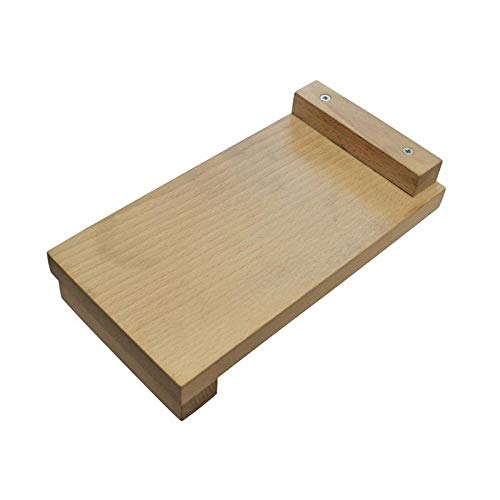
1. Faithfull Beech Bench Hook, 250mm x 130mm
A traditional bench hook made of beech and listed at 250 mm by 130 mm, with the UK as the country of origin. The listing is short. It gives a model number and the size but no more detail, and the details table oddly lists a wall mount type.
Suits: sawing small stock by hand. Strengths: beech wood and a compact size. Weaknesses: very little detail on the page. Skip it if you cut wide boards.


Best for classroom or home sawing
2. ESSDEE BH1 Bench Hook, 300x200mm
A wood bench hook measuring 300 mm by 200 mm. The maker lists it as protection for desks and work surfaces and as ideal for schools and colleges. It is larger than the Faithfull but the page names no wood species.
Suits: classroom or home sawing. Strengths: a roomier 300 x 200 mm board. Weaknesses: the wood type is not stated. Skip it if you want a stated hardwood.

View ESSDEE BH1 Bench Hook 300x200mm, 300mm x 200mm, Wood on Amazon

Best for lino cutting and block printing
3. Educational Arts BH2 Bench Hook, 300x400mm
The largest board here at 300 mm by 400 mm. The listing says it keeps lino work steady, protects desks and is meant for schools and colleges. The material is shown as lino and the brand as ESSDEE, so this is closer to a printmaking board than a saw hook.
Suits: lino cutting and block printing. Strengths: a big work surface. Weaknesses: described for lino, not sawing. Skip it if you want a saw board.


Best for a 20 mm hole table
4. Metabo 630129000 4 Bench Hooks
A set of four steel hooks for multifunction tables with 20 mm holes, made of galvanised steel with a rubber part for height adjustment. The set weighs 0.95 kilograms according to the table. The maker names its own MWB workbenches as compatible.
Suits: a 20 mm hole table. Strengths: four hooks and adjustable height. Weaknesses: the page mixes German and English words. Skip it if your holes are 3/4 inch.

View Metabo 630129000 4 Bench Hooks for Multifunctional Workbench on Amazon
Best for pairing with the Bessey tensioner
5. BESSEY BH-MFT Bench Hook, 20 mm
A single hook for multifunction tables with 20 mm holes and a table plate at least 19 mm thick, such as Festool MFT and Sortimo type tables. It works with the Bessey WNS-SET-MFT horizontal tensioner and the maker also calls it a universal stop. The materials line is muddled, listing reinforced PA6 plastic and steel.
Suits: pairing with the Bessey tensioner. Strengths: a clear hole and plate spec. Weaknesses: sold singly. Skip it if you want a set of four.
View BESSEY BH-MFT Bench Hook 20 mm for Multifunctional Tables on Amazon

Best for hole grid tables
6. Aluminium Alloy Bench Hooks, Pack of 6 (19mm Black)
A pack of six anodized aluminum alloy stops for 19 or 20 mm holes, in black. The seller says they weigh about a third of steel versions. Despite the name, the text also calls them bench dogs and clamps, so these are hole stops and not board style hooks.
Suits: hole grid tables. Strengths: six pieces and light weight. Weaknesses: mixed naming and little size detail. Skip it if you want a sawing board.

Care and Setup
- Measure your table holes before you pick a hole style hook.
- Seat a board style hook against the bench edge before you cut.
- Keep saw cuts to the lip on the wood board to spare the bench.
- Store wood hooks flat and dry.
Mistakes to Avoid
- Mixing 19 mm, 20 mm and 3/4 inch hole parts.
- Buying a lino board for sawing.
- Expecting a single hook to arrive as a set.
- Sawing into the bench instead of the lip.
How a Bench Hook Holds Work and Why Design Matters
A bench hook is a simple workholding aid. One raised fence, or cleat, on the underside hooks over the edge of your bench so that the hook cannot slide away from you. A second fence on the top surface gives the workpiece something to push against. When you saw or chisel toward the top fence, the force pushes the hook into the bench edge and the workpiece into the stop, so both stay put without clamps.
Design details affect how well this works. The underside fence needs to be deep enough to engage a typical bench edge and square enough to sit flat. The top fence should be firm and ideally square to the base so your cuts are accurate. The base itself should be flat, since a warped base lets the workpiece rock. Check the listing for the overall dimensions and material, and think about whether they suit the size of work you do.
- Check that the underside fence matches your bench thickness.
- Consider whether you need left- or right-handed use.
- Look for a notch or slot if you want to support the blade.
Some hooks are reversible, so you can use them for either hand. If you are left-handed, confirm the design suits you. Also consider the workpiece sizes: a small hook is great for dowels and trim, but larger stock may need a wider base to prevent tipping.
Checking Your Bench Edge and Top Before Buying
A bench hook relies on a bench edge that it can lock against. Aprons, overhangs, trim and thick lips can prevent the underside fence from seating. Measure the thickness of your benchtop and see whether there is any overhang beneath. Look at the edge profile: rounded edges grip less well than square ones. If your table has a lip or rail below the surface, a standard hook may sit unevenly.
Multifunction tables and perforated work surfaces are common in small shops. Some bench hooks are designed for these, using dog holes or slots to anchor the hook, and the listing should specify the hole spacing and diameter they support. If you use a table with a different hole pattern, check carefully and avoid assuming compatibility. Where a lot of force is applied, a loose fit can lead to movement and unsafe cuts.
Also consider the surface finish. A slick bench top, such as laminate or polished metal, offers less friction, so the hook may slip. Adding a non-slip mat or a bit of grip material under the hook can help. Make sure the hook does not damage your bench surface, and place a thin cloth or pad if needed. If you use the hook on a portable workbench or a folding table, check stability and avoid heavy cutting forces.
Wood, Plastic and Metal Hooks Compared
Traditional bench hooks are made of wood, which is stable and gentle on workpieces. Hardwoods hold their shape and resist wear from repeated saw cuts, while softer woods are cheaper but may dent and wear faster. A wood hook’s top surface may develop saw kerfs, which can guide the blade, but also means it should eventually be replaced or resurfaced.
Plastic or composite hooks can be lightweight and resist moisture. Some include features like non-slip pads or engineered grooves. Metal hooks can be durable and precise but may damage tools or workpieces if blades or chisels strike them. Check the listing for the material and finish, and think about the tools you will use. If you cut with a saw, a sacrificial surface helps protect the blade. If you need a hook for lino or printmaking, you want a design with a stop that holds a block and a surface that will not scratch the material.
- Wood: classic, quiet, easy to repair or replace.
- Plastic or composite: light, moisture resistant, varied designs.
- Metal: durable and rigid, requires care with blade contact.
Weight also matters. A heavier hook stays put better, while a very light one may shift. Check the fasteners or joinery: glue joints and screws should be tight and flush so that nothing catches the saw.
Safe Sawing, Chiseling and Carving Technique
A bench hook helps control the work, but safe technique still matters. Keep your non-cutting hand behind the blade path and away from the line of the cut. Hold the work firmly against the top fence. Start the saw cut with a light pull stroke, using your thumb or knuckle as a guide while keeping it well away from the blade. Let the saw do the work instead of pushing hard.
For chiseling, place the workpiece against the fence and keep both hands behind the cutting edge. Never place any part of your body in front of a chisel or knife. For carving or linocut work, use a hook sized for your block, and keep tools sharp, because dull tools need more force and are more likely to slip. Take breaks to avoid fatigue.
- Clamp the hook to the bench if you are making heavy cuts.
- Check that the hook is firmly seated against the edge before each cut.
- Use eye protection and keep the area clear of clutter.
Be careful not to saw into the fence. If the saw touches the base, you may dull it or damage the hook. Many users cut a shallow kerf in the fence to guide the blade, but only do so if the hook is designed for it. Keep children away from the bench.
Maintenance, Repair and Knowing When to Replace
A bench hook is a working tool, and it will show wear. Over time, the top surface collects saw marks, and the fences may loosen or chip. Check that the underside fence is still square and the base is flat. Brush off dust and chips after use, and keep the hook dry. Wood hooks can be lightly oiled or waxed on the outer surfaces to protect them, but keep the contact surfaces free of slippery finishes.
Repair loose joints with glue and clamps, or tighten screws. Replace the hook when the base is too deeply cut, the fence no longer sits square, or it slips on the bench even after cleaning. Because a hook is basically a simple device, some woodworkers make their own from scrap wood. If you are interested, consider this route as an alternative to buying, though you will need basic tools and accurate cuts to make it square.
When buying, ask what you need: one hook, or a pair for different tasks. A small hook for fine work and a larger one for stock can be useful. Store hooks flat or hanging, and keep them from getting wet. Check any warranty, and if the listing is vague about dimensions or materials, contact the seller to avoid unexpected fit problems.
Reading the Six Bench Hooks Side by Side
The bench hook is the simplest workholding device in the shop, which is exactly why the differences between these six matter: with so little mechanism, size, material and fit do all the work. Compare them on three axes — the size of stock they comfortably handle, whether they hook onto a bench edge or plug into a table’s hole grid, and how sacrificial you are willing to let them be.
Faithfull beech versus ESSDEE BH1
Both are classic wooden hooks in the school-workshop tradition. The Faithfull’s smaller footprint suits individual benches and shorter stock; the ESSDEE’s larger board gives more support for wider panels and for younger or less experienced users who benefit from a bigger, more forgiving platform. Wooden hooks like these are meant to be cut into over time — the fence and base accumulate saw kerfs and that is normal service wear, not failure. Choose by the width of work you saw most: a hook that is too small lets stock overhang and vibrate, while one that is far too large is simply awkward to store and position.
Educational Arts BH2 versus the wooden pair
The BH2’s extra-large format is aimed at classrooms and shared benches where one hook must serve many sizes of work and many hands. At home, that same size earns its keep for wide boards, sheet material and group projects with children, where the generous surface keeps small hands well away from the saw line. The trade-off is bench space: on a small bench, a very large hook crowds out everything else.
Metabo and BESSEY versus Aluminium Alloy pack
These three abandon the bench-edge hook entirely and plug into multifunction table hole grids instead. The Metabo set and the BESSEY BH-MFT are system parts: they make sense when your work already happens on an MFT-style top and you want stops that register in the grid. The aluminium pack of six offers multiple simple stops at once, useful for repeat cuts and for registering several edges. None of these replace a classic hook for hand-sawing at a traditional bench — they solve a different problem on a different surface, so the first decision is which surface you actually work on.
Your First Session: Setup in the Right Order
Start by checking the bench edge the hook will hang on: it needs to be reasonably square and free of obstructions underneath, because the hook’s stop bears against that edge on every cut. Sit the hook in place and push it firmly home, then place your stock against the fence and confirm the stock sits flat — rocking stock at this stage becomes an angled cut later. Do a first cut on scrap with a fine saw, using light strokes and letting the fence guide the start. Afterwards, inspect the cut for square and inspect the hook: a fresh kerf in the fence is expected, but a wandering first cut usually means the stock was not held flat and still, not that the hook is at fault.
If you use a grid-style stop instead, seat it fully in its holes and test for rock before the work goes on. A stop that rocks in oversize holes will shift at the worst moment; a thin shim or a different hole pair usually cures it.
Technique: Sawing, Chiseling and Holding Small Parts
The bench hook’s gift is that it turns your body weight and a simple push into secure holding, leaving both hands free for the tool. For sawing, keep the workpiece pressed down and into the fence with one hand well clear of the saw line, and saw with long, light strokes — forcing the saw makes the stock chatter against the fence. For chiseling and carving on the hook, work with the grain supported underneath and always cut away from the hand that steadies the piece. For sanding and filing small parts, the fence becomes a backstop that stops the part skating away; a piece of non-slip mat under the work makes the setup even more secure without any clamping at all.
Left-handed users should flip the hook or choose a reversible design so the fence ends up on the correct side for their sawing hand — working across your body to accommodate a hook is a false economy that costs accuracy.
Troubleshooting in Diagnostic Order
When cuts on the hook come out wrong, diagnose in order. First, seating: is the hook fully home against the bench edge, with nothing trapped underneath? Second, stock contact: does the workpiece touch the fence along its full length, or is a shaving or a bow in the board holding it off at one end? Third, hand pressure: uneven downward pressure lets the far end lift as the saw reaches it, tapering the cut. Fourth, the hook itself: a fence that has been sawn deeply in one spot can steer a blade into the old kerf, so move along the fence to a fresh section. Only after those checks should you question the saw — a dull or damaged saw wanders no matter how good the holding is.
Care, Repair and Knowing Your Hook’s Limits
A wooden bench hook is a consumable with a long life, not a precision instrument to baby. Brush it clean, keep it dry, and store it flat so it does not warp. When the fence becomes deeply notched in your usual cutting zone, you can often plane or saw the fence back to a fresh edge, or glue on a new fence strip, and get years more service. Retire a hook when the base splits, when the stop that engages the bench edge breaks down, or when the fence can no longer present a straight reference — at that point it stops being a guide and starts being a rumour. Grid stops need less care: keep the pegs clean, check them for bending after any heavy knock, and store the set together so sizes do not scatter across the workshop.
Choosing by the Work You Actually Do
Home woodworkers with a conventional bench should start with a mid-size wooden hook — it covers sawing, planing small parts against the fence, and general stop duties. Teachers and families benefit from the largest wooden format for its stability and forgiving size. Owners of multifunction tables should buy into their grid system with the matching stops and treat a classic hook as a separate, bench-side tool. And anyone who does a lot of small-parts work — models, boxes, instrument parts — will find a hook plus a non-slip mat quietly replaces a drawer of fiddly clamps.
Can I make one bench hook serve for both sawing and shooting?
A bench hook and a shooting board look related but do different jobs: the hook holds work for sawing to length, while a shooting board guides a plane to trim an already-cut end square. Using a hook as a shooting board usually disappoints, because its fence and base were not built to the tolerances planing demands. Keep the hook for sawing and holding, and make or buy a dedicated shooting board when your joinery needs that final, exact trim.
Workholding Scenarios, Walked Through
Crosscutting a board to length is the bench hook’s signature job. The board lies flat, registered against the fence, the hook’s stop bears on the bench edge, and your holding hand presses down and in while the saw works. Because the hook supports the board right up to the cut, the exit side of the cut stays clean instead of splintering away unsupported. For a row of identical cuts — drawer sides, box parts — mark once, and the hook’s repeatability does the rest: same registration, same pressure, same result.
Trimming small parts is the second scenario where hooks quietly shine. A component too small to clamp safely can be held against the fence with finger pressure well away from the tool’s path, and pared, filed or sanded with control. Model makers, box makers and anyone fitting small joinery will recognise the pattern: the hook turns the bench edge into a third hand that never gets tired and never drifts into the cut.
The third scenario is teaching. A bench hook is the safest way to introduce a child or a new woodworker to sawing, because the work is held by the bench rather than by grip strength, both the saw’s path and the holding hand’s safe zone are easy to see, and the hook itself absorbs the beginner’s wandering first cuts. That is why the large-format hooks in this list exist, and why schools have used the design for generations.
Bench Hooks and Their Neighbours
A bench hook overlaps with several other shop fixtures, and knowing the boundaries saves duplicate building. A shooting board is for planing end grain square after sawing — a precision fixture the hook does not pretend to be. A mitre box guides angled cuts with slots; a hook guides straight cuts with a fence and your own line discipline, which is faster for plain crosscuts and useless for repeatable angles unless you add a guide. A simple bench stop or planing batten holds work for planing rather than sawing. And multifunction-table stops, including the grid-fitting picks in this list, register work on a hole grid rather than a bench edge — the right system if your bench is a grid table, and no system at all if it is not. Choose the fixture by the operation: saw to length on the hook, square the end on the shooting board, and do not ask either to do the other’s job.
A Pre-Purchase Fit Checklist
Four checks prevent nearly every bench hook disappointment. One: measure your bench edge — its thickness and squareness decide whether a hanging hook seats properly. Two: measure the stock you saw most, in width especially, and choose a hook whose base supports it without excessive overhang. Three: decide your handedness setup in advance; a hook that cannot be flipped or used comfortably by your sawing hand will annoy you on every cut. Four: if you are considering grid stops, verify your table’s hole diameter and spacing against the product’s specification with your own measurements, not assumptions — grid systems differ, and a stop that almost fits is a stop that rocks. With those four numbers in hand, the six picks sort themselves by fit first and preference second, which is the correct order for a tool this simple.
Building the Bench Hook Into Your Everyday Workflow
A bench hook earns its keep through sheer availability. Hang it at the end of the bench or keep it on the benchtop where it lands naturally, and it becomes the default answer to a dozen small daily questions: crosscut this, hold that, support this while I pare it. The moment a hook lives in a distant cupboard, those jobs get done worse with whatever is at hand. Treat it as bench furniture, not as a stored tool.
Schools figured this out long ago — one hook per bench, always present, replaced when worn. A home shop can copy the system exactly, and can also copy the second lesson: when the hook’s fence is worn in your usual spot, that wear is information about where you work, not a defect. Shift your cutting position along the fence, renew the fence when the wear finally matters, and let the hook’s long, cheap service life be the model for how simple tools should behave.
Can a bench hook help with planing, or is it only for sawing?
It helps modestly: the fence works as a stop for planing small parts, and the base supports work during paring, filing and sanding. But it is not a planing stop’s equal for full-size boards, and it is not a shooting board for end grain. Use it as a versatile holding platform for small work, and keep dedicated fixtures for the jobs where planing forces get serious.
How do I stop thin stock vibrating on the hook?
Support is the cure: keep the stock flat on the base right up to the cut, press down close to the saw line with your holding hand safely clear, and choose a finer saw for thin material so each tooth takes a smaller bite. A non-slip mat under thin stock damps vibration noticeably, and cutting with lighter, faster strokes usually chatters less than slow, heavy ones.
How do I cut accurately when the board is longer than the bench hook?
Support the overhang so the board cannot flex or tip — a roller stand, a stool at bench height, or a second pair of hands — and keep the cut zone itself fully on the hook’s base. Long boards fail on hooks through leverage, not through the hook: the unsupported end droops, the board rocks against the fence, and the cut wanders. With the overhang supported level, the hook works exactly as it does for short stock, and the fence registration stays honest for the whole cut.
When is it time to retire a wooden bench hook?
When the fence can no longer present a straight, square reference — usually after the cutting zone has been sawn so deeply that blades drop into old kerfs and steer — or when the base splits or the bench stop breaks down. Before retiring it, try renewal: plane or trim the fence back to fresh wood, or fit a new fence strip, which restores most hooks completely. A hook is retired for reference failure, not for looking worn; a scarred hook with a true fence is still a good tool.
How do I use a bench hook with a Japanese pull saw?
The pairing works well with one adjustment: because a pull saw cuts as it draws toward you, the workpiece is pulled against the fence rather than pushed into it, so confirm the fence is on the side that receives that pull and that the hook itself is seated so the draw stroke does not lift it. Many users find the combination especially controlled for small, precise cuts, since the pull stroke’s light starting action suits the hook’s light holding. Keep strokes short and let the fence do the guiding, exactly as with a Western saw — only the direction of force has changed, and the setup must be honest about that direction.
Bench Hook FAQ
What does a bench hook do?
The lip on the underside hooks over the bench edge, and the lip on top stops the work from sliding when you saw or chisel.
Which picks are for multifunction tables?
The Metabo set and the BESSEY hook list 20 mm holes. The aluminum pack lists 19 or 20 mm holes.
Do I need to clamp a bench hook?
Light cuts rarely need clamping because the hook is designed to push against the bench edge. For heavy cuts or a slick surface, clamping or a non-slip mat adds stability.
Can a bench hook be used by left-handed people?
Some are reversible or symmetrical, and others are designed for right-handed use. Check the listing, or build a mirrored version if you make your own.
What size bench hook should I get?
Choose based on the stock you cut and the space on your bench. A small hook suits trim and dowels, while a larger one handles wider boards.
Is a bench hook the same as a shooting board?
No. A bench hook holds work while you saw or chisel, while a shooting board guides a plane for trimming edges. They look similar but do different jobs.
Can I use a bench hook on a round-edged table?
It may not seat well. A square edge works best, so consider a non-slip mat or a different holding method if your edge is rounded.
Will sawing damage the hook?
Occasional blade contact leaves marks, and cutting too deep can damage the base. Keep the cut aligned over the fence gap if the design has one.
How do I stop the hook from sliding?
Make sure the underside fence is fully engaged with the bench edge, clean dust from the surface, and use a grip mat if needed.
Matching a Bench Hook Size to the Work You Do
The listings in this guide span a wide range of sizes, from the compact 250 by 130 mm Faithfull to the 300 by 400 mm Educational Arts board. Size is not a quality ranking, it is a question of what you cut. A small hook is easier to store, quicker to reposition and well suited to dowels, moldings, tenons and thin strips. A larger hook gives wide boards a bigger platform and keeps a broad piece from tipping toward the saw.
Think about the stock you cut most often. If your pieces are narrow, a larger board adds little and makes the hook heavier to handle. If you cut wide shelving or plywood offcuts, a small hook leaves the board overhanging, and the unsupported part can pivot as you cut. As a general principle, the workpiece should rest on most of the hook’s top surface, with the fence behind it supporting its full thickness.
Many woodworkers keep two hooks, one small and one large, and reach for the one that fits the task. Others settle on a middle size and accept small compromises. If you are buying for a classroom or a family workshop, the larger boards may be more forgiving for beginners because there is more room to steady the stock.
- Narrow trim and dowels: a compact hook is enough.
- Boards and wide stock: choose the widest hook your bench can accommodate.
- Printmaking and lino: a larger board with a stop for the block.
- Shared tools for several users: a bigger, plainer hook is usually easier to share.
Which Hand Saws Pair Well With a Bench Hook
A bench hook is mostly used with fine-toothed hand saws, and the choice of saw changes how the hook behaves. Backsaws, such as tenon and dovetail saws, have a stiff spine and are designed for precise crosscuts. They sit well against the top fence and track predictably. Japanese pull saws cut on the pull stroke, so the force draws the workpiece toward you and away from the fence, which means a firm hold with the non-cutting hand matters even more. A small crosscut panel saw can be used on a hook for larger pieces, but the long blade tends to rise out of the cut if you are not careful.
Kerf and tooth size matter to the surface of the hook. A thin kerf makes a narrow groove that is easy to live with. A coarse saw can chew into the fence and leave a rough edge. If you find the fence getting ragged, you can add a sacrificial strip, which is easy to replace, rather than discarding the whole hook.
Chisels also work with a hook, but the grip changes. Paring with a sharp chisel across end grain is easier when the workpiece cannot slide, and a hook lets you put both hands on the tool. Keep your hands behind the cutting edge and never hold the piece with the hand in front of the blade.
Whatever you cut with, check that the hook sits firmly before each stroke. Dust and shavings under the cleat can let the hook rock, and a hook that moves invites a slip.
Sorting Out Hole Sizes on Multifunction Tables
The listings for the Metabo set, the BESSEY hook and the aluminum six pack all talk about holes, and this is where buyers most often go wrong. Many multifunction tables use a regular grid of round holes. The widely cited sizes are 19 mm, 20 mm and 3/4 inch, and these are close but not identical. A stop that is slightly too small will wobble, and one that is slightly too large will not seat at all.
Before ordering, measure your holes with calipers or a drill bit gauge rather than relying on the table’s brand name. Then compare that number with the figure in the listing. If the listing gives a range such as 19 or 20 mm, read the fine print to see whether the product expects a particular fit or whether it relies on a spring or collar to take up the difference. The BESSEY listing mentions a table plate at least 19 mm thick, which is the kind of detail that decides whether a stop will grip.
Thickness matters because a hole-style stop holds by sitting in the bore. Thin plates give less bearing surface, and some stops need a minimum depth to stay vertical. Adjustable height, as listed for the Metabo set, lets you raise a stop to match the stock thickness, so check the height range if you cut thick material.
- Measure the actual hole diameter.
- Check plate thickness against the listing.
- Read whether the hook is a stop, a clamp or a board-style hook.
- Confirm the pack quantity, since some are sold singly.
If the listing mixes terms such as bench dog, stop and hook, treat the dimensions and photographs as the authority and be ready to return the item if it does not fit.
Bench Hooks for Classrooms, Families and First Workshops
Bench hooks are a common first project and a common first purchase in schools, and the listings for the ESSDEE boards say they are meant for schools and colleges. In shared settings, durability and simplicity count. A plain wooden hook with no moving parts is easy to inspect, easy to store and hard to misuse. Look for smooth edges, tight joints and a fence that is secure.
For young users, supervision and technique are the key safety tools. Show where the non-cutting hand should stay, practice starting a cut slowly, and keep the work area clear. Remind everyone that the lip, not the bench, is meant to receive the saw. A small hook sized for small stock is easier to control than a large board, and it reduces the temptation to cut oversized pieces.
If you are setting up a first workshop, a bench hook is one of the lowest-cost ways to improve accuracy before investing in a vise. Pair it with a square, a marking knife and a decent back saw, and practice on scrap until your cuts land on the line. Many people find that a hook solves workholding for the cuts they make most often, and that they only need other clamping methods for larger or more complex tasks.
Finally, store the hook where you will use it. Hanging it from a nail near the bench keeps it flat, clean and within reach, which means you will actually use it rather than clamp a board and hope for the best.
Frequently Asked Questions
What saw is best to use with a bench hook?
A fine-toothed backsaw, such as a tenon or dovetail saw, is a common choice because its stiff spine tracks well. Japanese pull saws also work, though the pull stroke draws the work toward you, so hold it firmly against the fence.
How do I know which hole size my workbench has?
Measure the hole diameter with calipers or by testing drill bits, then compare it with the listing. The common sizes of 19 mm, 20 mm and 3/4 inch are close but not interchangeable. The table maker’s manual will usually state the correct figure.
Can I use a bench hook for sanding or filing small parts?
Yes, a hook can hold small parts against the fence for light sanding or filing, as long as the force pushes toward the fence. Avoid heavy pressure that could lift the hook off the bench edge, and keep fingers out of the path of the tool.
Is a wooden bench hook better than a metal stop?
They solve different problems. A wooden hook is gentle on saw teeth and suits sawing on a standard bench. Metal stops fit holes in multifunction tables and give a firm reference. Choose based on your bench type rather than material alone.
The Short Version
For a compact beech board, the Faithfull. For a larger wood board, the ESSDEE. For lino work, the Educational Arts BH2. For a steel set, the Metabo. For a single Bessey stop, the BH-MFT. For lightweight stops, the aluminum six pack.