A wheel dresser cleans and reshapes a bench grinder wheel when it clogs, glazes or wears out of round. Dressers come as diamond tools, abrasive sticks and toothed roller types. The main choices are the type, the grit or tooth style, the size and how you hold it against the wheel.
The six tools below include two 36 grit diamond dressers, a three piece diamond set, a silicon carbide stick, a toothed roller and a Huntington style dresser. Sizes and grits come from each listing page and are the makers’ own claims. We have not used these tools ourselves. Where a listing disagrees with itself, we say so.
As an Amazon Associate we earn from qualifying purchases. Links below are affiliate links, and they do not change the product information we give.
What to Look For
| Feature | Why it matters |
|---|---|
| Type | Diamond, stick and roller types cut differently |
| Wheel match | Check which wheel bonds the maker names |
| Size | A longer handle or guide bars add control |
| Rest or guide | Some need a steady tool rest, others use guide bars |
In this guide
Specs at a Glance
| Dresser | Type | Size | Notes |
|---|---|---|---|
| Desmond Huntington 0 | Roller | 11.89 in long | 2.14 lb; dust-protected bearings |
| POWERTEC 71003 | Diamond, 36 grit | 1/2 x 1-3/4 in face | Guide bars; length conflict |
| Mudder 3 piece | Diamond, 120 grit | Each about 4.5 x 1.3 cm | Textured handle |
| Norton stick | Silicon carbide stick | 6 x 1 x 1 in | Grit listed as coarse and medium |
| PFERD 39110 | U-shaped teeth | 1-1/2 in wide, 1 in dia. | 1.9 lb; handheld |
| WEN WA0003 | Diamond, 36 grit | 1/2 x 1-3/4 in face | Partly knurled handle; 0.06 kg |
The 6 Best Wheel Dressers
Top pickBest for fast dressing of larger wheels
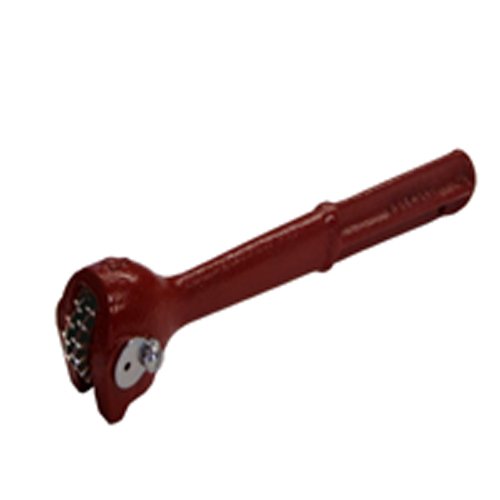
1. Desmond Huntington Number 0 Wheel Dresser
A dresser with dust-protected ball bearings and handles the maker says are designed for user comfort. It is described as filling most general dressing needs where fast dressing matters, and as good for silicon carbide stones. The listing weight is 2.14 pounds and the package is about 11.9 inches long. No wheel sizes are given, and the listing does not describe the cutter in detail.
Suits: fast dressing of larger wheels. Strengths: long handle and bearings. Weaknesses: no wheel size guidance. Skip it if you want a small diamond tool.

Best for bench grinder wheels
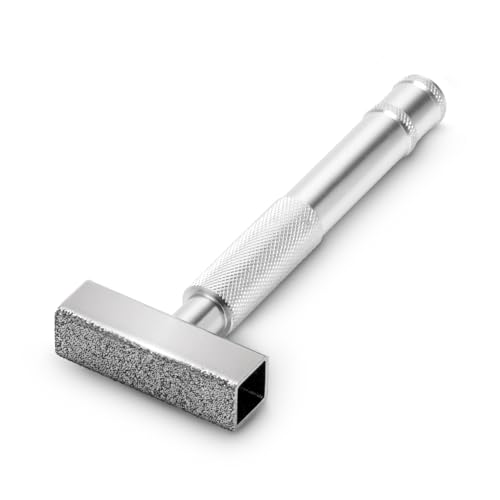
2. POWERTEC Diamond Grinding Wheel Dresser 71003
A diamond dresser with 36 grit diamond chips on a 1/2 by 1-3/4 inch surface, with guide bars. The bullet gives 4-5/8 inches long, while the table lists 7 by 3.5 inches, so the size is not consistent. The maker says it works on aluminum oxide, resin bonded, chlorinated and silicon carbide wheels.
Suits: bench grinder wheels. Strengths: a clear grit and face size. Weaknesses: a conflicting length. Skip it if you want a roller dresser.


Best for a shop with several grinders
3. Mudder 3 Pieces Grinding Wheel Dresser Diamond
Three small diamond dressers in one pack, each listed at 4.5 by 1.3 cm in the bullets, while the table gives 4.72 inches in length. The grit is listed as 120, and the maker names white and brown corundum, silicon carbide, ceramic and resin bond wheels. The handle is described as textured to resist slipping.
Suits: a shop with several grinders. Strengths: three tools in one pack. Weaknesses: small size and mixed dimensions. Skip it if you want a long handle.

View Mudder 3 Pieces Grinding Wheel Dresser Tool Diamond Bench Attachments Tool on Amazon

Best for manual sharpener wheels and general cleanup
4. Norton Abrasives Dressing Tool Stick
A 6 inch silicon carbide stick measuring 1 by 1 inch, with a vitrified bond. The maker says it opens, cleans and reshapes grinding wheels and handles rough finishing work such as removing small burrs. The table says coarse grit and a bullet says medium grit, so the grit is not consistent.
Suits: manual sharpener wheels and general cleanup. Strengths: a simple stick. Weaknesses: a mixed grit description. Skip it if you want a diamond surface.


Best for cleaning glazed wheels
5. PFERD Bench Grinder Wheel Dresser 39110
A handheld dresser with U-shaped teeth and a roll measuring 1-1/2 inches wide and 1 inch in diameter. The maker says it cleans, reshapes and trues bench grinder wheels. The listing weight is 1.9 pounds. A grit figure of 120 appears in the table even though this is a toothed tool, which looks like a data oddity.
Suits: cleaning glazed wheels. Strengths: handle and toothed roll. Weaknesses: a confusing grit entry. Skip it if you want a diamond finish.


Best for general bench grinder use
6. WEN Diamond Grinding Wheel Dresser WA0003
A hand-held diamond dresser with a 1/2 by 1-3/4 inch, 36 grit surface and a partly knurled handle. The maker says it fits ceramic, resin bonded, chlorinated silicon, corundum, silicon carbide and aluminum oxide wheels and can also be used on guide bars and other mounts. The listing weight is 0.06 kg.
Suits: general bench grinder use. Strengths: a clear grit and handle. Weaknesses: small and light. Skip it if you need a long roller dresser.

View WEN Diamond Grinding Wheel Dresser for Bench Grinders and Turning Stones (WA0003) on Amazon
Care and Setup
- Follow the maker’s instructions and wear eye protection.
- Rest the dresser firmly on the tool rest before it touches the wheel.
- Move it across the wheel face with light, even passes.
- Brush off dust and check the wheel for cracks afterward.
Mistakes to Avoid
- Using a diamond dresser on a wheel type the maker does not name.
- Pressing hard instead of making light passes.
- Trusting a size that conflicts within the listing.
- Dressing without eye protection.
Dressing Versus Truing a Wheel
People often use “dressing” and “truing” as if they mean the same thing, but they solve different problems. Dressing removes the dulled surface of the wheel, along with metal particles clogged in the pores, so fresh abrasive grains are exposed and the wheel cuts cleanly again. Truing corrects the wheel’s shape, so it runs round and its face is flat or has the profile you want. A wheel that has been knocked, worn unevenly or newly mounted may need truing first, and then dressing to restore sharpness.
Signs a wheel needs attention include a shiny glazed face, metal that burns or discolors when you grind, a wheel that vibrates, grooves that catch the workpiece, or an uneven face that makes it hard to hold a steady angle. Excess vibration can also point to a damaged wheel or a problem with the grinder, so inspect the wheel for cracks before you assume a dresser will fix it.
Some tools do both jobs, though one may be better at it than the other. A diamond dresser is usually better for truing because it cuts hard and stays flat. A stick or block dresser mainly refreshes the surface. Read the product listing to see what the maker says the tool is intended for.
Dresser Types Compared
The designs in this guide cover the common families of wheel dressers, and each suits a different user. Knowing the differences helps you avoid buying more tool than you need or too little for the job.
- Star or Huntington-style wheel dressers use hardened rotating cutters on a handle. They break up the wheel surface by crushing and are common on bench grinders. They remove material quickly, which also means they wear a wheel faster and create plenty of dust.
- Diamond-tipped dressers use a diamond particle or point to cut the wheel. They tend to give a flatter, finer finish and can last a long time, though they cost more. They need a steady hand or a guide, and some are used with a tool rest.
- Stick or block dressers are made from abrasive material, such as silicon carbide or aluminum oxide, and are pressed against the spinning wheel. They are simple and approachable for occasional use, but they wear down with every use and are less precise.
- Multi-piece sets offer several dressers or tips at once, helpful if you grind with more than one wheel type.
Check each listing for the grinder sizes and wheel materials it covers.
Matching the Dresser to Your Wheel
Not every dresser works on every wheel. Bench grinder wheels commonly use aluminum oxide or silicon carbide, but specialized wheels such as CBN or diamond wheels need a different approach. A diamond dresser meant for conventional wheels would not be the right tool for a superabrasive wheel, and the wrong tool could damage it. Read the wheel’s label and the dresser’s description, and when in doubt contact the maker.
Size and grit also matter. A fine wheel needs a gentler dressing, while a coarse wheel can handle a more aggressive tool. A very wide wheel may need a dresser that can span its face smoothly. Some dressers fit only certain grinder sizes, so check the wheel diameter and width against the listing.
Consider your tool rest. Many dressers are supported on the rest and slid across the wheel face. If your tool rest is worn, loose or wobbly, you will have trouble getting a true result with any dresser. Check that the rest is rigid, set to the correct gap from the wheel, and clean before you start dressing. A guide or jig can also help with consistent passes if you dress frequently.
Safe Dressing Practice
Dressing a wheel creates dust, sparks and noise, so the right protective gear is not optional. Wear eye protection or a face shield, hearing protection and a dust mask or respirator suited to abrasive dust. Tie back long hair and avoid loose sleeves and gloves that could catch. Follow the grinder maker’s instructions about guards and spark arrestors, and never remove the wheel guard.
Before dressing, unplug the grinder and inspect the wheel for cracks, chips or damage. Do a ring test only as recommended by the wheel’s maker. Check the tool rest position and the gap to the wheel. Then stand to the side of the wheel, not directly in line with it, and let the grinder reach full speed before you begin.
Move the dresser slowly and evenly across the face with light pressure, taking small passes rather than one deep cut. Pushing hard can overheat the dresser or the wheel, and it wastes material. Stop when the wheel looks uniform and clean. Afterward, let the wheel stop completely and clear the dust away. Be mindful of the dust, which can irritate lungs and eyes, and work in a ventilated area.
When to Replace the Dresser or the Wheel
Dressing removes some of the wheel each time, so wheels shrink with use. Eventually the wheel becomes too small to use safely or too narrow for your tool rest, and it needs to be replaced. Check the maximum and minimum size markings for the wheel and follow the maker’s guidance. Never use a wheel that is cracked or has been dropped, even if it looks fine.
The dresser has its own life. Star-type cutters wear down and lose their bite, stick dressers get shorter, and diamond dressers can lose diamond particles or become uneven. If a dresser starts to chatter, leaves a rough, uneven wheel, or takes noticeably longer to do the same job, it may be time for a new one. A diamond dresser that has chipped or loosened should be retired, since loose pieces can be a hazard.
Keep dressers clean and dry, store them in a case or drawer where the working face will not get knocked, and keep them away from oil. A good dressing habit extends the life of both the wheel and the tools you sharpen on it.
From Symptom to Dresser: Matching the Fix to What the Wheel Is Telling You
A grinding wheel talks constantly; the skill is translating. A wheel that loads up with metal and starts to burnish the work instead of cutting it is glazed or clogged, and it wants dressing to expose fresh grain. A wheel that leaves a wavy finish, chatters or runs visibly out of round wants truing, which is the heavier operation that restores geometry. A wheel that sheds grit, feels soft and wears quickly may simply be too soft a grade for the metal, and no dresser cures a wrong wheel choice. Before reaching for any of the six picks above, spend one minute on diagnosis: spin the wheel down, look at the face under good light, and run a fingertip lightly across a stopped, unplugged wheel to feel whether the surface is smooth and glassy, uneven, or sharp and open. That minute decides whether you need a light pass with a diamond dresser, a session with a star-type dresser, or a dressing stick used at the point of contact.
Glazing, loading and wear are three different problems
Glazing is dull grains polished smooth, usually from grinding hard material with too fine or too hard a wheel, and it shows as a shiny face and work that overheats. Loading is soft metal, aluminium or wood residue packed between grains, visible as smeared patches, and it shows as vibration and a wheel that grabs. Wear is the wheel honestly losing its shape, with a dished or rounded face that makes accurate grinding impossible. Diamond dressers such as the POWERTEC, the Mudder set and the WEN handle glazing and light truing elegantly. The star-type Huntington dresser, represented by the Desmond Number 0 and the PFERD, tears into a loaded or worn wheel more aggressively and is the classic choice for restoring a rough working face. The Norton dressing stick works differently again, used to open the face and touch up the edge right where the work happens. Owning the diagnosis matters more than owning all three types, but many working grinders end up with one of each because the problems rotate.
Each Pick at Work: Six Dressing Stations
Desmond Huntington Number 0: the traditional star dresser
The Huntington pattern has survived generations because it works: hardened star wheels on a handle roll across the face, fracturing grains and tearing out loaded material. It suits coarse and medium bench wheels that see tool steel, mower blades, axes and general farm and shop grinding. Its action is vigorous, so it restores a neglected wheel quickly, and its honesty is that it leaves a rougher face than a diamond pass, which for rough grinding is no fault at all. Keep the star wheels clean and free-spinning, present the dresser on the tool rest with a firm two-handed grip, and let it traverse steadily rather than dwelling in one spot and digging a groove.
POWERTEC diamond dresser: the everyday face-lifter
A flat diamond dresser such as the POWERTEC is the tool most bench grinder owners will use most often: a light pass to break a glaze, square an edge and restore bite before sharpening tools. It rewards a light touch and a steady traverse, supported on the rest, with the diamond face kept flat to the wheel. Used that way it removes very little wheel, which is why it suits frequent maintenance. Used with a digging, corner-first action it can gouge, so the habit to build is flat contact, modest pressure and patience, letting several light passes do what one heavy pass would do badly.
Mudder three-piece set: several grinders, several hands
A set of diamond dressers makes sense where there are multiple grinders or multiple users: one at each machine, so dressing happens when it should instead of when someone fetches the single shared dresser. It also lets a school or shared workshop standardise on one method and teach it once. The discipline with any set is inspection; a diamond face that has lost its stones or a handle that has loosened should be retired, because a failing dresser dragged across a wheel under pressure teaches bad habits and poor results.
Norton dressing stick: touch-ups at the point of work
The stick is the dresser you use mid-job, held against the spinning wheel to open the face, clean a loaded patch or refresh an edge used for a particular profile. It is a favourite where grinding is frequent and light, and where stopping to set up a handled dresser for every touch-up would break the rhythm of work. Respect its simplicity: it is consumed as it works, it needs the same eye and dust protection as any dressing, and it is a maintenance tool rather than the answer to a wheel that is badly out of true.
PFERD bench grinder dresser: the workshop-grade star tool
The PFERD occupies the same family as the Huntington but aimed at users who dress often and want a tool built for a long service life in a working shop. It suits production sharpening benches, agricultural workshops and any grinder that earns its keep daily. With any star dresser, the wearing parts are the cutters themselves; when they dull or chip, the dresser starts to skate and polish instead of fracture, which is the signal to service or replace them rather than pressing harder.
WEN diamond dresser: the compact companion to a home grinder
The WEN diamond dresser pairs naturally with the smaller bench grinders common in home workshops, giving the owner a simple, repeatable way to keep a wheel cutting for chisels, drill bits and garden tools. Its value is behavioural as much as mechanical: a dresser that lives on the grinder bench gets used at the first sign of glazing, and early light dressing is what keeps a wheel healthy for years. Store it in a fixed spot beside the machine, next to the eye protection, so the whole maintenance ritual takes moments.
Head-to-Head: Diamond, Star and Stick
Choose diamond for frequent light maintenance, edge squaring and the cleanest finish on finer wheels. Choose a star dresser for neglected, loaded or out-of-shape coarse wheels where material must come off and the face must be re-established. Choose a stick for quick touch-ups, opening a face mid-job and small local corrections. The common error is using one type to do another’s job: grinding away with a diamond dresser on a badly worn wheel wastes the diamond and the wheel, while attacking a fine wheel with a star dresser for a mere glaze sacrifices wheel life for nothing. If you grind daily, the pairing of a star dresser for restoration and a diamond for maintenance covers nearly everything. If you grind monthly, a single diamond dresser plus good habits will serve, and the stick is the inexpensive second tool to add when you find yourself wanting mid-job touch-ups.
Setting Up the Grinder So Dressing Works
Dressing quality is decided before the dresser touches the wheel. Unplug the grinder and check the wheel by eye for cracks or chips; a damaged wheel is replaced, never dressed back into service. Set the tool rest close to the wheel and level, since the dresser rides on it and any gap invites chatter and a grabbed tool. Check the spark guard position, confirm the wheel runs true when spun by hand, and clear the area so you can stand slightly to one side of the wheel’s plane, the safe position for all grinding. Put on eye protection and a dust mask, because dressing throws the very grit you are removing. Start the grinder and let the wheel reach full speed before presenting the dresser, supported on the rest, with a firm grip and light pressure. Traverse steadily across the face, listen for the sound to even out, and stop to inspect with the wheel switched off and stopped. Two light passes with inspection between them beat one determined pass every time.
Troubleshooting in Diagnostic Order
Work through problems in this sequence. First, vibration: check whether it exists before dressing, because dressing cannot fix a wheel that is cracked, badly mounted or running on worn bearings; a wheel that thrums at speed is a stop-and-investigate fault, not a dressing job. Second, a face that glazes again within minutes: suspect the wheel grade or grit for the material, or grinding technique with too little feed, rather than the dresser. Third, a face that dresses unevenly: check your rest setting and traverse, and whether you are dwelling at the ends of the pass. Fourth, a dresser that skates without cutting: inspect the dresser itself for worn stars, lost diamonds or a clogged stick face, and clean or replace as needed. Fifth, poor finish on the work after dressing: confirm you dressed for the finish you need, since a freshly star-dressed coarse face cuts fast but rough, and fine work may want a final light diamond pass. Each step is cheaper than the next guess, and the order keeps you from replacing parts that were never the problem.
Care and Storage: Keeping Dressers and Wheels Ready
Brush star wheels clean after use and check they spin freely; a star packed with grit stops fracturing and starts skidding. Keep diamond faces clean with a brush and store diamond dressers where the face cannot be knocked against harder tools, since the stones that do the work can be damaged by careless contact. Keep sticks dry and squared by use, and store all dressers in a set place at the grinder rather than in a general drawer, because a dresser that must be hunted for will be used too late. For the wheels themselves, store spares on edge in a dry rack, never hung by the bore in a damp corner, and note the date a wheel goes into service if your shop grinds a lot. The closing habit is the simplest: dress early and lightly. A wheel maintained in small passes keeps its size, its balance and its manners, and the dresser that tends it lasts for years.
Working With Different Wheels: Fine, Coarse, White and Grey
The wheel on the grinder changes what good dressing looks like. A coarse grey wheel used for roughing tools and mower blades tolerates and even benefits from a vigorous star dressing that leaves an open, aggressive face. A fine wheel wants a gentler hand and a diamond pass, because its value lies in the finish it leaves and a rough dressing throws that away. White and pink wheels, the friable types favoured for tool steels that must not overheat, dress easily and wear faster by design; they ask for light, frequent attention and punish heavy-handedness by simply disappearing. Wheels used for carbide need their own abrasive compatibility, and a dresser suited to ordinary wheels may skate uselessly on them, so check the wheel maker’s guidance rather than assuming. The practical habit is to note, for each wheel you run, which dresser and how many passes restored it last time, on a card kept at the grinder. That small record turns dressing from folklore into a repeatable setup, and it is how production benches keep several grinders all behaving the same.
Decision Guide: Who Should Buy Which Dresser
The home workshop with one bench grinder used for chisels, bits and garden tools should start with a diamond dresser, the POWERTEC or the WEN according to the grinder’s size, and add nothing until experience argues otherwise. The farm or heavy maintenance shop, whose wheels load up with soft metal and honest abuse, should start with a star dresser, the Desmond or the PFERD, because restoration is its weekly reality. The sharpening enthusiast who grinds daily and finishes edges on fine wheels should own the diamond for maintenance and keep a Norton stick at the bench for mid-job touch-ups, the pairing that keeps a fine wheel in its narrow happy zone. The multi-grinder workshop, school or shared space should buy the Mudder set and standardise, placing a dresser at every machine and teaching one method. And the user whose wheel problems keep returning despite correct dressing should spend the next money on the wheel itself rather than a second dresser, since grade and grit mismatches imitate dressing faults perfectly. Buy for the problem you diagnosed, in other words, not for the problem the loudest forum thread describes.
The Two-Minute Dressing Routine, Once It Becomes Habit
When dressing settles into routine it looks like this. Eye protection and dust mask on, grinder started, wheel at full speed. A breath while you look at the face and name the problem: glaze, load or shape. Dresser on the rest, flat and firm, light pressure, a steady traverse, then a second if the sound and the feel say the face is not yet even. Power off, wheel stopped, a fingertip check and a look under the light. Then the proof that actually counts: grind a piece of scrap or the tool you came to sharpen, and read the result, because a dressed wheel is only dressed when the work says so. The whole sequence takes about two minutes, most of it waiting for the wheel to spin up and stop, and it replaces the far longer ritual of fighting a glazed wheel through a sharpening session and wondering why every edge overheats. Build it into the start of grinding the way you would check a tyre before a journey, and the grinder becomes the reliable tool it was always supposed to be.
Wheel Safety Around Dressing: The Rules That Sit Above Technique
Everything in this guide assumes a grinder that is itself safe, and dressing day is the right day to confirm it. Before any dressing session, give the wheel the visual once-over the makers recommend: look for cracks, chips and damage around the bore, and check that the blotter and flanges are seated as they should be. A wheel that has been dropped, struck or stored badly is retired on suspicion, because no dressing restores structural honesty. Confirm the guards are in place and adjusted, the tool rest is close and firm, and the eye shield is clean enough to see through rather than around. Stand to the side while the wheel comes up to speed, every time, and let it run briefly before dressing or grinding, so any problem announces itself while nothing is touching the wheel. Keep the area free of clutter and bystanders, wear the eye and dust protection without negotiation, and never dress a wheel with loose clothing, gloves dangling or anything else that a spinning wheel could take hold of. These habits are not decoration around the real advice; they are the reason the real advice gets to be used for decades. A dressed wheel on a sound grinder, used this way, is one of the most reliable tools in the workshop, and the six dressers in this guide are all it asks for in return.
Wheel Dresser FAQ
What does a wheel dresser do?
It removes clogged metal and glaze from a wheel and restores a flat, clean face so the wheel cuts evenly.
Which type is simplest?
A diamond dresser or a dressing stick is simple to use. A roller type covers wide wheels quickly.
How often should I dress a grinding wheel?
There is no fixed schedule. Dress it when the face looks glazed, loaded with metal, uneven or when the wheel stops cutting well. Heavy use may call for more frequent dressing, but check the wheel's manual for guidance.
Can a wheel dresser fix a cracked wheel?
No. A cracked, chipped or damaged wheel should be replaced rather than dressed. Using a damaged wheel is a safety risk.
Is a diamond dresser better than a star-type dresser?
They suit different priorities. Diamond tools usually give a flatter, finer result and last longer, while star-type dressers are quick and straightforward. Pick based on your grinder, wheel and how precise you need to be.
Do I need a tool rest to use a wheel dresser?
Many dressers are designed to ride on the tool rest, which gives stability and control. Some can be used with a jig or guide. Check the product instructions for how the tool is intended to be used.
Can I use the same dresser on every grinding wheel?
Not necessarily. Wheel material and bond matter, and superabrasive wheels need compatible tools. Check the listing and the wheel's label before dressing.
What safety gear do I need when dressing a wheel?
At minimum, eye or face protection, hearing protection and a dust mask or respirator, plus a guard on the grinder. Avoid loose clothing and gloves that could catch. Follow your grinder's manual.
Why does my wheel vibrate even after dressing?
The wheel may be unevenly worn, out of balance or damaged, or the grinder's mounting hardware may be loose or worn. Stop and inspect everything with the grinder unplugged. If the vibration persists, replace the wheel or consult the grinder maker.
Signs Your Grinding Wheel Needs Attention
A wheel does not announce when it is due for dressing, but it gives clear hints if you watch for them. The first is glazing. A glazed wheel looks shiny and smooth on the face, because the abrasive grains have dulled and no longer break away to expose fresh ones. Work that once cut easily now burns, turns blue or smells hot, and you need to press harder to remove the same amount of steel. That extra pressure is the cue to dress it.
The second is loading. Soft metals such as aluminum, brass and mild steel can smear into the pores of the wheel and fill the gaps between grains. You will see gray or colored streaks across the face, and sparks drop off. Dressing removes the clogged surface and uncovers clean abrasive.
The third is an uneven face. Grooves, humps or a wheel that has worn into a rounded shape make it hard to hold a straight edge. If you feel a rhythmic bump as work touches the wheel, the face is out of round or has worn unevenly. A dresser can restore it, provided the wheel itself is sound. Cracks, chips along the edge or a wobble at the arbor are different problems that call for a new wheel, not a dresser.
Setting Up the Grinder for Easier Dressing
Dressing is far easier on a grinder that is set up properly. Check the tool rest first. It should sit close to the wheel, with a small gap that keeps work from catching, and it should lock firmly. Many dressers rely on the rest as a platform, so a loose or damaged rest makes any dresser harder to control.
Next, confirm the wheel is mounted securely and the guard is in place. Unplug the grinder before adjusting anything. After powering on, let the wheel reach full speed and stand to the side of its plane, not directly in line with it.
Position matters when you begin. Hold the dresser against the rest, bring it to the wheel face gently and move it smoothly across from side to side. Light passes remove less material and leave a better surface than a single deep cut. For a diamond-point or stick dresser, steady contact with consistent pressure avoids gouging. Take only as many passes as are needed to clean the face and reveal the grit. Taking off too much shortens the wheel’s life for no gain.
- Use a dust mask and eye protection, since dressing releases abrasive dust.
- Keep a vacuum or brush nearby to clear debris before returning to grinding.
- Recheck the gap between the wheel and rest after dressing, as the wheel is now slightly smaller.
Wheel Types, Grit and Why They Change the Plan
Not all wheels dress alike. Standard aluminum oxide wheels, common on home bench grinders, are the usual target for most dressers. Silicon carbide wheels are harder and better with non-ferrous work, and they may need a dresser rated to handle them. Very hard, fine-grit wheels glaze quickly and benefit from regular touch-ups, while coarse wheels shed grit faster and stay open longer.
Grit also affects how aggressive a dressing pass should be. Coarse wheels, in the range often used for shaping and rough removal, tolerate a more vigorous cut from the dresser. Fine wheels, used for sharpening and finishing, respond best to feather-light passes so the surface stays smooth. Before you buy, check the diameter and thickness of the wheels you own, because some dressers have size limits, and make sure the wheel is rated for the grinder speed.
If you use specialty wheels, such as ceramic or CBN types, follow the maker’s guidance on dressing. Some require specific dressers or may not be dressed at home at all.
Budget, Storage and Getting Long Service
Dressers are simple tools, and price usually tracks the quality of the abrasive and the toughness of the body. Basic star or stick types are inexpensive and good enough for light home use. Diamond dressers cost more, but a good one lasts through many wheels. A few extra dollars for a sturdier handle or a well-attached diamond tip is usually sensible if you grind often.
Store the dresser dry and away from loose steel that could damage the working end. Brush off dust after each use, and replace or rotate the tool when the working surface is worn smooth. As this guide relies on published specs and general knowledge rather than hands-on use, treat product claims cautiously and confirm sizes and compatibility on the listing before ordering.
If you are new to dressing, practice on a wheel you are happy to sacrifice, such as an old, nearly worn one. Learn the feel of a good pass: smooth, even, with a consistent spark and sound from end to end. If you hear a rattle, grinding or heavy vibration, stop and check the mounting and the wheel for damage. Many problems that look like a dresser issue are actually a loose flange nut, a worn arbor or an out-of-balance wheel.
It also helps to build a small routine. Before each grinding session, give the wheel a look and a listen. After a long session or after working a soft metal, give it a light dressing before you put it away, so that the next session starts with a clean face. That habit saves more time than it costs, and it extends the life of both the wheel and the work you do on it.
- Spin down the wheel fully before you leave the grinder unattended.
- Keep a spare wheel on hand so you are not tempted to push a worn one.
- Record the date you mount a new wheel to track its service life.
Frequently Asked Questions
What is wheel glazing and how do I fix it?
Glazing happens when abrasive grains dull and the wheel face turns shiny, so it burns metal instead of cutting it. Dressing the wheel removes the glazed layer and exposes fresh grains. Using the right wheel for the metal and avoiding heavy pressure helps prevent it from returning.
Should I unplug my grinder before dressing the wheel?
Unplug it while adjusting the tool rest, guard or wheel. For the dressing pass itself the wheel must be spinning, so let it reach full speed, stand to the side, and wear eye and dust protection. Never dress a wheel that looks cracked or wobbles.
How do I know when to throw away a grinding wheel?
Replace the wheel if it has cracks, chips, deep gouges, an out-of-round shape that dressing cannot fix, or if it has worn near the minimum diameter marked on the label. Also replace it after a drop or impact. A damaged wheel can fail at speed and cause injury.
Does dressing a wheel make it smaller?
Yes, each dressing pass removes a little material, so diameter slowly decreases. Light passes keep that loss small. As the wheel shrinks, its surface speed drops slightly, and the gap to the tool rest widens, so readjust the rest after every dressing session.
The Short Version
For a long handle with bearings, the Desmond. For a 36 grit diamond with guide bars, the POWERTEC. For a three pack, the Mudder. For a plain stick, the Norton. For toothed cleaning, the PFERD. For a knurled diamond handle, the WEN.