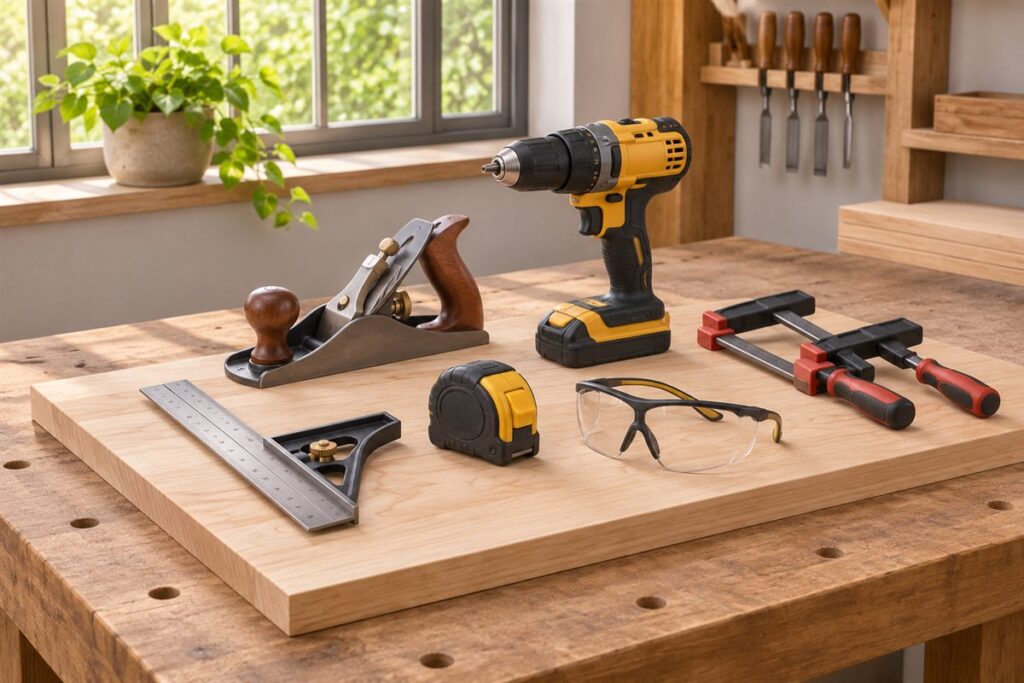
A cordless drill battery has to fit your tool, supply the voltage it expects and offer enough capacity for your jobs. In most cases the safest route is to choose a battery the maker lists for your exact drill. The sections below cover the numbers and habits that matter, and the maker’s manual always has the final word.
Reading the Label
Three details appear on nearly every pack. Voltage tells you the power level the tool is built for. Amp-hours (Ah) describe capacity, so a higher figure usually means longer run time and often more weight. The chemistry, commonly lithium-ion, affects charging needs and care.
Decision Table
| Factor | Why it matters | What to check |
|---|---|---|
| Platform fit | Packs are made for particular tool families | Match the model listed by the maker for your drill |
| Voltage | The tool expects a certain level | Use the same voltage the drill shows on its label |
| Capacity (Ah) | Controls run time between charges | Think about how long you drill at a time |
| Weight | Bigger packs add weight at the handle | Hold the drill with the pack fitted |
| Charger | Must suit the pack and its chemistry | Use the charger the maker lists |
Looking After a Battery
- Charge the pack with the charger made for it, in a dry place and on a surface that does not burn.
- Remove it from the charger once it is full if the maker advises that.
- Keep it away from direct heat, damp and metal objects that could bridge the contacts.
- Store it in a cool dry spot with some charge, following the maker’s storage notes.
- Stop using any pack that is swollen, cracked, leaking or unusually hot, and follow local rules for disposal and recycling.
Cautions
Do not open, crush or modify a pack, and do not charge it unattended in places where fire would spread. Avoid third-party packs that the maker does not list for your tool, since fit and protection features can differ. Nothing here promises any result, so follow the manual and local rules.
It also helps to keep a simple routine. Label each pack with a date, rotate packs so they wear evenly and keep a spare charged for longer jobs. If the drill feels weak even on a full charge, check the contacts for dirt, then read the maker’s guide or contact its support. Avoid leaving packs in a hot vehicle or in direct sun.
FAQ
Is a higher Ah pack always better?
It lasts longer between charges but weighs more. A smaller pack can be more comfortable for overhead or long fastening sessions.
Can I use a pack from a different brand?
Only if the maker states it is compatible. Adapters may not be supported, so check the guide.
The Short Version
Choose a pack listed for your drill, match voltage, then select capacity by how long you work and how much weight you can accept. Charge with the right charger and store the pack with care, following the maker’s manual and local rules.